

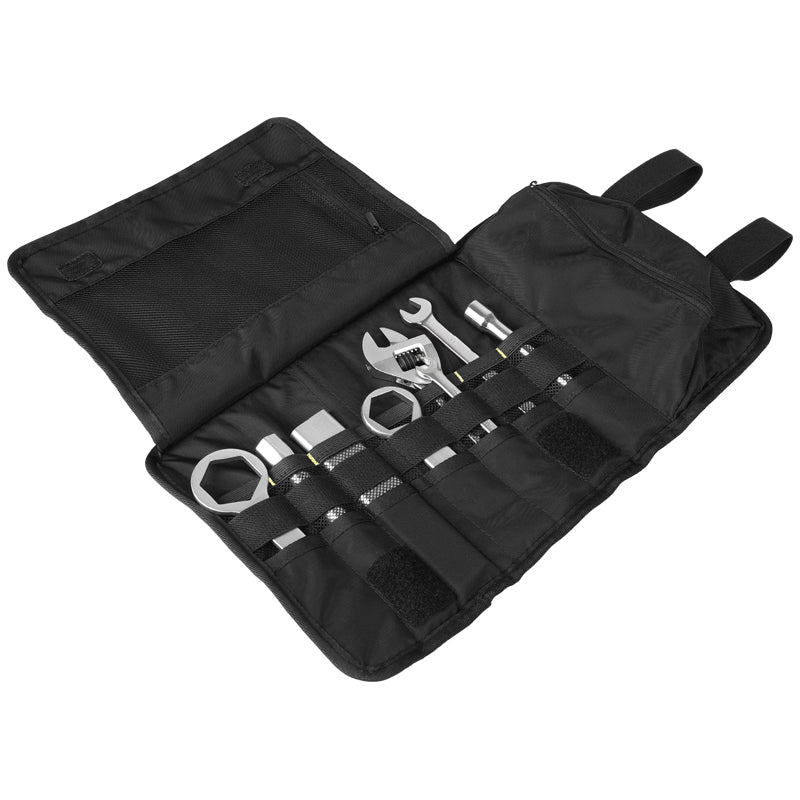
A motorcycle tool kit works if it covers only the four breakdowns that really happen on the road - punctures, loose fasteners, electrical problems, and chain issues - and is organized so that an empty pocket is immediately visible, not when you need it on the roadside. The most important rule is not about what you carry, but which wrench sizes you carry: only those used on your motorcycle, never a generic set. The container you choose - a roll bag or a hard case - weighs as heavily on the decision as the contents: we compare them using data from the LOBOO BGJB03 and CGJX-2 technical specifications.
A useful kit covers four breakdowns, not every possible scenario
Anyone who builds a good kit does not try to anticipate everything. They focus on the breakdowns that really happen, far from a workshop, and leave the rest out.
| What happens | What you need |
|---|---|
| Puncture - the most common breakdown of all | Repair kit suitable for your type of wheel, mini compressor or cartridges, pressure gauge |
| Loose fasteners - vibrations and unpaved roads | Wrenches in the sizes used on your motorcycle, not a complete set |
| Electrical problem - fuse, contact, cable | Spare fuses, self-amalgamating tape, cable ties, and a pocket multimeter if you know how to use one |
| Chain - tension or lubrication | Wheel axle wrench, adjustment wrench, lubricant |

The rule that cuts the weight in half: bring only the sizes used on your motorcycle
Don't bring a wrench set. Bring the sizes used on your motorcycle - and finding them is easier than it seems.
- Put the motorcycle in the garage and take your time one free afternoon.
- Note the diameters of the bolts you might need to work on during a trip: wheel axle, chain adjusters, guard bolts, brackets for installed accessories, and top-case bolts.
- Buy only those wrenches. On almost all motorcycles, there are four or five recurring sizes, not fifteen.
The real cost of a complete set
A complete set weighs three times as much and contains ten wrenches you would never use. Worse, it makes finding the right one slower, precisely when it matters to do so quickly.

The container matters as much as the contents: roll-up bag or hard case?
A bag has a structural flaw: it does not tell you what is missing. A roll with sewn-in pockets does - which is why mechanics have used rolls rather than pouches for fifty years. A hard case adds something the bag does not have: a keyed lock and a stated IP rating.
| Feature | BGJB03 roll-up bag | CGJX-2 hard case |
|---|---|---|
| Type | Fabric roll, independent pockets | Lockable hard case |
| Capacity / weight | 214 g empty | 2.3 L |
| Material | TPU-coated nylon, foam padding | Technical plastic |
| Water protection | Claimed waterproof, no IP rating | IP66 (dust and water jets) |
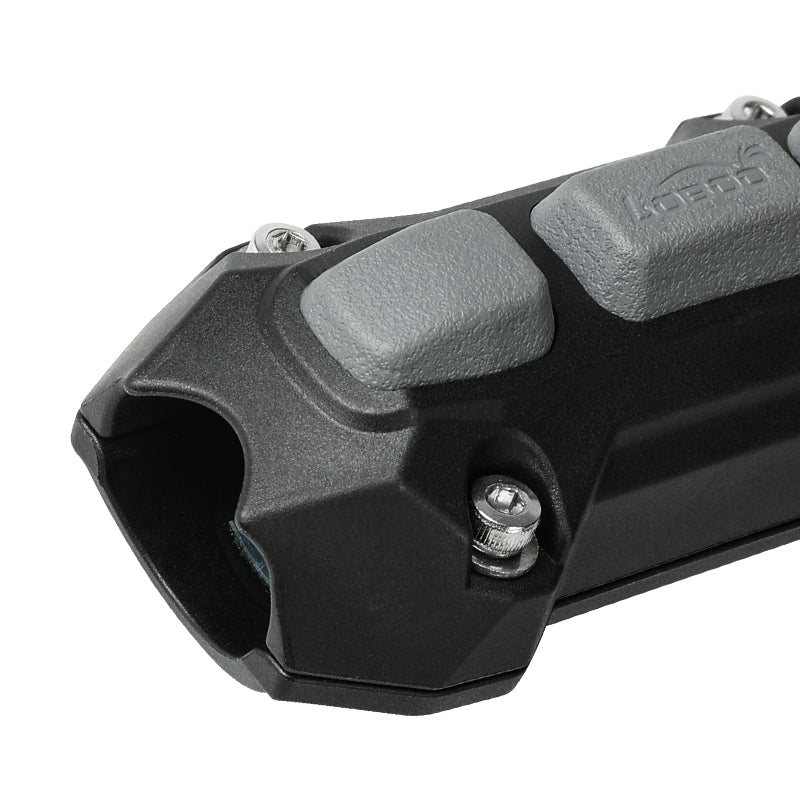
| Mounting | None: it must be stored in a compartment | Clamps on Ø 18 mm rack tube |
| Price | 18 € | 90 € |
| Where it goes | Case, tool box, crash bar bag | Empty space in the luggage rack |

- Brand
- LOBOO
- Open
- 40 × 22,5 cm
- Closed (triple fold)
- 22 × 12 × 5 cm
- Empty weight
- 214 g
- Material
- TPU-coated nylon, foam padding
- Pockets
- Two independent rows + mesh pocket with nylon zipper
- Water protection
- Claimed waterproof, no IP rating (not a dry bag)
- Package contents
- Bag only: tools not included

- Brand
- LOBOO
- Capacity
- 2.3 L
- External dimensions
- 272 × 89 × 175 mm
- Protection
- IP66 (dust and water jets from every direction)
- Compatible tubing
- 18 mm diameter
- Clear height inside the rack
- 212–262 mm
- Clamp spacing
- 161 mm
- Closure
- Cylinder lock, key can be matched to LOBOO cases on request

The kit goes low and close to the motorcycle, never on top of the tail
A tool kit is a dense, heavy load: those are exactly the characteristics that should be kept low and close to the motorcycle's center of gravity.
- Motorcycle tool case, if present
- Bottom of a side case
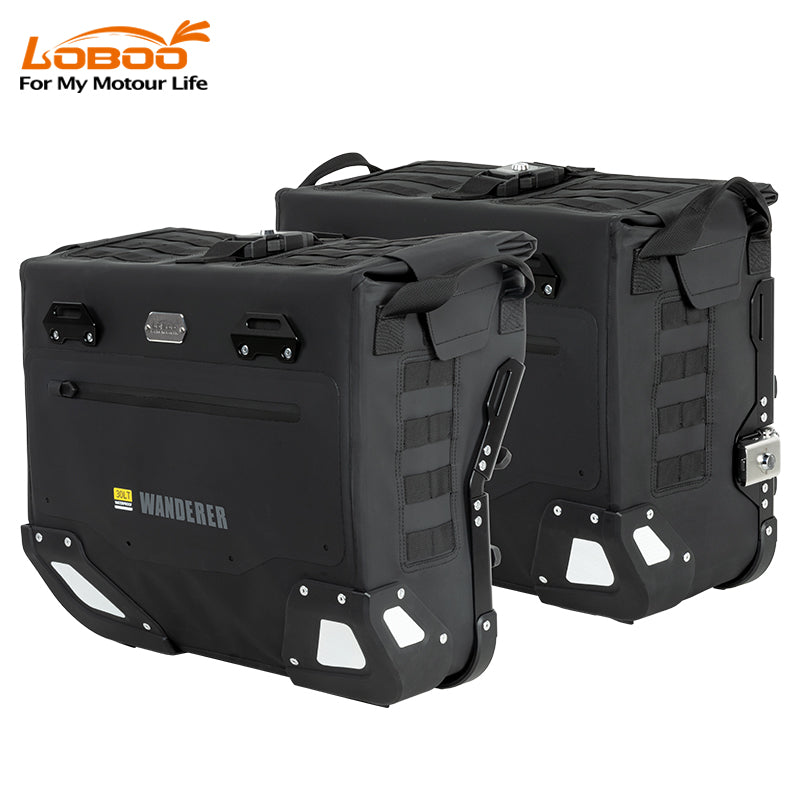
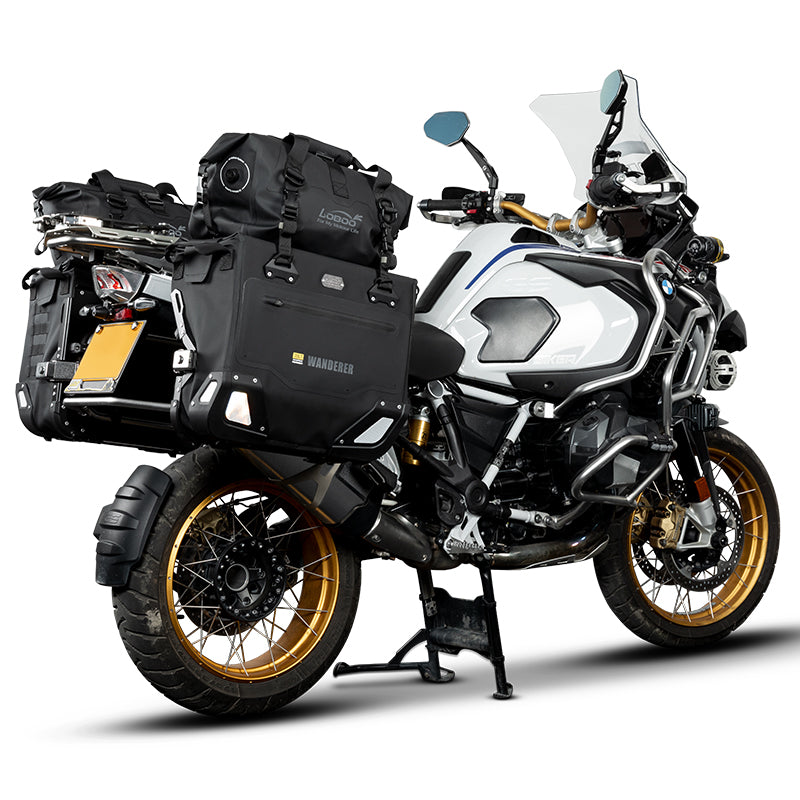
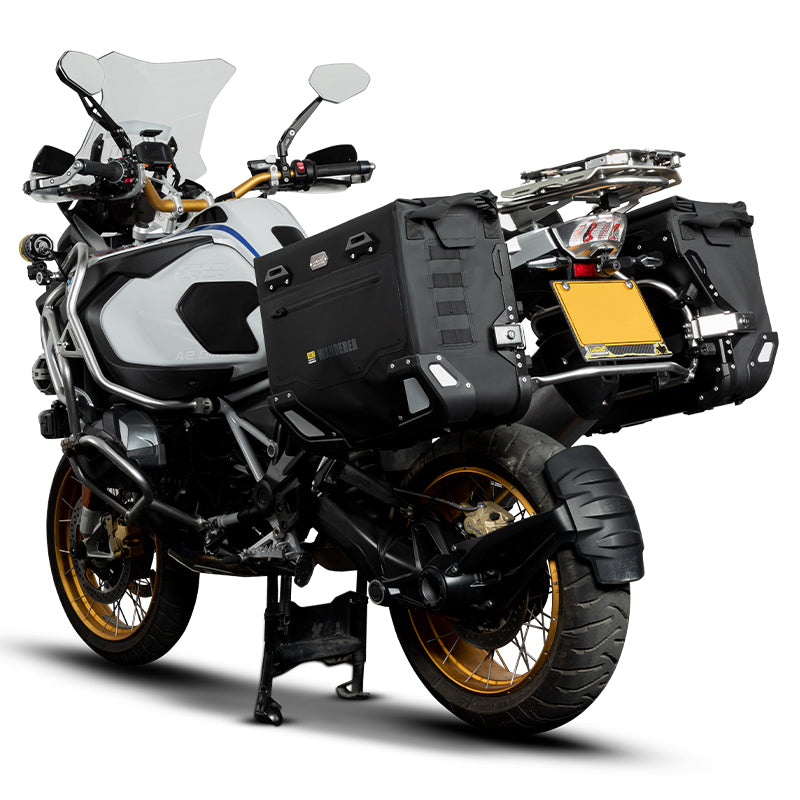
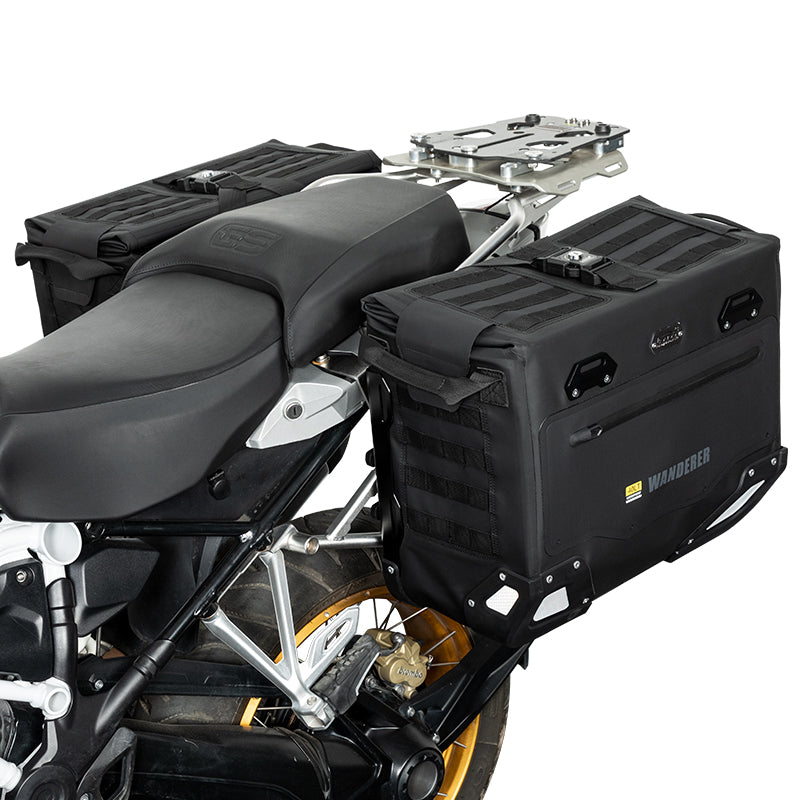
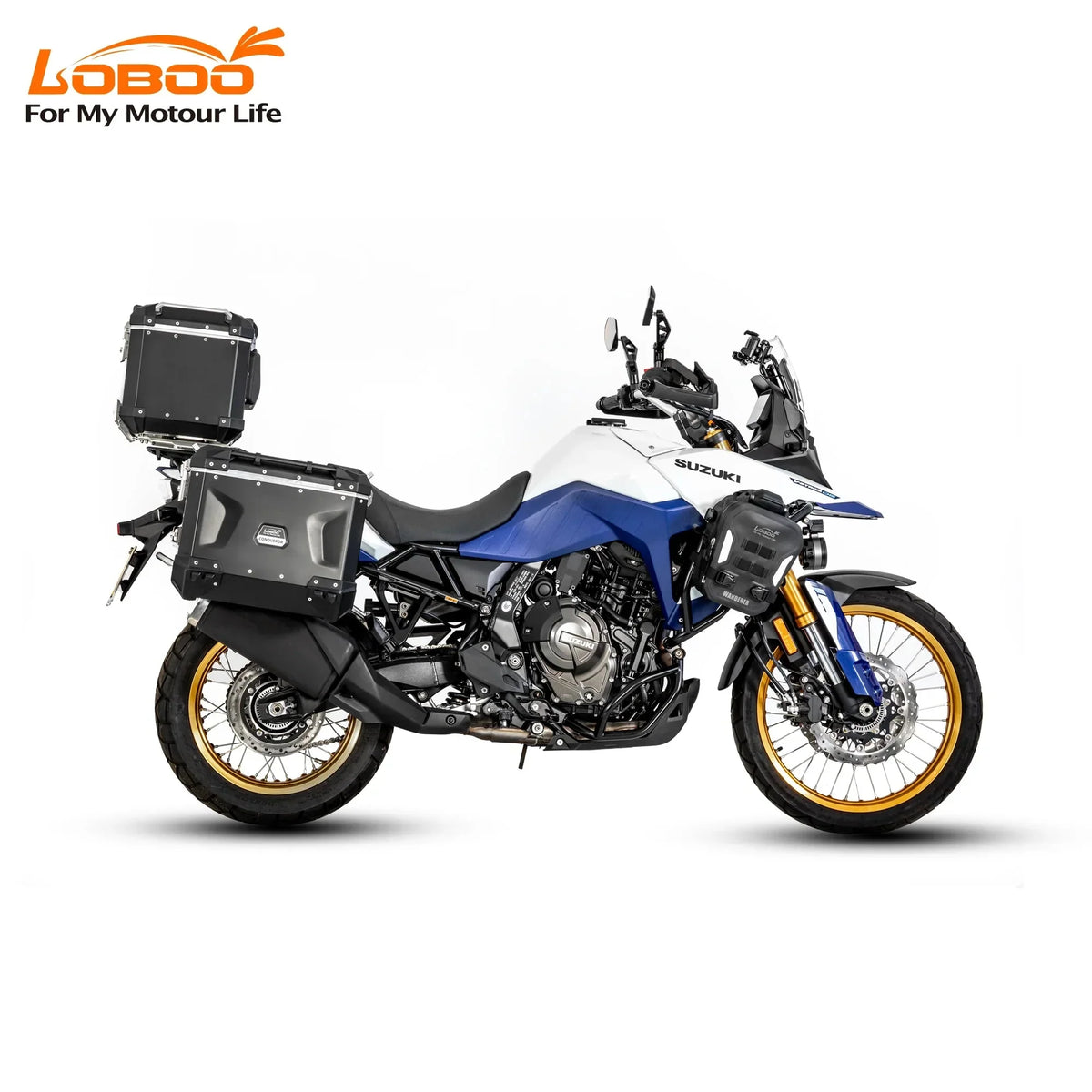
- Crash bar bag - the lowest and quickest position to reach while standing beside the motorcycle
- On top of a tail bag: the quickest way to raise the center of gravity exactly where it shouldn't be

- Brand
- LOBOO WANDERER
- Capacity
- 6 L + 6 L (12 L total)
- Material
- TPU composite fabric, 840D 0.6 mm mesh; internal PP structure
- Protection
- Declared IPX6
- Mounting
- Adjustable straps, crash bars 22 to 28 mm in diameter
- Bag dimensions
- 25 × 12 × 30 cm (declared data, LOBOO manual)
When closed, the BGJB03 tool bag measures 22 × 12 × 5 cm: before ordering a container, measure the space where you intend to keep it, whether that's one of the crash bar bags, the bottom of a suitcase, or the compartment of the CGJX-2 case.
The fabric is waterproof, but it's not a dry bag
The difference between "declared waterproof" and a certified IP rating determines where you can actually keep the kit.
The same goes for the tools themselves: tape and cable ties don't suffer, but steel wrenches left damp for days rust - and a rusted socket halfway through a trip is a socket that no longer fits a bolt.
The check that keeps the kit reliable is done once a year
A tool kit is the one thing you take on a trip hoping you never have to open it. And that's exactly why it degrades without you noticing.
- Before the season, open the roll (or the case) on a table.
- Look at the empty pockets: the tape dries out, the fuses corrode, the lubricant runs out, and last year you took out a wrench for a job in the garage and never put it back.
It's two minutes, and they're the only two minutes that make the kit reliable when you really need it.
Frequently asked questions
What should you pack in a motorcycle tool kit for a trip?
Four categories cover almost every real-world situation: a puncture repair kit with a small compressor, wrenches in the sizes used on your motorcycle, emergency electrical supplies (fuses, tape, zip ties), and whatever is needed for chain tensioning and lubrication.
Do you need to carry a complete set of wrenches?
No. It is better to identify the four or five sizes commonly used on your motorcycle in the garage and carry only those. A complete set weighs much more and makes it slower to find the right wrench.
Is a roll-up tool bag or a hard toolbox better?
It depends on where you keep it. The BGJB03 roll is lightweight (214 g), fits any compartment, and lets you see at a glance what is missing. The CGJX-2 toolbox adds a keyed lock and IP66 protection, but requires a compatible pannier rack (18 mm tube). Many people use them together: the folded bag fits inside the toolbox.
Where should you put the motorcycle tool kit?
Low down and close to the motorcycle, because it is dense and heavy cargo: in the toolbox, at the bottom of a side pannier, or in a crash bar bag. Never on top of the tail bag, because it raises the center of gravity exactly where that is least desirable.
Is the LOBOO BGJB03 tool bag waterproof?
The fabric is described as waterproof, but it has no IP rating and is not a dry bag. For direct and prolonged exposure to rain, it should be kept inside a watertight container, such as a pannier or the CGJX-2 toolbox.
Are the tools included with the bag or toolbox?
No, in neither case. Both the BGJB03 bag and the CGJX-2 toolbox contain only the container: the tools must be selected and purchased separately, based on the dimensions of your motorcycle.
How much does the LOBOO BGJB03 roll-up tool bag cost?
€18. At the time of writing, it is listed as in stock.
How much does the LOBOO CGJX-2 toolbox cost, and when is it preferable to the bag?
€90, currently out of stock. It is worthwhile when you have a pannier rack with an 18 mm tube and want a lockable, IP66-protected compartment separate from the rest of your luggage - useful for those who frequently mount and remove their panniers and want to leave their tools on the motorcycle at all times.
Which frames is the CGJX-2 toolbox compatible with?
The manufacturer states compatibility with an 18 mm diameter tube and a clear internal frame height between 212 and 262 mm, with a 161 mm clamp spacing: requirements met by LOBOO frames in the TIBET and PIKE TRACKER series and by frames from other brands with the same dimensions.
Do you need to drill the motorcycle to install the CGJX-2 case?
No. The clamps tighten onto the existing tubes of the pannier rack, without drilling or welding. The holes specified in the manual (using the included 5.5 mm drill bit) are made in the box itself to choose the mounting side, not in the motorcycle.
Is the CGJX-2 case key the same as the LOBOO pannier keys?
On request, the manufacturer supplies it with the same key combination as LOBOO aluminum panniers, using the key number provided: this is an option to specify when purchasing, not standard equipment.
How much does the closed tool bag weigh and how bulky is it?
214 grams empty. When closed in a triple fold, it measures 22 × 12 × 5 cm, compact enough to fit in a top case, saddlebag, or the compartment of the CGJX-2 case.
Does the tool bag fit in the CGJX-2 case?
Yes. The manufacturer states that the CGJX-2's internal compartment is sized to hold the folded BGJB03: that is why the triple fold with two straps exists.
Is it worth carrying a multimeter or other electrical tools in the kit?
A pocket multimeter helps quickly isolate an electrical fault, but it only makes sense if you already know how to read and use it while traveling. In most cases, spare fuses, tape, and zip ties already cover the most common electrical fault.
How often should the tool kit be checked?
Once a year, before the season: open the roll or case on a table and check the empty pockets, the condition of the tape and fuses, and the level of chain lubricant.
Build the right kit for your motorcycle
Tell us your motorcycle's make, model, and year: we'll help you identify the correct wrench sizes, choose between a roll-up bag and a hard case, and check compatibility with your pannier rack. You can also find our range of tools and containers in the Endurrad app for iPhone.
Discover the LOBOO tool bagSources: technical specifications and product descriptions for the LOBOO BGJB03, LOBOO CGJX-2, and LOBOO WANDERER BHGB11T (manufacturer-declared data); BHGB11T Roll Top Crash Bar Bag user manual (bag dimensions). Stock availability checked on October 2, 2026, and subject to change.


Share:
The 50 best-selling adventure motorcycles in Europe in 2026
Crash bars: how to protect them and what you can mount on them