Introduction
What is a motorcycle smart display
A motorcycle smart display is a dedicated unit, mounted on the handlebar or on the navigation mount, that brings the smartphone interface — maps, music, calls, messages, voice assistant — to a touch screen designed to withstand water, dust, and vibrations. In the vast majority of cases, it works via mirroring: the display does not process navigation autonomously but reproduces Apple CarPlay or Android Auto received from the phone via Bluetooth and Wi-Fi. The phone remains in your pocket or bag, protected from the elements; only the monitor is on the handlebar.
Around this core, more advanced models add functions that a smartphone cannot offer while riding: front and rear dashcam, TPMS (tire pressure monitoring system), blind spot radar/camera (BSD), reading motorcycle data via CAN-bus on some BMWs, 4G connectivity with SOS and anti-theft. In practice, the display combines into one device what previously required four or five separate accessories.
Differences from a traditional navigator
A traditional navigator — the most well-known example being the Garmin Zumo — is an autonomous device: it contains offline maps, a proprietary GPS receiver, and routing software that works even without a phone and without data coverage. This is its great strength (total autonomy in remote areas) and, at the same time, its limitation (proprietary interface, map updates to manage, fewer "apps" available).
A CarPlay/Android Auto smart display, on the contrary, depends on the smartphone: navigation comes from the apps you already use every day (Google Maps, Waze, Apple Maps, Calimoto, Kurviger, and similar), with real-time traffic, always updated points of interest search, and the same logic as the phone. In return, when the phone loses signal or runs out of battery, the display loses most of its navigation utility — unless you have downloaded offline maps in the app.
Advantages of Apple CarPlay
CarPlay offers an extremely clean and consistent interface, with a wide ecosystem of navigation apps (Apple Maps, Google Maps, Waze, and dedicated motorcycle apps), deep integration with Siri for hands-free voice control, and seamless management of calls, messages, and music. For those living in the iPhone ecosystem, CarPlay brings the same experience they are used to in the car to their motorcycle.
Advantages of Android Auto
Android Auto shines especially for its flexibility: Google Maps and Waze offer top-tier navigation, traffic, and search, Google Assistant is powerful, and the platform is open to a growing number of motorcycle apps. On recent Android phones, wireless projection is now standard. A recurring practical warning: some displays do not support phones with HarmonyOS (Huawei) and some less common Android variants, so it is advisable to check your model's compatibility before purchasing.
Differences from a smartphone mounted on the handlebar
Mounting the phone on the handlebar is the most economical solution, but the worst for the hardware. The reasons are well documented and concern four concrete physical problems.
Vibrations. High frequencies transmitted by the engine and road surface — particularly aggressive on large displacement twin-cylinder engines — can permanently damage the optical image stabilization (OIS) system of smartphone cameras. This is a real and costly damage, so much so that several mount manufacturers have developed anti-vibration dampers specifically for this. A dedicated display has no moving optics to damage and is designed to absorb these stresses.
Overheating. Under direct sunlight, with active navigation and charging in progress, a phone easily goes into thermal protection: screen darkens, reduced performance, shutdowns. Motorcycle displays, on the other hand, use low-power components and wide operating temperature ranges (typically from −20 °C to +60/70 °C), designed to be exposed all day.
Water resistance. Very few smartphones can withstand heavy rain, mud, and washing. Motorcycle displays declare IP67, IP68, or IP69K certifications (the latter being the most severe, which includes resistance to high-pressure and high-temperature water jets).
Safety. A larger screen, mounted in an ergonomic position and with voice control or physical commands, reduces the time spent looking away from the road compared to a phone. Add that the phone remains safe (no theft at traffic lights, no drops from the mount) and the difference in terms of active and passive safety becomes substantial.
In summary: a smartphone on the handlebar is an economical compromise that exposes an expensive and fragile device to conditions for which it was not designed. A smart display shifts that risk to hardware specifically designed for it.
Why more and more motorcyclists are replacing traditional Garmins with smart displays
For over twenty years, dedicated satellite navigators — Garmin leading the way — were the only serious way to navigate on a motorcycle. Today, a growing segment of motorcyclists is migrating to smart displays, and the reasons are concrete, not fashionable.
The app ecosystem has won. Those who plan with Google Maps, Waze, Kurviger, or Calimoto want those same apps on their motorcycle, with live traffic, speed camera updates from the community, instant POI search, and automatic synchronization with their phone and computer. A CarPlay/Android Auto display offers all of this without having to learn proprietary software or export tracks in specific formats.
Cost. A Garmin Zumo XT2 has a list price around $599 (similar range in euros). Several smart displays capable of navigation, music, and calls — and in many cases even dashcams — start at significantly lower prices. For those who do not need autonomous offline maps, the function-to-price ratio favors smart displays.
"Extra" features. Integrated dashcam (very useful in a context where motorcyclists are often "guilty until proven innocent"), TPMS, blind spot warnings, 4G connectivity with SOS: these are functions that Garmin, a pure navigator, does not offer.
OTA updates. The most refined smart displays receive over-the-air firmware updates that add functions over time. This is a "software-first" model that traditional navigators are only beginning to adopt.
However, be careful: the migration is not one-way and not for everyone. Those who rack up miles in truly remote areas, where cellular coverage disappears, still find Garmin (with its offline maps and autonomous GPS) a more reliable companion — or at least a valuable redundancy. It's no coincidence that many experienced adventure riders keep both: the smart display for everyday and connected use, and the dedicated navigator as a backup for long journeys. The choice, as we will see, depends on the type of rider more than on any supposed absolute superiority of one technology over another.
Products compared
The five devices requested as the basis for the comparison:
- JADO S6 — endurrad.com/products/monitor-moto-carplay-android-auto-dashcam-jado-s6
- Chigee AIO-6 LTE — chigee.com
- Carpuride W603B — carpuride.com
- RiderNav R7X — ridernav.com
- Garmin Zumo XT2 — garmin.com
International research: products added to the comparison
As per the method, we extended the search to 6"–7" displays from recognized brands truly relevant in the global market, excluding generic no-brand products from marketplaces. We are therefore adding two entrants to the main comparison and highlighting two alternatives in contiguous categories.
Added to the main comparison:
- Carpuride W702 / W702 Pro — the 7" variant from Carpuride itself, among the best-selling touring displays worldwide, appreciated for its robust mounting and dual Bluetooth. We include it as a "pure 7-inch CarPlay" reference.
- Aoocci C6 Pro — an all-in-one 6.25" system with dual 1080p dashcam and G-sensor, a direct alternative to models with integrated video recording.
Highlighted as alternative categories (not pure CarPlay mirroring):
- Chigee AIO-5 Lite — Chigee's "little brother" 5" model, still on sale, which already includes cameras and BSD in the price: excellent if you prefer the more compact screen.
- Carpe Iter V4C — an ultra-rugged native Android navigation tablet (up to 2000 nits), which directly runs Android apps without mirroring. This is a different philosophy from CarPlay/Android Auto, much loved in extreme off-road, but requires thinking "tablet-first" rather than smartphone projection.
In the technical table and benchmarks, we focus on the seven pure-CarPlay/Android Auto displays (the five requested + Carpuride W702 Pro + Aoocci C6 Pro), treating Garmin as a benchmark for the "autonomous navigator" category.
In-depth product sheets
JADO S6
Brand history and philosophy. JADO (JADO Tech) is a brand active in the smart vehicle device sector, with a distribution entity registered in the United States (Watertown, South Dakota) and Asian manufacturing. Compared to established giants, it is a recent name in the motorcycle world, with a declared "premium but accessible" positioning: it combines display, mirroring navigation, dual dashcam, and BMW integration into a single product.
Target audience. Tech-oriented motorcyclists who want a tidy and complete cockpit — with an integrated dashcam — without mounting four separate accessories; strong appeal to the BMW GS/Adventure world thanks to the dedicated version.
Materials and build quality. High-strength polymer shell; cameras (optional) in zinc alloy housing. IP69K certification, the most severe for water and dust. Customer reviews on perceived robustness and packaging quality are positive; however, as a young brand, it lacks the multi-year track record of field reliability that older brands have.
Operating system, speed, fluidity. Linux "riding-optimized" system with 4 GB of RAM and 128 GB of high-speed eMMC storage (official JADO technical specification data), expandable via TF card up to 256 GB. This is a generous endowment for the category: it guarantees responsiveness, ample space for dashcam recordings, and room for updates. The responsiveness reported by users and reviewers is good, with the interface responding well even via BMW Wonder Wheel.
Display, brightness, touchscreen. 6" IPS with brightness up to approximately 1800 nits, among the highest in its class, with a light sensor and automatic 5-level adjustment. Full-screen touchscreen optimized for technical gloves.
Water resistance and durability. IP69K; declared operating range −20 °C ↔ +70 °C.
Motorcycle compatibility. Universal (dedicated bracket or universal quick-release kit) for any motorcycle — including Japanese (Honda, Yamaha), KTM, Ducati, Triumph, Harley, Aprilia, Moto Guzzi, etc. The added bonus is the dedicated BMW version: quick-release module on the original navigator base, native reading of motorcycle data (speed, RPM, gear, fuel, temperature, tire pressure), Wonder Wheel control, and even BMW ESA management. Important and declared limitation: on BMWs from 2014 and older, the latest S6 version does not read OEM data directly, only via wired connection.
CarPlay / Android Auto / mirror. Wireless CarPlay, Android Auto, and HiCar (Huawei); Bluetooth 5.x + dual-band Wi-Fi 2.4/5 GHz; 5-constellation GNSS (GPS, BeiDou, Galileo, etc.).
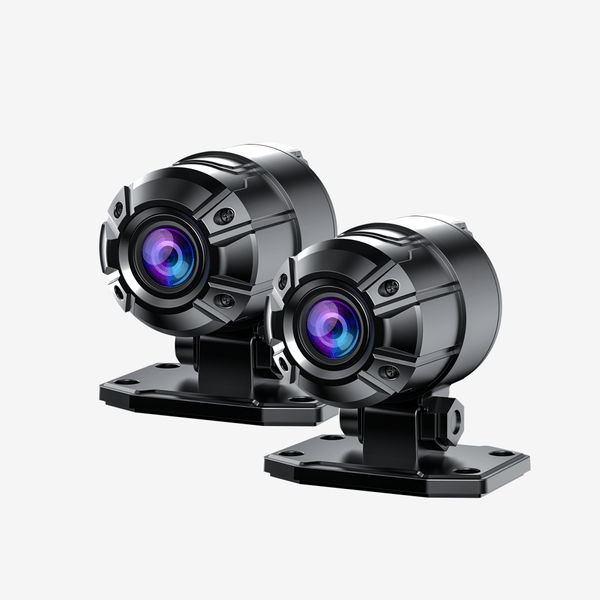
Cameras, dashcam, recording, night vision. Optional dual Sony 1080p front/rear dashcam, 30 fps, color night vision, zinc alloy housings. Continuous loop recording (1/3/5 min), emergency video lock via 5-axis gyroscope, video encryption, parking monitoring, full-screen rear-view streaming as a digital mirror.
TPMS, blind spot radar. TPMS Bluetooth and radar/BSD available as optional accessories.
OTA updates and software support. OTA firmware updates (a recent update improved OTA stability, DVR split-screen settings, and system optimizations) and dedicated app for video preview, management, and download.
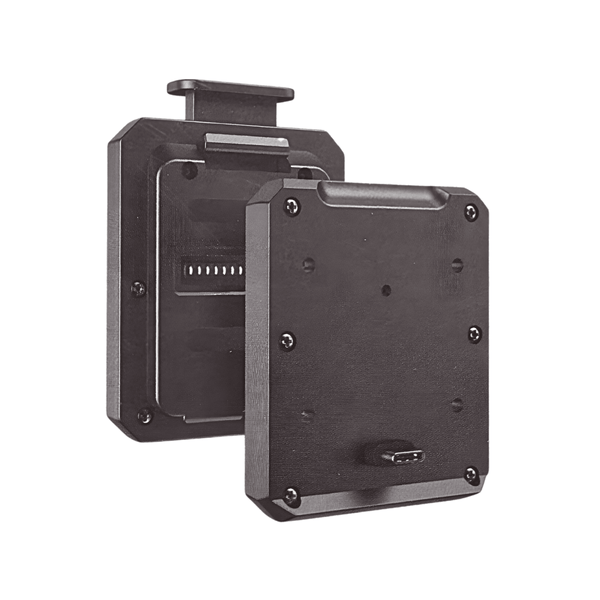
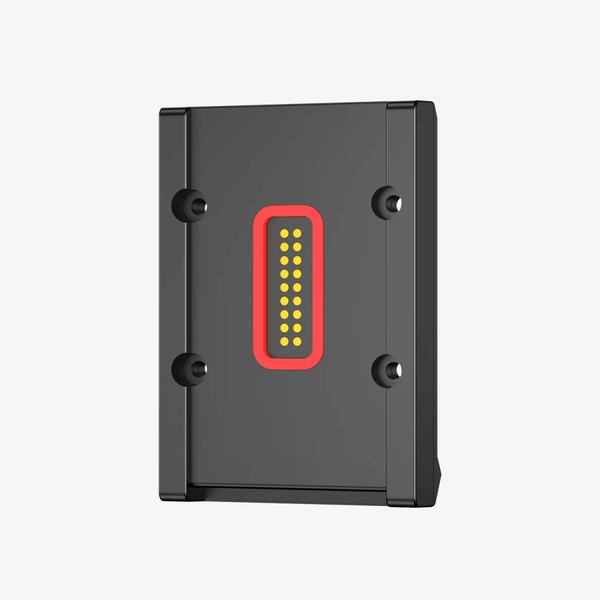
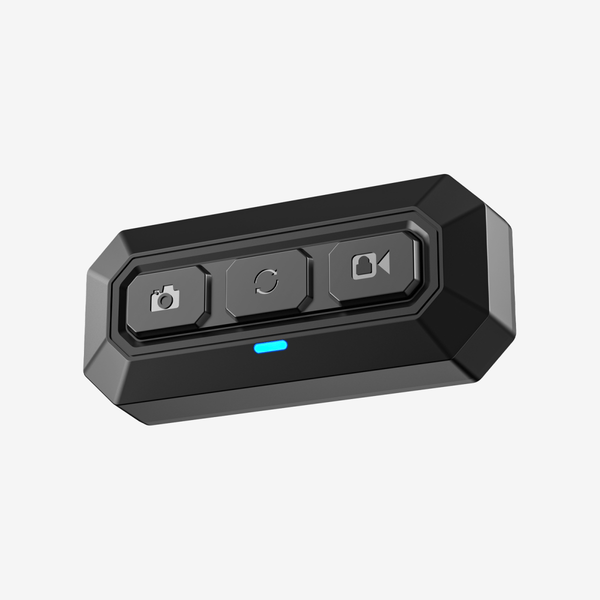
Accessories, installation, mounts. Wide catalog: BMW quick-release module, universal quick-release kit, additional cameras, TPMS sensors, handlebar Bluetooth remote control, handlebar/crossbar/fork stem mounts. Plug&play installation on BMW with original base; on other motorcycles via universal mount and connection to positive under key.
Price and warranty. On Endurrad €342 (list price €380), VAT included; accessories sold separately (e.g., BMW module ~€92, camera ~€95, pair of TPMS ~€47, remote control ~€47). 1-year warranty; in some markets, JADO promotes a free replacement within 1 year.
Pros: very bright display (1800 nits); integrated dual Sony dashcam with night vision; very deep BMW integration (data, Wonder Wheel, ESA); complete ecosystem (TPMS/BSD/remote control) from a single brand; competitive price for what it offers. Cons: young brand without multi-year track record; dashcam/TPMS/BSD are paid options (base price increases with full configuration); OEM data reading limitation on BMWs ≤2014; like all mirror devices, navigation depends on the phone.
Chigee AIO-6 LTE
History and philosophy. Chigee is a startup founded in April 2020 by motorcyclists with a background in consumer electronics; it grew from crowdfunding campaigns (the AIO-5 Lite on Indiegogo, the AIO-5 Play BMW on Kickstarter) to become one of the reference brands. Declared premium positioning — "the Apple of motorcycle displays," as reviewers often call it — with strong emphasis on screen quality, refined UI, and constant updates. The AIO-6 debuted at EICMA in Milan in November 2024.
Target audience. Advanced rider who wants data, safety, and connectivity: those looking for the most "smart" package (4G, telemetry, IMU, action-cam control) and willing to pay for it.
Materials and quality. Carefully crafted construction with independent shock-absorbing structure and anti-vibration system; four physical buttons (including long-press lock against accidental touches in the rain) plus glove-friendly touch. Declared water resistance IP67/IP68 (sources vary; an Italian retailer indicates IP68).
Operating system, speed, fluidity. CHIGEE OS 2 on a dual-core A53 processor. The UI is among the most praised in its class for cleanliness and responsiveness, with a design "around the rider." Navigation via CarPlay/Android Auto is, as always with mirror devices, handled by the phone.
Display, brightness, touchscreen. 6" IPS, 1280×720 resolution, "dual-side" automotive backlight. Brightness sources range between 2000 and 2300 nits depending on the page: in any case, at the top of its class. Dimensions 161×90.5×22 mm, weight 365 g.
Waterproof and durable. IP67/IP68; 12–18 V power supply.
Motorcycle compatibility. Universal (ball mount + 22–32 mm reducers) for all brands; for BMW with Nav preparation, Wonder Wheel control and data reading (optional OBD/CAN module) are available. A detail appreciated by GS owners: the AIO-6 connected to the phone does not interfere with the bike's TFT connection.
CarPlay / Android Auto / mirror / action-cam. Wireless CarPlay and Android Auto with automatic reconnection upon startup. It has no native apps: it mirrors. Control of action cams: Insta360 (X5/X4/ACE/ACE PRO2) and GoPro (Hero 11+); DJI not supported due to manufacturer's software restrictions.
Cameras, dashcams, night vision. Front/rear optional 1080p dashcams (with HDR; some sources cite 60 fps). The AIO-5 cameras are not compatible with the AIO-6: dedicated modules are required. Generous cables (105 cm front, 260 cm rear).
TPMS, blind spot radar. TPMS available; BSD via cameras; OBD reading of motorcycle parameters.
4G connectivity and security. This is the true specialty of the AIO-6 LTE: with a SIM, it offers real-time tracking, automatic emergency SOS (proprietary system that detects accidents and notifies a contact via 4G), live streaming, geofencing, and sentry mode. Bosch 6-axis automotive IMU with GPS-fused algorithm for lean angle measurement even in curves. Without a SIM, dashcam, BSD, and GPS recording remain active, but not 4G functions.
OTA updates and support. OTA via SD card (U3 recommended); the brand has a constant update rhythm and is among the most active in after-sales.
Accessories and installation. Universal and BMW quick-release, cameras, TPMS, OBD module, screen protectors. Typical installation 10 minutes for simple cases; longer with cameras/TPMS.
Price and warranty. Premium positioning: the base model starts around €400–500, but with cameras, TPMS, and accessories, it easily exceeds €600. In Italy, it is distributed by official retailers (including Endurrad). No integrated speaker and no internal battery: audio via headphones connected to the phone, power from the motorcycle.
Pros: Top-tier UI and display quality; 4G connectivity with SOS, tracking, and geofencing unique in its category; Bosch IMU with lean angle; mature and frequently updated ecosystem; excellent BMW integration. Cons: Most expensive once configured; many key features (cameras, TPMS, 4G) are options/subscriptions; no internal speaker; 4G functions require a SIM; 1280×720 display resolution in line with competitors, not superior.
Carpuride W603B
History and philosophy. Carpuride is a brand with a very wide range, known for its aggressive pricing and the number of models (5", 6", 7", basic, Pro, BS versions with Wonder Wheel, dashcam). It originated from the experience of portable CarPlay displays for cars, then adapted for motorcycles. The philosophy is "essential functionality at the right price."
Target. Those who want reliable CarPlay/Android Auto without frills and without spending too much; in the specific case of the W603B, the BMW rider with original navigator preparation who desires a wired controller and maximum simplicity.
Materials and quality. Functional plastic construction; IP67; light sensor for automatic brightness; screen lock with long-press for rain. Quality is adequate for the price — some reviews report imperfect finishes on the received unit, others praise it as "impeccable" after months of use: batch variability is the flip side of economical positioning.
Operating system, speed, fluidity. Pure mirroring device: no advanced "smart" OS, just the projected CarPlay/Android Auto interface. Good responsiveness for basic use; there's no telemetry, native apps, or advanced features on the W603B (which is the "wired controller + auto-brightness" variant).
Display, brightness, touchscreen. IPS 6.3", 1440×720 resolution (some specs indicate 1560×720), peak brightness around 1000 nits — readable in sunlight but significantly lower than JADO and Chigee's 1800–2300 nits. Glove-friendly capacitive touch.
Waterproof and durable. IP67; operating range −20 °C ↔ +60 °C (some Amazon listings indicate up to +80 °C).
Motorcycle compatibility. The W603B is designed for BMW with original navigator mounts (R1200GS, R1250GS, R1300GS, S1000XR, and others), but can also use universal mounts on any motorcycle. Note: the W603B offers wired controller + auto-brightness, but not Wonder Wheel control or motorcycle data reading, which in the Carpuride catalog are reserved for the BS series (W502BS/W602BS/W702BS). Declared incompatibility with HarmonyOS and some Android devices.
CarPlay / Android Auto / mirror. Wireless CarPlay and Android Auto; Bluetooth 5.0; Wi-Fi 5G. Audio only via Bluetooth to headset/helmet: no integrated speaker.
Cameras, dashcams, TPMS, radar. No dashcam on the W603B (for video recording, the W603D with dual 1080p cameras is needed). No TPMS or radar on this model.
Updates and support. Software/logo updates via small-capacity TF card; support ecosystem present but more "basic" compared to Chigee.
Accessories and installation. BMW or universal mount, wired controller included. Installation 15–30 minutes; plug&play on BMW with original mount. The W603B is powered by connecting to the motorcycle battery.
Price and warranty. It's the most economical option in the group, approximately €180–230. Warranty declared up to 2 years on the official website (some marketplace listings indicate 12 months).
Pros: Unbeatable price; plug&play on BMW with wired controller; IP67 and auto-brightness; total simplicity. Cons: 1000 nits brightness, the lowest in the group; no dashcam/TPMS/telemetry/Wonder Wheel on this model; no speaker; variable batch quality; virtually no "smart" functions.
RiderNav R7X
History and philosophy. RiderNav is a young brand (Shenzhen) that gained attention with the R7M, a 7" display designed specifically for the BMW Nav cradle. The R7X, launched for presale in April 2026, is its universal version: same screen and same OS, but with a quick-release mount suitable for any motorcycle. Philosophy: "a serious, purpose-built display, not a phone attached to the handlebars," but accessible to everyone.
Target. Those who want a large, bright, simple, and robust 7-inch display at an aggressive launch price, without being tied to a BMW platform.
Materials and quality. Robust construction with IP69K certification (high-pressure jets, mud); range −20 °C ↔ +70 °C. CE, FCC, TELEC certifications. Being a brand new product, long-term independent reviews are still lacking.
Operating system, speed, fluidity. RN OS, a "rider-tuned" interface designed for gloves, reflections, and movement. As a mirror, navigation is handled by the phone; however, the R7X reads its own GPS and basic motorcycle data (it does not access the CAN-bus, so no proprietary RPM, gear, or lean angle).
Display, brightness, touchscreen. IPS 7" HD, 1200 nits, optically bonded (laminated glass) to reduce reflections and improve sharpness. It's the largest in the group along with the Carpuride W702; intermediate brightness (more than the Carpuride 6.3", less than JADO/Chigee).
Waterproof and durable. IP69K, among the best in its category.
Motorcycle compatibility. Universal: quick-release mount for Φ22–32 mm handlebars, compatible with Harley, Honda, Yamaha, Kawasaki, Suzuki, KTM, Triumph, and "99% of motorcycles." Note: the R7X does not mount on the BMW Nav cradle (the R7M is needed for that) and does not read the motorcycle's CAN data.
CarPlay / Android Auto / mirror / action-cam. Wireless CarPlay and Android Auto with automatic reconnection; action cam control for DJI, Insta360, and GoPro directly from the display (an advantage over Chigee, which excludes DJI).
Cameras, dashcams, night vision. No integrated dashcam or dedicated camera modules: the R7X is a navigation display, not a video recording system.
TPMS, radar. TPMS available only via proprietary RiderNav module (factory TPMS are not compatible). No BSD radar.
OTA updates and support. Continuous OTA updates that add functions; this is one of the points the brand emphasizes most.
Accessories and installation. Universal quick-release included, optional ADV handlebar mount, TPMS module. Requires power cabling to the battery (or a switched live line). No speaker: audio via headphones.
Price and warranty. List price $559, launch price $350 for early orders (≈ €330–520 depending on exchange rate and promotions). 24-month warranty in launch promo (standard typically 12 months).
Pros: 7" optically bonded screen, large and clearly legible; IP69K; action-cam control including DJI; universal and quick-release; very competitive launch price. Cons: No dashcam, no motorcycle data/CAN reading, no BMW Wonder Wheel (R7M needed for that); TPMS only with proprietary module; no speaker; brand new product, reliability history yet to be established.
Garmin Zumo XT2
History and philosophy. Garmin is the historical benchmark for GPS navigation, with decades of experience. The Zumo XT2 (2023) is the flagship motorcycle model in its range: a standalone navigator, not a CarPlay display. Its philosophy is the opposite of mirror devices: complete independence from the phone, on-board maps, military-grade ruggedness.
Target. The adventure/touring traveler who wants standalone and reliable navigation even off-grid, with offline, topographical, and satellite maps, and who doesn't want to depend on data coverage or phone battery.
Materials and quality. MIL-STD-810 construction and IPX7 waterproof rating; hardware universally praised for ruggedness. The Achilles' heel, as many reviews point out, is the software: steep learning curve, outdated interface compared to smartphones, occasional charging/boot issues reported by users.
Operating system, speed, fluidity. Proprietary Garmin system. Not as fluid as a smartphone, but stable and self-sufficient. No CarPlay/Android Auto: this is the big differentiator.
Display, brightness, touchscreen. 6" sunlight-readable, ~1050 nits, HD, dual orientation (portrait/landscape), 15% larger than the previous XT. Glove-friendly touch. Brightness lower than top-tier mirror devices, but sufficient and well-calibrated.
Waterproof and durable. IPX7 (immersion up to 1 m for 30 min) + MIL-STD-810.
Motorcycle compatibility. Universal via Garmin mounts (handlebar, brake/clutch clamp, U-bolt). No proprietary data integration with motorcycle ECUs like on BMW-mode mirror devices.
Connectivity and navigation. Preloaded street, topographical, and 3D maps; BirdsEye satellite via Wi-Fi without subscription; 32 GB internal expandable to 256 GB via microSD; USB-C; Wi-Fi for updates; Bluetooth for helmet/headset and smartphone. Adventurous Routing (4 levels), Popular Paths, Ride Summaries, Group Ride Mobile (up to 20 riders via Tread app), and Group Ride Radio (accessory, no cellular coverage). Compatible with inReach satellite communicators (SOS, messaging), PowerSwitch, and BC 50 rearview camera. Free lifetime map updates.
Cameras/dashcams, TPMS, radar. No integrated dashcam (optional BC 50 rearview camera as an aid, not a dashcam). No native TPMS/radar.
Battery. Internal battery with ~3.5–6 hours of autonomy — the only one in the group that functions (for a while) even disconnected from the motorcycle.
Price and warranty. List price $599.99 (range €500–560 in Europe; over CAD 869 in some markets). Standard Garmin warranty.
Pros: Standalone navigation with offline, topo, and satellite maps; MIL-STD-810 ruggedness; internal battery; Adventurous Routing and Group Ride; inReach/PowerSwitch ecosystem; free lifetime map updates; brand with unparalleled history. Cons: No CarPlay/Android Auto; software with a steep learning curve and outdated UI; no dashcam/TPMS; brightness (1050 nits) lower than top mirror devices; most expensive among "pure navigators"; some users complain about bugs and charging issues.
Additional Entrants (Summary)
Carpuride W702 / W702 Pro. Same philosophy as the W603B but with a 7" screen: more "real estate" for maps, much loved by tourists. The W702 Pro adds auto-brightness, compass, barometer, dual Bluetooth (useful for passenger intercom); the BS series adds Wonder Wheel and motorcycle data on BMWs. Metal mounting appreciated for solidity. No dashcam on basic versions (video recording is on other models). Indicative price €250–350. Excellent compromise between large screen and price.
Aoocci C6 Pro. All-in-one 6.25", 1000 nits with auto-brightness, dual 1080p 30 fps dashcam with loop and emergency recording via G-sensor. An alternative to JADO for those who want integrated video recording at a low price; ecosystem and diffusion are lower than the big players.
Chigee AIO-5 Lite (5" alternative). Already includes Sony IMX307 cameras and BSD in the price (~£449), 5" screen. A sensible choice for bikes where 6"–7" is cumbersome.
Carpe Iter V4C (Native Android). Ruggedized ~2000 nit tablet running Android, directly running MyRoute-App, OsmAnd, Calimoto, Google Maps, etc., without mirroring. A separate category, preferred for hardcore off-roading; ~€589.
Technical Comparison (Over 70 Features)
Legend: ✔ present · ✖ absent · opt. optional/accessory · n.d. not declared. Where sources diverge, both values are reported.
| # | Feature | JADO S6 | Chigee AIO-6 LTE | Carpuride W603B | RiderNav R7X | Garmin Zumo XT2 | Carpuride W702 Pro | Aoocci C6 Pro |
|---|---|---|---|---|---|---|---|---|
| 1 | Display diagonal | 6" | 6" | 6.3" | 7" | 6" | 7" | 6.25" |
| 2 | Panel technology | IPS | IPS | IPS | IPS (bonded) | HD | IPS | IPS |
| 3 | Resolution | n.d. | 1280×720 | 1440×720 | HD (n.d.) | HD | n.d. | n.d. |
| 4 | Brightness (nit) | ~1800 | 2000–2300 | ~1000 | 1200 | ~1050 | n.d. | ~1000 |
| 5 | Dual orientation | ✖ | ✖ | ✖ | ✖ | ✔ | ✖ | ✖ |
| 6 | Glove-friendly touch | ✔ | ✔ | ✔ | ✔ | ✔ | ✔ | ✔ |
| 7 | Physical buttons | opt. (remote) | ✔ (4) | ✖ (controller) | ✖ | ✔ | ✖ (controller) | ✖ |
| 8 | Operating system | Linux | CHIGEE OS 2 | pure mirror | RN OS | Garmin OS | pure mirror | pure mirror |
| 9 | Processor | n.d. | Dual-core A53 | n.d. | n.d. | n.d. | n.d. | n.d. |
| 10 | RAM | 4 GB | n.d. | n.d. | n.d. | n.d. | n.d. | n.d. |
| 11 | Internal storage | 128 GB eMMC | n.d. | ✖ | ✖ | 32 GB | ✖ | n.d. |
| 12 | microSD expansion | up to 256 GB | ✔ (SD) | ✔ (update only) | ✔ (OTA) | up to 256 GB | ✔ | ✔ (64 GB incl.) |
| 13 | Wireless CarPlay | ✔ | ✔ | ✔ | ✔ | ✖ | ✔ | ✔ |
| 14 | Wireless Android Auto | ✔ | ✔ | ✔ | ✔ | ✖ | ✔ | ✔ |
| 15 | HiCar (Huawei) | ✔ | n.d. | ✖ | n.d. | ✖ | n.d. | n.d. |
| 16 | Offline autonomous navigation | ✖ | ✖ | ✖ | ✖ | ✔ | ✖ | ✖ |
| 17 | Onboard proprietary GPS | ✔ (GNSS 5) | ✔ | ✖ | ✔ | ✔ | ✖ | n.d. |
| 18 | Topographic/satellite maps | ✖ | ✖ | ✖ | ✖ | ✔ | ✖ | ✖ |
| 19 | Bluetooth | 5.x | ✔ | 5.0 | ✔ | ✔ (BLE) | ✔ (dual) | ✔ |
| 20 | Dual-band Wi-Fi | ✔ | ✔ | ✔ (5G) | ✔ | ✔ | ✔ | ✔ |
| 21 | 4G/LTE connectivity | ✖ | ✔ (SIM) | ✖ | ✖ | ✖ | ✖ | ✖ |
| 22 | Emergency SOS | opt. | ✔ (4G) | ✖ | ✖ | ✔ (via inReach) | ✖ | ✖ |
| 23 | Anti-theft tracking/geofencing | ✖ | ✔ (4G) | ✖ | ✖ | ✖ | ✖ | ✖ |
| 24 | Integrated/modular dashcam | ✔ opt. (Sony) | ✔ opt. | ✖ (→W603D) | ✖ | ✖ | ✖ | ✔ (included) |
| 25 | Dual front/rear camera | ✔ opt. | ✔ opt. | ✖ | ✖ | ✖ | ✖ | ✔ |
| 26 | Video resolution | 1080p 30fps | 1080p (HDR) | — | — | — | — | 1080p 30fps |
| 27 | Night vision | ✔ (color) | n.d. | — | — | — | — | n.d. |
| 28 | Loop recording | ✔ (1/3/5) | ✔ | — | — | — | — | ✔ |
| 29 | Emergency lock (G-sensor) | ✔ (5-axis) | ✔ | — | — | — | — | ✔ (G-sensor) |
| 30 | Streaming rear-view (mirror) | ✔ | ✔ | ✖ | ✖ | (BC50 opt.) | ✖ | ✔ |
| 31 | TPMS | opt. | opt. | ✖ | opt. (proprietary) | ✖ | opt. (BS/Pro) | n.d. |
| 32 | Radar/BSD blind spot | opt. | ✔ (camera) | ✖ | ✖ | ✖ | ✖ | ✖ |
| 33 | Motorcycle data reading (CAN/OBD) | ✔ (BMW) | ✔ (OBD opt.) | ✖ (→BS series) | ✖ | ✖ | ✔ (BS series) | ✖ |
| 34 | Lean angle (IMU) | ✖ | ✔ (Bosch 6-axis) | ✖ | ✖ | ✖ | ✖ | ✖ |
| 35 | Action cam control | ✖ | ✔ (no DJI) | ✖ | ✔ (incl. DJI) | ✖ | ✖ | ✖ |
| 36 | Universal quick-release | ✔ opt. | ✔ opt. | ✖ | ✔ (incl.) | ✖ | ✖ | n.d. |
| 37 | BMW Nav quick-release | ✔ opt. | ✔ opt. | ✔ (BMW base) | ✖ (→R7M) | ✖ | ✔ (BS series) | ✖ |
| 38 | BMW Wonder Wheel | ✔ | ✔ | ✖ | ✖ | ✖ | ✔ (BS) | ✖ |
| 39 | BMW ESA control | ✔ | n.d. | ✖ | ✖ | ✖ | ✖ | ✖ |
| 40 | Integrated speaker | ✔ | ✖ | ✖ | ✖ | ✖ (BT audio) | ✖ | n.d. |
| 41 | Internal battery | ✖ | ✖ | ✖ | ✖ | ✔ (3.5–6h) | ✖ | ✖ |
| 42 | Water resistance | IP69K | IP67/IP68 | IP67 | IP69K | IPX7 | IP67 | n.d. |
| 43 | Military standard | ✖ | ✖ | ✖ | ✖ | MIL-STD-810 | ✖ | ✖ |
| 44 | Min. operating temp | −20 °C | n.d. | −20 °C | −20 °C | n.d. | −20 °C | n.d. |
| 45 | Max. operating temp | +70 °C | +85 °C (TPMS) | +60/80 °C | +70 °C | n.d. | +60 °C | n.d. |
| 46 | Light sensor/auto-brightness | ✔ (5 levels) | ✔ | ✔ | n.d. | ✔ | ✔ | ✔ |
| 47 | Rainproof screen lock | n.d. | ✔ (long-press) | ✔ (long-press) | n.d. | n.d. | ✔ | n.d. |
| 48 | OTA updates | ✔ | ✔ | limited | ✔ | ✔ (Wi-Fi) | limited | ✔ |
| 49 | Companion app | ✔ | ✔ (Chigee Go) | ✖ | n.d. | ✔ (Tread) | ✖ | ✔ |
| 50 | iOS compatibility | ✔ | ✔ | ✔ (iOS 10+) | ✔ | ✔ (BT) | ✔ | ✔ |
| 51 | Android compatibility | ✔ | ✔ | ✔ (11+) | ✔ | ✔ (BT) | ✔ | ✔ |
| 52 | HarmonyOS limitations | n.d. | n.d. | ✖ not compatible. | n.d. | — | ✖ not compatible. | n.d. |
| 53 | BMW compatibility | ✔✔ (data/ESA) | ✔✔ (data) | ✔ (base) | ✖ (→R7M) | ✔ (bracket) | ✔✔ (BS) | ✔ (bracket) |
| 54 | Japanese motorcycle compatibility | ✔ | ✔ | ✔ | ✔ | ✔ | ✔ | ✔ |
| 55 | KTM compatibility | ✔ | ✔ | ✔ | ✔ | ✔ | ✔ | ✔ |
| 56 | Ducati compatibility | ✔ | ✔ | ✔ | ✔ | ✔ | ✔ | ✔ |
| 57 | Triumph compatibility | ✔ | ✔ | ✔ | ✔ | ✔ | ✔ | ✔ |
| 58 | Harley compatibility | ✔ | ✔ | ✔ | ✔ | ✔ | ✔ | ✔ |
| 59 | Aprilia compatibility | ✔ | ✔ | ✔ | ✔ | ✔ | ✔ | ✔ |
| 60 | Moto Guzzi compatibility | ✔ | ✔ | ✔ | ✔ | ✔ | ✔ | ✔ |
| 61 | Power from motorcycle battery | ✔ | ✔ (12–18V) | ✔ | ✔ | ✔ | ✔ | ✔ |
| 62 | Ease of installation | medium | medium | easy (BMW) | easy | easy | easy | medium |
| 63 | Group ride/rider tracking | ✖ | ✔ (4G) | ✖ | ✖ | ✔ (up to 20) | ✖ | ✖ |
| 64 | Speed camera/curve alert | via app | via app | via app | via app | ✔ (native) | via app | via app |
| 65 | Satellite SOS compatible | ✖ | (proprietary 4G) | ✖ | ✖ | ✔ (inReach) | ✖ | ✖ |
| 66 | 12V electronics control | ✖ | ✖ | ✖ | ✖ | ✔ (PowerSwitch) | ✖ | ✖ |
| 67 | Handlebar remote control | ✔ opt. | opt. | ✔ (wired) | ✖ | ✖ | ✔ (wired) | ✔ (remote) |
| 68 | Accessory ecosystem | extensive | extensive | medium | growing | very extensive | medium-extensive | medium |
| 69 | Brand maturity/history | young | growing | medium | very new | very high | medium | low |
| 70 | Declared certifications | IP69K | IP67/68, Bosch IMU | IP67 | CE/FCC/TELEC, IP69K | MIL-STD-810, IPX7 | IP67 | n.d. |
| 71 | Warranty | 1 year | var. | 1–2 years | 1–2 years | Garmin standard | 1–2 years | n.d. |
| 72 | Indicative price | ~€342 | ~€400–600+ | ~€180–230 | ~€330–520 | ~€500–560 | ~€250–350 | ~€300–400 |
Benchmark (scores 1–10, editorial comparative evaluation)
The following scores are a reasoned comparative evaluation based on declared specifications and documented feedback, not laboratory measurements. They serve to guide, not to declare absolute truths.
| Category | JADO S6 | Chigee AIO-6 LTE | Carpuride W603B | RiderNav R7X | Garmin Zumo XT2 | Carpuride W702 Pro | Aoocci C6 Pro |
|---|---|---|---|---|---|---|---|
| Display | 9 | 9 | 6 | 8 | 7 | 7 | 6 |
| Fluidity | 8 | 9 | 7 | 8 | 6 | 7 | 6 |
| Hardware | 8 | 9 | 6 | 8 | 9 | 7 | 6 |
| Software | 7 | 9 | 6 | 7 | 6 | 6 | 6 |
| Features | 9 | 10 | 5 | 6 | 7 | 6 | 7 |
| Dashcam | 8 | 8 | — | — | — | — | 7 |
| Navigation | 7 | 7 | 7 | 7 | 10 | 7 | 7 |
| Ease of use | 8 | 8 | 9 | 8 | 6 | 8 | 7 |
| Updates | 8 | 9 | 5 | 8 | 7 | 5 | 6 |
| Ecosystem | 8 | 9 | 6 | 6 | 9 | 7 | 5 |
| Accessories | 9 | 9 | 6 | 6 | 9 | 7 | 5 |
| Robustness | 9 | 8 | 7 | 9 | 10 | 7 | 6 |
| Value for money | 9 | 7 | 9 | 8 | 6 | 8 | 7 |
| BMW experience | 9 | 9 | 6 | 3 | 6 | 8 | 5 |
| Adventure Experience | 8 | 8 | 6 | 8 | 10 | 7 | 6 |
| Touring Experience | 8 | 9 | 7 | 8 | 9 | 8 | 7 |
| Off-road Experience | 8 | 8 | 6 | 8 | 10 | 6 | 6 |
| Urban Experience | 9 | 9 | 8 | 8 | 6 | 8 | 8 |
| Indicative Average | 8.3 | 8.6 | 6.6 | 7.3 | 7.8 | 7.0 | 6.3 |
The emerging picture is consistent with their respective philosophies: Chigee excels in software, features, and connectivity; Garmin dominates in autonomous navigation, robustness, and off-road capabilities; JADO S6 offers the most balanced package of features, dashcam, and price, with the best BMW integration along with Chigee; Carpuride W603B wins on simplicity and price but suffers from a lack of features; RiderNav R7X impresses with its screen, robustness, and launch price but is penalized by the absence of a dashcam and BMW integration.
In-depth Technical Analysis
Processors, RAM, storage. Only two devices declare their computing hardware: Chigee (dual-core A53, CHIGEE OS 2) and JADO (Linux, 4 GB RAM, 128 GB eMMC). Other mirrors do not publish SoC/RAM because, being projection terminals, the "brain" remains the phone: the experience depends more on the quality of the Wi-Fi/BT chip and firmware optimization than on raw local power. Garmin is a case apart: 32 GB internal storage is used for maps and tracks, as it is an autonomous navigator.
GPS Chip. JADO declares a 5-constellation GNSS (GPS/BeiDou/Galileo…), Chigee integrates high-precision GPS fused with Bosch IMU, RiderNav and Garmin have their own receiver. The Carpuride W603B, in fact, relies on the phone's GPS for navigation. A local GPS is especially important for geolocating dashcam recordings and for telemetry accuracy.
Wi-Fi and Bluetooth. All offer dual-band 2.4/5 GHz Wi-Fi (essential for wireless mirroring latency) and Bluetooth (5.0 on Carpuride, 5.x on JADO). The dual Bluetooth on the Carpuride W702 Pro allows simultaneous phone + intercom connection, convenient for passenger audio.
Brightness. This is perhaps the most important parameter for daytime safety. Hierarchy: Chigee 2000–2300 nits and JADO ~1800 nits at the top; RiderNav 1200 nits and Garmin ~1050 nits in the intermediate range (Garmin, however, has a notoriously well-calibrated panel); Carpuride ~1000 nits is the lowest. Above 1000 nits, all remain readable in the sun, but the margin of the top performers is noticeable on the brightest days and with dark visors.
Cameras and video codecs. Dashcams (JADO Sony 1080p, Chigee 1080p HDR, Aoocci 1080p) typically record in MP4 H.264 at 30 fps, with loop and G-sensor lock. JADO emphasizes color night vision; Chigee emphasizes HDR quality. RiderNav and Garmin do not record (RiderNav controls external action cameras; Garmin supports the BC 50 rearview camera as an aid, not as a dashcam).
Software stability and boot speed. The more refined mirrors (Chigee, JADO, RiderNav) boast fast boot times and automatic reconnection upon power-on. Chigee is the most praised for stability and update frequency; JADO has released targeted updates for OTA stability and split-screen; Garmin, though robust, is the most criticized for software bugs and learning curve.
Power consumption and operating temperatures. All are low-power and have low-voltage protection (Chigee disconnects below 12 V to avoid draining the battery). Wide operating ranges (−20 °C ↔ +60/70 °C). Only Garmin has an internal battery (3.5–6 h), useful for planning when the motorcycle is off.
IP Protection. Severity hierarchy: IP69K (JADO, RiderNav) > IP68 (some Chigee sources) > IP67 (Carpuride, other Chigee sources) > IPX7 (Garmin, which also adds MIL-STD-810 for mechanical resistance). For real-world use, all withstand rain and normal washing; IP69K provides an extra margin with pressure washers and mud.
Mount Quality. An underestimated but crucial point against vibrations. The Carpuride W702 is praised for its solid metal mounting; RiderNav focuses on the universal quick-release; JADO and Chigee offer dedicated quick-releases (universal and BMW). A poor mount nullifies even the best display: it's worth investing in quality anti-vibration brackets, especially on twin-cylinder motorcycles.
Software Analysis
Which software is more stable? For stability and maturity, Chigee OS 2 is the benchmark in the mirror category, closely followed by JADO's Linux and RiderNav's RN OS. Garmin is stable but based on a different logic (autonomous navigator) and more criticized for bugs. Carpuride, being a pure mirror without advanced OS, "inherits" the stability of CarPlay/Android Auto: very little to manage, little that can break.
Which receives more updates? Chigee is the most active, with frequent updates that add features. RiderNav bases much of its promise on continuous OTAs. JADO updates regularly (OTA stability, DVR). Garmin updates maps (lifetime free) and firmware via Wi-Fi. Carpuride is the most static.
Which has the best UI? Chigee, for its cleanliness and elegance, is the one reviewers most often praise. For those who live with CarPlay/Android Auto, however, the most important UI is that of the phone's navigation app, which is identical across all mirrors.
Which is more intuitive? Paradoxically, the Carpuride W603B: it does one thing (project CarPlay/Android Auto with a wired controller) and does it without complications. At the opposite extreme, Garmin is the least immediate due to its learning curve.
Which offers the best ecosystem? A head-to-head between Garmin (inReach, PowerSwitch, BC 50, Group Ride Radio, Tread) on the navigation/adventure front and Chigee/JADO on the smart front (cameras, TPMS, BSD, 4G, action-cam control). It depends on what you mean by "ecosystem": explorer autonomy or tech rider connectivity.
Real-world experience in different conditions
This section does not describe a personal test over 20,000 km, which would be fictitious: it is a reasoned synthesis of what the specifications imply and what emerges from international reviews and owner feedback, condition by condition.
Direct sunlight. Here, brightness is everything. Chigee (2000–2300 nits) and JADO (1800 nits) offer the greatest margin against glare; RiderNav (1200 nits, laminated glass) significantly reduces reflections; Garmin (1050 nits) compensates with a well-calibrated panel; Carpuride (1000 nits) remains readable but is the most challenged on the brightest days.
Rain. All can withstand it. JADO and RiderNav (IP69K) provide maximum peace of mind in downpours and washes; models with rain screen lock (Chigee, Carpuride) prevent accidental touches when raindrops "travel" across the touch screen. Those who ride extensively in the rain appreciate physical buttons (Chigee) or a wired controller (Carpuride).
Cold. Range up to −20 °C on almost all of them. The capacitive touch with thick winter gloves is the real limit: here, physical controls/Wonder Wheel make more of a difference than the operating temperature.
Heat. Dedicated displays avoid the thermal throttling typical of smartphones. The real heat risk, if anything, concerns the phone powering the mirroring: keeping it in the shade (in a bag/pouch) is the winning move — and that's exactly what these systems allow.
Dirt roads / off-road. Garmin is in its element: offline maps, MIL-STD-810 robustness, independence from the phone. Among the mirrors, RiderNav (IP69K, 7") and JADO/Chigee perform well, with a caveat: in areas without data coverage, navigation via CarPlay/Android Auto only works if you have downloaded offline maps in the phone app.
Highway. An easy context for everyone: large screen, automatic reconnection, voice control. The 7" (RiderNav, Carpuride W702) provides the best at-a-glance readability at high speeds.
Touring. Complete and connected systems win: Chigee (4G, data, SOS, IMU) and JADO (dashcam + BMW + price). Garmin remains unbeatable for those planning long routes with Adventurous Routing and Group Ride. The 7" helps on long legs.
Urban use. Here, mirrors shine: live traffic from Waze/Google Maps, instant POI search, notifications, music. JADO/Chigee/Carpuride are ideal in the city; Garmin, geared towards adventure, is less "urban."
Long journeys. The decisive factor becomes ecosystem reliability: Garmin for off-grid autonomy; Chigee for the connected safety package (4G SOS); JADO for having navigation + dashcam + motorcycle data in a single device that reduces bulk.
Why display size truly changes the riding experience
Diagonal size is not an aesthetic detail: it changes the amount of time your gaze is off the road and the effort required to read.
5" (e.g., Chigee AIO-5 Lite). Compact, ideal for naked bikes, small motorcycles, and cluttered cockpits. Less "real estate" for maps, but the smaller footprint is a real advantage on some motorcycles. Rider consensus is that 5" is the minimum useful size.
6" (JADO S6, Chigee AIO-6, Garmin XT2). The most voted balance point by the community: readable maps, manageable bulk, doesn't obstruct instrumentation. For most motorcyclists, it's the "right by default" choice.
6.2"–6.3"–6.25" (Carpuride W603B, Aoocci C6 Pro). Practically the same experience as the 6", with a few extra millimeters of usable area. Marginal differences in real use.
6.5". A less represented mid-range size among the big players; useful for those who want a bit more surface without going all the way to 7".
7" (RiderNav R7X, Carpuride W702). Maximum at-a-glance readability, particularly appreciated when standing on the pegs off-road and at high speeds on the highway. The downside: many reviewers find it almost too large for most motorcycles, with the risk of bulk and obstruction of the view or instrumentation. Perfect for large adventure and touring motorcycles, less so for compact naked and sport bikes.
Conclusion on size: 6" for the majority, 7" for those who prioritize readability and do a lot of dirt/touring on large motorcycles, 5" for those with limited space or who want discretion. The size should be chosen on the motorcycle, not in abstract: measure the space on your cockpit before deciding.
Exclusive in-depth analysis: JADO S6
We dedicate a chapter to the JADO S6 because, among the complete mirrors, it concentrates the most functions in a single product at a competitive price. Let's analyze it point by point, without absolutes: every strength is justified, every limitation is stated.
6" Display and brightness. The 6" IPS panel with brightness up to ~1800 nits is, on paper, among the brightest in its category, second only to the Chigee. The automatic 5-level adjustment and light sensor handle the day/night transition and tunnels well. It is a concrete strength for daytime safety.
Dual Sony dashcam. The integration of a dual dashcam with Sony sensors (front/rear, 1080p 30 fps) with color night vision is what distinguishes the JADO from most pure mirrors (Carpuride W603B, RiderNav, Garmin do not record). In a context where motorcyclists are often at a disadvantage in legal matters, having an integrated "black box" — with loop recording, emergency lock on a 5-axis gyroscope, and video encryption — is a real value. It should be noted that the cameras are optional: they affect the final price.
Front/rear recording and streaming rear-view. In addition to continuous recording, the full-screen streaming rear-view acts as a digital mirror: useful off-road when mirrors become unusable while standing on the pegs, or in traffic.
BMW support, Wonder Wheel, CAN-BUS. The dedicated BMW version is the real ace: quick-release module on the original navigator base, native reading of motorcycle data (speed, RPM, gear, fuel, temperature, pressure), Wonder Wheel control, and ESA management. This level of integration is comparable to Chigee and superior to Carpuride W603B/RiderNav R7X. A stated and important limitation: on BMWs ≤2014, direct OEM reading is not supported (only via cable).
Internal memory and system speed. The Linux system with 4 GB of RAM and 128 GB of high-speed eMMC (official JADO data) is responsive according to users and reviewers. The 128 GB is a generous endowment for the category: it translates into many hours of dashcam recording available before needing expansion, which goes up to 256 GB via TF card. This is one of the parameters where the JADO offers more margin compared to mirrors that rely solely on microSD.
Robustness and build quality. High-strength polymer shell, zinc alloy cameras, IP69K: the perceived robustness is praised in reviews. However, it lacks the multi-year track record that Garmin or, to a lesser extent, Chigee have: it is a young brand, and long-term reliability is still being built.
Mounts, sensors, TPMS, BSD radar. Extensive ecosystem: BMW and universal quick-release, handlebar Bluetooth remote, optional TPMS and BSD radar. In full configuration, the JADO becomes a true control center, but the cost increases accordingly.
OTA updates and quality/price. Regular OTAs (with targeted updates for stability and DVR) and a price of €342 (list price €380) place the JADO in a very favorable quality/price ratio for what it offers: few devices provide a bright display, integrated dual dashcam, and deep BMW integration at this price point.
In summary, why it is among the most complete (without absolutism). The JADO S6 is not "the best at everything": Chigee surpasses it in UI, 4G, and IMU; Garmin in off-grid autonomy. But if the criterion is how many valuable functions it concentrates in a single product for the same cost — top bright display, dual Sony dashcam, BMW integration with data/Wonder Wheel/ESA, optional TPMS and BSD, OTA — then the JADO S6 is, objectively, among the most complete proposals in its price range. It is this completeness, not absolute superiority, that is its strongest argument.
Final Ranking
Indicative rankings, based on the comparative analysis in this guide. The "best" one is still the one that suits your motorcycle and your usage.
TOP 10 overall (overall balance) 1. Chigee AIO-6 LTE 2. JADO S6 3. Garmin Zumo XT2 4. RiderNav R7X 5. Carpuride W702 Pro 6. Carpuride W603B 7. Aoocci C6 Pro 8. Chigee AIO-5 Lite 9. Carpe Iter V4C 10. (spot open to new entrants 2026)
TOP 5 quality/price 1. Carpuride W603B 2. JADO S6 3. RiderNav R7X (launch price) 4. Carpuride W702 Pro 5. Aoocci C6 Pro
TOP BMW (data/Wonder Wheel integration) 1. JADO S6 (BMW version) 2. Chigee AIO-6 LTE 3. Carpuride BS series (W702BS)
TOP Adventure 1. Garmin Zumo XT2 2. Chigee AIO-6 LTE 3. RiderNav R7X
TOP Touring 1. Chigee AIO-6 LTE 2. Garmin Zumo XT2 3. JADO S6
TOP Off-road 1. Garmin Zumo XT2 2. RiderNav R7X 3. Chigee AIO-6 LTE
TOP for travelers (connected, safety) 1. Chigee AIO-6 LTE (4G SOS, tracking) 2. Garmin Zumo XT2 (with inReach) 3. JADO S6
TOP for recording journeys (dashcam) 1. JADO S6 (dual Sony, night vision) 2. Chigee AIO-6 LTE 3. Aoocci C6 Pro
TOP technology 1. Chigee AIO-6 LTE (4G, Bosch IMU, action-cam) 2. JADO S6 3. RiderNav R7X
TOP safety 1. Chigee AIO-6 LTE (SOS, BSD, IMU) 2. JADO S6 (dashcam, BSD, TPMS) 3. Garmin Zumo XT2 (inReach SOS, native alerts)
Conclusion: which device for which rider
Beginner. Carpuride W603B: affordable, simple, plug&play. Brings CarPlay/Android Auto to the handlebars without complications, ideal for understanding if a smart display is for you before investing more.
Traveler (connected touring). Chigee AIO-6 LTE: 4G with SOS and tracking, IMU, top UI and constant updates. If you seek pure off-grid autonomy, pair it with or prefer a Garmin Zumo XT2.
Commuter (city). JADO S6 or Carpuride W603B: live traffic, dashcam (JADO) for protection in urban chaos, phone safe in your pocket.
Maxi-enduro / extreme adventure. Garmin Zumo XT2 for offline maps and robustness; alternatively, RiderNav R7X (7", IP69K) or Chigee AIO-6 LTE, remembering to download offline maps.
BMW GS. JADO S6 BMW version or Chigee AIO-6 LTE: both read bike data and support the Wonder Wheel. The JADO adds an integrated dashcam and ESA management at an aggressive price.
Honda Africa Twin. JADO S6 or Chigee AIO-6 LTE (universal, with dashcam/data); for those who do a lot of remote off-roading, Garmin Zumo XT2 as a standalone navigator.
Ducati Multistrada. Chigee AIO-6 LTE or JADO S6: clean look, full features; the 6" does not weigh down the Multistrada's sporty-touring cockpit.
KTM Adventure. RiderNav R7X (7") or Chigee AIO-6 LTE: robustness and readability for adventure/rally use; Garmin if you prioritize off-grid.
Triumph Tiger. JADO S6 or Carpuride W702 Pro (7"): the first is complete and bright, the second has a large screen and good price.
Harley. Carpuride W702 Pro (7") or RiderNav R7X: large screen, easy mounting, immediate CarPlay/Android Auto experience for cruising.
In a nutshell: if you want the most complete and connected smart package, Chigee AIO-6 LTE; if you want the best balance of features/price with dashcam and BMW integration, JADO S6; if you want the most reliable off-grid standalone navigation, Garmin Zumo XT2; if you want to spend little and keep it simple, Carpuride W603B; if you want the 7" universal at the best launch price, RiderNav R7X.
Methodological and style note
This article was written with a journalistic approach, based on the model of technical sector publications, with an informative and non-promotional tone. Every statement is anchored to specifications declared by manufacturers or documented feedback; where data is uncertain or conflicting between sources (e.g., brightness and IP rating of the Chigee, or the guarantees of the Carpuride), we have noted it instead of arbitrarily choosing one. Benchmark scores are editorial comparative evaluations, not laboratory measurements. The stated objective – the most complete and honest comparison in Italian for this category – relies precisely on this transparency: a trusting reader is a returning reader, and a buying reader.


Share:
Off-road motorcycle air filter: how to choose it