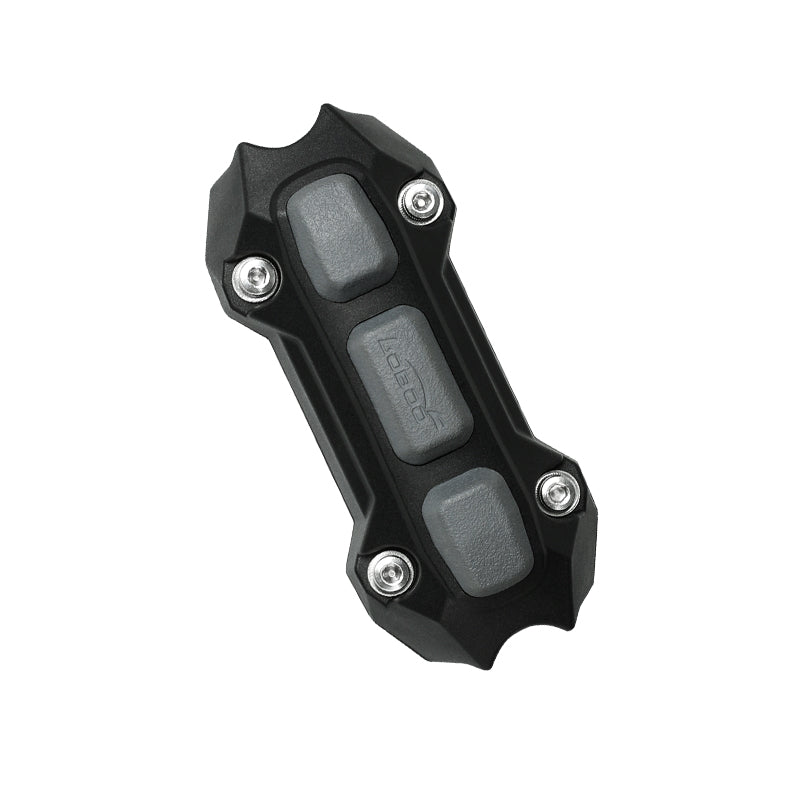
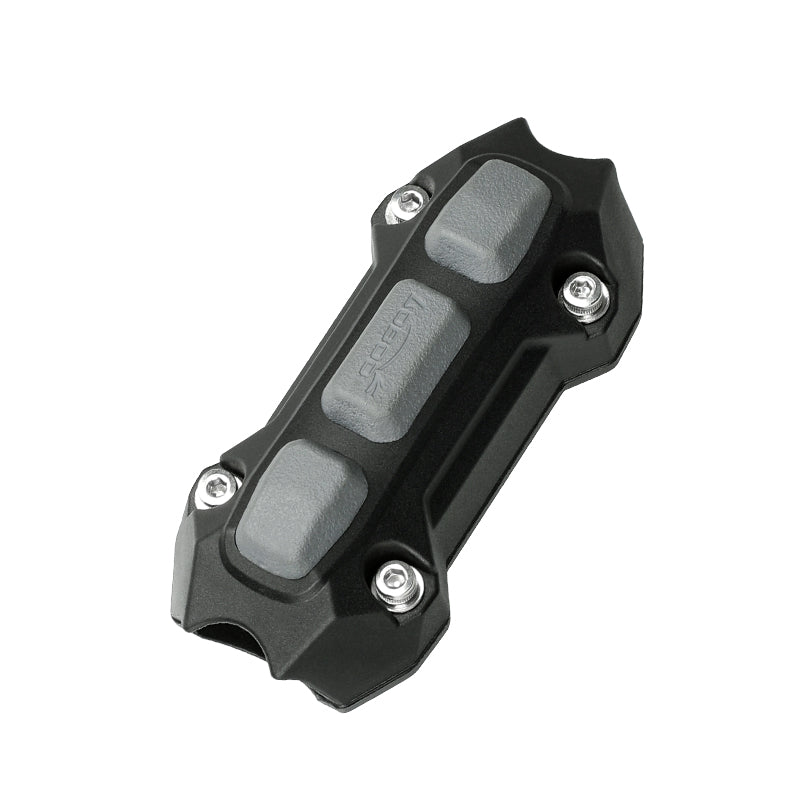
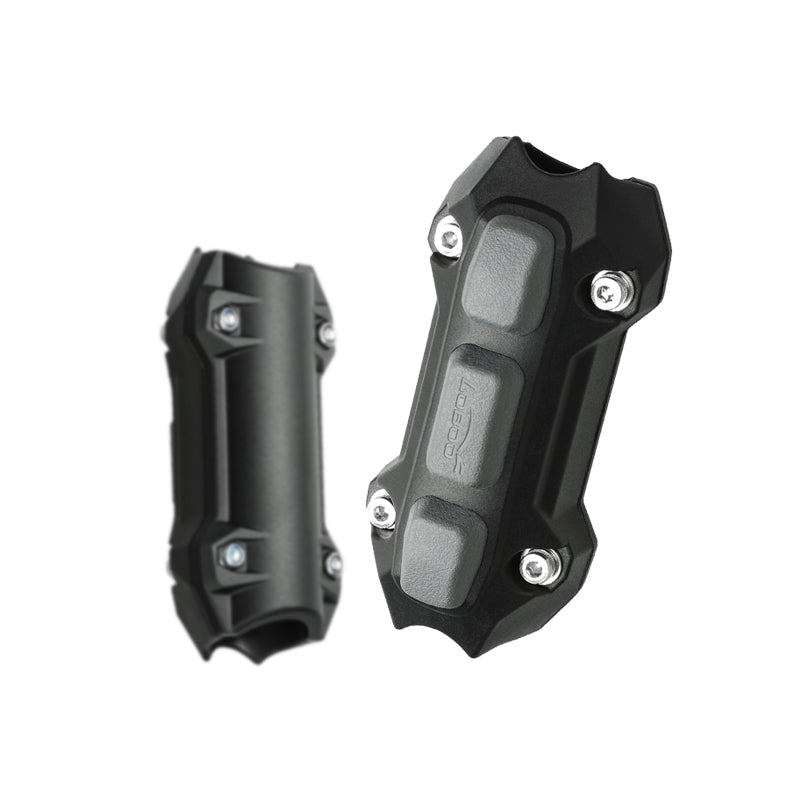
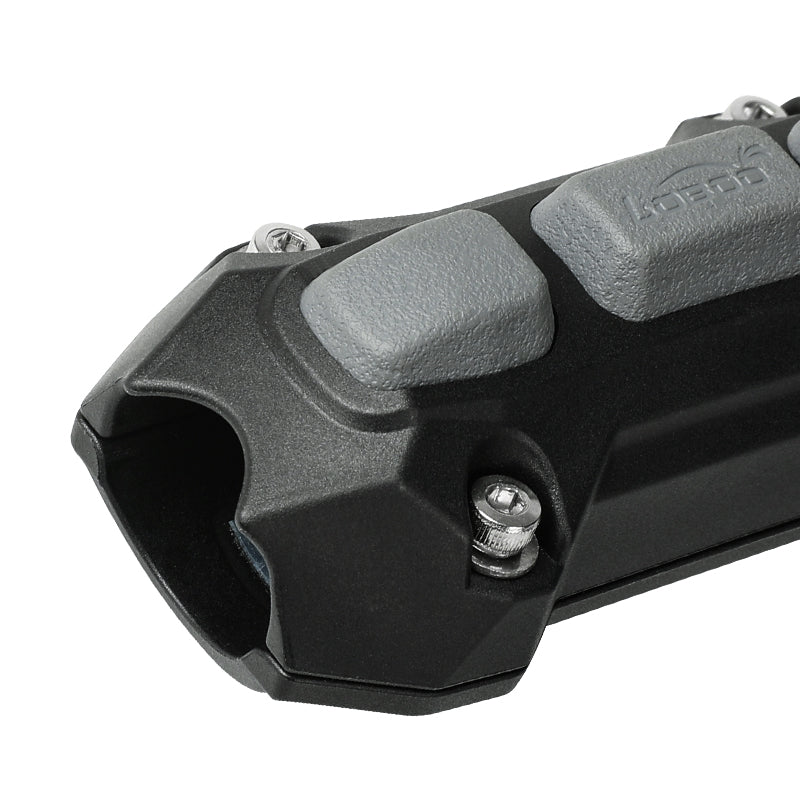
25mm

Tube

2pz

Package

108g

Weight

No

Puncture

Identification

Model

CHGJT25MM

Crash Bar Buffer Protective Rubber Sleeve

Manufacturer

LOBOO

Package contents

2 protectors

Morsetteria included in each one

Color

Nero

Low profile

Dimensions

Space occupied by a single guard

108 × 48 × 46

32 mm base

Weight

108

Per individual protection

Materials and construction

Structure

3 separable pieces

Upper shell, lower shell, and rubber element

Outer shell

Technical plastic

Abrasion-resistant

Inner bearing

Rubber

Absorbs the impact energy

Contact surface

Rough rubber

Increase the friction on the tube

Assembly

Mounting type

4-bolt clamp

With self-locking nuts

Hardware included

8 M4×20 screws

With 8 self-locking nuts and 8 M4 flat washers; 4 protective screws

Tightening torque

5

Prescribed by LOBOO; do not exceed it

Puncture

Not requested

It closes on the existing bar

Required tool

Hex key

Performance

Function

Sacrificial layer

Absorbs abrasion and impact instead of the bar

Spare parts

Replacement of the individual piece

The three components separate: only the damaged part needs to be replaced.

Compatibility

Required tube diameter

25

One size: spacers or adapters are not included.

Compatible bars

LOBOO, GIVI, Touratech, OEM BMW and KTM

Provided that it comes with a 25 mm tube

Vehicle type

Adventure and touring motorcycles with tubular engine guards

Specifications declared by LOBOO. The 25 mm diameter is binding: measure your bar before ordering.

The sacrificial part that scratches instead of your crash bar.

All you need to know before ordering

Technical specifications, equipment, delivery, and warranty: find every detail, verified against official LOBOO documentation, below.

Description Bumpers for Motorcycle Crash Bars Ø 25 mm | Tubular protection with rubber pads, 2 pieces

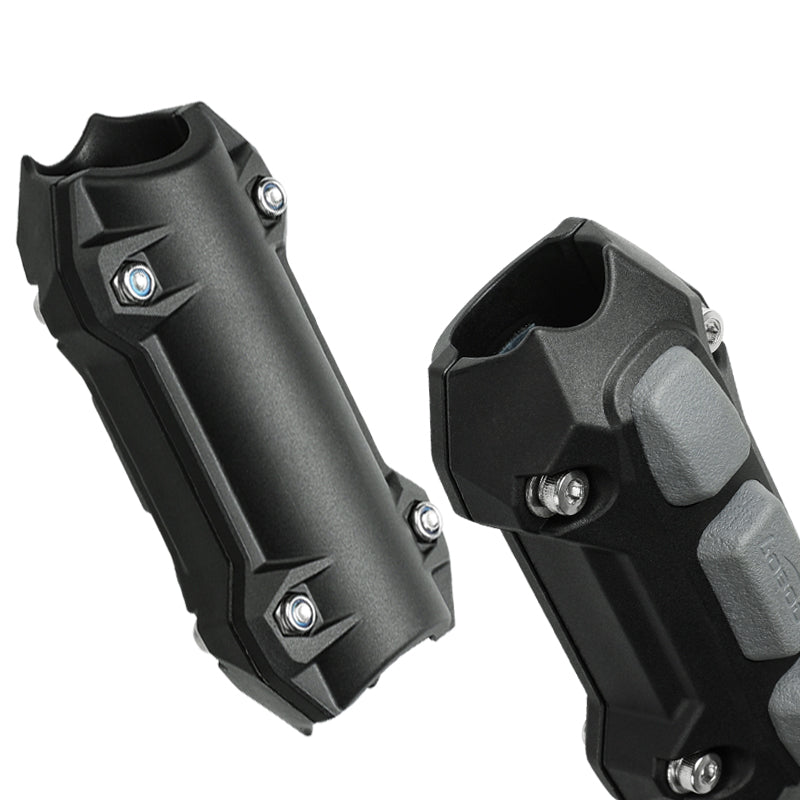
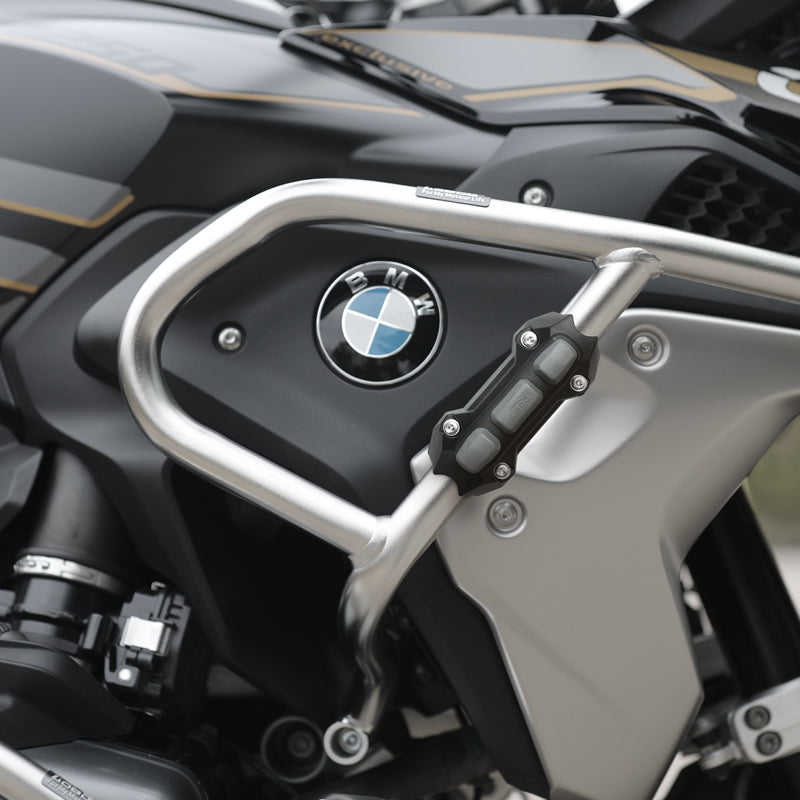
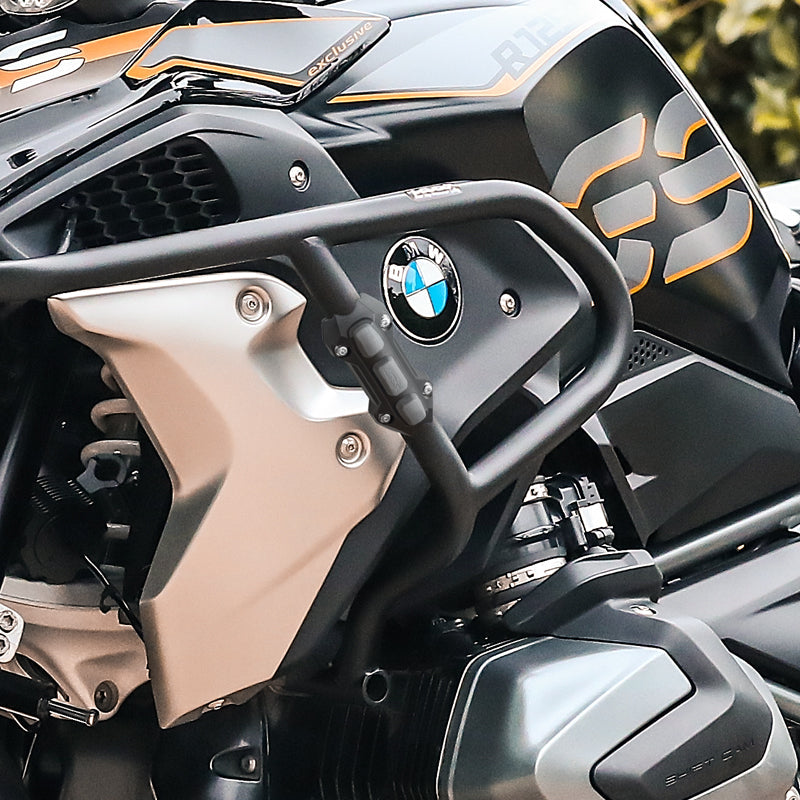
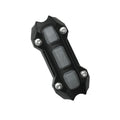
Crash bars do their job only once, and that is when they get scratched. Crash protectors are the part that wears out instead of the tube: two technical plastic shells with rubber pads that clamp onto the most exposed point of the bar and absorb contact with the asphalt.

Why fit crash protectors to crash bars

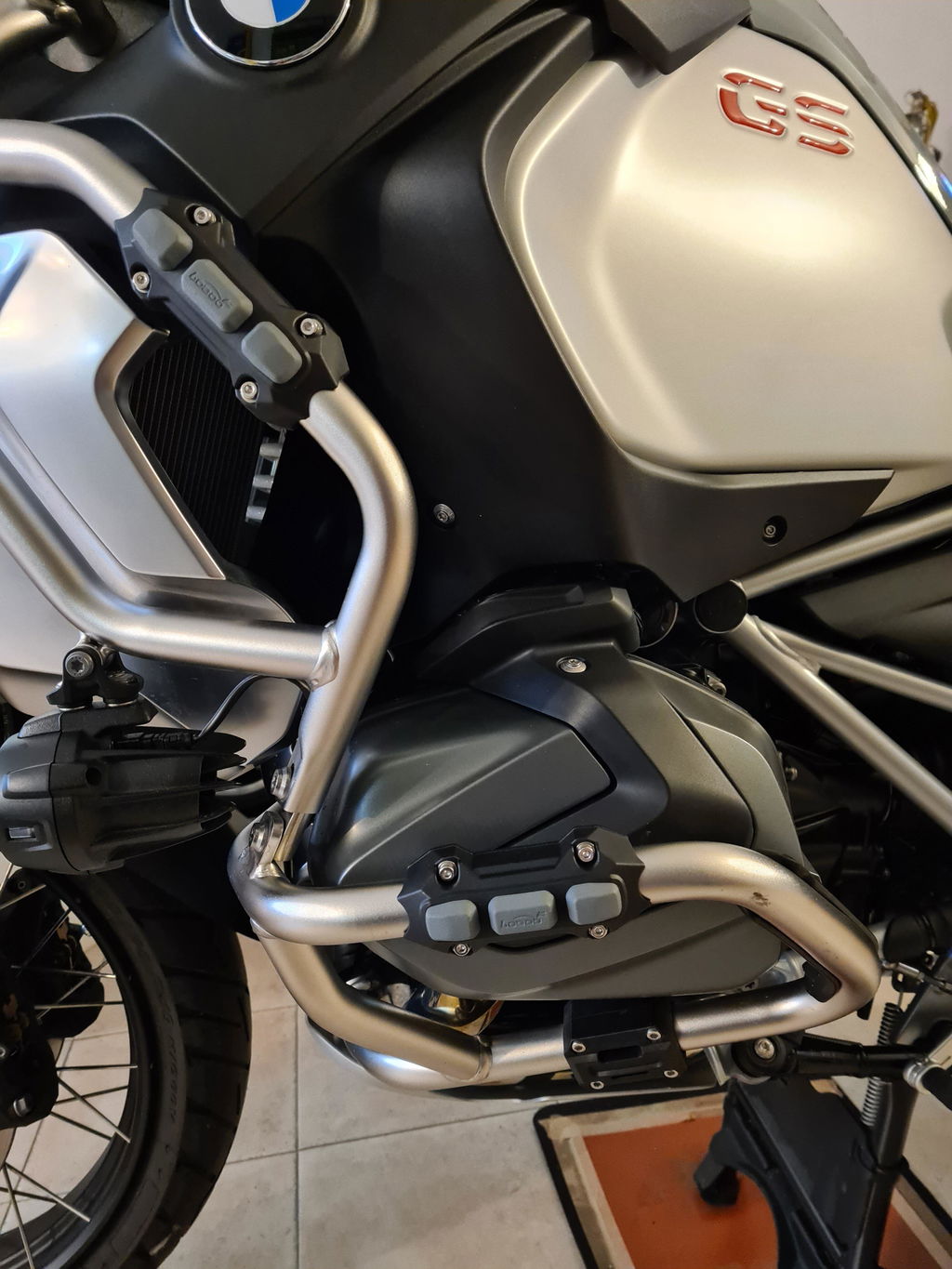
  • The damage stays on the inexpensive part. In a stationary or low-speed fall, the crash protector is what scrapes along the ground: the tube underneath remains intact, and replacing a crash protector costs a fraction of a new bar.
  • The rubber pad keeps the bike off the ground. The added thickness widens the contact point by a few millimetres and keeps the fairings and engine block farther from the ground.
  • Four-bolt clamp. The grip is distributed across four points instead of two, so the crash protector does not rotate on the tube when hit from the side.
  • No drilling. Open them, position them where needed, and close them around the tube. Nothing permanent is done to the bar, and they can be moved at any time.
  • 108 g each. Negligible weight, located low down and close to the motorcycle's axle.

Main features

  • Pair of crash protectors for 25 mm-diameter crash bar tubes
  • High-strength technical plastic outer shell
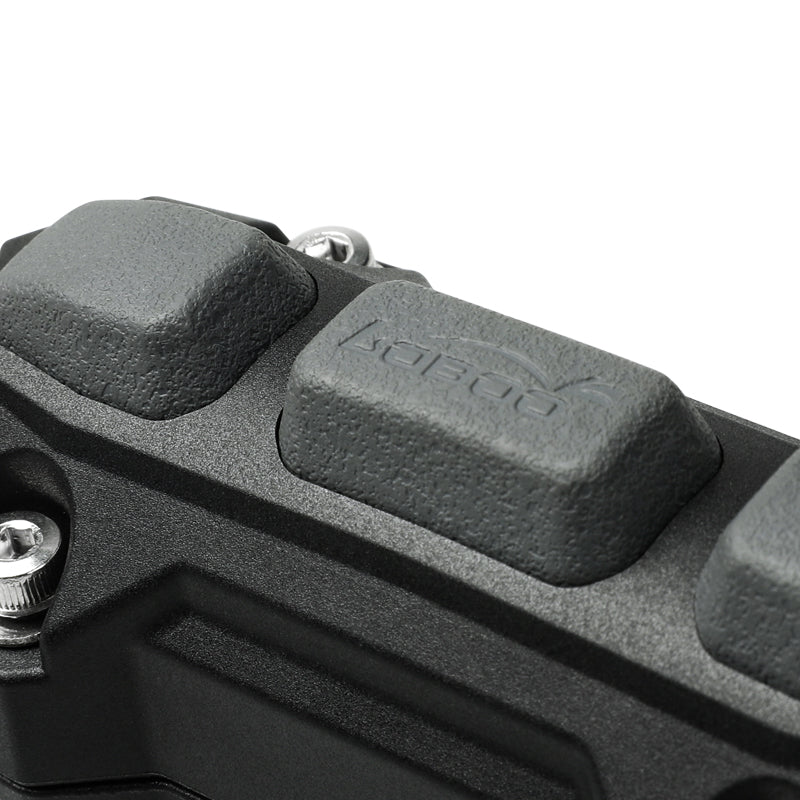
  • Rubber pads on the impact surface
  • Four-bolt clamp mounting
  • Reversible installation and removal, with no drilling or modification of the bar
  • 108 g per piece, 216 g per pair

Technical specifications

Type Crash protectors for crash bars
Tube diameter 25 mm
Material Technical plastic and rubber
Mounting 4-bolt clamp
Weight 108 g per piece — 216 g per pair
Pieces per package 2
Drilling None

How to install them

All you need is an Allen key. Open the crash protector, place it on the chosen section of tube, and close it by tightening the four screws: the crash bar stays mounted on the motorcycle and does not need to be removed or drilled. The manual recommends not fully tightening the screws immediately, but completing the positioning first, and checking the tightness again after the first few kilometres.

Where to position them

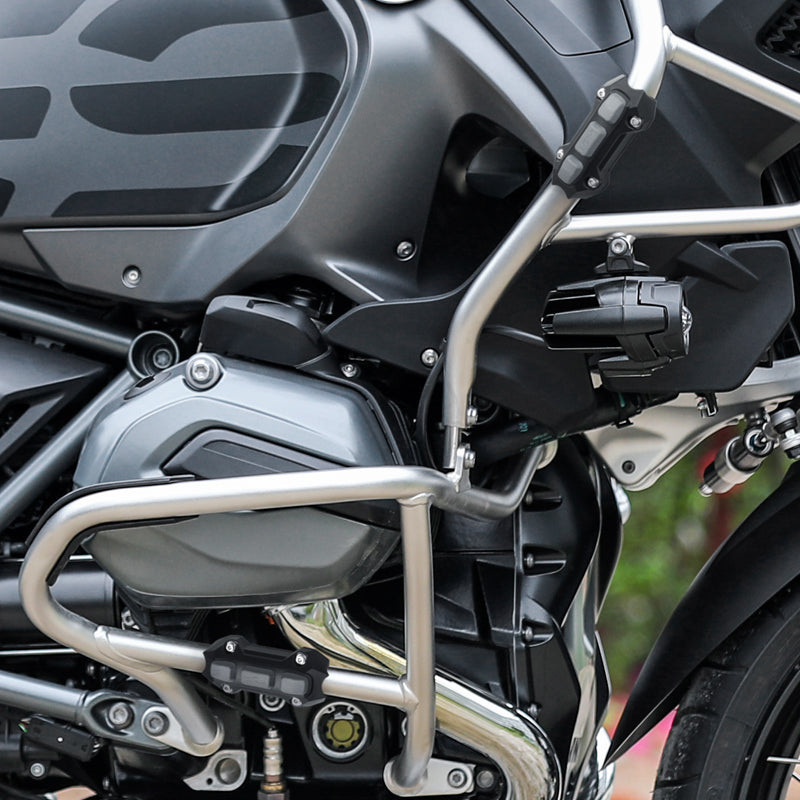
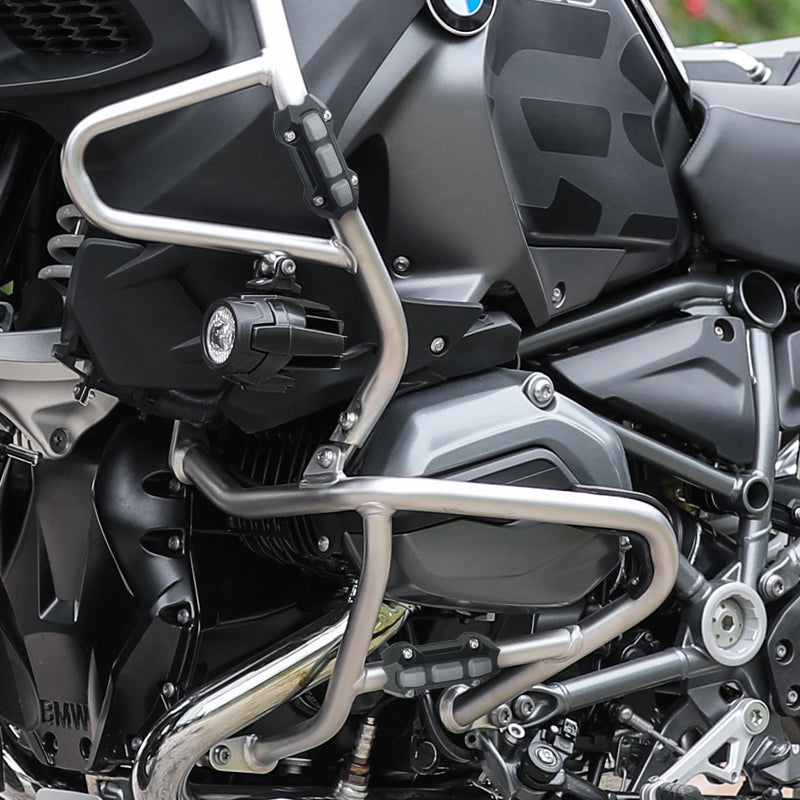
At the bar's most protruding point, the part that touches first if the motorcycle goes down—normally the vertical section at engine-block height. A simple way to identify it is to look at the motorcycle resting on its side stand and see which area of the crash bar protrudes the most.

Compatibility

For 25 mm tubes only. The clamp is shaped for that diameter: on a thinner tube it would remain loose and rotate on the first impact, while on a thicker one it would not close. Measure the outside diameter of your bar before ordering—with calipers, or by wrapping a tape measure around it and dividing the circumference by 3.14: for 25 mm, it is approximately 78.5 mm.

The diameter does not depend on the motorcycle but on the crash bar fitted, so look for this information on the crash bar's product sheet, not the motorcycle's.

Package contents

  • 2 crash protectors complete with rubber pads
  • Mounting hardware
Why choose it
  • It's the sacrificial piece:It takes the scrape instead of the bar. Replacing it costs a few euros; remaking a steel engine guard costs hundreds.
  • Two materials, two tasks:The outer shell of technical plastic resists abrasion on asphalt, while the inner rubber cushion absorbs impact energy.
  • It doesn't move:Four-bolt clamp with anti-loosening nuts and a rough internal rubber lining. Once tightened, it stays put, even on dirt roads.
  • Installation without modifications:It clamps onto the existing bar with an Allen key. No drilling, no welding.
  • Low profile:Adds protection without altering the motorcycle's lines.
Who is it recommended for

It's useful if:

  • You have 25mm crash bars, stainless steel or painted, and you don't want to see them scratched after the first standstill fall
  • You ride off-road, or simply park in tight spaces where the bike might lean
  • You want an inexpensive spare part to replace when worn, instead of having to redo a component

It's not useful if your bar is not 25mm: in that case there is no thickness that will make them fit.

Documents and manufacturer

Usage and Notes

  • Measure the outer diameter of the crash bar before ordering: the product is sized for 25 mm and cannot be adapted with shims.
  • Tightening torque prescribed by LOBOO:5 N·m on M4×20 screws. The manufacturer warns that overtightening will strip the screw head. Tighten the four screws evenly and recheck after the first few kilometers.
  • Place the protectors where the bar might touch the ground, not near cables, brake hoses, or levers.
  • It is a sacrificial component: after a fall, it should be inspected and, if deformed or deeply abraded, replaced. The three pieces are separable, so often only the worn part needs to be changed.
  • It does not replace the crash bar nor is it an approved safety device: it reduces abrasions and cosmetic damage, but does not guarantee protection in the event of an impact.

How does it work, in detail?

She puts something between the bar and the asphalt.

She puts something between the bar and the asphalt.

A crash bar does its job by resting on the ground, and every time it does, it comes away with a scratch. On a polished stainless-steel bar, it shows immediately; on a painted one, the abrasion becomes the starting point for rust.

The bumper protrudes from the tube and makes contact first. It is the part that wears out instead of the bar, and costs a fraction of what it would cost to refinish or replace it.

The rubber pad absorbs the impact.

The rubber pad absorbs the impact.

Between the two engineered plastic shells there is a rubber element. It is not an aesthetic detail: it is the part that deforms and absorbs the energy instead of transmitting it all at once to the tube and, through the tube, to the frame.

The outer shell takes the abrasion from the asphalt, while the rubber takes the impact. Two materials, two different jobs: that is why it works better than a simple plastic tube slid onto the bar.

Three pieces: you only replace the damaged one.

Three pieces: you only replace the damaged one.

Each protector comes apart into three separate components: the upper shell, the rubber element, and the lower shell. It is not a single molded piece.

In practice, after a scrape that has worn away only the exposed part, you can replace that piece and keep the rest. LOBOO itself identifies this as a design choice to reduce maintenance costs, and for a sacrificial component, that is exactly the point.

Only 25 mm, and it must be measured

Only 25 mm, and it must be measured

25 mm is the most common diameter for adventure crash bars: LOBOO, GIVI, Touratech, and original BMW and KTM bars use it almost every time. But it is a fixed size, not a range: there are no spacers or adapters for 22, 28, or 32 mm.

Before ordering, measure the tube with a caliper. If you don't have one, wrap a tape measure around it: a 25 mm diameter corresponds to a circumference of approximately 79 mm. Or tell us which motorcycle and crash bars you have, and we'll verify it for you.

It tightens and stays where it is

It tightens and stays where it is

Four M4×20 screws for the guard, with self-locking nuts and washers: everything is included in the package. The rubber surface that contacts the tube is intentionally rough, so it creates friction instead of slipping or rotating under vibration.

Installation requires no drilling or modifications: it clamps onto the existing bar with a hex key. LOBOO specifies a tightening torque of 5 N·m and warns not to exceed it, to avoid damaging the screw head.

FAQs

For more information, please see our FAQ.

How can I tell if my bar is 25 mm?

Measure the tube’s outside diameter with calipers, or wrap a measuring tape around the bar and divide the circumference by 3.14. On a 25 mm bar, the circumference is approximately 78.5 mm. If you don’t have the tools, the specification is almost always listed in the engine guard’s technical data sheet.

Does it work on bars of different diameters?

No. The clamp is shaped for a 25 mm tube: on a smaller diameter, it would be loose and rotate; on a larger one, it would not close. Do not use improvised shims to adapt it, because in the event of a fall, it is precisely the grip on the tube that does the work.

What pipe diameter are they mounted on?

Only for tubes with a 25 mm outside diameter. This is the standard size for adventure crash bars, but it is not universal: no spacers or adapters are available for other diameters. If your bar is 22, 28, or 32 mm, this product is not suitable for you.

How can I tell if my bar is 25 mm?

With a caliper, measuring the tube’s outside diameter is immediate. Without a caliper, wrap a tailor’s tape measure around the bar: a 25 mm diameter corresponds to a circumference of approximately 79 mm. Alternatively, send us the make and model of your motorcycle and which crash bar you installed—we’ll tell you.

Do you need any special tools to install them?

No, just an Allen key for the clamp’s four screws. Installation does not require removing the crash bar: the guard opens, is positioned at the chosen point, and closes around the tube.

Where should they be placed on the bar?

At the bar’s most protruding point—the part that touches down first if the motorcycle falls—this is usually the vertical section at engine-block level. If you’re unsure, place the motorcycle on its side stand and see which area of the engine guard is most exposed.

Does the clamp loosen with vibrations?

The clamping is secured with four bolts, which distribute the grip better than two. As with any component bolted onto the motorcycle, you should still check the tightness again after the first few miles and then periodically.

Can they be moved or removed?

Yes, at any time: loosen the four screws and reposition them. They do not drill into or modify the bar, so the adjustment is completely reversible.

How many protectors are in the package?

Two, one per side, each with its own four-bolt clamp and self-locking nuts. There’s no need to buy additional hardware. LOBOO recommends installing a pair on each side for maximum coverage; in that case, two packages are required.

How much do they weigh?

108 g each, so 216 g per pair. This weight does not affect the motorcycle’s handling, especially since the guards are positioned low and close to the longitudinal axis.

Are they also compatible with non-LOBOO crash bars?

Yes. The mounting uses a clamp and does not depend on the bar brand: LOBOO states compatibility with most systems on the market, including GIVI, Touratech, and original BMW and KTM crash bars. The only requirement is a 25 mm tube.

Does installation require drilling into the motorcycle?

No. The guard closes around the tube by tightening the upper and lower shells with four M4×20 screws: no drilling, no welding, no modifications. An Allen key is required, and LOBOO specifies a tightening torque of 5 N·m, warning not to overtighten to avoid damaging the screw head.

Do they move or rotate with vibrations?

The clamp uses locknuts, and the rubber surface in contact with the tube is textured, so it grips instead of slipping. As with any bolted accessory, it’s worth checking the tightness again after the first few miles.

What material are they made of, and how are they made?

Each protector consists of three pieces: an upper and lower shell made of technical plastic, which resist abrasion against asphalt, and an intermediate rubber element that absorbs impact energy. The three pieces are separable, so if damage occurs, only the worn part can be replaced instead of the entire bumper.

Should they be replaced after a fall?

It depends on how much they have been used. They are sacrificial components: after a tip-over or scrape, they should be inspected, and if the shell is deformed or deeply abraded, it is best to replace them. That is precisely the purpose of the product: this wears out instead of the bar.

Didn't find the answer you were looking for?

Do not hesitate to contact us

Buying guides, technical comparisons, and news on adventure motorcycle accessories

Before choosing

View all

Honda CRF1100L Africa Twin con allestimento fuoristrada, pilota fermo in sella su prato

Honda Africa Twin: which version is really worth it?

Base, ES, DCT, or Adventure Sports: official 2026 Honda Italy prices and weights compared, what really changes between the CRF1100L Africa Twin versions, and which one is best depending on how you ride.

Read moreabout Honda Africa Twin: which version is really worth it?

ZXMoto 820X bianca vista di tre quarti anteriore, adventure cinese a tre cilindri

ZXMoto 820X: the three-cylinder Chinese adventure bike targeting Europe

The ZXMoto 820X emerges from Chinese homologation documents: a 819 cc three-cylinder engine, around 116 hp, 19- and 17-inch wheels, and a European debut expected at EICMA 2026. What is confirmed, what is not, and how it compares with the Triumph Tiger 900 GT.

Read moreabout ZXMoto 820X: the three-cylinder Chinese adventure bike targeting Europe

Prototipo BMW di media cilindrata camuffato durante i collaudi su strada bianca, vista frontale

BMW F 600 GS: what do we really know about the new mid-displacement GS?

BMW is reportedly developing a mid-displacement GS between the F 450 GS and F 900 GS: what the prototype shows, what BMW has actually confirmed, and how it would compare with the Yamaha Ténéré 700.

Read moreabout BMW F 600 GS: what do we really know about the new mid-displacement GS?