Motorcycle accessories
Motorcycle Handlebar Risers: Specific and Universal Risers
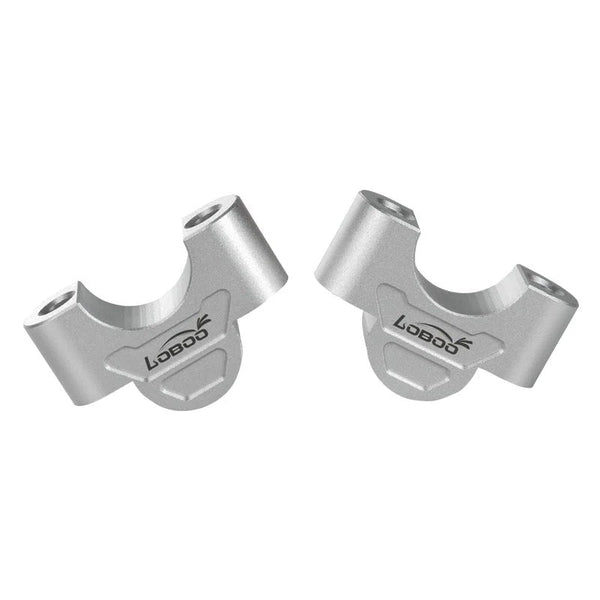
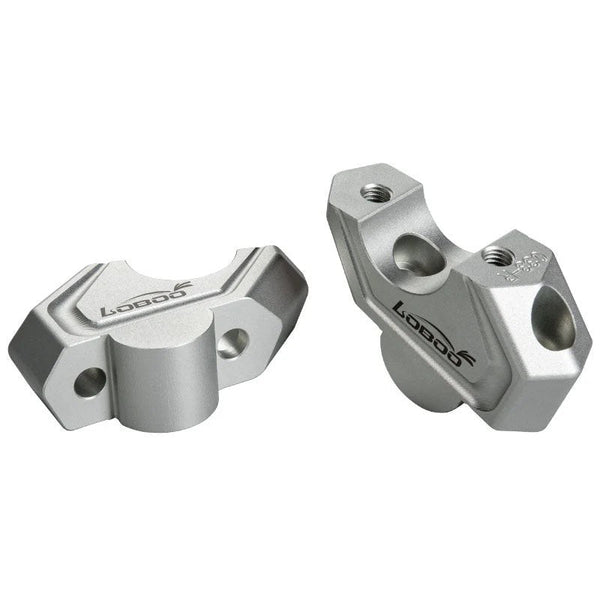
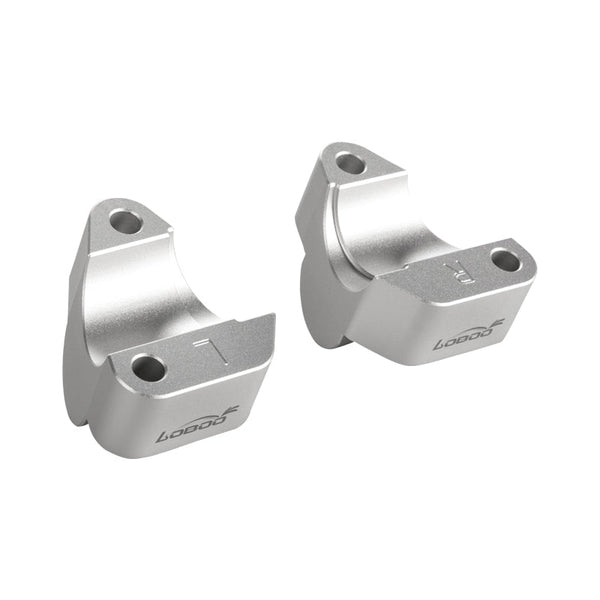
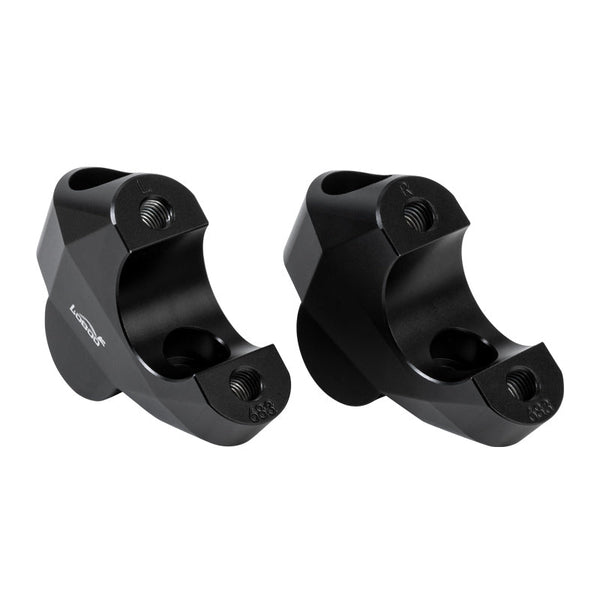
Handlebar risers raise and, in many cases, move the handlebars back to bring your torso into a more upright position: less strain on your wrists, shoulders and back on long trips, and more control when standing on the footpegs ...
14 prodotti
14 prodotti
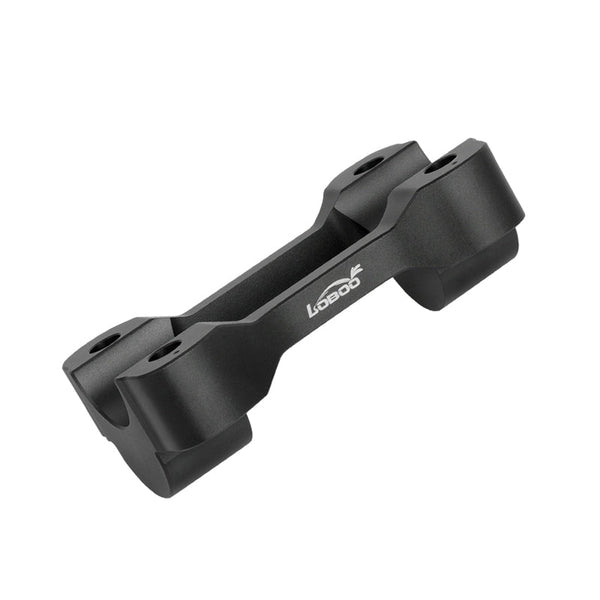
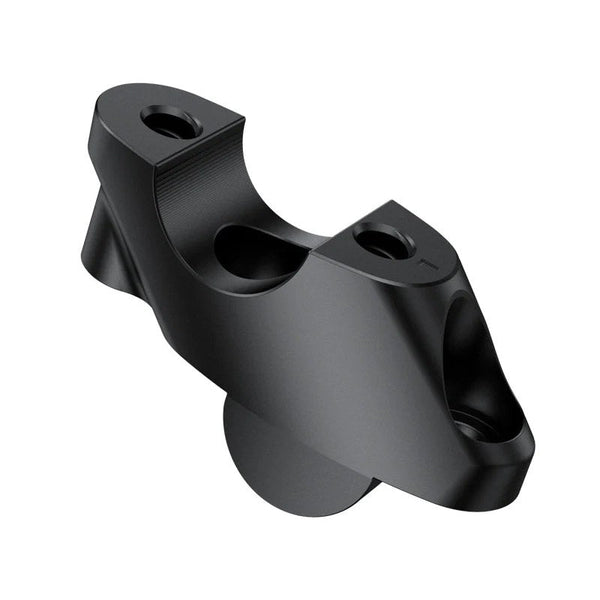
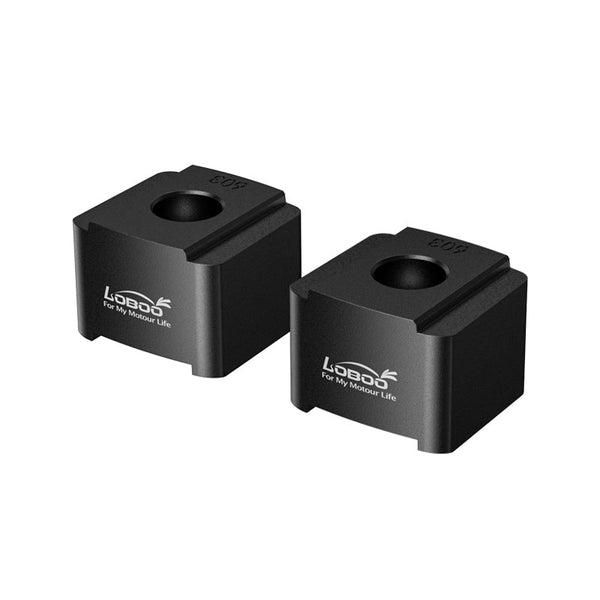
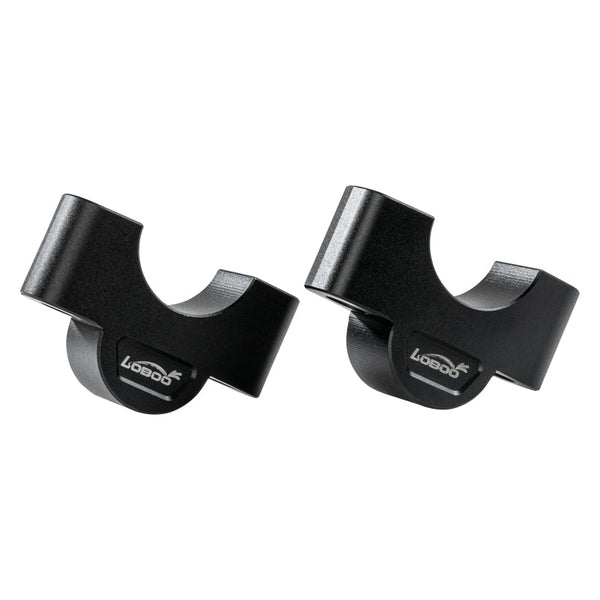
Can't find what you're looking for?
Tell us the make, model, and year of your motorcycle: we’ll check compatibility before you place your order.
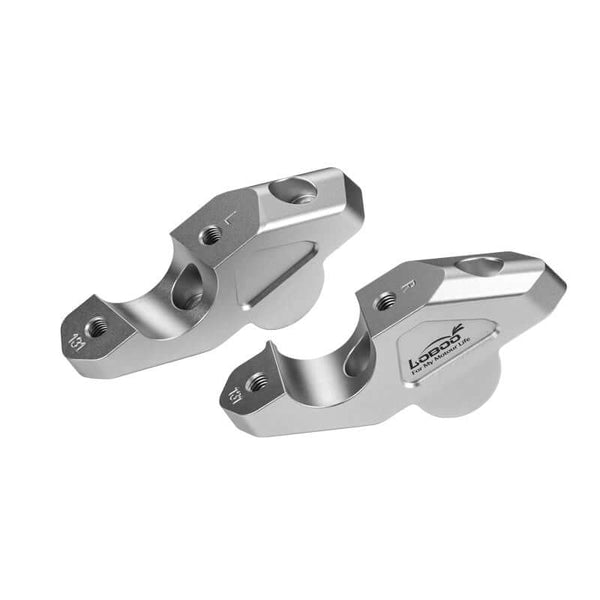
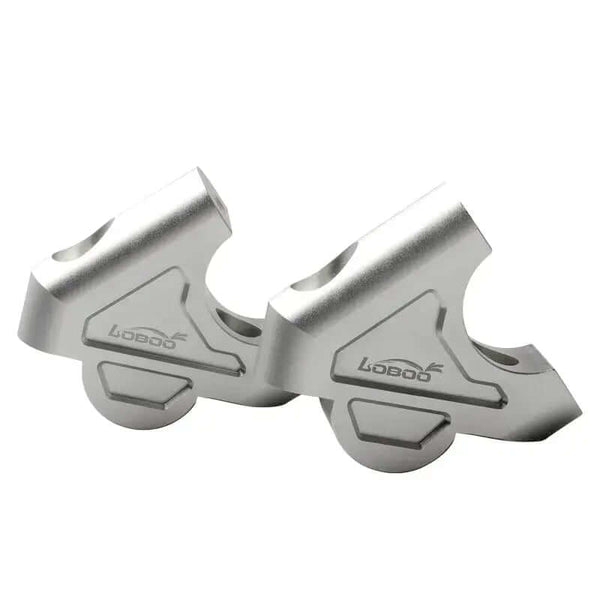
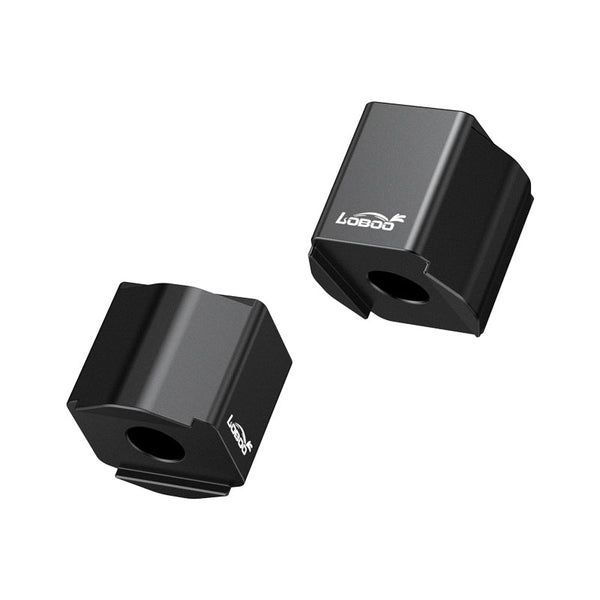
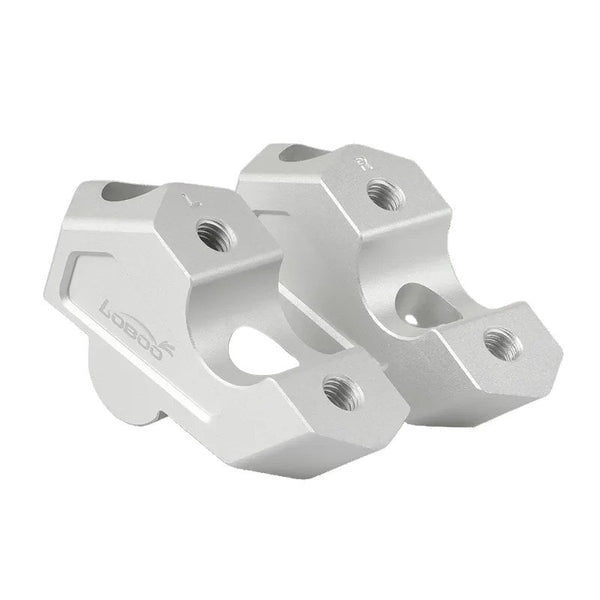
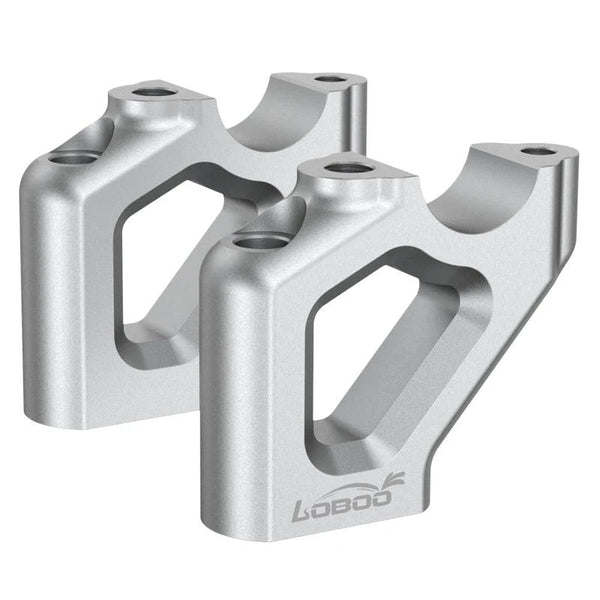
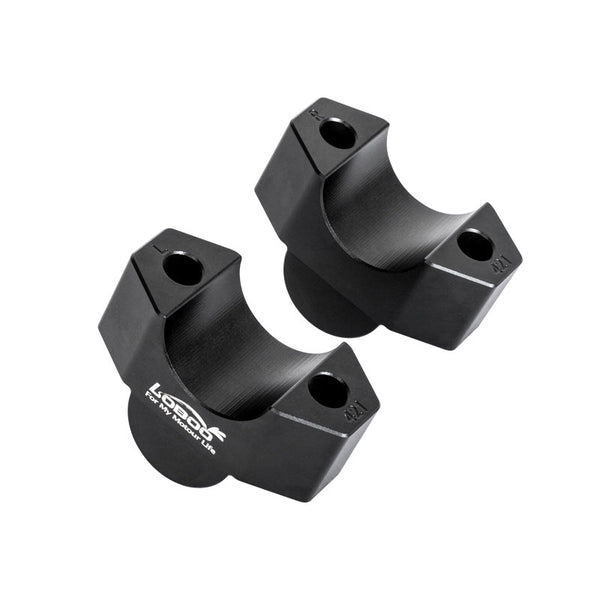
Handlebar risers raise and, in many cases, move the handlebars back to bring your torso into a more upright position: less strain on your wrists, shoulders and back on long trips, and more control when standing on the footpegs off-road. At Endurrad you'll find model-specific handlebar risers by LOBOO — with the correct holes and spacing already set for BMW GS, KTM Adventure, Honda, Triumph, Aprilia, Suzuki, CFMOTO, VOGE and Benelli — as well as universal risers for 22.2 and 28.6 mm handlebars, including adjustable-height models.
Select your motorcycle below to immediately find the compatible riser, or consult the selection guide to understand how many millimeters of rise you really need.
Choose your motorcycle
BMW
- BMW R 1300 GS and Adventure handlebar risers — 29 mm rise · R 1300 GS accessories · R 1300 GS Adventure
- BMW R 1250 GS, R 1200 GS and S 1000 XR handlebar risers — 30 mm rise · R 1250 GS accessories · R 1200 GS · S 1000 XR
- BMW F 850 GS and F 900 GS handlebar risers — 19 mm rise + 25 mm setback · F 900 GS accessories · F 850 GS
- BMW F 800 GS (2025+) and F 750 GS handlebar risers — 23 mm rise + 20 mm setback · F 800 GS accessories · F 750 GS
KTM and Husqvarna
- KTM Adventure and Husqvarna handlebar risers — 19 mm rise, black or silver · 890 Adventure R accessories · 790 Adventure R · 390 Adventure · 1290 Super Adventure S · Norden 901
Honda
- Honda NC750X (2016+) and CB400X handlebar risers — 24 mm rise + 18 mm setback · NC 750 X accessories · CB400X
- Honda CB500X, NX400 and NX500 handlebar risers — 20 mm rise · CB500X accessories
Triumph
- Triumph Tiger 900 and 850 Sport offset handlebar risers — 12 mm up + 20 mm back · Tiger 900 accessories · Tiger 900 Rally Pro · Tiger 850 Sport
- Triumph Tiger 1200 GT Pro handlebar risers (2023+) — 25 mm rise · Tiger 1200 GT Pro accessories
Aprilia
Suzuki
CFMOTO
VOGE
Benelli
Can't find your motorcycle in the list? Check out the universal ForBikes risers for 22.2 and 28.6 mm handlebars.
Explore the riding position
- Motorcycle handlebars — if, in addition to raising the bars, you want to change their bend and width
- Handlebar ends — anti-vibration bar ends
- Motorcycle grips — grip and vibration reduction
- Motorcycle handguards — hand and lever protection
- Rearview mirrors
- Mirror adapters and risers — if you're looking for mirror risers rather than handlebar risers
- Motorcycle smartphone mounts — to install on the riser or bar
- Motorcycle footpegs — the other ergonomic contact point
- All ergonomics accessories
Featured LOBOO risers: LOBOO ergonomics and comfort · entire LOBOO catalog.
Handlebar riser selection guide
What is a handlebar riser
A handlebar riser is a spacer installed between the top triple clamp and the handlebar clamps, raising the handlebars by a defined number of millimeters. Many models also add setback, moving the handlebars toward the rider. The combined effect is a more upright riding position, with less pressure on the wrists and lower back on the road and a more natural posture when riding standing on the footpegs off-road.
There are two types: model-specific risers, with the bolt spacing and hole diameter already matching the motorcycle's top triple clamp, and universal risers, which fit handlebars with standard diameters but require you to check the bolt spacing of the original clamps.
How to choose the right handlebar riser
1. Handlebar diameter
The two standards are 22.2 mm (7/8", typical of enduro and naked bikes) and 28.6 mm (1 1/8", typical of tapered handlebars and adventure bikes). The riser must match the diameter at the clamping point. Adapter risers are also available to convert from 22.2 to 28.6 mm.
2. How many millimeters of rise
As a general guideline: 15–20 mm is a fine adjustment, noticeable but almost always compatible with the original cables and lines; 25–30 mm is the jump that truly changes your posture on long trips and when riding standing; above 30 mm, the risk of needing to modify the wiring and brake line increases significantly. LOBOO risers listed on Endurrad range from 12 to 30 mm of rise.
3. Rise or rise with setback
A rise-only adjustment is suitable when the distance from the handlebars is already correct and the issue is torso angle. Setback is useful for riders with short arms relative to the motorcycle or those who often ride standing: bringing the handlebars closer prevents you from having to lean forward. Several LOBOO models combine both features, such as 19 mm of rise with 25 mm of setback for the BMW F 850 GS and F 900 GS.
4. Cables, wiring, and brake line
This is the check most often overlooked. After installation, with the steering turned fully to both sides, cables and hoses must never be taut. For modest rises, the original slack is generally sufficient; with greater rises, it may be necessary to reroute the cables or, in extreme cases, install a longer brake hose.
5. Material and tightening
Quality risers are made from CNC-machined aluminum and supplied with dedicated hardware. Tightening must be done to the specified torque, in a crisscross pattern and progressively, and the gap between the two halves of the clamp must remain uniform above and below.
Model-specific or universal riser?
| Model-specific riser | Universal riser | |
|---|---|---|
| Installation | Directly onto the original mounting holes | Requires checking the center-to-center distance and diameter |
| Geometry | Rise and setback already calibrated for the motorcycle | Standard rise, often adjustable |
| Appearance | Integrated with the steering plate | More visible |
| When to choose it | Your motorcycle is among those covered in the catalog | Motorcycle not covered, or adjustable height required |
Handlebar risers for adventure and maxi-enduro motorcycles
On adventure and maxi-enduro motorcycles, the riser is almost always the first ergonomic modification, even before the seat or footpegs, because it offers the best balance of cost, installation time, and perceived benefit. When riding standing on the footpegs, handlebars that are too low force you to bend your back and knees, reducing control on uneven surfaces; raising them by 20–30 mm realigns your torso, arms, and steering. In touring, the same modification reduces the static load on your wrists that builds up after several hours on the highway.
What to pair with a riser
Anyone who installs a riser often reassesses the entire riding position. The most common pairings are anti-vibration grips, handlebar ends as bar-end weights, handguards, and a smartphone mount, which finds a rigid, clearly visible anchoring point on the riser. To complete the setup: larger footpegs.
Why buy handlebar risers from Endurrad
- LOBOO model-specific risers, with the make, model, and rise height indicated in the title of each product page: compatibility can be verified before purchase, without interpreting tables.
- Genuine coverage for ten adventure and touring brands, including motorcycles often ignored by general catalogs, such as VOGE, Benelli, and CFMOTO.
- Universal risers for 22.2 and 28.6 mm handlebars, including height-adjustable options, for motorcycles not covered by the specific catalog.
- Free shipping for orders over €100 in Italy and €250 in Europe.
- 14-day return policy from receipt of the order's last item.
Frequently asked questions about handlebar risers
How do I know whether a riser is compatible with my motorcycle?
For model-specific risers, the applicable make, model, and year are indicated in the title and product description: if your motorcycle is listed, the riser mounts to the original holes. For universal risers, you must check two details on your motorcycle: the handlebar diameter at the clamping point (22.2 or 28.6 mm) and the center-to-center distance between the two original clamps.
How many millimeters of rise do I need?
It depends on your height and how you use the motorcycle. A 15–20 mm rise is a fine adjustment and in most cases does not require any work on the cables or hoses. A 25–30 mm rise noticeably changes your posture and is the typical choice for long trips and standing riding. Above 30 mm, always check the slack in the wiring and brake hose.
What is the difference between a riser and a setback riser?
A standard riser raises the handlebars while keeping the same distance from the rider. A setback riser raises them and brings them closer, making it suitable for riders who feel too stretched forward or who often ride standing on the foot pegs.
Do I need to change the cables or brake hose when installing a riser?
Not always. With modest risers, the original slack is usually sufficient. The check must be performed after installation: with the steering at full lock on both sides, no cable, wiring, or hose should be under tension. If this happens, the cable routing must be repositioned or the brake hose replaced with a longer one.
What is the difference between 22.2 mm and 28.6 mm handlebars?
There are two standard diameters: 22.2 mm (7/8") is typical of enduro and naked bikes; 28.6 mm (1 1/8") is typical of tapered handlebars fitted to maxi-enduro and adventure bikes. The riser must match the diameter of your handlebar at the clamping point. Adapter risers are available to convert from 22.2 to 28.6 mm.
Are mirror risers the same thing?
No. Mirror risers only move the mirror to improve the rearward view and do not change the handlebar position or riding ergonomics. If that is what you are looking for, go to mirror adapters and risers.
Is there a riser for the BMW R 1300 GS?
Yes. The LOBOO CJG131 riser is available in the catalog, with a 29 mm rise, suitable for the BMW R 1300 GS and R 1300 GS Adventure.
Can I install the riser myself?
Yes, it is one of the simplest jobs to do on the motorcycle: loosen the original clamps, place the risers between them, and tighten the new hardware to the specified torque, crosswise and progressively. The only step you must not skip is checking the slack in the cables and hoses with the handlebars turned fully from side to side.