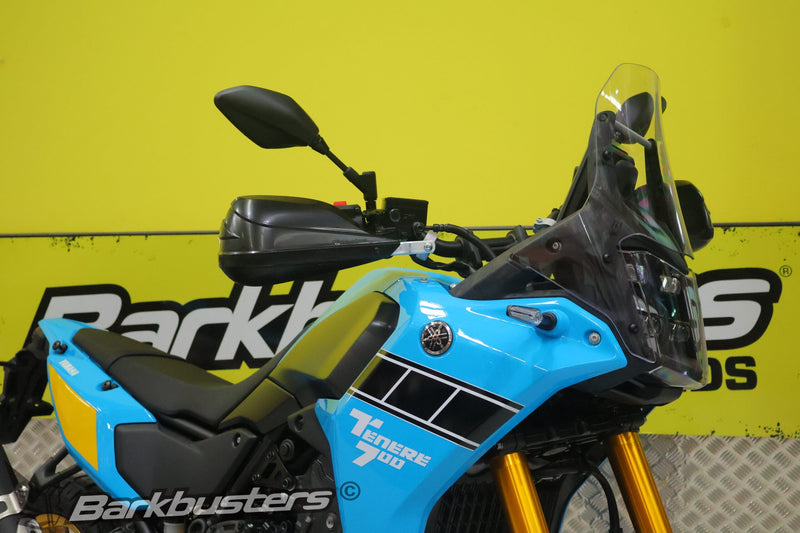



If you're preparing your bike for the next long season, 2026 adventure motorcycle accessory trends aren't about passing fads. They're about what holds up best after three days of rain, what weighs less when the bike goes down on a rocky surface, and what makes life easier when you have to ride 700 km, find a track, and recharge everything without losing your mind.
In 2026, the direction is clear: fewer accessories installed "just because" and more components chosen for a precise function. Those traveling on a BMW R 1300 GS, a KTM 890 Adventure, an Africa Twin, or a Ténéré 700 are becoming more selective. They aren't looking for more volume; they want better-managed bulk. They don't want a bike loaded with parts; they want a bike ready to work.
2026 adventure motorcycle accessory trends: less unnecessary weight
The first real trend is the shift from heavy configurations to cleaner setups. That doesn't mean giving up protection or carrying capacity. It means avoiding duplicates and choosing accessories that do their job well without weighing down the bike's handling.
You can see it especially in luggage. Aluminum cases remain a sensible choice for long road trips, for those crossing borders and wanting organization, capacity, and secure locking. But on mixed asphalt-and-dirt routes, interest in well-supported semi-rigid and soft systems is growing, because when standing on the pegs, less width, less weight up high, and less risk of structural damage in a low-speed fall matter.
On a Ducati DesertX or a Yamaha Ténéré 700, for example, the issue isn't just how many liters you carry. It's where that weight sits and how much it affects the bike when you change pace on rough ground. On an R 1250 GS or Tiger 1200, on the other hand, the compromise can shift toward more capacious solutions, provided the pannier rack and mounting system don't add vibrations or play over time.
More modular, less universal luggage
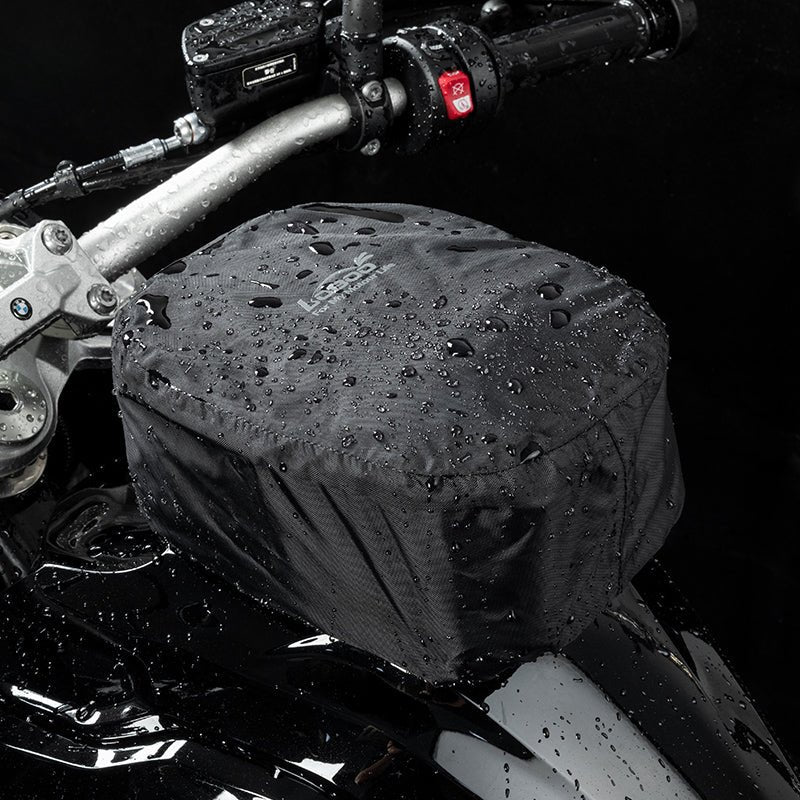
In 2026, true modularity wins. Tank bags that don't interfere when you ride standing up, side bags that you can quickly remove at camp, and systems that go from a weekend to a full week without rebuilding the entire bike.
Another interesting trend is the move away from the idea of the universal accessory. Those who seriously prepare an adventure bike are paying closer attention to model compatibility, exhaust position, space on the right pannier, the presence of passenger grab handles, seat shape, and rack dimensions. It's a useful change in mindset, because many problems arise precisely from accessories that are "adapted" rather than designed for a specific platform.
Protection: less showpiece effect, more useful coverage
For years, many adventure bikes were fitted with crash bars, skid plates, and reinforcements almost for aesthetic reasons. In 2026, the trend is more practical: protect the parts that actually break.
This changes how you choose engine guards, skid plates, and side protection. On bikes such as the F 850 GS, Africa Twin CRF1100L, or KTM 1290 Super Adventure, the right question isn't whether the component "looks impressive." It's whether it protects the crankcase, headers, radiator, or side panels in the types of falls you actually experience. A stationary tip-over on a trip and a hard impact on a stone step call for different protection.
Skid plates and crash bars follow real-world use
Those riding medium-to-heavy off-road are increasingly viewing the skid plate as a functional component, not a secondary accessory. Thickness matters, but so do how it is mounted, how much it covers laterally, and whether it leaves enough room for maintenance and cleaning.
With crash bars, the trend is toward less intrusive but better-designed structures. If you make the bike too wide, you protect it on one hand but compromise it in tight passages and loaded touring maneuvers. If you keep them too narrow, you risk leaving the most expensive areas exposed. There is no one-size-fits-all answer here. It depends on the bike's weight, the amount of off-road riding, and how often you travel alone or with a passenger.
Lighting: more integration, fewer improvised installations
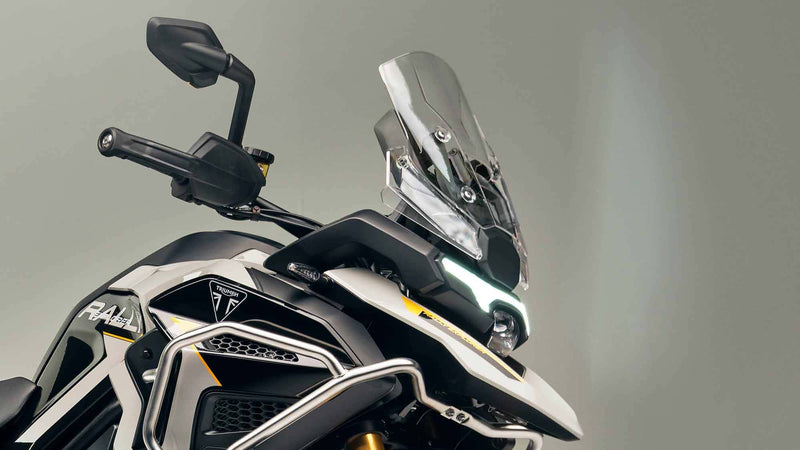
Among the 2026 adventure motorcycle accessory trends, lighting is one of the most practical. Not so much to have more light overall, but to have light that is easier to manage.
Those who really ride at night, on secondary roads or in the rain, don't install auxiliary lights just to turn the road ahead into daylight. They want a consistent beam, clean wiring, switches positioned well for use with gloves, and mounts that don't loosen with vibration. The point isn't the advertised peak power. It's how well you can see the sides of the road, how stable the mounts remain, and how reliable the system is after months of use.
The most useful trend is integration. Fewer improvised brackets, fewer cables crossing the windscreen without a clear purpose, and more kits designed to work with the bike without turning the front end into a test bench. On recent maxi-enduros, where electronics and available space are more complex, this matters even more.
Ergonomics: 2026 puts the rider, not just the bike, at the center
This is one of the best developments. Ergonomic accessories are no longer considered comfort options and are becoming tools for control. After eight hours in the saddle, an incorrect position isn't just tiring: it means less precision under braking, more load on the wrists, less stability when standing, and more mistakes during slow maneuvers.
For footpegs, handlebar risers, seats, and handguards, the trend is sensible customization. Don't raise everything, widen everything, or add padding everywhere. Correct the critical point in your posture. If you're tall and often ride standing up, the problem may be the torso-to-knee angle. If you do long stretches on asphalt, it may be constant pressure on the seat or your hands' exposure to cold and water.
Ergonomics for different body types too
A finally more mature aspect concerns riders of different heights, proportions, and hand sizes. No special terminology is needed; you need a correct setup. The grips, lever-to-handlebar distance, seat height, and footpeg position have a far greater impact than generic catalogs often admit.
On a Himalayan or an F 750 GS, the adjustment range can completely change your confidence at low speed. On an R 1300 GS or Africa Twin, it can turn a demanding bike into one that feels like yours after just a few rides.
Navigation and power: organization first
The era of smartphones mounted any which way and loose cables is coming to an end. In 2026, navigation on adventure bikes follows a cleaner approach: stable mounts, a readable position both standing and seated, and power protected from water and vibration.
It's not just about convenience. It's about safety. If the phone moves on dirt, the cable comes loose in the rain, or the mount forces you to lower your gaze too far, navigation gets worse precisely when you need it most. That's why solutions with dedicated brackets, mounting points that align with the dashboard, and USB or 12V outlets installed where they genuinely make sense are becoming more popular.
Intercoms are following the same path. Fewer features to show off, more focus on real-world battery life, use with gloves, clear audio at highway speeds, and compatibility with helmets and mixed travel groups.
Equipment and range: small accessories, huge impact
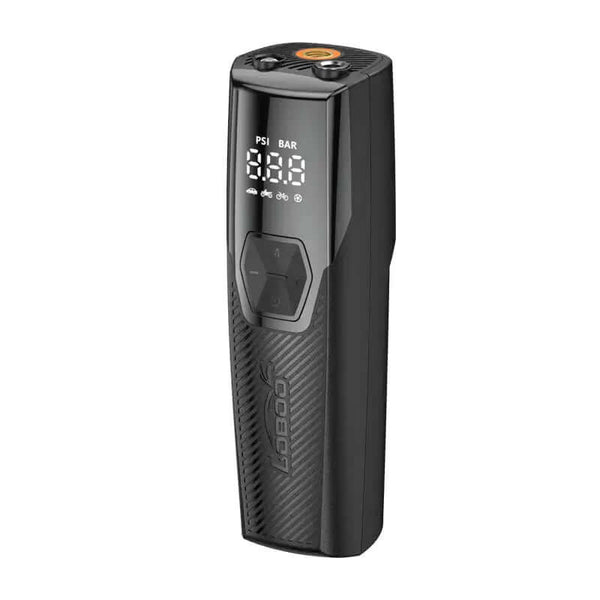
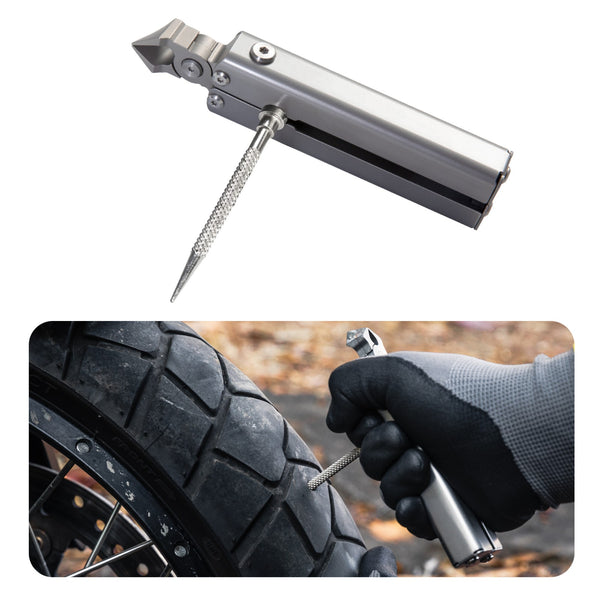
Another strong trend is the reassessment of equipment that doesn't show up in photos of a parked bike. Repair kits, tools, fuel-range solutions, and tire-management equipment are returning to the spotlight, because they're what save your day when the journey stops being straightforward.
Those who take quick weekend trips often overlooked them. Less so now. It only takes a puncture far from asphalt or a long stretch without fuel to understand that some accessories weigh little but are worth a lot. Here too, however, the direction isn't to carry half a garage with you. It's to choose the minimum that solves a concrete problem on your bike and route.
What really changes for those choosing
The real 2026 innovation isn't a single category. It's the selection criteria. People are buying less for image and more for their actual use case. A good adventure accessory today should answer simple questions: does it withstand vibration and water, can it be installed without forcing anything, does it create interference, does it remain practical when the bike is loaded, and does it make sense for your model?
This applies across all platforms, from the Ténéré 700 to the Tiger 900, from the GS to the DesertX. It matters even more for those who alternate long trips with short rides. In that case, the best accessories aren't the most conspicuous ones. They're the ones that don't force you to reconfigure the bike from scratch every time.
If you're planning an upgrade, the right move is to start with the areas that genuinely limit you. If visibility is an issue, look at lighting. If the bike tips over while stationary and you pay for the damage, focus on protection. If you arrive at the end of the day exhausted, ergonomics is probably the first investment. If you waste time every morning loading and securing everything, luggage is the bottleneck.
Endurrad works especially well here: helping you view an accessory not as an isolated object, but as part of a setup that fits your bike and the way you travel.
In the end, the best trend is this: a better-prepared adventure bike isn't the one with the most parts installed. It's the one that, when the weather turns, the road ends, and you still have 300 km ahead, lets you think about the journey instead of the equipment.