If, after 400 km of riding, you find yourself with a stiff right forearm and your hand looking for relief on every straight, a Kaoko cruise control review makes sense only from this perspective: understanding whether this accessory really reduces fatigue without complicating your riding. It is not electronic, does not maintain speed on its own, and does not replace attentiveness. However, in the right context, it can significantly improve comfort on adventure and touring motorcycles.
What the Kaoko really is
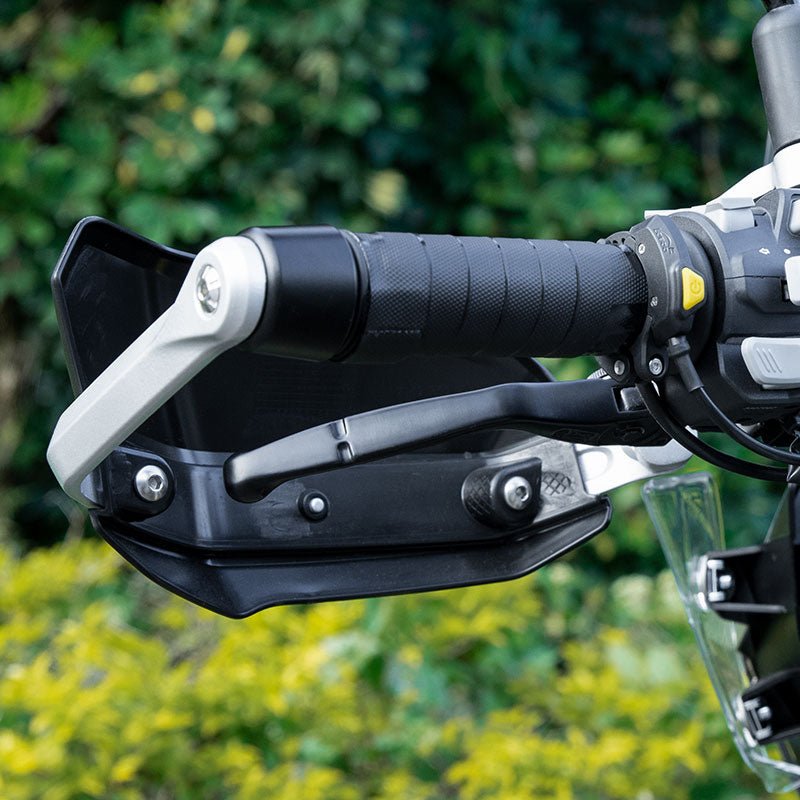
The Kaoko is a mechanical throttle friction lock. In practice, it works at the end of the handlebar and, by rotating the ring, increases friction on the throttle grip. The result is simple: the control does not spring back immediately with its usual speed, and you can loosen your grip with your right hand.
This distinction matters. Calling it cruise control is convenient because everyone understands what it is for, but its behavior differs from that of a factory electronic cruise control. The Kaoko system does not read speed, compensate for climbs, wind, or gradients, or automatically maintain km/h. Instead, it gives you adjustable resistance on the throttle, which is useful when you are covering asphalt for hours.
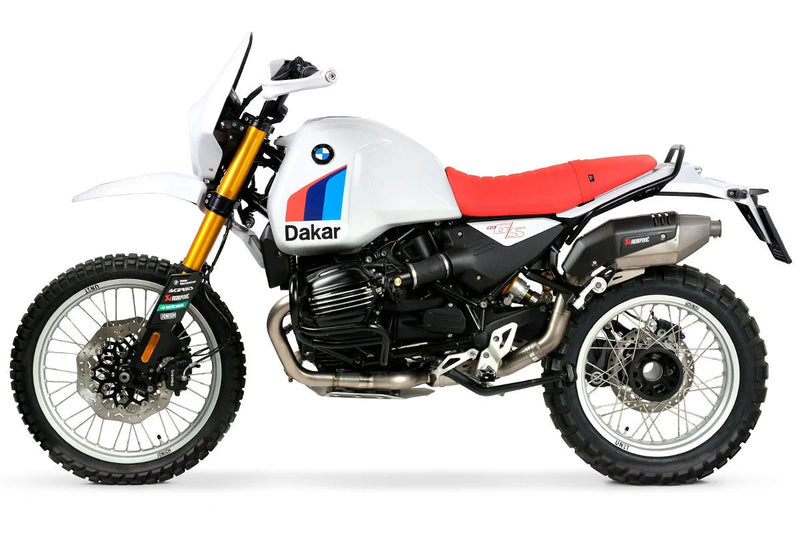
On a well-equipped BMW GS or a KTM Adventure designed for long-distance travel, it is one of those accessories that seem secondary until you spend a second consecutive day covering 700 km.
Kaoko cruise control review in real-world use
The practical benefit is one thing: it reduces right-hand fatigue on long rides. Not insignificantly, but not equally in every situation. On straight motorways or fast main roads, it is effective because it lets you loosen your grip, change your finger position, shake out your wrist, and recover some sensitivity without completely closing the throttle.
After the first few kilometers, the sensation feels natural. Once properly adjusted, the control remains manageable and does not give you the foreign-object feeling that inexpensive accessories sometimes leave behind. This is precisely where the Kaoko's strength lies: it does not try to do too much. It works simply, predictably, and mechanically.
Where is it less convincing? In traffic, during constant throttle opening and closing, and on technical off-road terrain. If you ride a Ténéré 700, an Africa Twin, or an F 850 GS on uneven surfaces, constantly modulating the throttle, this accessory loses much of its advantage. That is not a defect. Its field of use has simply changed.
When it really helps and when it does not
If your main use is medium- to long-distance motorcycle touring, the Kaoko makes sense. If you often ride long stretches to reach mountain passes, the Balkans, Northern Europe, or simply the boring section before the enjoyable part of the trip, it helps in one specific way: conserving energy.
On a loaded maxi-enduro, perhaps with panniers, a tall windscreen, and noisy knobby tires, fatigue does not come only from the seat. It comes from continuous micro-tensions. Right hand, shoulder, trapezius. Reducing one of these tensions makes a difference at the end of the day.
If, on the other hand, you mainly use the bike for short rides, tight mountain roads, spirited riding, or frequent off-road riding, the Kaoko becomes less central. Not useless, but less decisive. In these cases, you might install it and use it rarely. It is worth saying this because it is the kind of accessory that greatly satisfies those with the right need and leaves those expecting a real cruise control underwhelmed.
Fitting and compatibility: the point not to underestimate
With products like this, compatibility matters more than the name. The Kaoko comes in specific versions based on the handlebar, bar ends, handguards, and throttle-control geometry. This is why it should not be treated as a universal accessory.
If your bike has original handguards or aftermarket ones, or if you have already changed the handlebar weights, checking compatibility becomes essential. On models such as the BMW R 1250 GS, R 1300 GS, Honda Africa Twin, KTM 890 Adventure, Triumph Tiger, or Ducati DesertX, even a variation at the end of the handlebar can completely change the type of kit required.
When the kit is the correct one, fitting it is generally not complicated for anyone with basic mechanical skills. But the point is not just to screw on a component. The point is to achieve a clean adjustment: enough friction to support the throttle, but not so much that it feels unnatural when releasing it. Once properly installed, the control must always remain controllable and predictable.
How it behaves in everyday riding
This is where the Kaoko cruise control review should be read without false expectations. On the motorway, it works well. On long stretches at a constant speed, it works well. On flowing main roads, even with slight variations, it remains useful.
When crosswinds, gradients, or traffic appear, the system's inherent limitation becomes clear. If the motorcycle loses speed uphill, you have to correct it. If it accelerates downhill, you have to correct it. If traffic ahead slows down, you must be ready to close the throttle immediately. That is why the Kaoko improves comfort; it does not automate riding.
The good news is that, being mechanical, its behavior remains consistent. No electronic logic, no interface, no button to search for while wearing gloves. If you like a minimalist solution, that is a real advantage. Fewer things to interpret and fewer things to manage during the ride.
Materials and perceived quality
On an accessory you constantly touch with your right hand, perceived quality matters more than it might seem. The ring, machining, and precision of the fit make the difference between something that feels like part of the motorcycle and something that looks like it was added afterward.
In this respect, the Kaoko is convincing because it delivers a clean mechanical feel. There is no unnecessary play, and no sense that you have to find the right point by trial and error every time. This precision is not merely an aesthetic detail. It is what allows you to use it confidently on long rides, even when tired or wearing heavy touring gloves.
Limitations to consider before buying
The first limitation is semantic but concrete: it is not cruise control in the automotive or electronic sense of the term. If you are looking for a system that automatically maintains speed, this is not for you.
The second limitation is the riding environment. On tight, twisty roads or demanding off-road terrain, the advantage decreases significantly. On a Himalayan or a Ténéré used for mixed trips with a lot of off-road riding, it can remain installed without actually being used very often.
The third limitation is the need to choose the correct kit. Anyone who prepares a motorcycle with handguards, larger grips, or ergonomic modifications already knows that details can waste time if they are wrong from the start. The same rule applies here: compatibility first, everything else second.
Who I would really recommend it to
I would recommend it to the long-distance tourer who rides long stages and wants to arrive less tired at the day's final fuel stop. I would also recommend it to anyone using a middleweight or maxi adventure bike for mixed trips with a lot of connecting asphalt, where the transfer is not an interlude but half the mileage.
I would be less likely to recommend it to anyone looking for an emotional upgrade or a solution to use in every situation. The Kaoko is practical, not spectacular. It helps you feel better in the saddle when the road stretches out and the scenery changes more slowly than the odometer.
If you are new to touring accessories, it is also a good example of a sensible purchase: it adds no bulk, has no noticeable weight, requires no power supply, and solves a specific problem. Provided, once again, that you actually have that problem.
The final verdict in this Kaoko cruise control review
The Kaoko makes sense if you focus on fatigue, not speed. It is an accessory designed well for a very specific need: giving your right hand a break without complicating the motorcycle. On long days of asphalt, it does its job. Outside that context, it remains useful, but less decisive.
For a motorcycle genuinely prepared for touring, this is the kind of component that justifies itself on the road, not in the specification sheet. If you spend many hours with the throttle barely open and want to arrive at your destination less tense, the Kaoko deserves consideration. If, instead, you are looking for a system that does everything by itself, it is better to know before installing it: its strength is precisely that it remains simple and asks you to do only what is truly necessary.