You start in the morning with good asphalt, find roadworks midday, then the last 40 km towards the border are a strip of potholes, gravel, and dust. This is where a well-done Africa Twin setup for the Balkans stops being an accessories list and becomes a matter of rhythm, fatigue, and margin of error.
The CRF1100L is already built as a suitable motorcycle for real travel. But between a long weekend in Italy and a week in the Balkans, the context changes: more variable terrain, more hours in the saddle, more likelihood of overloading the bike more than usual. Preparing it well doesn't mean making it heavier. It means eliminating weak points that, on normal roads, remain tolerable, but on a long journey become nuisances or problems.
Africa Twin Setup for the Balkans: Where to Start
The first question isn't which accessory to mount. It's how you'll use the bike. If you'll mostly be doing asphalt transfers with some detours onto easy dirt roads, the priorities are essential protection, long-distance comfort, and stable luggage. However, if your route includes secondary passes, bumpy gravel roads, and sections with loose stones, weight and load distribution matter at least as much as total capacity.
With the Africa Twin, the most common risk is wanting to cover every possible scenario and ending up with a bike that's taller, wider, and harder to manage when stationary. In the Balkans, you might have to make U-turns uphill, park on uneven ground, or push the bike by hand in front of accommodation or a pass. In those moments, a theoretically complete but too-heavy setup immediately comes at a cost.
Protection: Few, But Placed Where Needed
If there's a sensible starting point, it's motorcycle protection. Not because "it will fall anyway," but because on uneven ground, a misplaced kickstand, a low-speed slide, or a badly hit stone can ruin your schedule.
For an Africa Twin destined for the Balkans, engine guards and a skid plate almost always make sense. The engine guard helps in stationary or near-stationary falls, typical when maneuvering a loaded bike. The skid plate becomes important as soon as you leave decent asphalt: not just for stones, but for steps, ruts, and sharp impacts coming from below when the bike is fully loaded.
The point here isn't to install the most voluminous protection possible. It's to assess actual use. If you'll be doing light off-roading and a lot of asphalt, an overly intrusive solution can add weight without a proportional benefit. If, however, you already know you'll be passing over broken sections or military roads, more serious engine coverage is absolutely justified.
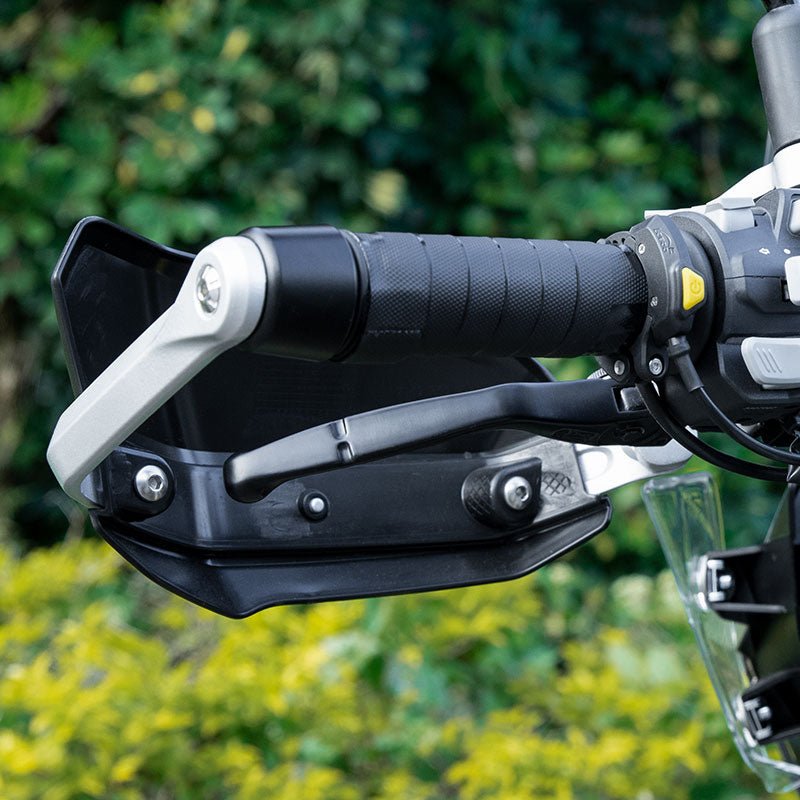
Handguards also deserve attention. With rain, wind, and low branches, they help more than they seem, and on cold or wet stages, they reduce hand fatigue. They don't change the bike, but they improve control when riding many consecutive hours.
Luggage: Less Volume, More Stability
In the Balkans, the right luggage isn't what holds the most. It's what doesn't force you to ride worse. On the Africa Twin, this means carefully considering rigid, semi-rigid, or soft bags.
If the trip is mainly road-based, with fixed overnight stays and organized gear, aluminum cases remain practical: you load and unload quickly, they protect the contents well, and they give you a clear structure. The downside is the lateral bulk. In narrow town centers, ferries, courtyards, and during slow maneuvers, you'll feel it.
If you anticipate more off-road riding or want a narrower, less nervous bike on bumpy terrain, semi-rigid and soft bags have concrete advantages. They weigh less, move less in case of impact, and lighten the overall feel of the bike. However, they require more discipline in packing. If you just throw everything in without criteria, you lose the advantage.
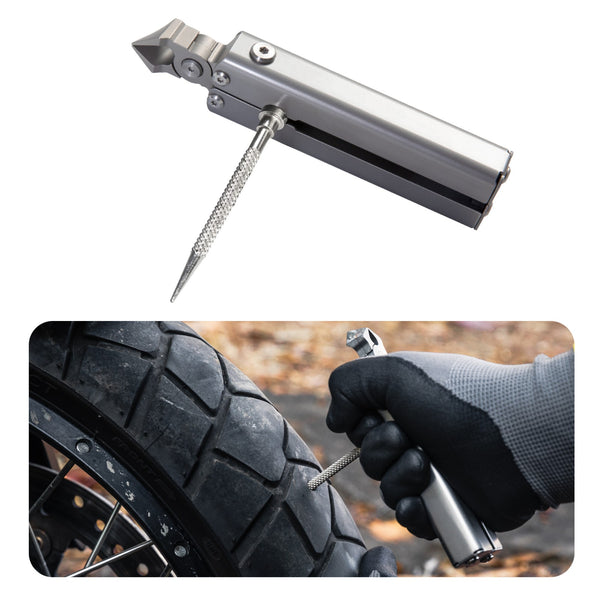
The useful rule is simple: dense weight goes low and close to the center of the bike. Tools, inner tubes if you carry them, repair kits, and small spare parts should not be high on the rack. The higher you raise the mass, the more challenging the Africa Twin becomes in slow changes of direction and on uneven ground.
A tank bag is often more useful than an extra duffel bag. Documents, tolls, power bank, rain gloves, clear glasses, water: everything you use three times a day must be accessible without disassembling half the bike. It's not flashy, but it saves you time at every stop.
Tires: The Right Compromise Depends on the Actual Route
On the topic of tires, mistakes are often made out of enthusiasm. The idea of starting with aggressive knobs is understandable, but if the trip involves 80 percent asphalt and many transfers, a tire too oriented towards off-road can tire you out faster, wear out quickly, and worsen comfort and noise.
For a sensible Africa Twin setup for the Balkans, there's one criterion: look at the actual kilometers you'll be off-road, not the ones you imagine. If gravel and dirt are part of the trip but not the focus, a 50/50 tire or even a slightly more road-oriented one can give you more overall balance. If, however, you already plan passes, poorly maintained tracks, or stages with variable surfaces after rain, then it makes sense to go more aggressive.
Load also matters. A tire that seems precise when you're riding alone can change a lot with full panniers and a loaded suspension. Before leaving, it's advisable to check wear, cold pressure, and the bike's behavior fully loaded over an entire day, not just on your commute or a Sunday ride.
Ergonomics: After 500 km, Theory Ends
If after four hours your wrists, knees, or back ache, the problem isn't the journey. It's your position. And in the Balkans, where you can go from a main road to an easy track on the same day, a wrong posture robs you of clarity precisely when you need it.
On the Africa Twin, it's worth checking three areas. The first is the saddle-footpeg-handlebar triangle. If you often ride standing or frequently alternate between sitting and standing, the handlebar position and footpeg support must feel natural. If you have to bend your back too much or put too much weight on your wrists to stand, you'll feel it after a couple of hours.
The second area is the saddle. There's no single "right" saddle: it depends on your height, weight, hip width, and riding style. A softer saddle isn't always better on long days. Sometimes a better-supported surface causes less fatigue after 300 km. Here, your real experience matters, not the technical specifications.
The third area is managing cold and rain. Heated grips and wind protection aren't just comfort items for leisurely touring. They are tools that help you stay precise when the temperature drops and you still have two hours to ride.
Navigation and Power: Small Things That Prevent Big Mistakes
On long trips, improvisation works until it doesn't. A stable, readable, and well-positioned navigation mount helps more than an extra bag. If you have to look down too much or your phone vibrates on every bump, you'll get distracted precisely on the sections where you should be reading the terrain.
The same applies to electrical power. A well-placed USB or 12V socket, with neat wiring and easy access, prevents flying cables, stressed connectors, and unnecessary stops for recharging. These are details, but in real travel, details make the difference between a prepared bike and a makeshift one.
If you use an intercom and navigation together, test everything beforehand. Audio, visibility, gloves, light rain, full lock. Better to discover at home that the cable is too tight or that the mount touches where it shouldn't, not 700 km from home.
What to Avoid in a Balkans Setup
The classic mistake is treating the trip as an extreme expedition even when it's not. More accessories don't mean more reliability. They mean more weight, more bolts to check, and more things that can loosen.
The second mistake is overloading the rear. A full top case and a high duffel bag behind the saddle might be fine on smooth transfers. When potholes, tight hairpin bends, and gravel appear, they significantly worsen the bike's balance.
The third mistake is leaving without a real test fully loaded. If you install protection, change tires, add luggage and mounts, the bike changes. Braking, weight transfer, steering response, support when stationary. Do at least a full day with the final configuration.
The Right Setup is One That Leaves You Margin
A good setup isn't about transforming the Africa Twin into something it's not. It's about making it work well in the context you're preparing it for. Protection where a trivial fall can cost you the trip, luggage that doesn't shift the center of gravity too much, tires consistent with the actual route, ergonomics that conserve your energy when the day gets long.
If you're preparing your bike for the Balkans, the most useful criterion is this: every accessory must solve a specific problem. If you don't know what problem it solves, you probably don't need it. When the bike remains clean, readable, and easy to manage even when loaded, you're already on the right track to enjoying the trip instead of constantly managing the setup.