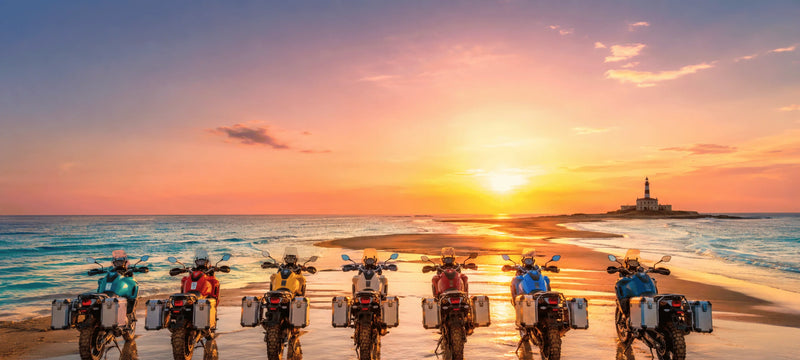
Tunisia doesn't forgive accessories chosen "just to be safe." If you load your Ténéré 700 like you're going on an alpine trip and then take it across fast tracks, rocks, sand, and long transfers, you'll quickly realize: too much weight up high, too much useless stuff, too little protection where it's really needed. A good Tenere 700 setup for Tunisia starts here - removing the superfluous and reinforcing the points that make a real difference on the ground.
Ténéré 700 setup for Tunisia: where to start
The base is excellent. The Ténéré 700 is born with a rare balance: a 21-inch wheel, honest chassis, an engine that handles transfers well and doesn't get you into trouble when the terrain worsens. This is precisely why it's best not to distort it.
For Tunisia, the goal isn't to turn it into a raid maxi overloaded with brackets, but to protect it in exposed areas, increase range and practicality, and allow you to stay in the saddle for hours without wasting energy. If you get the approach wrong, the bike remains reliable but becomes more tiring to manage as soon as the sand gets soft or you have to pick it up from a standstill.
The right criterion is simple: every accessory must solve a real problem. A low-speed fall, a long stage with crosswinds, continuous navigation under the sun, a repair far from asphalt. If it doesn't address one of these scenarios, you probably don't need it.
Protection: weight should be low, not everywhere
On the Ténéré 700, protection makes sense if it defends expensive or delicate components without adding too much weight to the front. The first element is the bash plate. In Tunisia, it's not just for protection against a sharp stone impact: it's also needed when you pass quickly over steps or broken tracks and the bike hits the bottom more than expected. Here, the actual coverage of the lower and side area matters, not just the massive appearance.
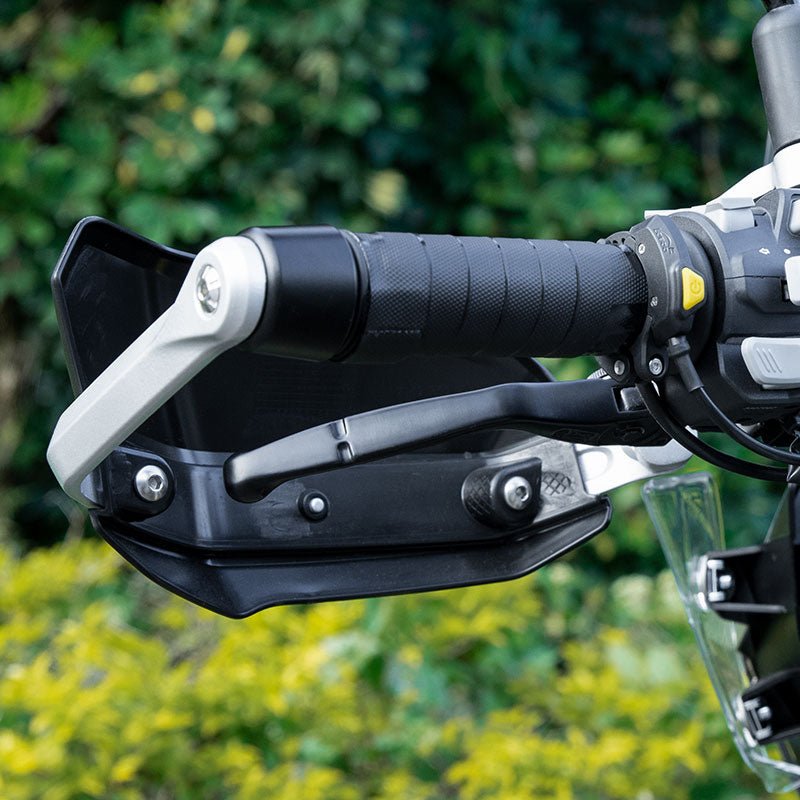
Immediately after come handguards with a rigid structure. If you lay the bike down in the sand or on a stony track, the brake or clutch lever must stay in place. The light original handguards are good for air and debris, less so for real impacts.
Crash bars are where honesty is most needed. On a Ténéré 700 loaded for Tunisia, they don't always make sense in their most extended and heaviest version. If you're on a trip with a lot of dirt roads and want to maintain agility, an essential set combined with targeted fairing and tank protection is often better. However, if you anticipate frequent low-speed falls, technical stages, or want to protect the radiator with more margin, a more complete structure can make sense. The price to pay is before you: more weight, more bulk, more steering inertia.
Luggage: less volume, more control
One of the most common mistakes in setting up a Ténéré 700 for Tunisia is installing large rigid panniers because "then everything fits." The problem is that off-road, you immediately feel that volume. It widens the bike, shifts weight to the rear, and makes every correction slower.
For this type of trip, soft or semi-rigid bags are often the most sensible choice. Standing on the pegs, they move less than it seems, tolerate resting on the ground better, and reduce the risk of damage to the subframe compared to a very rigid system in the event of a fall. This doesn't mean that aluminum panniers are wrong in absolute terms. If your route is more touring-oriented, with lots of asphalt and easy tracks, and you want more organization for your luggage, they can still work. But as soon as the riding becomes more physical, the advantage almost always goes to soft solutions.
A tank bag makes sense if it remains compact. Documents, water, power bank, glasses, small tools. Beyond a certain height, it starts to bother you when seated and especially when standing. At the rear, a well-secured waterproof duffel bag is better than two poorly stacked layers of luggage. The lower and closer the load is to the bike, the less tired you'll get.
Tires and range: two choices that change the trip
You can accept a less-than-perfect windshield or an improvable seat. A wrong tire, however, you'll feel every meter. For Tunisia, the choice depends on the ratio of asphalt to sand, but the logic remains the same: avoid overly road-oriented tires if you plan on real tracks. The Ténéré 700 works well with knobby or off-road oriented mixed tires, especially at the front, where precision and floatation matter more than many admit.
There's a trade-off. Noise, faster wear on asphalt, less grip in fast corners on blacktop. But the moment you leave the road and find loose sand or rocky terrain, that choice pays dividends.
The other point is range. It's not always necessary to increase it, but you need to think about actual stages, not ideal ones. If you're traveling in a group with varying rhythms, if you make detours, or if you encounter strong winds and slow sections, fuel consumption shifts. A supplementary fuel solution makes sense when it prevents you from riding with too narrow a mental margin. However, it should be integrated without turning the bike into a mobile fuel tank. Fuel is only useful as long as it doesn't degrade balance and weight management too much.Ergonomics: the difference between riding well and arriving tired
Tunisia combines hours in the saddle with sections where you work a lot with your legs and torso. This is why ergonomics isn't just about general comfort. It's about efficiency.
Footpegs are often the first sensible upgrade. A wider platform offers better support with rigid boots, reduces fatigue on the soles of your feet, and gives you more control when the terrain breaks up. The handlebars also deserve attention, but only if your standing position isn't natural. Don't change the bend for fashion: change it if you feel closed shoulders, strained wrists, or difficulty staying centered on the bike.
The seat is a classic component that divides opinion. Some get along well with the original, while others start shifting constantly after 300 km. If you anticipate long transfers, a better-distributed seat can have more impact than many aesthetic accessories. If, however, the trip is very off-road, be careful not to choose a seat that's too wide and hinders your movements.
Heated grips aren't a priority for a trip to Tunisia, but a well-installed USB or 12V socket is. Between navigation, intercom, and smartphone, stable power quickly stops being a minor detail.
Navigation and lighting: useful, but without overcomplicating your bike
On such a trip, navigation support must remain readable, stable, and protected from vibrations. You don't need a rally tower if your use is tourist-adventure. You need to see the track well without distracting your gaze too much and without finding yourself with brackets that loosen on the tracks.
The support should be chosen based on the device you actually use. If you navigate with a smartphone, take care of vibration dampening and power. If you use a dedicated GPS, legibility and position relative to the windshield matter. The typical mistake is to mount everything and then discover that, when standing, the display disappears behind the cables or reflects too much.
The discussion about auxiliary lights is similar. They can make sense for late returns, dawn crossings, or visibility on rural roads, but they are not automatically indispensable. Adding wiring and exposed points just to have more light doesn't always improve the trip. If you install them, they must be well-secured and protected. If you don't really need them, it's better to keep the system simple.
Tools, spare parts, and what's really worth bringing
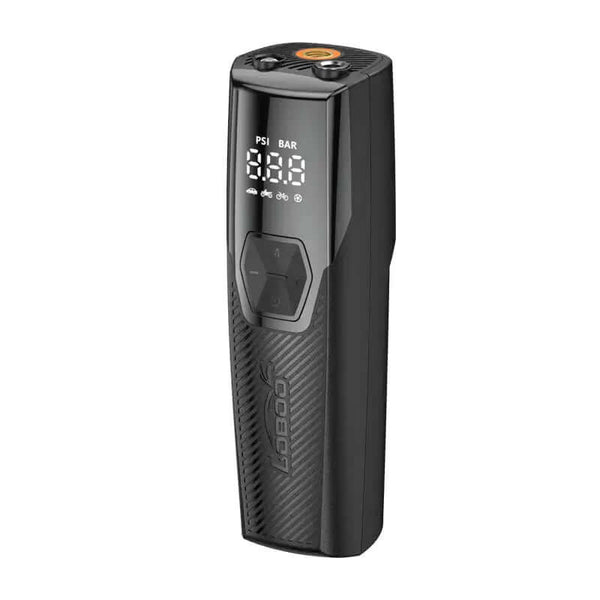
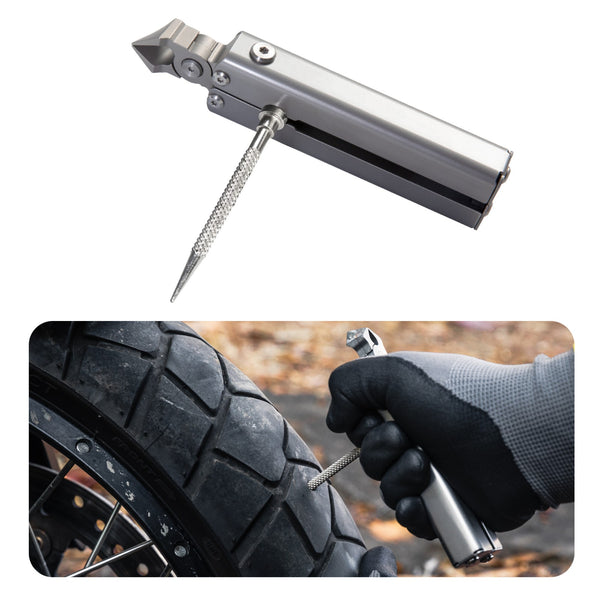
The right kit isn't the most complete one. It's the one that allows you to get going again from probable breakdowns. For a Ténéré 700 heading to Tunisia, the reasoned minimum includes tools consistent with the bike's actual fasteners, a tire repair system, inflation, zip ties, technical tape, and a few small but sensible spare parts.
Here, a rule applies that avoids a lot of unnecessary weight: bring what you know how to use. An extra lever or an inner tube may only make sense if you are able to intervene or are traveling with someone who really knows how to do it. Otherwise, you're carrying pieces that won't get you out of trouble.
Water should also be considered equipment, not a random accessory. If you have to stop every time to drink, you'll drink less than necessary. An accessible hydration solution while riding really changes the day, especially on hotter stages or slow sections.
What you can leave at home
On a bike like the Ténéré 700, the margin between well-equipped and overloaded is thinner than it seems. For Tunisia, you can often do without enormous windshields, bulky rigid panniers, double brackets "just in case," redundant tools, and accessories mounted just because they look like an expedition.
If a component adds weight, bulk, or complexity, it must give you a clear advantage in safety, reliability, or fatigue management. This is the filter we also use when selecting accessories for this type of bike: not what fills the spec sheet, but what really holds up when the day gets long and the track worsens.
Properly preparing the Ténéré 700 for Tunisia doesn't mean making it more extreme. It means keeping it effective for the entire journey, from the long transfer to the track that forces you to ride cleanly. If at the end of the day you still have energy for the next day, then your setup is working for you.