

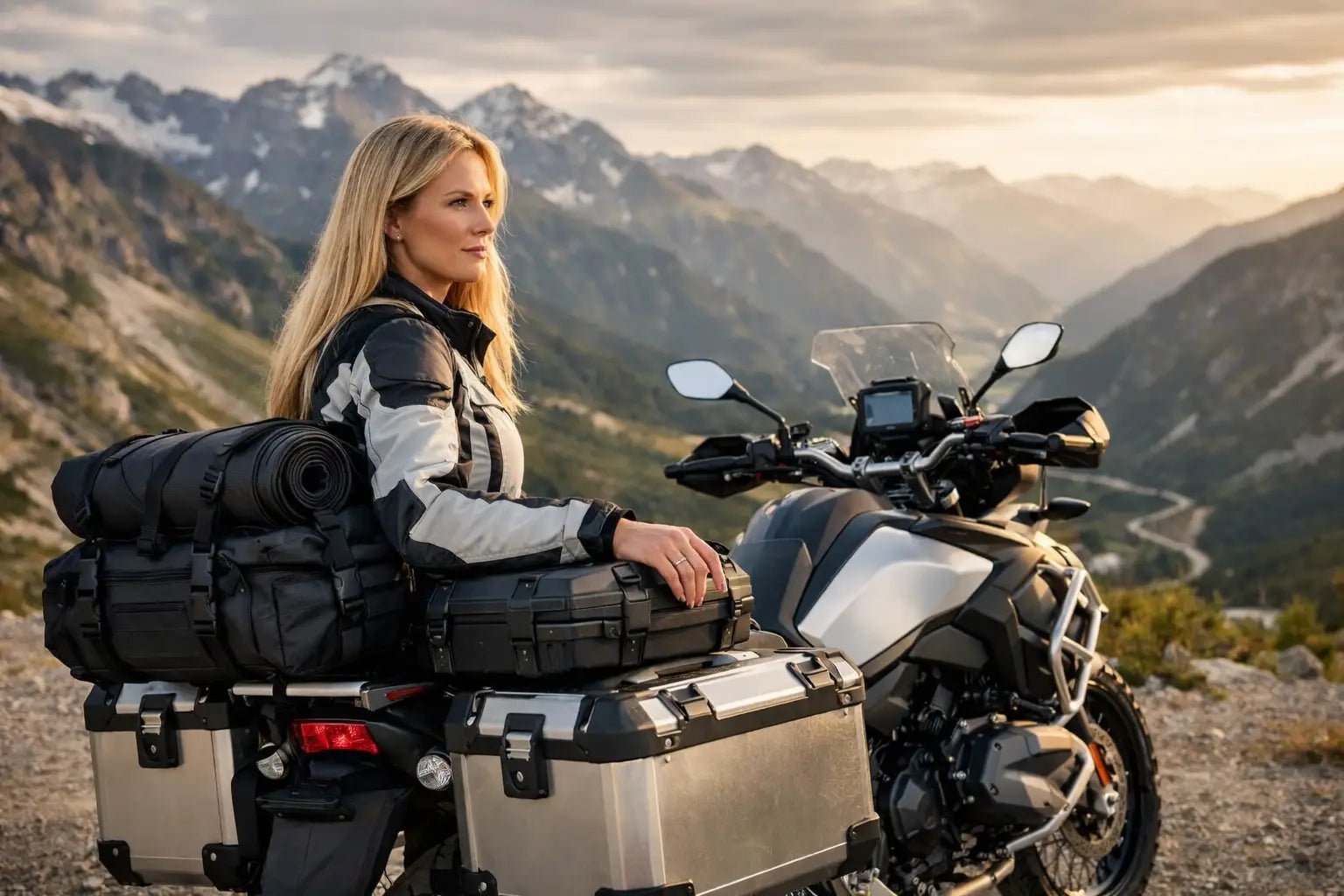
If you've taken long trips in the last ten or fifteen years, you've seen the evolution of motorcycle travel luggage without needing catalogs. Previously, you often chose between two extremes: rigid aluminum to carry a lot and protect everything, or soft bags to use only when needed. Today, it's not just about how much you carry. What matters is how the motorcycle remains balanced, how well the system holds up on damaged pavement or dirt roads, and how much time you waste every time you have to mount, dismount, or search for something in the rain.
The evolution of motorcycle travel luggage starts from real-world use
The most evident change doesn't concern aesthetics, but rather how luggage addresses concrete problems. Those who travel with a BMW R 1250 GS, an Africa Twin, or a Tiger 900 don't use their luggage in the same way as someone going on a two-day trip with a Ténéré 700 or a KTM 890 Adventure. And in fact, modern luggage has become more specialized.
For years, the logic was simple: more volume, more security. It worked, but only up to a certain point. On a fully loaded maxi-enduro for two weeks, a pair of aluminum side cases provided order and protection. However, it added weight high up and to the outside, widened the bike in traffic, and required robust frames. On rough dirt roads, that mass was keenly felt.
From this, the true evolution began: no longer luggage designed only to contain, but systems engineered not to worsen the bike's behavior. Weight, load distribution, ease of access, and modularity have become central criteria.
From pure aluminum to hybrid systems
Aluminum remains a benchmark, especially for those who do road and mixed touring with long stages, frequent overnight stays, and equipment to protect. It has clear advantages: a regular shape, usable volume, secure closures, a structure that withstands impacts and intense use. If you need to carry clothing, tools, electronics, and perhaps work on the go, internal organization matters a lot.
The limit, however, is known to anyone who has truly ventured off-road. A rigid case is heavy, can transmit stress to the frame, and in certain scenarios penalizes more than it helps. It's not an absolute flaw - it depends on where you go and how you ride - but it's why semi-rigid and technical soft solutions have grown in popularity.
Semi-rigid cases have shifted the focus to a different balance. Less mass, more compact profiles, greater vibration tolerance, and often more practical management when you need to remove luggage at the end of the day. They don't always offer the same mechanical protection as aluminum, but for many travelers, the gain in rideability largely compensates.
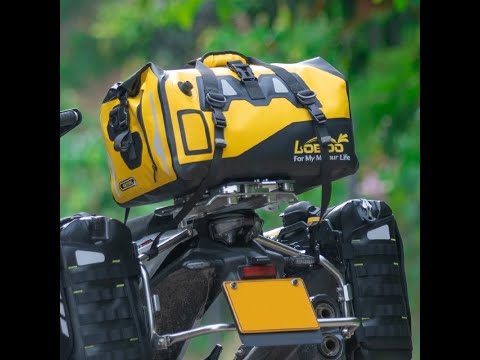
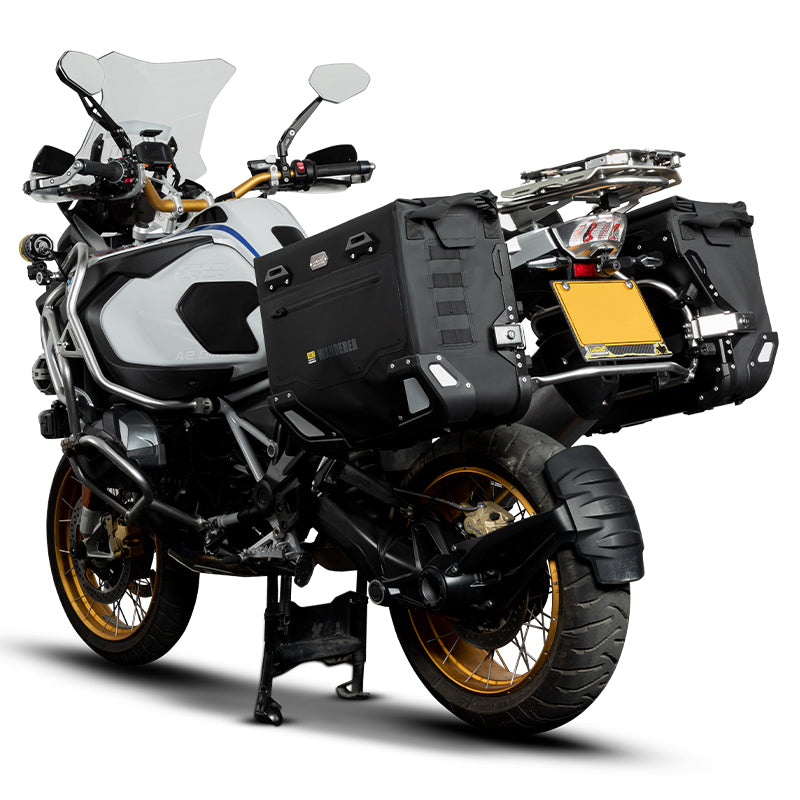
Soft travel bags, in turn, are no longer a fallback. In well-designed products, everything changes: anti-abrasion materials, effective roll-top closures, anchoring points designed not to move, organized interiors, and systems that remain stable even on fast tracks or uneven terrain. On a Ténéré 700, a DesertX, or a carefully used Himalayan, the advantage is immediately felt: the bike remains lighter to handle, and if you fall at a standstill or almost, the luggage tends to be more forgiving.
Materials and details: this is where the real leap is seen
When it comes to the evolution of motorcycle travel luggage, materials matter more than marketing sheets. It's not enough to know if a case is rigid or soft. You need to look at how it's built and where it's reinforced.
In aluminum cases today, the difference is made by well-calibrated thickness, protected corners, clean welds, the quality of hinges, and the seal of gaskets. These are all inconspicuous details, but decisive when you open a side case after hours of rain or after a day of continuous vibrations. A closure that remains precise over time is worth more than a flashy finish.
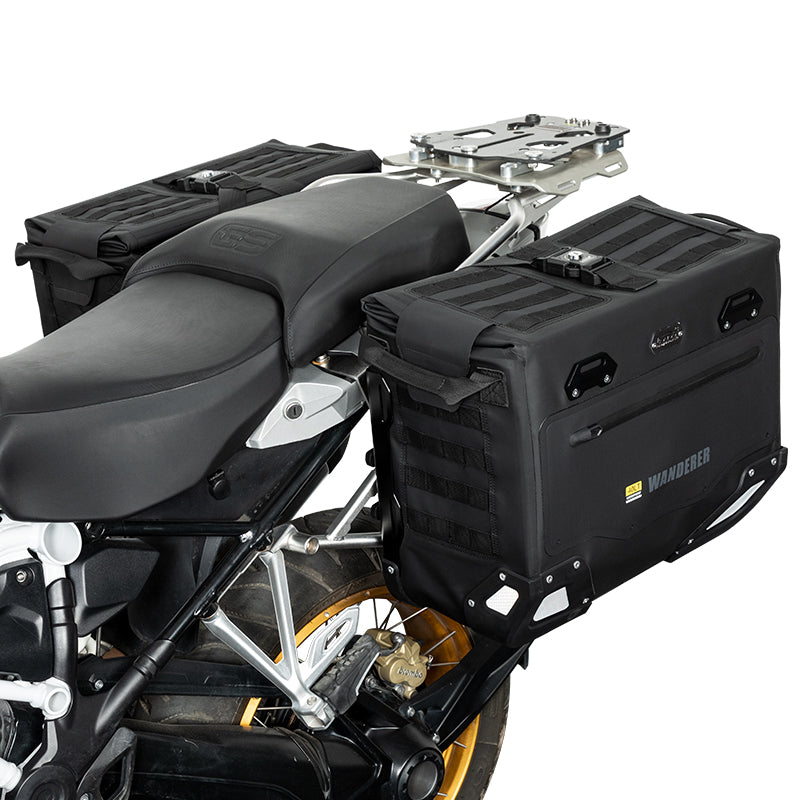
In semi-rigid and soft cases, the leap has been even sharper. Layered fabrics, internal panels that maintain shape, stiffened bases at contact points, anti-rotation systems, and buckles that adjust without going crazy with gloves on. These are details that reduce real problems: rubbing on side panels, shifting loads, inconvenient opening with a full bag, straps that need another adjustment after 300 km of dirt road.
Here it's fair to be honest: no material solves everything. Aluminum still wins in order, protection, and quick access. Soft bags often win in weight, adaptability, and dynamic behavior. Semi-rigid ones are in the middle, but only if the design is well executed.
Assembly and compatibility: today they matter as much as capacity
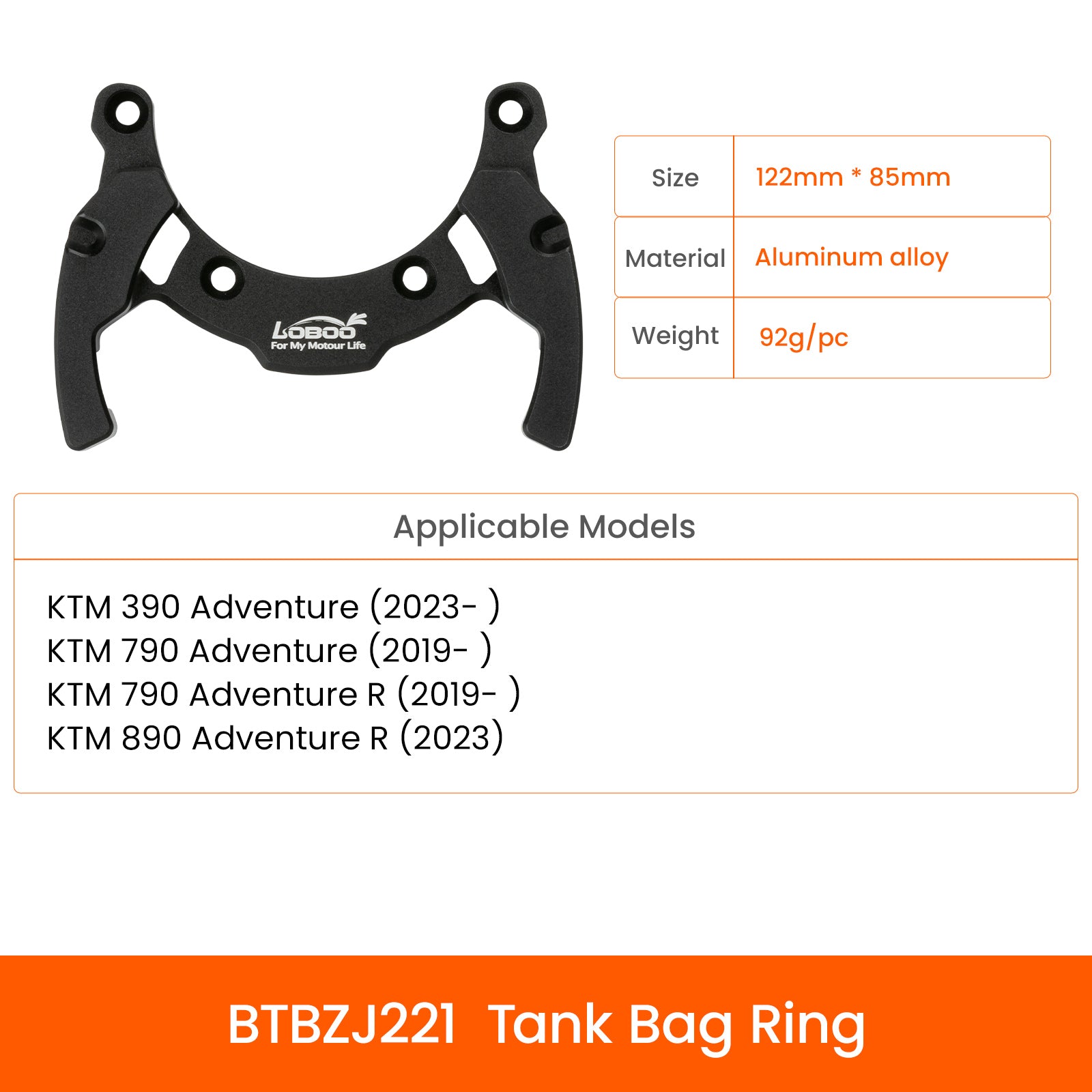
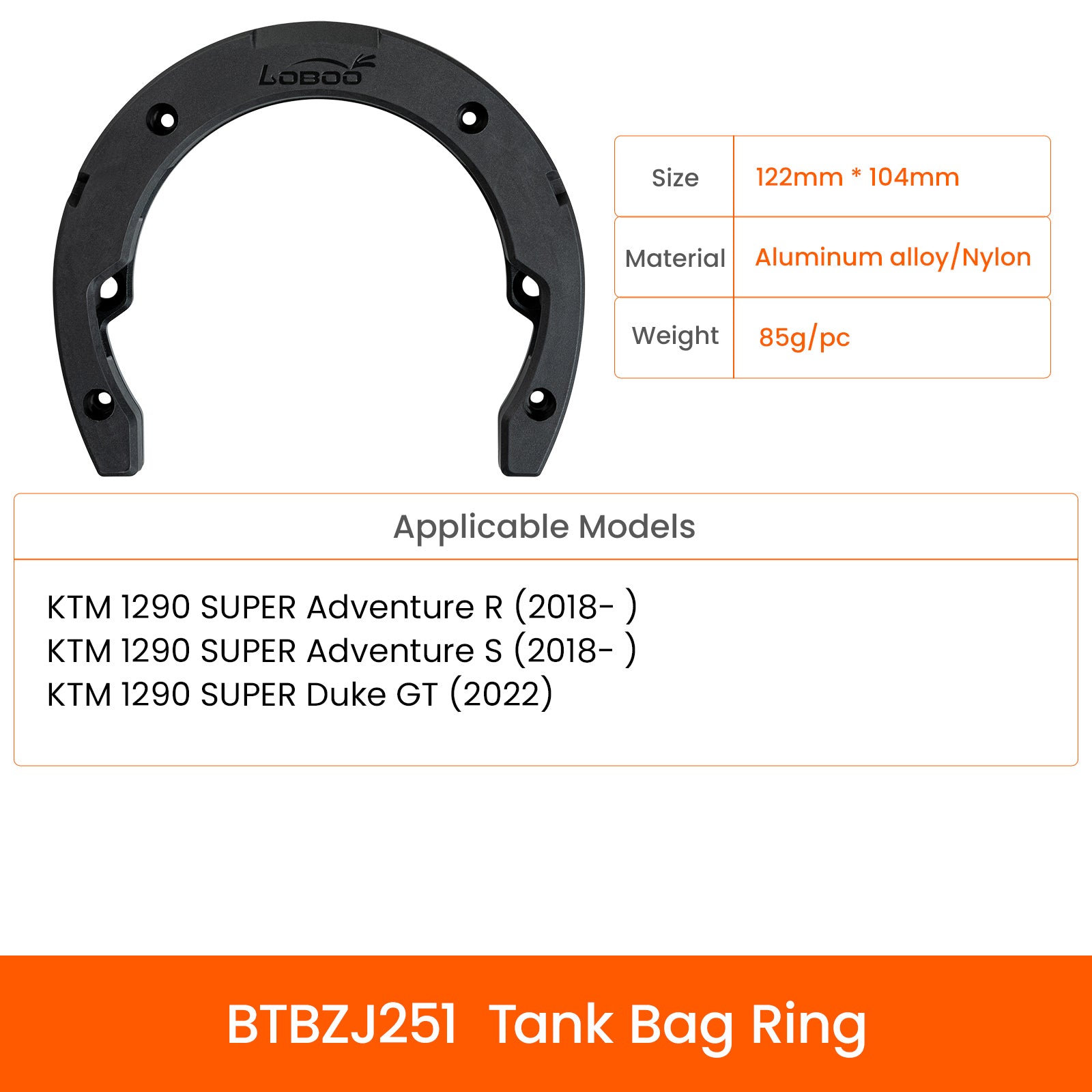
Once upon a time, we talked almost exclusively about liters. Today, the issue is different: how the system integrates with the motorcycle. On models like the R 1300 GS, KTM 1290 Super Adventure, or Tiger 1200, luggage cannot be evaluated without looking at attachments, frames, exhaust, symmetry, and ease of removal.
Model-specific compatibility has become central because a valid case in the abstract can be wrong on your bike. The exhaust side bulk, the final width, the point where the weight rests, and even the practicality of use with passenger footpegs or a two-piece seat all change. If you travel as a couple, for example, a poorly placed case can penalize passenger boarding or foot space.
Mounting systems have also made progress. Today, many riders seek solutions that allow everything to be removed in a few minutes, without sacrificing stability. This is a sensible request: a touring motorcycle must remain versatile. It's one thing to prepare it for three weeks in the Balkans, another to use it on a weekend without carrying unnecessary structure and weight.
More lightness, but without being deceived
In recent years, the word lightness has become central, and rightly so. Every kilogram saved on luggage is a kilogram you don't have to manage when maneuvering, braking, and on uneven terrain. But the point is not to chase the lowest number.
A very light but unstable case, difficult to load, or uncomfortable to close will tire you out more than a slightly heavier but well-designed one. This is especially true for those who use the bike truly loaded and not for a daily outing. Weight should be read together with support rigidity, load position, and the speed with which you can organize what you carry.
This is why the right choice depends on the scenario. If your typical trip is road-based, with long stages, hotel or equipped camping, and a lot of asphalt, a rigid solution often remains the most rational. If your real trip includes rocky terrain, light water crossings, falls from a standstill, and continuous changes of pace, it makes sense to look at lighter and more forgiving systems. If you alternate everything, the most interesting area today is that of modular systems.
Safety and practicality have shifted priorities
Another key step in the evolution of motorcycle travel luggage is this: it's no longer just about how much a case can withstand, but how much it simplifies your day. It seems like a detail, but it isn't.
Opening a side case without spilling its contents, securing a tail bag without covering useful access points, loading rain gear in an accessible position, dismounting luggage in front of a hotel without losing ten minutes. These are all things that weigh more than the declared liters.
Safety should also be interpreted practically. On the road, the stability of the system at high speeds and with crosswinds matters. Off-road, it matters that the luggage doesn't move and doesn't turn the bike into something unpredictable. At the end of the day, passive safety also matters: reliable closures, solid handles, components that don't loosen after thousands of kilometers.
How to choose today without repeating past mistakes
The most useful way to understand this evolution is to start with three questions. The first is where you actually ride, not where you imagine going. The second is how often you dismount and remount your luggage. The third is how sensitive you are to weight and bulk when riding slowly or standing on the footpegs.
If your typical trip is road-based, with long stages and a lot of organized gear, a rigid case still makes a lot of sense. If your real trip includes rocky sections, light fords, falls from a standstill, and continuous changes of pace, it makes sense to look at lighter and more forgiving systems. If you're in the middle, it's worth considering semi-rigid or modular solutions, provided that compatibility with your motorcycle is clear and leaves no doubt.
At Endurrad, this approach is simple: don't ask yourself which luggage is fashionable, but which system works well on your bike and for your type of trip. That's where a more expensive choice initially stops seeming expensive, because it avoids mistakes that you then pay for in stability, practicality, or durability.
Travel luggage has changed because the way we travel by motorcycle has changed. Today, you don't need to carry more stuff. You need to carry the right stuff, in the right place, with a system that doesn't complicate the road when the road complicates itself.


Share:
How to adjust touring motorcycle ergonomics
How to choose adventure motorcycle footpegs