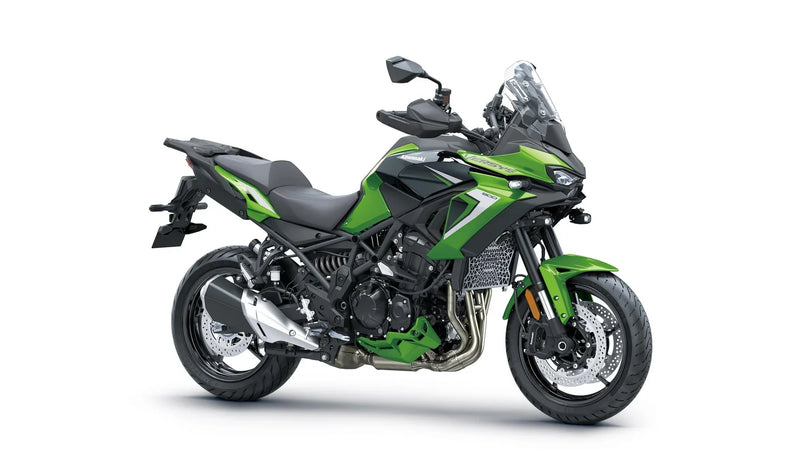
When people talk about «Aprilia accessories» in a motorcycle accessories shop, the risk is being too general: Aprilia produces the Tuono, RS, RSV4, Shiver and Dorsoduro, as well as the Tuareg. But if you are looking for touring accessories for an Aprilia, in the vast majority of cases you are talking about one bike: the Tuareg 660, the only true adventure bike in the range, with its Rally variant. That is why Endurrad's Aprilia catalogue is, in practice, entirely a Tuareg 660 catalogue.
Preparing it for travel does not mean fitting everything available. It means choosing protection, luggage and ergonomic accessories based on how you will actually use the bike: long asphalt transfers, mixed off-road riding with frequent stops, or trips for two with a full load of luggage. Here you will find what really exists for the Tuareg 660, what is available today and what Endurrad does not yet have in its catalogue.
In brief. For the Aprilia Tuareg 660 (204 kg kerb weight, 18 L tank, 860 mm seat height - official Aprilia figures), the Endurrad catalogue covers four real areas: protection (LOBOO CHG441 crash bars and Barkbusters BHG-105 handguards), luggage (JP441B side racks and Pike Tracker pannier kit, both available), ergonomics (CJG441 handlebar risers and LOBOO folding mirrors) and electronics (Denali CANsmart control unit for the standard CANbus). Several Tuareg-specific codes are temporarily out of stock: in these cases, the link leads to the dedicated collection, not to an empty product page.
What's still missing. Endurrad does not currently have a dedicated engine skid plate for the Tuareg 660: if you are looking for sump protection, for now the options are crash bars or a custom solution, not a ready-to-order catalogue product.
The Aprilia catalogue on Endurrad is the Tuareg 660, not «Aprilia motorcycles»
The Tuareg 660 was launched in 2021 as a lightweight road enduro, designed more for genuine off-road riding than for pure asphalt touring. It has a 659 cc twin-cylinder engine producing 80 hp at 9,250 rpm and 70 Nm at 6,500 rpm, with a kerb weight of 204 kg that makes it one of the lightest bikes in its category. The 860 mm seat height and 240 mm of suspension travel front and rear tell the same story: this is a bike that prioritises agility and control while standing on the footpegs, rather than the pure touring comfort of a 250 kg maxi enduro.
This also changes how it should be prepared. On a 240 kg GS, the challenge is often managing the weight during slow-speed manoeuvres. On the Tuareg 660, the challenge is different: preserving the agility that sets it apart even after fitting panniers, protection and luggage, without making it disproportionately heavier than what it offers as standard.
| Data | Value | Source |
|---|---|---|
| Displacement | 659 cc, parallel twin | Aprilia, official technical sheet |
| Power | 80 hp (59 kW) at 9,250 rpm | Aprilia, official technical sheet |
| Torque | 70 Nm at 6,500 rpm | Aprilia, official technical sheet |
| Kerb weight | 204 kg | Aprilia, official technical sheet |
| Seat height | 860 mm | Aprilia, official technical sheet |
| Tank | 18 L (3 L reserve) | Aprilia, official technical sheet |
| Suspension travel | 240 mm front and rear | Aprilia, official technical sheet |
| Tires | 90/90-21 front · 150/70 R18 rear | Aprilia, official technical sheet |
The crash bar protects the frame, but not yet the engine sump
Off-road, the first low-speed fall almost always hits the same points: engine sides, tank, and levers. For the Tuareg 660, the reference product in the LOBOO catalog is the CHG441 crash bar, made of 304 stainless steel with a 25 mm diameter tube and 2 mm wall thickness, designed to work around the engine perimeter and protect the tank and sides in a stationary or low-speed fall. At the time of checking, the code was out of stock in both finishes (black and silver): the correct link is the dedicated collection, where you can check when it is restocked.

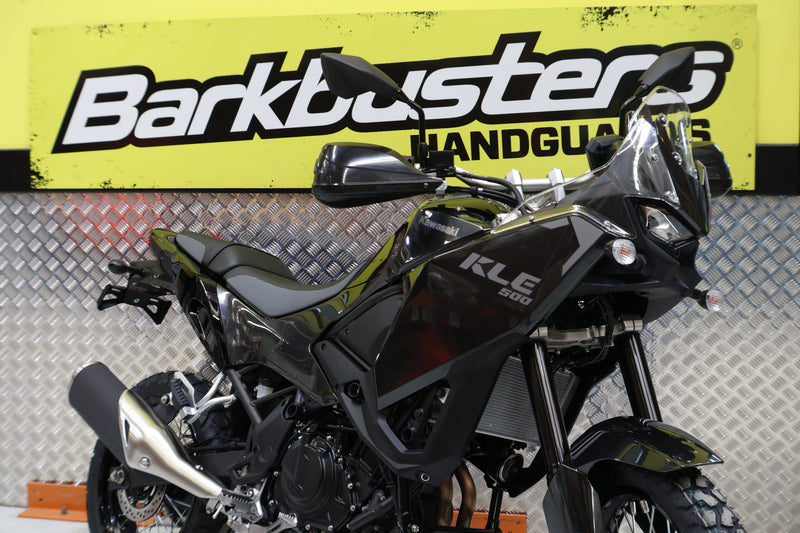
For hand protection, the reference is the Barkbusters BHG-105 mounting kit, the structure onto which the Barkbusters plastics are then mounted (JET, STORM, SABRE or EGO depending on the level of protection you are looking for). This code also shows zero units at the time of checking: the Aprilia Tuareg 660 accessories collection remains the correct link until it is restocked.
For those who want lighter protection without modifying the structure, Endurrad also offers PPF protective films for the bodywork (Eazi-Grip, available for the 2022-2024 versions and for the 2025-2026 Tuareg 660 and Rally 660) and tank grip pads, useful for maintaining a stable grip with your knees when riding standing up. These codes are also temporarily out of stock: same reference collection.
The Pike Tracker rack and cases are designed together, not assembled separately
On the Tuareg 660, a light and agile motorcycle, luggage weighs twice as much as on a 250 kg maxi enduro: every kilogram added to the sides is felt more in the standing riding behavior on dirt. That is why LOBOO developed the rack and case as a single set rather than as two separate purchases with compatibility that must be checked separately.

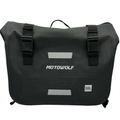
The JP441B side case racks (with reinforcement crossbar and mounting hardware) are available, as is the complete kit pairing them with the Pike Tracker aluminum cases already mounted. If you prefer lighter, less bulky luggage for mixed dirt riding, the Tuareg 660 is also compatible with the Wanderer semi-rigid cases (IPX6 waterproof, with removable 20 L bags) and the Pike Tracker aluminum cases sold separately from the rack, for those who want to choose the capacity independently.
For a more in-depth comparison of the configurations available for this model, the dedicated article Pike Tracker aluminum cases for Aprilia Tuareg 660 and Rally goes into detail on capacity, weight, and prices.
If you are looking for a top case in addition to the side cases, Endurrad also carries the dedicated JP441W top case plate, a complete kit with tubular support, bracket, and hardware designed specifically for this frame. The product is currently out of stock at the time of verification: in this case too, the dedicated collection is the up-to-date reference.
Risers and folding mirrors change the standing riding position on dirt
The standard position of the Tuareg 660 is set up for mixed use, but riders who spend a lot of time standing on the footpegs often find the handlebar too low and too close to the body. The LOBOO CJG441 handlebar riser raises the position by 25 mm, directly addressing this compromise. The product is currently out of stock at the time of verification: the Aprilia Tuareg 660 accessories collection is the correct reference for checking when it is back in stock.

As for mirrors, the LOBOO folding range is compatible with the Tuareg 660: the RM01 with a 115 mm round lens and the RM03, the most compact in the range, are both available, and you still need the dedicated adapter kit for the Tuareg's mounting thread, sold separately from the mirrors.
The CANsmart control unit prevents improvised wiring for those adding electrical accessories
Those who install auxiliary lights, USB sockets, or other electrical accessories on a modern motorcycle often face the same problem: where to draw power without cutting wires or interfering with the original control unit. For the Tuareg 660 from 2022 onward, Endurrad carries the Denali CANsmart GEN II control unit, which uses the motorcycle's standard CANbus to control up to four accessories from the handlebar controls, without additional relays or invasive work on the original electrical system. The product code is temporarily out of stock: the same reference collection applies when it returns.
A motorcycle cover costs little and extends the life of the bodywork between trips
It is not strictly a travel-preparation accessory, but for those who leave their motorcycle outdoors between stages - in front of a mountain shelter, at a campsite, on a ferry - the Endurrad 210D waterproof motorcycle cover is also compatible with the Tuareg 660 and is available: it protects against rain, UV rays, and dust without the cost or bulk of more substantial solutions.
How to choose in practice, in three questions
- Do you ride technical off-road terrain with a real risk of low-speed falls? Start with the CHG441 crash bar and consider Barkbusters handguards: they are the protections that cover the points a fall hits first.
- Do you travel two-up or with a full load for several days? The Pike Tracker frame and pannier kit provides organization and capacity; if you want to stay lighter on mixed off-road terrain, the Wanderer semi-rigid panniers are the alternative.
- Do you spend a lot of time standing on the foot pegs? The handlebar riser and sturdy folding mirrors are the changes that most improve comfort for this type of riding, more than an aesthetic accessory.
Endurrad Products for the Aprilia Tuareg 660 at a Glance
| Product | Code | Price | Availability (30/09/2026) |
|---|---|---|---|
| LOBOO Crash Bar | CHG441 | 360,00 € | Out of stock → collection |
| Barkbusters Handguard Kit | BHG-105 | 123,50 € | Out of stock → collection |
| LOBOO Side Frames | JP441B | 328,50 € | In stock |
| Pike Tracker Frame + Pannier Kit | JP441B + panniers | from €972.40 | In stock |
| LOBOO Handlebar Risers | CJG441 | 55,56 € | Out of stock → collection |
| RM01 Folding Mirrors | RM01 | 211,50 € | In stock |
| RM03 Folding Mirrors | RM03 | 207,00 € | In stock |
| LOBOO Top Case Plate | JP441W | 306,00 € | Out of stock → collection |
| Denali CANsmart Controller | DNLWHS26500 | 366,00 € | Out of stock → collection |
| Endurrad 210D Motorcycle Cover | ENDU210D | 39,00 € | In stock |
For out-of-stock codes, the Aprilia Tuareg 660 Accessories collection remains the up-to-date reference: it gathers all products tagged for this model, with real-time availability.
Frequently asked questions about preparing the Aprilia Tuareg 660 for travel
Which accessories are really needed to prepare an Aprilia Tuareg 660 for travel?
It depends on how you use it: for technical off-road riding, protection comes first (crash bars, handguards); for fully loaded touring, frames and panniers matter more; for riders who often ride standing, risers and sturdy folding mirrors make the biggest difference to everyday comfort.
Does Endurrad have an engine skid plate for the Tuareg 660?
No, not yet in the catalog. At the moment, the main protection available for this model is the LOBOO CHG441 crash bar, which protects the engine perimeter but does not replace a skid plate specifically designed for the engine casing.
Are the Pike Tracker panniers for the Tuareg 660 also suitable for the Rally version?
Yes: both the JP441B frames and the complete pannier kit are tagged for both versions, the Tuareg 660 and Tuareg Rally 660.
What is the difference between the aluminum panniers and the Wanderer semi-rigid panniers?
The Pike Tracker aluminum panniers offer more organization and capacity for long trips with a full load. The Wanderer semi-rigid panniers are lighter and less bulky, with removable IPX6 waterproof bags, and are better suited to mixed off-road use with a smaller load.
Is the CHG441 crash bar available immediately?
At the time of verification (30/09/2026), it is listed as out of stock in both finishes. The Aprilia Tuareg 660 Accessories collection shows updated availability and lets you receive a restock notification.
How much does the Aprilia Tuareg 660 weigh, and what does that mean for luggage?
204 kg in running order, according to official Aprilia data. It is one of the lightest adventure bikes on the market, which is why luggage that is too heavy or poorly distributed is more noticeable in off-road handling than on a 240-270 kg maxi-enduro.
Does the CJG441 handlebar riser change the motorcycle's type approval?
A riser that raises the handlebar position by a few millimeters, such as the CJG441's 25 mm, is a bolt-on accessory that does not alter the motorcycle's approved specifications. If in doubt, always check with a trusted workshop for your specific case.
Is an adapter kit required to mount LOBOO folding mirrors on the Tuareg 660?
Yes. The RM01, RM02, RM03, and RM03-Lite mirrors come without mounting hardware: the adapter kit for the Tuareg 660's thread is required and sold separately.
What is the Denali CANsmart control unit used for on the Tuareg 660?
It uses the motorcycle's standard CANbus to control up to four additional electrical accessories from the existing handlebar controls, avoiding parallel wiring and additional relays.
Do Barkbusters handguards require any other components besides the BHG-105 kit?
Yes. The BHG-105 is only the mounting kit that attaches the structure to the motorcycle: the protective plastics (JET, STORM, SABRE, EGO) are selected and purchased separately according to the desired level of protection.
Do Eazi-Grip protective films also fit the Tuareg Rally 660?
Endurrad offers separate versions for the Tuareg 660 2022-2024, Tuareg 660 2025-2026, and Tuareg 660 Rally 2025-2026: always check your motorcycle's exact year and version before purchasing.
What is the practical difference between crash bars and handguards for travelers?
The crash bar protects the engine, fuel tank, and sides in a stationary or low-speed fall. Handguards specifically protect the brake and clutch levers, which are often the first parts to break in a minor fall on dirt.
Why is a motorcycle cover also useful during a trip?
Because it protects the bodywork from rain, sun, and dust during extended stops outdoors - a real concern for anyone camping or leaving their motorcycle stationary for days during a trip.
Are you preparing your Aprilia Tuareg 660 for your next trip?
Tell us the year and version (Tuareg 660 or Rally 660): we'll tell you what's currently available among protection, luggage, and ergonomics products, and when temporarily out-of-stock items are expected back.
Further reading: Pike Tracker panniers for Tuareg 660 and Rally · motorcycle handlebar risers · Barkbusters handguards