Last updated: September 22, 2026. Data verified against the official regulations, FAQ, and participant utilities for the 12th edition.
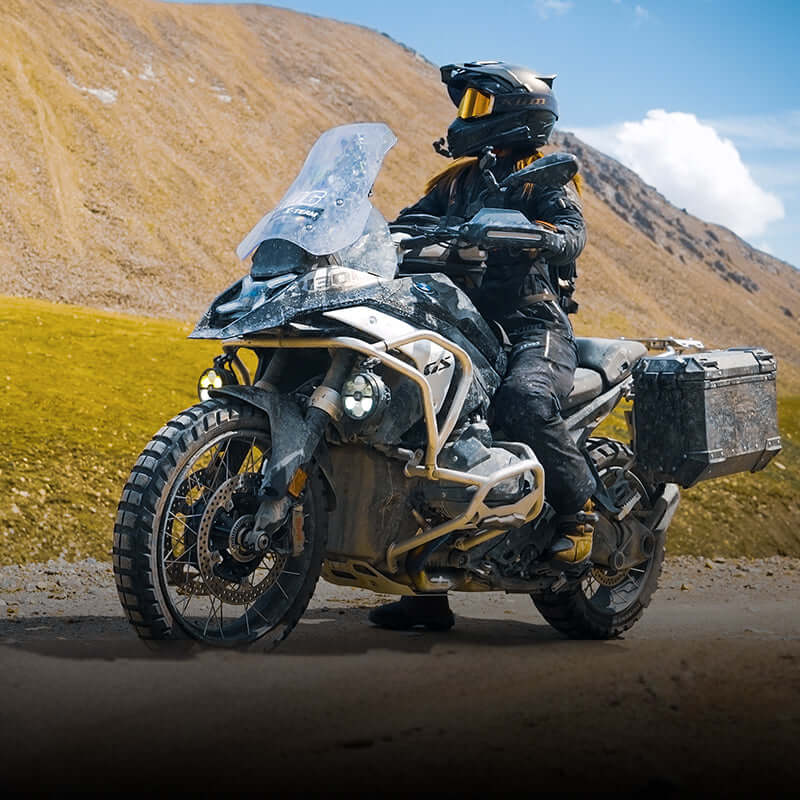
The Transitalia Marathon 2026 brings adventouring on maxi enduro bikes to Molise for the first time: four stages from Rimini to Termoli, from September 28 to October 1, preceded by the Transitalia Expo in Rimini (September 25-27). It is not a race: no timing, roads open to traffic, and the Highway Code always applies. This is the twelfth edition of the event organized by Motoclub Strade Bianche in Moto with Mirco Urbinati's Minoa Group, and the farthest south in its history.
In brief. Transitalia Expo in Rimini from September 25 to 27, 2026, with free admission. Start on Monday, September 28 at 8:30 a.m. from Piazzale Fellini, then Città di Castello, Cascia, Castel di Sangro (a new stage) and finish in Termoli on Thursday, October 1, covering more than 1,000 km overall.
What matters for those preparing the motorcycle: three GPX tracks per stage (Complex, Plain, Road), knobby tires for the off-road tracks, motorcycles over 140 kg, a single soft bag on the organizer's van, and the mandatory provision of inner tubes and tools.
Where the data comes from: the 2026 TM regulations, FAQ, and utility page on the official website. Where the organizers do not publish a figure, such as the distances of individual stages, we state that rather than estimate it.
The twelfth edition heads farther south than ever
Termoli is the southernmost point ever reached by the event, and Castel di Sangro is an entirely new stage.
The organizers stated that they were inspired by the 1989 Rally del Titano, faithfully recreating the locations and atmosphere of the major Italian raids of the late 1980s as closely as possible, using routes recovered from historic roadbooks. The stages were announced as long and highly technical, with constant changes of pace and long off-road sections tailored to maxi enduro bikes.
| Label | Transitalia Marathon 2026 |
|---|---|
| Overall period | September 25 – October 1, 2026 |
| Transitalia Expo | September 25-27, Rimini (Piazzale Fellini, Lungomare Tintori, Rotonda Lucio Battisti), free admission |
| Start | Monday, September 28, 8:30 a.m., Piazzale Fellini, Rimini |
| Finish | Thursday, October 1, Termoli (CB) |
| Stages | Città di Castello, Cascia, Castel di Sangro, Termoli |
| Route | Over 1,000 km according to the regulations; distances for individual stages not published |
| Type | International non-competitive adventouring and motorcycle touring event, included in the FIM Adventure Touring calendar |
| Motorcycle | Modern maxi enduro and rally bikes, historic motorcycles up to 1992, road motorcycles in the Concept category; specialist enduro bikes and quads excluded |
| Participants | Limited entry, maximum 350 according to the regulations |
| Organization | Motoclub Strade Bianche in Moto A.s.d. with Minoa Group sas |
| Patronage | FMI and FIM, patronage of the Ministry of Tourism for the second consecutive year |
Who's behind the 2026 edition
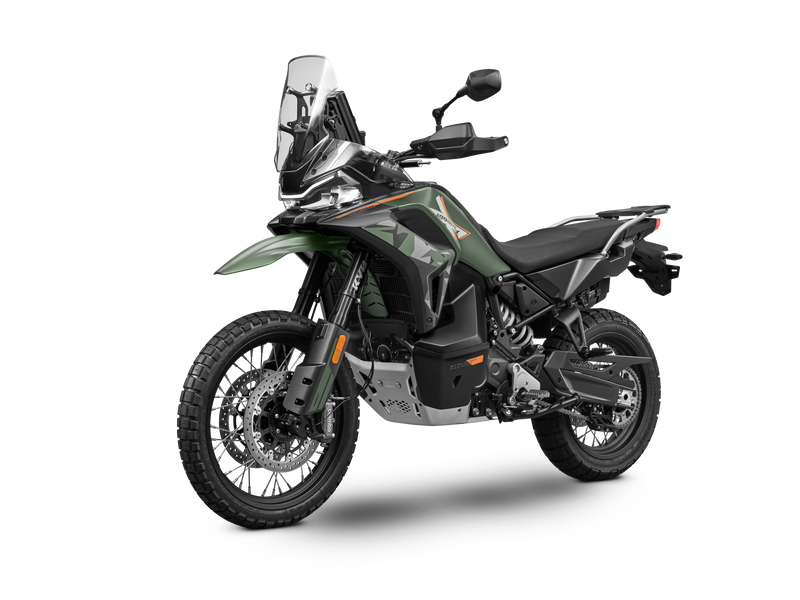
This year's event is jointly led by Mirco Urbinati, founder of Transitalia, Alessandro Masetti, and Beppe Gualini. Morbidelli returns as Official Lead Motorcycle, the lead bike, together with the Rally Team Azzurrorosa, and brings its adventure range to the Expo demo rides. Ducati is officially present for the second year: those who register with the company can tackle the Complex track accompanied by Product Genius staff and Ducati riders. According to reports in the trade press, almost 400 participants from 23 countries took part in the 2025 start.
Four stages from Rimini to Termoli, through five regions
The organizers have not published the mileage for the individual stages, so we do not report it. The regulations do, however, recommend an average of around 35 km/h: a figure that says a lot about the type of roads.
| Date | Day | From | To | Arrival and end-of-stage dinner |
|---|---|---|---|---|
| September 25-27 | Transitalia Expo and checks | Rimini | Rimini | Village di Piazzale Fellini, official dinner on Sunday 27 |
| Monday, September 28 | Stage 1 | Rimini | Città di Castello (PG) | Le Logge |
| Tuesday, September 29 | Stage 2 | Città di Castello | Cascia (PG) | Grand Hotel Elite Cascia |
| Wednesday, September 30 | Stage 3, new route | Cascia | Castel di Sangro (AQ) | Hotel Sporting Village |
| Thursday, October 1 | Stage 4, finale | Castel di Sangro | Termoli (CB) | Martur Resort, final dinner |
The exact tracks are provided only to participants and sharing them is prohibited: anyone who publishes an official track risks permanent exclusion. Here you will find the character of each day, not the roads.
Stage 1 – Rimini → Città di Castello (September 28)
You leave the coast and immediately head into inland Italy, amid the gentle contours of Montefeltro and the first hills of the Apennines. The organizers indicate the route over Alpe della Luna before descending into the Upper Tiber Valley. Città di Castello, in the province of Perugia, is a historic art city of ancient origin, a Roman municipality known as Tifernum Tiberinum, and a historic location for Transitalia. This is the stage where you find your rhythm: the first day with a loaded motorcycle, the first hours of navigation, and the first unpaved roads. The veterans' advice is not to overdo it, because there are four days and fatigue catches up with you at the end.

Stage 2 – Città di Castello → Cascia (September 29)
An early-morning start and a long day along the Apennine ridge, through the wilder parts of Umbria. Following the roadbook from the historic editions of the late 1980s, the route descends toward the Colfiorito plateau before climbing back toward Cascia, in the Valnerina, known worldwide for the Sanctuary of Saint Rita. Cascia had already hosted a stage in 2022. Here the Apennines begin to make themselves felt, with higher elevations and cooler mornings.
Abruzzo and Molise are the real new feature of 2026
Stage 3 – Cascia → Castel di Sangro (September 30)
This is the new stage of the edition. The route skirts Lazio and climbs toward Abruzzo through some of the region's most spectacular highlands, with broad roads and open views. Castel di Sangro, in Alto Sangro in the province of L'Aquila, lies at around 800 meters above sea level: in late September, that means crisp morning air and layered clothing. It is the most mountainous day of the journey.

Stage 4 – Castel di Sangro → Termoli (October 1)
The final day crosses all of Molise, a little-known land that the organizers compare to the roads of the great rallies of the 1980s, skirting Puglia and reaching the Adriatic. The finish is in Termoli, with the old town and the Castello Svevo as the final backdrop: this is the first time the Transitalia Marathon has reached the city.
Complex, Plain or Road: every day you choose how much dirt riding to do
It is the biggest difference compared with a group ride. For each stage, every participant receives three routes and can choose which one to follow, even changing during the day.
| Route | What it is | Format | For whom |
|---|---|---|---|
| Complex | Full off-road route, following the printed roadbook | GPX and roadbook | For those with off-road experience on adventure bikes and knobby tires |
| Plain | Light off-road riding, skipping the most demanding sections of the Complex route | GPX | For those who want dirt roads without the more technical sections |
| Road | Secondary asphalt roads passing through the heart of towns | GPX | Concept category and road bikes; mandatory with a passenger and road tires |

The GPX tracks are sent by email a few days before the start (the FAQ says three days) and must be loaded onto the GPS before arriving. The paper roadbook is optional; it can be collected at the desk during the checks and costs an additional €50, but it is not provided to anyone who does not have a roadbook holder and trip master mounted on the motorcycle. The RADAR document, containing instructions for navigating the tracks safely, must also be printed every evening. There are passage checks on the Complex and at the points where tracks connect, intended to ensure that no one is left behind.
A typical day: start at 8 a.m., briefing at 9 p.m.
- Document and motorcycle checks: at Piazzale Fellini in Rimini, Friday the 25th from 3 p.m., Saturday the 26th and Sunday the 27th from 10 a.m. The regulations and utility page list closing times that differ by one hour; it is best not to arrive at the last minute.
- Start of the first stage: Monday, September 28 at 8:30 a.m. from Piazzale Fellini. On the following days, departures are between 8:00 and 8:30 a.m., with three riders per minute, arriving at the starting table with the engine switched off.
- End-of-stage Village: open from 3:30 p.m., so there is no need to rush. The time card is handed in for the finish stamp; anyone arriving after 8 p.m. or skipping the end of the stage must notify the organizers.
- Dinner at 8 p.m. and briefing at 9 p.m., at the dinner venue: the evening briefing is mandatory for all categories. Anyone who skips it without a valid reason will not be allowed to leave with the group the following day and must reach the end of the stage on asphalt.
Rimini's Transitalia Expo is open to everyone and free
The Transitalia Expo, now in its fifth edition, is the open-air motorcycle travel show held before the start: September 25, 26 and 27, 2026 at Piazzale Fellini, Lungomare Tintori and Rotonda Lucio Battisti in Rimini Marina Centro, with free admission. It features manufacturers offering demo rides, accessory and clothing companies, talks and workshops with travelers, and, for the first time, tourism promotion organizations from the areas crossed. The Metzeler tire-changing service operates in the Village and can be booked in advance. Announced exhibitors include SEFO Group, the Italian distributor of LOBOO, the brand behind several accessories mentioned below. On Monday the 28th in the morning, visitors can also watch the start, with free admission.

Eligible motorcycles: maxi enduro bikes over 140 kg; specialist enduro bikes are not allowed
| Category | Motorcycle | Navigation | Passenger |
|---|---|---|---|
| A1 Glorious | Motorcycles manufactured up to 12/31/1992, individual | Roadbook and GPS track support | No |
| A2 Modern Maxi Enduro Rally | Modern maxi enduro and rally, individual | Roadbook and GPS track support | No |
| S1 Teams | Modern maxi enduro and rally motorcycles, teams of at least three riders | GPS | No |
| C1 Concept | Road motorcycles, individual | GPS track | Yes, only in this category |
At the Rimini Village check-in, the organization verifies that:
- the motorcycle complies with the Highway Code and is the one declared at registration;
- it is a maxi enduro weighing more than 140 kg: specialized enduro motorcycles are not allowed, nor are quad bikes or temporary plates;
- it is fitted with a knobby tire such as the Metzeler Karoo 4, unless only the Road track is chosen;
- the exhaust is road-legal and not excessively noisy;
- the rider and any passenger wear suitable clothing and protective gear for a long off-road journey, including on the Road track.
A non-compliant motorcycle will not be allowed to start, and the fee will not be refunded. Any motorcycle change for technical reasons must be communicated 30 days before departure.
License, FMI membership, and rider requirements
Anyone of any nationality may participate, provided they have a valid motorcycle license and a FMI membership card for the current year, which is also mandatory for the passenger in category C1 and is not included in the fee; those who do not have one can obtain it through the organizing motorcycle club. Wearing technical clothing with boots, protective gear, and a helmet is mandatory; the regulations also recommend an airbag, knee pads, and a neck brace. Previous editions also required a medical certificate of good health and fitness: if you have any doubts about your medical documentation, confirmation must be requested from the organization.
How much it costs: €980 fee, but hotels and fuel are not included
| Fee | Amount |
|---|---|
| Participant with a roadbook, all categories | 1.030 € |
| Participant without a roadbook, all categories | 980 € |
| Passenger, C1 category only | 890 € |
| Additional dinner for companions or support staff | €38 per dinner |
The fee includes access to the Expo Village for the three days, the official dinner on Sunday the 27th and the opening ceremony, the three GPX tracks for each stage with passage permits, logistical, medical, and mechanical staff along the route, first aid and support vehicles, luggage transport to the end of each stage, access to the stage Villages, five evening dinners, a t-shirt, backpack, and event merchandise. Part of the fee is donated to projects for children with severe disabilities.
The fee does not include FMI membership, accommodation, fuel, lunches, or recovery of the motorcycle using rescue vehicles other than those provided by the organization. The accompanying mechanical assistance handles quick repairs; for lengthy work and replacement parts, the participant is responsible. If the motorcycle breaks down, the organization's vehicles will take it, where possible, to the nearest paved road. For hotels, the organization works with the tour operator Euphemia, but everyone is free to book wherever they prefer.
The van carries only one soft bag, and this changes how you prepare.
This is the point most underestimated by first-time participants.
- Only one soft bag per participant, labeled with first and last name: hard cases are not recommended, and the organizers are not liable for damage.
- No electronic devices in the loaded bags, or at least mark them clearly.
- The luggage must be handed in within one hour of the first departure and collected as soon as you arrive, because it does not remain on the vans overnight.
- The Village is not always close to the hotel: the luggage must be convenient to carry on the motorcycle for the final stretch.
- At the end of the event, there is no luggage transport for the return to Rimini.
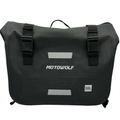
You therefore need two different systems. The first is a soft, waterproof duffel bag for a change of clothes and evening essentials, which travels on the van and is attached to the seat at the end of each stage to get to the hotel. The IPX6 waterproof rear case, from 40 to 90 liters is designed specifically for this use; to choose the capacity, see the guide motorcycle rear bag: how many liters are needed. The second is the day's load, which stays on the motorcycle: tools, tire repair kit, water, rain gear, documents, chargers. With the bulk of the luggage on the van, the motorcycle can travel light, and every kilogram less is noticeable on the Complex.

How to prepare your motorcycle: get everything done with a few hundred kilometers to spare
Four consecutive days of guided roads and gravel riding leave no room for deferred maintenance. A leak or loose screw is better discovered at home than in Castel di Sangro.
Tires
Knobby tires are required for the off-road sections. Check the depth and condition of the knobs, not just the center of the tread: the legal minimum of 1 mm is not a sensible benchmark for more than 1,000 km of gravel riding. Inspect the sidewalls for cuts and check the tire's age using the DOT code (the last four digits indicate the week and year). Set tire pressures according to the motorcycle and tire manufacturer's recommendations for the load and intended use: there is no universal value. If the tires are already halfway through their service life, consider changing them at the Metzeler service center in the Village by booking in advance.
Brakes
Dust and mud accelerate brake pad wear: install new ones if they are more than half worn. Check the discs, the age of the fluid according to the manufacturer's interval, and the hoses.
Drivetrain
Check tension with the motorcycle loaded, wear on the front and rear sprockets, and chain smoothness. On dusty dirt roads, clean and lubricate it every evening. The step-by-step method is in the guide to motorcycle travel chain maintenance.
Oil, filters and suspension
If the service is due soon, bring it forward. Check the oil, coolant and especially the air filter, the component that works hardest on dry dirt roads. Adjust the preload for the actual weight: with the large luggage on the van, the motorcycle is lighter than on a normal trip. Check the fork seals.
Electrical system and lighting
GPS, smartphone and intercom require power for many hours a day: check the battery, terminals and charging, and secure the USB sockets properly, protecting them from water. At the end of September in central Italy, the sun sets shortly before 19:00: check the headlight, brake light and turn signals. Any additional lights must be approved and installed in accordance with regulations, because the motorcycle must be compliant during the inspection: here we explain how to read auxiliary light approval markings.
Protection and navigation
On dirt roads, a tip-over while stationary or at low speed is the most common type, and it always affects levers, engine sides, radiator and headlight. You then need a device that can read GPX files, on a rigid mount and with reliable power. To choose the device, read the motorcycle navigator guide.
Motorcycle checklist before departure
- Knobby tires, knobs intact, sidewalls without cuts, age checked
- Pressures set according to the manufacturer, for the load and intended use
- Brake pads over half their thickness, brake fluid changed on schedule, hoses intact
- Chain tensioned with the bike loaded, drive kit not at the end of its service life
- Service completed with time to spare, oil and coolant levels correct
- Air filter clean or new
- Suspension preload adjusted for actual weight
- Battery charged, terminals clean, charging verified
- Headlight, brake light, turn signals and horn working
- Fasteners for guards, luggage rack and mounts rechecked
- Handguards, engine guards, radiator and headlight protection installed
- Rigid GPS mount, water-protected USB power supply
- GPX tracks uploaded and a printed RADAR document
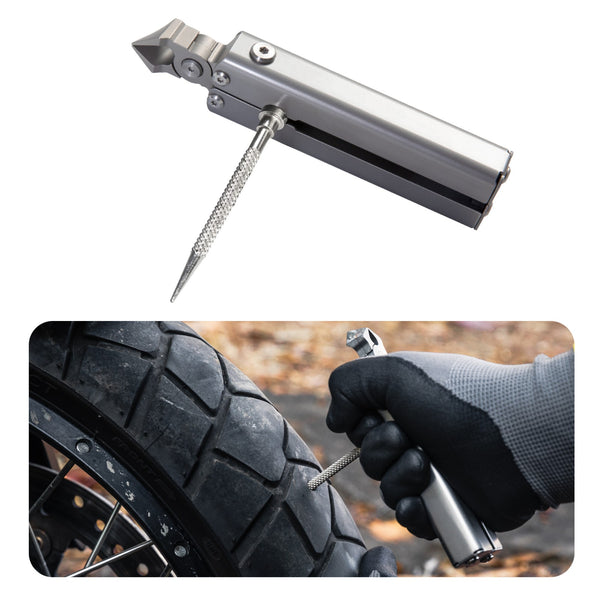
- Two inner tubes of the correct size and a tubeless repair kit if you have tubeless tires
- Your motorcycle's specific tools
- Road-legal exhaust, motorcycle compliant with the Highway Code
- Motorcycle documents, driver's license, FMI membership card
- Technical clothing with boots, protective gear and helmet
What to bring: the mandatory equipment comes first
The rule is simple: anything you do not use at least once a day, or that will not save the day in the event of a breakdown, stays at home.
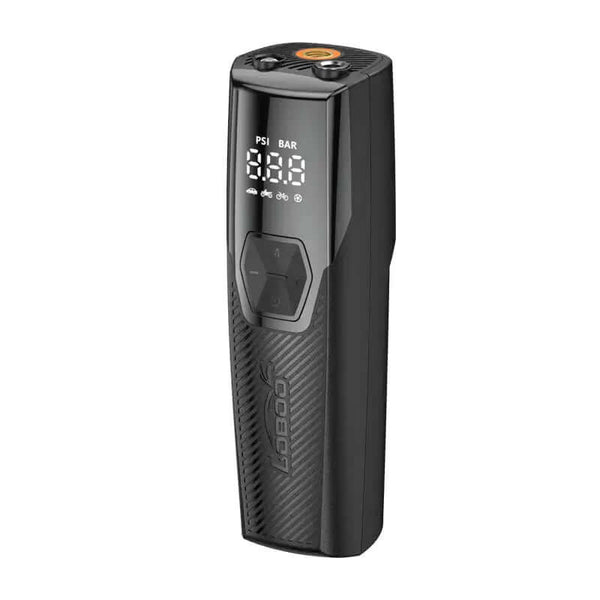
The official requirements ask every participant to carry two inner tubes, a tubeless repair kit if the tires are tubeless, and their motorcycle's specific tool set at all times. The set should be kept in a fixed, accessible place: the roll-up tool bag made of TPU-coated nylon weighs 214 g and keeps every wrench in its own pocket. After a repair, the tire must be reinflated: the 150 PSI, 294 g portable compressor takes up about as much space as a water bottle. What to put in the roll, wrench by wrench, is covered in the guide to the motorcycle tool kit.

- Rider: helmet, technical protective clothing and boots are mandatory; airbag, knee guards and neck brace are recommended; off-road gloves plus a spare pair.
- Electronics: GPS or smartphone with the tracks, spare cable, power bank, RADAR document. Carry it on the motorcycle, not in the van's luggage bag.
- Emergency: first-aid kit, the organization's number saved in your contacts, cable ties, duct tape, hardware for your motorcycle, and a master link if the chain requires one.
- Rain and cold: the 2022 edition ended in heavy rain; add a warm layer for the high-altitude mornings between Cascia and Castel di Sangro.
- Spare parts: brake and clutch levers, fuses, bulbs if the motorcycle does not have LED lights, air filter if it can be replaced by hand.
- Documents: driver's license, registration document, insurance, FMI membership card, health insurance card, pass and wristband collected at the desk.
Accessories that solve the real problems of an adventouring event
Not a shopping list: the concrete problems posed by the Transitalia, and what solves them. We mention only products available in the Endurrad catalog; model compatibility is shown on the product page.
The day's load goes down low, on the engine guard bars
Rain gear, water, inner tubes, and tire repair kits belong down low, close to the center of gravity. The 6-liter Wanderer crash bar bags in waterproof TPU mount on the bars and leave the tail free; all options are in the engine guard and crash bar bags collection. Before loading them, read how to protect and make the most of engine guard bars.

Levers, engine, radiator, and headlight are the parts that break
Our catalog includes crash bars and engine guard bars, Barkbusters handguards and the other handguards for adventure motorcycles, radiator guards, and headlight guards. Because the radiator matters more than it may seem: motorcycle radiator protection: is it really necessary?.
A GPS that vibrates or shuts off is worth less than a paper map
Model-specific GPS navigator mounts attach to the crossbar above the instrument panel; for smartphones, there are anti-vibration phone holders. If you still need to choose your device, start with GPS navigators and CarPlay.
More light on back roads, with the right brackets
As the light fades, a wider beam helps you read curves and terrain. Auxiliary motorcycle lights should be mounted on brackets anchored to the motorcycle, not on collars that rotate with vibrations: we discuss this in where auxiliary lights should really be mounted.
You can experience the Transitalia even without a race number
Three ways: visit the Transitalia Expo at Piazzale Fellini from September 25 to 27, attend the start on the morning of Monday, September 28, in Rimini, both free of charge, and follow the participants live with the WHIP tracking of the 2026 edition, available through the official website.

After Termoli, you need to arrange your return trip
The journey ends in Termoli, not Rimini, and the luggage vans do not return anything to the starting point. Anyone who left a van or trailer in Rimini must make their own arrangements. The organizers mention an external motorcycle and passenger return service from Termoli provided by X-Bivouac, at €220 plus VAT, available with at least 12 requests, and an affiliated parking facility for vans and trailers in Santarcangelo di Romagna.
Frequently asked questions about the Transitalia Marathon 2026
When does the Transitalia Marathon 2026 take place?
From September 25 to October 1, 2026: Transitalia Expo in Rimini from September 25 to 27, driving stages from September 28 to October 1.
Where does the Transitalia Marathon 2026 start?
From Piazzale Fellini in Rimini, Monday, September 28, 2026, at 8:30 a.m.
Where does the Transitalia Marathon 2026 finish?
In Termoli, Molise, on Thursday, October 1, 2026. It is the southernmost point ever reached by the event.
What are the stages?
Four: Rimini-Città di Castello on September 28, Città di Castello-Cascia on September 29, Cascia-Castel di Sangro on September 30, and Castel di Sangro-Termoli on October 1.
How many kilometers is it?
The regulations specify an overall route of more than 1,000 km. The mileage of individual stages is not published and may vary due to unforeseen detours.
Is the Transitalia Marathon a race?
No. It is a non-competitive event, with no timing, set time limits, or rankings, held on roads open to traffic and in compliance with the Highway Code.
Which motorcycles can participate?
Maxi enduro and modern rally bikes (categories A2 and S1), motorcycles manufactured up to 1992 (A1), and road motorcycles in the C1 Concept category. The motorcycle must weigh more than 140 kg and comply with the Highway Code.
Are specialist enduro bikes allowed?
No. The regulations exclude specialist enduro bikes, quads, and motorcycles with test plates.
How much does registration cost?
€1,030 with a roadbook, €980 without a roadbook, €890 for a passenger in the C1 category. The FMI membership card, hotel, fuel, and lunches are not included.
Is an FMI membership card required?
Yes, an FMI membership card for the current year is mandatory for everyone, including passengers, in addition to a valid motorcycle license.
Can two people participate?
Yes, but only in the C1 Concept category. With a passenger and road tires, the Road track is mandatory.
How does navigation work?
For each stage, there are three GPX tracks to choose from: Complex (full off-road), Plain (light off-road), and Road (secondary asphalt roads). The tracks are sent by email a few days before departure.
Is a roadbook required?
No, it is optional and costs an additional €50. It is provided only to those who have a roadbook holder and trip master mounted on the motorcycle.
Which tires are required?
A Metzeler Karoo 4-type knobby tire is required for the off-road tracks. Those riding only the Road track may use road tires.
Can hard cases be used?
Yes on the motorcycle, but for transport in a van, the organizers ask for a single soft bag and advise against hard cases, for which they accept no liability in case of damage.
What must you bring?
Two inner tubes, a tubeless repair kit if using tubeless tires, tools specific to your motorcycle, and technical riding gear with boots, protective gear, and a helmet.
Can you still register for the 2026 edition?
No: registration opens on January 28, payment in full is due by June 30, and transferring the spot is allowed until August 30. For 2027, it is best to follow the official channels starting in January.
What is the Transitalia Expo and when is it held?
It is the open-air motorcycle travel show held before the start, now in its fifth edition: September 25-27, 2026, in Rimini, between Piazzale Fellini, Lungomare Tintori, and Rotonda Lucio Battisti, with free admission and demo rides from the manufacturers.
Which motorcycle is the lead bike for the 2026 Transitalia Marathon?
Morbidelli, confirmed as Official Lead Motorcycle together with the Rally Team Azzurrorosa. Ducati is officially present with Product Genius staff and riders on the Complex track.
How can you follow the Transitalia Marathon remotely?
With WHIP real-time tracking dedicated to the 2026 edition, linked from the official website.
Preparing your motorcycle for the Transitalia or your next trip?
Tell us your motorcycle's make, model, and year: we'll tell you which protections, mounts, and luggage are actually available for it, without making you buy something you won't use.
More details: motorcycle tool kit · engine guards · motorcycle navigator · crash bars for your motorcycle