


Choosing a motorcycle navigator is more complicated than it seems, and not because of the maps. Maps are now good everywhere. What really changes the experience in the saddle is everything else: whether the screen remains readable in the midday sun, whether the handlebar mount can withstand eight hours of off-road riding, whether the device keeps working in the rain while you are wearing gloves, and whether, after two years, you find yourself paying a subscription you had not anticipated.
This guide is not a ranking. It is a selection method: four product families, seven technical criteria that matter, and a decision path to determine which category matches the way you travel.
Quick answer
A motorcycle navigator is a satellite navigation device designed to withstand rain, vibrations, and direct sunlight, with an interface that can be used with gloves. There are four categories: dedicated GPS navigators (standalone offline maps, €300–600), CarPlay and Android Auto smart displays (use the smartphone as the brain, €250–600), smartphones on mounts (inexpensive but exposed to vibration damage), and minimalist turn-by-turn navigators (€150–200). The choice depends on three factors: how much you navigate offline, how much brightness you need, and whether you accept depending on your phone.
Why a car navigator does not work on a motorcycle
The difference is not the software: it is the operating environment. A navigator mounted on the handlebars faces conditions that a dashboard device never encounters.
Direct sunlight without shade. In a car, the windshield and roof create shade. On a motorcycle, the screen is fully exposed to the sun, often with glare from the asphalt. Below 1,000 nits of brightness, a display becomes unreadable at midday in summer, and no anti-glare film can compensate for insufficient backlighting.
High-frequency vibrations. The handlebars transmit oscillations that no dashboard ever experiences. It is a structural problem for mounts and - as we will see - a serious problem for smartphones.
Water, dust, and temperature fluctuations. A motorcycle device must have a genuine IP rating (IP67 at minimum, IP69K on the best products) and a wide operating range: high-end displays typically claim -20 °C to 60 °C.
Glove input. A standard capacitive touchscreen does not respond through leather or waterproof membrane gloves. Motorcycle navigators use touchscreens calibrated for gloves or physical controls.
The four families of motorcycle navigators
1. Dedicated GPS navigator
It's the classic standalone device: its own GPS chip, maps loaded into memory, an internal battery, and it works even with the smartphone switched off in your pocket. Garmin and TomTom dominate this category.
The current benchmark is the Garmin zūmo XT3, available from February 20, 2026, in a 4.7-inch version for €499.99 and a 6-inch version for €599.99. It includes topographic maps and off-road-oriented features, and riders who ride on a circuit can activate a performance package with lap times, lean angles and acceleration data, at a cost of €11.99 per month or €119.99 per year.
When it makes sense. Long trips outside coverage, off-road routes, GPX tracks, group riding. It's the only category that lets you navigate with a dead phone or without a signal, and the only one designed natively to follow a track rather than an address.
The drawback. High upfront cost, a less intuitive interface than the apps you use every day, and a closed ecosystem: you plan with the manufacturer's software, not Google Maps.
2. CarPlay and Android Auto smart displays
It's the fastest-growing category. The device contains no maps: it's a rugged display that mirrors the smartphone via Apple CarPlay or Android Auto. The phone stays in your pocket, protected, while the same apps you use in the car are on your handlebar.
The Chigee AIO-6 is currently the benchmark in this category. It features a 6-inch 1280×720 IPS display with dual-sided backlighting and a claimed brightness of around 2,000–2,300 nits depending on the version, weighs 365 grams, measures 161 × 90.5 × 22 mm, is IP69K-certified and operates between -20 °C and 60 °C, with a glove-compatible touchscreen and screen-lock button. Two technical details that almost no review mentions: the AIO-6 has no internal battery and must be powered by the motorcycle's battery, and it requires an SD card, not included, for OTA firmware updates.
BMWs are where this category really shines: with the dedicated mount, the display reads the bike's native data and is controlled using the handlebar Multi-Controller, without taking your hands off the grips. That's why on an R 1300 GS or an R 1250 GS, this solution often beats a dedicated sat-nav for pure usability.
However, there is a distinction within this category that is worth making, because it shifts the boundary between these devices and dedicated sat-navs. Some smart displays are pure mirrors of the smartphone: without a connected phone, they are just blank screens. Others have their own satellite receiver.
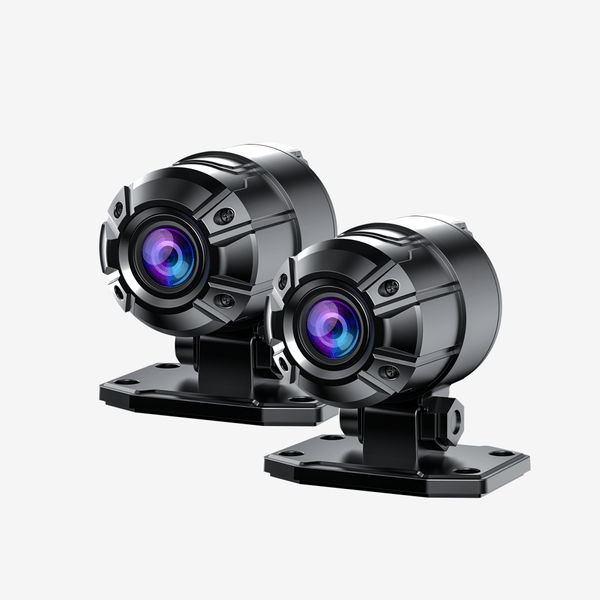
This is the case with the JADO S6, which features a five-constellation GNSS (GPS, BeiDou, Galileo, and others) for positioning and route tracking independent of the phone. It does not turn it into a standalone navigator — the maps remain on the smartphone — but it means route recording, speed data, and georeferencing of footage continue to work even without a connection. The rest of the specifications are consistent with the high-end segment: a 6-inch IPS display with up to approximately 1,800 nits, wireless CarPlay, Android Auto, and HiCar, dual dashcams, IP69K certification with an operating range from -20 °C to 70 °C, 4 GB of RAM on a Linux system, and OTA updates.
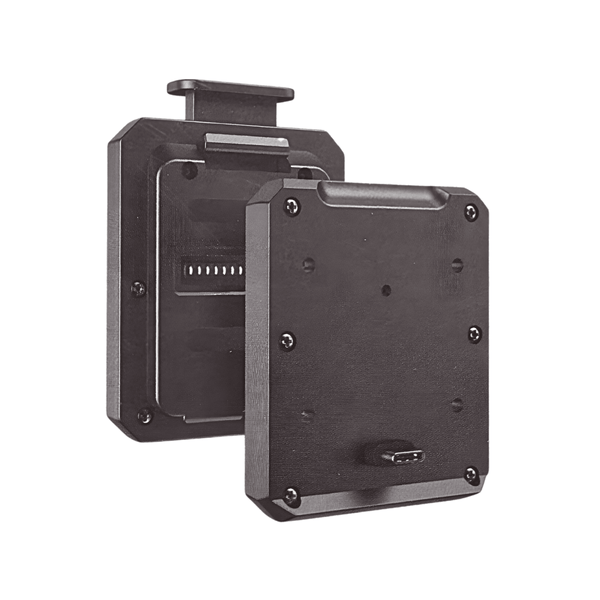
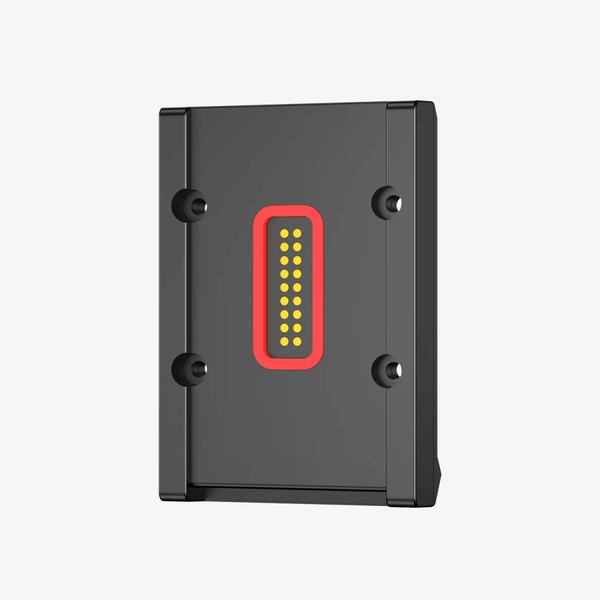
For BMWs with the original preparation, there is a dedicated quick-release module that adds access to the motorcycle's native data and control via the Wonder Wheel: this configuration solves in one go the two problems we'll examine later, mounting and theft protection.
The limitation. You depend on your phone: battery, data, and a stable connection. And there is a little-known restriction: for safety reasons and in compliance with CarPlay and Android Auto regulations for motorcycles, video mirroring is not allowed — no video apps on the display.
If this is the category you're interested in, the model-by-model comparison is in our complete guide to smart motorcycle displays with CarPlay and Android Auto.
3. Smartphone on a mount
The cheapest solution: a good mount and the phone you already have. It costs a fraction of the alternatives and gives you the interface you know best.
The problem almost nobody tells you about. Apple has issued an official warning about this: high-amplitude vibrations generated by large-displacement engines, transmitted directly to the phone's frame through the handlebars, can permanently damage the iPhone camera's optical image stabilization and autofocus. This is not a forum legend: it is documented damage and is not covered by the warranty. If you choose this route, a mount with vibration damping is not an optional accessory.
There are also the practical daily limitations: a screen that dims due to overheating under the sun, a touchscreen that goes haywire in the rain, a battery that drains quickly with GPS and the screen on, and the very real risk of losing or breaking your phone halfway through the trip.
When it makes sense. Urban use, short trips, small-displacement motorcycles, tight budget. On a two-week trip across Europe, it is the option most likely to leave you stranded.
4. Minimalist arrow navigator
A niche but sensible category: a small round device that does not show the map, only the direction to take and the distance. The phone stays in your pocket and calculates the route; the device displays the essentials.
The benchmark is the Beeline Moto II, priced at around £180, with an optional subscription of about £4 per month that adds voice directions and live traffic, but is not essential. It does not compete with dedicated navigation software, but is an elegant, minimalist solution for those who want clear, legible instructions without a large screen on the handlebars — a natural choice for scramblers, café racers, and classic motorcycles where a 6-inch display would look out of place.
Comparison of the four categories
| Category | Price range | Offline navigation | Depends on the phone | Suitable for |
|---|---|---|---|---|
| Dedicated GPS navigator | 300–600 € | Yes, complete | No | Long trips, off-road, GPX tracks |
| CarPlay / Android Auto smart display | 250–600 € | Only with maps downloaded to the phone | Yes | Road touring, daily use, BMW motorcycles with built-in provision |
| Smartphone on a mount | €30–150 (mount only) | Only with downloaded maps | Completely | Cities, short trips, minimum budget |
| Minimalist arrow navigator | 150–250 € | No | Yes | Retro bike, for those who want minimal bulk |
The seven criteria that really matter
Technical specifications list dozens of items. In practice, these seven determine whether the navigator will really serve you or end up in a drawer.
- Brightness in nits. This is the first specification to look for, yet almost no product listing highlights it. Below 1,000 nits, the screen is compromised in direct sunlight. High-end displays range from 1,500 to 2,300 nits.
- Power supply. Internal battery or power from the motorcycle? A vehicle-powered device never leaves you without power, but requires a properly installed electrical system; a battery-powered one is easier to install but has limited battery life. Note: virtually all high-end CarPlay smart displays, including the JADO S6 and Chigee AIO-6, do not have an internal battery and must be wired to the motorcycle. If you are looking for a display with an integrated battery, you are looking at a different product category, almost always at the lower end.
- IP certification. IP67 is the minimum acceptable rating. IP69K, which adds resistance to high-pressure, high-temperature water jets, means you can wash the motorcycle without removing anything.
- Vibration management. This concerns the mount as much as the device. A rigid mount on a single-cylinder bike transmits everything; a damped one extends the life of any electronics.
- Genuine offline maps. A practical question: does it work in a valley without coverage? A dedicated navigator does by design. With a smart display, it depends on what you downloaded to your phone before setting off.
- Use with gloves. Check that the touchscreen is explicitly calibrated for motorcycle gloves, or that a physical alternative control exists.
- Recurring costs. Map updates, data subscriptions, premium features. The list price is not the cost of the device: calculate three years of use before comparing two products.
The real weak point is not the navigator: it is the mount
In our experience, most problems with a motorcycle navigator do not originate with the device. They originate with the mount.
A mount that is too rigid transfers every vibration to the electronics. A mount that is too flexible makes the screen wobble and difficult to read in corners. A universal mount on a tapered handlebar does not clamp evenly and rotates at the first pothole. And a device mounted too high forces you to take your eyes off the road for longer than is prudent.
Three practical pointers. First: if your motorcycle has a factory navigation mount, use it — it is designed for the load and vibrations of that frame. Second: on motorcycles without a factory mount, a steering plate mount is almost always better than a handlebar mount because it works on a larger mass. Third: consider a quick-release system, because leaving a navigator on the handlebar while parked is an invitation.
In the motorcycle GPS mounts section, you will find solutions filtered by model, while the GPS and CarPlay navigators collection contains the devices we have selected for adventure and touring use.
Dedicated navigator mounts
- R 1300 GS navigator mount — Ø 12 mm crossbar, no drilling
- BMW F 750/850/900 GS navigator mount — 12 or 22 mm bar, TFT instrumentation
- CFMOTO 800MT navigator mount — 150 mm crossbar, Ø 12 or 22 mm
- Universal JADO quick-release mount — with power supply, for any motorcycle
Which motorcycle navigator to choose based on use
You take long trips with stops outside built-up areas, on dirt roads, or along GPX tracks. Dedicated GPS navigator. It is the only category that does not depend on data coverage or your phone's battery, and it is the only one designed to follow a track.
You do road touring and use the same navigation apps every day. CarPlay or Android Auto smart display. You gain ease of use, and on motorcycles with a factory navigation mount, integration with the handlebar controls is hard to beat. Download the offline maps before setting off.
You have a BMW with a Multi-Controller. Smart display with a dedicated mount, no hesitation. It is the only case in which you can control the navigator without taking your hands off the grips.
You ride mainly in the city or on short trips. Smartphone on a quality vibration-damping mount. But make sure it is genuinely vibration-damping: saving money here means risking your phone's camera.
You have a retro motorcycle or want minimal visual clutter. Minimalist turn-by-turn navigator. You give up the map but gain a clean, simple setup.
You still don't know how much you will actually navigate. Start with a quality mount and your smartphone. It's the reversible solution: if you discover that you navigate only occasionally, you have spent nothing; if you discover that you navigate a lot, you will still need the mount.
Five mistakes we see most often
- Choosing by screen size instead of nits. A large, dim screen is worse than a small, bright screen.
- Ignoring the power supply. A device that requires power from the motorcycle must be wired correctly, with a fuse and a switched-power connection. Doing it incorrectly means a dead battery after three days of parking.
- Mounting the phone without vibration damping on a vibrating motorcycle. Camera damage is documented and is not covered by the warranty.
- Not downloading maps for offline use. This applies to smart displays and smartphones. Data coverage disappears exactly where you need it most.
- Overlooking the three-year cost. Subscriptions and updates can exceed the initial price difference between two products.
Conclusion
There is no single best motorcycle GPS: there is the right category for how you use your motorcycle. Those who cover many miles outside data coverage need true independence and choose a dedicated device. Those who do road touring and want their own apps on the handlebars choose a smart display. Those who ride in the city have no reason to spend hundreds of euros, as long as they protect their phone from vibrations.
What all the options have in common is the aspect that almost nobody considers at the time of purchase: screen brightness, mount quality, and the actual cost over three years. If you make your decision based on these three factors rather than the technical specifications, you are unlikely to go wrong.
Frequently asked questions about motorcycle GPS devices
What is the difference between a motorcycle GPS and a CarPlay smart display?
A dedicated GPS has its own maps and GPS and works independently, even without a smartphone. A smart display does not contain maps: it mirrors the phone's screen via CarPlay or Android Auto, so it depends on the phone for route calculation and maps.
Do I really need a motorcycle GPS if I have a smartphone?
It depends on how you use it. In the city, a smartphone on a good vibration-damping mount is sufficient. On long trips, off-road routes, or in areas without data coverage, a dedicated device or a smart display with maps downloaded for offline use significantly reduces the risk of being left without navigation.
Can motorcycle vibrations damage a smartphone?
Yes, and it is a documented risk. Apple has published an official warning stating that high-amplitude vibrations from large-displacement engines can permanently damage the iPhone camera’s optical image stabilization and autofocus. A vibration-damping mount is the necessary countermeasure.
How many nits are needed to read the screen in sunlight?
Below 1,000 nits, readability in direct sunlight is compromised. Devices designed for motorcycles typically claim between 1,500 and 2,300 nits, with enhanced backlighting and anti-glare treatments.
How much does a motorcycle sat nav cost?
A high-end dedicated GPS sat nav costs between €300 and €600. CarPlay and Android Auto smart displays cover a similar range, from €250 to €600. Minimalist turn-by-turn navigators cost between €150 and €250. Any applicable subscriptions and map updates must be added to the list price.
Does a motorcycle sat nav work with gloves?
Models designed for motorcycles can: they use touchscreens calibrated for use with gloves or provide physical controls. General-purpose devices with standard capacitive touchscreens, including smartphones, generally cannot, unless you use gloves with conductive fingertips.
Can I use a motorcycle sat nav in the rain?
Yes, provided it has an appropriate IP rating. IP67 is the recommended minimum; IP69K adds resistance to high-pressure, high-temperature jets, which is also useful when washing the motorcycle.
What is the best motorcycle sat nav for off-road use?
For off-road use, the ability to follow GPX tracks without data coverage, the availability of topographic maps, and mechanical durability are important. This is the scenario in which a dedicated GPS sat nav retains a structural advantage over smartphone-based solutions.
Is it better to mount the sat nav on the handlebar or the steering plate?
On motorcycles without a factory mounting provision, mounting to the steering plate is generally preferable because it is attached to a larger mass and transmits fewer vibrations. If the motorcycle has an original navigation mount, it is best to use that.
Where can I buy a motorcycle sat nav and the appropriate mount?
On Endurrad.com, you’ll find sat navs, smart displays, and dedicated mounts filtered by motorcycle model, with compatibility verified before purchase.
Sources: Garmin (zūmo XT3 specifications and pricing, February 2026), CHIGEE (official technical documentation and FAQs for the AIO-6 series), JADO (S6 specifications), Bennetts BikeSocial (independent tests of smart displays and motorcycle sat navs), Apple Support (warning about vibrations from large-displacement engines). Article updated in August 2026.