

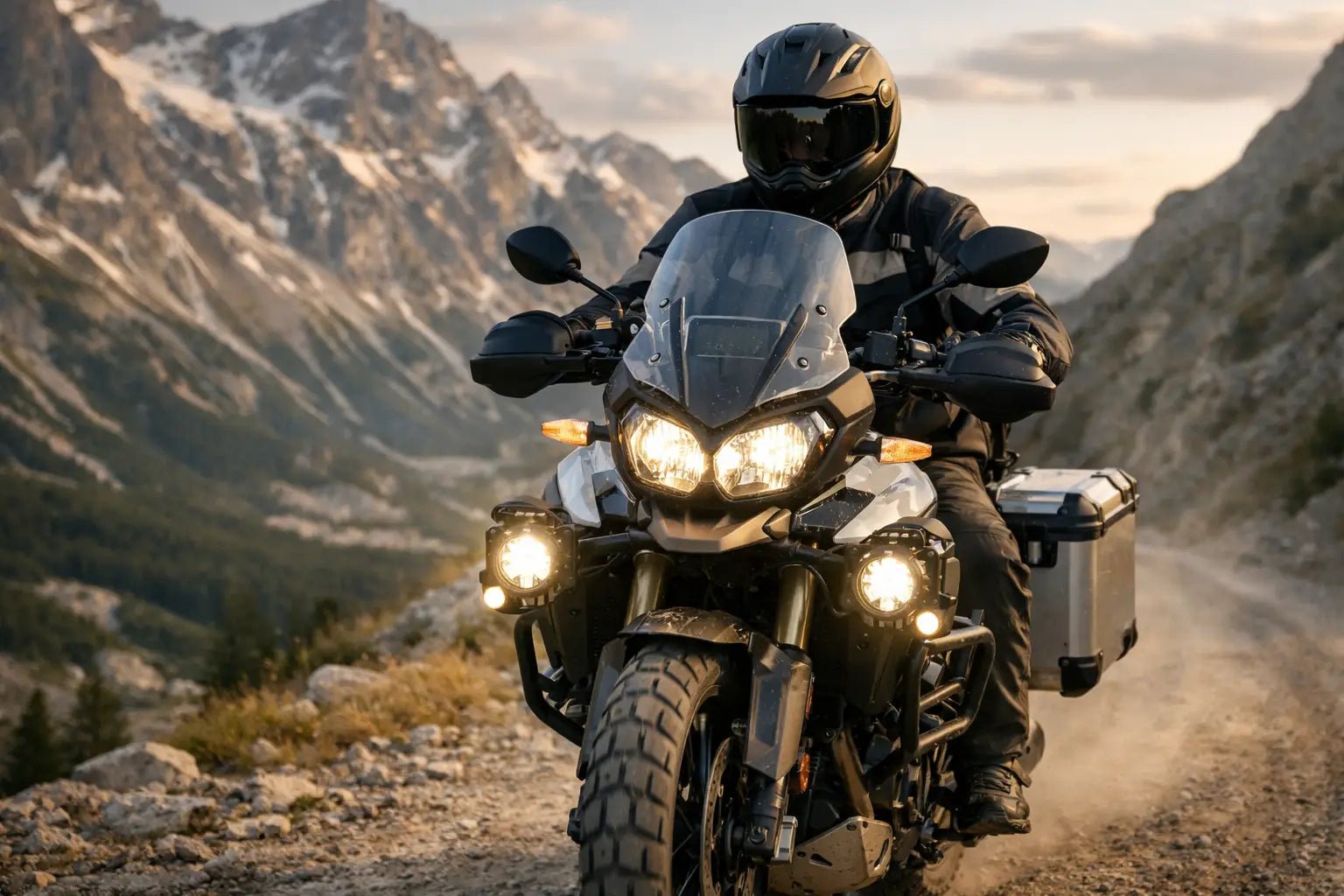
In short. “Approved” on its own means nothing. What matters is which beam was approved, under which certificate number, and whether the marking is stamped on the light housing.
There are two different families on the European market: auxiliary lights approved as an auxiliary high beam (ECE R112 or R149 driving beam), which switch on together with the original high beam, and lights approved with both low and high beams approved (ECE R149.00 Class B or C), which have a genuine cutoff line.
And above all: approval concerns the device. The installation and usage conditions on your vehicle remain subject to the Highway Code, which is a different and separate matter.
Three different things that are always confused
Almost all the confusion on this subject arises from treating three levels that are independent of one another as a single block.
- Device approval. This certifies that the product, having undergone laboratory testing, complies with the photometric limits of a regulation. It has a number, an issuing body, and a test report. This is the only level that concerns the manufacturer.
- Installation. This concerns where and how you mount the device: position, height, symmetry, number of devices, and electrical connection. It concerns you or your mechanic.
- Use. This concerns when you can switch it on and under what conditions. It is governed by the Highway Code provisions on lighting devices, not by the product certificate.
An approved headlight that is installed and used incorrectly remains a problem. An unapproved headlight does not become compliant just because it is installed correctly. These are two independent aspects, and both must be verified.
Driving beam or low beam: the distinction that changes everything
This is what distinguishes two product categories that look identical on the shelves.
| Approval type | What is approved | How it is used | Typical examples |
|---|---|---|---|
| ECE R112 / R149 driving beam | Auxiliary high-beam only | Turns on with the original high beam and turns off with it | Most aftermarket auxiliary lights, DENALI range |
| ECE R149.00 Class B or C | Low beam and high beam, both approved | The dipped beam has a cut-off line and can remain on during normal driving | LOBOO L series |
| No approval declared | None | Outside the scope of this article | Generic LED bars, products without a certificate |
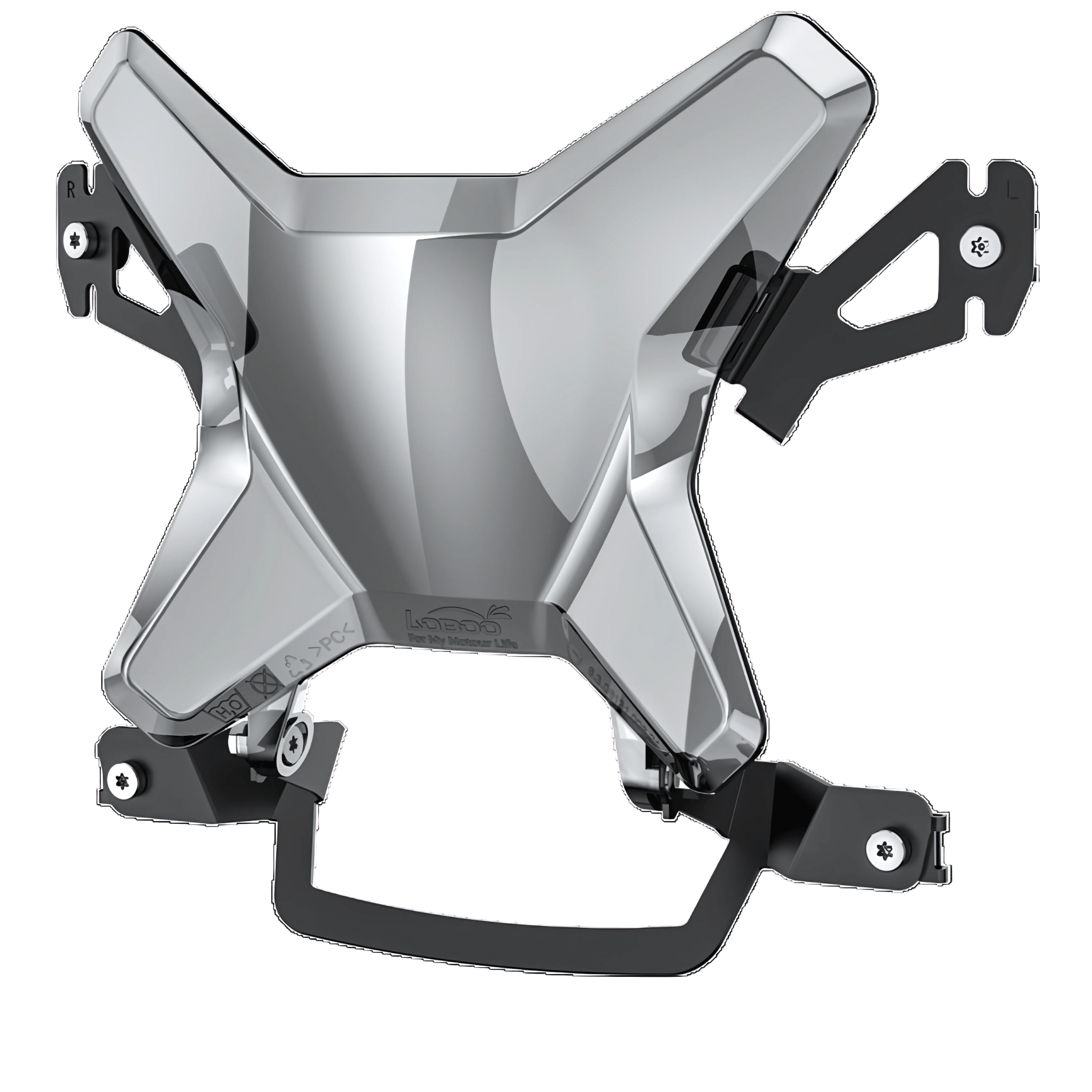
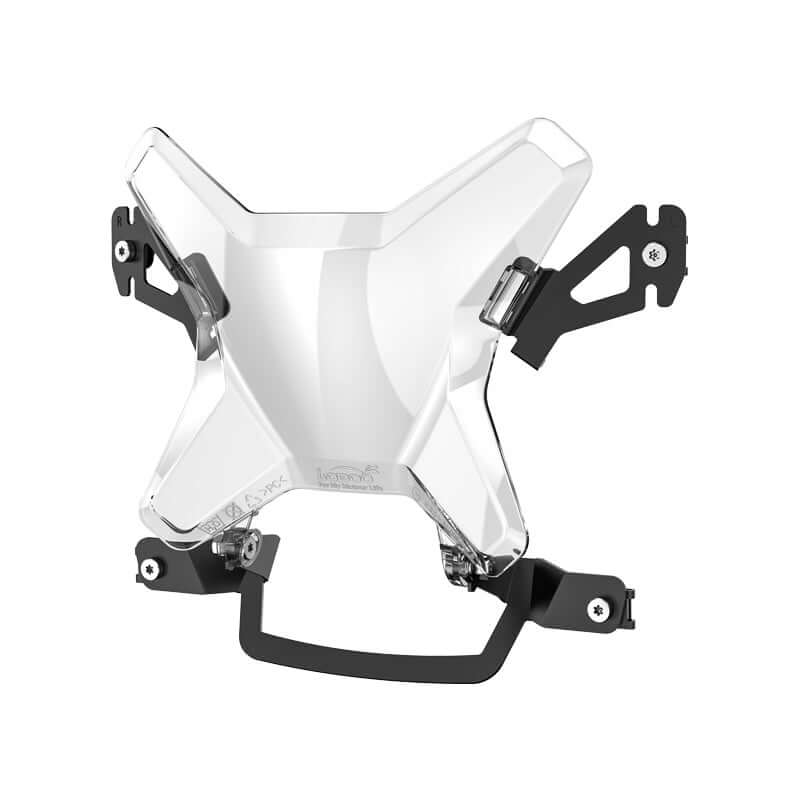
UN ECE Regulation R149 governs road lighting devices and provides for different classes with different photometric requirements for the dipped beam. In the Endurrad catalog, you will find Class C on the LOBOO L7S, L7, and L12T, and Class B on the L11, L16, and L18S, with an indication for right-hand traffic.
How to read an ECE certificate
A genuine certificate is a document of just a few pages containing precise information. Here is what to look for in it.
-
The approval number, in the form
E57*149R00/06*1142. The letter E followed by a number identifies the country that issued the approval, the middle section identifies the regulation and amendment series, and the final section is the sequential number. - The authority that issued it and the date.
- The test report on which the approval is based, which is the relevant technical document.
- The approved type and the variants covered. A certificate may apply to several models in the same family, but no further: if your model does not appear in the list, that certificate does not apply to it.
- The class and, where applicable, the direction of traffic.
If one page of the certificate seems to contradict the rest, also read the attached test report and information folder. This is the case with the LOBOO certificates for L11 and L16: the first page incorrectly cites Regulation R10.06 on electromagnetic compatibility, while the approval number, photometric tests, and information folder indicate an R149.00 Class B RHT headlamp.
The final check, the one that matters
The marking must be physically stamped on the lamp housing, not merely written on the box or in the listing. If it is not on the product, the certificate they showed you does not apply to that item.
Certificates for LOBOO auxiliary lights sold on Endurrad
This is the practical difference between saying “approved” and proving it. The complete PDF can be downloaded from each product page.
| Model | Certificate number | Regulation | Covered variants |
|---|---|---|---|
| L7S | E57*149R00/06*1142 | R149.00 Class C | L7, L7-800MT, L7-DS525X |
| L11 | E57*149R00/06*1186 | R149.00 Class B | L11T, L11Pro, L11S, L11Q, L11K |
| L12T | E57*149R00/06*1143 | R149.00 Class C | L12, L12U, L12Q, L12H |
| L16 | E57*149R00/06*1187 | R149.00 Class B | L16T, L16Pro, L16S, L16Q, L16K |
| L18S | E57*149R00/08*1206 | R149.00 Class B | L18, L18Pro, L18Q, L18D |
| L7X | Not yet available | — | Requested from the manufacturer |
The case of L7X deserves a note, because it shows how the mechanism works: it is a different type from the L7S, so the latter's certificate does not cover it, even though the two products look very similar. Until the specific document arrives, that light is not declared approved.
Installation: what remains your responsibility
The certificate does not exempt you from anything that follows.
- Position and symmetry. The two lights should be at the same height and symmetrical in relation to the motorcycle's centerline. Almost never above the original headlight.
- Beam alignment. This is the most important check and the one most often skipped. The center of the beam must fall below the height of the lights, measured against a wall with the rider's weight on the seat.
- Electrical connection. Follow the diagram for your model: some manufacturers require a relay with a dedicated fuse, while others specify a direct connection to the battery. Do not generalize from another product.
- Conditions of use. Verify the requirements applicable to your vehicle under the current regulations. If in doubt, a workshop or the vehicle registration office are the right contacts: this guide is not a substitute for professional advice.
Frequently asked questions
Do auxiliary lights need to be approved?
Approval applies to the device and certifies compliance with the photometric limits of the applicable regulation. Installation and use conditions on the vehicle remain subject to the Highway Code provisions concerning lighting devices. If you use the motorcycle on public roads, choose products with documented approval and verify the requirements applicable to your vehicle.
How can I tell whether an auxiliary light is genuinely approved?
Ask for the certificate number in the form of E followed by the country code, the regulation and the sequential number, and check that the marking is stamped on the light housing. If the seller only replies with the word «approved» without providing the document, you have not verified anything. For LOBOO auxiliary lights sold on Endurrad, the certificate can be downloaded as a PDF from the product page.
What is the difference between Class B and Class C?
These are two classes provided for by UN ECE Regulation R149.00, with different photometric requirements for the dipped-beam pattern. In the Endurrad catalog, Class C appears on the LOBOO L7S, the L7 variants and the L12T; Class B appears on the L11, L16 and L18S, with right-hand traffic indicated.
Is one certificate valid for all similar models?
No. A certificate covers the approved type and the variants explicitly listed in it. The LOBOO L7S certificate, for example, also covers L7, L7-800MT and L7-DS525X, but not L7X, which is a different type. If your model does not appear on the list, that document does not apply to it.
Can an approved auxiliary light still cause problems?
Yes, if it is installed or used improperly. Approval concerns the device, not the installation. A perfectly certified light mounted too high and aimed toward the horizon will dazzle oncoming traffic: that is an adjustment issue, and responsibility remains with whoever installed it.
Have a question about approval?
Tell us which product you are considering: we’ll tell you whether a certificate exists, which beam it covers, and whether your model is among the approved variants. For the auxiliary lights we sell, the PDF can be downloaded before purchase.
Further reading: best motorcycle auxiliary lights 2026 · how to choose auxiliary motorcycle lights · motorcycle lighting guide


Share:
How to choose motorcycle pannier racks
How to choose heated motorcycle grips