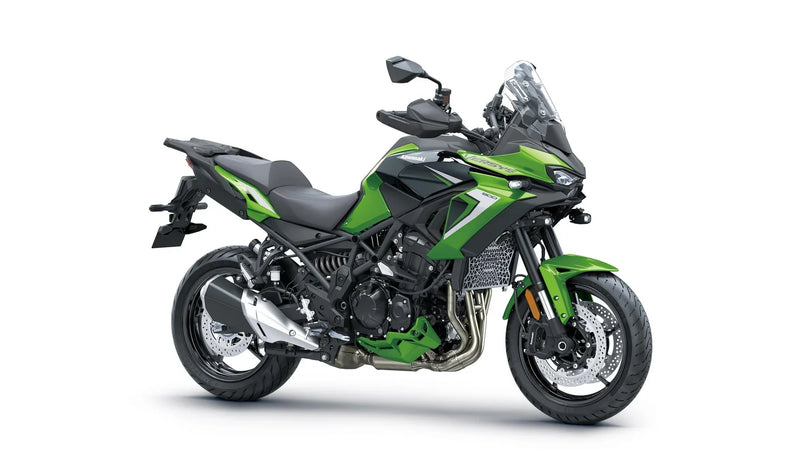
The BMW R 1250 GS is born for travel, but there's a clear difference between a stock GS and one ready for 5 days of alpine passes, highway transfers, and a couple of rough sections. The point of a BMW GS 1250 travel setup isn't to randomly add accessories. It's to build a motorcycle that remains balanced when loaded, predictable when you're tired, and practical when you need to open a pannier in the rain.
The GS 1250 is very forgiving, but not entirely. If you load it high and far back, you'll feel it in low-speed maneuvers. If you choose heavy protection indiscriminately, you add unnecessary weight. If you neglect ergonomics and electronics management, after 600 km you're no longer traveling: you're just enduring.
BMW GS 1250 Travel Setup: Where to Truly Start
The first step is simple: understand what kind of trip you take most often. A GS prepared for fast asphalt two-up doesn't have the same setup as one used solo with soft luggage and a lot of gravel. The bike is the same, but the hierarchy of priorities changes.
If you do long transfers with hotels or B&Bs, well-organized cargo capacity, wind protection, and a relaxed riding position are paramount. If, however, you anticipate packed dirt roads, rocks, and stationary drops, then genuine protection, low weight, and luggage that doesn't widen the rear too much become more important.
This is often where money is poorly spent: choosing a product based on its category, not on the scenario. A hard case is practical for touring and convenient when you need frequent access to its contents. A soft or semi-rigid solution might be more sensible if you want less weight, less bulk, and less rigidity on light or medium off-road.
Luggage: Capacity Yes, But Balance Comes First
On the GS 1250, you can carry a lot, and that's precisely why it's easy to overdo it. The correct setup doesn't start with the declared liters but with where the weight ends up. The higher you load, the more the bike changes in direction changes and tight turns. The more mass you shift behind the rear axle, the lighter the front end becomes, and the worse the sense of control when the pace picks up or the terrain gets dirty.
For a classic road trip, side cases and a top case make sense if you genuinely use a distribution logic. Heavy items go low and close to the bike's center: tools, repair kits, rain gear, essential spares. The top case should only contain light items or things you need to grab quickly. Filling it with everything you don't know where else to put is the quickest way to end up with a less composed GS.
If you also ride off-road, soft or semi-rigid panniers become interesting because they reduce weight and rigid volume. They are not the right choice for everyone. It depends on how you travel, how often you open and close your luggage during the day, and how much internal organization you need. But on a GS 1250 that is truly used off-road, they often provide better balance.
The tank bag deserves a separate discussion. On the GS, it's one of the most useful accessories if it doesn't become a hindrance. It should hold documents, power banks, glasses, snacks, perhaps a second visor or earplugs. If it's too high, it interferes when riding standing up or in slow hairpins. If it's too wide, it bothers you more than it helps.
Protection: Choose What Suits Your Use
A travel motorcycle also falls when stationary. On a GS 1250, an inclined surface, a two-person maneuver, or a stop on soft ground is all it takes. That's why protection isn't about aesthetics. It's about saving time, less damage, and more peace of mind when you're far from home.
Crash bars and a skid plate almost always make sense, but not all configurations serve the same purpose. If you primarily ride on asphalt with some gravel roads, you're interested in protection that defends well in low-speed falls and occasional impacts. If you anticipate rocky terrain, underbody impacts, and more demanding use, the skid plate becomes central and should be evaluated for real coverage, shape, and mounting points, not just the declared thickness.
Here the compromise is clear: more protection often means more weight. This isn't an absolute problem, but it should be considered in the overall package. A GS 1250 with crash bars, a reinforced skid plate, auxiliary lights, frame guards, and aluminum luggage remains a great traveler, but it becomes less nimble in maneuvers and more demanding if you frequently use it fully loaded on difficult terrain.
Ergonomics: You Feel the Difference on Day Three, Not Day One
Many accessories seem secondary until you do three stages in a row. Then you realize that the BMW GS 1250 travel setup relies heavily on posture and contact with the bike. If the handlebars force you to hunch your shoulders too much, if the footpegs don't give you support when riding standing up, if the seat creates pressure in the same spot, the problem isn't generic comfort. It's the clarity you lose with the miles.
Handlebar risers, footpegs better suited to your boots, a correctly profiled seat, and effective handguards make more of a difference to your day than many flashy accessories. However, there's no single recipe here either. Taller handlebars can help you standing on gravel and worsen seated feel if you overdo it. Wider footpegs improve support and control, but can change leg position. The right choice depends on your height, riding style, and the balance between road and off-road.
If you often travel in cold or rain, heated grips and good aerodynamic protection are worth more than many layers added at the last minute. Cold hands slow everything down: braking, modulation, concentration. On a motorcycle designed to eat miles, thermoregulation is a practical matter.
Navigation and Power: Less Improvisation, More Continuity
When the journey lengthens, navigation support must remain stable despite vibrations, rain, and uneven roads. Whether you use a dedicated GPS or a smartphone, the point isn't just to see the map. It's to be able to consult it without diverting your gaze too much and without finding your device dead halfway through the day.
On a GS 1250, clean mounts, a legible position, and organized power are sensible. Flying cables, precarious adapters, and universal mounts forced into place are the classic solution that seems sufficient until you hit water or a series of potholes. Intercoms also fall into the setup, especially if you travel two-up or often use voice guidance. It doesn't make you go faster, but it reduces stress and confusion.
Auxiliary lights, however, should be evaluated for real use. If you do a lot of secondary roads, high passes, or late-night transfers, improving visibility and your presence in traffic can make sense. If you almost always travel during the day, they become less of a priority than other items.
What to Carry Without Turning Your GS Into a Mule
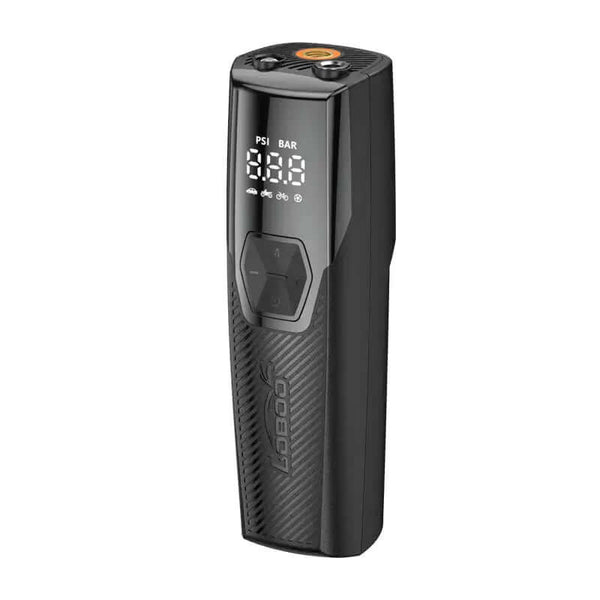
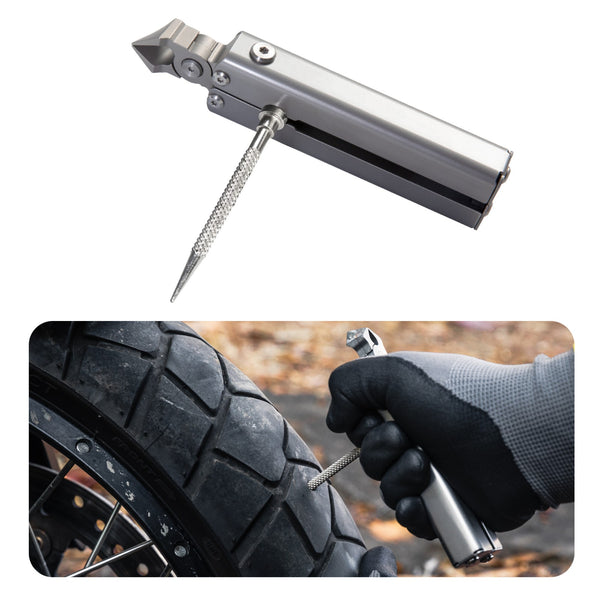
There's a minimum essential that a serious travel bike shouldn't be without: a tire repair kit, tools consistent with the bike, reasoned charging management, and a mental reserve for small road problems. There's no need to turn your GS into a mobile workshop. You need to avoid getting stranded for something trivial.
Here too, common sense counts. Duplicated tools, improbable spare parts, and "just in case" clothing add weight without truly increasing your autonomy. If the trip is European and you pass through populated areas with a certain frequency, the setup can be more essential. If you really go off the beaten path or do long stages on isolated roads, then it makes sense to increase the equipment, but always with precise logic.
The Most Common Mistakes in BMW GS 1250 Travel Setup
The first is setting up the bike for the trip you dream of, not the one you actually take. The second is adding good accessories individually without checking the final result. Each component affects weight, bulk, ease of use, and accessibility.
The third mistake is trying everything on the morning of departure. A loaded GS 1250 changes. It needs to be ridden first, adjusted first, understood first. At least one full outing with luggage, correct tire pressure for the intended use, and load distribution close to the real one will tell you much more than ten spec sheets.
If you are building your setup, the best method is to start with three questions: how much time do you spend riding standing up, how many times a day do you open your luggage, and how much weight are you willing to pay for more protection and structure. From there, the setup takes shape coherently. And that's precisely what makes the difference between an accessorized GS and a GS ready to take you far without complicating your journey.
If you're unsure what to add first, the answer usually isn't "everything." It's the accessory that prevents the most likely problem on your next trip. From then on, every choice makes more sense.