

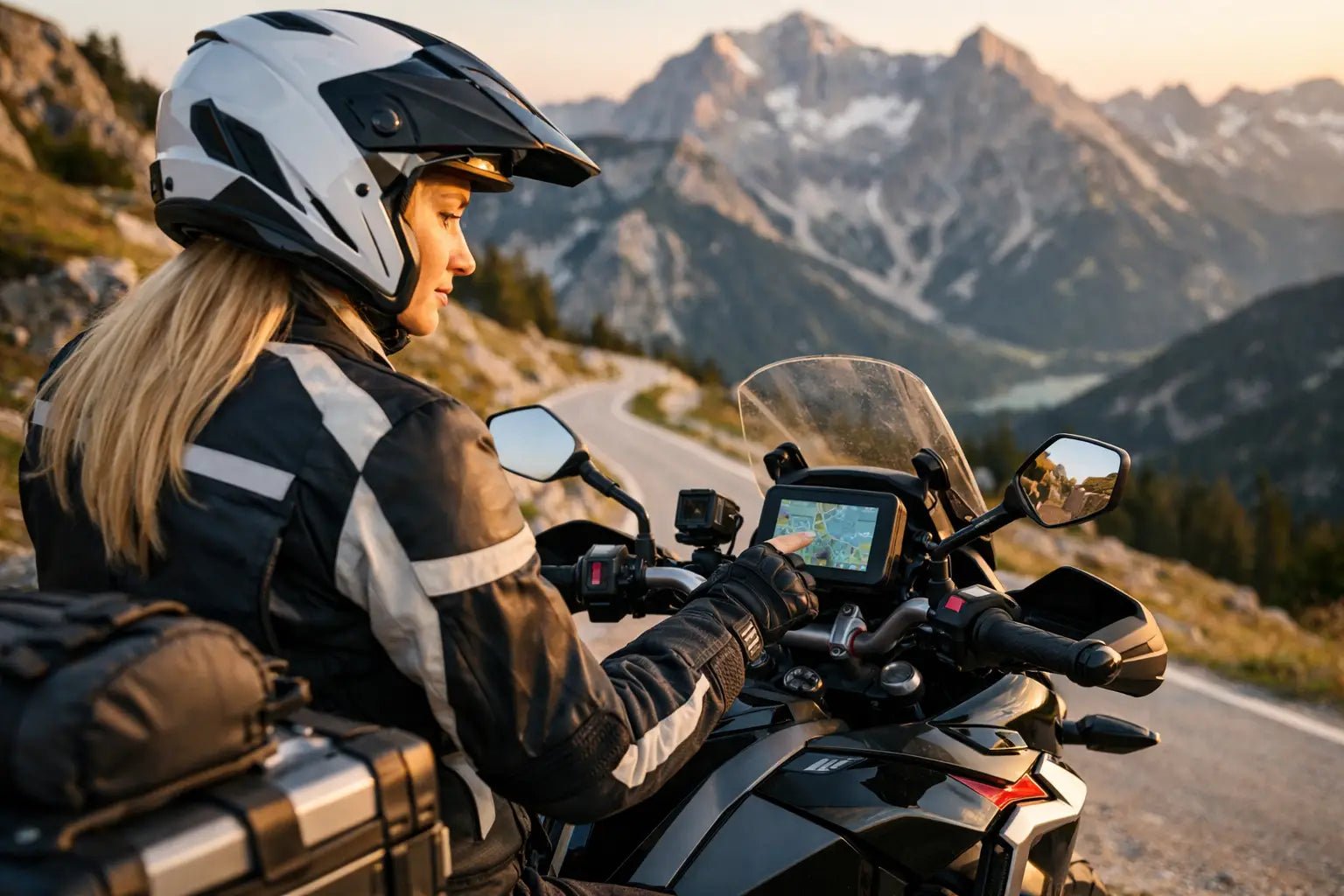
You realize how important navigation is when you start looking at the track in the rain, with wet gloves and your helmet isolating you from the rest. That's when the question "which GPS for motorcycle travel" stops being theoretical and becomes practical: you need a device that remains readable, stable on its mount, and reliable even after hours of vibrations, heat, or dirt roads.
The right choice doesn't just depend on your budget. It depends on how you travel, how much autonomy you want in planning, and how willing you are to tolerate compromises between simplicity, robustness, and precision. For a weekend on well-marked asphalt, an essential solution might suffice. For a long stretch through alpine passes, gravel roads, and highway transfers, navigation errors cost time, effort, and often safety.
Which GPS for Motorcycle Travel: The First Real Distinction
The first choice isn't between brands, but between approaches. Do you want a dedicated navigator or will you use your smartphone with a motorcycle mount? On paper, they both do the same thing. On a BMW GS, an Africa Twin, or a Ténéré 700 loaded for a week, in real-world use, they differ significantly.
A dedicated GPS is designed to be outdoors, always. It handles rain, direct sun, dust, and prolonged vibrations better. Plus, it has an interface designed for use with gloves and, generally, more consistent screen readability when the light suddenly changes, for example, entering a forest or exiting a tunnel.
The smartphone is more flexible, often quicker at searching for an address, and convenient if you use apps you already know. But it has clear limitations: it suffers from overheating, can become difficult to read under strong sun, and not all models appreciate hours of vibrations on the handlebars. If you make occasional trips and stick to simple routes, it might be enough. If you travel often or also go off-road, a dedicated navigator remains a more consistent choice.
What Really Matters in a Travel GPS
The screen comes before almost everything else. It doesn't just need to be large; it needs to be readable. A very sharp but dim display will cause difficulties precisely when you need it most, i.e., at midday or with a dark visor. If you ride standing on the pegs, as often happens on many adventure bikes in light off-road, readability at varying angles matters even more.
Then there's durability. Not in a vague sense, but in real-world behavior: continuous rain for hours, fine dust, temperature fluctuations, frequent washes, vibrations on damaged asphalt. A car device adapted to a motorcycle might be fine as long as the journey is simple. When the road surface worsens, the limitations begin.
Map management also makes a difference. If you travel in areas with poor coverage, offline maps are not an extra but a necessity. The same applies to the ability to upload GPX tracks. If you plan your trip before leaving or follow itineraries shared among travel companions, this feature saves you a lot of lost time on the road.
Finally, there's power. A good navigator is of little use if the mount isn't stable or if the wiring doesn't withstand daily use well. On adventure bikes, where the handlebars are active, the mount is almost as important as the device. Correct mounting and reliable power are part of navigation, not secondary accessories.
Dedicated GPS or Smartphone: Depends on How You Use Your Motorcycle
If you primarily do road touring, with predefined stops and frequent breaks, a well-mounted smartphone can make sense. You get used to it quickly, have quick search, updated traffic, and a lower initial cost if you already own the phone. The key is to protect the device and accept that, in summer or under intensive use, some limitations will emerge.
If, on the other hand, you alternate between asphalt and dirt roads, face 500-800 km days, or travel in areas where the signal comes and goes, a dedicated GPS is more reassuring. Not because it performs magic, but because it removes worries. You leave it mounted, power it stably, and work on maps and tracks without depending on your phone, which you might want to keep charged for calls, photos, or emergencies.
For long-distance travelers, this separation is often the most sensible solution: the navigator guides, the smartphone remains a backup and communication tool. It's a less elegant setup on paper, but very practical in the field.
Mount and Position: Small Error, Continuous Annoyance
Many choose their navigator carefully and then mount it poorly. It happens often. A good device, if it vibrates too much or is mounted too low, becomes uncomfortable after just the first day.
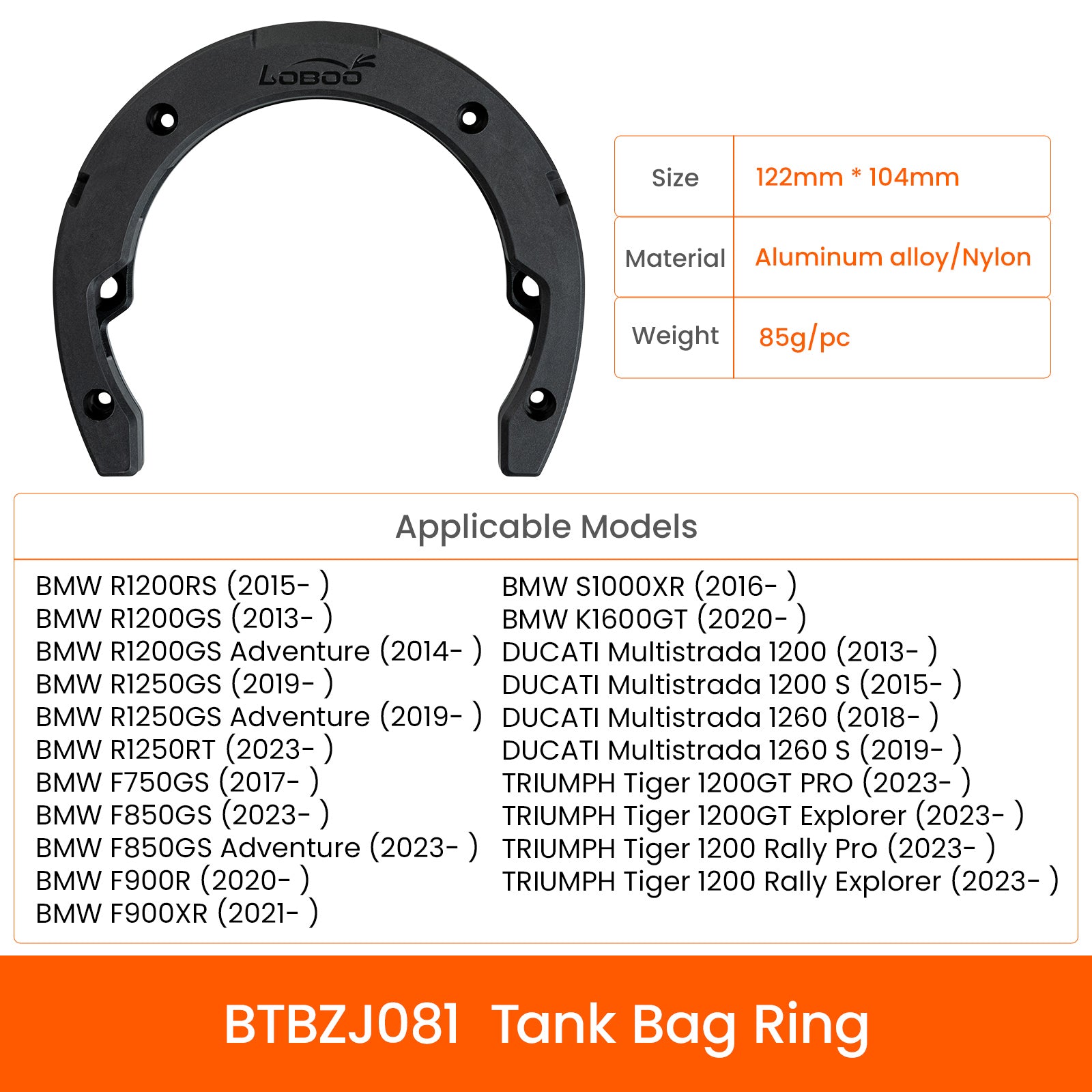
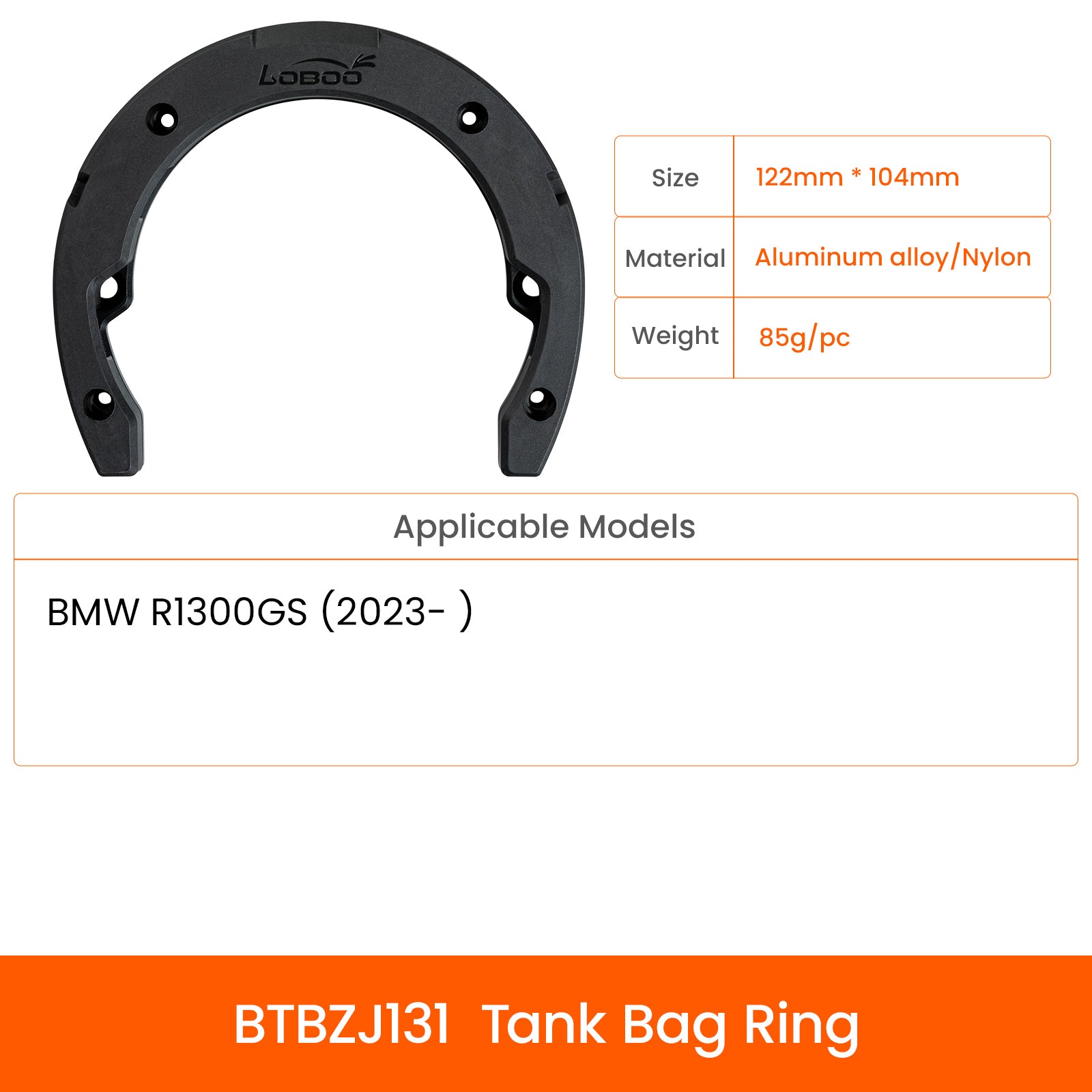
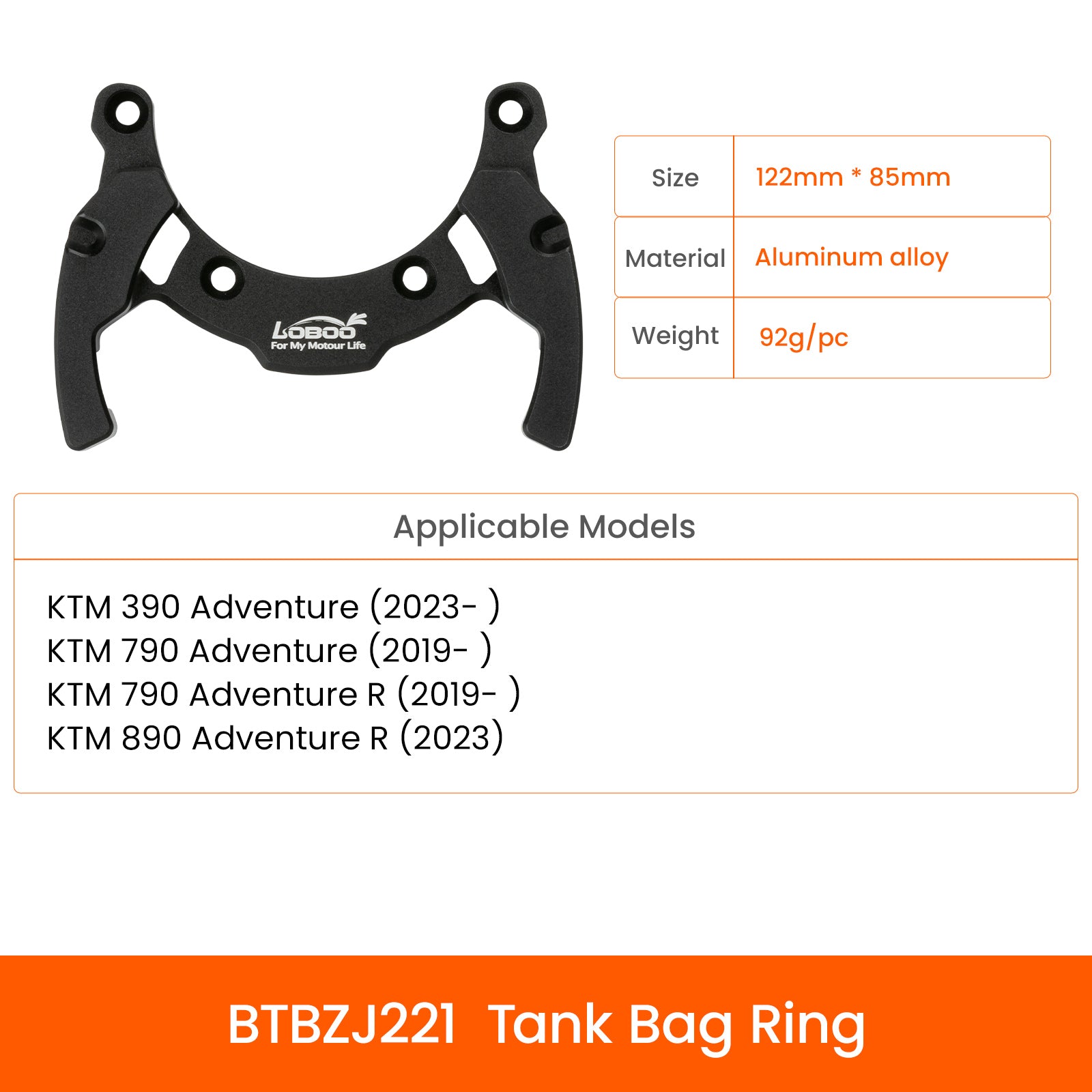
On motorcycles like the R 1250 GS, KTM 890 Adventure, or Tiger 900, the ideal position depends on riding posture and instrumentation. The closer the navigator is to your field of vision, the less you have to take your eyes off the road. But it must not cover the dashboard or force you into a poor reading angle when sitting or standing. This is why model-specific mounts make sense: they are not an aesthetic detail, they serve to maintain visibility and stability where a generic bracket often gives up.
The locking system also matters. On cobblestones, potholes, or compacted tracks, a loose closure translates into vibrations, micro-movements, and premature wear. If you use a smartphone, the issue is even more delicate: stability and vibration damping are not optional.
Useful Functions, and Those That Just Seem Useful
Turn-by-turn navigation is the basic. The real leap, for motorcycle travelers, comes when the device handles deviations, waypoints, imported tracks, and recalculation well without confusing you. If a GPS recalculates aggressively as soon as you deviate a few meters from the route, on mountain roads or in complicated urban passages, it can become more annoying than useful.
An often underestimated feature is the speed of the glove-friendly interface. There's no need for a menu full of options if you have to insist three times in the rain to change screens. The same applies to voice commands via intercom: convenient, yes, but only if the device remains clear even without audio. In traffic, wind, or with a noisy helmet, visual confirmation remains crucial.
"Scenic" functions matter less than they seem. Very rich graphics, too much data on screen, continuous notifications: on a motorcycle, they are tiring. A clean interface, few touches, and easily readable information at first glance are better.
How to Choose the Right GPS for Your Trip
If you mainly ride on asphalt, take European routes, and want simple planning, aim for an easy-to-use device with good readability and updatable maps without complications. In this scenario, extreme off-road resistance takes a backseat, while route clarity and quick management of stops become central.
If you also use your motorcycle on dirt roads, prioritize body robustness, mount quality, readability while standing on the pegs, and fluid track management. Here, the GPS must be a working tool, not just a map with arrows.
If you're embarking on long journeys, focus on power reliability, offline use, backup simplicity, and compatibility with your setup. When you have luggage, a tank bag, an intercom, and occupied sockets, every component must coexist with the rest without improvisation.
For beginners, the most useful advice is not to buy features you won't use. A clear, well-mounted system consistent with your travel style is better than a complex device used at 20%. Effective navigation doesn't depend on the number of menus, but on how much it truly helps you when the day gets long.
The Most Common Mistake When Asking Which GPS for Motorcycle Travel
The classic mistake is choosing by looking only at the device and not the complete system. A good GPS without proper mounting, stable power, and a well-designed position performs less than it should. The opposite is also true: a sensible setup can make even a simpler solution work well.
That's why, when evaluating which GPS for motorcycle travel is right for you, always consider three things together: where you'll mount it, how you'll power it, and under what conditions you'll actually use it. Not on the home-to-bar commute, but after six hours in the saddle, with dirty gloves, glaring light, and an unexpected detour.
On Endurrad, this approach matters more than the pure technical sheet, because the right question isn't "how many functions does it have?", but "can it handle your way of traveling?". It's the criterion that avoids bad purchases and leaves you free to think about the road.
If you're choosing now, don't look for the absolute perfect navigator. Look for the one that helps you make fewer mistakes, get less tired, and stop less. When the journey gets complicated, that's already a lot.






Share:
GPS for motorcycle adventure: what do you really need
Main stand or oversized side stand?