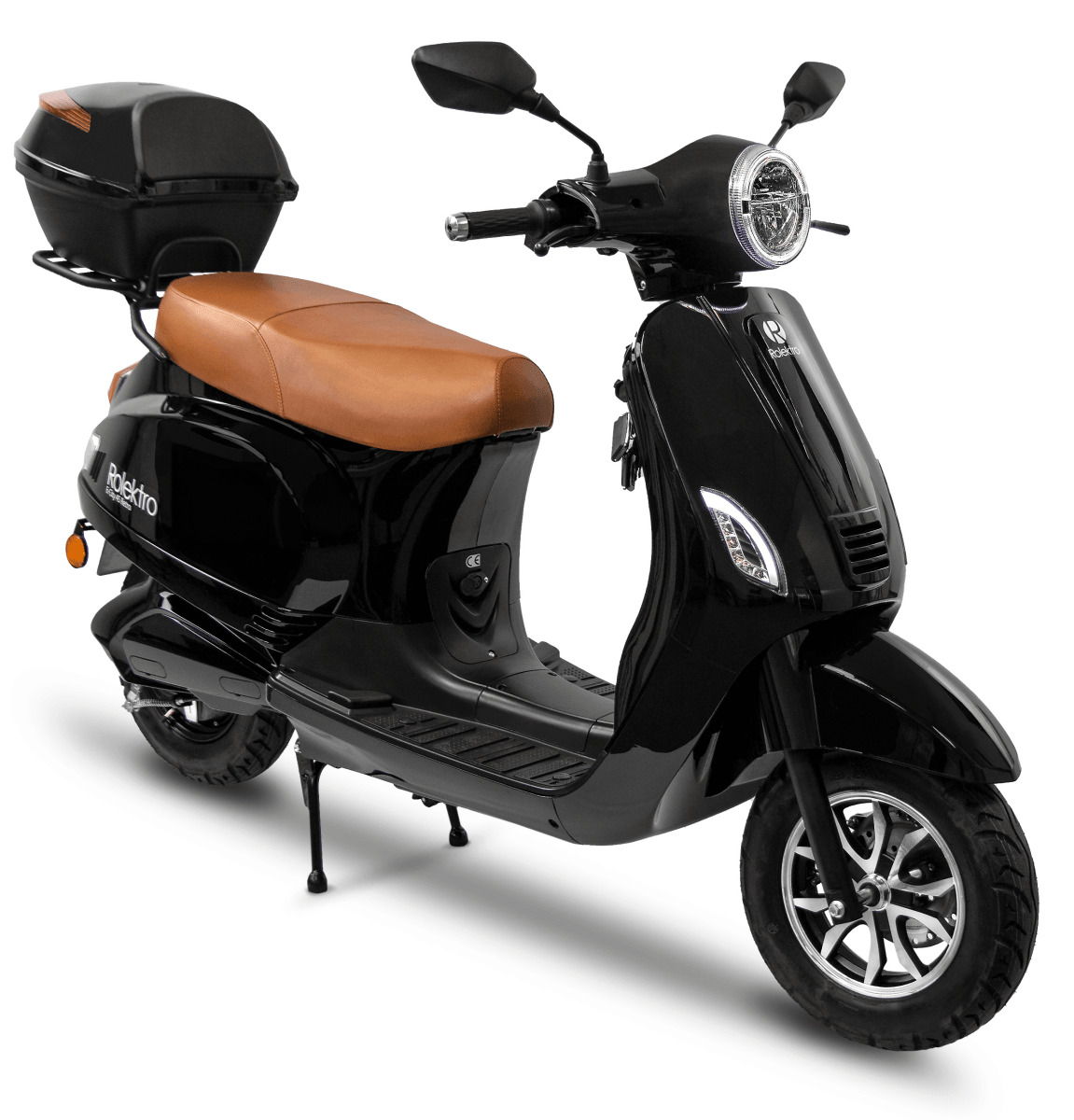
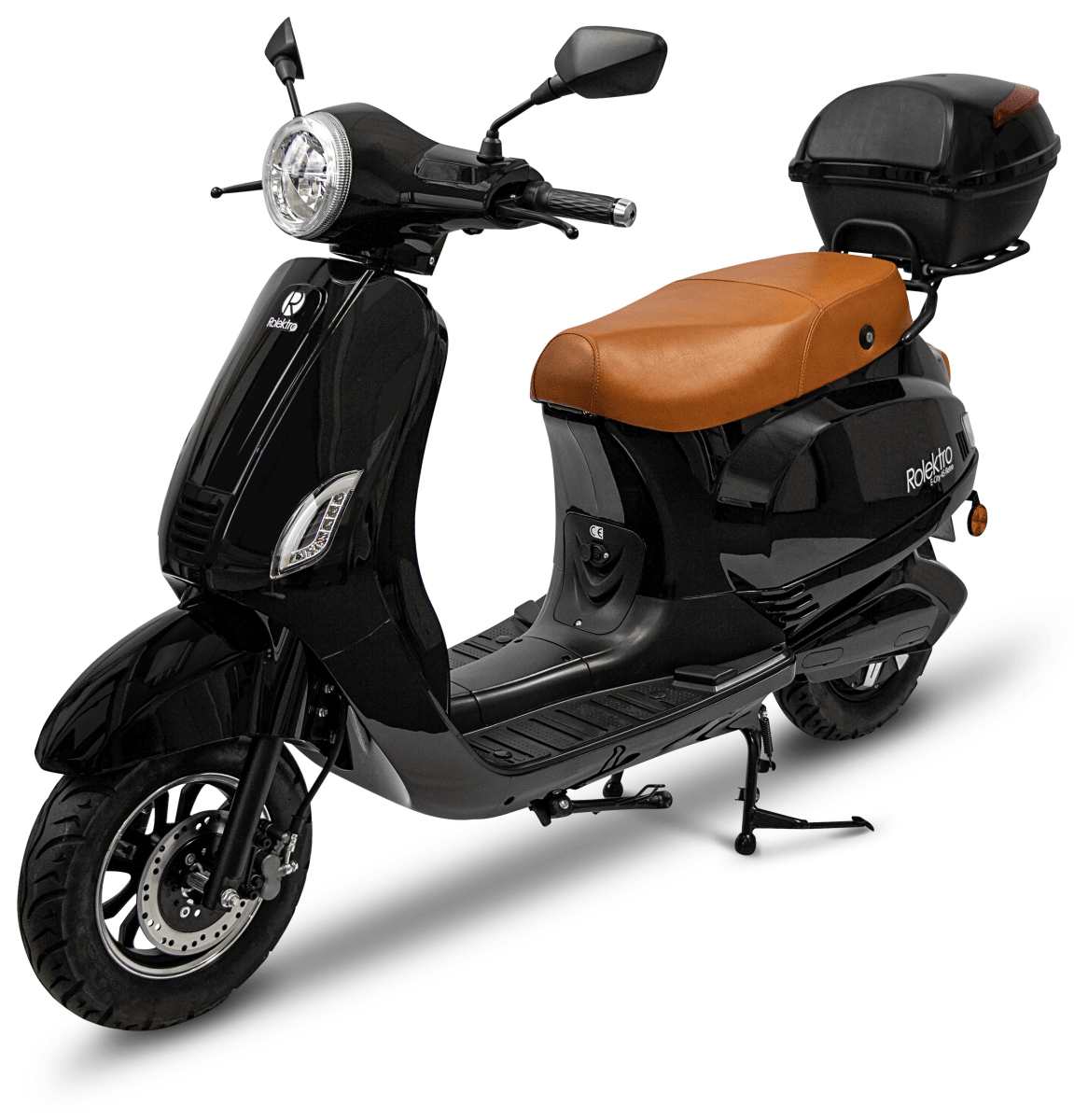
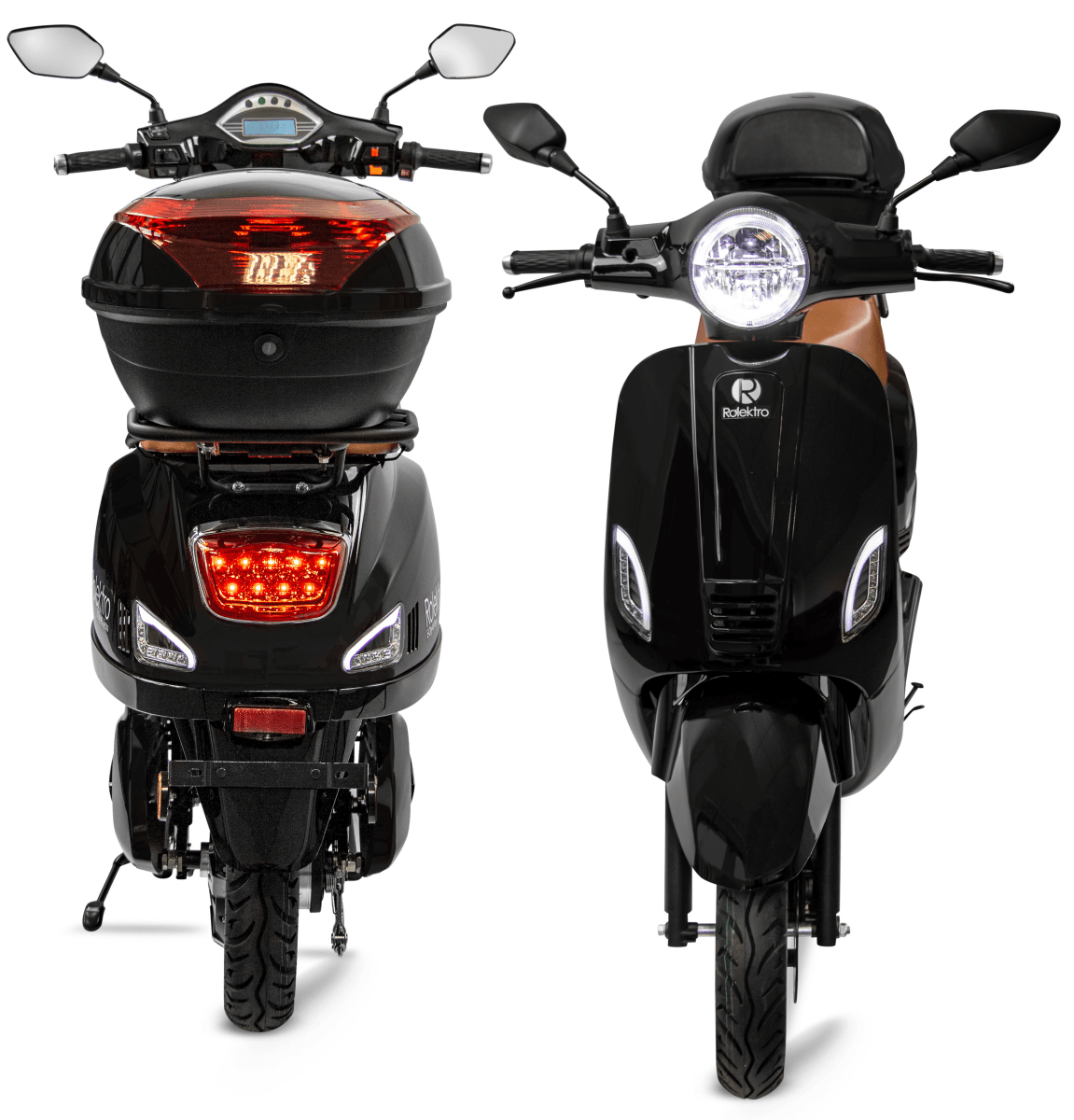
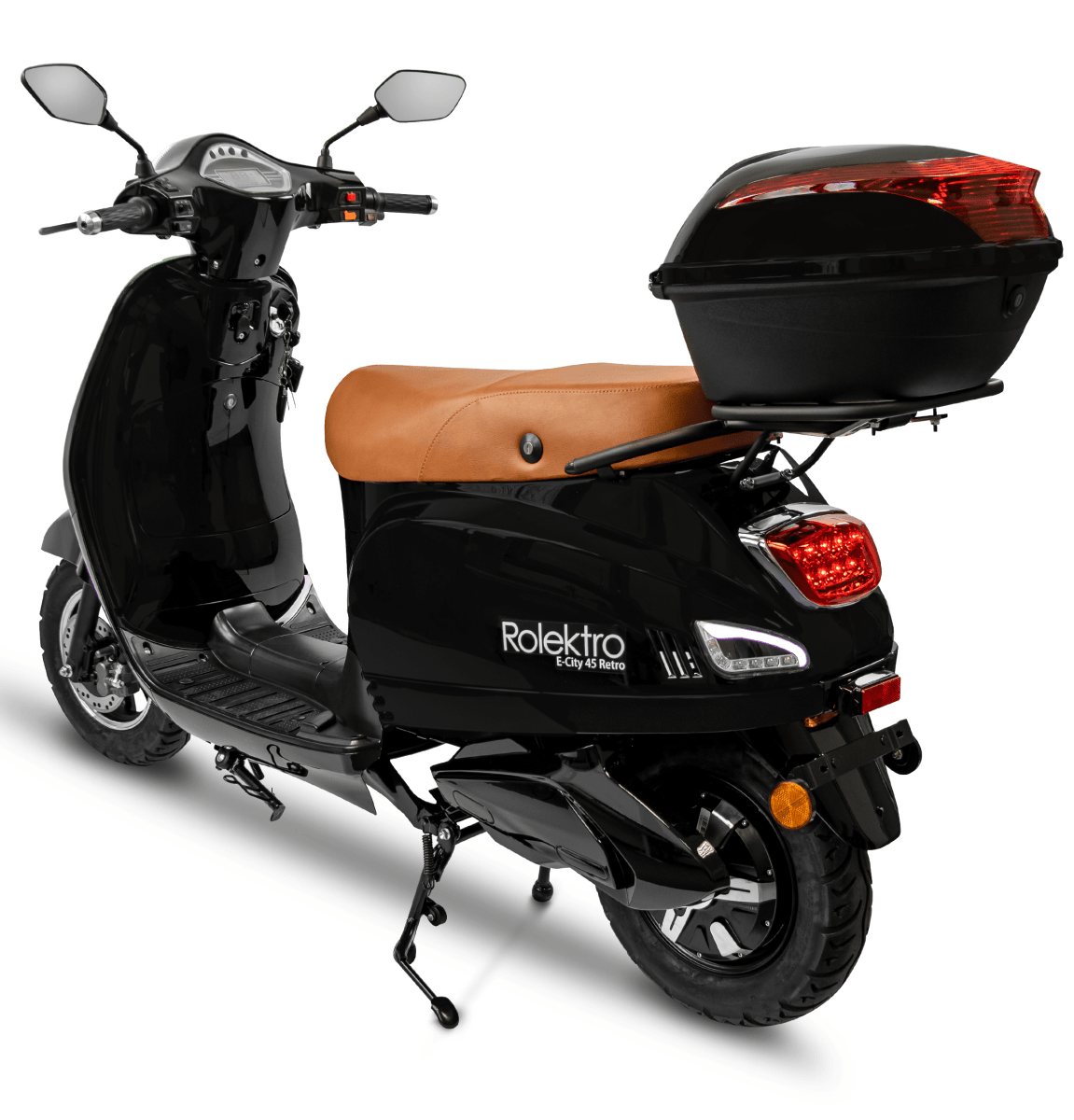
The Rolektro E-City 45 Retro V2021 is a road-legal two-wheeled electric moped: top speed 45 km/h, declared range up to 70 km, removable 60 V lithium battery, and a two-person approved seat. It can be ridden with an AM license, obtainable at 14 years old, and requires a license plate, registration certificate, and RCA insurance like any moped.
What is it really for?
It replaces a car for short, repetitive journeys: home-to-work, school, shopping, city rides. At 45 km/h, it keeps up with city traffic on roads with a 50 km/h limit. It's quiet, has no exhaust pipe, and doesn't need oil changes at the mechanic.
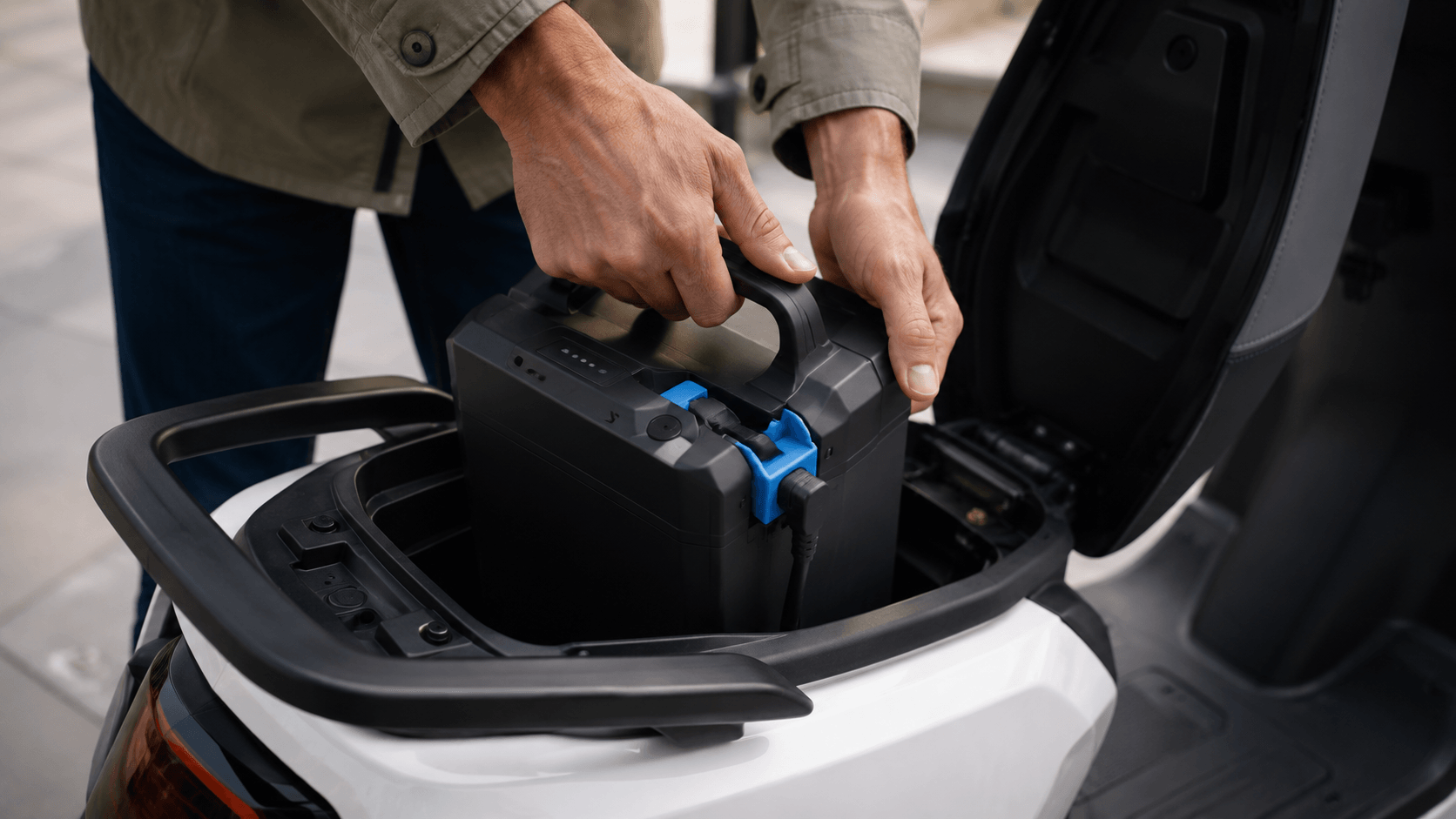
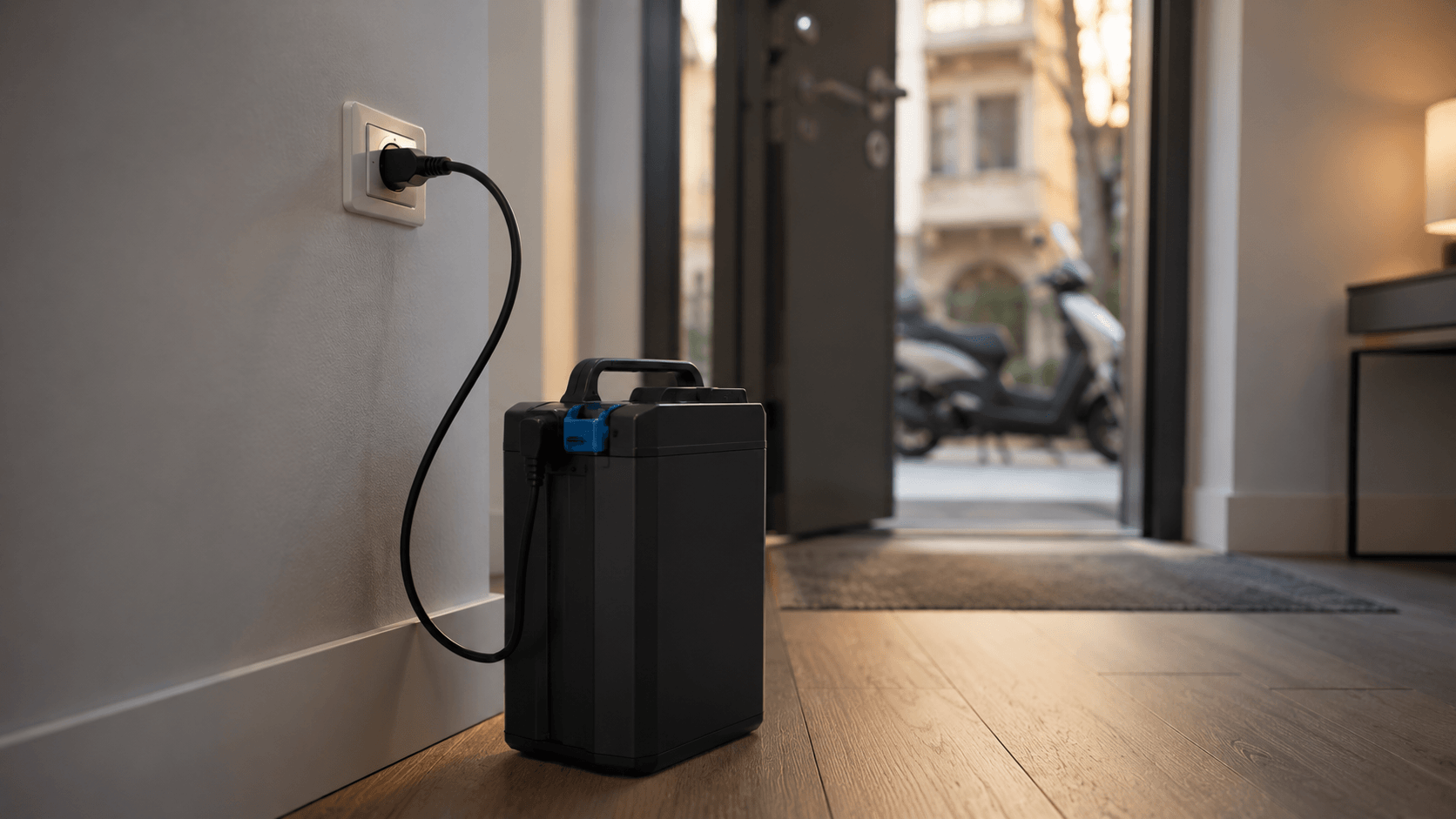
The battery slides out from under the seat and weighs approximately 13 kg. You can remove it and take it indoors to charge: if you don't have an outlet in the garage, or don't have a garage, it's not a problem. With a metal handle and snap connector, the operation takes less than a minute.
How much does it cost to move around?
The battery is 60 V and 27.5 Ah, which means 60 × 27.5 = 1,650 Wh, or 1.65 kWh. At €0.25/kWh, a full charge costs €0.41. Considering about 15% charger losses, the energy actually drawn from the socket is about 1.94 kWh, meaning a real cost of €0.49.
Based on the declared 70 km range, this means 2.4 kWh per 100 km, or about €0.69 per 100 km at the socket. The cost per kilometer is less than one cent.
What do you need to get it on the road in Italy?
-
AM license, obtainable from 14 years of age. A1, A2, A, and B licenses are also valid.
-
License plate and registration certificate, through the Motorizzazione Civile (Department of Motor Vehicles) or a car practice agency.
-
Mandatory RCA insurance.
-
Helmet mandatory for driver and passenger.
The European Certificate of Conformity (CoC) is delivered with the vehicle and is the document used to initiate registration.
It is not suitable for
-
Motorways, expressways, and extra-urban ring roads. Mopeds are not allowed on these roads. With a maximum speed of 45 km/h, even a busy state road is an uncomfortable choice.
-
Those who travel more than 55-60 km per day without being able to recharge. The 70 km is a declared value under favorable conditions: with two people on board, uphill climbs, and cold weather, the actual figure decreases.
-
Those looking for performance on steep uphill climbs with two people on board. The declared maximum climbable gradient is 20% (11°), and this is a peak value, not a cruising value.
-
Those who want ABS or disc brakes on both wheels. Here there is a disc at the front and a drum at the rear, and no combined or anti-lock braking system is indicated.
-
Those who cannot move it by hand frequently. It weighs 88 kg: it moves well on a flat central stand, much less so on an uphill ramp.
The rear drum brake: what it entails
There is a disc brake at the front and a drum at the rear. This is the most common solution for this category of vehicles, and on a 45 km/h vehicle, it brakes sufficiently, as the effective braking power still comes from the front.
There are three real differences: the drum provides less lever sensitivity, so it's harder to modulate; it heats up more during repeated braking on long descents; and when the brake shoes wear out, the play must be manually adjusted, whereas a disc is self-adjusting. Nothing to worry about in urban use, but if you descend from a hilly town every day, it's something to consider.
Battery: life and replacement
The manufacturer declares 600-800 full charge cycles. With one recharge every two days, this is about four years before reaching the end of its useful life, which for a lithium battery does not mean "stops working" but "has lost a noticeable part of its original capacity."
The battery is a spare part available in the catalog and is replaced by extracting it from under the seat, without disassembling any part of the vehicle.
Warranty and assistance
24-month legal conformity warranty. Endurrad is the seller and your sole point of contact for assistance, spare parts, and warranty: you do not need to contact Germany.