


In short. A real motorcycle tablet mount, designed for a 7-11-inch device, does not exist in the Endurrad catalog - and this is not an isolated case: almost no serious manufacturer makes one, because a real tablet catches too much wind, weighs too much, and is not built for handlebar vibrations. What actually exists are three options: a high-end smartphone mount such as LOBOO PH02/PH06 (accepts at most a large phone, not a tablet), an Outplorer modular base with a 1-inch ball mount onto which a tablet cradle purchased elsewhere can be attached, or a dedicated motorcycle display such as the JADO S6, built from the ground up to live on the handlebar.
If you are looking for a way to bring maps, roadbooks, or CarPlay to a large screen on your motorcycle, here you will find the actual dimensions, the limits stated by manufacturers, and which of the three options is right for your motorcycle.
A real tablet is not designed for a handlebar
Before searching for a "motorcycle tablet mount," it is worth understanding why it is so difficult to find a serious one. It is not manufacturer laziness: it is physics.
An 8-inch tablet generally weighs 300-500 grams and exposes more than 120 cm² of surface area to the wind. Mounted high above the instruments, at the end of an arm or bracket, it becomes a sail: every side gust and every wake from a heavy vehicle translates into torque that the mount must absorb without flexing and without making the screen vibrate out of focus. On a handlebar already occupied by controls, additional switches, and a GPS bar, finding room for something that bulky is a separate problem.
Then there is the issue of durability. Motorcycle smartphones on the market almost always claim native IP67 or IP68 protection. Consumer tablets, even high-end ones, often stop at much weaker splash resistance or lack certification for prolonged outdoor use, and direct summer sunlight, combined with the screen running at maximum brightness for navigation, easily causes them to enter thermal protection mode. Finally, there is power consumption: an 8-11-inch display with GPS active and high brightness drains a battery in a few hours, which means that a real tablet on a motorcycle almost always needs dedicated power from the electrical system, not a power bank in your pocket.
Endurrad does not sell a true tablet mount, and we are telling you that right away
The closest mounts in the range are designed for smartphones, not tablets. The official dimensions make that clear.
The LOBOO PH02S is the most widely used mount in the range: mechanical claw locking, three levels of anti-vibration silicone, and attachments for handlebars (Ø 22-32 mm), GPS bars (Ø 12-13 mm), or mirrors (Ø ≤10.2 mm). The manufacturer states compatibility with phones, including the case, of 65-98 mm in width, 125-170 mm in length, and up to 13 mm in thickness. The LOBOO PH06, the aluminum model with magnetic damping and wireless charging up to 36 W, is even narrower: 65-92 mm wide, 125-169 mm long.
An iPad mini, the most compact tablet currently available, measures approximately 178 x 135 mm: it exceeds the PH02S's stated maximum length by more than 8 cm. A 10- or 11-inch tablet is not even worth considering with these mounts. The point is not that LOBOO products are poor quality — they are among the most solid smartphone mounts we carry, with complete electronic protection and genuine shock absorption — but that they were designed and certified for a different device category.

| Device format | Typical dimensions | Does it fit in the LOBOO PH02S? | Does it fit in the LOBOO PH06? |
|---|---|---|---|
| Standard smartphone | 70-80 x 150-165 mm | Yes | Yes |
| Phablet / large smartphone (e.g. Ultra, Pro Max series) | 78-92 x 160-172 mm | Yes, at the upper limits | At the limit, measure with the case |
| iPad mini / 8.3" mini tablet | approximately 135 x 178 mm | No — exceeds the maximum length | No |
| 10-11 inch tablet | over 170 x 245 mm | No | No |
The modular route exists, but the tablet cradle must be purchased separately
If giving up the tablet is not an option, the most honest solution is the modular one: Endurrad provides the motorcycle mount, not the cradle for the device.
The Outplorer P100 range uses a system of separate components built around a 1-inch ball, the same diameter used by RAM Mount systems, among the most widely used in the world for mounting electronics on vehicles. In practice: from Endurrad, you buy the base that attaches to the motorcycle - to the handlebar, mirror, steering plate, or GPS bar - with or without anti-vibration air suspension, and a standard ball sits on top. The actual tablet cradle, which grips the edges of the device, is a separate piece compatible with the same ball standard, which Endurrad currently does not carry and must be purchased from another supplier specializing in tablet mounts.
It is a more involved solution than an all-in-one mount, but it is also the only one that truly allows an 8-10-inch tablet to be mounted on a motorcycle, provided you choose a quality cradle and verify that the selected arm can support the device's weight and bulk without vibrating.

A drilling-free anchor point already exists on the BMW R 1300 GS
If your motorcycle is a BMW R 1300 GS, the cockpit space problem already has a structural solution: all that is missing is the attachment for the device.
The LOBOO CDZ131 GPS Mount is a CNC-machined anodized aluminum bracket with a 12 mm diameter, designed exclusively for the R 1300 GS from 2023 onward (not compatible with the R 1300 GS Adventure, which has a different cockpit). It attaches to the original mounting points without drilling or cutting: once removed, the motorcycle returns exactly to its factory condition, a detail that matters when reselling it. The dual-axis design expands the cockpit's usable surface, so you can place a navigator and smartphone side by side without crowding your view of the dashboard.
The same honesty applies here: the navigator and the device mount are not included. The bracket is the lossless attachment point to the motorcycle; a compatible arm or cradle goes on top, with the mount you prefer - smartphone, dedicated GPS, or, with the right adapter, a lightweight mini tablet.

If you really want a large, stable screen, a motorcycle display does what a tablet cannot
Many people looking for a "motorcycle tablet mount" do not actually want a tablet: they want a large, sunlight-readable screen with maps and CarPlay always within view. That is why a different, more suitable product category exists.
The JADO S6 is a 6-inch display designed from the ground up for use on a motorcycle: IP69K certification (high-pressure, high-temperature water jets, not just rain), wireless Apple CarPlay and Android Auto, and an integrated dashcam with dedicated cameras. For those riding a BMW with the original mounting provision, there is a dedicated quick-release module that mounts the JADO S6 in place of the standard navigation system, along with steering-stem and crossbar mounts for other motorcycles. It costs more than a smartphone mount - the display alone starts at €379, and the BMW module is an additional €82 - but it is a device built to remain on the handlebars in all conditions, not a tablet adapted by force.
This is not the article for comparing all available CarPlay displays: if that is the route you're interested in, the complete guide to smart motorcycle displays compares the CarPlay and Android Auto alternatives available on the Endurrad market.

Riding with a device switched on on the handlebars is subject to precise rules
The device's position matters as much as how it is mounted. It must remain readable at a glance, without covering the dashboard or forcing you to look too far down from the road. On motorcycles with an adjustable windscreen, also check for turbulence: a perfect position in the workshop can become shaky or reflective as soon as you change the windscreen height.
The three questions to ask yourself before ordering
Will it fit my motorcycle?
Measure the mounting point before choosing: the handlebar or GPS bar diameter, the available space taking into account handguards, tank bags, and other accessories already installed, and whether your motorcycle has an original mounting provision (such as on the R 1300 GS with the CDZ131 bracket) that is worth using instead of adding another clamp.
What do I actually receive in the box?
With LOBOO smartphone mounts, you receive the complete mount, ready to install. With the Outplorer base and the BMW GPS bracket, you receive only the anchor point for the motorcycle: the device cradle must be selected and purchased separately, compatible with the 1-inch ball mount or the specified diameter. With the JADO S6 display, you receive the complete device, and the bracket for your specific motorcycle must be selected from the available versions (BMW mounting provision, steering stem, crossbar).
How do I mount it?
LOBOO mounts lock into place and install without special tools on the already measured tube. The CDZ131 GPS bracket attaches to the original BMW cockpit mounting points, is reversible, and requires no drilling. The JADO module for BMW physically replaces the standard navigator in the original mounting location. In all cases, if the mount includes a charging module, it must be connected to the motorcycle's electrical system: allow extra time to route the power supply, preferably from a switched positive connection.
When a tablet still makes sense on a motorcycle
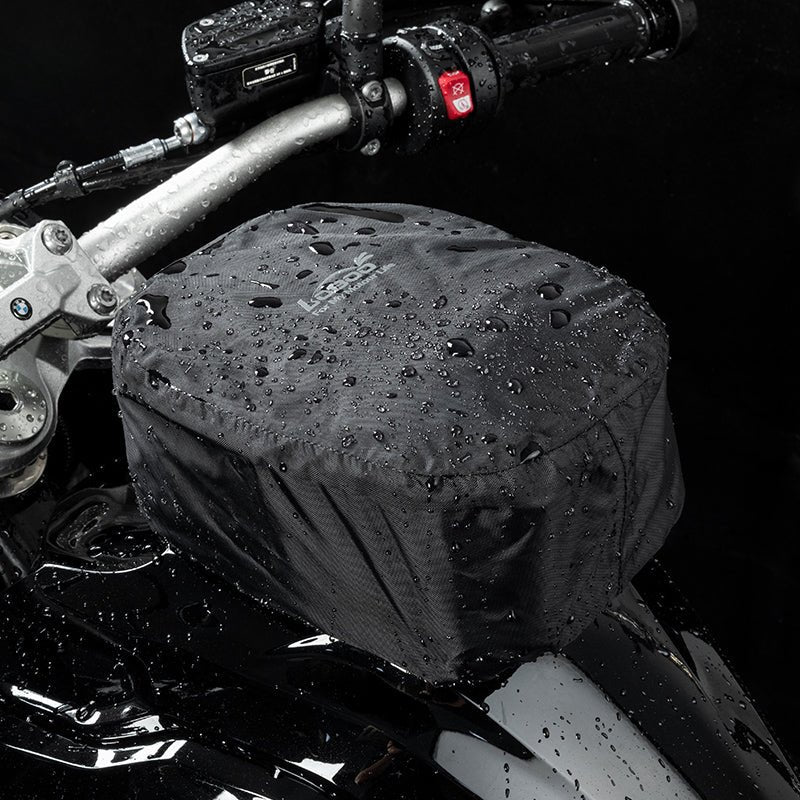
It makes sense as a device to consult while stationary - at the bivouac, in a B&B, or to review the route for the next leg - rather than as an active navigation screen while moving. If you really want to keep it onboard while riding, it is better to store it in a handlebar or tank bag with a transparent map pocket for stops, while for actual navigation, a compact smartphone in a shock-absorbing mount, or a dedicated motorcycle display, remains more stable, easier to read, and easier to power for an entire day of travel.
- If you navigate for hours with detailed maps every day, a dedicated motorcycle display or a large smartphone in a shock-absorbing mount will hold up better than a bare tablet on a long arm.
- If you only need the tablet to plan the day's route in the evening or consult a stationary roadbook, a handlebar bag with a transparent pocket avoids the mounting problem altogether.
- If you ride demanding off-road terrain, every extra centimeter of arm and every additional joint between the handlebar and screen adds another centimeter of oscillation: always prioritize the shortest, most rigid solution.
Frequently asked questions
Can I mount a real tablet on my motorcycle?
Physically, yes, using the 1-inch ball modular system: a compatible base anchored to the motorcycle and a tablet cradle compatible with the same mount, purchased separately. An all-in-one mount designed for a 7-11-inch tablet is not in the Endurrad catalog, and you will not easily find one elsewhere, even among reputable motorcycle brands.
Why doesn't Endurrad sell a dedicated tablet mount?
Because the manufacturers we work with - especially LOBOO and Outplorer - have focused their mounts on the smartphone segment, where demand is higher and where damping, charging, and IP certification make engineering sense. A tablet substantially changes the structural requirements and is a different product, not a larger size of the same mount.
What is the difference between a smartphone mount and a tablet mount?
A smartphone mount is designed for widths of 65-98 mm and weights under 250 grams, with damping calibrated for that weight. A proper tablet mount must support devices wider than 120 mm and heavier, with a much larger surface exposed to the wind: it requires stiffer arms, stronger mounting points, and often a more powerful mechanical locking system, not just adjustable jaws.
What phone sizes fit in the LOBOO PH02?
With the case already fitted: width 65-98 mm, length 125-170 mm, thickness up to 13 mm. Outside these values, the jaws do not close correctly, according to the manufacturer's technical data sheet.
Is the LOBOO PH06 better than the PH02 for intensive use?
The PH06 adds a machined aluminum body and magnetic damping, which is more effective than the PH02S's silicone pads against high-frequency vibrations that can damage the camera's optical stabilizer. However, it accepts slightly smaller devices (65-92 mm wide) and costs more.
Can I use an Outplorer base with a tablet case bought elsewhere?
Yes, provided that the tablet cradle declares compatibility with the 1-inch ball mount used by the Outplorer base, the same diameter widely used in RAM Mount systems. Always check the maximum weight specified for the arm and base before mounting a tablet together with its case.
What is the 1-inch ball standard, and why does it matter?
It is a mechanical mounting diameter widely used in the vehicle-mounting sector, allowing bases, arms, and cradles from different manufacturers to be combined, provided they declare the same standard. Outplorer uses it across the P100 range and sells a dedicated adapter (BA25) to convert a screw mount into a 1-inch ball.
Does the GPS bracket for the BMW R 1300 GS already include the device mount?
No. The LOBOO CDZ131 is only the aluminum mounting point for the original cockpit mounting points. The sat-nav, smartphone, and the corresponding device mount are selected and installed separately, above the bracket.
Is it legal to ride with a tablet or sat-nav switched on and mounted on the handlebars?
Article 173 of the Highway Code prohibits holding devices that require the use of the hands while riding. A device securely mounted and consulted with a glance without holding it is the setup intended to remain legal: nevertheless, make sure it does not obstruct your view of the instruments or the road.
Does a motorcycle display like the JADO S6 really replace a tablet?
For navigation, CarPlay/Android Auto and the dashcam, yes, and with an IP69K rating that no consumer tablet claims. It does not replace a tablet for other uses — reading, editing, general apps — which remain outside the scope of a display designed for riding.
Do vibrations really damage a tablet or smartphone?
High-frequency handlebar vibrations can permanently damage cameras' optical image stabilizer, a known fault that is generally not covered by warranty. Mounts with vibration damping — silicone-based like the PH02S or magnetic damping like the PH06 — reduce but do not eliminate the phenomenon, according to the manufacturer's claims.
Is a case better, or should I use the device bare in the mount?
It depends on how you use it. A case protects against rain and impacts but increases bulk and reduces heat dissipation, a problem in summer when the screen is at maximum brightness under the sun. Always check the mount's compatibility measurements including the case you will actually use.
Does a tablet consume too much battery to last through a motorcycle trip?
With GPS active, a data connection and high brightness, an 8-11 inch screen drains the battery in a few hours. For extended use, dedicated power from the motorcycle's electrical system is needed, not a power bank kept in your pocket: this is one reason why mounts with an integrated charging module, such as the LOBOO PH02S and PH06, remain more practical for those who navigate all day.
What should I measure before ordering a mount?
The exact diameter of the mounting point (handlebar, GPS bar or mirror), your device's dimensions with the case you will actually use, and the real available space considering the other accessories already mounted on the cockpit.
Planning your onboard electronics for your next trip?
Tell us your motorcycle's make, model and year: we'll help you determine whether you need a smartphone mount, a modular base or a dedicated display, and which mount is truly compatible with your cockpit.
More details: best CarPlay and Android Auto motorcycle smart displays · how to properly prepare the BMW R 1300 GS · motorcycle GPS mounts