In brief. Yamaha will present a new model on November 2, 2026, at 18:00 in Milan, on the eve of EICMA. The official teaser shows only an electrocardiogram with three beats at irregular intervals and the phrase «Redefine the Standard»: no name, no engine displacement, no photos.
The press reads those three beats as a three-cylinder engine with uneven firing intervals and is betting on the Yamaha Ténéré 900, the large adventure bike missing for years above the Ténéré 700. It is the strongest hypothesis, but it remains a hypothesis. Here we separate official information from estimates and explain what this concretely means for those who ride or are setting up a Ténéré 700 today.

The three irregular beats point to a three-cylinder engine different from the CP3
Three peaks suggest three cylinders. The detail that matters, however, is the spacing: Yamaha has already been producing a regular three-cylinder engine for over ten years.
Today's CP3: evenly spaced firing intervals
The 890 cc CP3 three-cylinder engine in the MT-09, Tracer 9, XSR900 and YZF-R9 has crankpins offset by 120°: on a four-stroke engine, that means one firing pulse every 240° of rotation. The result is the smooth, continuous power delivery that made it famous on the road (119 hp at 10,000 rpm and 93 Nm at 7,000 rpm on the Tracer 9, according to the technical data sheet).
Off-road, that regularity is not helpful: the rear tire receives power without pauses and tends to spin on loose surfaces.
The Triumph T-Plane precedent
Triumph solved the same problem on the 2020 Tiger 900 with the T-Plane crankshaft: a 1-3-2 firing order and intervals of 180°, 270° and 270°. Three closely spaced pulses followed by a longer pause, during which the tire stops being driven and reconnects with the ground. It is the same logic as 270° parallel twins, including the Ténéré 700’s CP2.
| Engine | Configuration | Firing pulses | Data status |
|---|---|---|---|
| Yamaha CP3 890 | Inline three-cylinder, 120° crank | Even, every 240° | Official |
| Triumph T-Plane (Tiger 900) | Inline three-cylinder, 1-3-2 firing order | Uneven, 180°-270°-270° | Official |
| Yamaha CP2 689 (Ténéré 700) | 270° parallel twin | Uneven | Official |
| New Yamaha three-cylinder engine | Redesigned crankshaft (hypothesis) | Uneven according to the teaser | Estimate |
The Ténéré 900 is the strongest hypothesis because there is a gap above the 700
Since the Super Ténéré 1200 was discontinued, Yamaha has had no medium-to-large-displacement enduro. In the meantime, competitors have filled the segment.
| Manufacturer | Road enduro between 750 and 1000 cc | Front wheel |
|---|---|---|
| BMW | F 900 GS, F 900 GS Adventure | 21" on the GS |
| KTM | 890 Adventure, 990 Adventure | 21" |
| Triumph | Tiger 900 Rally | 21" |
| Honda | XL750 Transalp | 21" |
| Ducati | DesertX | 21" |
| Yamaha | none: there is the Ténéré 700 (689 cc), and then the Tracer 9, which is a road crossover with 17" wheels | – |
Why a true enduro is expected
For Yamaha, the name Ténéré means off-road: a 21-inch front wheel, an 18-inch rear wheel, and long-travel suspension. Yamaha already has a three-cylinder crossover with 17" wheels: the Tracer 9. A “Ténéré” with road wheels would make little commercial sense. This too is a deduction, not a confirmation.

The estimates say 45 hp more than the 700, but also more weight and a tall seat
None of the numbers in the «900» column is official. They are estimates based on components Yamaha already has in its lineup: the Tracer 9's CP3 and the Ténéré 700's chassis. Alongside them, we provide the actual data for the 2025-2026 Ténéré 700.
| Item | Ténéré 700 2025-26 (official data) | Ténéré 900 (Endurrad estimate) |
|---|---|---|
| Engine | CP2 parallel twin, 270° crankshaft | Inline three-cylinder, uneven firing order |
| Displacement | 689 cc | approximately 890 cc, CP3-based |
| Power | 73.4 hp (54 kW) at 9,000 rpm | around the CP3's 119 hp, subject to different tuning |
| Torque | 68 Nm at 6,500 rpm | around the CP3's 93 Nm |
| Transmission | 6-speed | 6-speed, possible Y-AMT version |
| Wheels | Spoked, 90/90-21 and 150/70 R18 | Spoked, 21" and 18" |
| Travel | 210 mm front / 200 mm rear | at least 200 mm per axle |
| Seat height | 875 mm (860 mm lowered version) | not below 860 mm, probably around 900 |
| Kerb weight | 208 kg | approximately 225–235 kg |
| Fuel tank | 16 L | cannot be estimated |
| Price | 10.999 € | not disclosed |
- Around 45 hp and 25 Nm more than the 700 (estimate)
- More leeway on the highway when fully loaded and riding two-up
- Twin-cylinder traction, if the teaser is telling the truth
- Around twenty kilos or more to manage when stationary and on inclines
- High seat: anyone who can barely touch the ground on the 700 will not find any relief
- Price predictably higher than the 700

Ténéré 700 accessories will not fit the 900
In the short term, nothing changes: there is usually a long wait between the presentation and the bikes reaching dealerships. But anyone outfitting a Ténéré 700 should know that the most expensive parts are frame-specific.
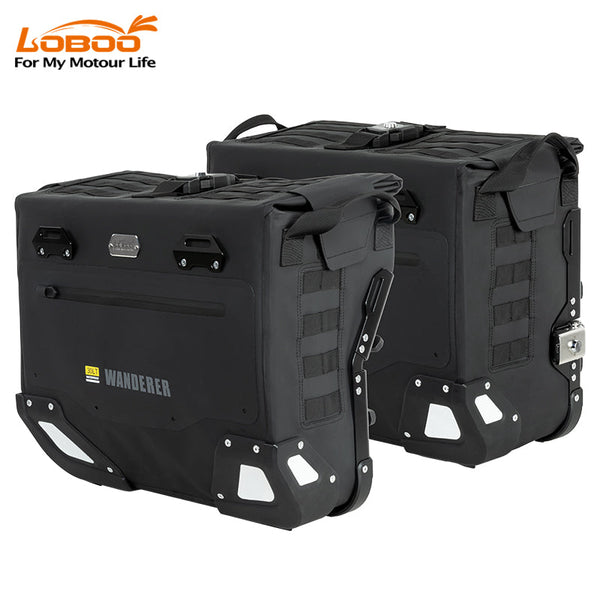
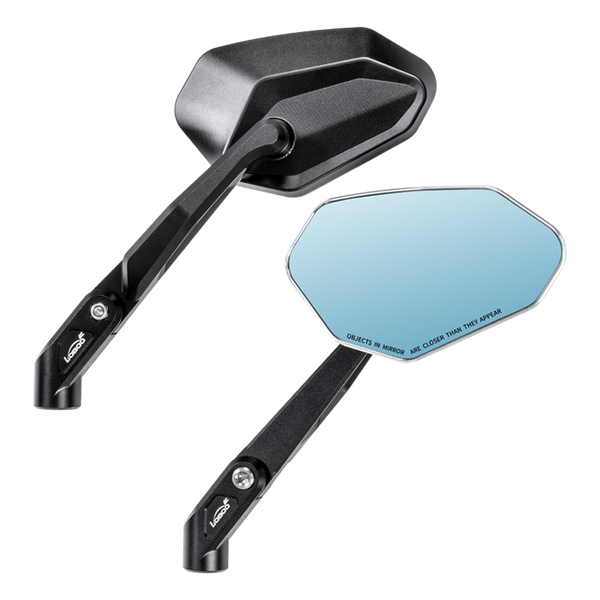
- Panniers and top cases (LOBOO panniers fit any dedicated LOBOO frame)
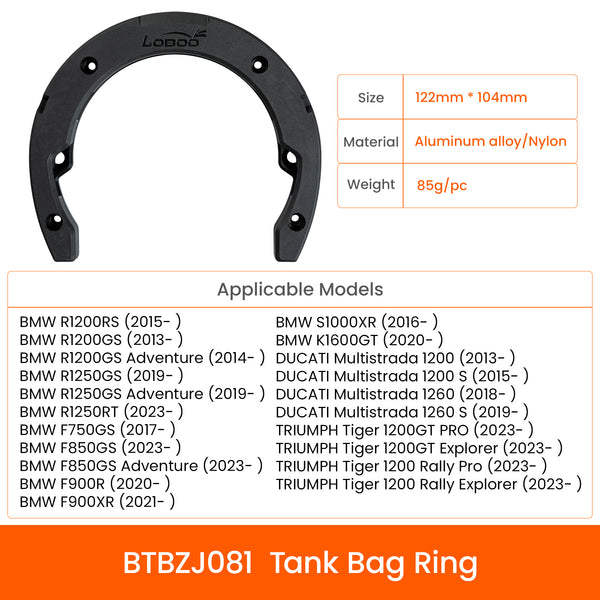
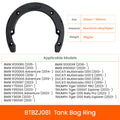
- Soft bags, tank bags with compatible ring, dry bags
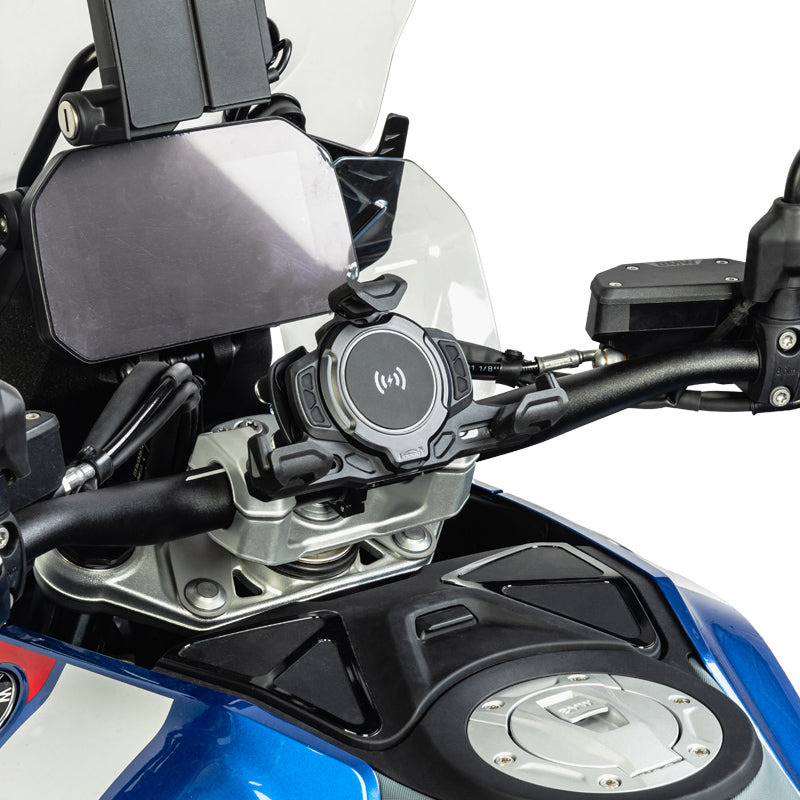
- Universal smartphone and GPS mounts
- Engine guard and crash bars
- Side case frames and top case plate
- Model-specific auxiliary light mounts, DENALI kits and handguards
The right approach
A three-cylinder engine has a different frame, anchor points and dimensions from a parallel twin. If you plan to keep your Ténéré 700, there is no point delaying its setup while waiting for a motorcycle that has not yet been shown. If you are thinking of changing it in 2027, it is better to invest in what remains: the cases, while the frames can be replaced.
On a heavier motorcycle, some choices also stop being optional: a larger kickstand foot on soft ground and sturdy crash bars, because a stationary fall with 230 kg causes damage that would not happen on the 700.

- Compatibility
- Yamaha Ténéré 700 from 2022
- Material
- Steel
- Installation
- Original mounting points, without adapter brackets
- Compatible cases
- PIKE TRACKER P35L+P30R, Wanderer 40+30 L
- Price
- 414,00 €

- Contents
- JP871B frames + 35 L (left) and 30 L (right) aluminum cases
- Exhaust side
- Shaped right case, narrower profile
- Maximum load
- 10 kg per case
- Empty case weight
- 11.6 kg per pair, frames excluded
- Price
- €1,057.90 silver · €1,124.90 black

- Compatibility
- Standard Ténéré 700 2022–2026
- Material
- Stainless steel
- Installation
- No drilling, 8 manual steps
- Compatible top cases
- PIKE TRACKER 36 L and 45 L, TIBET 36 L
- Price
- 306,00 €

The entire dedicated catalog, from DENALI lighting kits to Barkbusters handguards, is in the Yamaha Ténéré 700 accessories collection.
On November 2, we will find out whether it really is the Ténéré 900
Yamaha and EICMA's official dates. We will update this article after the presentation without changing its URL.
- Late August 2026 — Yamaha releases the “Redefine the Standard” teaser with the three beats.
- November 2, 2026, at 6:00 p.m. — Yamaha presentation in Milan, on the eve of EICMA.
- November 3–4, 2026 — EICMA, days reserved for press and trade professionals.
- November 5–8, 2026 — EICMA open to the public, Fiera Milano Rho.
- After EICMA — if it is the Ténéré 900, it is expected to go on sale during 2027 (estimate: timing and prices have not been announced).
The complete EICMA overview
All the other maxi enduro, crossover, and Adventure models expected in Milan, confirmed or not, are covered in our guide to the new products at EICMA 2026.
Frequently asked questions about the Yamaha Ténéré 900
Has Yamaha confirmed the Ténéré 900?
No. As of October 5, 2026, Yamaha has announced only a presentation in Milan on November 2, 2026, at 6:00 p.m., with a teaser hinting at a three-cylinder engine. The name Ténéré 900 is a media interpretation.
When will the new Yamaha be unveiled?
November 2, 2026, at 6:00 p.m. in Milan, the day before EICMA opens to the press. The show is open to the public from November 5 to 8, 2026, at Fiera Milano Rho.
What do the three irregular beats in the teaser mean?
They most likely indicate a three-cylinder engine with uneven firing intervals, meaning a crankshaft different from the current CP3's. An irregular firing order improves traction on loose surfaces.
What is the difference from the MT-09's CP3 engine?
The CP3 has crankpins offset by 120° and a firing interval of 240°, resulting in smooth power delivery. The rumored engine would have uneven intervals, with a longer pause between two firing events, like the Triumph Tiger 900's T-Plane engine.
How many horsepower will the Ténéré 900 have?
This has not been announced. If it were derived from the 890 cc CP3, the reference point would be the Tracer 9 with 119 hp and 93 Nm; a specific off-road tune could prioritize low-end torque over maximum power.
How much will the Ténéré 900 weigh?
There is no official figure. The 2025-26 Ténéré 700 weighs 208 kg in running order: a three-cylinder model with the same enduro setup should weigh approximately between 225 and 235 kg. This is an estimate.
Will it have a 21-inch wheel?
Very likely, but not confirmed. The Ténéré name is associated with off-road riding, and all its direct competitors (BMW F 900 GS, KTM 890 and 990 Adventure, Honda Transalp, Ducati DesertX) use a 21-inch front wheel.
How much will the Ténéré 900 cost?
The price has not been announced. As a reference, the 2025-26 Ténéré 700 costs €10,999 and the Tracer 9 €12,199 (Moto.it price list): it is reasonable to expect a price higher than the 700's, but any figure today would be made up.
When will it arrive at dealerships?
If the November 2 presentation really concerns the Ténéré 900, it would realistically go on sale sometime in 2027. Yamaha has not indicated a timeline.
Will the Ténéré 900 replace the Ténéré 700?
There are no indications of this. The 700 occupies a different price and weight bracket: it is more likely that the new model will complement the 700.
Will the Ténéré 700 accessories fit the Ténéré 900?
Almost certainly not for anything attached to the frame or engine: skid plate, crash bars, case frames, top-case plate, and auxiliary-light mounts. Cases, top cases, soft bags, and universal accessories will remain usable.
If I have a Ténéré 700, should I wait before kitting it out?
If you're going to keep the bike, no: the wait concerns a motorcycle that hasn't been shown yet, and delivery times are long. If you're thinking of changing it, invest mainly in cases and bags, which can move from one motorcycle to another with the right frames.
What if it's a turbo bike instead?
It's the alternative possibility: in 2020, Yamaha developed a supercharged three-cylinder engine based on the MT-10 and filed a patent for an electrically assisted turbocharger. The teaser is compatible with both interpretations. We'll find out on November 2.
Are you kitting out your Ténéré?
Tell us your motorcycle's make, model, and year (for the Ténéré 700, also the version: standard, Rally, Extreme, or World Raid), and we'll recommend compatible frames, cases, and protection, with updated availability.
Yamaha Ténéré 700 accessoriesSources. Yamaha teaser and invitation (late August 2026) as reported by Moto.it (08/27/2026), Motorbox, MOTORRAD, and motorcycles.news; official dates from the EICMA website; 2025-26 Ténéré 700 and Tracer 9 data from the technical specifications published in the Moto.it price list; T-Plane from the Triumph Tiger 900 documentation; LOBOO data from the manufacturer's specification sheets and manuals. Endurrad prices and availability verified on October 5, 2026.
First published on August 31, 2026, rewritten and updated on October 5, 2026. We will update the article after the November 2 presentation.