Free shipping on orders over €100 · 14-day returns

Road sign with a semicircle and black lines: what does it mean, and when do you have to keep your motorcycle lights on?

Motorcycle Accessories News
Moto adventure con faretti supplementari LOBOO L7S montati sulla barra paramotore
Last updated: October 16, 2026Reading time: 11 minSources: Ley 24.449 (Argentina), Highway Code Article 152, StVO, CTB, Chilean and Uruguayan laws

The road sign with a semicircle and black lines is a round sign with a red border containing the symbol for low-beam headlights: a semicircle with several slanted lines pointing down from it. You’ll find it mainly in Argentina, and it means just one thing: from this point on, you must drive with your low beams on (or daytime running lights, if the vehicle has them), day and night.

You won’t see that sign in Italy, but the rules for motorcyclists are already stricter: Article 152 of the Highway Code requires lights to be on at all times, even in cities. Here you’ll find what Argentine law says, what applies here, what changes in the countries people most often travel to by motorcycle, and how to prepare your lighting system before setting off.

In brief

  • What it means: you must drive with your low beams on. The symbol is the same as the low-beam indicator on the dashboard.
  • Argentina: on national roads, such as Ruta 40, low beams or daytime running lights must be on 24 hours a day (Article 47 of Ley 24.449, as amended by Ley 27.425 of 2017).
  • Italy: motorcycles and mopeds must always have their low beams on, including in built-up areas; daytime running lights are permitted during the day when visibility is good. Fine: €42 to €173.
  • Abroad: Germany, Austria, France, Switzerland, Slovenia, Croatia, Chile, Uruguay and Brazil require motorcycles to have their lights on, even during the day.
  • Auxiliary lights: extra lights help you see and be seen, but they don’t replace the motorcycle’s low beam.

The sign with the stylized headlight asks for just one thing: low beams on

Red border, white background, a black semicircle and a few slanted lines: it looks like a puzzle, but drivers already know it because it’s the same design as the green low-beam indicator.

Endurrad's graphic recreation of the symbol: the semicircle is the headlight, and the slanted lines pointing down indicate the low beam. Illustrative drawing, not a reproduction of the official sign.

How to read the three elements

  • The circle with the red border: in European and South American road signage, it indicates a command, meaning a requirement, not a recommendation.
  • The semicircle: represents the headlight assembly.
  • The diagonal lines pointing downward: These are the beam directed toward the road surface, that is, the low beam. If they were horizontal, they would indicate high beams, which the sign does not require.

The sign was featured in the Italian automotive press, which described it as a sign used in Argentina to remind drivers of the requirement to drive with low-beam headlights on. It is not part of the signage commonly seen in Italy: the requirement for motorcycles comes from the Highway Code and applies everywhere, without needing a sign to remind riders. For this very reason, the symbol is of particular interest to anyone planning a motorcycle trip in South America.

In Argentina, low beams must stay on on national roads, day and night

The rule is in Article 47 of Ley 24.449, the national traffic law, as rewritten by Ley 27.425, published in the Boletín Oficial on December 22, 2017.

The current text states that when a vehicle is traveling on national roads, its low beams or daytime running lights (DRLs) must remain on, day and night, regardless of natural light and visibility; exceptions are sections where high beams are required and railroad crossings. The same 2017 reform repealed the previous Ley 25.456, which referred only to low beams, and added daytime running lights as an equivalent alternative.

24 hlow beams or DRLs on national roads, at all times
2017year Ley 27.425 rewrote Art. 47
RN 40Ruta 40, the main route for motorcycle trips in Patagonia, is a national road
Pay attention to the provinces. National law applies on national roads; in cities and on provincial roads, local regulations apply, because each province has adopted Ley 24.449 with different wording and dates, and some have stricter rules. On national roads, enforcement is handled by the Gendarmería. We could not find an up-to-date official source for the amount of the fines, so we do not report it.

What this means for motorcycle travelers

For a European motorcyclist, little changes: almost all recent motorcycles switch their lights on automatically when you start the engine. The tricky part is something else. On thousands of kilometers of Patagonian straight roads, with wind, dust, and vibrations, a headlight that fails far from a repair shop puts you on the wrong side of the law and, above all, makes you less visible to trucks. Knowing how your headlight works and what you can fix yourself is part of preparing for the trip.

In Italy, motorcycles have the strictest rule: lights must be on even in cities

Article 152 of the Highway Code treats cars and motorcycles differently, requiring more of two-wheeled vehicles.

Cars must keep their position lights and low beams on while driving outside built-up areas. Mopeds, motorcycles, tricycles, and quadricycles must do so also in built-up areas, that is, at all times. Daytime running lights may be used instead of low beams and position lights if the motorcycle is equipped with them, but not in the cases listed in article 153, paragraph 1: at night (from half an hour after sunset to half an hour before sunrise), in tunnels, in fog, snow, heavy rain, or whenever visibility is poor. Historic and collectible vehicles are exempt.

42-173 €penalty provided for under art. 152, paragraph 2
-30%reduced payment if paid within 5 days of notification
Everywherefor motorcycles, the requirement applies both in and outside urban areas
Situation Motorcycles and mopeds Cars
During the day in urban areas, when visibility is good Low beams or daytime running lights No requirement
During the day outside urban areas, when visibility is good Low beams or daytime running lights Low beams or daytime running lights
At night, in tunnels, in fog, or in heavy rain Low beams and position lights; daytime running lights are not enough Low beams and position lights; daytime running lights are not enough
Historic or collectible vehicle Exempt from the daytime requirement Exempt from the daytime requirement

Source: arts. 152 and 153 of the Highway Code, as reproduced by SicurAUTO and avvocatoandreani.it, accessed October 16, 2026. The Code was recently amended: normattiva.it is the authoritative source for the current text. For the 2026 updates, see the article on the new Highway Code and motorcycles.

Sources disagree on penalty points. The table attached to art. 126-bis lists 1 point for art. 152, but refers to paragraph 3, which no longer exists in the current text; several general guides, on the other hand, mention 2 or 3 points. Since we could not find a single, unambiguous official source, we cannot state a number with certainty: if you receive a ticket, check what it says.

Abroad, riding a motorcycle with its lights on is the rule almost everywhere

In Europe and South America, the rules for cars vary widely from country to country; for motorcycles, however, daytime lights are required almost everywhere.

Country Motorcycles during the day Daytime running lights permitted Reference
Italy Always, even in cities Yes, when visibility is good Highway Code, art. 152
Germany Always Yes, low beams or daytime running lights StVO § 17 paragraph 2a
Austria Always (not for cars) Check before setting off SicurAUTO
France Always (not for cars) Check before setting off SicurAUTO
Switzerland Always, for all vehicles Check before setting off SicurAUTO, TCS
Slovenia Always, for all vehicles Not always accepted: low beams are better SicurAUTO
Croatia Always (cars only in winter) Check before setting off SicurAUTO
Argentina On national roads, 24 hours a day Yes Law 24.449, art. 47
Chile Always, with lights on Yes, on interurban roads Law 18.290, art. 72; D.S. 22/2006
Uruguay Always, for all vehicles Yes, if factory-fitted Law 18.191 Article 30
Brazil Low beams during the day and at night The law requires motorcycles to use low beams CTB Article 40

In northern Europe (Denmark, Norway, Finland, Estonia, Iceland), as well as Bulgaria and Montenegro, daytime lights are mandatory for all vehicles, according to SicurAUTO. If you're heading to the Balkans, also see our Africa Twin setup for the Balkans, and for the north, the GS equipment for Northern Europe.

How to read the table. For Italy, Germany, Argentina, Chile, Uruguay, and Brazil, we consulted the legal text (directly or through legal sources); for the other European countries, the source is a SicurAUTO guide, so this is secondary data. In Brazil, legal scholars debate whether the fine is higher, but Article 40 requires motorcycles to have their low beams on during the day and at night. Rules change: before setting out, check the ACI or TCS country pages.

Low beams, daytime running lights, and auxiliary lights are not the same thing

When a law says lights must be on, it means a specific light: knowing which one helps you avoid fines abroad and making the wrong choices in the garage.

The three lights that matter

  • Low beam: illuminates the road without dazzling oncoming traffic. It is the light accepted by all the laws in the table, at all times.
  • Daytime running lights (DRLs): designed to make you visible during the day, not to illuminate the road. Italy, Germany, Argentina, and Uruguay accept them during the day; in Slovenia, not always, and in Brazil the law specifies low-beam headlights for motorcycles.
  • Auxiliary lights: these are an addition. They do not replace the motorcycle's low beam, either under Italian law or, according to the sources consulted, under foreign laws.
Adventure motorcycle seen from the front, with a main headlight and two additional LOBOO L7S lights on the crash bar
Main headlight plus two auxiliary lights: the three-point front is easier for oncoming traffic to recognize. Photo: LOBOO L7S product listing.

On long, straight roads, when a motorcycle approaches a car about to overtake a truck, the outline of a single headlight can easily blend into the background. Two auxiliary lights mounted low on the crash bar widen the light signature: this is an editorial opinion based on travel experience, not research data. If you use them on the road, they must be approved and aimed so they don't dazzle oncoming traffic.

Works if
  • the lights are approved for road use, with an ECE mark on the housing
  • the beam is aimed with the motorcycle loaded, because luggage and a passenger raise the front end
  • the electrical system can handle the extra load, with a relay or control unit
Doesn’t do
  • does not replace the low beam: if your motorcycle’s headlight fails, you’re still not road-legal
  • does not authorize you to use high beams on other road users: lower the level or switch them off in town and when approaching oncoming traffic
  • does not make the motorcycle visible from behind, where brake lights and reflectors matter
Approved LOBOO L7S auxiliary lights with low and high beamsSKU L7S
Pair of LOBOO L7S auxiliary lights with yellow lens covers and mounting clamps
Approval
ECE R149.00 Class C, E57*149R00/06*1142
Functions
Low beam, high beam, flashing
Pair output
2,500-8,000 lm low beam; up to 15,000 lm with both beams
Adjustment
8 levels with a dial near the clutch
Light
6000 K white, 3000 K with the included yellow lens cover
Sealing and housing
IP68, CNC aluminum, glass lens
Installation
22, 25, and 28 mm tube clamps included
Listing price
261 €
Available LOBOO stated specificationView the listing
LOBOO L7S auxiliary light on with the yellow lens cover in the rain
In rain and fog, the yellow lens cover reduces glare from white light on raindrops. Photo: LOBOO L7S product listing.

As of October 16, 2026, the L7S listing shows 4 units in stock. Alternatives are available in the LOBOO lighting and motorcycle auxiliary lights collections; find brackets for your bike in headlight brackets. For help reading an ECE certificate, see the guide to approved auxiliary lights, and to compare models, see the best motorcycle auxiliary lights of 2026.

Before a long trip, treat your headlight like your tires

A lighting check in the garage takes ten minutes; a failed headlight a thousand kilometers from the nearest repair shop can take days to deal with.

  1. Find out what type of headlight you have. If it uses replaceable halogen bulbs, carry a spare low-beam bulb of the same type. If it has an integrated LED unit, find out in advance what happens if it fails, because it often can’t be fixed at the roadside.
  2. Check the fuses and connectors. Vibration and water are the enemies of electrical contacts: two spare fuses of the correct rating take up about as much space as a coin.
  3. Adjust the beam with the motorcycle loaded. Panniers, a tank bag, and a passenger compress the rear suspension and raise the headlight: a beam that was correctly aligned when unloaded may end up shining into oncoming drivers’ eyes.
  4. Clean the lenses and reflectors. On dirt roads and dusty tracks, a layer of dust on the headlight reduces its output more than you might think. A headlight guard also prevents stone chips.
  5. Check the electrical system if you add loads. Auxiliary lights, heated grips, and USB sockets all add to the power draw: add up the wattage before setting off, not in the middle of the pampa.
Pair of LOBOO L7S auxiliary lights on the front of an adventure motorcycle, switched on at night
At night, auxiliary lights extend your visibility on unlit roads; in the city, they should be dimmed or switched off. Photo: LOBOO L7S product listing.

For the complete list of checks to make before setting off, see our guide on preparing your motorcycle for a long trip; to protect your headlight from stones, see our guide to headlight protection for off-road motorcycles; and for electrical loads, see our guide to the motorcycle power distribution unit. And if your trip often has you riding back at sunset, also read how to ride a motorcycle in the dark during standard time.

Frequently asked questions about the sign and riding with your lights on

The most frequently asked questions, with sources listed in the notes below.

What does the road sign with a semicircle and black lines mean?
It is a round sign with a red border and the symbol for a low-beam headlight: the semicircle is the headlamp, and the lines angled downward represent the beam. It indicates that you must drive with your low beams on, or with daytime running lights where permitted by law.
Where can you find this sign?
Italian media have reported it as a sign used in Argentina, where Article 47 of Law 24.449 requires low beams or daytime running lights to be on 24 hours a day on national roads, such as Ruta 40.
Is the same sign used in Italy?
This is not a sign you’ll see on Italian roads. Here, no sign is needed to make it compulsory: Article 152 of the Highway Code requires motorcycles to use their lights on any road, including in cities.
Do I have to keep my motorcycle lights on during the day in the city?
Yes. Article 152 requires mopeds, motorcycles, tricycles, and quadricycles to use position lights and low beams, even in built-up areas. Cars are required to do so only outside built-up areas.
How much is the fine for riding a motorcycle with the lights off?
Article 152 provides for a fine of 42 to 173 euros. As with other Highway Code violations, if you pay within 5 days of being cited or notified, the minimum amount is reduced by 30%. Sources disagree about license points: check what the citation says.
Are motorcycle DRLs enough instead of the low beam?
In Italy, yes, if the motorcycle is equipped with them, but only during the day when visibility is good. At night, in tunnels, or in fog, snow, or heavy rain, the low beam and position lights are required (Articles 152 and 153 of the Highway Code).
Do lights have to be on in cities in Argentina?
National law applies to national roads, where low beams or daytime running lights must stay on day and night. In cities and on provincial roads, local rules apply and vary from province to province: keeping your lights on at all times is the simplest and safest choice.
Can I use auxiliary lights instead of the low beam?
No. Auxiliary lights are an addition to the motorcycle's lighting system and do not replace the low beam required by law. If you use them on public roads, they must be approved and adjusted so they do not dazzle oncoming traffic.
In which European countries must motorcycles have their lights on during the day?
Among the most popular destinations for Italian motorcyclists are Germany, Austria, France, Switzerland, Slovenia, and Croatia, as well as the Nordic countries. In Germany, the requirement for motorcycles is set out in § 17, paragraph 2a, of the StVO, and allows either low beams or daytime running lights.
What are Brazil's requirements for motorcycles?
Article 40 of the Código de Trânsito Brasileiro requires motorcycles, mopeds, and scooters to use the farol baixo, meaning the low beam, both day and night. Legal sources classify daytime violations as a medium-level offense, but experts disagree about the fine.
Do historic motorcycles have to keep their lights on during the day?
Not in Italy: Article 152 exempts vehicles of historical and collector interest from the requirement. This exemption is not guaranteed abroad, so it is best to keep the lights on when traveling.
Why can't I turn off my motorcycle's headlight?
Many recent motorcycles automatically turn on the low beam or daytime running lights when started, and international motorcycle type-approval regulations (UNECE Regulation R53) require automatic activation on models without daytime running lights. This is not a defect: it is how the manufacturer ensures the motorcycle always complies with the rules.

Read next

Getting your motorcycle ready for a long-distance trip?

At Endurrad, you'll find approved auxiliary lights, dedicated brackets, and electrical accessories to help you be seen, in Italy and on Ruta 40. Tell us your motorcycle's make, model, and year, and we'll recommend compatible brackets and lights.

Discover LOBOO lighting

Take Endurrad with you everywhere: download the Endurrad app for iPhone.

Sources
Argentina, Law 24.449 Article 47 as amended by Law 27.425 (Official Gazette, 12/22/2017): text published by Microjuris; previous text (Law 25.456) at argentina.gob.ar; provincial enforcement: Derecho en Zapatillas.
Italy, Highway Code Article 152: SicurAUTO and avvocatoandreani.it; current text at normattiva.it. Article 126-bis points table: Portale dell'Automobilista.
Germany, StVO § 17: gesetze-im-internet.de.
Chile, Law 18.290 Article 72: iura.cl; Decree 22/2006, amended by Decree 181/2006.
Uruguay, Law 18.191 Article 30 (text of Law 19.824): IMPO.
Brazil, CTB Articles 40 and 250: Âmbito Jurídico.
Other European countries: SicurAUTO; TCS.
Original report on the Argentine signal: Autoblog, October 15, 2026. LOBOO L7S listing: Endurrad catalog, manufacturer-declared specifications, verified October 16, 2026.
Do you have a question about your motorcycle? We respond Monday to Friday, 8:30 a.m.–5:30 p.m.
Scrivici su WhatsApp

Commenti

Dallo shop Endurrad

Prima di partire: gli accessori che servono sempre

-33%
Endurrad 30L Universal Rear Bags
€80,00 Prezzo di listino €120,00
Consegna in 2-3 giorni lavorativi
-9%
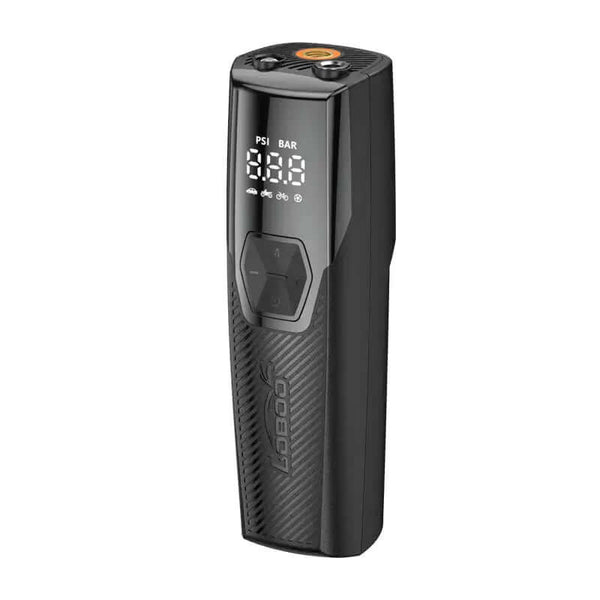
LOBOO LOBOO CP06 portable compressor for motorcycles and cars | 150 PSI, 35 L/min, 294 g 4,0 (1) recensioni
€50,00 Prezzo di listino €55,00
Consegna in 2-3 giorni lavorativi
-9%
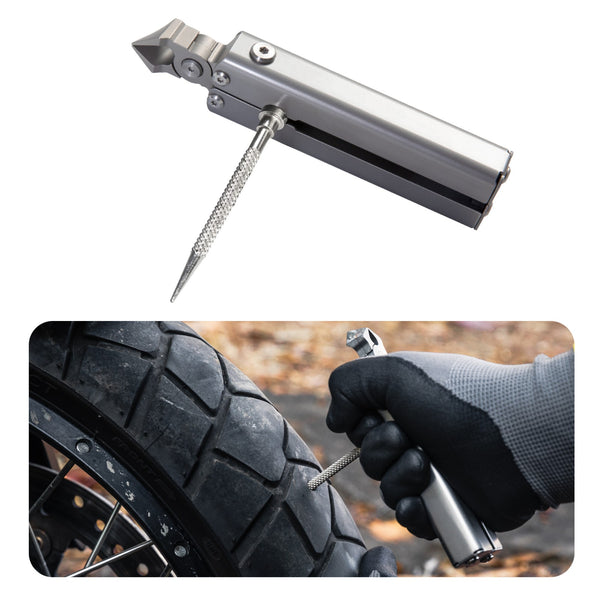
LOBOO Tubeless motorcycle tire repair kit with pliers and case
€32,00 Prezzo di listino €35,00
Consegna in 2-3 giorni lavorativi

Dal blog

Altri articoli

Tutti gli articoli
{"@context":"http:\/\/schema.org\/","@id":"\/en\/blogs\/news-motorcycle-accessories\/segnale-semicerchio-linee-nere-luci-moto#article","@type":"Article","mainEntityOfPage":{"@type":"WebPage","@id":"https:\/\/endurrad.com\/en\/blogs\/news-motorcycle-accessories\/segnale-semicerchio-linee-nere-luci-moto"},"articleBody":"\n\n\nLast updated: October 16, 2026Reading time: 11 minSources: Ley 24.449 (Argentina), Highway Code Article 152, StVO, CTB, Chilean and Uruguayan laws\n\n\nThe road sign with a semicircle and black lines is a round sign with a red border containing the symbol for low-beam headlights: a semicircle with several slanted lines pointing down from it. You’ll find it mainly in Argentina, and it means just one thing: from this point on, you must drive with your low beams on (or daytime running lights, if the vehicle has them), day and night.\nYou won’t see that sign in Italy, but the rules for motorcyclists are already stricter: Article 152 of the Highway Code requires lights to be on at all times, even in cities. Here you’ll find what Argentine law says, what applies here, what changes in the countries people most often travel to by motorcycle, and how to prepare your lighting system before setting off.\n\nIn brief\n\n\nWhat it means: you must drive with your low beams on. The symbol is the same as the low-beam indicator on the dashboard.\n\nArgentina: on national roads, such as Ruta 40, low beams or daytime running lights must be on 24 hours a day (Article 47 of Ley 24.449, as amended by Ley 27.425 of 2017).\n\nItaly: motorcycles and mopeds must always have their low beams on, including in built-up areas; daytime running lights are permitted during the day when visibility is good. Fine: €42 to €173.\n\nAbroad: Germany, Austria, France, Switzerland, Slovenia, Croatia, Chile, Uruguay and Brazil require motorcycles to have their lights on, even during the day.\n\nAuxiliary lights: extra lights help you see and be seen, but they don’t replace the motorcycle’s low beam.\n\nIn this article\n\nHow to read the sign\nThe rule in Argentina\nThe rule in Italy\nRules in countries people travel to\nLow beams, daytime running lights and auxiliary lights\nChecks before a long trip\nFrequently asked questions\n\n\nThe sign with the stylized headlight asks for just one thing: low beams on\nRed border, white background, a black semicircle and a few slanted lines: it looks like a puzzle, but drivers already know it because it’s the same design as the green low-beam indicator.\nEndurrad's graphic recreation of the symbol: the semicircle is the headlight, and the slanted lines pointing down indicate the low beam. Illustrative drawing, not a reproduction of the official sign.\n\nHow to read the three elements\n\n\nThe circle with the red border: in European and South American road signage, it indicates a command, meaning a requirement, not a recommendation.\n\nThe semicircle: represents the headlight assembly.\n\nThe diagonal lines pointing downward: These are the beam directed toward the road surface, that is, the low beam. If they were horizontal, they would indicate high beams, which the sign does not require.\n\n\nThe sign was featured in the Italian automotive press, which described it as a sign used in Argentina to remind drivers of the requirement to drive with low-beam headlights on. It is not part of the signage commonly seen in Italy: the requirement for motorcycles comes from the Highway Code and applies everywhere, without needing a sign to remind riders. For this very reason, the symbol is of particular interest to anyone planning a motorcycle trip in South America.\n\n\nIn Argentina, low beams must stay on on national roads, day and night\nThe rule is in Article 47 of Ley 24.449, the national traffic law, as rewritten by Ley 27.425, published in the Boletín Oficial on December 22, 2017.\nThe current text states that when a vehicle is traveling on national roads, its low beams or daytime running lights (DRLs) must remain on, day and night, regardless of natural light and visibility; exceptions are sections where high beams are required and railroad crossings. The same 2017 reform repealed the previous Ley 25.456, which referred only to low beams, and added daytime running lights as an equivalent alternative.\n\n\n24 hlow beams or DRLs on national roads, at all times\n\n\n2017year Ley 27.425 rewrote Art. 47\n\n\nRN 40Ruta 40, the main route for motorcycle trips in Patagonia, is a national road\n\n\n\nPay attention to the provinces. National law applies on national roads; in cities and on provincial roads, local regulations apply, because each province has adopted Ley 24.449 with different wording and dates, and some have stricter rules. On national roads, enforcement is handled by the Gendarmería. We could not find an up-to-date official source for the amount of the fines, so we do not report it.\n\nWhat this means for motorcycle travelers\nFor a European motorcyclist, little changes: almost all recent motorcycles switch their lights on automatically when you start the engine. The tricky part is something else. On thousands of kilometers of Patagonian straight roads, with wind, dust, and vibrations, a headlight that fails far from a repair shop puts you on the wrong side of the law and, above all, makes you less visible to trucks. Knowing how your headlight works and what you can fix yourself is part of preparing for the trip.\n\n\n\nIn Italy, motorcycles have the strictest rule: lights must be on even in cities\nArticle 152 of the Highway Code treats cars and motorcycles differently, requiring more of two-wheeled vehicles.\nCars must keep their position lights and low beams on while driving outside built-up areas. Mopeds, motorcycles, tricycles, and quadricycles must do so also in built-up areas, that is, at all times. Daytime running lights may be used instead of low beams and position lights if the motorcycle is equipped with them, but not in the cases listed in article 153, paragraph 1: at night (from half an hour after sunset to half an hour before sunrise), in tunnels, in fog, snow, heavy rain, or whenever visibility is poor. Historic and collectible vehicles are exempt.\n\n\n42-173 €penalty provided for under art. 152, paragraph 2\n\n\n-30%reduced payment if paid within 5 days of notification\n\n\nEverywherefor motorcycles, the requirement applies both in and outside urban areas\n\n\n\n\nSituation\nMotorcycles and mopeds\nCars\n\n\n\nDuring the day in urban areas, when visibility is good\nLow beams or daytime running lights\nNo requirement\n\n\nDuring the day outside urban areas, when visibility is good\nLow beams or daytime running lights\nLow beams or daytime running lights\n\n\nAt night, in tunnels, in fog, or in heavy rain\nLow beams and position lights; daytime running lights are not enough\nLow beams and position lights; daytime running lights are not enough\n\n\nHistoric or collectible vehicle\nExempt from the daytime requirement\nExempt from the daytime requirement\n\n\n\nSource: arts. 152 and 153 of the Highway Code, as reproduced by SicurAUTO and avvocatoandreani.it, accessed October 16, 2026. The Code was recently amended: normattiva.it is the authoritative source for the current text. For the 2026 updates, see the article on the new Highway Code and motorcycles.\n\nSources disagree on penalty points. The table attached to art. 126-bis lists 1 point for art. 152, but refers to paragraph 3, which no longer exists in the current text; several general guides, on the other hand, mention 2 or 3 points. Since we could not find a single, unambiguous official source, we cannot state a number with certainty: if you receive a ticket, check what it says.\n\n\nAbroad, riding a motorcycle with its lights on is the rule almost everywhere\nIn Europe and South America, the rules for cars vary widely from country to country; for motorcycles, however, daytime lights are required almost everywhere.\n\n\nCountry\nMotorcycles during the day\nDaytime running lights permitted\nReference\n\n\n\nItaly\nAlways, even in cities\nYes, when visibility is good\nHighway Code, art. 152\n\n\nGermany\nAlways\nYes, low beams or daytime running lights\nStVO § 17 paragraph 2a\n\n\nAustria\nAlways (not for cars)\nCheck before setting off\nSicurAUTO\n\n\nFrance\nAlways (not for cars)\nCheck before setting off\nSicurAUTO\n\n\nSwitzerland\nAlways, for all vehicles\nCheck before setting off\nSicurAUTO, TCS\n\n\nSlovenia\nAlways, for all vehicles\nNot always accepted: low beams are better\nSicurAUTO\n\n\nCroatia\nAlways (cars only in winter)\nCheck before setting off\nSicurAUTO\n\n\nArgentina\nOn national roads, 24 hours a day\nYes\nLaw 24.449, art. 47\n\n\nChile\nAlways, with lights on\nYes, on interurban roads\nLaw 18.290, art. 72; D.S. 22\/2006\n\n\nUruguay\nAlways, for all vehicles\nYes, if factory-fitted\nLaw 18.191 Article 30\n\n\nBrazil\nLow beams during the day and at night\nThe law requires motorcycles to use low beams\nCTB Article 40\n\n\n\nIn northern Europe (Denmark, Norway, Finland, Estonia, Iceland), as well as Bulgaria and Montenegro, daytime lights are mandatory for all vehicles, according to SicurAUTO. If you're heading to the Balkans, also see our Africa Twin setup for the Balkans, and for the north, the GS equipment for Northern Europe.\n\nHow to read the table. For Italy, Germany, Argentina, Chile, Uruguay, and Brazil, we consulted the legal text (directly or through legal sources); for the other European countries, the source is a SicurAUTO guide, so this is secondary data. In Brazil, legal scholars debate whether the fine is higher, but Article 40 requires motorcycles to have their low beams on during the day and at night. Rules change: before setting out, check the ACI or TCS country pages.\n\n\nLow beams, daytime running lights, and auxiliary lights are not the same thing\nWhen a law says lights must be on, it means a specific light: knowing which one helps you avoid fines abroad and making the wrong choices in the garage.\n\nThe three lights that matter\n\n\nLow beam: illuminates the road without dazzling oncoming traffic. It is the light accepted by all the laws in the table, at all times.\n\nDaytime running lights (DRLs): designed to make you visible during the day, not to illuminate the road. Italy, Germany, Argentina, and Uruguay accept them during the day; in Slovenia, not always, and in Brazil the law specifies low-beam headlights for motorcycles.\n\nAuxiliary lights: these are an addition. They do not replace the motorcycle's low beam, either under Italian law or, according to the sources consulted, under foreign laws.\n\n\nMain headlight plus two auxiliary lights: the three-point front is easier for oncoming traffic to recognize. Photo: LOBOO L7S product listing.\nOn long, straight roads, when a motorcycle approaches a car about to overtake a truck, the outline of a single headlight can easily blend into the background. Two auxiliary lights mounted low on the crash bar widen the light signature: this is an editorial opinion based on travel experience, not research data. If you use them on the road, they must be approved and aimed so they don't dazzle oncoming traffic.\n\n\nWorks if\nthe lights are approved for road use, with an ECE mark on the housing\nthe beam is aimed with the motorcycle loaded, because luggage and a passenger raise the front end\nthe electrical system can handle the extra load, with a relay or control unit\n\n\n\nDoesn’t do\ndoes not replace the low beam: if your motorcycle’s headlight fails, you’re still not road-legal\ndoes not authorize you to use high beams on other road users: lower the level or switch them off in town and when approaching oncoming traffic\ndoes not make the motorcycle visible from behind, where brake lights and reflectors matter\n\n\n\n\n\nApproved LOBOO L7S auxiliary lights with low and high beamsSKU L7S\n\n\n\n\n\nApproval\nECE R149.00 Class C, E57*149R00\/06*1142\n\n\nFunctions\nLow beam, high beam, flashing\n\n\nPair output\n2,500-8,000 lm low beam; up to 15,000 lm with both beams\n\n\nAdjustment\n8 levels with a dial near the clutch\n\n\nLight\n6000 K white, 3000 K with the included yellow lens cover\n\n\nSealing and housing\nIP68, CNC aluminum, glass lens\n\n\nInstallation\n22, 25, and 28 mm tube clamps included\n\n\nListing price\n261 €\n\n\n\n\nAvailable LOBOO stated specificationView the listing\n\n\nIn rain and fog, the yellow lens cover reduces glare from white light on raindrops. Photo: LOBOO L7S product listing.\nAs of October 16, 2026, the L7S listing shows 4 units in stock. Alternatives are available in the LOBOO lighting and motorcycle auxiliary lights collections; find brackets for your bike in headlight brackets. For help reading an ECE certificate, see the guide to approved auxiliary lights, and to compare models, see the best motorcycle auxiliary lights of 2026.\n\n\nBefore a long trip, treat your headlight like your tires\nA lighting check in the garage takes ten minutes; a failed headlight a thousand kilometers from the nearest repair shop can take days to deal with.\n\n\nFind out what type of headlight you have. If it uses replaceable halogen bulbs, carry a spare low-beam bulb of the same type. If it has an integrated LED unit, find out in advance what happens if it fails, because it often can’t be fixed at the roadside.\n\nCheck the fuses and connectors. Vibration and water are the enemies of electrical contacts: two spare fuses of the correct rating take up about as much space as a coin.\n\nAdjust the beam with the motorcycle loaded. Panniers, a tank bag, and a passenger compress the rear suspension and raise the headlight: a beam that was correctly aligned when unloaded may end up shining into oncoming drivers’ eyes.\n\nClean the lenses and reflectors. On dirt roads and dusty tracks, a layer of dust on the headlight reduces its output more than you might think. A headlight guard also prevents stone chips.\n\nCheck the electrical system if you add loads. Auxiliary lights, heated grips, and USB sockets all add to the power draw: add up the wattage before setting off, not in the middle of the pampa.\n\nAt night, auxiliary lights extend your visibility on unlit roads; in the city, they should be dimmed or switched off. Photo: LOBOO L7S product listing.\nFor the complete list of checks to make before setting off, see our guide on preparing your motorcycle for a long trip; to protect your headlight from stones, see our guide to headlight protection for off-road motorcycles; and for electrical loads, see our guide to the motorcycle power distribution unit. And if your trip often has you riding back at sunset, also read how to ride a motorcycle in the dark during standard time.\n\n\nFrequently asked questions about the sign and riding with your lights on\nThe most frequently asked questions, with sources listed in the notes below.\nWhat does the road sign with a semicircle and black lines mean?It is a round sign with a red border and the symbol for a low-beam headlight: the semicircle is the headlamp, and the lines angled downward represent the beam. It indicates that you must drive with your low beams on, or with daytime running lights where permitted by law.\nWhere can you find this sign?Italian media have reported it as a sign used in Argentina, where Article 47 of Law 24.449 requires low beams or daytime running lights to be on 24 hours a day on national roads, such as Ruta 40.\nIs the same sign used in Italy?This is not a sign you’ll see on Italian roads. Here, no sign is needed to make it compulsory: Article 152 of the Highway Code requires motorcycles to use their lights on any road, including in cities.\nDo I have to keep my motorcycle lights on during the day in the city?Yes. Article 152 requires mopeds, motorcycles, tricycles, and quadricycles to use position lights and low beams, even in built-up areas. Cars are required to do so only outside built-up areas.\nHow much is the fine for riding a motorcycle with the lights off?Article 152 provides for a fine of 42 to 173 euros. As with other Highway Code violations, if you pay within 5 days of being cited or notified, the minimum amount is reduced by 30%. Sources disagree about license points: check what the citation says.\nAre motorcycle DRLs enough instead of the low beam?In Italy, yes, if the motorcycle is equipped with them, but only during the day when visibility is good. At night, in tunnels, or in fog, snow, or heavy rain, the low beam and position lights are required (Articles 152 and 153 of the Highway Code).\nDo lights have to be on in cities in Argentina?National law applies to national roads, where low beams or daytime running lights must stay on day and night. In cities and on provincial roads, local rules apply and vary from province to province: keeping your lights on at all times is the simplest and safest choice.\nCan I use auxiliary lights instead of the low beam?No. Auxiliary lights are an addition to the motorcycle's lighting system and do not replace the low beam required by law. If you use them on public roads, they must be approved and adjusted so they do not dazzle oncoming traffic.\nIn which European countries must motorcycles have their lights on during the day?Among the most popular destinations for Italian motorcyclists are Germany, Austria, France, Switzerland, Slovenia, and Croatia, as well as the Nordic countries. In Germany, the requirement for motorcycles is set out in § 17, paragraph 2a, of the StVO, and allows either low beams or daytime running lights.\nWhat are Brazil's requirements for motorcycles?Article 40 of the Código de Trânsito Brasileiro requires motorcycles, mopeds, and scooters to use the farol baixo, meaning the low beam, both day and night. Legal sources classify daytime violations as a medium-level offense, but experts disagree about the fine.\nDo historic motorcycles have to keep their lights on during the day?Not in Italy: Article 152 exempts vehicles of historical and collector interest from the requirement. This exemption is not guaranteed abroad, so it is best to keep the lights on when traveling.\nWhy can't I turn off my motorcycle's headlight?Many recent motorcycles automatically turn on the low beam or daytime running lights when started, and international motorcycle type-approval regulations (UNECE Regulation R53) require automatic activation on models without daytime running lights. This is not a defect: it is how the manufacturer ensures the motorcycle always complies with the rules.\n\n\nRead next\n\nSafetyRiding a motorcycle in the dark during standard time\nRegulationsNew Highway Code and motorcycles\nLightsApproved auxiliary lights\nComparisonBest motorcycle auxiliary lights 2026\nTravelHow to prepare your motorcycle for a long trip\nProtectionHeadlight protection for off-road motorcycles\n\n\n\nGetting your motorcycle ready for a long-distance trip?\nAt Endurrad, you'll find approved auxiliary lights, dedicated brackets, and electrical accessories to help you be seen, in Italy and on Ruta 40. Tell us your motorcycle's make, model, and year, and we'll recommend compatible brackets and lights.\nDiscover LOBOO lighting\nTake Endurrad with you everywhere: download the Endurrad app for iPhone.\n\n\nSources\nArgentina, Law 24.449 Article 47 as amended by Law 27.425 (Official Gazette, 12\/22\/2017): text published by Microjuris; previous text (Law 25.456) at argentina.gob.ar; provincial enforcement: Derecho en Zapatillas.\nItaly, Highway Code Article 152: SicurAUTO and avvocatoandreani.it; current text at normattiva.it. Article 126-bis points table: Portale dell'Automobilista.\nGermany, StVO § 17: gesetze-im-internet.de.\nChile, Law 18.290 Article 72: iura.cl; Decree 22\/2006, amended by Decree 181\/2006.\nUruguay, Law 18.191 Article 30 (text of Law 19.824): IMPO.\nBrazil, CTB Articles 40 and 250: Âmbito Jurídico.\nOther European countries: SicurAUTO; TCS.\nOriginal report on the Argentine signal: Autoblog, October 15, 2026. LOBOO L7S listing: Endurrad catalog, manufacturer-declared specifications, verified October 16, 2026.\n\n\n","headline":"Road sign with a semicircle and black lines: what does it mean, and when do you have to keep your motorcycle lights on?","description":"The round sign with the red border, semicircle, and black lines requires dipped headlights to be on: you’ll find it in Argentina. What does Argentine law say, what does Article 152 require in Italy, and what rules apply to motorcycles in the countries you travel to?","image":"https:\/\/endurrad.com\/cdn\/shop\/articles\/07-faro-loboo-l7s-montato-su-moto-adventure_69e5903b-7f56-48b8-8801-b407092ad45c.jpg?v=1792123437\u0026width=1920","datePublished":"2026-10-16T06:03:56+02:00","dateModified":"2026-10-16T11:00:04+02:00","author":{"@type":"Person","name":"Endurrad"},"publisher":{"@type":"Organization","name":"Endurrad®"}}