


The real question is not whether soft bags or hard cases are better overall. The right question is: where are you going, what motorcycle are you riding, and how often do you leave the pavement? On a BMW GS loaded for fast-paced touring, the answer may be very different from a Ténéré used on rough tracks, with possible falls and luggage reduced to the essentials.
Anyone who really travels knows it: the luggage system changes the motorcycle’s behavior, practicality during stops, and even the margin for error when the surface deteriorates. That is why choosing between soft luggage and aluminum cases is not an accessory detail. It is a technical decision, to be assessed using the same criteria as when choosing protection, tires, or suspension setup.
Soft Bags or Hard Cases: The Real Difference
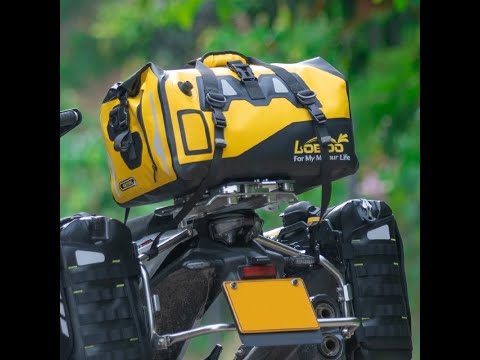
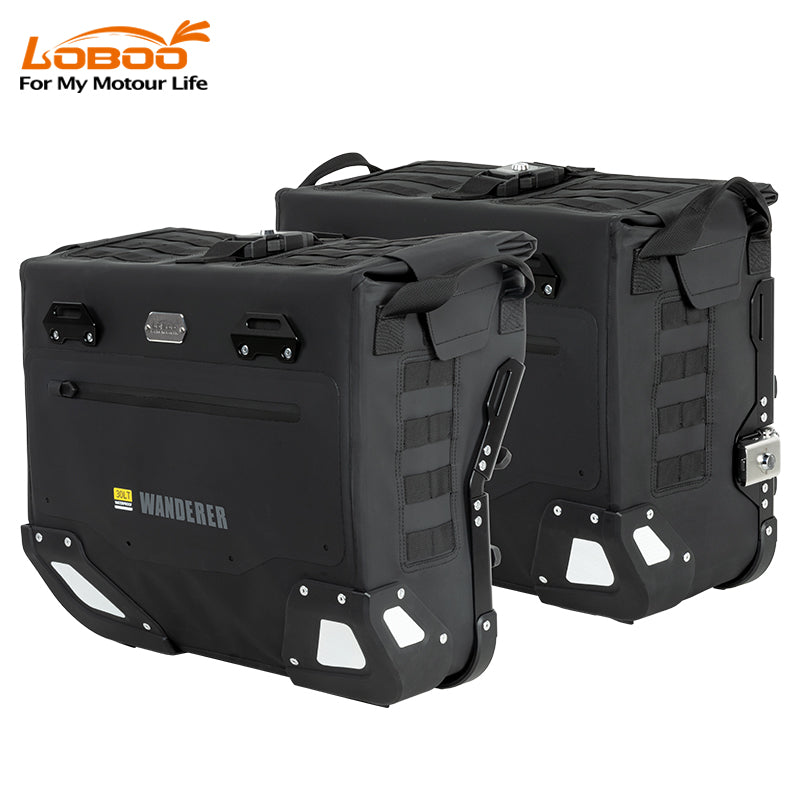
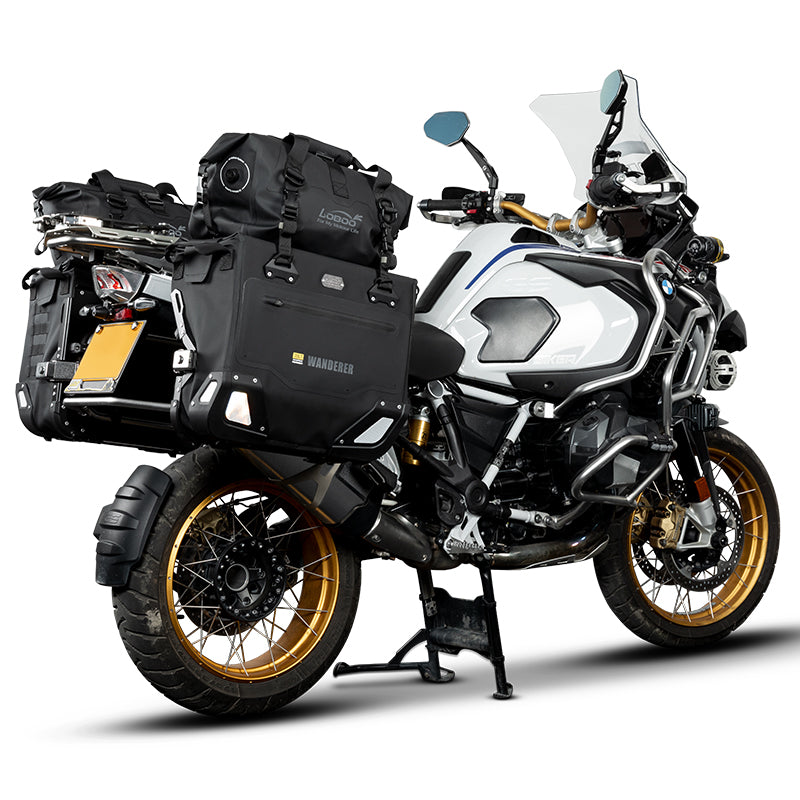
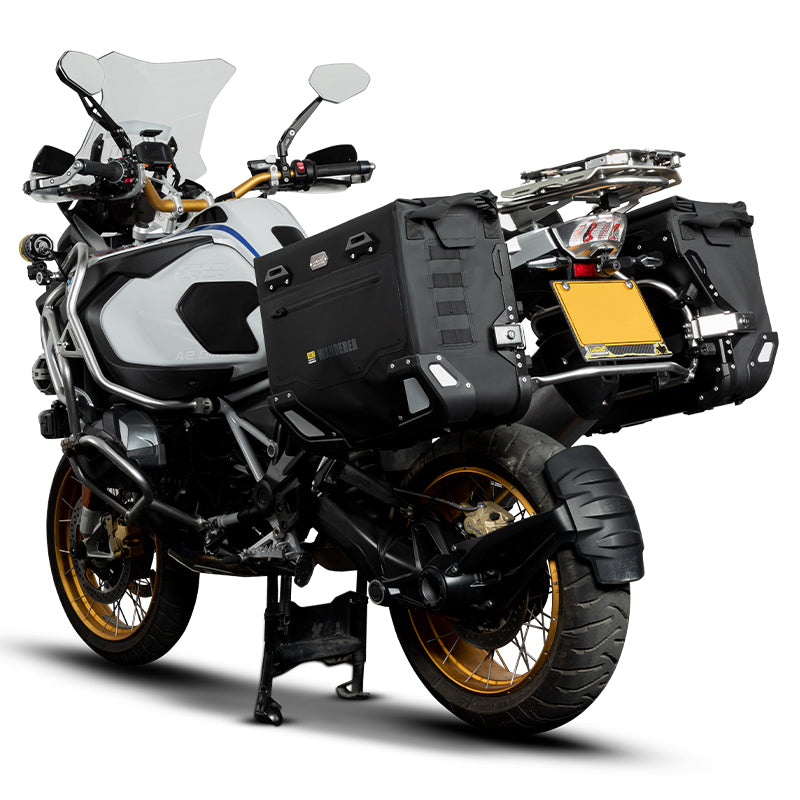
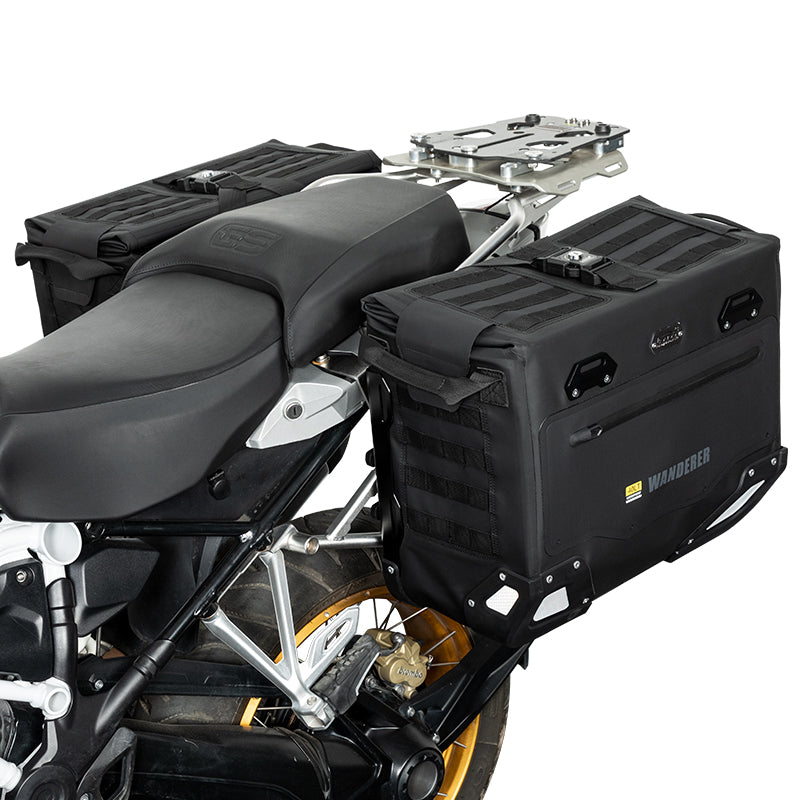
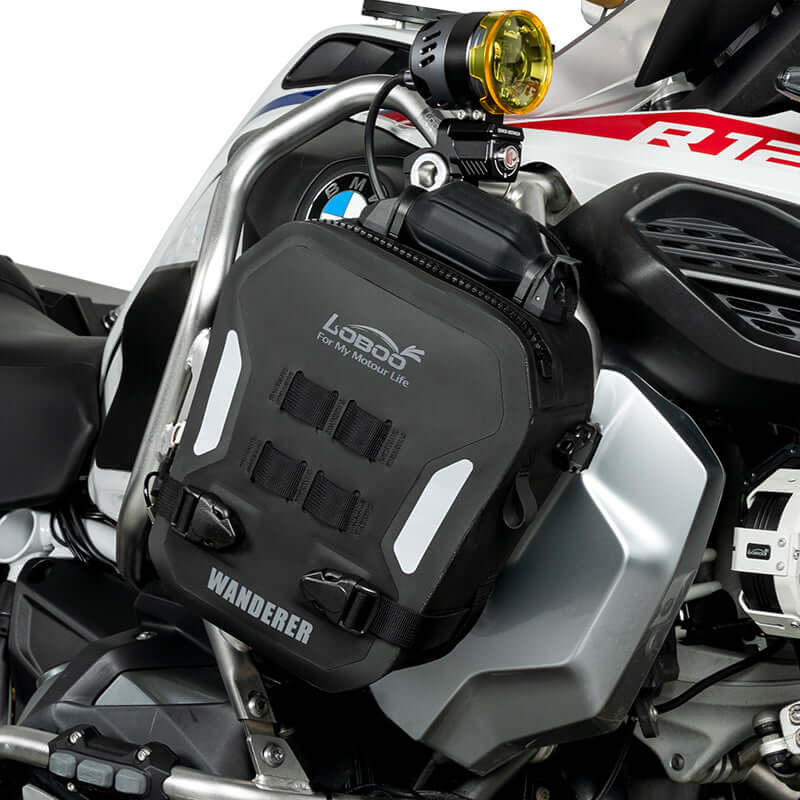
Soft bags are designed to keep weight down, absorb impacts and vibrations better, and offer more tolerance off-road. They are generally made from high-strength materials, with reinforcements in critical areas and roll-top closures or dedicated waterproof systems. They have an obvious advantage when the motorcycle falls at low speed or settles onto uneven ground: they tend to deform instead of transferring a sharp impact to the frame or the rider’s leg.
Hard cases, especially aluminum ones, focus instead on structure, stable load capacity, and everyday practicality. They open quickly, organize the contents better, and make it easier to carry bulky or delicate items. They are highly valued in road-based touring and long-distance travel, where accessibility, content protection, and modularity matter as much as durability.
The point is that neither solution always wins. Everything changes depending on how you use it.
When Soft Bags Make More Sense
If you do real adventure riding, with frequent dirt roads, technical sections, or routes where falling is a real possibility, soft bags have the advantage from the start. They weigh less, have fewer sharp edges, handle the motorcycle’s movements better on rough ground, and reduce one of the classic problems of off-road travel: carrying too much luggage simply because there is space for it.
On motorcycles such as the Yamaha Ténéré 700, KTM Adventure, or Honda Africa Twin used for serious mixed riding, a soft setup also helps when riding standing up. The rear end remains lighter, the side dimensions are often easier to manage, and the effect of vibrations on the mounts can be lower, especially if the system is designed to work with dedicated fasteners and well-distributed tension points.
There is also an aspect many people underestimate: tolerance for mistakes. A hard case hits; a soft bag gives way. That does not mean a soft bag is indestructible, but in real-world use it generally gives you more leeway when the terrain puts you in difficulty.
The downside is just as clear. Soft bags require more attention when loading, offer less natural organization, and demand more careful handling of tools, electronics, spares, and heavy items. If you do not use inner bags or organizers, finding what you need right away can be less straightforward.
When Hard Cases Remain the Better Choice
If you ride mostly on asphalt, do long transfers, travel fully loaded, or commute with technical equipment, hard cases still make a lot of sense. They offer a stable structure, a regular shape, and more rational luggage management. This is particularly useful when you need frequent access to the contents, carry a computer, a camera, work equipment, or simply want to keep everything neatly separated.
On touring motorcycles and adventure bikes used mainly on the road, such as the BMW R 1250 GS or similar models, hard cases make good use of the bike’s load capacity and intended purpose. On long trips, with many-hour stages and frequent stops, opening a case, taking out what you need, and closing it again in a few seconds is a real advantage.
Protection from the elements is also a strong point, provided you choose well-built systems with reliable water resistance. In addition, the top surface of a hard case can be useful for securing additional equipment or as an improvised work surface while traveling.
The limitation appears when the route becomes more difficult. More weight, more width, greater structural rigidity. On rough dirt or narrow sections, these features can become a clear compromise. And in a fall, a hard case can bend, damage the mount, or become a rigid object in an area where you would prefer something more yielding.
Safety, Dimensions, and Motorcycle Behavior
It is worth being direct here: the luggage system does not only change where you put your clothes. It changes how the motorcycle reacts. A heavily loaded pair of hard cases increases the perceived inertia during changes of direction and can make low-speed maneuvers more demanding. On the road, it is easy to manage, but on unstable surfaces the difference is noticeable.
Soft bags generally help maintain behavior closer to that of an unloaded motorcycle, especially if the overall volume remains limited. This does not eliminate the issue of weight, but it distributes it in a less detrimental way.
There is also the issue of side dimensions. In traffic, narrow passages, or on mule tracks, knowing exactly how far the motorcycle sticks out is essential. Some hard cases significantly widen the rear section. Soft bags can be more compact, but it depends on the model, the motorcycle, and the frame used. It is not enough to look at capacity in liters. You also need to consider the actual width, load position, and type of support.
Protecting the Contents: It Is Not Only About Water
Many people reduce the comparison to a single point: are they waterproof or not? In reality, the real difference is how they protect the contents from rain, dust, compression, and impacts.
Hard cases protect delicate items better from crushing. If you carry photographic equipment, electronics, or anything that must not be deformed, they have a practical advantage from the start. Soft bags, on the other hand, work extremely well for clothing, accessories, camping kits, and compressible items, but they require a little more organization for sensitive objects.
This is one of those cases where the nature of the trip matters more than theory. A weekend in a hotel is different from a week with a tent, tools, spares, and complete self-sufficiency.
Soft Bags or Hard Cases by Type of Trip
For advanced commuting and predominantly road-based touring, hard cases are often the most practical solution. For mixed travel with easy dirt sections, both can work well, provided that the load is carefully planned. For adventure riding with frequent off-road sections, soft bags are often the more coherent choice.
Your experience also matters. A motorcyclist accustomed to traveling light will make much better use of a soft set. Someone who always carries more equipment, rides long stages, and wants immediate access to the contents may appreciate hard cases more. There is no universal answer, but there is a right answer for the way you use your motorcycle.
Compatibility with the Motorcycle Matters More Than It Seems
This is not something to improvise. Not all systems work well on every motorcycle, and not all frames withstand intensive use in the same way. Exhaust position, rear symmetry, distance from the wheel, frame type, and mounting points vary considerably between GS, Africa Twin, KTM Adventure, and Ténéré models.
A solution that looks excellent on paper can become awkward or unbalanced if it is not compatible with the specific model. That is why a technical approach focused on the motorcycle platform is always preferable to a generic choice. Endurrad works in precisely this direction: helping motorcyclists identify systems that are genuinely compatible and designed for real-world use.
The Right Choice Is the One That Helps You Ride Better
If you want a simple rule, here it is: the closer your trip is to off-road riding, the more sense soft bags make. The more road-oriented, organized, and fully loaded your use is, the stronger the case for hard cases. In between lies a large gray area, where experience, loading habits, and motorcycle type all matter.
The best choice is not the one that holds the most liters or looks impressive while parked. It is the one that, after eight hours in the saddle, a maneuver on a slope, and ten kilometers of rough terrain, makes you feel that the motorcycle is still under control. That is where every good trip begins.


Share:
KTM 890 Adventure setup: what's needed
Rear rack for adventure motorcycle