

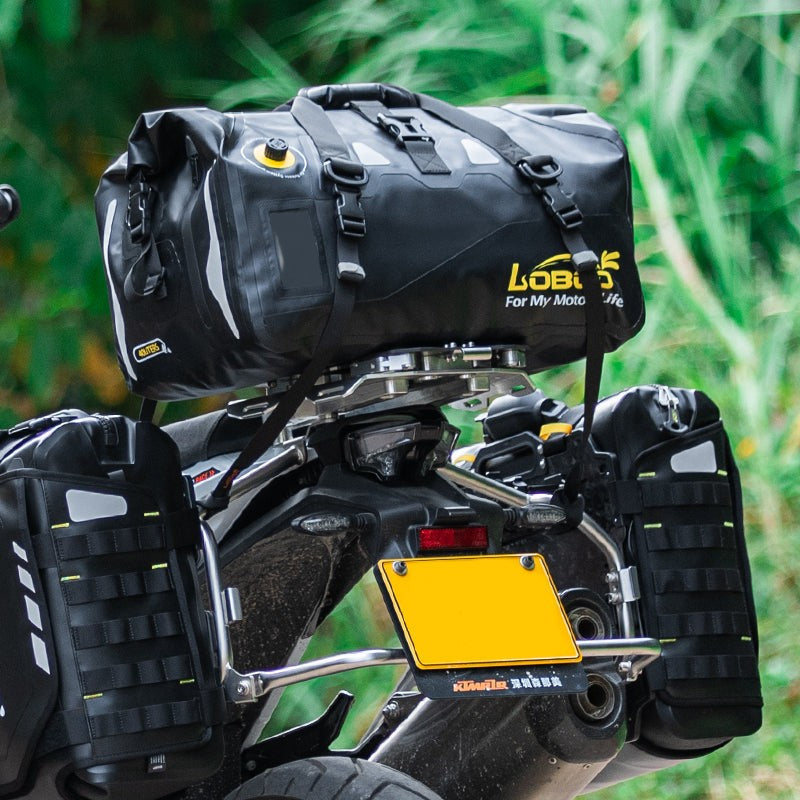
In brief. “Semi-rigid” is not a technical category: it is the label the market uses for anything that is not an aluminum case but is not just an ordinary sack either. Under that name are products that attach at different points on the motorcycle — on the tail or on the crash bars — and that offer very different levels of water resistance.
The criterion that really matters is not the number of liters, but two things: where the bag is attached and what level of water resistance the manufacturer claims, IPX6 or IPX7.
Data reliability. The specifications, prices, and measurements in this guide are those stated by the manufacturers on the Endurrad product pages, verified at the time of publication. Availability and price may vary: the current information is always the information on the product page.
Semi-rigid is a marketing label, not a technical category
If you search for “semi-rigid motorcycle cases,” you have probably already ruled out aluminum and want something more structured than a sack. The problem is that the term alone tells you nothing about where it mounts or how well it keeps water out.
In practice, “semi-rigid” covers at least three different constructions: bags made of technical PVC with rigid internal inserts, TPU fabric bags with a polypropylene frame that maintains their shape when empty, and inflatable bags that are soft when deflated and become rigid only once inflated. None of the three has a shell like an aluminum case, and all three are more structured than a generic dry bag rolled up on itself.
To choose well, it is best to ignore the label and look at two things: where the luggage attaches and what level of water resistance it actually claims.
The mounting point matters more than the number of liters
Soft and semi-rigid luggage falls into two families that occupy different spaces on the motorcycle, and they are not alternatives: anyone who really travels almost always ends up using both.
- On the tail or passenger seat — this is the large volume that replaces hard cases or a top case. It attaches with quick-release straps to the anchor points on the sides of the tail section.
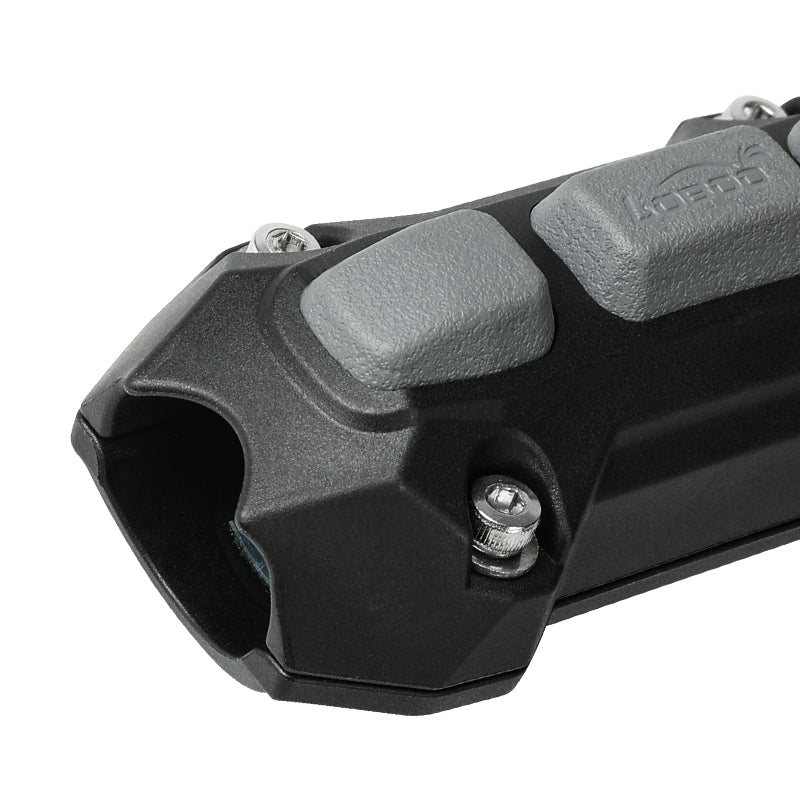
- On crash bars — this is the small, readily accessible volume that makes use of the empty space between the tube and the fairing. No hard case, side case, or top case can make use of it.
The first covers the trip, while the second covers everyday use: puncture repair kit, rain gear, and documents within easy reach without opening the main compartment. They are two different purchases that answer two different questions, which is why it makes sense to treat them separately instead of searching for “the” perfect semi-rigid case.
The IP rating is the only piece of information that almost no seller declares

“Waterproof” on its own means nothing: it is an adjective, not a data point. The number that matters is the IP rating according to the international IEC 60529 standard, adopted in Europe as EN 60529, and for motorcycle luggage, these are the two digits you actually encounter.
| Rating | What it really means |
|---|---|
| IPX6 | It withstands powerful water jets from any direction and heavy rain. It is not designed to withstand immersion. |
| IPX7 | It also withstands temporary immersion, typically up to one meter for 30 minutes according to the standard. This is the rating you need if you are fording streams or if the bag is positioned low, exposed to wheel spray. |
| No declared rating | The fabric may be water-repellent and hold up well in riding rain, but there is no verifiable data behind it. Treat the contents accordingly, especially electronics and documents. |
If a seller cannot tell you a bag's IP rating, the implicit answer is that it does not have one, or has never had it certified. LOBOO product sheets always state the rating explicitly, precisely because it is the information that allows a real comparison between different products.
The LOBOO tail bag ranges from 40 to 90 liters with the same closure system

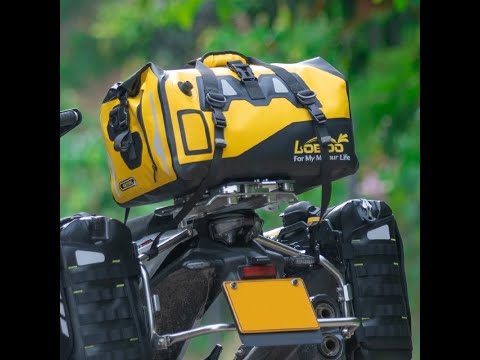
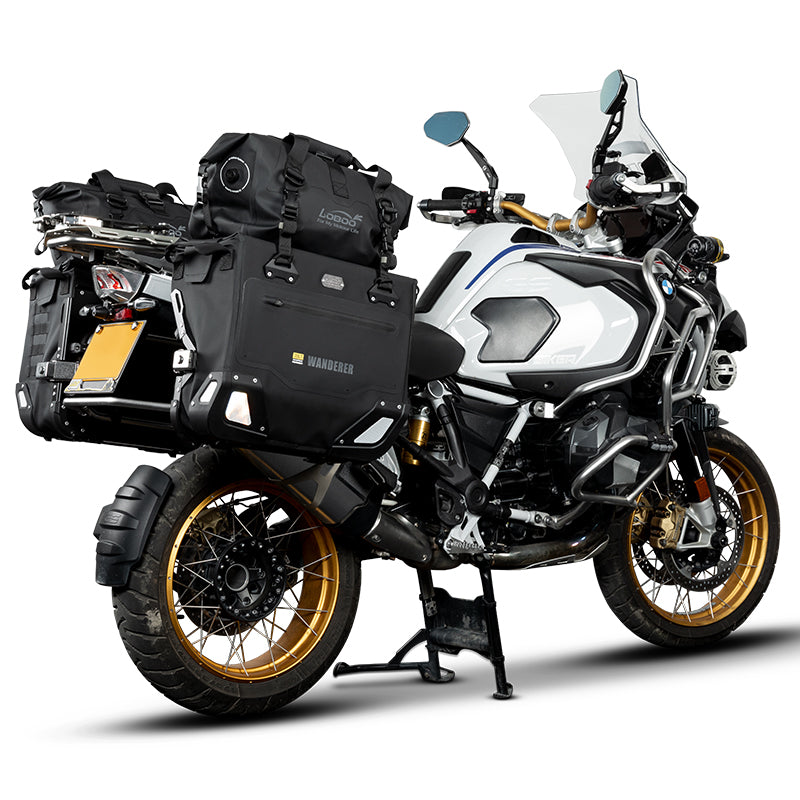
The LOBOO BWB waterproof motorcycle top case is the piece that genuinely replaces hard panniers on a mixed trip. Body made of technical PVC with seamless high-frequency welds, declared IPX6 rating, patented magnetic roll-top closure, four capacities: 40, 50, 66, and 90 liters.
The detail that solves the classic soft-luggage problem - the half-empty bag bouncing against your back - is the front air-release valve: after the roll-top is closed, it expels excess air, compressing the load and keeping the bag stable even when carrying little.
| Volume | Price | Colors |
|---|---|---|
| 40 L | 54,00 € | Black, yellow, military green |
| 50 L | 58,50 € | Black, yellow, military green |
| 66 L | 63,00 € | Black, yellow, military green |
| 90 L | 72,00 € | Black, yellow, military green |
If the motorcycle is a classic - scrambler, roadster, custom - a technical TPU dry bag clashes with its lines. The alternative is the 40-liter vintage rear bag in waxed canvas, 55 × 30 × 25 cm, with PU trim and brass-colored buckles, featuring the same patented magnetic roll-top closure. The compromise should be stated clearly: the manufacturer makes the warranty conditional on the absence of prolonged exposure to sun and rain, so it must be dried and stored after a storm. If the motorcycle is kept outside year-round, the PVC version with a declared IP rating is better. It costs €198.00.
Crash bar bags reclaim space that no pannier uses

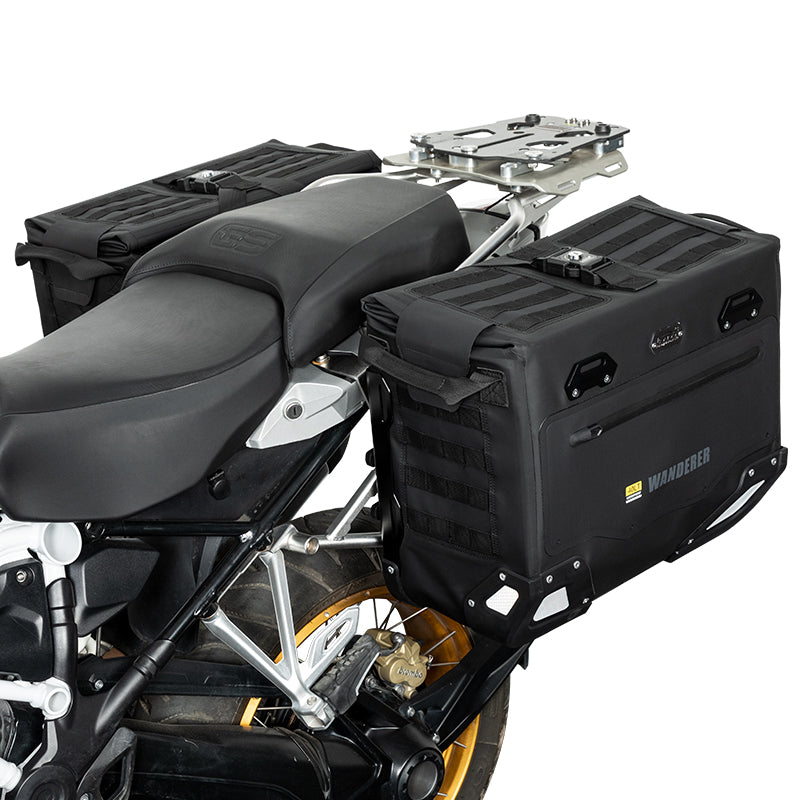
There is an empty space between the crash bars and the sides of the motorcycle that no pannier can fill. Six liters per side - twelve as a pair - are enough for a puncture repair kit, rain gear, spare gloves, and documents, and this is also the quickest compartment to reach: standing next to the motorcycle, without removing anything.
Here the choice is between two construction philosophies, and depends on the diameter of your crash bar tube.
| Rigid WANDERER (BHGB11T) | Inflatable WANDERER (BHGB05T) | |
|---|---|---|
| Capacity | 6 L per bag, 12 L per pair | 6 L per bag, 12 L per pair |
| Compatible tube | Ø 22-28 mm, adjustable straps | Ø 25 mm, round section |
| Stated protection | IPX6, three-roll roll-top closure and two buckles | IPX7, airtight waterproof zipper |
| Structure | Removable PP U-frame, retains its shape when empty | Air chamber: semi-rigid when deflated, elastic cushion when inflated |
| Material | TPU composite fabric with 840D mesh, 0.6 mm | TPU on an 840D nylon base |
| Dimensions | — | 230 × 100 × 330 mm |
| Anti-theft | — | Stainless steel cable in the zipper slider, with key lock |
| Price (pair) | 94,50 € | 234,00 € |
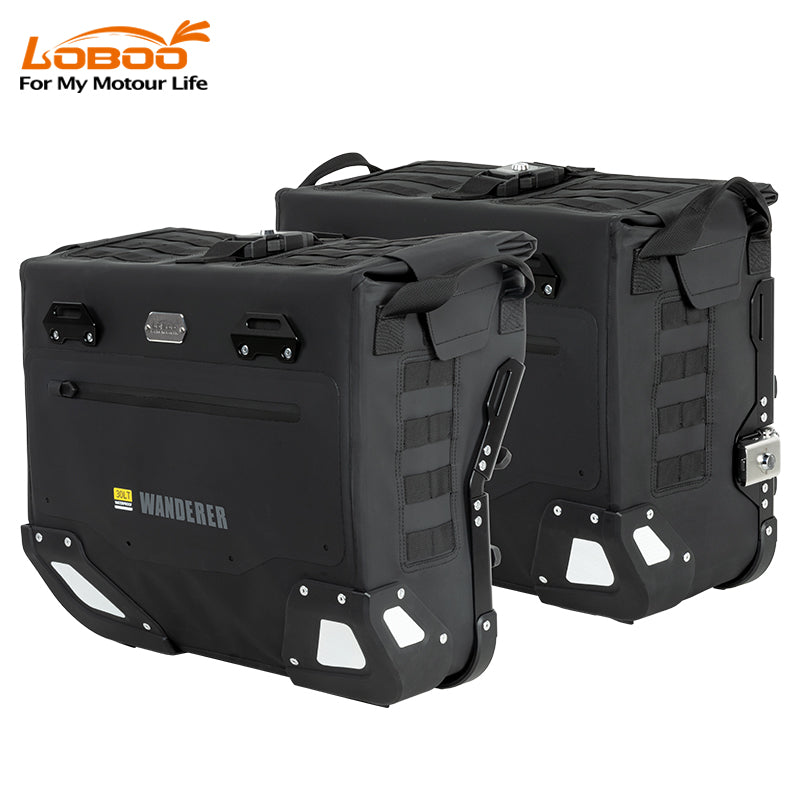
The rigid WANDERER bags are the standard choice: they cover a wider range of diameters and cost less than half as much. The inflatable WANDERER bags make sense in two specific cases. The first is the IPX7 rating, useful if you ford streams or if the route exposes the bags to continuous splashes. The second is that they disappear when not needed: they deflate, can be stored away, and the motorcycle returns to a clean look without permanent bulk in everyday use. The manufacturer states a load capacity of no less than 300 kg per inflated bag and at least 6 hours of protection per inflation: this is a static test by the manufacturer, not impact-resistance certification, and it does not replace either engine guard bars or protective riding gear.
There is also a third option for anyone looking for genuine side volume instead of just the space between the tube and fairing: LOBOO Alps inflatable side panniers, 23 or 30 liters per side, mounted on 18 mm frames rather than on the bars. At the time of publication, they are not shown as in stock in any configuration: if you're interested, the motorcycle inflatable bags collection shows the latest availability.
How to measure the engine guard tube in one minute

Crash bar bag compatibility does not depend on the motorcycle; it depends on the tube. And the engine guard bars must already be installed because they are the anchoring structure: they are not included in the package.
- Use calipers to measure the tube's outside diameter at the point where you want to mount the bag.
- Without calipers: wrap a tape measure around the tube and divide the circumference by 3.14. A 25 mm tube has a circumference of approximately 78.5 mm.
- Make sure the chosen section is clear for at least the bag's width, with no obstructing welds or brackets.
- Check the clearance from the exhaust and cylinder heads: the bag must not touch hot parts.
If you don't have the bars yet, at Endurrad you can find engine guards and crash bars for BMW, KTM, Honda, Ducati, Aprilia, and other adventure motorcycles.
Soft, semi-rigid, and aluminum luggage work together rather than excluding one another
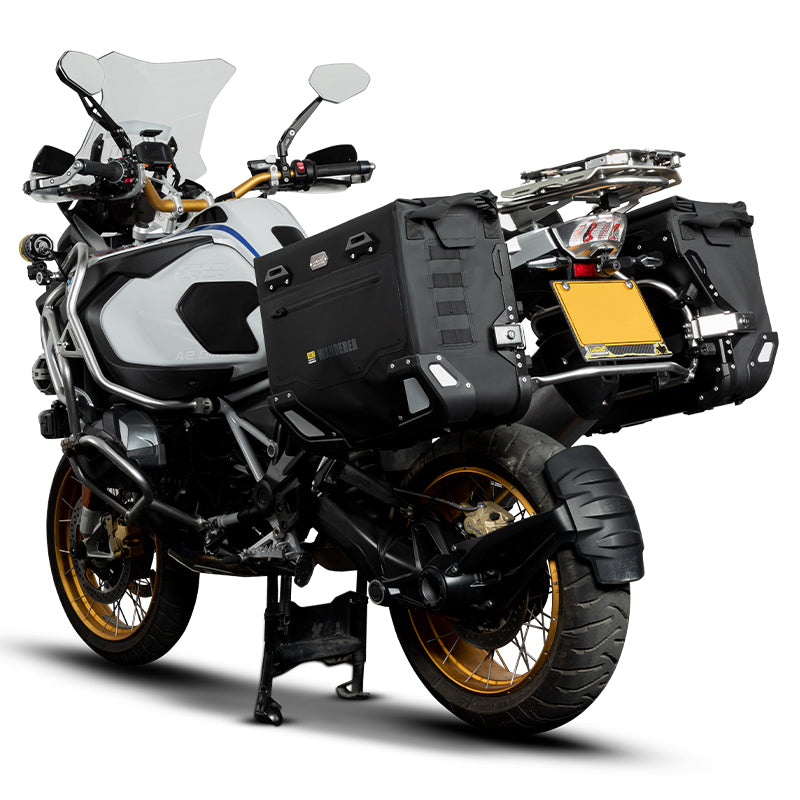
An aluminum side case offers more volume and a shell that protects against impacts and attempted break-ins, but it requires model-specific frames, stays on the motorcycle all year round, and makes the bike wider. Soft and semi-rigid luggage costs less, requires no side frames, disappears when not needed, and makes use of spaces that would otherwise remain empty - but offers fewer liters and its contents do not have a rigid shell around them.
In practice, the two systems are not alternatives: crash bar bags are the natural complement to a set of aluminum cases, not their replacement, and the tail bag provides the volume that side cases alone cannot. Anyone who travels frequently in practice ends up using both systems together.
How to build a complete setup, in order
- The large volume at the rear, sized for the longest trip you actually take, not the one you'll take once. The right size is explained in motorcycle tail bag: 40, 50, 66 or 90 liters?
- Crash bar bags, if you already have the bars installed: this is the expense that makes the biggest difference to everyday use on a trip.
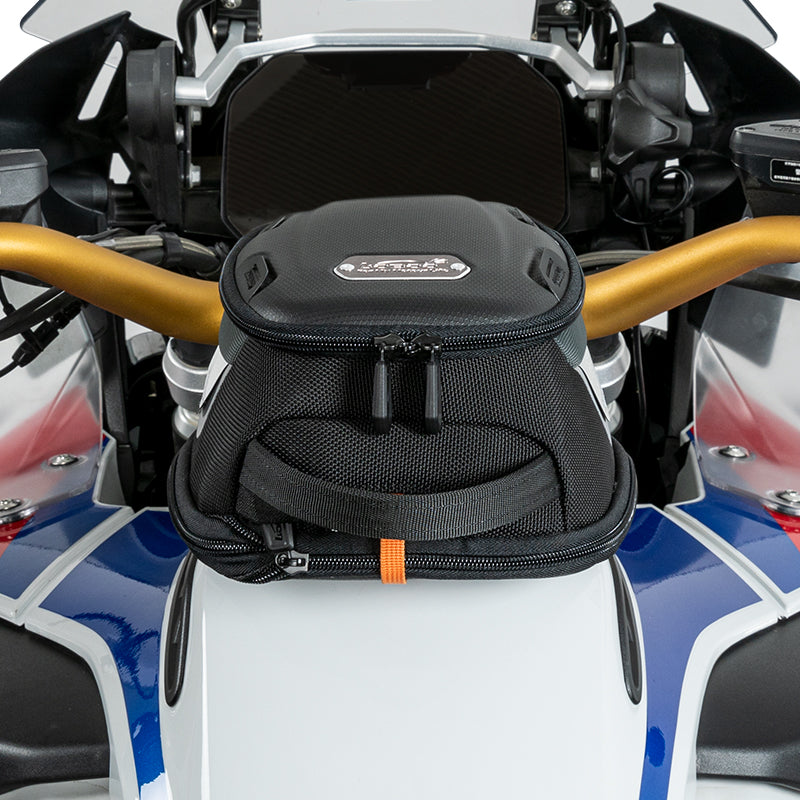
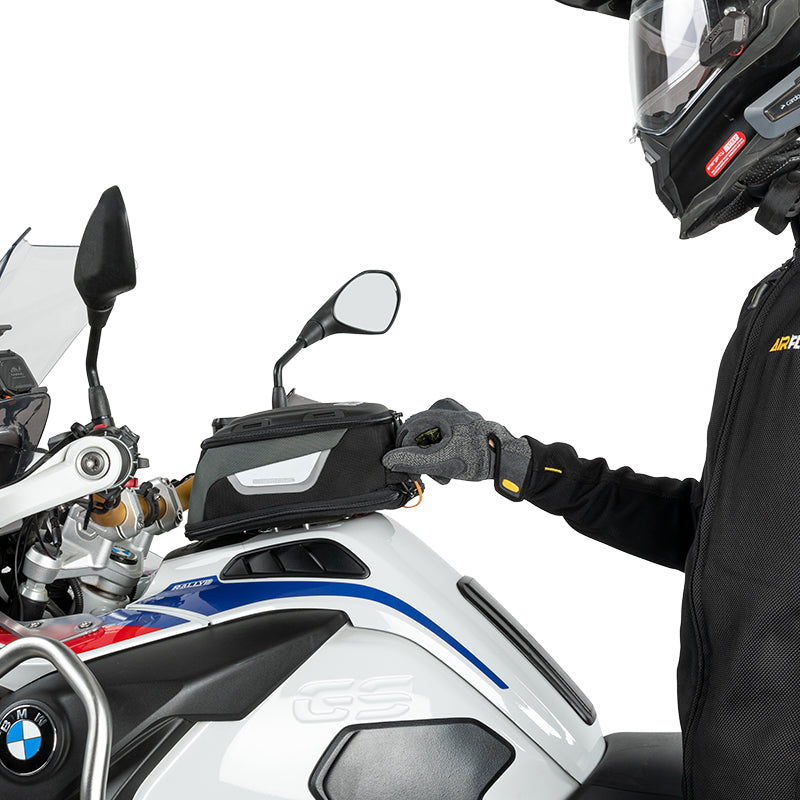
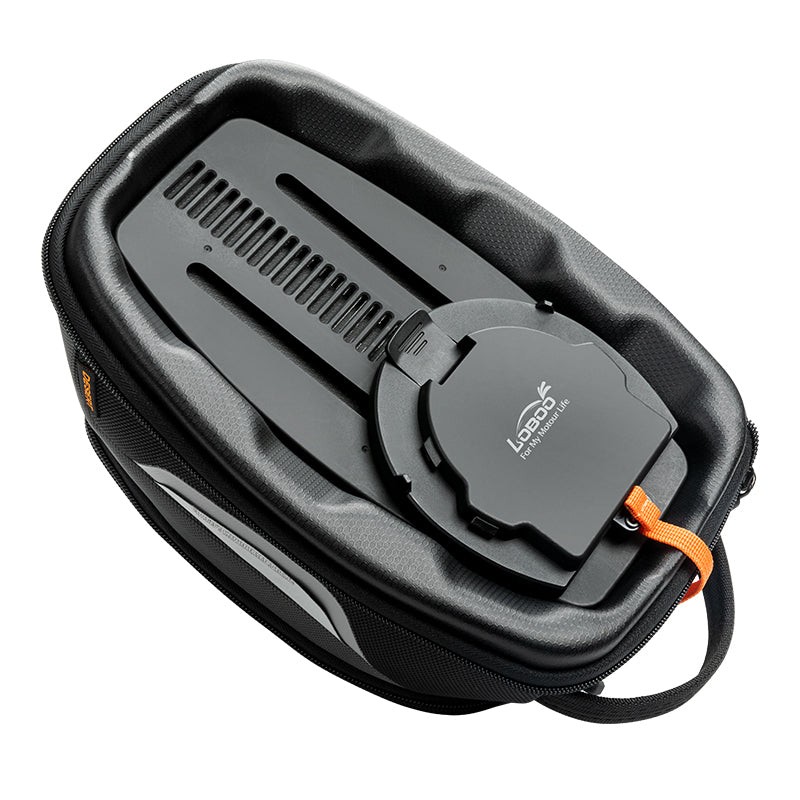
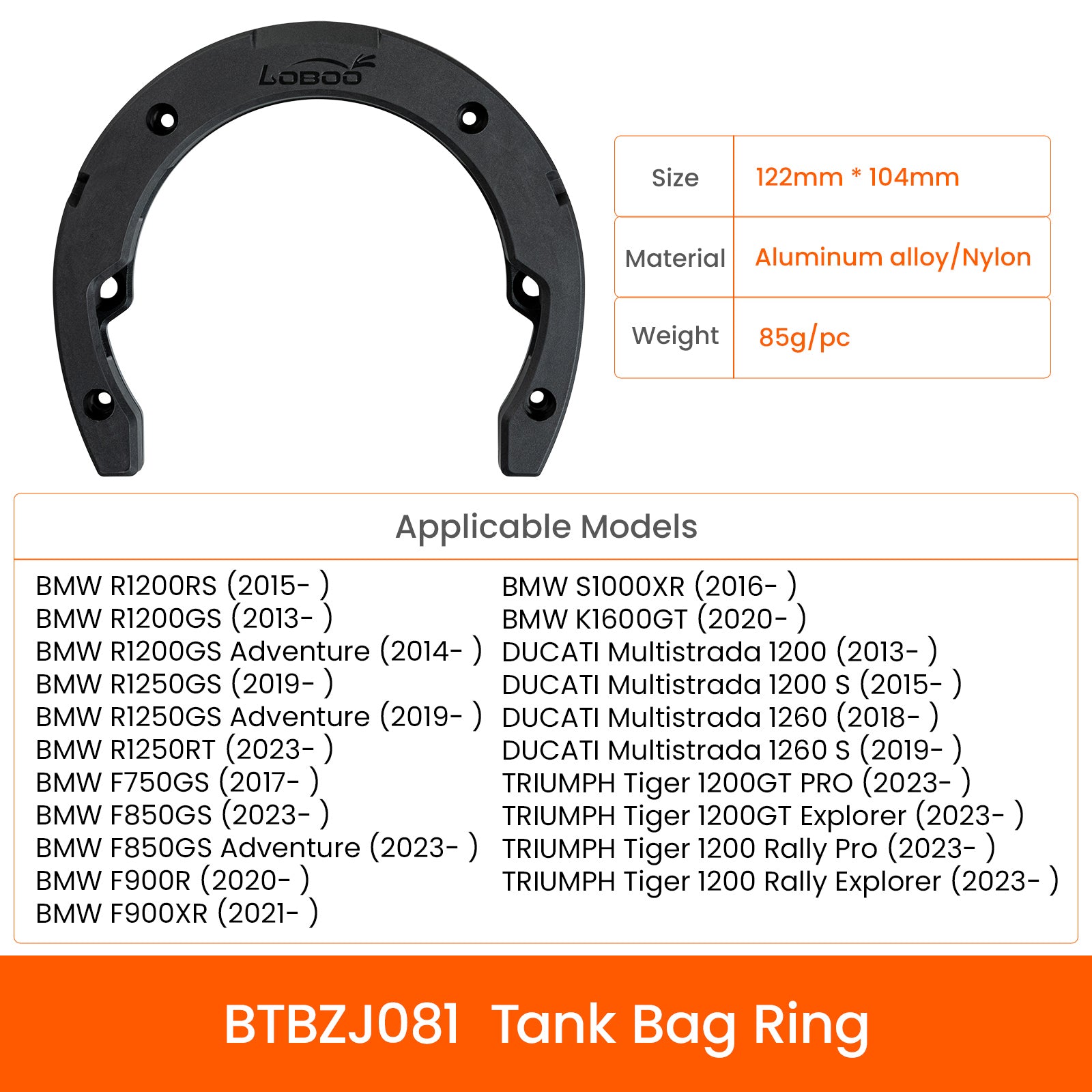
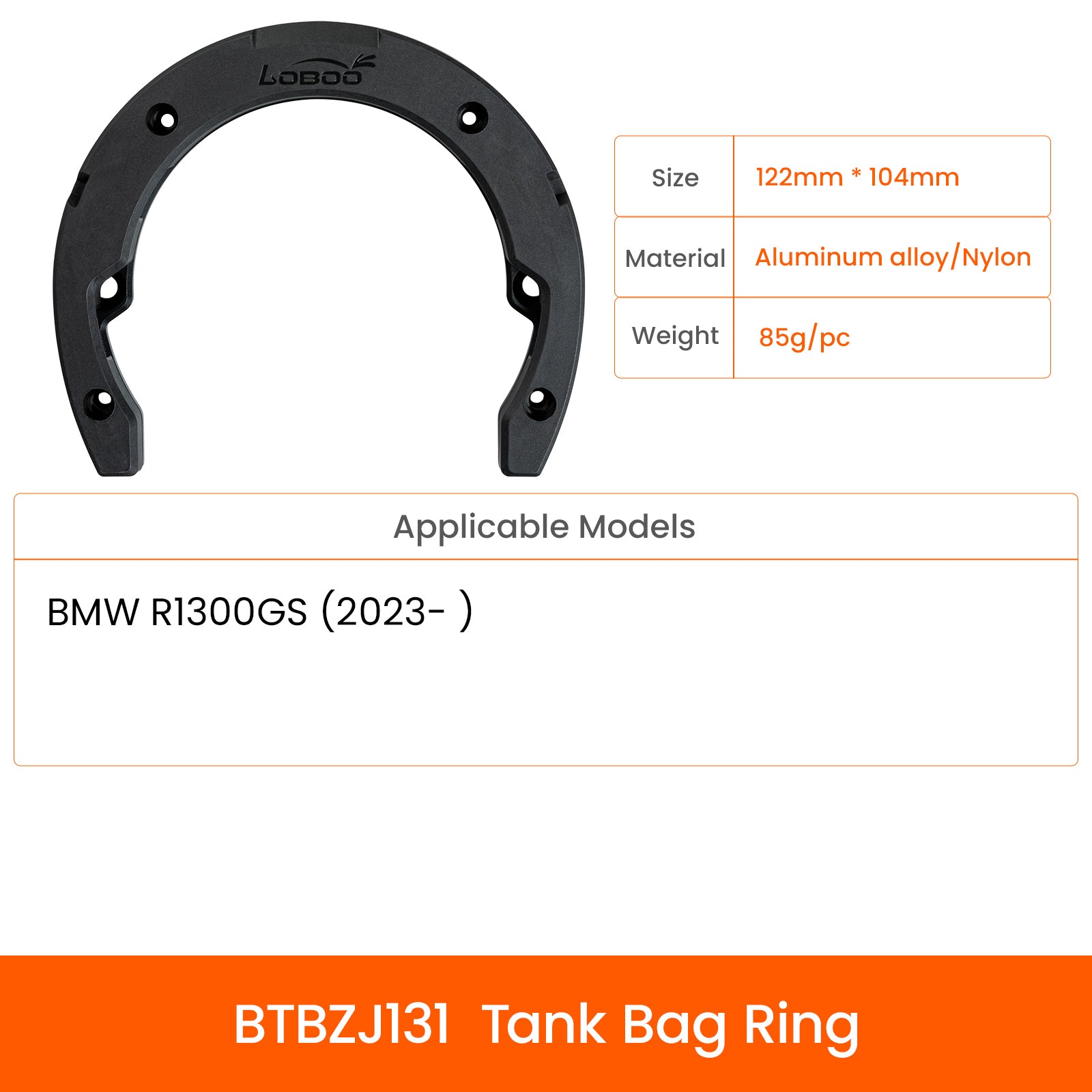
- A tank bag, for documents and your phone within easy reach - we discuss it in magnetic tank bag: why it won't stay in place and how to fix it.
- Keep heavy loads low and close to the motorcycle: tools, inner tubes, repair kit. Only light items should go up top. Do it the other way around and even the best bag will seem unstable - the mechanism is explained in motorcycle dry bag: why it shifts and how to keep it secure.
How much it really costs to equip your motorcycle
| Component | Price | When it makes sense |
|---|---|---|
| LOBOO BWB tail bag, 40-90 L | 54,00 - 72,00 € | For those looking for the main volume with a stated IPX6 rating |
| Vintage canvas tail bag, 40 L | 198,00 € | Classic motorcycles, occasional use in the rain |
| WANDERER rigid crash bar bags, pair | 94,50 € | 22-28 mm tube, limited budget |
| WANDERER inflatable crash bar bags, pair | 234,00 € | 25 mm tube, need IPX7 or want them to disappear at the end of the trip |
A complete setup - a 40 L PVC tail bag plus a pair of rigid crash bar bags - starts at around €148.50. It's the most realistic entry point for equipping an adventure motorcycle today without adding side cases.
Frequently asked questions
What exactly is a semi-rigid motorcycle case?
There is no single technical definition. The term refers to luggage that is more structured than a soft bag but lacks the shell of an aluminum case: it may have a rigid internal insert, a removable polypropylene frame, or, in the case of inflatable bags, become rigid only once inflated.
What is the difference between IPX6 and IPX7 on a motorcycle bag?
IPX6 means resistance to high-pressure water jets and heavy rain, according to the IEC 60529 standard. IPX7 adds resistance to temporary immersion. Both ratings are sufficient for riding in the rain; if you ford water or the bag is exposed to wheel spray, IPX7 is required.
Are crash bar bags suitable for any motorcycle?
Compatibility depends not on the motorcycle but on the diameter of the crash bar tube. WANDERER rigid bags fit tubes from 22 to 28 mm, while the inflatable ones require a 25 mm round tube. In both cases, the crash bars must already be installed: they are not included in the package.
How do I measure the tube diameter before ordering?
With a caliper at the point where you will mount the bag, or by wrapping a tailor's tape measure around the tube and dividing the circumference by 3.14. Also check that the section is clear of the bag's width and away from the exhaust and cylinder heads.
How much volume is needed for a one-week trip?
As a general guideline, a 40-liter tail bag plus crash bar bags will cover a week traveling solo without camping; with a tent and sleeping bag, it is best to move up a size. The choice of capacity, with all comparisons, is explored in depth in this dedicated guide.
Does a half-empty tail bag become unstable?
Not with a vent valve: it expels air after the roll-top is closed, and the volume adapts to the actual contents. The complete mechanism, including the reasons why the bag may still shift, is explained in motorcycle dry bags: why they shift.
Does soft luggage protect its contents like an aluminum case?
No. A rigid case has a shell that protects against impacts and attempted break-ins. Soft and semi-rigid luggage protects against water and dust and is more forgiving in a laid-down fall, but it does not provide a mechanical or anti-theft barrier.
Can I use soft bags and aluminum cases together?
Yes, and it is the most common combination among people who travel frequently: rigid side cases for protected volume, crash bar bags for quick access, and a tail bag for extra volume on longer trips.
Are inflatable bags safer than rigid ones in case of a fall?
The manufacturer states that the inflatable bags have a load capacity of at least 300 kg per inflated bag, as a static test: in a slide, that air volume works between the bar and the ground. However, it is not a homologated device and does not replace the crash bars or protective clothing, for either type.
What is not included in the crash bar bags package?
The crash bars, which must already be installed on the motorcycle. The inflatable bags instead include buckles, a lock with keys, M6×10 screws, and an Allen key; threadlocker for the screws is not included.
Is the vintage canvas bag suitable for a motorcycle that is always kept outdoors?
It's not the ideal choice. The manufacturer makes the warranty conditional on avoiding prolonged exposure to sun and rain: waxed canvas withstands rain while riding well but must be dried after a storm. If the motorcycle is kept outdoors all year round, the PVC version with a stated IPX6 rating is the more reliable choice.
How do you maintain a bag with a magnetic roll-top or waterproof zipper over time?
The roll-top must be rolled down for several complete turns and closed with both buckles before setting off. For the waterproof zipper, avoid closing it when the bag is overpressurized, lubricate it periodically with a specific silicone product, and rinse it with fresh water after use on salted roads.
What's the difference between crash bar bags and Alps-type inflatable side panniers?
Crash bar bags occupy the remaining space between the tube and fairing and mount on the crash bars. Inflatable side panniers are a larger volume, designed to partially replace hard panniers, and mount on 18 mm side frames rather than on the bars.
Do you need a frame to mount crash bar bags?
No. Crash bar bags attach directly to the crash bar tubing with adjustable straps and buckles, without dedicated frames. You only need the bars to be installed already.
If you're unsure about the diameter of your bars or which liter combination to choose, send us the make, model, and year of your motorcycle: we'll check everything before you place your order.
Are you preparing your setup for your next trip?
At Endurrad, you'll find tail bags, rigid and inflatable crash bar bags, all compatible based on your motorcycle's tube diameter or anchor points, not its model.
More details: aluminum panniers: the frame is what matters · rear bag: how many liters · dry bag: why it moves · rear and saddle bags



Share:
Motorcycle touring seat cover: how to choose the right one
BMW F 450 GS: The Lightweight A2 License GS That Makes Adventure an Everyday Occurrence