



Motorcycle Airbags
Inflatable motorcycle bags are bags whose body is a sealed air chamber: when deflated, they remain semi-rigid and take up little space; once inflated, they become an elastic cushion that fills the gap between the motorcycle’s frame and the luggage. Manufacturer LOBOO states that this technology supports at least 300 kg per inflated bag and that the protective effect lasts for at least 6 hours per inflation.
The two families: crash bars and pannier frames
The term “inflatable motorcycle bags” covers two different products, which attach to different parts of the motorcycle and meet different needs.
- Inflatable crash bar bags — a pair with 6 L per bag (12 L total), attaching to engine guard bars with round Ø 25 mm tubing. They make use of the irregular space between the bars and the side panels and provide a quick-access compartment for puncture repair kits, rain gear, documents, and gloves. They complement panniers; they do not replace them.
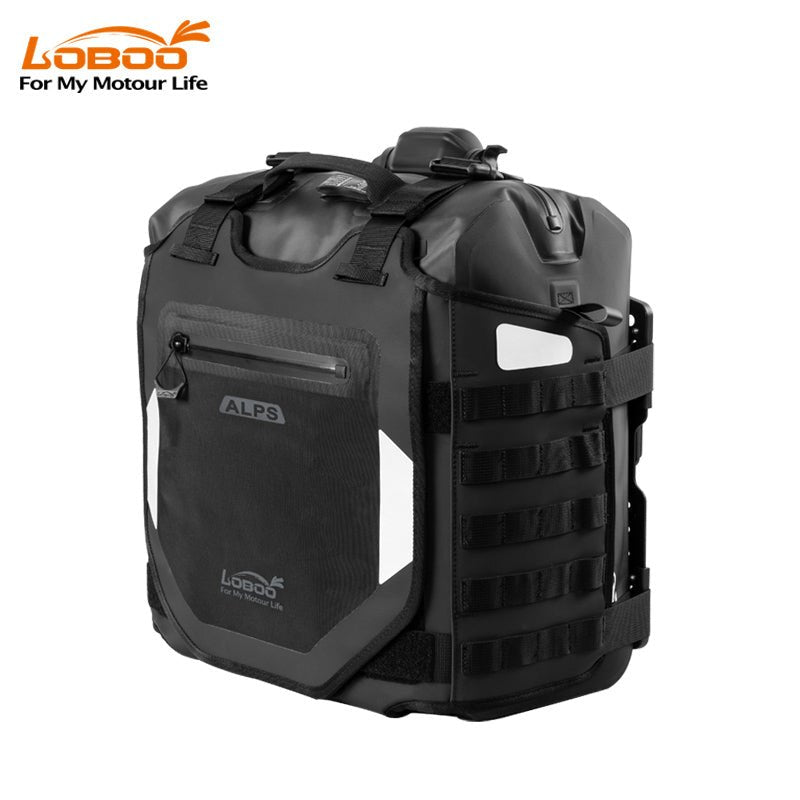
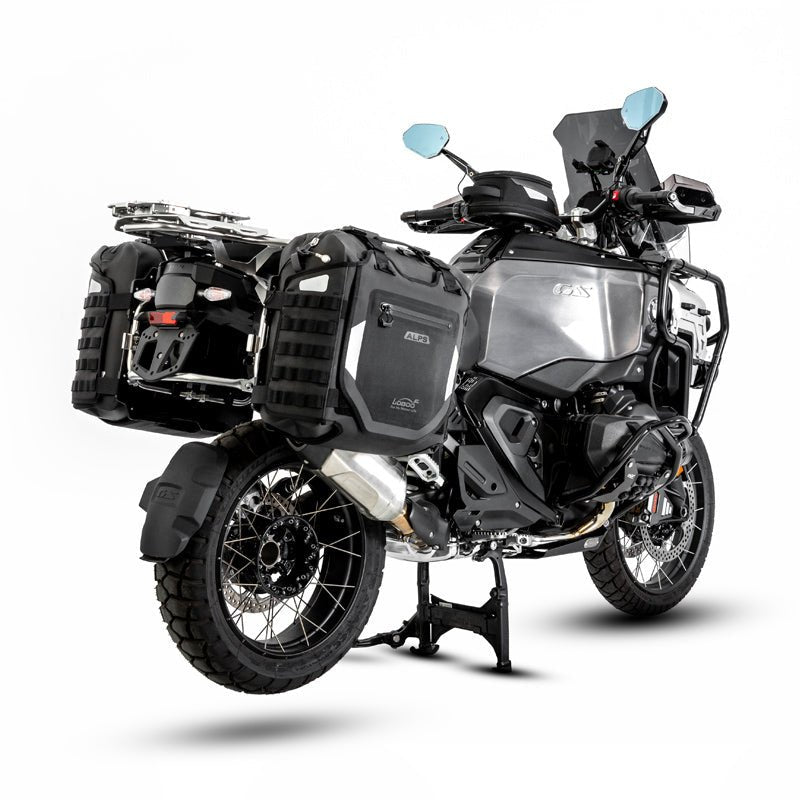
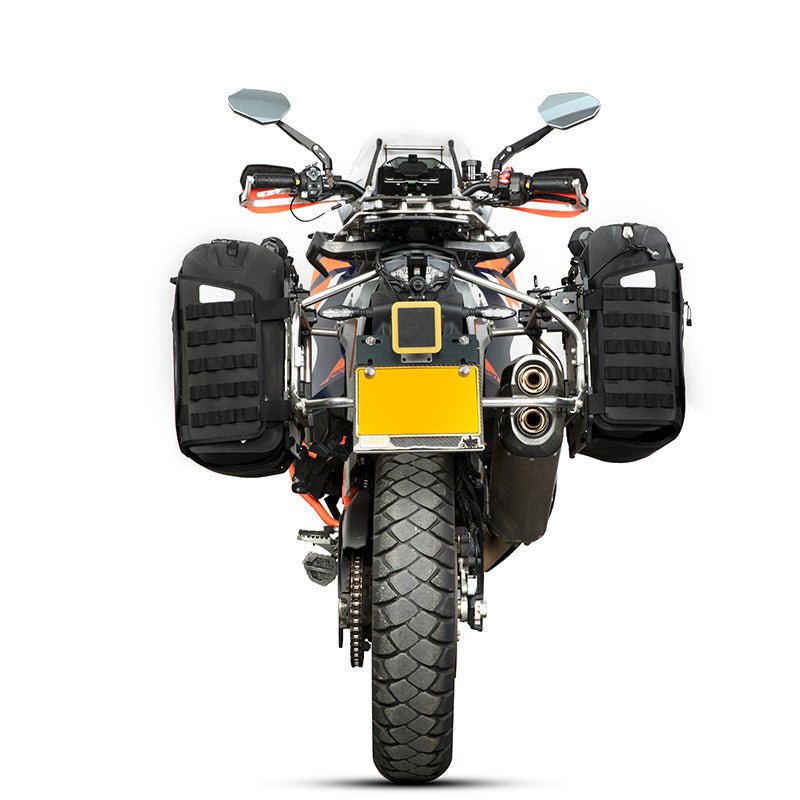
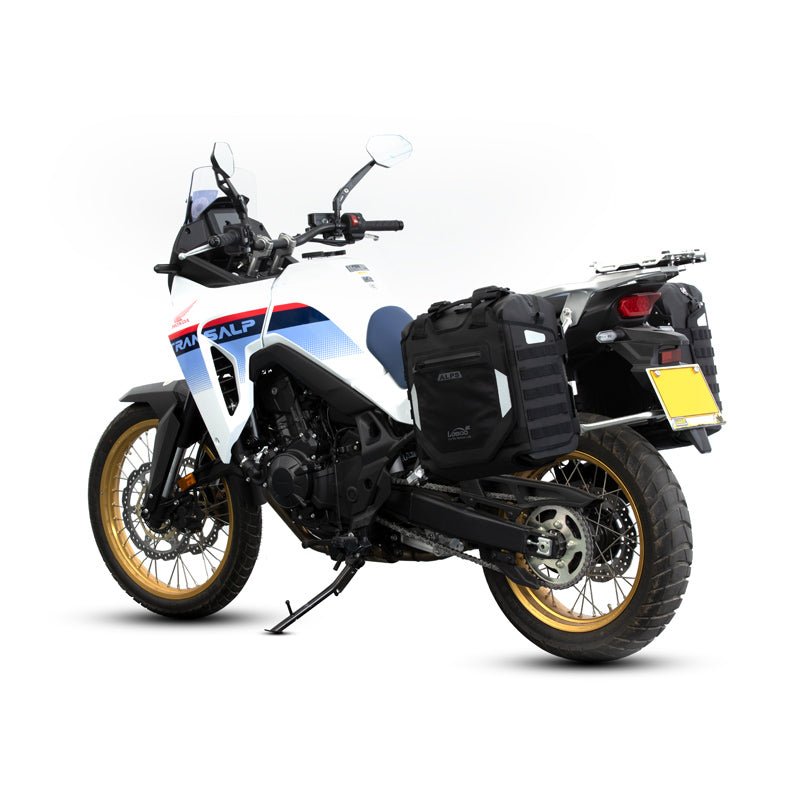
- Inflatable pannier bags — 23 L or 30 L per side, attaching to 18 mm side frames and replacing a set of side panniers. The same inflatable principle, with the capacity of main luggage. Compatible frames, spacers, and load capacity per side are explained in the guide to inflatable motorcycle pannier bags.
How to choose
Compatibility depends not on the motorcycle model but on the tube diameter to which the bag attaches: 25 mm for crash bar versions and 18 mm for pannier frames. Measure the tube with calipers before ordering, or wrap a tape measure around it and divide the circumference by 3.14.
Then check that the bag does not interfere with the exhaust, cylinder heads, or steering at full lock, and that the selected section of tubing is unobstructed across the entire width of the bag.
For the crash bar version, you can find everything explained step by step in the guide to inflatable engine guard bags: how to inflate the air chamber, which crash bars in the catalog have 25 mm tubing, how to install it, and what the manufacturer actually claims.
Inflatable or hard-shell
An aluminum pannier offers more capacity and a shell that protects against impacts and break-ins, but it requires dedicated frames and remains on the motorcycle all year round. An inflatable bag costs less, requires no frames if you already have crash bars, disappears when not needed, and makes use of otherwise empty space; in return, it offers less capacity and the contents are not protected by a rigid shell.
Related products
If you do not yet have anchor bars, Endurrad offers crash bars and engine guards. For non-inflatable versions with a rigid internal structure, see the crash bar bags, and for complete luggage, see the motorcycle panniers and bags.
Frequently asked questions
Can inflatable motorcycle bags be punctured?
The body is made of TPU fabric on an 840D nylon base, the same type of material used for waterproof motorcycle bags: puncturing it requires a deliberate perforation, not ordinary rubbing. If the bag loses air, the contents remain inside and the bag stays attached because the mounting does not depend on air pressure.
Do they require a pump or compressor?
No. Inflation is done by hand through a one-way valve with an integrated pump.
Are they an approved safety device?
No. The stated load capacity refers to the inflated bag in a static test: it is an accessory passive protection system that does not replace engine guard bars or protective clothing.


