


In brief
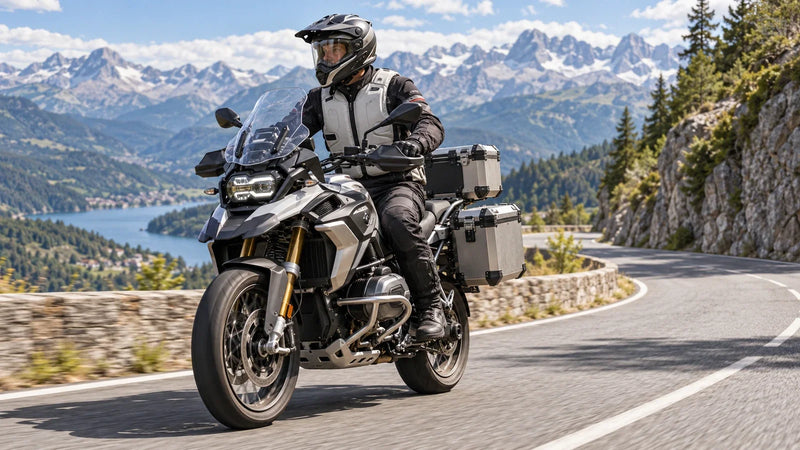
Traveling alone by motorcycle works wonderfully if you prepare for it: complete freedom over timing and route, but no one to notice if something goes wrong. What makes the difference isn't courage, but having a plan: stages you can shorten, someone who knows where you are, a phone that's always charged, and a way to ask for help even where there's no signal.
112 is free throughout the European Union, the Where ARE U app sends your location to emergency services in many regions of Italy, and a satellite messenger provides coverage in areas without a signal. This guide explains what changes mentally and on the road, how to stay reachable, what to bring, and how to spend your evenings without letting loneliness become a burden.
Traveling alone is different: here's what changes
The first effect is wonderful: you decide when to set off, where to stop, and whether that side road is worth a detour. The second only becomes apparent later: every decision, every unexpected event, and every evening are yours alone.

- you want to decide the pace, stops, and detours without having to compromise with anyone;
- you are already comfortable with long rides and days in the saddle;
- you enjoy being alone with your thoughts and don't mind dining by yourself;
- you are willing to devote half a day to preparation and safety.
- you are still getting used to the motorcycle or the load;
- the trip involves challenging off-road riding or remote areas without coverage;
- you have never tried lifting the motorcycle or repairing a flat tire;
- the prospect of spending an evening alone makes you anxious.
Solo, as a couple, or in a group: a practical comparison
There is no single best formula. The table summarizes how the variables that really matter change; it is an editorial assessment based on travel experience, not statistics.
| Appearance | Alone | As a pair (two motorcycles) | In a group |
|---|---|---|---|
| Route freedom | Total | High, with mediation | More limited |
| Help after a fall | Only if you can ask | Immediate | Immediate |
| Lifting the motorcycle | Skills and training | Easier as a pair | Easier |
| Costs (accommodation, fuel) | All yours | Often shared | Often shared |
| Decision fatigue | High: you decide everything | Medium | Low |
| Low | Silence or chance encounters | Company | Company, sometimes too much |
Your state of mind matters as much as your motorcycle: chosen solitude and empty evenings
People who set off alone often talk about the helmet as a quiet room. But solitude isn't the same for everyone: choosing it is one thing; being stuck with it a thousand kilometers from home is another.
What the research says (and doesn't say)
Thuy-vy Nguyen, Richard Ryan and Edward Deci (University of Rochester) had participants sit alone for 15 minutes, without devices. The result, published in Personality and Social Psychology Bulletin, was that time alone tends to reduce both intense negative emotions (anger, anxiety) and intense positive emotions: it brings a general sense of calm. Those who freely chose to be alone, or what to think about, benefited more.
A note about the study's limitations: it doesn't involve motorcyclists or long trips. Read it as a sign that chosen solitude can be restorative, not as a guarantee that it will be good for you in every circumstance. This is not a diagnosis: if loneliness while traveling weighs on you persistently, talk to someone you trust or a professional.
How to handle evenings
Evenings are the real test for solo travelers. Here's a simple idea: decide in advance what kind of evening you want. If you're looking for company, choose accommodation with a common area, a hostel, or a place where people eat at long communal tables. If you're looking for quiet, book a room with a bathroom and somewhere to eat nearby. A phone call home, even a short one, helps you feel less isolated. And remember that fatigue amplifies your mood: after a long day, everything seems grayer, as we explain in our guide to motorcycle fatigue on long trips.
If the thought of setting off again after an accident or fall weighs on you more than you expect, you'll find a practical guide in how to get back on your motorcycle after a fall.
Staying reachable: 112, app and satellite phone
When you're alone, the real risk isn't falling: it's falling and being left there without anyone knowing. The check-in plan has three levels, and they should be used together.
| Tool | What it's for | Limit |
|---|---|---|
| 112 | Free emergency number from landlines and mobile phones in all EU countries, according to the European Commission; connects you to the police, ambulance service and fire department | Available in the field; local rules apply outside the EU |
| App Where ARE U | Official 112 app: sends your location when the call is placed; chat and silent calling | Not available throughout Italy: the list changes, so check your area |
| Satellite messenger (e.g., Garmin inReach) | SOS and satellite messages where there's no network; Garmin cites a 24-hour coordination center | Cost of the device and a subscription plan |
| Point of contact | Someone who knows your itinerary and schedule and raises the alarm if they can't reach you | It only works if you've agreed on what to do and when |
What to get ready before you leave
- Share your itinerary. Send a trusted person your stages, accommodations, and expected times; agree on a daily check-in message and what to do if it doesn't arrive.
- Local emergency number. Rider Magazine (Jerry Lewis, December 7, 2022) recommends that whoever monitors your tracker know the local emergency number.
- Keep the device on you. If you use a satellite communicator, keep it on you, not on the bike: after a fall, the bike could be far away.
- Useful medical information. Allergies, blood type, and an emergency contact somewhere first responders can find them quickly.
The plan: stages, timings, and flexibility
The secret to a good solo trip is planned flexibility: an itinerary that gives you room to adjust.
- Choose stages you can shorten. Each day should have a point where you can stop early without sacrificing the trip.
- Arrive while it's light. Riding changes after sunset: during standard time, it gets dark early. We discuss this in riding a motorcycle in the dark during standard time.
- Have a weather alternative. On wet roads, your safety margins shrink; the slippery spots are covered in riding a motorcycle in the rain.
- Take a proper break. When you're alone, no one will say, "Let's stop": schedule your own breaks before you need one.
- Book the first and last nights. Leave the rest open, but have an alternative ready.
For general bike preparation and pre-ride checks, find the full list in how to prepare your motorcycle for a long trip. If your first destination is in the South, motorcycling in winter in the South and on the islands covers the weather and what to wear.
Riding alone: picking up the bike, getting a flat, getting back on the road
In company, you can solve a mechanical problem together; alone, you need to know how to solve it yourself or know who to call.
Three things to try before setting off
- Pick up the motorcycle. Rider Magazine recommends practicing and carrying a strap for sand or gravel. Try it with the bike unloaded, on level ground, with a friend present.
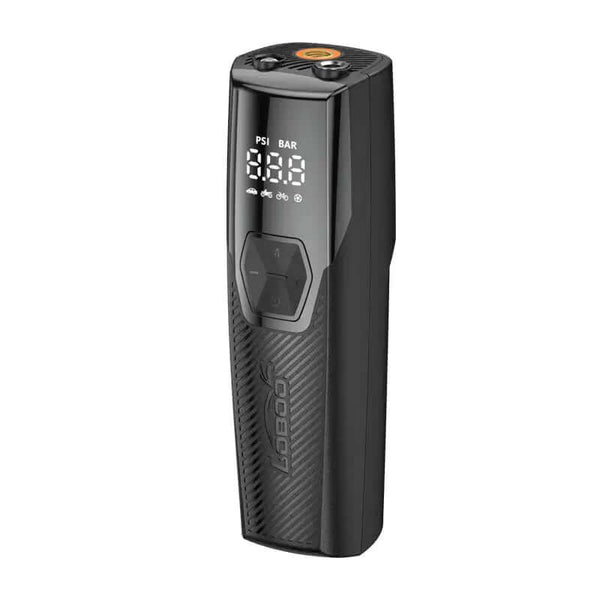
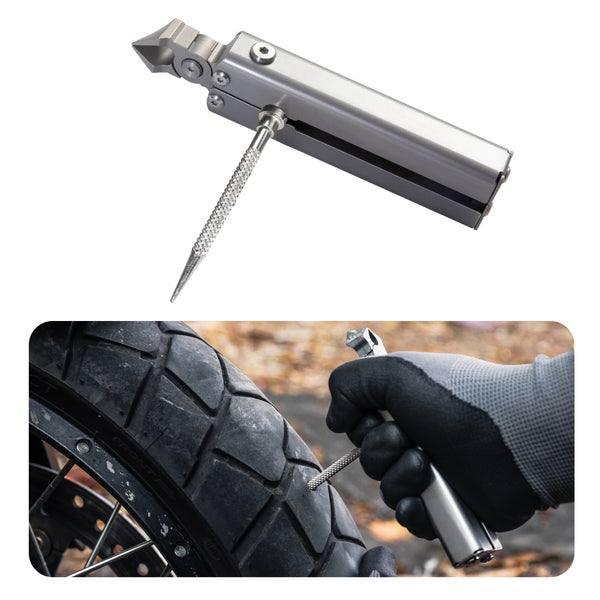
- Repair a puncture. Bring a repair kit suited to your tire and a compressor: try them at home, not for the first time on the roadside.
- Use the tool kit. Find out what to bring in motorcycle tool kit: what to bring on a trip.
For compressors, the go-to guide is portable motorcycle compressor: how to choose a 12V inflator. To charge your phone and GPS from the bike's electrical system, the 100 W USB-C socket for motorcycles explains how much current it draws.

- Maximum pressure
- 150 PSI
- Flow rate
- 35 L/min
- Weight
- 294 g
- Price
- 50 €
Luggage, power and cold: what you need when riding alone
When riding alone, you can't rely on a companion's luggage, charger or spare jacket: you carry everything you need. And you carry it so it stays dry, accessible and working.
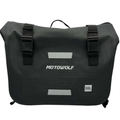
To choose the right luggage, use motorcycle bags: how to choose between tank, tail, side and crash bar bags as your guide. When riding alone, the rule is to keep frequently needed items at the top and within reach: documents, water, emergency kit, charger.

- Capacity
- 50 L
- Type
- Waterproof tail bag
- Price
- 221 €
- Availability
- 2 pieces

- Output power
- up to 130 W total
- Ports
- 2 USB-C
- Function
- Bidirectional, with voltmeter
- Price
- 90 €
For navigation and an onboard display, explore the Chigee range with CarPlay and Android Auto and the rest of the LOBOO electronics and navigation. To keep your hands warm, the H80 heated handlebar mitts (€81, last item in stock at the time of writing) and the heated clothing collection help you avoid giving in to the cold.
Frequently asked questions
Is it safe to travel by motorcycle alone?
How do I call for help if I crash somewhere with no cell service?
Does 112 work abroad too?
What is the Where ARE U app, and do I need it?
Do You Really Need a Satellite Messenger?
How many kilometers a day should you ride when traveling alone?
How do you handle evenings when traveling alone?
Will I be able to pick up a large adventure bike on my own?
What should I do if I get a flat tire on my own?
Is it better to take your first big trip alone or with someone?
How do I keep my phone and GPS charged while traveling?
What should I tell the people staying at home?
Is riding alone good or bad for you?
Read more
Set off prepared, even when you're riding alone
Planning your next solo trip? At Endurrad, you'll find luggage, power, navigation, and cold-weather protection accessories, chosen for riders who really cover the miles. Tell us your motorcycle's model and year, and we'll help you choose compatible accessories. Take Endurrad with you in your pocket with the Endurrad app for iPhone.