

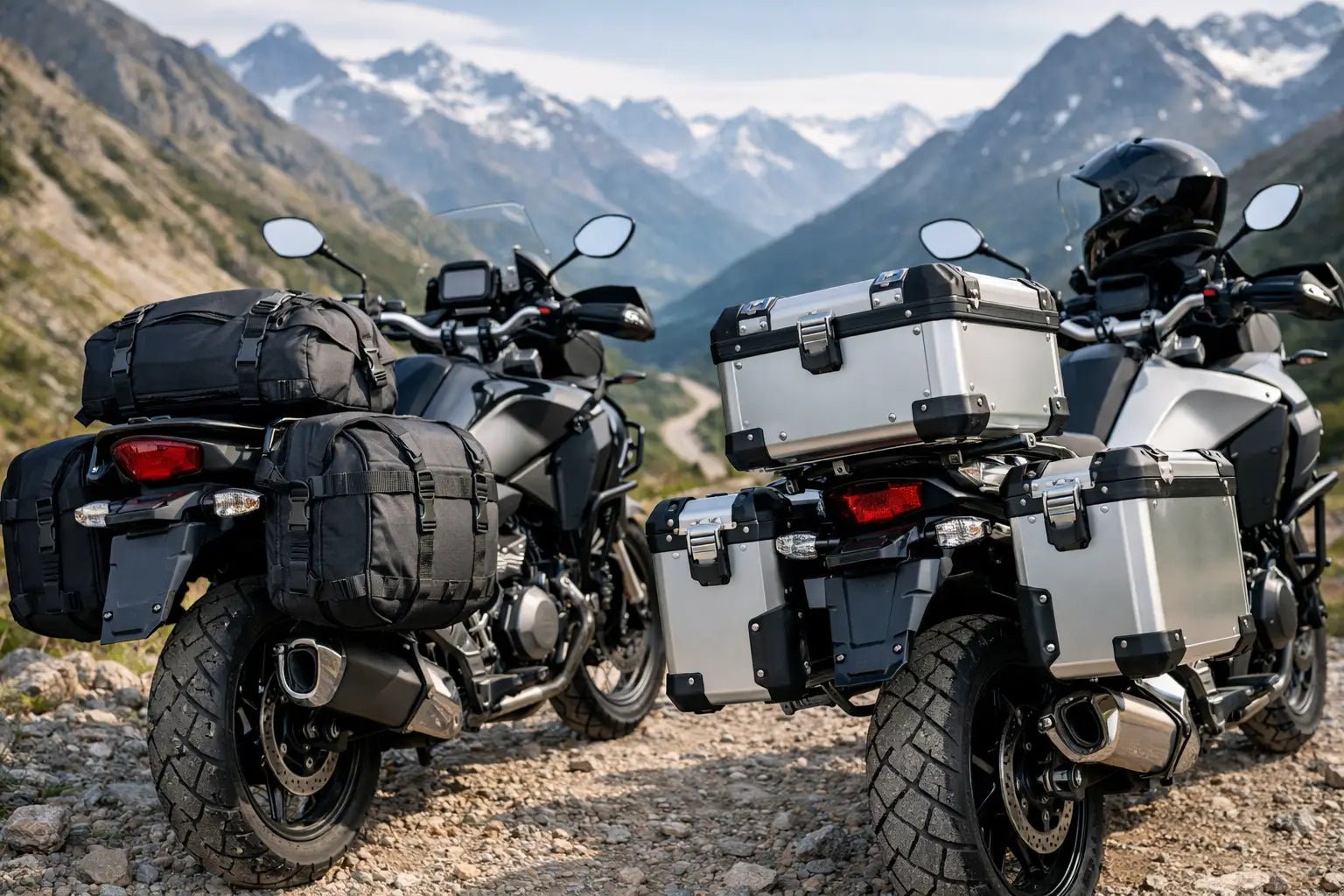
If you prepare your motorcycle for long trips or mixed asphalt-and-dirt outings, the comparison between semi-rigid and aluminum panniers is not a matter of style. It changes the motorcycle’s behavior, how you manage the load, and even your margin for error when the terrain gets more challenging. The right choice depends on where you are going, how much you carry, and how important it is to you to have a rigid, protective system that is always ready.
Semi-rigid vs aluminum panniers: the real difference
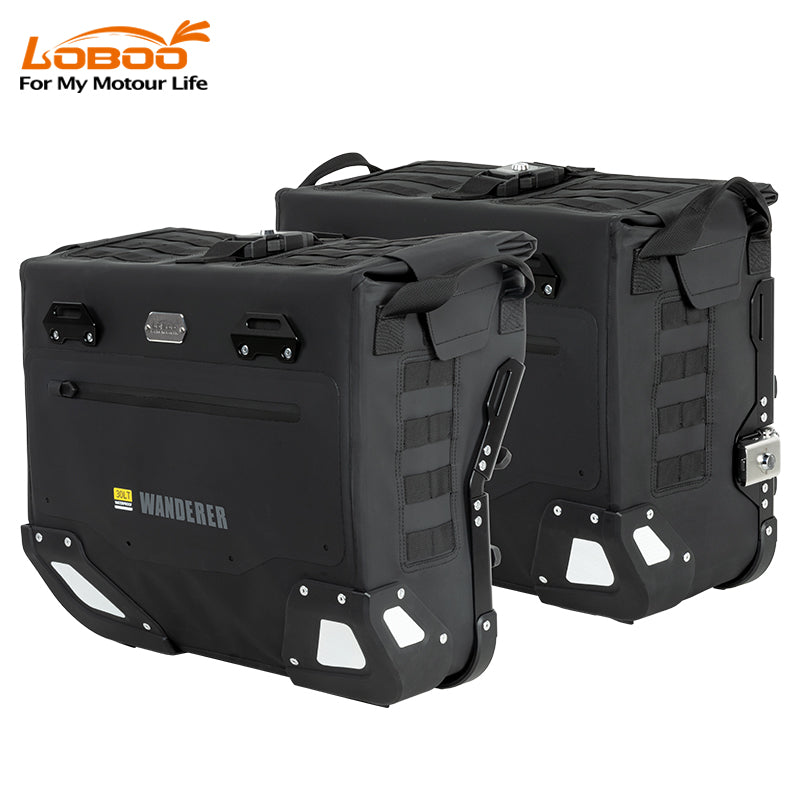
The main difference is not just the material. It is how the luggage works together with the motorcycle. Aluminum panniers are designed to provide structure, stable load capacity, and a high level of protection for your gear. Semi-rigid panniers, on the other hand, focus on light weight, a less noticeable overall bulk, and better tolerance in low-speed impacts or the kinds of falls typical of off-road riding.
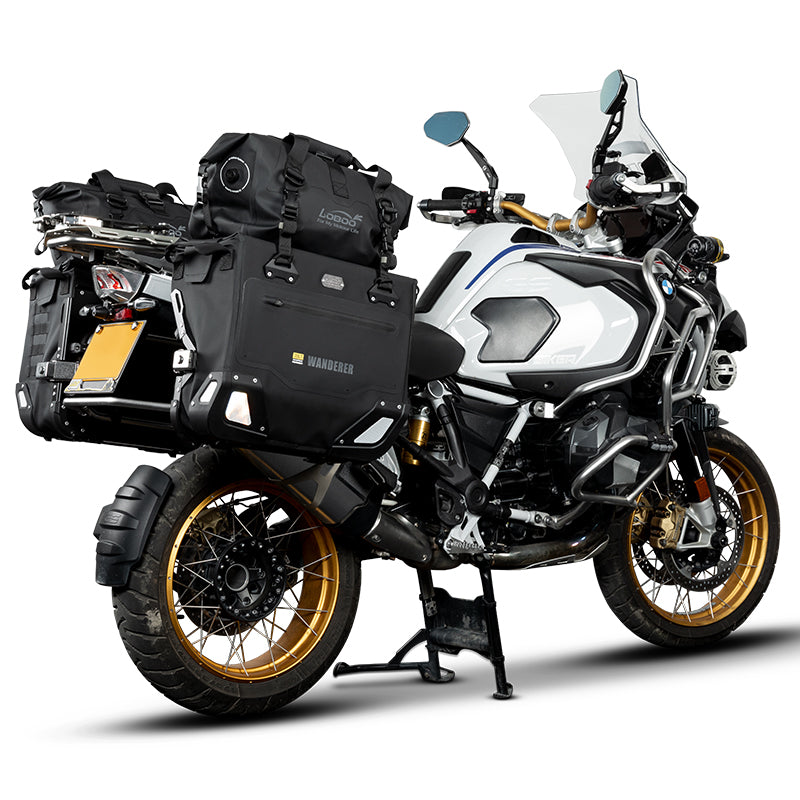
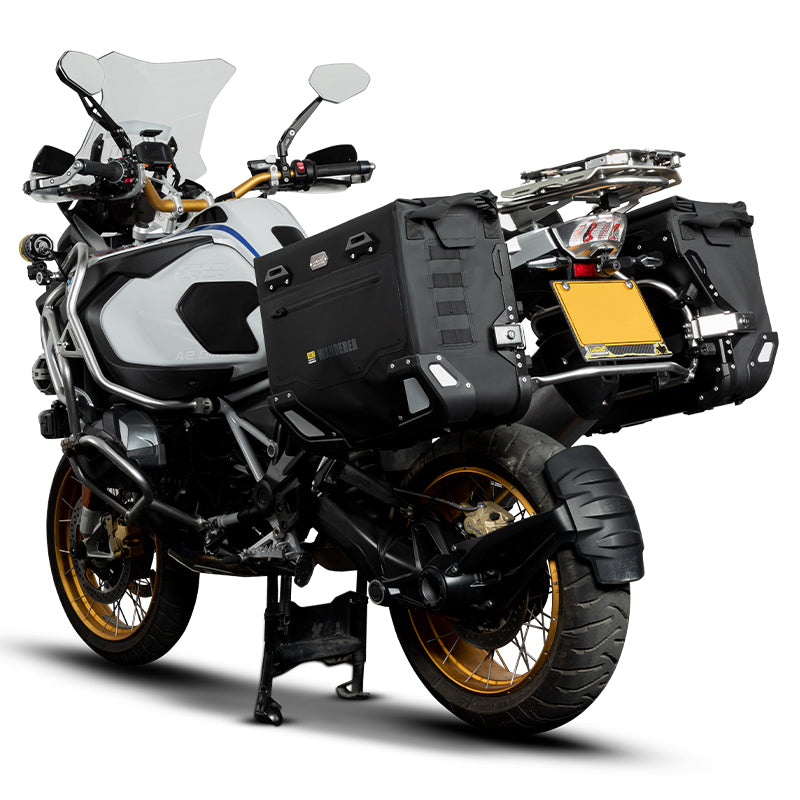
On a BMW GS, an Africa Twin, or a KTM Adventure, you notice this difference immediately. With an aluminum set, you have a more solid, orderly, and predictable platform when you need to carry heavy equipment, electronics, spare parts, or clothing for several days. With semi-rigid panniers, the motorcycle generally remains more agile, less tiring to maneuver, and easier to manage if the trip includes dirt roads, narrow passages, or riding with a lighter load.
When aluminum really makes sense
Aluminum panniers remain the benchmark for long-distance touring with a lot of equipment. The reason is simple: they offer usable volume, rigid walls, convenient access, and a system that makes it easy to organize the contents. If you take trips lasting several days with a tent, tools, rain gear, technical clothing, and perhaps photographic or electronic equipment, the rigid structure makes a real difference.
Another practical advantage is the protection of the contents. Aluminum provides better protection against distributed impacts, load compression, and crushing. That does not mean it is indestructible. After a major fall, it can become dented or deformed, and in some cases a damaged hard pannier may become more difficult to open or close. However, as long as the system remains intact, it offers a feeling of solidity that is difficult to match on the road and during long trips.
There is also the matter of everyday practicality. Aluminum panniers can be loaded and unloaded quickly, often allow additional gear to be secured on top of the lid, and work well with highly stable dedicated racks. For riders who use their motorcycle methodically, with a precise and repeatable travel setup, they are an extremely functional solution.
Where semi-rigid panniers are the smarter choice
Semi-rigid panniers are not a compromise. In many situations, they are the more technical choice. If your use includes a significant amount of dirt riding, rough tracks, low-speed falls, or simply more dynamic riding, a less rigid system can reduce several limitations typical of metal panniers.
The first is weight. Less mass means less inertia during oscillations, less stress on the racks, and a more natural motorcycle through changes of direction. On a Yamaha Ténéré or a dual-sport prepared for lightweight touring, this matters much more than the technical specifications might suggest.
The second is perceived bulk. Even when the overall width does not change dramatically, a semi-rigid pannier tends to feel less intrusive when riding standing up, moving through narrow passages, and maneuvering at a standstill. In addition, during light slides or minor side impacts, the system’s more yielding behavior can be an advantage both for the luggage and for limiting the risk of structural damage.
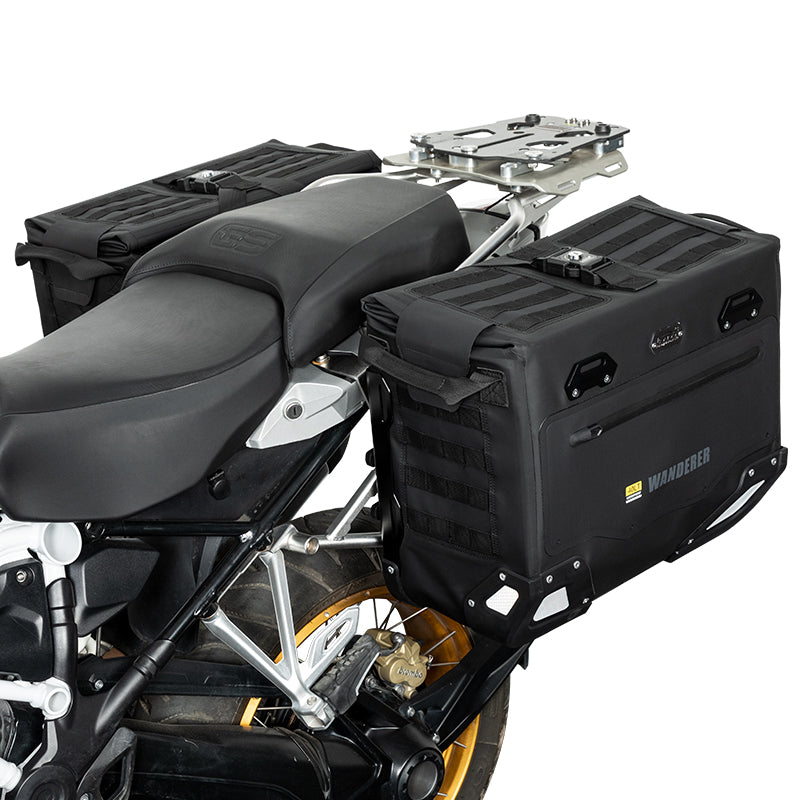
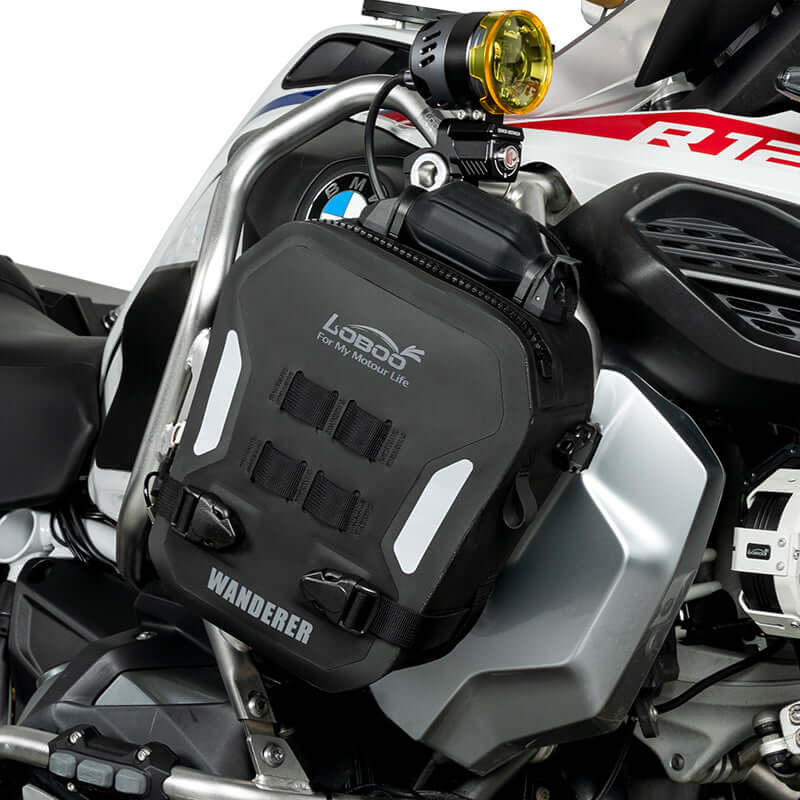
However, semi-rigid panniers have one clear limitation: they require more care when organizing the interior. If you carry delicate items, sharp edges, heavy tools, or very dense loads, you need to manage the distribution and protection of the contents carefully. They do not provide the same structural-box feel typical of aluminum, and it is right to take that into account.
Weight, center of gravity, and motorcycle behavior
This is where much of the decision is made. Panniers are not just containers. They are mass positioned laterally and often fairly high up. Every additional kilogram at the rear and sides changes corner entry, stability on rough surfaces, response during changes of direction, and the effort required during slow riding.
Aluminum panniers, together with dedicated racks and mounting accessories, create a heavier system even when empty. If you then fill them without a plan, the motorcycle becomes more physically demanding to manage. For asphalt touring, this is acceptable and sometimes even preferable for organization and capacity. Off-road, however, that weight starts to make itself felt.
In many cases, semi-rigid panniers help keep the overall weight down and maintain a more progressive response. This does not mean they are always superior off-road. If the trip includes long stages, high autonomy, and a lot of technical equipment, a well-loaded aluminum system can still make perfect sense. But if the focus is mobility on mixed surfaces and the ease of recovering the motorcycle in slow-speed situations, the difference is very noticeable.
Content protection and riding safety
When discussing safety, two aspects must be separated. The first is protecting what you carry. The second is how the luggage system affects riding and unexpected situations.
On the first point, aluminum has the advantage. It offers greater mechanical protection and better resistance to compression. If you carry sensitive equipment, the benefit is real. On the second point, however, the situation changes. A rigid, angular structure can become more difficult to deal with in the event of an impact, fall, or poorly managed lean in challenging sections. Because semi-rigid panniers are more forgiving and less aggressive in impacts, they are often preferred by riders tackling technical sections or traveling alone on routes where a simple slide should not turn into a bigger problem.
Here too, there is no answer that works for everyone. Someone who rides 80 percent on the road and 20 percent on dirt will have different priorities from someone who uses an adventure motorcycle as a true exploration bike on varied surfaces.
Semi-rigid vs aluminum panniers based on real-world use
If you use your motorcycle for road touring, travel as a pair, or take multi-day trips with complete equipment, aluminum is often the most coherent choice. It gives you organization, quick access, and a structure that works well with substantial loads. It is the classic setup for riders who want a motorcycle ready to cover the miles with everything in its place.
If, on the other hand, you alternate between asphalt and dirt with a more active riding style, travel alone, pack light, or want to reduce fatigue during maneuvers, semi-rigid panniers may be the smarter solution. Not because they are worth less, but because they are better suited to use where weight, flexibility, and agility matter more than absolute rigidity.
There is also a very common middle ground: the adventure rider who mainly rides on the road but does not want to give up detours onto gravel tracks, rough roads, and more difficult sections. In this case, the choice depends on your style. If you prioritize organization, capacity, and content protection, choose aluminum. If you prioritize motorcycle control and light weight, opt for semi-rigid panniers.
Compatibility, racks, and system quality
An often-overlooked point is that you are not choosing just the pannier. You are choosing a complete system made up of supports, anchor points, weight distribution, and compatibility with the motorcycle model. On platforms such as the GS, Adventure, Africa Twin, or Ténéré, mounting quality matters as much as the material.
An excellent set mounted on unsuitable supports loses precision, increases vibration, and can compromise load stability. Conversely, a solution designed properly for the specific motorcycle makes the luggage safer, easier to use, and less intrusive while riding. That is why it is always worth thinking in terms of the system, not just the pannier.
Riders who prepare their motorcycle carefully look at the final width, position relative to the exhaust, ease of removal, water resistance, strength of the mounting points, and accessibility while wearing gloves or in real travel conditions. This is where a technical, model-compatible catalog, like the one a specialist brand such as Endurrad builds around the needs of motorcycle travelers, really makes a difference.
How to choose without regretting it after the first trip
The right question is not which material is best in absolute terms. It is which system best supports the way you travel. If you tend to pack heavily, want a rigid base, and ride mostly on the road, aluminum is hard to beat. If, instead, you want a motorcycle that moves more freely, ride more dirt, and aim for a lean but serious setup, semi-rigid panniers make a great deal of sense.
It is also worth being honest about one point: many riders buy with extreme travel in mind, but then use their motorcycle mainly for long weekends, Alpine trips, mixed routes, and the occasional easy dirt road. In these cases, choosing based on real-world use prevents you from ending up with a setup that is oversized or poorly suited to your style.
The best choice is the one that lets you set off with fewer doubts and fewer unnecessary compromises. Because when the motorcycle is prepared properly, the luggage stops being a problem and becomes what it should be: part of the journey, not a limitation to manage.


Share:
Jado S6 for motorcycles: is it really worth it?
Honda Africa Twin Accessories: what you really need