A stone thrown up by the wheel of the rider ahead is enough to turn a quiet transfer into a real problem. An off-road motorcycle headlight protector is designed precisely for this purpose: to protect one of the motorcycle's most exposed components, preventing cracks, breakage, and reduced visibility when the terrain becomes unpredictable.
On an adventure or dual-sport motorcycle, the front headlight operates on more than just asphalt. It is exposed to vibrations, dust, mud, jets of water, and, above all, impacts. When preparing a motorcycle for long trips or light to moderate off-road riding, headlight protection is not a secondary accessory. It is a functional choice, on a par with skid plates, radiator guards, and well-designed mounts.
Why headlight protection really matters off road
The point is not only to prevent complete failure of the headlight assembly. Even minor damage can compromise a trip. A chipped lens can worsen beam distribution, allow dirt or moisture to enter, and, in the worst cases, force an expensive replacement.
On models such as the BMW GS, KTM Adventure, Honda Africa Twin, or Yamaha Ténéré, the headlight assembly often has complex shapes, large surfaces, and integrated LED technology. This improves visibility, but makes the component more expensive and less straightforward to replace than traditional headlights. On a trip, especially far from service centers or readily available spare parts, a well-chosen protector can make the difference between carrying on and stopping.
There is also a practical aspect that many people underestimate. In mixed riding, the stone does not come only from the ground in front of the wheel. It can come from intersecting paths, a rocky descent, or the motorcycle ahead just a few meters away. If you ride in a group, the risk increases.
Grille or full screen: the first choice to make
When discussing off-road motorcycle headlight protection, the initial choice is almost always between a metal grille and a transparent screen. Both make sense, but not for the same uses.
Metal grille
A grille provides good protection against direct impacts from stones and larger debris. It has a highly technical, generally robust design and performs well on motorcycles frequently used off road. It also tends to withstand superficial scratches well, since it does not have a transparent surface that must remain flawless.
The compromise involves light management. If the grille pattern is not precisely designed, it can create small shadows in the light beam or less clean diffusion, especially at night. This is not always a real problem, but it depends on the headlight geometry and build quality.
Transparent screen
A screen made of polycarbonate or an equivalent material keeps the beam line clearer and allows the headlight assembly to remain visible without obvious visual interference. On many modern motorcycles, it is the preferred solution for riders who use their motorcycle both for touring and off road, because it provides effective protection without significantly altering the headlight's appearance or function.
Here, the trade-off is different. The screen can become scratched, cloudy over time, or dirty more easily with mud and dust if it is not cleaned correctly. In addition, for very intensive use on aggressive terrain, material quality matters considerably.
Materials and construction: what to look at
It is not enough for a protector to look solid. On an adventure motorcycle, what matters is how it is designed, how it mounts, and how specifically it is made for the model.
The most reliable metal structures use stainless steel or high-quality aluminum, with suitable thicknesses and finishes designed to withstand vibration, water, and dirt. A grille that is too thin may deform. One that is too heavy or has poorly designed brackets can instead place unnecessary stress on the mounting points.
For transparent screens, the material must withstand impacts and the passage of time. Polycarbonate is a popular choice because it combines lightness with impact-absorption capabilities. Thickness also matters, but it is not enough on its own. A thick panel that is poorly mounted can vibrate, while one that is well designed and correctly spaced from the headlight performs better.
Also pay attention to the distance between the protector and the headlight assembly. If it is too small, in the event of a strong impact the protector may transfer the force to the headlight instead of absorbing or dispersing it. This is one of those details that immediately distinguishes thoughtfully designed products from generic ones.
Compatibility: this is where you decide whether the accessory is right
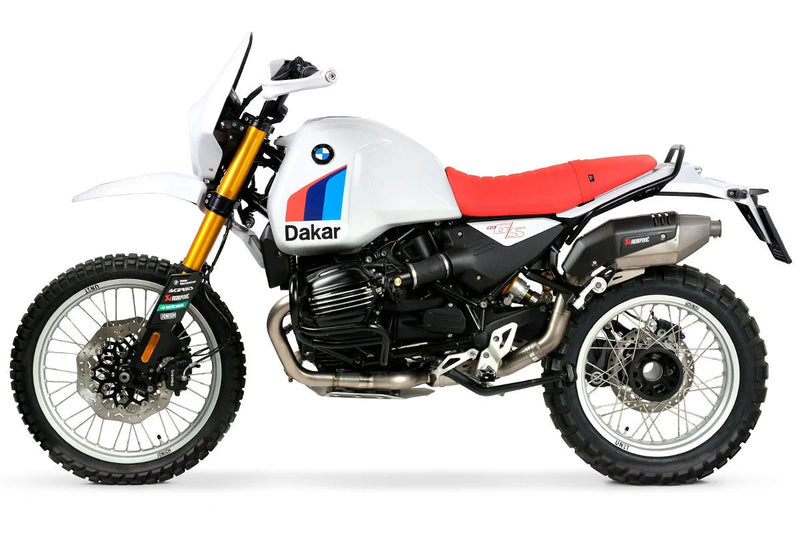
For this type of product, compatibility is not a commercial detail. It is part of the performance. A headlight protector for a BMW R 1250 GS does not meet the same needs as one for a KTM 890 Adventure or an Africa Twin. The shape of the headlight assembly, anchor points, available space, and interaction with the windscreen, instrument mounts, or accessory bars all differ.
For this reason, it is best to choose only solutions developed for the exact model and, if necessary, the correct year as well. On motorcycles updated over the course of a series, small differences in the front end can completely change the installation.
Anyone who prepares a motorcycle for serious trips knows this: a universal accessory that requires modifications is rarely the best choice. Even less so for the headlight. If the installation is not precise, vibrations, noises, abnormal stresses, and, in the worst cases, unwanted contact with the fairing can occur.
Installation and maintenance: two often underestimated aspects
A good protector must mount securely while also allowing practical access to the headlight for cleaning and inspection. This matters especially if you frequently ride in dust, rain, or mud.
Fixed or removable system
A fixed system makes sense for those seeking maximum simplicity and who do not want moving parts. However, if the protector is very close to the headlight or collects dirt on the inside, a removable solution may be more practical. Some systems allow the screen to be quickly detached so both the protector and the original lens can be cleaned thoroughly.
This is a concrete advantage, not a minor detail. Dirt trapped between the headlight and protector can, over time, worsen visibility and routine maintenance.
Vibrations and fasteners
Off-road riding tests every front-end component with vibration. For this reason, brackets, bushings, spacers, and screw quality should be evaluated. Precise installation prevents annoying rattles and reduces the risk of loosening. After the first few miles, especially on rough surfaces, checking the tightness is always a good habit.
Does headlight protection change the light?
The correct answer is: it depends on the design, material, and use. A protector properly developed for the correct model tends to cause minimal interference. A poorly designed solution, on the other hand, can create reflections, shadows, or minor beam distortions.
With a grille, the main issue is geometry. If the mesh is too intrusive in relation to the light source, the effect is more noticeable. With a transparent screen, the problem may instead be a dirty, scratched, or improperly treated surface.
For those who frequently ride at night or take mixed routes that end after sunset, it is worth prioritizing protectors designed to preserve the original headlight's performance as much as possible. On paper, they may all look similar. In real use, they are not.
When it makes the most sense to invest in an off-road motorcycle headlight protector
If the motorcycle is used only on clean asphalt and in urban environments, the risk exists but remains more limited. On an adventure motorcycle used for touring, unpaved roads, alpine passes, fast tracks, or group trips, protection makes much more sense.
It becomes even more important if the headlight assembly is expensive, if the trip is long, or if you are heading to areas where finding a replacement quickly is unrealistic. In these cases, the protector is not an aesthetic embellishment. It is part of the logic behind building a motorcycle that is ready to set off.
Those looking for truly compatible accessories for specific models find value in a technical selection focused on real-world use, such as the one offered by Endurrad. Not to add parts to the motorcycle, but to install components that make sense in the field.
How to choose without making a mistake
The right choice comes down to three simple questions. How much off-road riding you actually do. How exposed and expensive your headlight assembly is. How important it is to you to maintain the cleanest possible light beam.
If you ride off road frequently and place absolute priority on durability, a well-designed grille may be the most consistent solution. If you use the motorcycle in mixed conditions, cover many miles, and want discreet protection with excellent light output, a transparent screen is often the more balanced option.
In both cases, the difference comes down to model-specific design, material quality, and installation precision. This is what separates accessories that can withstand a serious trip from those that only seem right when standing still in the garage.
Preparing a motorcycle for adventure means eliminating weak points before they appear. The front headlight is one of those components you really notice only when it gets damaged. It is better to think about it beforehand, while making the right choice is still easy.