If, after an hour of riding, you feel constant pressure on your helmet, aerodynamic noise, and turbulence on your shoulders, the problem is often not the motorcycle. On many GS versions, an aftermarket BMW GS windscreen is one of the most effective ways to improve real comfort, especially when mileage increases and riding alternates between highways, state roads, and fast sections with panniers mounted.
It's not just about having "more plastic" in front. A taller or wider windscreen changes how the air detaches, rises towards the helmet, and relieves pressure on the torso. If chosen correctly, the benefit is felt immediately. If chosen incorrectly, you might end up with more turbulence than before.
When you really need an aftermarket BMW GS windscreen
The need almost always arises from the actual use of the motorcycle. Those who use the GS for short rides at moderate speeds often get along well with the standard windscreen. However, those who rack up miles, travel loaded, wear an adventure helmet with a peak, or ride in winter tend to perceive the limitations of the standard setup sooner.
The clearest sign is aerodynamic fatigue. We're not just talking about wind on the chest, but that dirty flow that hits the top of the helmet, making the journey noisier and more tiring. The passenger can also suffer from this, especially on GS bikes used for touring as a couple.
Another typical case concerns very tall or very short riders. The original windscreen is designed for an average compromise, but torso height, the seat mounted in a high or low position, and riding posture completely change the point at which the airflow arrives. This is why an accessory perfect for one rider may be ineffective for another with the same motorcycle.
Height, width, and profile: what really changes
When evaluating an aftermarket BMW GS windscreen, the three parameters that matter are height, width, and curvature. Height primarily influences helmet and torso protection at cruising speeds. Width has a greater impact on shoulder and arm coverage, which is very useful on long trips and in colder seasons.
The profile, however, is often underestimated. A well-designed shape can manage the flow much better than a simply taller windscreen. Some models work by creating a controlled air passage at the bottom or top to reduce negative pressure behind the screen. Translated on the road: less helmet buffeting and less noise.
Here, a crucial point comes into play. More protection does not automatically mean more comfort. A very tall windscreen can work very well in winter and on the highway, but be cumbersome in summer, when riding standing up, or on mixed sections where more visual freedom and movement are needed.
Compatibility with the GS model: the detail that prevents mistakes
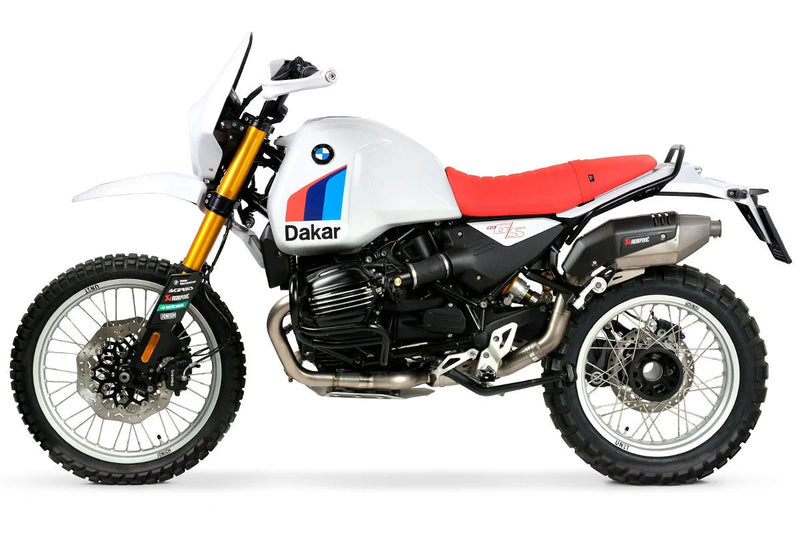
BMW GS does not mean just one motorcycle. R 1200 GS, R 1250 GS, F 750 GS, F 850 GS, and their respective Adventure versions have different frames, front ends, mounts, and geometries. This is why compatibility must be checked precisely, not by similarity.
The year of production matters, the standard or Adventure version matters, and the original adjustment system also matters. On some models, the windscreen mount works well even with larger surfaces. On others, especially if extensions or deflectors are added, it is essential to check rigidity, mounting points, and behavior at high speeds.
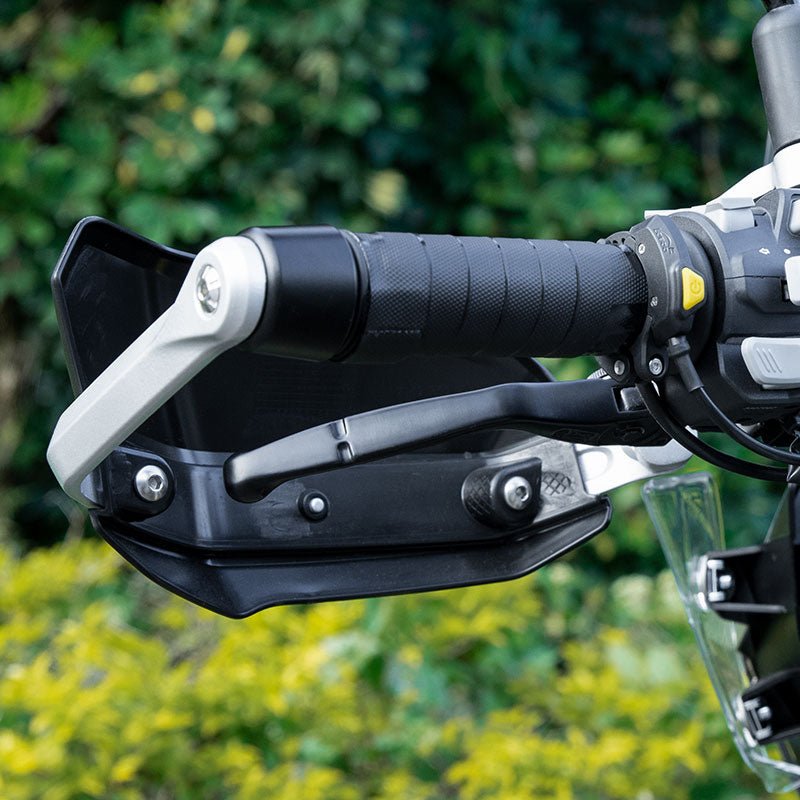
Those preparing their bike for long trips should also consider accessories already installed. GPS mounts, navigator bars, enlarged handguards, and different mirrors can interfere with travel or the field of vision. In a well-organized technical catalog by motorcycle model, like Endurrad's, this step is much simpler because the selection starts from real compatibility and not from a generic description.
Tall windscreen or adjustable spoiler?
This is one of the most frequent questions, and the answer depends on the predominant use. A taller, one-piece windscreen is often the cleanest choice for those seeking stable protection, simplicity, and a ready-to-go touring setup. Fewer components, fewer continuous adjustments, predictable behavior.
An adjustable spoiler, on the other hand, adds fine-tuning. It can be very useful if you alternate between different seasons, adventure and touring helmets, or if you share the bike with another rider. It allows you to raise the flow exit point without having to mount an excessively large screen.
Conversely, a spoiler introduces another variable. If the mount is not solid or the geometry is not suitable for your GS, the result may be less clean than a windscreen designed directly with optimized dimensions and profile. Here too, a simple rule applies: a coherent system is better than an improvised solution.
How to choose the aftermarket BMW GS windscreen based on usage
If your primary scenario is medium to long-range touring, with many consecutive hours in the saddle, it is advisable to prioritize torso protection, noise reduction, and stability at highway speeds. In this case, a taller and slightly wider windscreen is often the most sensible configuration.
If, on the other hand, you use the GS in a more mixed way, with asphalt, dirt roads, and frequent standing riding, it is better to avoid overly intrusive solutions. A moderately larger, perhaps well-profiled windscreen, maintains good protection without penalizing close-up visual control on dirt roads.
For those who travel mainly in winter or cold areas, lateral coverage gains almost as much importance as height. Less air on the shoulders and upper arms means less fatigue and a general feeling of a more "closed" and protective motorcycle.
Very tall riders should be careful of a common mistake: choosing the tallest windscreen available thinking it will solve everything. Sometimes the flow is only shifted to the top of the helmet, worsening comfort. In these cases, the profile and any adjustment matter much more than the declared centimeters.
Materials, thickness, and build quality
For an accessory exposed to vibrations, rain, insects, washing, and temperature fluctuations, the material makes a difference. A good windscreen must offer stable transparency over time, scratch resistance as much as possible, and sufficient rigidity not to flex excessively at cruising speeds.
Thickness also needs to be interpreted correctly. More thickness is not always automatically synonymous with a better result, but adequate construction for the mounting points and the surface of the screen is essential to avoid wobbling, noise, and stress on the original mounts.
Also pay attention to the edge finish and drilling quality. These are details that say a lot about the precision of the component and the ease of assembly. Those who really use their bike immediately notice the difference between a well-designed accessory and one that requires adaptations, improvised shims, or continuous adjustments.
Installation and adjustment: the work doesn't end when you bolt it on
Even the best aftermarket BMW GS windscreen needs to be adjusted properly. The first test should be done with your actual configuration: seat in the position you usually use, usual helmet, any panniers mounted if you often travel that way. Changing one of these elements alters the perception of the flow.
Correct adjustment seeks a balance between protection and visibility. Looking through the windscreen is almost never the ideal solution in adventure-touring riding, especially with rain, dirt, or low light. The upper edge should be in an area that protects well without compromising road readability.
After installation, it is advisable to test the bike at progressive speeds and in multiple scenarios. An extra-urban road is enough to understand the pressure on the torso, but only a fast section truly tells how the helmet behaves within the flow. If you feel sudden blasts of air on the visor or vibrations around your ears, the adjustment needs to be revised.
What to really expect on the road
A good aftermarket windscreen does not transform the GS into a fully faired tourer. It reduces wind impact, improves flow quality, and lowers fatigue, but some air will always be present. And that's not necessarily a defect: many motorcyclists prefer a little ventilation rather than total protection with turbulent air.
The real benefit is measured after several hours. You arrive less tired, with less tension in your neck and shoulders, and with a more relaxed ride on long transfers. This is the point: don't chase a perfect theoretical solution, but a configuration consistent with your use of the GS.
If you are preparing your bike for serious trips, the windscreen is not an aesthetic detail. It is a comfort and control component that affects you every time the mileage increases. Choose it as you would choose a set of panniers or engine protection: based on compatibility, quality, and real conditions of use. Your next adventure also starts here.