Motorcycle chain maintenance for touring should not be improvised when you are already 300 km from home, with a loaded bike and a long stretch still ahead. It is one of those simple jobs that, when done properly and regularly, prevents noise, premature wear, uneven power transmission and, in the worst cases, serious problems during the trip.
On a chain-driven adventure or touring bike, the load changes everything. Luggage, passenger, fast motorway sections, dust, water and dirt roads put the final drive under much more stress than commuting. That is why a practical approach is needed: less abstract theory, more proper checks and good timing.
Why the chain suffers more on a touring motorcycle
A touring motorcycle often operates in mixed conditions. Dry asphalt in the morning, rain in the afternoon, dust or light mud the next day. Each environment leaves something on the drivetrain: abrasive dirt, moisture and residue that mixes with the lubricant and accelerates wear.
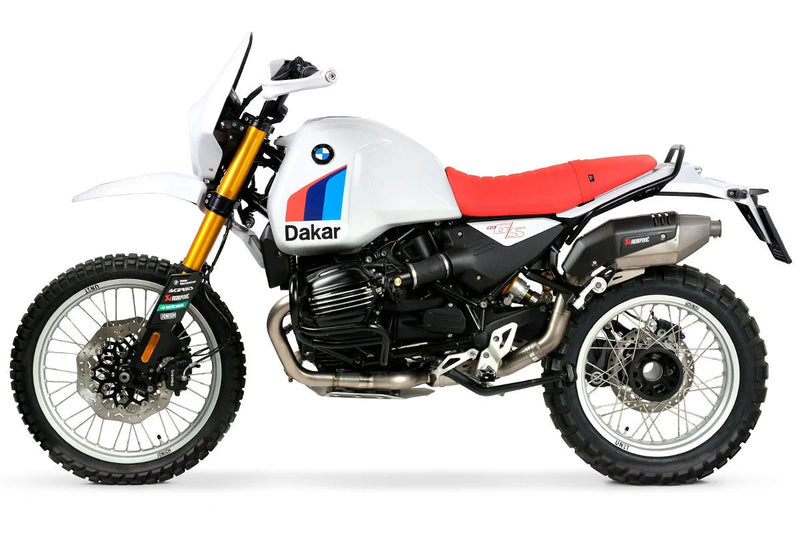
Then there is the issue of weight. A BMW GS, KTM Adventure, Africa Twin or Ténéré loaded for a long trip does not behave like a bike ridden unloaded for a few hours. The rear suspension works differently, the swingarm changes position and chain tension must be checked more carefully. This is where many people get it wrong: they adjust the chain as if the bike were always lightly loaded, then end up with a chain that is too tight when the shock absorber compresses.
Motorcycle chain maintenance for touring: the essential checks
Chain maintenance on a touring motorcycle is based on four points: cleaning, lubrication, tension and wear inspection. Skipping one compromises the others as well.
Cleaning removes residue that increases friction and wear. Lubrication protects the rollers and reduces mechanical strain. Correct tension prevents jerking, noise and abnormal loads on the front sprocket, rear sprocket and bearings. Finally, a visual inspection tells you whether the drivetrain kit is still working properly or whether replacement is approaching.
There is no need to complicate things with racing workshop procedures. Consistency is what matters, especially before setting off and during long trips.
How often to clean and lubricate
There is no interval that works for everyone. It depends on the type of chain, how the bike is used and the environment. On dry asphalt, with relaxed riding and little exposure to dirt or water, you can go longer between services. If you ride on unpaved roads, ride through rain or cover many kilometres in summer with fine dust, the schedule changes considerably.
As a practical guideline, check the chain every day during a demanding trip and service it when the lubricant has clearly disappeared, the chain looks dry or it starts becoming noisy. After heavy rain, water crossings or dusty off-road riding, servicing it sooner is almost always the right choice.
A common mistake is lubricating too often without ever cleaning the chain. The result is not a better-protected chain, but a mixture of dirt and lubricant that acts like an abrasive paste. Less frequent maintenance done properly is better.
How to clean the chain without damaging it
The rule is simple: use a suitable cleaner, the right brush and no unnecessary aggression. O-ring or X-ring chains fitted to most modern touring motorcycles have seals that retain the internal grease. Overly aggressive products or metal tools can damage them.
Work on a warm chain, not one that is still boiling hot immediately after a ride. Apply the cleaning product, let it work for the necessary time and remove the dirt with a dedicated brush. Then dry the chain thoroughly. If moisture remains, the new lubricant will adhere less effectively and the work will be less effective.
If the chain is only dusty, it does not need a deep clean every time. If you can see dark buildup around the links or feel rough operation, it is time to clean it more carefully.
Proper lubrication: a little, in the right place
Lubricating properly does not mean covering everything in product. The useful area is the inside of the chain, where the lubricant can reach the rollers and contact surfaces most effectively. Spraying randomly on the outside does little and soils the wheel, tyre and swingarm.
The best time is after a ride, while the chain is still slightly warm. The product spreads better and has time to adhere before you set off again. If you lubricate immediately before riding, some of it will be flung off almost at once.
Context matters here too. For a mainly road-based trip, a more durable lubricant may make sense. If you expect to ride mostly on dry dirt roads, an overly sticky formula tends to hold on to more dust. There is no perfect product for everything: there is the product best suited to the type of route.
Chain tension: where the worst damage happens
If there is one critical aspect of motorcycle chain maintenance for touring, it is tension adjustment. A chain that is too loose slaps, jerks and wears the front and rear sprockets unevenly. A chain that is too tight is even worse: it limits suspension movement, stresses the output-shaft bearings and can create abnormal loads when the rear of the motorcycle is heavily compressed.
The correct value cannot be guessed. It must be checked against the manufacturer's specifications while taking the actual touring configuration into account. On adventure motorcycles with significant suspension travel, the swingarm geometry changes considerably. This means that an adjustment that appears perfect with the bike unloaded can become too tight with luggage and a passenger.
That is why the check must always be carried out methodically. The motorcycle must be in the condition specified in the manual for measurement. After adjustment, it is essential to check the alignment of the rear wheel. The indicators on the swingarm help, but they are not always perfectly accurate. If the wheel is not properly aligned, the chain will run poorly even with the correct slack.
How to tell if the drivetrain kit needs replacing
No maintenance makes a chain kit last forever. Sooner or later, replacement is necessary, and postponing it too long is a false economy. A worn chain reduces smoothness and can compromise the motorcycle's reliability precisely when you need it most.
The signs are fairly clear. If you find stiff links that do not move freely again after cleaning, if chain-tension adjustments become increasingly frequent, if the chain shows obvious elongation or if the teeth of the rear and front sprockets have a worn, irregular profile, the kit is nearing the end of its life. Another typical symptom is a drivetrain that alternates between tight and loose sections as the wheel rotates.
In these cases, replacing just one component is not advisable. The chain, front sprocket and rear sprocket work together and wear together. Fitting a new chain to worn gears shortens its life from the outset.
Before setting off: the check worth more than many accessories
Before a long trip, the final drive deserves the same level of attention you give to tyres, brakes and luggage. A quick but thorough check can prevent unnecessary stops or emergency repairs far from home.
Check the overall condition of the chain, its cleanliness, lubrication and correct slack. Make sure there are no stiff spots, unusual noises or suspect teeth on the rear and front sprockets. If the kit is already well into its service life and you are planning thousands of kilometres, the most sensible choice may be to replace it before setting off, rather than hoping it will last.
On motorcycles designed to go anywhere, preparation means reliability. That applies to protection, luggage, navigation and also to a chain that often receives less attention than it deserves. Endurrad speaks to people who genuinely use their motorcycles for touring, and experience in the field makes one thing clear: a well-maintained drivetrain improves the ride, reduces wear and leaves more room for what really matters - continuing to cover the miles without unnecessary worries.
What to take with you on the trip
There is no need to turn your luggage into a mobile workshop, but a few items make sense. A compact touring lubricant, a small basic cleaning kit and the right tools for checking or adjusting chain tension can make a real difference, especially on long routes or in areas where finding assistance is not easy.
Compatibility with the motorcycle matters here too. Some models require specific sizes for the wheel nut or swingarm adjusters, so it is worth checking before you leave. Carrying generic tools that cannot be used on your own motorcycle is of no benefit.
Good maintenance does not make a trip less adventurous. It makes it more dependable. And when the road stretches on, the asphalt ends or the weather changes suddenly, knowing that the final drive is in good condition lets you focus on riding, not on the noise coming from the rear.