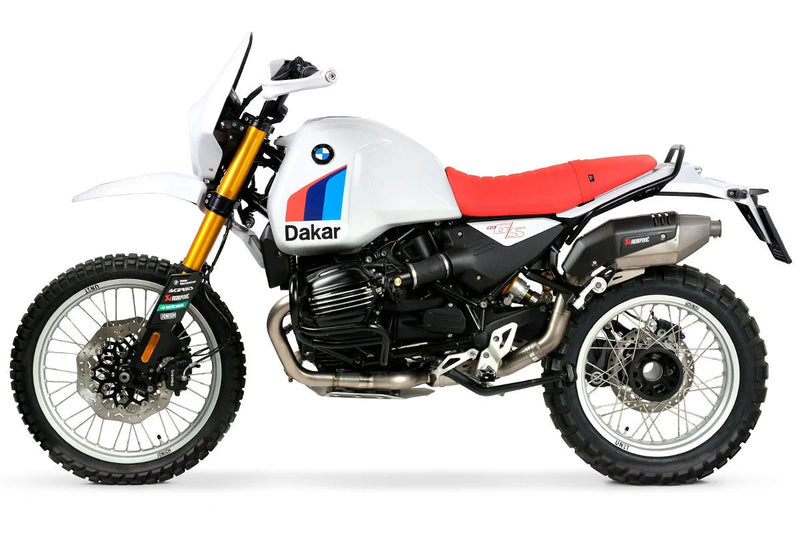
Anyone who prepares a GS for serious travel quickly understands this: buying random accessories leads to unnecessary weight, bulk, and solutions that seem perfect on paper but change little on the road or off-road. A good BMW GS accessory guide is precisely for this—to distinguish what truly improves protection, comfort, and load capacity from what only adds complexity.
The BMW GS is an extremely versatile platform, but precisely for this reason, it must be set up consistently with its actual use. One thing is an R 1250 GS used for long journeys with a passenger and luggage, another is an F 850 GS that alternates between touring and dirt roads, and yet another is a GS used daily and loaded for two or three important trips a year. The right accessories are not "the best ever." They are those compatible with the model, the type of riding, and the load level the bike will have to handle.
BMW GS Accessory Guide for Real Priorities
The starting point is not the catalog, but a simple question: what should your GS do better than it does now? If the answer is to protect the bike in case of static falls or impacts on rocky terrain, the priority will be different from someone who wants more travel range, greater saddle comfort, or a tidier navigation setup.
The most common mistake is to start with panniers. They are essential, but first, consider accessories that prevent costly damage and those that improve control and reduce fatigue. On an adventure bike, protection and ergonomics often have a more immediate impact than luggage.
Protection: The First Sensible Investment
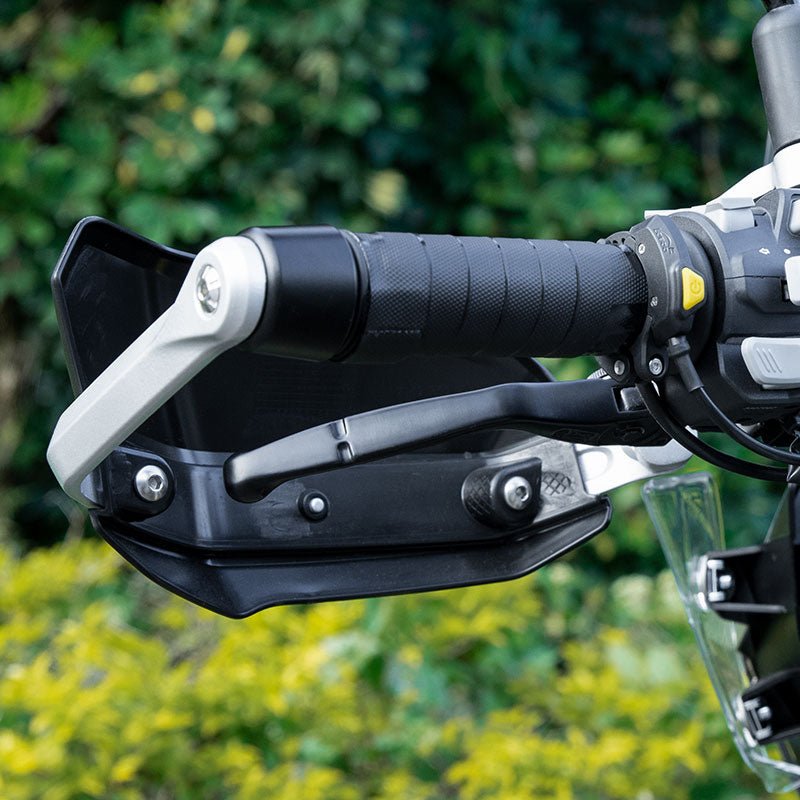
If the GS sees dirt roads, inclined parking, fully loaded maneuvers, or long journeys, protection is the foundation. Engine guards, side bars, and protection for exposed components such as the radiator, headlight, or engine covers serve to limit damage that can stop the journey or turn a trivial fall into a major repair.
Here, the type of structure matters a lot. A well-designed engine guard must protect without creating unfavorable leverage points on the frame and without unduly penalizing ground clearance and accessibility for maintenance. The engine bars must have solid and correctly distributed attachments. An overly heavy or poorly integrated protection can be counterproductive, especially in mixed use.
For those who travel predominantly on asphalt with some light off-road, a medium protection configuration is often sufficient. For those tackling rocky terrain, easy dirt tracks, or long journeys on variable surfaces, it is advisable to step up and also protect secondary areas. It is not a question of adventure aesthetics. It is mechanical preparation.
Luggage and Loading Systems: Rigid or Semi-Rigid?
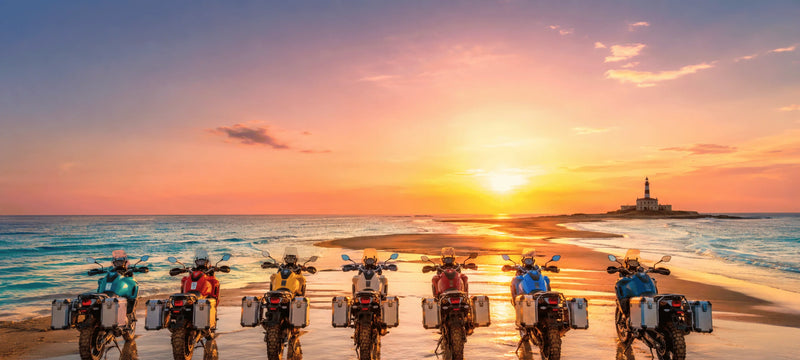
Luggage is among the most requested accessories for GS, but it must be chosen carefully. Aluminum remains a benchmark for those who travel long distances and want maximum capacity, structural robustness, and practicality in securing additional cargo. They are perfect for touring, mixed roads, and intensive use, especially when the bike needs to carry equipment, technical clothing, and spare parts.
Semi-rigid panniers, on the other hand, offer concrete advantages for those who include more off-road in their itinerary. In the event of impacts or low-speed falls, they can be less penalizing, reduce weight and bulk, and often improve the dynamic handling of the bike when the ground is uneven. The compromise is in capacity, structural rigidity, and sometimes ease of access.
The decisive point is the pannier rack. It must be specific to the GS model and compatible with the exhaust, rear dimensions, and passenger. A good loading system is not just spacious. It must keep the bike balanced, prevent vibrations, and not complicate mounting and dismounting. If the journey is often with a passenger, the top case must also be carefully evaluated: useful, yes, but not to be overloaded because it affects the rear end more than many imagine.
Comfort and Ergonomics: Accessories You Feel After 300 km
On GS bikes, comfort is not a luxury. It is riding performance. When the posture is correct, the bike is controlled better, you get less tired, and you arrive more alert even at the end of the stage. Ergonomic accessories make sense especially if they solve a specific problem.
Handlebar risers, wider footpegs, comfort seats, and alternative windscreens are among the most effective interventions. But they must be proportioned. A handlebar riser useful for standing riding can worsen seated posture if exaggerated. A more protective windscreen reduces air pressure, but if it is not suitable for rider height and helmet, it can generate annoying turbulence. A more padded seat is not always the most comfortable after many hours: the shape also matters a lot.
Those who use the GS in winter or in mid-seasons also appreciate heated grips, deflectors, and solutions to improve aerodynamic protection for hands and torso. These are details that become central when you cover kilometers for consecutive days.
Navigation, Mounts, and Power Supply
A touring GS needs a clean and reliable control station. GPS or smartphone mounts, dedicated brackets, power sockets, and anti-vibration mounting systems are among those accessories that seem secondary until you face rain, dirt roads, and many hours of riding.
The criterion here is simple: stability, readability, and accessibility. The device must remain visible without forcing you to look away from the road too much, and the mount must withstand vibrations and impacts well. If you use your smartphone as a navigator, power management and protection of the device from water and stresses become essential.
For some setups, it makes sense to create a truly lightweight travel tower, especially for those who undertake raids or long routes with a digital roadbook, satellite navigation, and additional accessories. For more tourist use, however, a simple but well-integrated configuration is often sufficient.
Lighting and Visibility: Useful, Not Decorative, Upgrade
Auxiliary lights play a real role, especially on motorcycles that travel at dawn, dusk, in fog, or in poorly lit areas. They improve the field of vision and increase the motorcycle's visibility to other road users. On the GS, they make sense when combined with correct mounts, reliable wiring, and a light beam consistent with use.
For road touring, configurations that broaden lateral and frontal vision without creating reflections or glare are very effective. For those tackling dirt roads and isolated sections, more depth and high resistance to vibrations, dust, and water are needed. Again, it's not the most flashy solution that wins, but the one that works well after thousands of kilometers.
Compatibility: Where Fewer Mistakes Are Made and More Difference
In choosing GS accessories, compatibility is everything. It's not enough for a product to be "for BMW GS." You need to check the year, version, presence of original packages, already mounted frames, aftermarket exhausts, setup, and existing accessories. An R 1200 GS LC, an R 1250 GS Adventure, and an F 900 GS have different needs and attachment points. Thinking that the same solution works everywhere is the fastest way to waste time and have a suboptimal mounting.
This is especially true for engine guards, pannier racks, windscreens, auxiliary lights, and ergonomic components. Even a few millimeters or a different attachment can change stability, interference, and ease of installation. A serious approach always starts from the specific model and intended use, not from the generic category.
How to Build a GS Setup Without Overloading the Bike
A well-accessorized GS should not look like a catalog assembled in one block. It must remain balanced. Every accessory adds weight, bulk, possible vibrations, and sometimes new maintenance. For this reason, it is advisable to build the bike in functional packages.
For pure touring, the sensible sequence is essential protection, luggage, aerodynamic comfort, navigation, and only then auxiliary lighting or secondary details. For mixed travel and off-road use, however, it makes more sense to start with structural protection, ergonomics for standing riding, lighter luggage, and a compact navigation station. For daily use with some travel, often much less than you think is enough: a good navigation mount, a well-designed protection, and a modular loading solution can change the experience without unnecessarily weighing down the bike.
A technical selection made by model and intended use, as in Endurrad's approach, helps precisely to avoid the most expensive mistake: buying accessories that are valid in themselves, but wrong for your GS.
The final rule is simple. Every accessory must solve a concrete problem or truly improve the journey. If it doesn't protect, doesn't increase comfort, doesn't improve the load, or doesn't make the bike more ready to go anywhere, you probably don't need it. Your next adventure starts here - with a well-prepared GS, not just one with many accessories.