After a hundred or so kilometers on the highway, the problem isn’t the motorcycle. It’s your right hand. A mechanical motorcycle throttle lock is designed precisely for this: to reduce throttle fatigue during long journeys without making the ride feel artificial or complicated to manage.
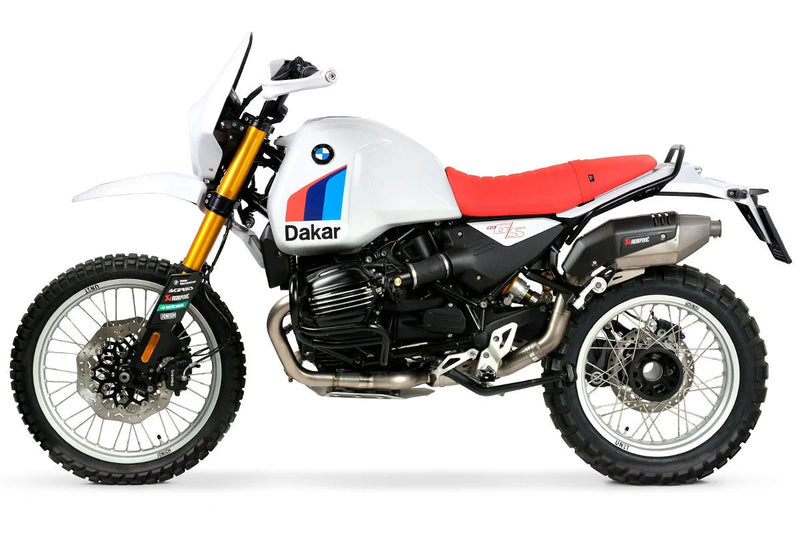
For those traveling on BMW GS, KTM Adventure, Africa Twin, Ténéré, or other touring and mixed-use motorcycles, this accessory only makes sense if it offers a real benefit. It’s not enough for it to “hold the throttle.” It must do so progressively, without compromising safety, with correct installation and precise compatibility with the grips, handguards, and bar-end weights.
What a mechanical motorcycle throttle lock really is
The name can be misleading. It is not an electronic cruise control and does not automatically maintain speed. A mechanical throttle lock creates controlled resistance or lightly locks the throttle grip. In practice, it helps maintain the set throttle opening for a few seconds or longer stretches, while still allowing the rider to close the throttle at any time.
This distinction is central. With an electronic system, the motorcycle regulates speed; with a mechanical device, you are always the one managing the bike. The advantage is construction simplicity. The limitation is that speed varies with inclines, wind, load, and road surface. On an adventure bike with full panniers and a tall windscreen, it only takes an uphill stretch to understand how much the situation differs from an integrated cruise control.
When it makes sense to install one
A mechanical throttle lock is most useful on motorcycles used for medium- and long-distance touring. On highway journeys or flowing main roads, it allows you to relax your grip, slightly change your hand position, and reduce tension in your wrist, forearm, and shoulder.
On a large adventure bike or tall touring motorcycle, often loaded for a trip, comfort depends on more than just the seat or windscreen. Constant throttle management also has a significant effect on overall fatigue. After hours in the saddle, a small accessory can make a real difference.
It is not, however, designed for sporty riding, heavy urban traffic, or technical off-road use. In the city, the throttle needs constant adjustment. On dirt, where immediate response and precise acceleration control are essential, any additional resistance must be considered very carefully. On easy gravel roads and fast transfers it may make sense, but generally not on slow, technical sections.
How it works and what changes while riding
There are solutions with adjustment rings, screw systems, or devices that work against the bar end. The goal is always the same: to increase throttle-grip friction in an adjustable way. Once you find the right setting, the grip does not immediately return to the closed position when you loosen your hold, but remains stable enough to let you ride more comfortably.
The key word is adjustable. If the system is too loose, it is of little use. If it is too tight, it becomes annoying and potentially counterproductive. A good throttle lock must allow quick micro-adjustments, even while wearing touring gloves, and maintain consistent behavior in heat, cold, dust, and vibration.
In practice, the greatest benefit is noticeable on long, steady stretches. Not to “take your hands off the handlebars,” which makes no sense on a motorcycle, but to reduce the load on your right hand and restore a more natural posture.
Mechanical motorcycle throttle lock and safety: the real issue
It is worth being direct here. A mechanical motorcycle throttle lock is useful only if it does not compromise the top priority: being able to close the throttle immediately and without hesitation. If the throttle return becomes stiff, irregular, or unpredictable, the installation is incorrect or the product is not suitable for the motorcycle’s configuration.
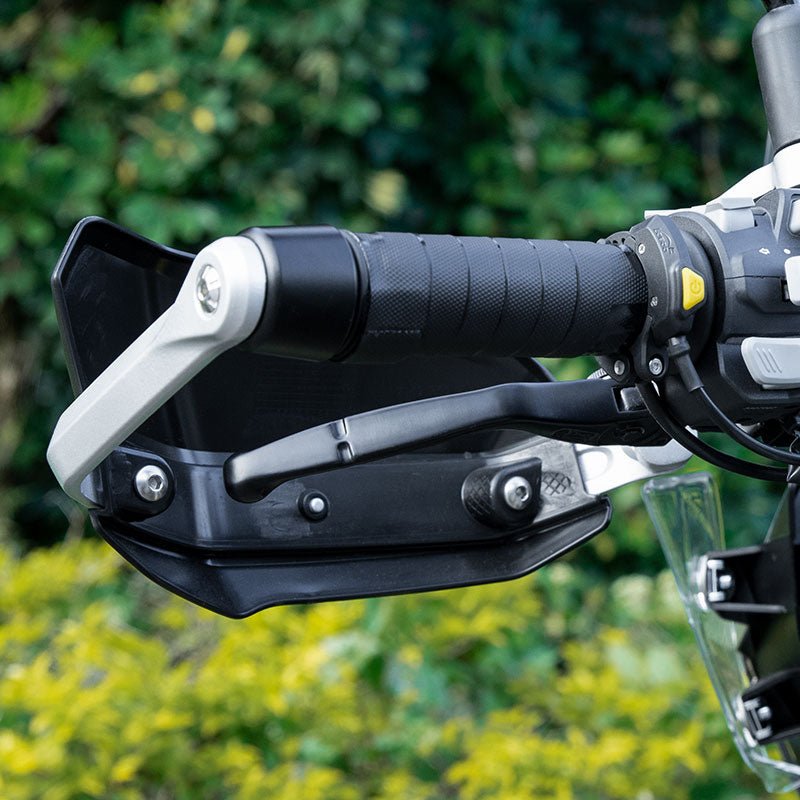
Compatibility matters more than it may seem. Aftermarket handguards, heated grips, larger grips, non-original bar-end weights, or handlebar protection can change the available space and the way the device operates. On adventure bikes, where cockpit customization is common, this is even more important.
Usage conditions also matter. On wet surfaces, in traffic, or on roads with frequent changes of pace, the benefit decreases, and it is often best to leave it completely disengaged. It is not an accessory to use all the time. It is a tool to activate when conditions make it genuinely useful.
What to consider before buying
The first criterion is specific compatibility with the motorcycle and the accessories already installed. It is not enough for the handlebar diameter to be correct. You also need to check the type of throttle control, the shape of the bar end, the space between the grip and bar-end weight, and whether closed handguards are fitted.
The second aspect is build quality. A component exposed to vibration, water, dust, and temperature fluctuations must use materials that remain stable over time. Precise machining, clean fits, and durable finishes make a difference in adjustment and consistent use. On a motorcycle designed to go anywhere, an uncertain or imprecise accessory quickly becomes a source of annoyance.
The third point is ergonomics. If activating or deactivating it distracts you too much, the benefit is lost. The best systems are intuitive, easy to adjust while wearing gloves, and do not force unnatural hand movements.
Finally, consider the type of riding you actually do. If you mainly use the motorcycle on mixed routes with little fast asphalt, it may be more useful to invest first in overall ergonomics, wind protection, or riding position. If, instead, you cover many transfer miles before reaching the roads that matter, a throttle lock can become one of those accessories you appreciate on every long ride.
Which motorcycles benefit from it most
Adventure and touring motorcycles are the natural candidates. BMW GS, KTM Adventure, Honda Africa Twin, and Yamaha Ténéré share a touring-oriented setup that often includes long stages, steady speeds, and many consecutive hours in the saddle. In this context, the relief for the right hand is more noticeable than on naked bikes or motorcycles used almost exclusively in urban environments.
Engine power delivery also matters. A twin-cylinder engine with strong low- and mid-range torque and progressive response is better suited to relaxed throttle management. On sharper engines or highly responsive setups, greater sensitivity is required, and the benefit may be less pronounced.
The overall setup also plays a role. A motorcycle with an effective windscreen, a touring-friendly seat, and a well-designed riding position enhances the benefits of a throttle lock because it makes the accessory part of a consistent comfort package. If the riding position is already tiring for other reasons, the result will be only partial.
Common mistakes to avoid
The most common mistake is to consider it a universal shortcut to greater comfort. It is not. If your wrist gets tired because the brake lever is poorly adjusted, your handlebar position is wrong, or vibrations are excessive, a throttle lock does not solve the root problem.
Another mistake is tightening the system too much in search of an “automatic” effect. The more friction you add, the more you alter the natural throttle return. The correct setting is the minimum needed to support the throttle opening, not the maximum possible.
Finally, there is imprecise installation. On a well-prepared motorcycle, every accessory must coexist with the others without interference. If the device touches the handguard, works poorly with the bar-end weight, or changes behavior when the handlebars are turned, it must be adjusted before setting off.
Is it worth it?
Yes, if you do real touring and want to increase comfort without complicating the motorcycle with additional electronics. No, if you expect the behavior of a factory cruise control or use the motorcycle almost exclusively on routes where the throttle is constantly changing.
Its value lies in well-executed simplicity. It is a small but far from trivial accessory: it must be compatible, precise, and consistent with the way you ride. For this reason, on a technical catalog like Endurrad’s, it makes sense to look for one using the same criteria applied to navigation mounts, protection, or luggage systems: not to add something for its own sake, but to genuinely improve the motorcycle in real-world use.
When the transfer ride gets longer and the day has only just begun, comfort is not a luxury. It is an energy reserve that carries you to the next stop.