


In brief. Preparing a motorcycle for a long trip means doing four things in this order: mechanics (tires, chain, brakes, and fluids assessed based on the miles you will ride), load (stay below the vehicle's gross weight listed in the registration document, with weight low and close to the center), adjustments (preload, tire pressure, and headlight with the motorcycle loaded), and an onboard kit to get back on the road by yourself after a puncture.
Start a month early, not the night before, and finish with a 150-200 km fully loaded test ride. If you cross the Alps or France, also check local requirements: in Switzerland, the vignette is also required for motorcycles; in France, certified gloves and a high-visibility vest on board are mandatory.
Preparation starts a month early because tires and accessories need to be run in
The problem with last-day preparations is not the rush: it's that they leave no time to discover what is wrong. A new tire needs to be gently run in for a few hundred kilometers, a newly installed mount settles, and a cable may pass too close to the steering only when the handlebars are turned all the way.
- Four weeks before: the mechanics. Compare the trip mileage with the condition of the tires, chain kit, brake pads, and the due date of the next service. If a component will not last through the trip with a margin to spare, order it now: adventure-size parts are not always in stock.
- Three weeks before: luggage and installations. Frames, cases, guards, electronic mounts. Install everything using the tightening torques specified in the manuals and note what you have touched.
- Two weeks before: workshop or DIY. Service, tires, chain, and fluids if needed. New tires need miles before the trip, not during it.
- One week before: fully loaded test ride. 150-200 km with full luggage, any passenger, and the electronics switched on. Then recheck the fasteners.
- The day before: checks only. Cold tire pressure, fluid levels, lights, documents, onboard kit. No new installations.

Tires, chain, and brakes should be assessed based on the miles you will ride, not those already covered
A tire halfway through its service life in the city is a good tire. Before 3,000 km with full panniers, heat, and perhaps a stretch of gravel road, it is a tire to replace halfway through the trip, in a country where your size may not be available.
| Component | What to check | Reference |
|---|---|---|
| Tires | Tread depth, age, cuts, and deformation. The legal limit for motorcycles is 1 mm, but a long trip requires a much larger margin. | Highway Code, limit reported by QN Motori |
| Chain kit | Stretching, tight spots, and sprocket teeth. Adjust the tension according to the procedure in the owner's manual. | Motorcycle owner's manual |
| Brakes | Pad thickness, consistent lever feel, and fluid color and expiration date. | Manufacturer's maintenance schedule |
| Fluids | Engine oil, coolant, and final-drive oil where applicable. If the service is due during the trip, do it early. | Manufacturer's maintenance schedule |
| Battery | Resting and starting voltage: a tired battery holds up in the garage and fails on the first cold night. | our battery guide |
| Air filter | If the trip includes dusty trails, start with a clean or new filter. | air filter guide |
The remaining-mileage criterion
For every consumable component, there is only one right question: will it get you home with a margin? If the answer is «maybe», replace it first. A chain or a pair of brake pads costs less than losing a day waiting for a workshop that has the right part number. For details on brake pads, see the guide when to replace them before a trip; for the chain, see the guide on maintenance while traveling.

How much you can load is stated in the registration document: gross weight minus motorcycle weight
The limit is not the volume of the panniers; it is the permitted gross weight that the manufacturer certifies. Subtract the kerb weight and you get how much the rider, passenger, clothing, luggage, and mounted accessories can weigh together.
| Item | Weight | Data type |
|---|---|---|
| Rider with clothing | 90 kg | assumption |
| Passenger with clothing | 70 kg | assumption |
| Pair of LOBOO PIKE TRACKER 35 + 30 L panniers, empty | 11.6 kg | declared by LOBOO |
| Luggage contents | 20 kg | assumption, 10 kg per side |
| Full rear bag | 8 kg | assumption |
| Frames, guards, and mounted accessories | 10 kg | estimate: weigh them or add up the specification sheets |
| Total | 209.6 kg | remaining margin: approximately 18 kg out of 228 |
- heavy items (tools, water, lubricant, liquids) are placed low in the side panniers
- the two panniers weigh roughly the same
- the top case or rear bag carries only light, bulky items
- you observe the maximum load per pannier and the speed specified by the manufacturer
- the top case becomes the main storage compartment: weight high and at the rear, front end light
- one pannier is full and the other is empty
- the load extends beyond the limits of Article 170 of the Highway Code
- you only count the volume in liters and never the kilograms

Adjust preload, tire pressure, and the headlight with the motorcycle loaded, not unloaded
With an extra 200 kg, the rear sinks, the front end becomes lighter, and the headlight points upward. The motorcycle becomes slower to turn into corners, takes longer to brake, and dazzles oncoming traffic. Three adjustments restore its balance.
1. Rear shock preload
Increase it according to the manual's table for «rider with passenger and luggage». On motorcycles with electronic suspension, simply select the correct load profile. If the motorcycle also has rebound adjustment, the manual usually recommends closing it slightly with the load.
2. Tire pressure
Use the value specified in the owner's manual for the loaded motorcycle, if one is provided, and measure it when cold, before setting off. During the trip, check it again every two or three days: a TPMS sensor does it for you in real time if your display supports it. We discuss this in the guide to TPMS sensors for motorcycles.
3. Headlight height
With the correct preload, the headlight returns almost to alignment. If the motorcycle has manual adjustment, check it again fully loaded against a wall in the evening. The same applies to auxiliary lights.

On a trip, protection is mainly for stationary falls
The most frequent fall with a loaded motorcycle does not happen off-road: it happens in a sloping parking lot, during a U-turn on gravel, or when the kickstand sinks into hot asphalt. At low speed, but with 300 kg falling on its side.
| Protection | What it protects | When it is a priority |
|---|---|---|
| Engine guard bars / crash bars | fairings, fuel tank, engine covers, side radiator | always, on heavy maxi-enduros |
| Skid plate | oil pan, headers, filter | with broken roads or off-road riding |
| Radiator protection | radiator from stones thrown by the wheel | unpaved roads, construction sites, gravel |
| Structural handguards | levers, controls, hands | rough roads, cold, rain |
| Headlight protection | front optics | trails and construction sites |

Navigation and charging are tested under vibration, not on the table at home
A navigation device that turns off in a tunnel or a phone that runs out of battery halfway through a leg is not faulty: it is the result of an untested setup. Travel electronics must be tested like everything else, in a fully loaded test ride.
- Vibration-damped mount if you use your smartphone: handlebar vibrations can damage the camera's optical stabilization. How to choose one: smartphone mount guide.
- Dedicated display if you want CarPlay or Android Auto to be readable in sunlight and with gloves on: smart displays for motorcycles.
- Switched power: a socket connected directly to the battery can drain the bike while it is parked overnight. We explain how much power a USB-C socket draws in 100 W USB-C socket.
- Offline maps downloaded before setting off, for mountain passes and areas without coverage.
- Cavi che non tirano a manubrio tutto girato a destra e a sinistra.

Smartphone navigating on a handlebar mount: it should be tested with the engine running and on bumpy roads.
The on-board kit should get you back on the road, not repair the motorcycle
| On-board kit for a long trip | Item |
|---|---|
| Why | Tubeless repair kit (or inner tubes and tire levers for spoked wheels with tubes) |
| a puncture is the most likely breakdown | 12 V compressor or CO2 cartridges |
| the tire must be reinflated after the repair | Tools in the sizes for your motorcycle |
| The right Torx and Allen keys, not a generic set | Fuses, cable ties, duct tape |
| solve 90% of minor electrical and fastening problems | Chain lubricant |
| the chain should be lubricated every few days, more often in the rain | Headlamp and work gloves |
| punctures can happen in the dark too | Earplugs |

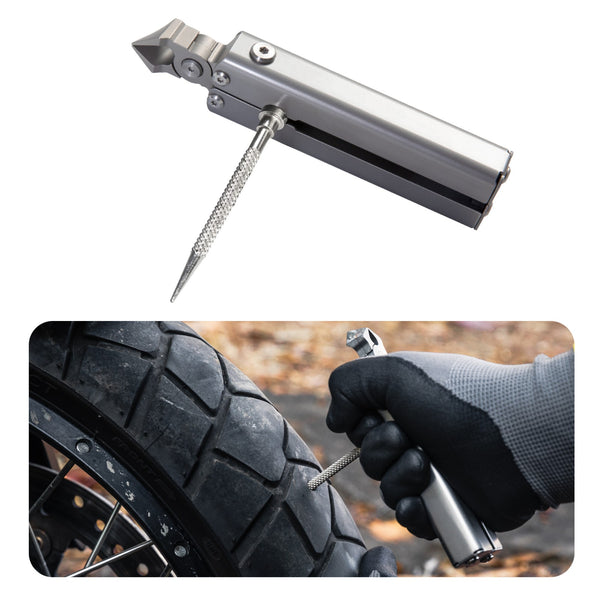
- LOBOO T10 tubeless tire repair kit with pliers, needles, and cutting blade
- pliers with hex fitting, 147 mm closed
- Heads
- reamer needle and insertion needle, cutting blade
- Material
- martensitic steel
- Case
- hard, 174 × 71 × 34 mm
- Weight
- approximately 312 g with case
- Attention
- strips and adhesive not included

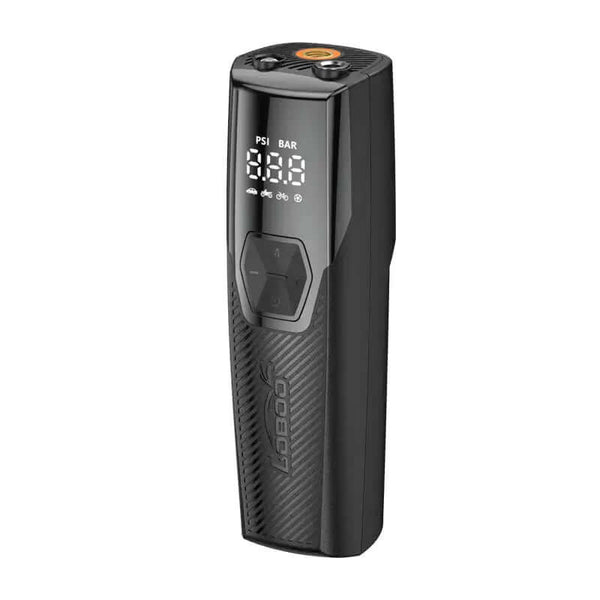
- Pressure
- 2-150 PSI, automatic stop
- Flow rate
- 35 L/min
- LOBOO test
- 150/70 R17 from 0 to 2.5 bar in approximately 4 min
- Power supply
- 12 V, socket or battery clamps, no internal battery
- Dimensions / weight
- 156.6 × 47.7 × 45.5 mm · 294 g
- Extras
- LED light with SOS mode

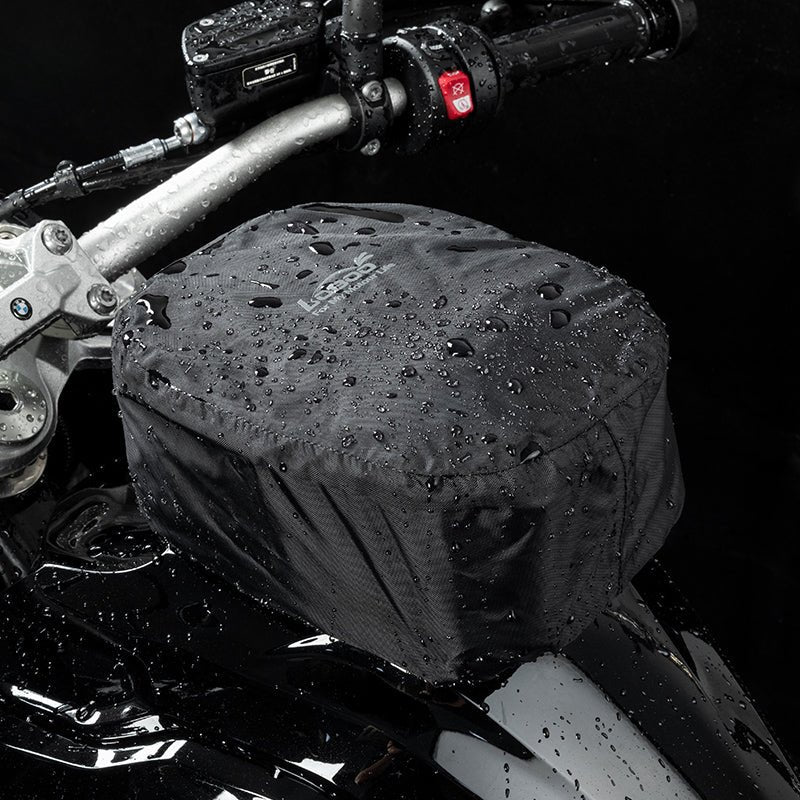
- Open / closed
- 40 × 22.5 cm · 22 × 12 × 5 cm
- Weight
- 214 g empty
- Material
- TPU-coated nylon, padded interior
- Details
- zippered mesh pocket, ruler up to approximately 15 cm
- Attention
- tools not included, no IP rating
Requirements change across borders: France, Switzerland, and Austria are the most frequent cases
Those leaving Italy for the Alps or France encounter rules that do not exist here. None is complicated, but they are usually discovered during the first inspection.
| Country | What is required when riding a motorcycle | Source |
|---|---|---|
| France | CE-certified motorcycle gloves for rider and passenger, mandatory since November 20, 2016: a €68 fine and one penalty point for the rider. A high-visibility vest must be carried on board since January 1, 2016: €11 if missing, up to €135 if you do not wear it during an emergency stop. | Prefecture of La Réunion (Road Safety) · Points-Based Driving Licence |
| Switzerland | Annual motorway vignette costing 40 francs, also required for motorcycles, available in electronic format and linked to the license plate. Without a vignette: a 200-franc fine plus the purchase of the vignette. | ch.ch, Swiss Confederation |
| Austria | Motorcycle vignette for motorways and expressways: for 2026, €5.10 for 10 days and €42.70 for the year are reported. 2026 is the last year of the adhesive version. | Motorrad & Reisen; check the ASFINAG shop |
| EU countries | Italian third-party liability insurance covers travel in EU countries. For non-EU countries, ask your insurance company whether a Green Card is required. | your insurance company |

The fully loaded test is the part of preparation that cannot be skipped
A motorcycle that handles well unloaded may behave differently with full cases, a full tank, and a passenger. Riding 150-200 km on mixed roads a week before departure will reveal almost everything.
- Load it as you will for the trip: same luggage, same weight, same arrangement. Include your passenger if they will be traveling with you.
- Ride on every type of road: the motorway for wind and turbulence, bends for stability, a damaged road for noises, and a tight maneuver from a standstill.
- Listen and look: cases knocking, bags rubbing against the exhaust, or the windscreen making noise at a certain speed. If the aerodynamic protection is not right, read how to choose a tall windscreen.
- Use the electronics: keep navigation, charging, and the intercom active throughout the ride.
- Recheck the fasteners at the end of the ride: newly installed frames, mounts, and guards settle during the first few hundred kilometers.
- Note what you use often and move it to the tank bag or the most convenient pocket.

Frequently asked questions about preparing a motorcycle for a long trip
How long in advance should you prepare the motorcycle for a long trip?
It is best to start about a month in advance: you need time to order tires, a chain, or brake pads, fit luggage and accessories, have the motorcycle serviced, and leave at least a week for a fully loaded 150-200 km test ride.
Do I need to have the motorcycle serviced before setting off?
If the service is due during the trip or shortly afterward, yes: bringing it forward costs less than looking for an authorized workshop abroad. If it is not due for a long time, checks of the tires, chain, brakes, fluids, and battery are enough.
What is the minimum tread depth for a motorcycle?
For motorcycles, the legal limit in Italy is 1 mm; for mopeds, it is 0.5 mm. For a long trip, being above the limit at departure is not enough: the tire must still be above it at the end of the trip, under the load and temperatures you will encounter.
What tire pressure should I use when the motorcycle is loaded?
The pressure specified in the owner's manual for the motorcycle with a passenger or fully loaded, if one is provided, measured when cold. During the trip, it should be checked again every two or three days; a TPMS sensor displays it in real time.
How much weight can I load on the motorcycle?
The difference between the permitted maximum weight and the kerb weight, as listed in the registration document. For the BMW R 1300 GS, that is 465 kg minus 237 kg: 228 kg in total for the rider, passenger, clothing, luggage, and fitted accessories.
How many kilograms can be put in a side case?
The case and frame manufacturer specifies it. BMW Motorrad recommends 10 kg per case and a maximum speed of 180 km/h with the cases mounted for the aluminum cases on the GS Adventure. If the case and frame have different limits, the lower one applies.
Is it better to load the top case or the side cases?
The side cases. A top case puts weight high up and behind the rear axle, lightens the front end, and worsens stability: it should be used for light, bulky items such as a helmet, rain gear, and jacket.
What should I pack in my motorcycle travel kit?
Tubeless tire repair kit (or inner tubes and tire levers if you have spoked wheels with tubes), a 12 V compressor or cartridges, tools in the sizes needed for your motorcycle, fuses, cable ties, tape, chain lubricant, and a headlamp.
Do I need a compressor if I already have a tubeless repair kit?
Yes. The kit seals the hole, but the tire then needs to be reinflated to the correct pressure. A 12 V compressor such as the LOBOO CP06 connects to the motorcycle's socket or battery and stops automatically at the set pressure.
What do you need to ride a motorcycle in France?
In addition to an approved helmet, CE-certified motorcycle gloves for the rider and passenger (a €68 fine and one penalty point for the rider) and a high-visibility vest on board, to be worn in the event of an emergency stop.
Is a vignette also required for motorcycles in Switzerland and Austria?
Yes, in both countries. In Switzerland it costs 40 francs, is valid for one year, and can also be purchased as an electronic version linked to the license plate. In Austria, a motorcycle vignette is also available for 10 days and 2 months.
How should you prepare your sat-nav and smartphone for the trip?
A damped mount or dedicated display, switched power supply, offline maps downloaded before departure, and cables that don't pull when the handlebars are turned. Then test it with the engine running and on rough roads.
How many test kilometers should you ride before setting off?
At least 150-200 km fully loaded one week before departure: highway, curves, a rough road, and a stationary maneuver. Finally, recheck the tightness of the frames, mounts, and protection.
Read also
Are you preparing your motorcycle for your next trip?
Tell us your motorcycle's make, model, and year, and what trip you have in mind: we'll tell you which frames, protection, and accessories are compatible and what makes sense to install first. Keep orders and new releases close at hand with the Endurrad iPhone app.
Sources. BMW Motorrad Italia, R 1300 GS technical data sheet (DIN kerb weight 237 kg, permitted maximum gross weight 465 kg) · BMW Motorrad, R 1300 GS Adventure aluminum cases FAQ (10 kg per case, 180 km/h) · Prefecture of Réunion, Road safety: mandatory gloves · Permis à Points: mandatory motorcycle equipment (vest) · ch.ch, motorway vignette · Motorrad & Reisen, 2026 vignette prices · QN Motori, minimum motorcycle tread depth · LOBOO product sheets and stated data (T10, CP06, BGJB03, PIKE TRACKER). Endurrad prices and availability verified on October 9, 2026.