

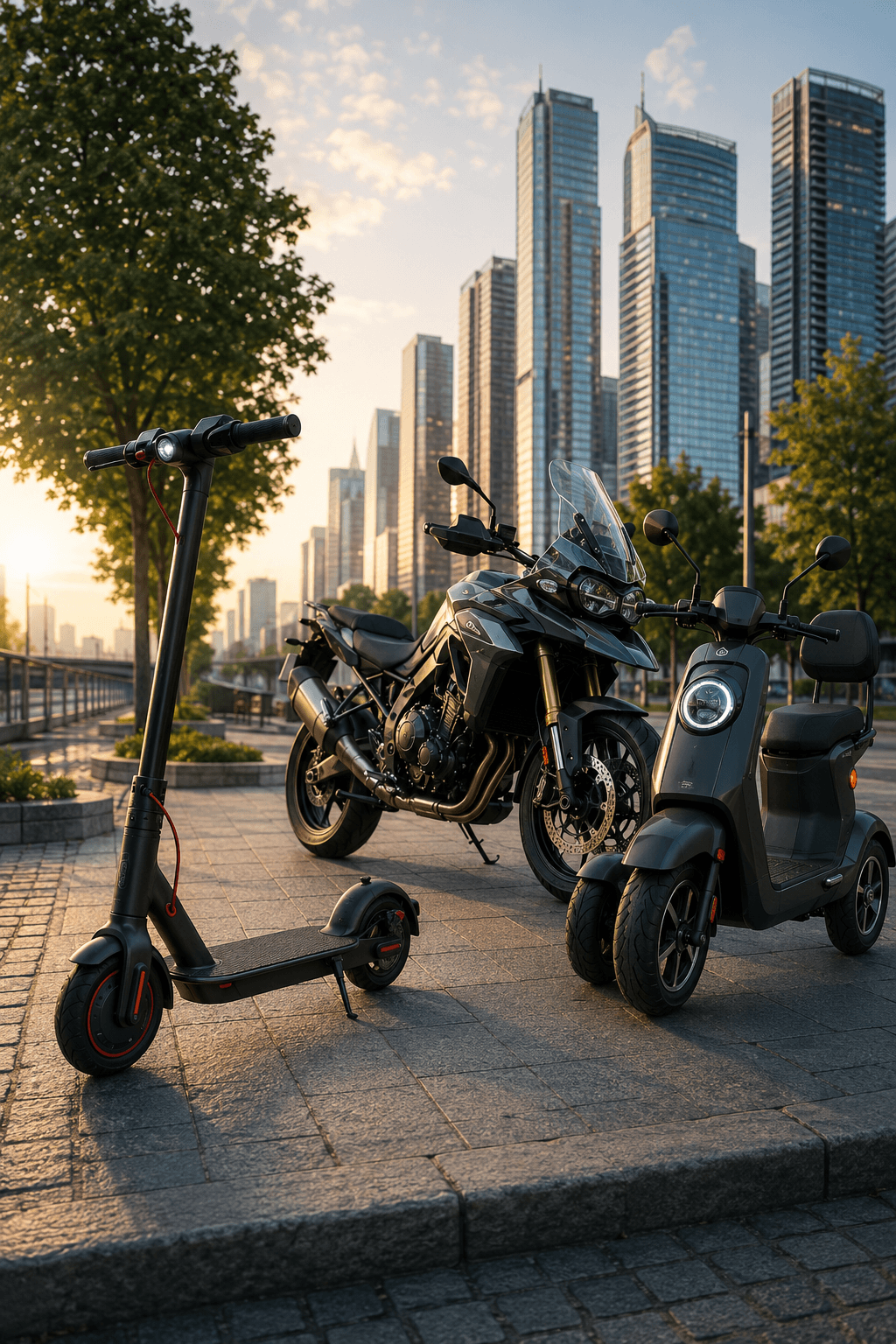
People who love motorcycles have a particular relationship with their vehicles: mechanics, reliability, and the freedom to get around all matter. In the city, however, a motorcycle is not always the most practical choice—limited traffic zones, parking, short trips, and the last mile to and from the station. This is where electric micromobility is becoming a sensible complement: it does not replace the motorcycle; it complements it.
Since 2024, the regulatory framework has changed substantially, and the final requirements came into force in 2026. If you are considering an electric scooter or electric moped as a second urban vehicle, here is what you need to know—and how to choose without unpleasant surprises.
What changed with Law 177/2024
Law 177/2024, in force since December 14, 2024, rewrote the rules of the Highway Code for electric scooters, bringing the long experimental phase to an end. The points that matter today:
- Helmets mandatory for everyone, not just minors, from December 14, 2024.
- Identification mark (a kind of license plate) mandatory from May 16, 2026: a personal, non-transferable, non-removable sticker.
- Third-party liability insurance mandatory from July 16, 2026, linked to the identification system.
- Where they can be ridden: only on urban roads with a speed limit of up to 50 km/h, cycle paths, and roads where bicycles are permitted. Rural roads and sidewalks are prohibited.
- Speed: up to 20 km/h on urban roads, 6 km/h in pedestrian areas where permitted.
These rules apply to privately owned electric scooters. Always check your municipality’s ordinances, which may add local restrictions.
Warning: not all electric vehicles follow the same rules
This is the point that causes the most confusion. “Electric” does not automatically mean “scooter.” Depending on its power, speed, and construction characteristics, a vehicle may fall into different categories—electric scooter, moped, mobility aid—and each has its own requirements regarding a license, license plate, insurance, and helmet.
The practical consequence is clear: before buying, you need to know exactly which category the vehicle falls into and what that entails. A serious seller will tell you clearly, with the compliance documentation in hand.
How to choose a reliable electric vehicle
As motorcyclists, we know that the details make the difference. The same criteria apply here:
- Compliance and type approval: the vehicle must meet the construction requirements set out by Italian and European regulations.
- Declared category: kick scooter, moped, or mobility aid? It must be stated explicitly, not left open to interpretation.
- Service and component availability: an electric vehicle lasts if you can repair it. A local service network matters more than the list price.
- Documentation: certifications, warranty, and manual in Italian.
If you are considering an electric scooter
The jump from a kick scooter to a type-approved electric scooter changes everything: category, license, plate, insurance, and access to incentives. We have collected the complete overview in several dedicated guides:
- How to choose an electric scooter: categories, real-world range, and information to request
- Which license do you need? A complete guide to L1e and L3e
- License plates, registration, and mandatory insurance
- 2026 incentives: how much is the Ecobonus worth and how do you apply?
Frequently asked questions
Do I need a license for an electric scooter?
A standard electric scooter does not require a license, and the minimum age is 14. Vehicles that fall into the moped category are subject to different requirements, including a license. This is another reason to check the category before purchasing.
When did insurance become mandatory?
For privately owned electric scooters, third-party liability insurance has been mandatory since July 16, 2026, in connection with the identification system introduced with the identification plate.
Can I use an electric scooter outside the city?
No. They may be used only on urban roads with speed limits of up to 50 km/h, cycle paths, and roads where bicycles are permitted. Non-urban roads are prohibited.
Does it make sense for a motorcyclist?
Yes, as a complementary means of transport. For the last mile, travel within restricted traffic zones, or short trips where a motorcycle is impractical, a lightweight electric vehicle is a second urban vehicle that works well alongside a motorcycle.
Electric micromobility is not an alternative to motorcycles: it is the urban extension of the same passion for moving freely. Choosing it according to the same criteria you use when choosing a motorcycle—compliance, reliability, and support—is the way to make the right choice.


Share:
Electric scooter: what license do you need? Complete guide to L1e and L3e