

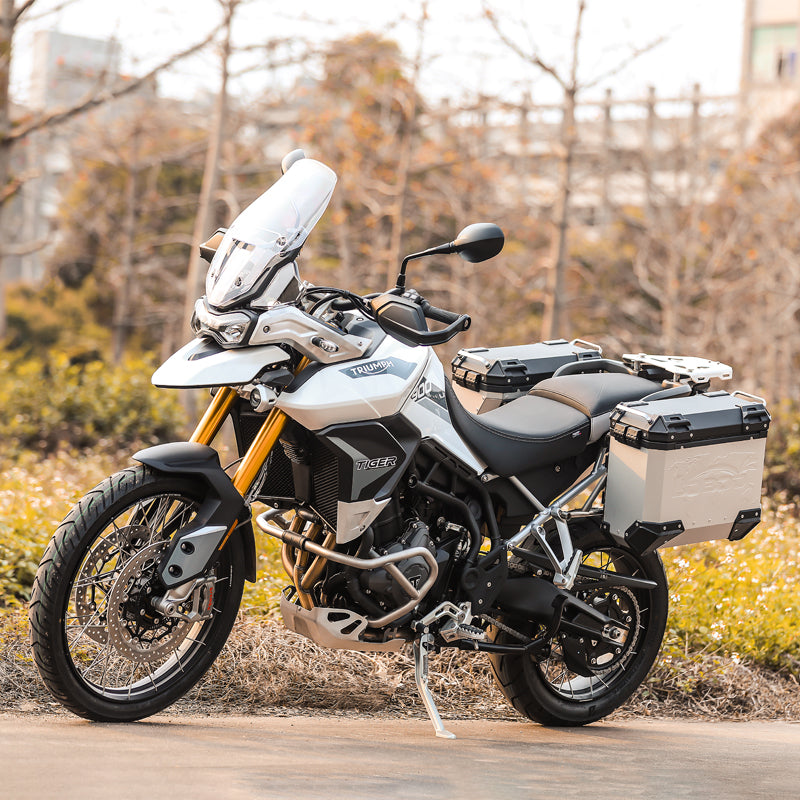
In brief. Triumph has added two new special editions to the Tiger 900 and Tiger 1200 range: the Alpine Edition, focused on asphalt and touring, and the Desert Edition, focused on off-road riding. They are not standalone models: the Alpine is based on the GT Pro, while the Desert is based on the Rally Pro (Tiger 900) or Rally (Tiger 1200).
Why it matters to you. Suspension, wheels, tires and standard protection change, and this determines what you really need to add for traveling or leaving the asphalt — not everything needed on a Desert is also needed on an Alpine.
Reliability. Prices and equipment are taken from the official Triumph Italy configurator and the manufacturer's international press release, verified in September 2026.
Alpine and Desert are not two new motorcycles; they are two equipment packages
The first misconception to clear up concerns the name: the Alpine and Desert Editions do not replace the Tiger 900 or Tiger 1200 GT Pro and Rally Pro; they complement them.
On the Tiger 900, the Alpine Edition is based on the GT Pro, the alloy-wheel version designed for road use. The Desert Edition, on the other hand, is based on the Rally Pro, the one with spoked wheels and long-travel suspension. The same pattern applies to the Tiger 1200: Alpine based on the GT Pro, Desert based on the Rally.
This is not even the first time Triumph has used these two names. An Alpine and Desert Edition pair already existed for the previous-generation Tiger 1200, launched in 2020. The 2026 versions are a different motorcycle: the frame, engine, electronics and suspension are those of the current Tiger range, so accessories developed for the 2020 Alpine and Desert Editions are not compatible with these.
The practical rule of thumb remains simple: if your use is mainly on-road with some unpaved roads, the Alpine covers that use better than the base GT Pro thanks to its superior finishes and equipment. If, on the other hand, you plan to ride trails, dirt roads and off-road transfers, the Desert already comes with the equipment you would have to add yourself to a GT Pro.
On the Tiger 900, the difference is visible in the suspension and wheels
Same engine, same frame, same 20-liter tank. Everything that touches the ground changes.

| Feature | Tiger 900 Alpine Edition | Tiger 900 Desert Edition |
|---|---|---|
| Price in Italy | 17.095 € | 17.995 € |
| Engine | T-Plane three-cylinder 888 cc, 108 hp (79.5 kW) at 9,500 rpm, 90 Nm at 6,850 rpm | |
| Front suspension | Marzocchi 45 mm USD, manual adjustment, 180 mm of travel | Showa 45 mm USD, 240 mm of travel |
| Rear suspension | Electronic preload adjustment | Showa, 230 mm of travel |
| Wheels | Alloy, 19" front / 17" rear | Tubeless spoked, 21" front / 17" rear |
| Tyres | Metzeler Tourance Next | Bridgestone Battlax Adventure |
| Standard protection | Crash bars | Crash bars, tank protection, aluminium skid plate |
| Silencer | Akrapovič with titanium coating, standard on both | |
| Colours | Snowdonia White, Sapphire Black with Aegean Blue details | Urban Grey, Sapphire Black with Baja Orange details |
The figure that matters most for those who need to equip it is fork travel: the Desert's extra 60 mm is not an abstract number; it changes the ground clearance and therefore also where to look for the mounting point for luggage and additional protection.
On the Tiger 1200, the difference lies in the electronics
The power output remains identical here: the difference lies in the suspension and safety equipment.

| Feature | Tiger 1200 Alpine Edition | Tiger 1200 Desert Edition |
|---|---|---|
| Price in Italy | 21.995 € | 22.995 € |
| Engine | 1,160 cc three-cylinder, 150 hp (110 kW) at 9,000 rpm, 6-speed gearbox, shaft drive | |
| Suspension | Semi-active Showa, 220 mm of travel, Active Preload Reduction function (20 mm lowering) | Long-travel Showa with dedicated off-road mode (according to Triumph's international press release) |
| Wheels | Alloy, 19" front / 18" rear | Spoked (according to Triumph's international press release; not confirmed on the Italian configurator) |
| Safety electronics | Blind Spot Assist and Lane Change Assist radar as standard, adaptive LED headlights, 7" TFT | |
| Comfort | Heated grips and seat as standard | |
| Colours | Satin Crystal White, Ash Grey | Not listed on the Italian configurator at the time of writing |
Those who ride mainly on asphalt choose Alpine; those who leave the asphalt choose Desert
It is not a matter of prestige between the two editions, but of equipment suited to the intended use. The Alpine Edition makes sense for those who do fast touring, motorways, and mountain passes: alloy wheels that are easier to manage on asphalt, road tyres with higher mileage, and suspension designed for carrying loads on the road.
The Desert Edition makes sense for riders who regularly plan unpaved routes, trails and off-road transfers: the greater suspension travel absorbs potholes and stones more effectively, the spoked wheels handle lateral impacts better than alloy wheels, and the additional standard protection already covers the bike's most exposed areas.
Anyone who buys the Desert Edition but will use the bike almost exclusively on the road is paying an extra €900 (on the Tiger 900) or €1,000 (on the Tiger 1200) for suspension travel and a knobbly tyre they will never really use. In that case, the Alpine, with a few protection accessories added later, remains the more rational choice.
Even with all this standard equipment, luggage still needs to be added
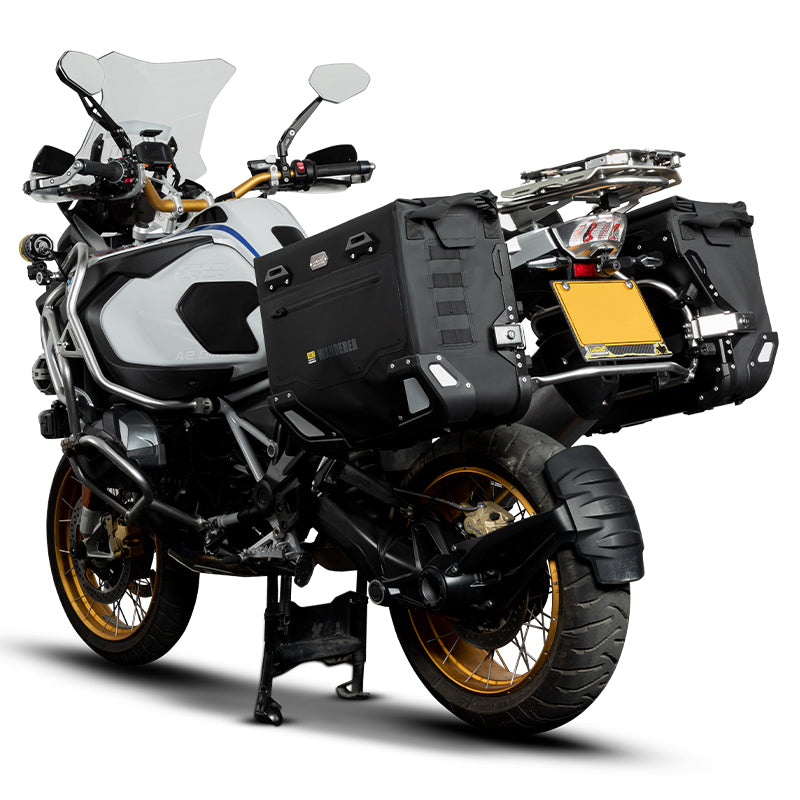
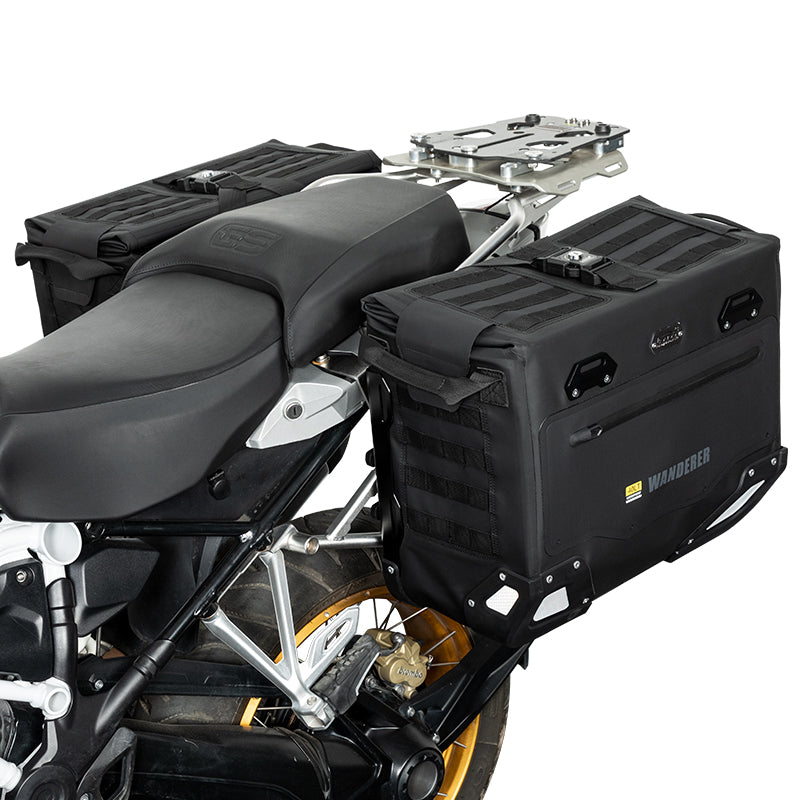
None of the four versions comes with a pannier system as standard: it is the first item that anyone buying an Alpine or Desert Edition will actually add.

Endurrad offers dedicated pannier racks for the Tiger 900 Rally Pro (also compatible with the Tiger 850 Sport from 2021), which attach to the mounting points provided by the manufacturer without adapter brackets and accept both aluminium and semi-rigid panniers. For the Tiger 1200 GT Pro, there are racks that allow symmetrical configurations, a useful feature because the exhaust on many adventure bikes requires a narrower right pannier: here you can mount two 37- or 45-litre panniers per side, for up to 90 litres in total.
On the Desert Edition, where standing riding on loose terrain is more frequent, it also makes sense to widen the side stand's footprint: the standard foot puts the bike's weight on just a few square centimetres and sinks into hard-packed earth or gravel. Endurrad's catalog includes dedicated side stand plates for both the Tiger 900 Rally Pro and the Tiger 1200 GT Pro, made of CNC-machined alloy and mounted on the original foot without drilling: at the time of writing, they are temporarily out of stock, and the links lead to the collection where availability will be shown again.
On the ergonomic side, riders who often ride standing on uneven terrain may also want a dedicated handlebar riser: for the Tiger 900 and Tiger 850 Sport, there is an offset riser that raises the handlebar by 12 mm and moves it back by 20 mm, also in the Triumph Tiger 900 accessories collection.
To learn more about choosing between aluminum panniers and semi-rigid systems, the guide aluminum panniers: the frame is what decides explains why compatibility should always be checked on the frame before the pannier. For additional protection on engine guard bars, the guide engine guard bars: how to protect them and what you can mount on them explains how to measure the tube diameter before ordering.
There is already a general accessories guide for the Tiger 900
If you are preparing a standard Tiger 900 GT or Rally Pro for travel, including everyday use, the guide accessories for the Triumph Tiger 900: what you need covers protection, luggage, ergonomics, and navigation in more detail than is needed here. This article focuses on the specific differences introduced by the 2026 Alpine and Desert Editions and what changes in terms of equipment compared with the base version.
Frequently asked questions
What is the Triumph Tiger 900 Alpine Edition?
It is a special trim level of the Tiger 900, built on the GT Pro platform and designed for road and touring use. It costs €17,095 in Italy and comes standard with Marzocchi suspension, alloy wheels, Metzeler Tourance Next tires, and an Akrapovič silencer.
What is the Triumph Tiger 900 Desert Edition?
It is the special trim level built on the Rally Pro platform, designed for off-road use. It costs €17,995 in Italy and adds long-travel Showa suspension, tubeless spoked wheels, Bridgestone Battlax Adventure knobby tires, and additional protection for the fuel tank and oil sump.
How much does the Tiger 900 Alpine Edition cost in Italy?
€17,095 according to the official Triumph Italia configurator, with the price verified in September 2026.
How much does the Tiger 900 Desert Edition cost in Italy?
€17,995 according to the official Triumph Italia configurator, €900 more than the Alpine Edition.
What are the main differences between the Alpine and Desert Editions of the Tiger 900?
Suspension (180 mm Marzocchi versus 240 mm Showa at the front), wheels (alloy versus tubeless spoked), tires (road versus knobby), and standard protection, which is more extensive on the Desert. The engine, frame, and fuel tank are identical.
Do the Tiger 1200 Alpine and Desert Editions have the same power?
Yes, both are fitted with the same 1,160 cc three-cylinder engine producing 150 hp at 9,000 rpm. The suspension, wheels, and some equipment differ, but not the engine.
How much do the Tiger 1200 Alpine and Desert Editions cost in Italy?
The Alpine Edition starts at €21,995, while the Desert Edition starts at €22,995, according to the official Triumph Italia configurator.
Are the Alpine and Desert Edition completely new bikes?
No, they are special trims of the existing Tiger 900 and Tiger 1200 range: the Alpine is based on the GT Pro, while the Desert is based on the Rally Pro (or Rally, on the 1200). They do not replace the base models; they complement them with higher equipment levels.
Which base version are the Alpine and Desert Edition built on?
The Alpine Edition is based on the GT Pro, while the Desert Edition is based on the Rally Pro. This applies to both the Tiger 900 and Tiger 1200.
Do the Tiger 1200 Alpine and Desert Edition have radar as standard?
Yes, the Blind Spot Assist radar with Lane Change Assist is standard on both Tiger 1200 editions, along with adaptive LED headlights and heated grips and seats.
What is the difference between the wheels on the Alpine and Desert Edition?
On the Tiger 900, the Alpine has 19"/17" alloy wheels, while the Desert has 21"/17" tubeless spoked wheels. Spoked wheels better tolerate lateral impacts on uneven ground, while alloy wheels are lighter to handle on asphalt.
Is this the first time Triumph has used the names Alpine and Desert Edition?
No. An Alpine and Desert Edition pair already existed for the previous generation of the Tiger 1200, launched in 2020. The 2026 versions are built on a different technical platform: accessories from the older editions are not compatible with these.
Is the Desert Edition worthwhile even if I do little off-roading?
In most cases, no: the extra cost pays for suspension travel and knobby tires that remain unused. For predominantly road use, the Alpine Edition, with any protection added later, is the more coherent choice.
Are dedicated accessories available for these bikes from Endurrad?
Yes. For the Tiger 900 Rally Pro and Tiger 1200 GT Pro, the foundations of their respective Desert and Alpine Editions, Endurrad has dedicated collections with luggage frames, side-stand plates, protection and handlebar risers with verified compatibility.
What should you add for a long trip on these bikes?
In order: a luggage system with a dedicated frame, additional protection if your riding includes off-road terrain, and a side-stand plate for soft ground on the Desert Edition. Navigation and auxiliary lighting remain secondary choices, to be assessed based on the type of trip.
Are you equipping a Tiger 900 or 1200 Alpine or Desert Edition?
Tell us the make, model, trim and year: we'll confirm compatibility and availability before you order.
More insights: accessories for Triumph Tiger 900 · aluminum luggage: the frame makes the difference · engine guards: how to protect them


Share:
Motor Bike Expo 2027 in Verona: dates, tickets, halls, and why you should go
Motorcycle handlebar risers: which height should you choose for your bike?
1 comment
Ho acquistato di recente una desert Edition1200 cc la immatricolerò a breve e volevo sapere oltre alla piastra para motore e le barre laterali al motore quelli altezza serbatoio sono incluse nel prezzo oppure sono optional grazie per la risposta che mi fornirete