Setting off at dawn with 4 degrees Celsius, perhaps after a night at altitude, completely changes how you evaluate comfort in the saddle. Understanding how to choose heated motorcycle grips is not a secondary issue: it affects motorcycle control, command sensitivity, and fatigue resistance, especially when covering miles on asphalt, mixed terrain, or light gravel.
Heated grips are not just for "being more comfortable." They help maintain a more natural grip on the handlebars when cold stiffens fingers and forearms. On a well-prepared adventure or touring bike, they are one of those accessories that, after the first serious trip, stop seeming optional.
How to choose heated motorcycle grips without making mistakes
The most common mistake is looking only at the price or the declared temperature. In reality, compatibility, heat uniformity, electrical absorption, and control quality matter much more. A grip that heats up a lot but poorly, or that doesn't fit correctly on the handlebar and throttle tube, quickly becomes a problem.
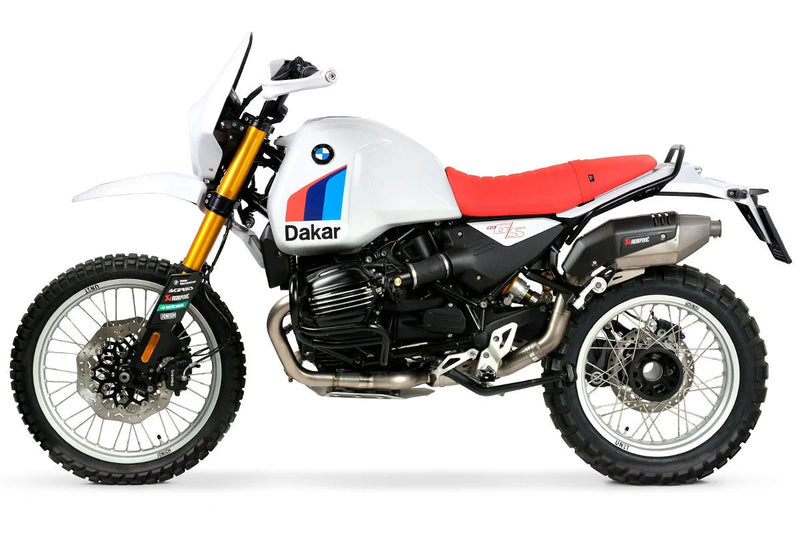
The first point to check is the internal diameter. On most motorcycles, the left side and the right side do not have the same mounting base, because on the right there is the throttle tube. If the measurement is incorrect, you will have play, forced mounting, or an uneven throttle response. On models like BMW GS, KTM Adventure, Africa Twin, or Ténéré, specific compatibility is often the best way to avoid unnecessary adaptations.
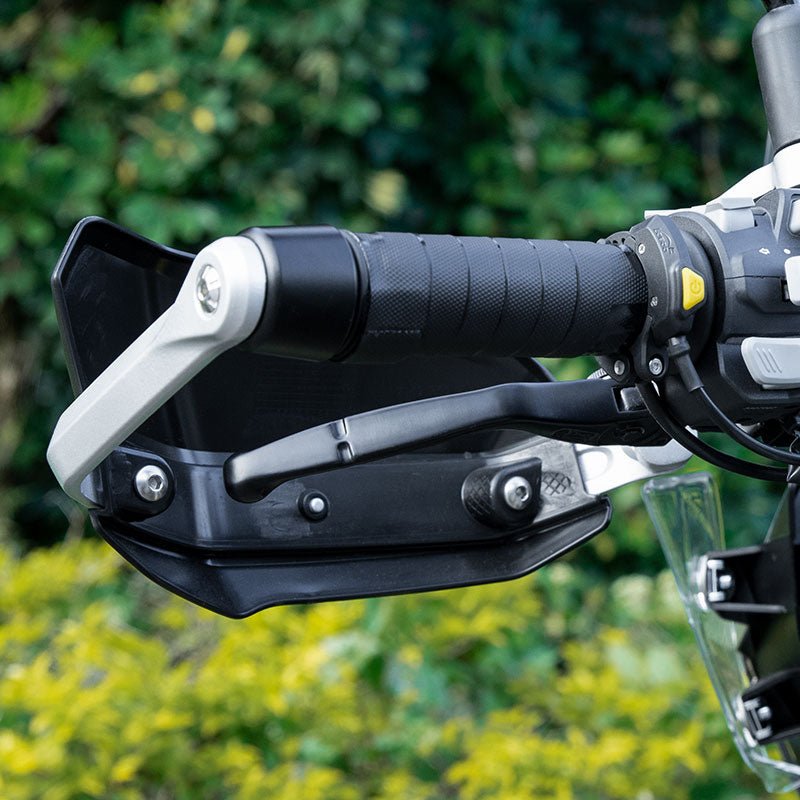
The length of the grip also matters. Many kits are only universal on paper, but in practice, they may require cutting or modifications if the handlebars have handguards, special bar ends, or closely spaced controls. On a bike designed for travel, where there are often additional accessories, these details make a difference.
Power and heating speed
When it comes to performance, the useful data is not "how much it heats" in a generic sense, but how it distributes heat and how quickly it reaches an effective temperature. A good pair of grips must heat up quickly and, above all, uniformly between the left and right sides.
This point is more important than it seems. The left side is mounted directly on the metal handlebar, which dissipates heat. The right side, however, is on the throttle tube, often made of plastic, and retains temperature better. Quality systems compensate for this difference by designing different resistors for the two sides. If there is no compensation, you will find one hand much warmer than the other.
For touring and adventure use, multi-level adjustment is preferable to an on-off system. In morning transfers, a medium level may suffice, while in rain, wind, or at altitude, more intensity is needed. Having precise heat management also helps prevent hands from overheating when the outside temperature changes during the day.
Electrical absorption and motorcycle electrical system
Here it is appropriate to think technically. Heated grips draw current, so they must be compatible with the capacity of the electrical system and with other accessories mounted on the motorcycle. If you already use auxiliary lights, a navigator, USB sockets, heated seats, or powered technical clothing, the overall load must be carefully evaluated.
On modern maxi-enduro and touring bikes, there are generally no problems, but this does not mean that any kit is suitable. Higher absorption does not automatically equate to better performance. The efficiency of the system and temperature management matter. A well-designed kit offers stable heat without stressing the system.
Even better if the system includes battery protection or automatic shutdown when the engine is off. This is a very concrete detail, especially on trips with frequent stops, ferries, photo breaks, or short stages where it's easy to forget an accessory turned on.
Control unit, command, and ease of use
One of the most evident differences between a good product and a mediocre one is seen in the control. If the button is uncomfortable to reach with winter gloves, poorly legible, or poorly mounted on the handlebar, every adjustment becomes a distraction.
The best systems have compact control units, clear buttons, and indicators that are easily visible even in strong light or rain. On a touring motorcycle, where you often alternate between city, state roads, and gravel, you must be able to change levels in a few seconds without taking attention away from driving.
It is also worth considering aesthetic and functional integration. On many adventure motorcycles, the cockpit is already occupied by GPS mounts, roadbooks, smartphones, auxiliary light controls, and various accessories. An overly bulky control only creates confusion. A clean solution, easy to fix, and consistent with the available space is better.
Grip material and grip
Heat alone is not enough. The outer compound must offer good grip with summer, winter, and waterproof gloves, without becoming slippery with water or mud. This aspect is even more important on motorcycles also used off-road, where the grip on the handlebars works continuously.
A grip that is too hard fatigues the hands during long transfers. A grip that is too soft, however, can wear out sooner or transmit a less precise sensation. The right balance depends on the use: those who mainly ride on asphalt may prefer more comfort, while those who alternate between dirt roads and uneven sections often seek more control and consistency.
The surface design also matters. Overly aggressive textures can become annoying after hours of riding; overly smooth textures lose effectiveness in the rain. There is no universal answer to this, but there is a practical rule: if you really travel, the priority is the balance between grip, durability, and comfort.
Compatibility with handguards, bar ends, and cruise control
When evaluating how to choose heated motorcycle grips, don't just consider the handlebar measurement. You also need to check what's around it. Closed handguards, original bar ends, lever protectors, throttle lock systems, or mechanical cruise control can affect mounting and operation.
In some cases, the kit is perfectly compatible. In others, small adaptations are needed, or it is better to choose a product designed for that motorcycle platform. If the end of the grip does not work well with the bar end or interferes with the throttle control, you risk suboptimal throttle return or unwanted friction. On an accessory that directly affects vehicle control, this is not a detail to be underestimated.
For this reason, on the most popular travel models, motorcycle-specific compatibility often remains the most sensible choice. It reduces the margin of error and makes installation cleaner.
Installation: DIY or professional installation?
If you have manual skills, correct tools, and familiarity with the motorcycle's electrical system, installation can be managed without particular difficulty. But it must be done well. This means routing cables neatly, avoiding hot areas or pinch points, allowing freedom of movement for the steering, and ensuring the throttle tube remains perfectly fluid.
The delicate point is not just fixing the grip, but integrating the system reliably. Improvised connections, strained wiring, or poorly positioned controls lead to problems over time, especially on motorcycles that experience vibrations, rain, dust, and long transfers.
On a motorcycle prepared for real travel, the installation must meet the same standard as the rest of the setup. If you have doubts, it's better to have a correct installation from the start than to have to dismantle everything before departure.
When heated grips are enough and when they are not
Heated grips greatly improve comfort, but they don't work miracles alone. They heat the palm of the hand, while the back remains exposed to cold, water, and wind. If you often travel in winter or cross mountain passes in spring and autumn, the best result comes with effective handguards and appropriate gloves.
This is a classic case where the system matters more than the individual accessory. Good aerodynamic protection reduces heat dispersion, handguards limit the direct impact of air and rain, and grips maintain finger sensitivity. Comfort clearly increases, but above all, control increases.
For those who use their motorcycle all year round, this combination makes much more sense than an isolated solution. Not to add accessories randomly, but to build a motorcycle consistent with its actual use.
What is the right choice for an adventure or touring motorcycle
The right choice is one that integrates well with your motorcycle, your electrical system, and your way of traveling. If you take short, seasonal rides, an essential but well-built kit may suffice. If you face long transfers, variable weather, and high altitudes, it's worth investing in a solution with precise adjustment, reliable wiring, and specific compatibility.
On motorcycles like GS, Adventure, Africa Twin, or Ténéré, where comfort and control must coexist with intensive use, it makes no sense to choose blindly. Heated grips are only seemingly simple accessories. In practice, they affect the quality of riding every time the temperature drops and the road is still long.
If you are preparing your motorcycle for the next season, think this way: anything that reduces fatigue and loss of sensitivity becomes part of safety, not just comfort. And it is precisely from these details that well-executed journeys begin.