Anyone who racks up miles quickly understands: the wrong windscreen is more tiring than the wind. Helmet buffeting, chest pressure, constant noise, and tired shoulders can turn even a good touring motorcycle into a less precise companion than it should be. This is why understanding how to choose a tall motorcycle windscreen, or rather how to choose the right tall motorcycle windscreen for your motorcycle and your riding position, is not a matter of aesthetics but of comfort, control, and real-world performance.
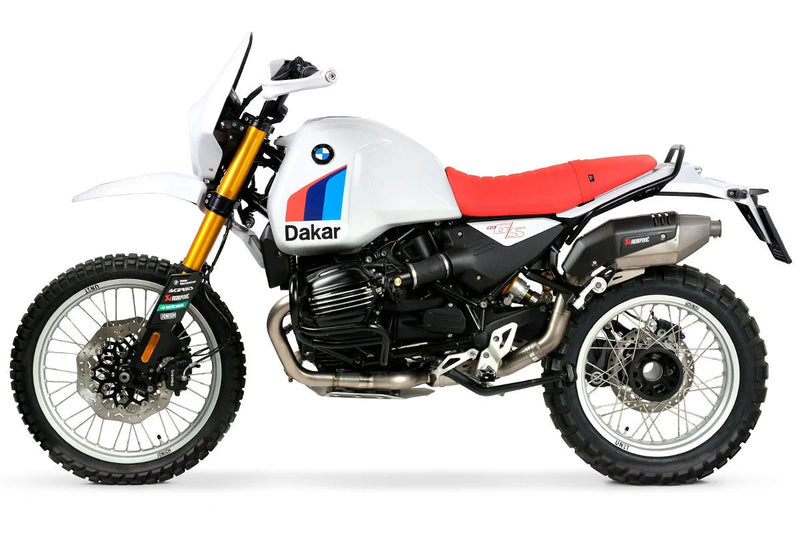
A common mistake is thinking that taller always means better. In reality, a windscreen only works well when its shape, width, and inclination work with the rider's position, the seat, the helmet, and the intended use of the motorcycle. On a BMW GS used for highways and alpine passes, the desired result is not the same as on a Ténéré that alternates between fast transfers and light off-road. The choice must be made technically, not by feeling.
How to choose the right tall motorcycle windscreen without making mistakes
The first criterion is the objective. If you want to reduce air pressure on your torso, the windscreen must deflect the flow higher and cleanly. If, however, the main problem is helmet noise, simply increasing the height is not enough: the quality of the airflow, i.e., how the air detaches from the upper edge and how it passes through the area between the windscreen and the rider, matters a lot.
This is where the difference between protection and turbulence comes into play. A very tall windscreen can relieve pressure from the chest but create an unstable zone at visor level. This often happens when the upper edge ends up exactly in the helmet's field. The result is continuous buffeting, especially above 90-110 km/h. For this reason, the right size is not the maximum available, but the one that shifts the flow to a favorable point relative to your height in the saddle.
In practice, a tall rider with a raised seat will have different needs than a rider of average height on a standard setup. Even a few centimeters make a big difference. The same applies to the helmet: an adventure helmet with a peak reacts to the air differently than a full-face touring helmet.
Height, width, and profile matter more than centimeters
Height is the first data everyone looks at, but it's not the only one that matters. A tall but narrow windscreen protects the frontal torso well but leaves the shoulders and arms more exposed. On long journeys, this can become tiring, especially in winter or in the rain. A wider model improves lateral coverage, but can increase visual bulk and affect the perception of the front end on motorcycles also used standing or on rough terrain.
The upper profile is equally important. Edges designed to progressively guide the airflow work better than simple, vertical cuts. Some windscreens adopt a final curve or an integrated spoiler to raise the air without having to increase the overall height too much. This is a useful solution when seeking highway protection without turning the motorcycle into something less manageable off smooth roads.
The thickness and rigidity of the material also play a role. At sustained speeds, a windscreen that flexes too much can generate vibrations, micro-movements, and aerodynamic noise. On an adventure motorcycle loaded for a trip, where comfort is measured after hours of riding and not in the first five minutes, this difference is clearly felt.
When a taller windscreen is really useful
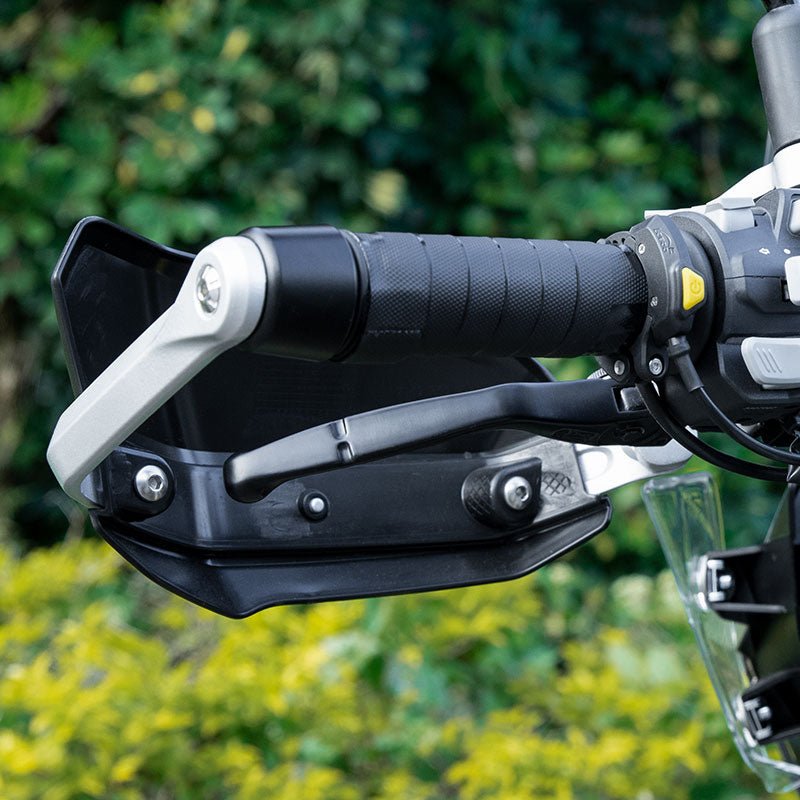
A tall windscreen makes sense when you do long transfers, often use ring roads and highways, travel all year round, or want to reduce fatigue in the upper body. On models like the Africa Twin, KTM Adventure, or GS, a good touring windscreen can significantly change the quality of the journey, especially if you also combine effective handguards and a correct ergonomic setup.
It makes less sense, or needs to be chosen more carefully, if you often ride light-to-medium off-road, if you stand a lot on the footpegs, or if you seek maximum freedom of movement in front of the handlebars. In these cases, an excessively tall element can be more visually intrusive and less suitable for dynamic mixed use.
Compatibility with the motorcycle and your setup
On this point, it is advisable to be very strict. A windscreen must be compatible not only with the motorcycle model, but also with the year, any original adjustment, and accessories already installed. Navigation brackets, GPS mounts, side deflectors, larger handguards, and upper bars can interfere with travel, inclination, or fastening.
For modern adventure motorcycles, real compatibility is as important as design. A windscreen designed for a certain generation of BMW R 1250 GS does not necessarily offer the same fit on an R 1300 GS. The same applies to standard Africa Twin and Adventure Sports, or to the different series of Yamaha Ténéré. Before choosing, the right question is not just "do I like it?", but "does it work well with my configuration?".
Riding position also matters. If you have installed handlebar risers, a comfort seat, or lowered footpegs, your ergonomic triangle changes. Consequently, the point where the wind hits your helmet and shoulders changes. This is one reason why two motorcyclists on the same motorcycle can give opposing opinions on the same windscreen.
Adjustments, spoilers, and deflectors: when are they really needed?
If you want a more precise solution, an adjustable windscreen or one combined with an upper spoiler offers more room for adaptation. It's not just a convenience: it's a concrete way to tailor the airflow to the rider's height, the season, and the type of route.
The upper spoiler is particularly useful when the base windscreen is good but the flow still hits the helmet too low. It adds aerodynamic extension without requiring a much larger element to be fitted. It works well especially for those who alternate daily use, touring, and some light off-road sections, as it allows for a more flexible compromise.
Side deflectors, on the other hand, help to clean the air in the shoulder and upper arm area. These accessories are often underestimated, but on some motorcycles, they make a tangible difference in the overall feeling of protection. They do not replace the correct windscreen, but they can complement it well.
How to tell if the problem is the windscreen or the helmet
Not everything depends on the plexiglass. A noisy helmet or one unsuitable for riding tall motorcycles can amplify turbulence that is actually moderate. If you feel irregular jolts on your head, the cause may be disturbed airflow. If you mainly hear continuous noise, the helmet's aerodynamics could contribute more.
This is why tests should be read realistically. The correct solution is the one that works on your motorcycle, with your posture and with your equipment. The goal is not to eliminate air completely, which is often neither possible nor desirable, but to make it cleaner and less tiring.
How to choose the right tall motorcycle windscreen based on real use
If the motorcycle is designed for touring and you do a lot of fast asphalt riding, the priority is stable protection at cruising speeds. Here, useful height, rigidity, lateral width, and adjustment matter. If, on the other hand, you alternate between state roads, mountain passes, and easy dirt roads, it is advisable to look for a model that protects better than the original but without exaggerating with volume and bulk.
For those who travel as a pair, rider comfort remains central, but the aerodynamic stability of the motorcycle under load also has its weight. Luggage, saddlebags, and roll bags modify the overall behavior during fast transfers, so having well-balanced front protection also improves the perception of the motorcycle over long distances.
Anyone who uses their motorcycle all year round should also consider protection from cold and rain. A well-designed tall windscreen reduces exposure and allows you to arrive less fatigued, especially on long winter transfers. It's not a luxury detail: it's part of the travel setup.
The most common mistake: buying based solely on size
The size in centimeters alone tells little. It must be interpreted together with the shape, adjustment, attachments, and intended use. A quality windscreen designed for the specific model often works better than a larger one that is less coherent with the motorcycle. This is where a technical approach makes the difference.
For those who seriously prepare their motorcycle, the choice of windscreen should be seen like that of luggage or engine protection: a functional component that must integrate with the vehicle and the journey. Endurrad works precisely on this logic, focusing on accessories that are compatible and truly suitable for adventure and touring use, not on generic solutions.
If you are choosing your next windscreen, start with three simple questions: where do you actually use your motorcycle, how tall are you in your real configuration, and what discomfort do you want to eliminate first. When the answer is clear, the choice also becomes clear - and the journey changes from the very first kilometers.