

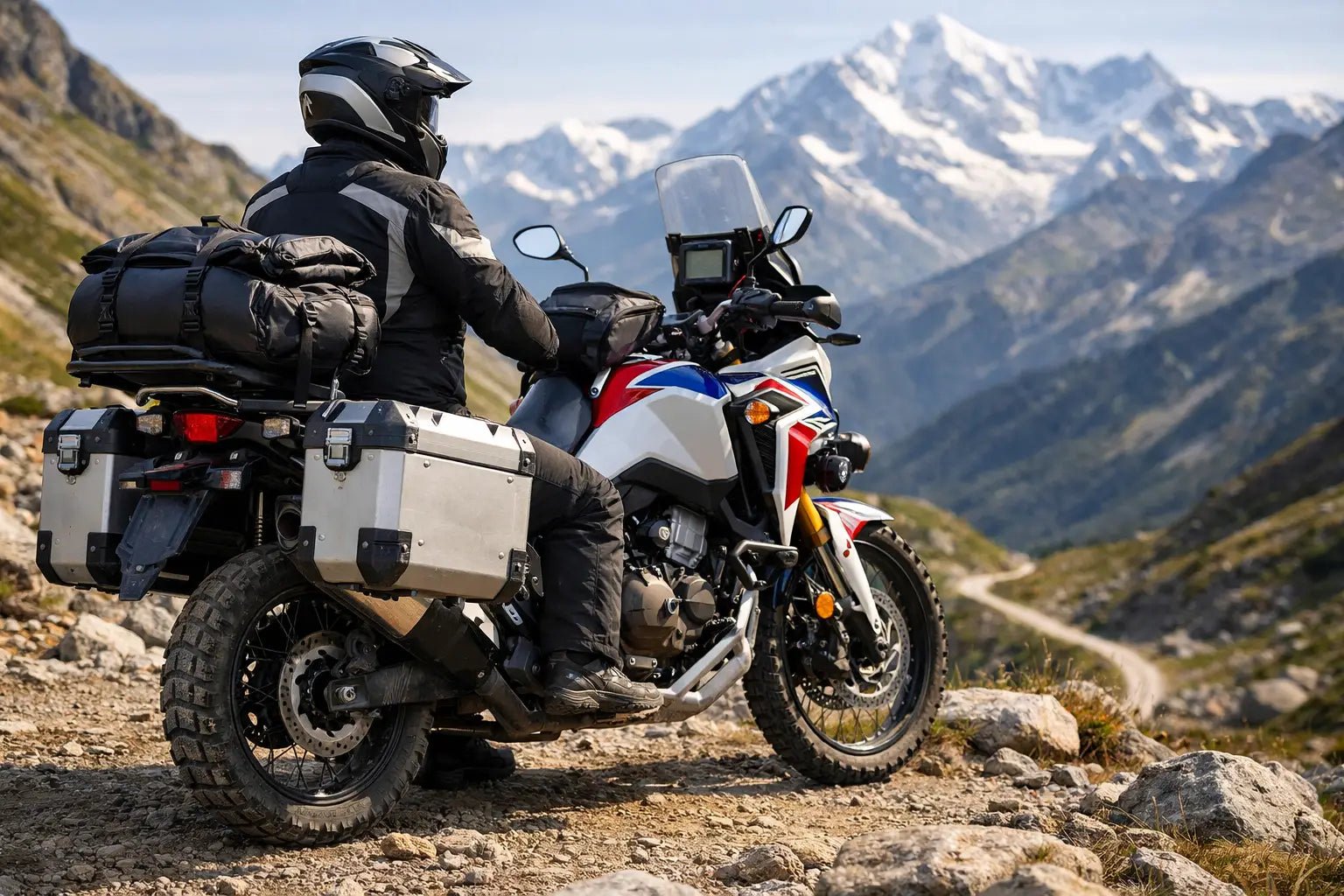
Starting with a stock Africa Twin is already a good foundation. But when the journey gets longer, the load increases, and asphalt gives way to rough or unpaved sections, upgrading a Honda Africa Twin for travel stops being a whim and becomes a technical choice. The difference is felt above all after many hours in the saddle: less fatigue, more control, and greater protection for both motorcycle and rider.
The right question is not which accessories to buy first, but which modifications are truly necessary for the way you travel. A setup suited to fast road touring is not the same as one for someone who alternates long transfers, Alpine passes, and easy trails. The Africa Twin is versatile precisely because it accepts many different configurations, but achieving a coherent result requires setting priorities.
Honda Africa Twin travel upgrade: where to start
The first mistake is focusing only on aesthetics or on the most visible products in the catalog. Anyone preparing a motorcycle for serious travel should start with four areas: protection, load capacity, ergonomics, and navigation management. These are the elements that change how the motorcycle behaves in real use, not while parked.
If you take medium-length trips with light luggage, you might prioritize comfort and mounting systems. If, on the other hand, you plan journeys lasting several days, perhaps with changing weather and mixed surfaces, protection and luggage immediately become central. The order matters, because every accessory adds weight, bulk, or complexity, and not everything genuinely improves the motorcycle in every situation.
Protection: the foundation comes first
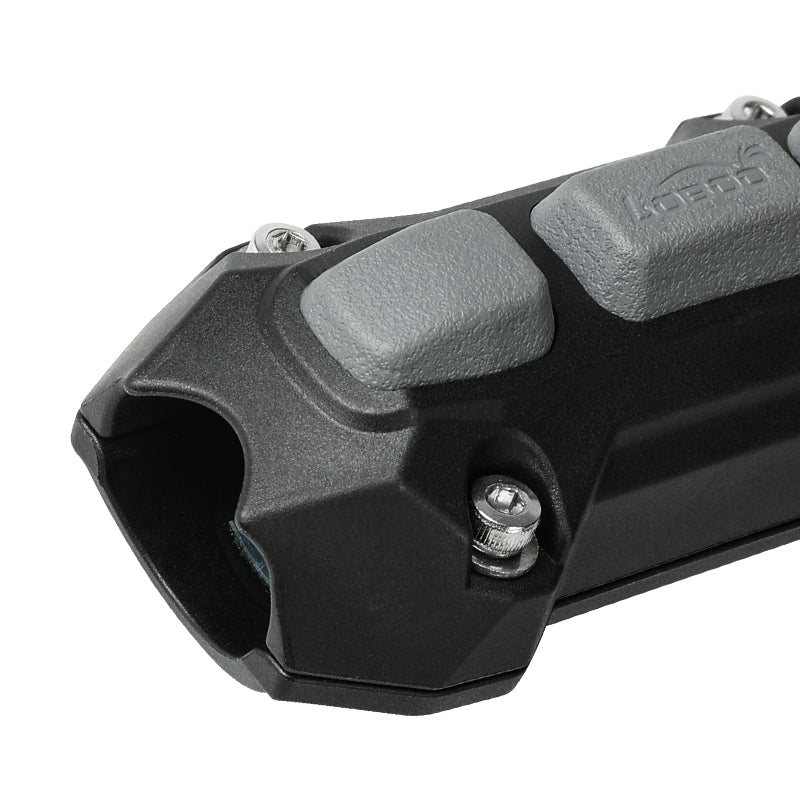
On an adventure motorcycle like the Africa Twin, protection is not a secondary accessory. It is the first line of defense when the motorcycle falls while stationary, scrapes against a poor landing, or takes a hit from rocks and ruts. Skid plates, engine guards, and frame protectors should be evaluated based on use, not just on material or design.
Those who stay mostly on asphalt with occasional tourist off-road sections can choose balanced protection that does not add too much weight to the front end. Those tackling more demanding sections should consider more extensive coverage for the lower engine area and sides. The point is not to install as much protection as possible, but to properly protect the areas that are genuinely exposed without complicating maintenance, access, or heat dissipation.
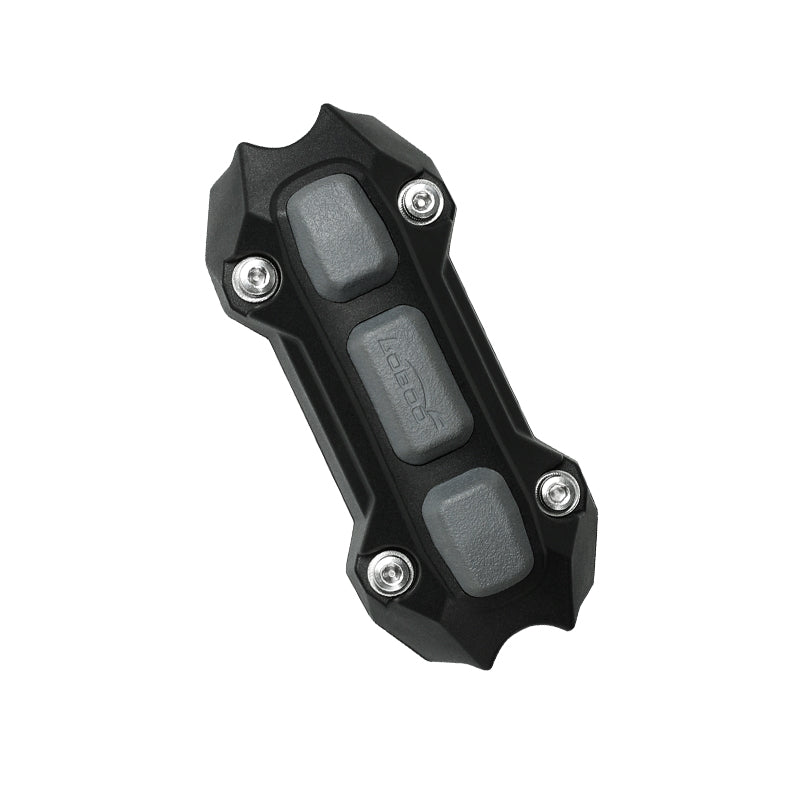
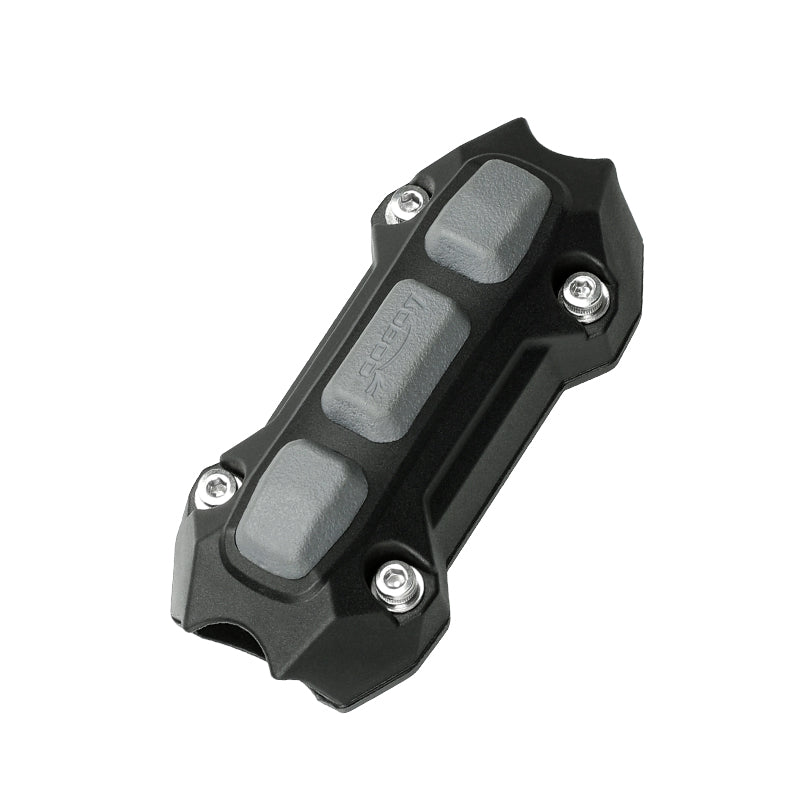
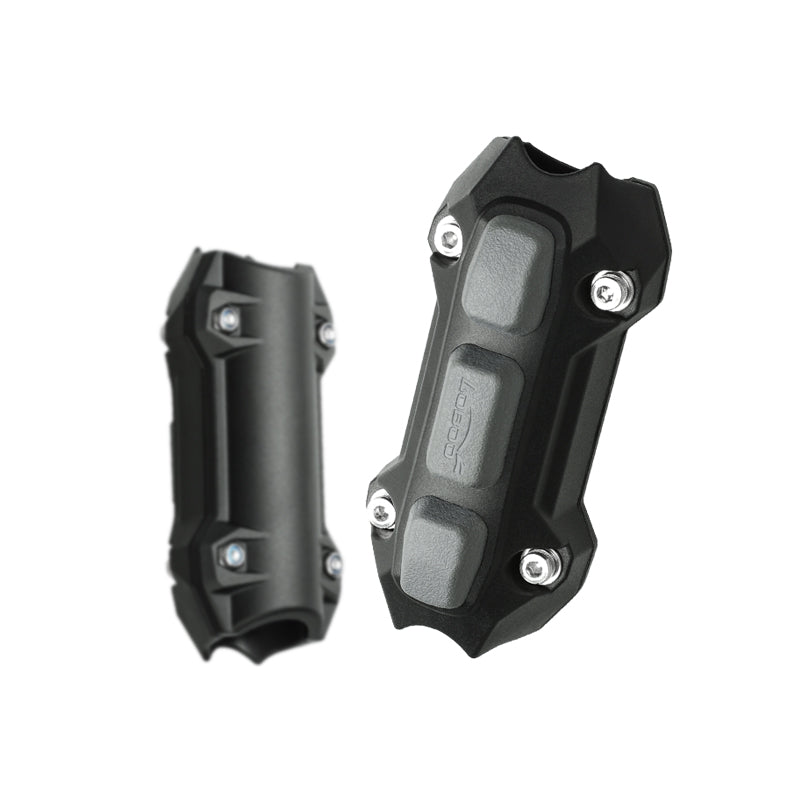
A good skid plate, for example, must absorb impacts and debris while also integrating correctly with the frame and not creating annoying vibrations. Side bars must provide good protection without making the motorcycle unnecessarily wider. Compatibility with auxiliary lights, luggage, and future accessories is also very important when choosing.
Load capacity without ruining the handling
When talking about travel, luggage is often the first thing that comes to mind. Fair enough, but with one clarification: increasing load capacity does not simply mean adding liters. It means distributing weight, maintaining accessibility, and not compromising the bike's dynamics too much.
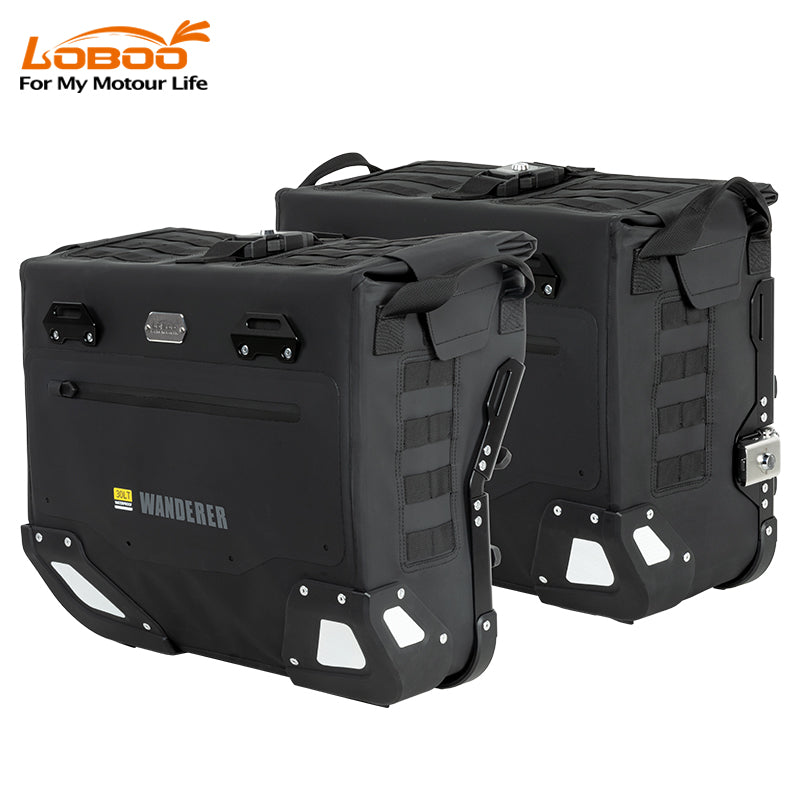
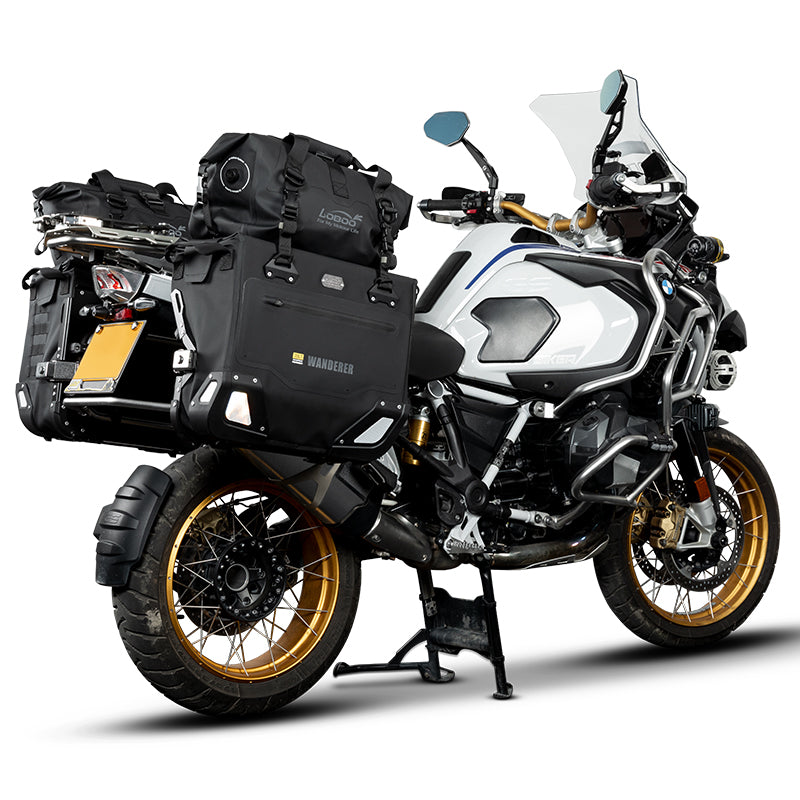
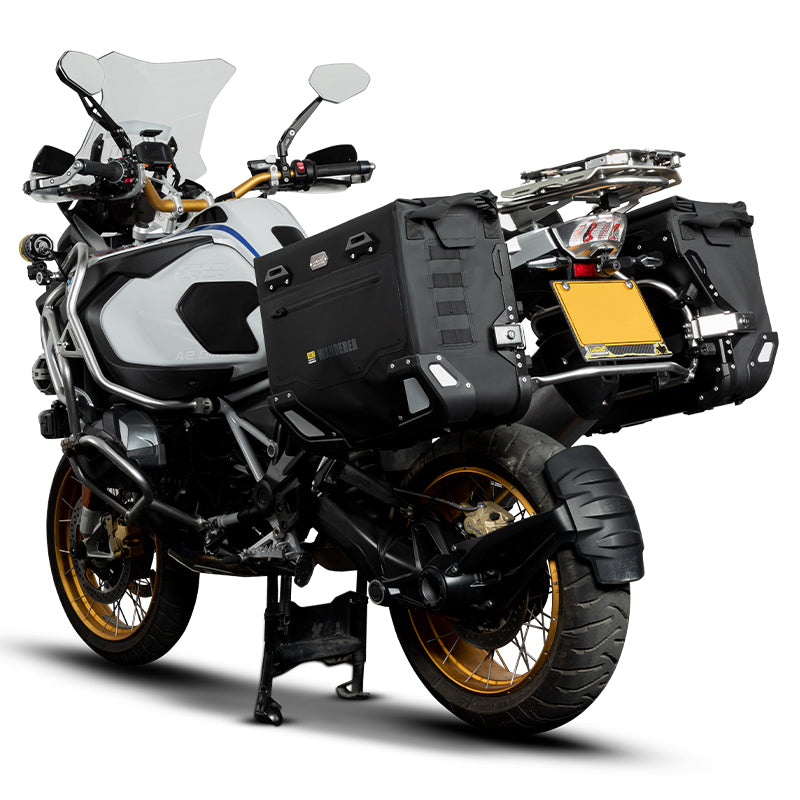
Aluminum luggage makes sense for those seeking maximum durability, a regular shape, and easy organization. It is sturdy, protects the contents well, and adapts to long transfers. On the other hand, it increases width and lateral rigidity, and requires more attention on unpaved surfaces or in tight passages.
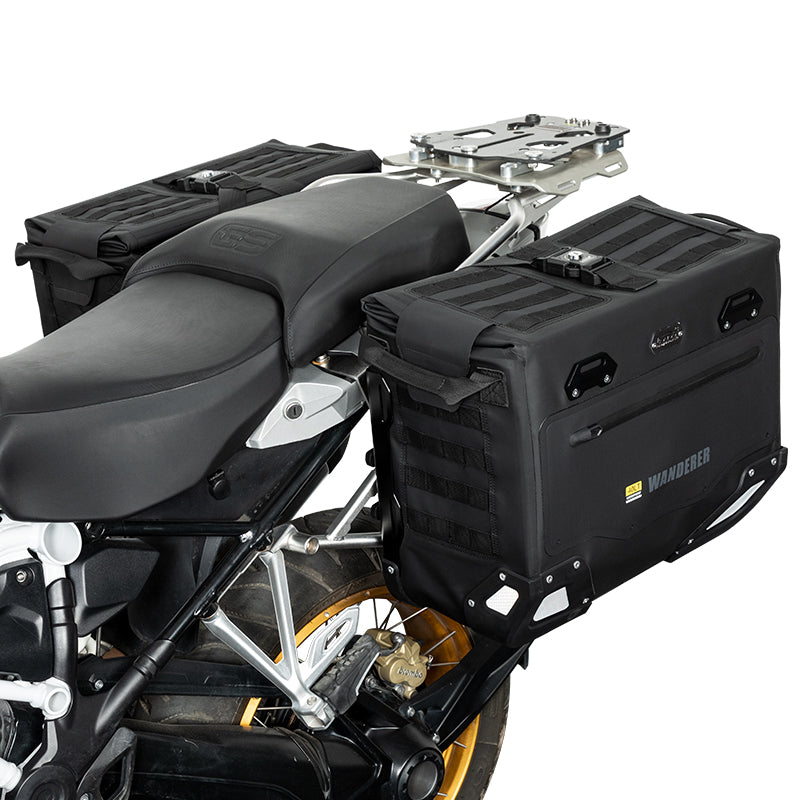
Semirigid solutions, by contrast, are appealing to those who want to keep weight and bulk down, with an additional advantage in the event of side impacts. They do not always offer the same loading convenience as a rigid set, but for many adventure trips they represent a very smart balance.
The best choice depends on three factors: how many days you will be away, how much off-road riding you actually do, and how often you remove your luggage. If the trip includes hotels, asphalt, and fast transfers, a well-integrated rigid set remains a highly effective solution. If you alternate mixed surfaces, low-speed falls, and more dynamic stages, semirigid luggage may make more sense.
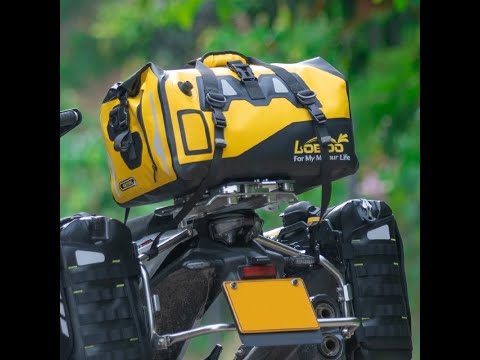
The top case also deserves a mention. It is practical, but it places weight high and toward the rear, so it affects the motorcycle's response more than you might expect. For pure touring use, it is extremely convenient. If, however, you want to maintain cleaner handling, it is better not to overdo the volume and weight.
Frames and mounting systems: the detail that changes everything
The mounting system matters almost as much as the luggage itself. A well-designed frame improves stability, makes installation easier, and reduces play or vibration over time. It also determines how narrow the motorcycle remains, how easy it is to access the seat, and how practical it becomes for everyday maintenance.
On the Africa Twin, it is best to choose mounting systems genuinely designed for the model rather than adapted solutions. Model-specific compatibility reduces interference problems with the exhaust, passenger footrests, and rear section, and makes the motorcycle's behavior at full load more predictable.
Comfort: less fatigue, more useful miles
Many motorcyclists invest first in lighting power or luggage and underestimate comfort. This is a classic mistake. After 400 km, an imperfect riding position matters more than a few extra liters of capacity.
For a Honda Africa Twin travel upgrade, the seat-handlebar-footpeg triangle is one of the most important areas. Handlebar risers, more stable footpegs or ones with better support, seats designed for long distances, and a suitable windscreen can radically change the quality of a day on the motorcycle.
There is no universal answer here, though. A tall rider may need to open up their riding position and reduce the load on their back and knees. A medium-height motorcyclist who also rides standing on unpaved surfaces might prefer a different compromise to avoid worsening control. The windscreen should also be chosen carefully: taller does not automatically mean better. Sometimes it protects the torso more but introduces turbulence around the helmet.
Heated grips, if you travel in multiple seasons, are not a luxury. They are one of those accessories that become indispensable when you ride through rain, high altitudes, or long transfers early in the morning. The same applies to a well-positioned, reliable power outlet for a smartphone, GPS, or additional devices.
Navigation and cockpit: organization, visibility, control
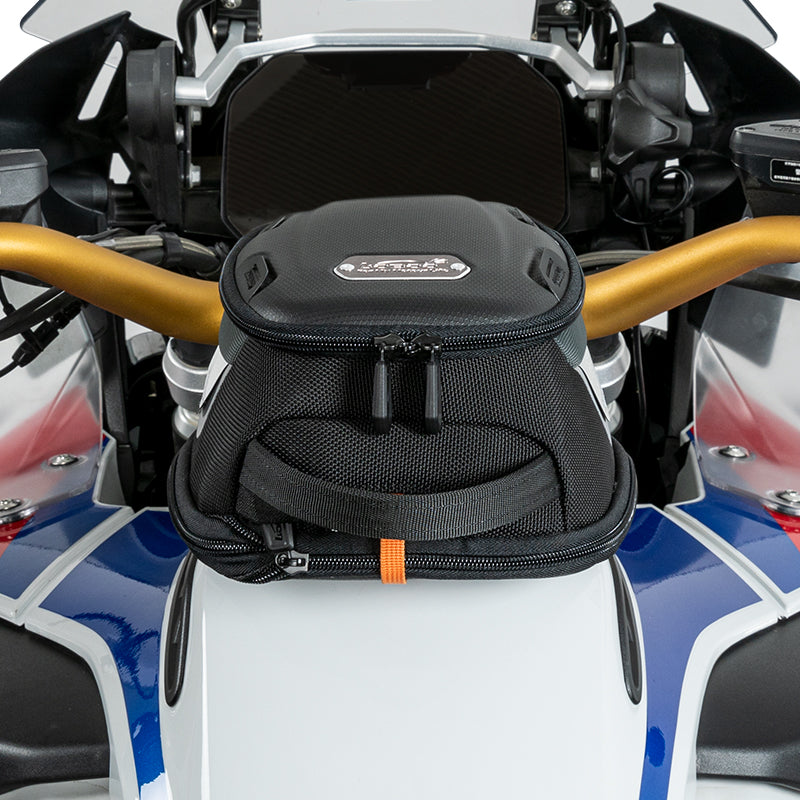
Modern travel requires a functional cockpit. Not just for following a route, but for safely managing information, charging, and accessories. GPS or smartphone mounts, mounting bars, reinforced brackets, and vibration-damping systems are not all the same, and on the Africa Twin they must coexist with the original instrumentation without obstructing the view.
A good navigation setup must meet three criteria. The device must remain readable while standing, must not move over rough terrain, and must be powered without improvised wiring. On a motorcycle designed to cover miles and handle mixed surfaces, the strength of the mount makes the difference between a professional setup and a solution that works only on smooth roads.
If you use your smartphone as a navigator, carefully consider vibration, rain protection, and heat dissipation. A dedicated GPS is often the more suitable choice for frequent travelers, especially in changing conditions. Not because it is always more advanced, but because it was designed for that job.
Lighting: see better and be seen better
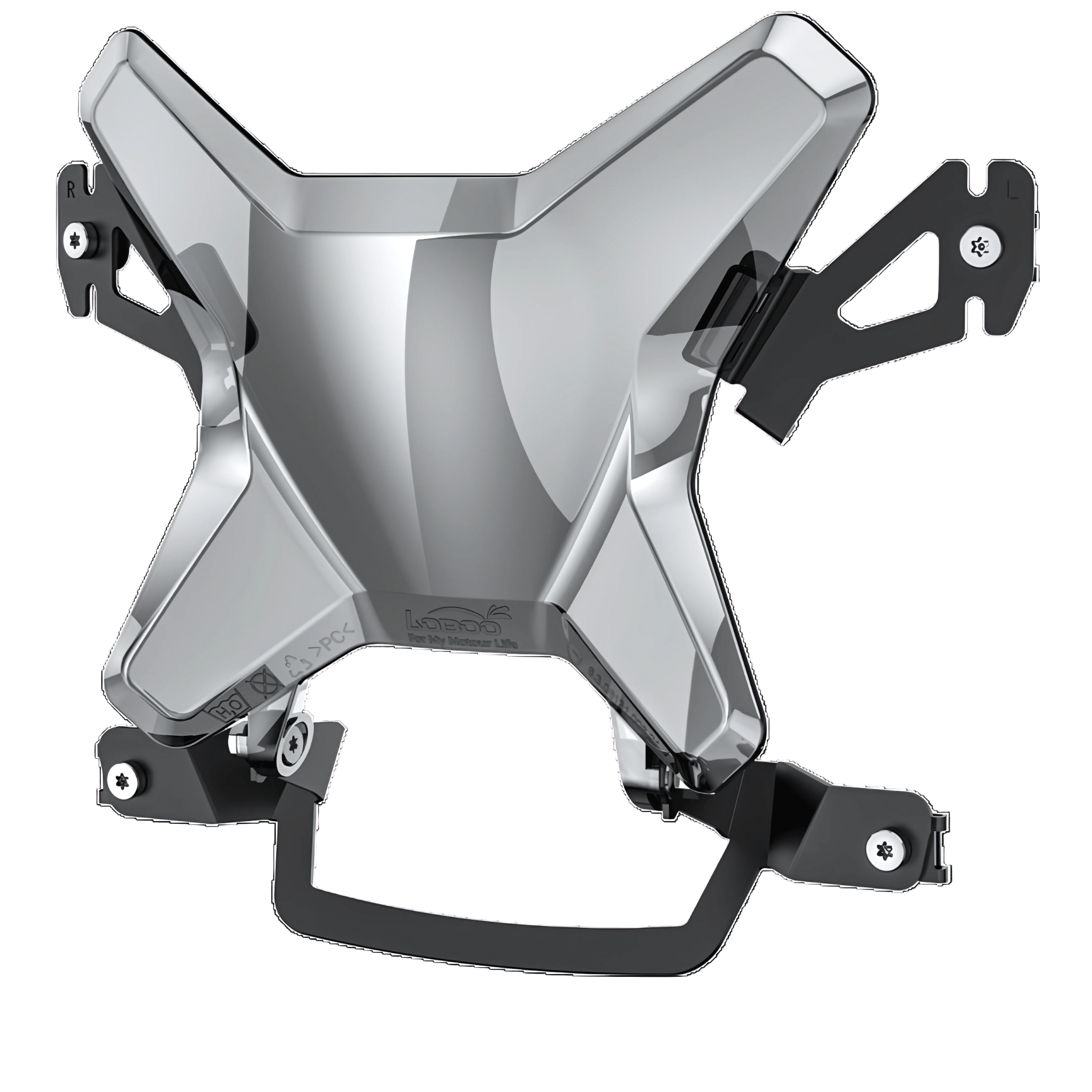
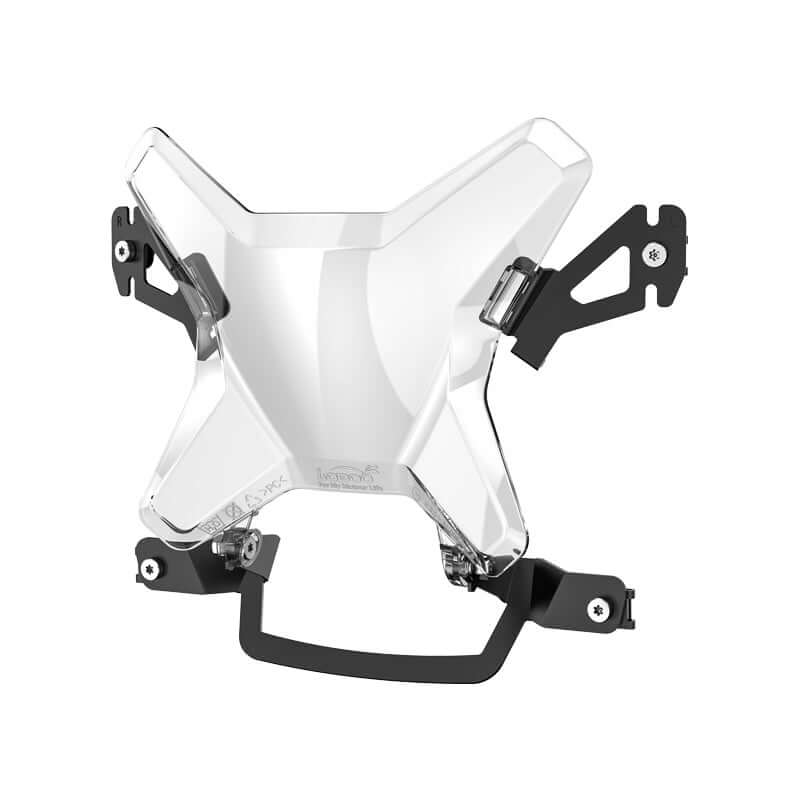
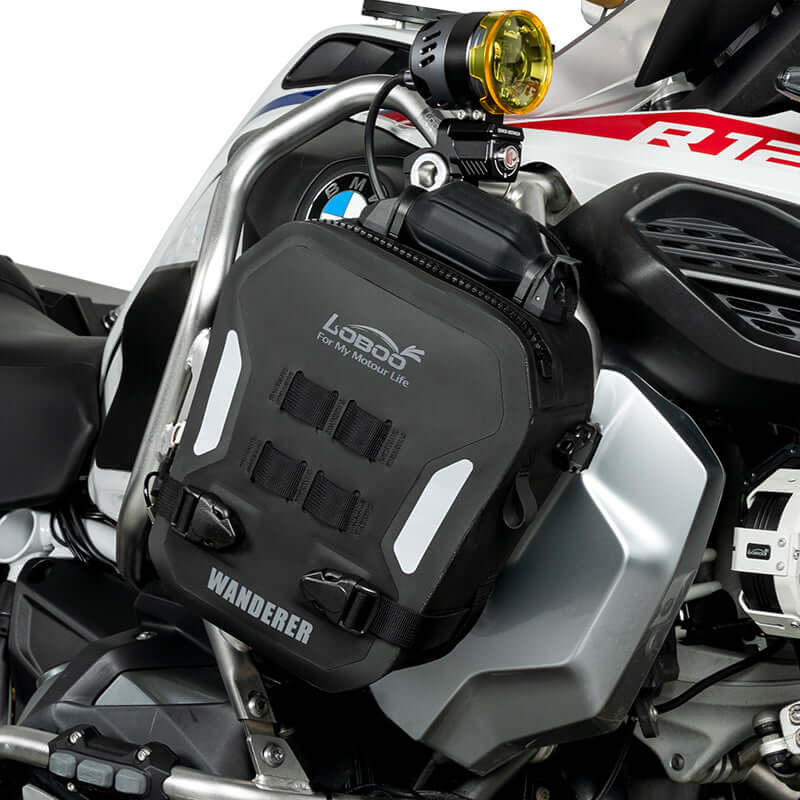
Another upgrade that is often decisive is auxiliary lighting. Well-designed auxiliary lights improve lateral visibility, beam depth, and the motorcycle's visibility in traffic. On long trips, especially with early departures, late arrivals, or bad weather, the benefit is tangible.
Balance is important here too. More light is not enough if the beam is poorly adjusted or the mounting position is exposed. You need a stable system that is compatible with the protection components and has neatly arranged wiring. The goal is to increase safety and road visibility, not to fill the motorcycle with components that are disconnected from one another.
Suspension setup and weight: the least visible but most serious upgrade
If you load the Africa Twin heavily, its setup changes. And it changes significantly. The risk is to install individually worthwhile accessories and end up with a motorcycle that is less precise, more tiring, and slower to react.
For this reason, every upgrade should also be evaluated in terms of total weight and distribution. Heavy luggage, full protection, auxiliary lights, a top case, and cockpit accessories can quickly add up. The result may be excellent for fully loaded touring, but less lively in everyday use or on unpaved surfaces.
The solution is not to give up useful accessories. It is to choose coherent components and build the motorcycle around the trips you actually take. Someone who travels two-up and fully loaded will have different needs from someone who rides alone with compact luggage. In this sense, a technical approach like Endurrad's is valuable precisely because it helps you think in terms of compatibility, function, and real-world use.
How to build a sensible Honda Africa Twin travel upgrade
The best preparation is the one that avoids excess. First protect the motorcycle's critical areas, then define the luggage system, and next work on ergonomics and navigation. Only afterward does it make sense to refine the setup with additional lighting or specific details.
This order reduces mistakes and unnecessary expenses. It also lets you understand how the motorcycle changes at each stage, without adding components at random. A well-prepared Africa Twin is not the one with the most accessories, but the one that remains reliable, predictable, and genuinely ready to set off.
When an upgrade is right, you notice it after many hours, in the rain, cold, on unpaved roads, and with luggage. The motorcycle works better, you get less tired, and every component has a precise reason for being there. That is the key point to keep in mind before your next trip.


Share:
Best motorcycle travel comfort accessories
How to choose an adventure aluminum top case