The KTM 1390 Super Adventure is no longer a project: it has been in production since October 2025 and is already available from several Italian dealers in three versions, S, R and S EVO, with list prices starting at €21,580. The main changes compared with the 1290 concern the engine, now a 1,350 cc unit producing 175 hp, and the electronics (collision-avoidance radar, AMT automatic transmission on the S EVO), while the frame, wheelbase, seat height and fuel-tank capacity remain the same. Anyone coming from the 1290 will therefore find a more powerful and more heavily assisted motorcycle, but not a bulkier one.
It is no longer a matter of «what to expect»: it is already on sale
For years, the 1,390 cc Super Adventure was the subject of spy photos and rumors. Since late 2025, it has no longer been.
What changed compared with expectations
KTM began producing the new Super Adventure at its plant in Mattighofen, Austria, in October 2025, and officially presented it in January 2026 in three trims: 1390 Super Adventure S, 1390 Super Adventure R and 1390 Super Adventure S EVO. It is therefore not a 2027 model to wait for: it is already included in KTM dealers' sales plans in Italy, with availability confirmed in several regions.
| Version | List price | Setup |
|---|---|---|
| 1390 Super Adventure S | 21.580 € | Fast touring, standard WP semi-active suspension |
| 1390 Super Adventure R | 21.980 € | Off-road-oriented setup, 21" front wheel, adjustable mechanical suspension |
| 1390 Super Adventure S EVO | 23.580 € | Top of the range: AMT automatic transmission and adaptive cruise control with radar |
List prices recorded by MotorBox and InSella in October 2026: check the updated amount and any promotions with the dealer, as it may vary depending on the trim and optional equipment.

The engine grows to 1,350 cc and the family gets a new name
The jump from «1290» to «1390» is not a marketing rounding: the engine displacement really changes, and so does the torque curve.
Engine overview
The 75° V-twin increases from 1,301 to 1,350 cm³ (KTM lists it as 1,350 cc in the official documentation; some trade press reports it as 1,349 cc due to rounding). The declared power is 175 hp at 9,500 rpm (some Italian sources report it as 173 hp, a discrepancy due to conversion between units), while maximum torque is 145 Nm at 8,000 rpm. Compared with the 1290, that is 13-15 hp more, achieved in part thanks to the new CAMSHIFT system, which shifts the intake camshafts laterally to provide two distinct profiles: more flow and lift at high revs, greater smoothness and manageability at low revs.
| Data | KTM 1390 Super Adventure | Source |
|---|---|---|
| Displacement | 1,350 cm³, 75° V-twin | KTM Motorrad |
| Maximum power | 175 hp at 9,500 rpm | KTM Motorrad |
| Maximum torque | 145 Nm at 8,000 rpm | KTM Motorrad |
| Transmission | 6 gears (standard automatic AMT on the S EVO) | KTM Motorrad |
| Fuel system | Keihin EMS with electronic throttle control (RBW), dual ignition | KTM Motorrad |
| CO₂ emissions | 139.5 g/km | KTM Motorrad |
The name «1390» is not coincidental: KTM uses the same engine family, introduced in 2024 on the Super Duke 1390 R, in this Super Adventure as well. For those coming from a 1290, the character remains that of a KTM twin-cylinder engine, but with a stronger pull at high revs, made more manageable by the dual cam profile rather than by a simple increase in displacement.

Between the S, R and S EVO, the electronics change, not the foundation
The three versions share the same engine and basic chassis: what sets them apart, and justifies the €2,000 difference between the S and the S EVO, is the rider-assistance package.
Standard WP semi-active suspension (SAT technology), updated in both hardware and software for a faster response. 8.8" vertical touchscreen display. This is the entry-level version, designed for those who ride mainly on asphalt and make long journeys.
Fully adjustable conventional WP XPLOR suspension (48 mm upside-down fork, PDS rear shock), 21" spoked front wheel, reinforced standard skid plate with an additional support arm. This is the version designed for demanding off-road riding, not for those seeking the most comprehensive electronics package.
Adds the AMT automatic transmission (centrifugal clutch, no clutch lever, Comfort/Street/Sport modes) and Bosch fifth-generation front radar with adaptive cruise control and Group Ride mode. 8" display with integrated navigation, cornering ABS, TPMS and keyless ignition.
| Feature | S | R | S EVO |
|---|---|---|---|
| Suspension | WP semi-active (SAT) | Adjustable mechanical WP XPLOR | WP semi-active (SAT), optional Suspension Pro package |
| Front wheel | 19" spoked | 21" spoked | 19" spoked |
| Transmission | 6-speed manual | 6-speed manual | Standard automatic AMT |
| Cruise control | Non-adaptive | Non-adaptive | Adaptive with radar, Group Ride |
| Display | 8.8" vertical touchscreen | 8.8" vertical touchscreen | 8" with integrated navigation |
| Price | 21.580 € | 21.980 € | 23.580 € |
Compared with the 1290, the frame remains the same
This is the most useful information for anyone deciding whether to switch from the 1290 to the 1390, or whether accessories already purchased are still suitable.
What changes and what does not
According to the technical comparison published by InSella between the 2026 R and the previous R, the tubular steel frame and cast-aluminum swingarm remain the same, as do the wheelbase (157.7 cm), seat height (88 cm) and tank capacity (23 liters). The changes are the engine (from 160 hp/138 Nm to 175 hp/145 Nm), electronics (instrument panel from 7" to 8.8", addition of ACC radar), ergonomics (new tank profile, wider and adjustable handlebar, repositioned footpegs) and weight, which increases by approximately 3 kg.
- Frame, swingarm, wheelbase, seat height and tank: unchanged from the 1290
- Engine, electronics, dashboard and engine guard: revised
- Tank, side panels and handlebar: new design, so the mounting points in that area may be different
- Weight: approximately +3 kg on the R version

Accessories: what is really available and what is still missing
Here, we prefer to be honest rather than sell you something that is not yet ready for this motorcycle.
The status of the Endurrad catalog for this model
The 1390 Super Adventure is too recent a model for the main dedicated accessory suppliers (pannier frames, luggage rack plates, custom-fit crash bars) to have already certified adaptation to this specific frame. Currently, the Endurrad catalog lists only the Kaoko mechanical cruise control with original handguards as compatible as a universal accessory for the KTM Adventure range; it is currently out of stock.

- Declared compatibility
- KTM 790, 890, 1090 and 1290 Adventure with original handguards; also listed for the 1390 Super Adventure range
- Type
- Mechanical friction cruise control, not electronic
- Price
- 120 €
- Note
- Especially useful on the S and R, which do not have the S EVO's standard adaptive cruise control
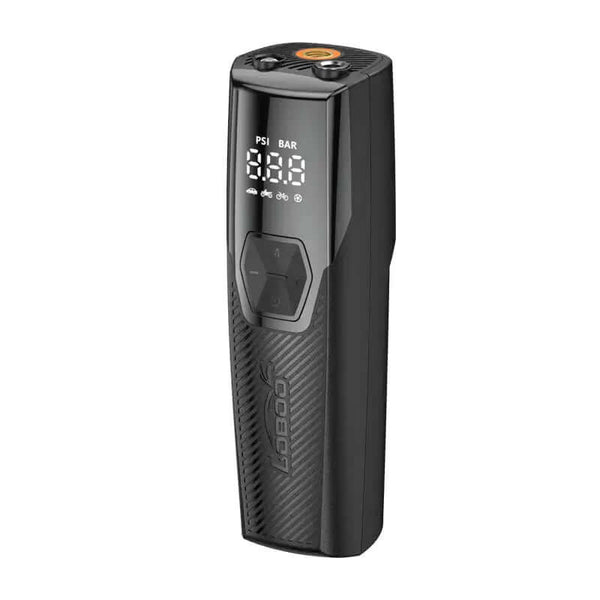
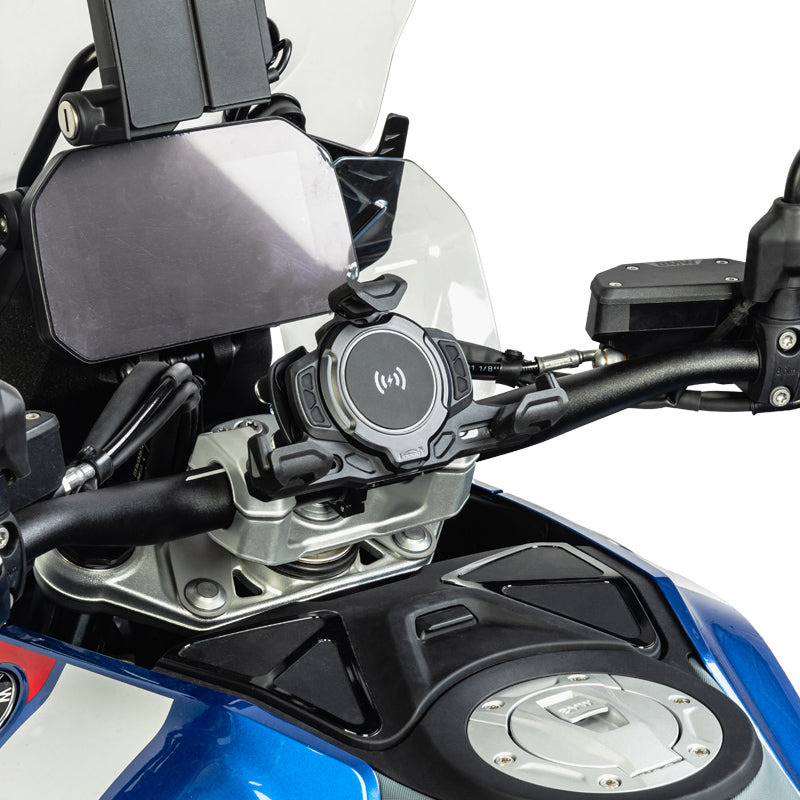
While dedicated frames and plates are still pending, the categories in which Endurrad universal products remain useful on any Adventure, including the 1390, are clamp-on GPS mounts for the handlebar or mirror, magnetic tank bags (which do not depend on the frame), and custom-size motorcycle covers. Crash bars and panniers remain the main problem: here it is best to wait for an official compatibility statement before buying, even if the item on display looks identical to the one fitted to the 1290.

Frequently asked questions
How much does the KTM 1390 Super Adventure cost?
The list price starts at €21,580 for the S version, rises to €21,980 for the R and reaches €23,580 for the S EVO, the most comprehensive in terms of electronics. These list prices were reported by MotorBox and InSella in October 2026: the final dealer price may vary depending on promotions and optional extras.
What is the difference between the KTM 1390 Super Adventure S, R and S EVO?
The S has standard WP semi-active suspension and is designed for road touring. The R has adjustable mechanical suspension, a 21" front wheel, and a reinforced engine guard for riders who do serious off-road riding. The S EVO adds the AMT automatic transmission and radar-based adaptive cruise control: it is the most assistance-equipped version, not the one best suited to off-road riding.
When was the KTM 1390 Super Adventure released?
Production began at the Austrian plant in Mattighofen in October 2025, with the official presentation in January 2026. It is already available from several KTM dealers in Italy.
What engine does the KTM 1390 Super Adventure have?
A 75° V-twin with a displacement of 1,350 cm³ and a CAMSHIFT variable valve-timing system: 175 hp at 9,500 rpm and 145 Nm at 8,000 rpm, according to KTM's figures. Some Italian press reports 173 hp, a discrepancy caused by conversion between units of measurement.
Why is it called "1390" if the engine is 1,350 cc?
KTM uses the same engine-family designation introduced in 2024 on the Super Duke 1390 R, which shares its twin-cylinder platform with this Super Adventure. The commercial name therefore does not exactly match the actual displacement, something that had already happened with the "1290" (actual displacement: 1,301 cc).
How much does the KTM 1390 Super Adventure weigh?
KTM Italia lists the R at approximately 231 kg dry and 248 kg with a full tank of fuel. Foreign sources report the S EVO at around 227 kg dry: the two figures are not directly comparable because the weighing protocols specified by the sources are not the same.
What range does it have, and how high is the seat?
The fuel tank holds approximately 23 liters on all versions, unchanged from the 1290. The seat height is 88 cm, also identical to the previous generation.
How does the S EVO's AMT automatic transmission work?
It is an automated transmission with a centrifugal clutch: there is no clutch lever on the handlebar, and gear changes are managed electronically with three modes (Comfort, Street, Sport) that change the speed and manner in which the gear changes are carried out.
How do the radar and adaptive cruise control work?
Only on the S EVO: a front-facing fifth-generation Bosch radar maintains the distance from the vehicle ahead by automatically adjusting speed, with a Group Ride mode designed for group travel that maintains a constant distance between the motorcycles.
Is the KTM 1390 Super Adventure R suitable for demanding off-road riding?
It is the version specifically designed for that use: a 21" front wheel, fully adjustable WP XPLOR suspension, and a standard engine guard that is more reinforced than those on the other two versions. It is still a maxi enduro weighing over 230 kg, however: serious off-road riding still requires experience, not just the right equipment.
What changes compared with the KTM 1290 Super Adventure?
Engine (from 160 to 175 hp), electronics (ACC radar, larger display), ergonomics (redesigned tank, handlebar, and footpegs), and weight (approximately +3 kg). The frame, wheelbase, seat height, and tank capacity remain unchanged.
Do accessories for the 1290 Super Adventure also fit the 1390?
It is not guaranteed. The identical wheelbase and seat are a favorable indication for accessories mounted on the subframe, but manufacturers of luggage frames and top-case plates have not yet certified compatibility with the 1390. The tank and side panels have a new design, so accessories that attach in that area must be checked on a case-by-case basis.
What license is required to ride the KTM 1390 Super Adventure?
An A license, since this motorcycle comfortably exceeds the 35 kW power limit set for the A2 category.
Does Endurrad have dedicated accessories for the KTM 1390 Super Adventure?
There is not yet a catalog of model-specific frames or skid plates: it is too recent a model. The Kaoko mechanical cruise control is listed as compatible as a universal accessory, but it is currently out of stock. Tell us the make, model, and year of your motorcycle if you are looking for a specific accessory: we will honestly tell you what has already been verified and what has not.
Do you have a KTM 1390 Super Adventure, or are you about to buy one?
The dedicated catalog is still under construction: tell us the make, model, and year of your motorcycle, and we will honestly tell you what has already been verified for your bike and what is best to wait for. You will also find our selection of accessories for the entire KTM Adventure range, from the 790 to the 1290.
Discover KTM accessoriesThe article was also checked using the Endurrad app for iPhone, where you can find our always-up-to-date accessories catalog: download the Endurrad app.
Sources: KTM Motorrad Italia, official 1390 Super Adventure R page · KTM 1390 Super Adventure R technical specifications · InSella, technical comparison of the 1390 R vs 1290 R · MotorBox, KTM 1390 Super Adventure MY2026 price list · Motorimagazine, KTM 1390 Super Adventure S · AMCN, KTM 1390 Super Adventure S EVO review. Last updated: October 12, 2026.