

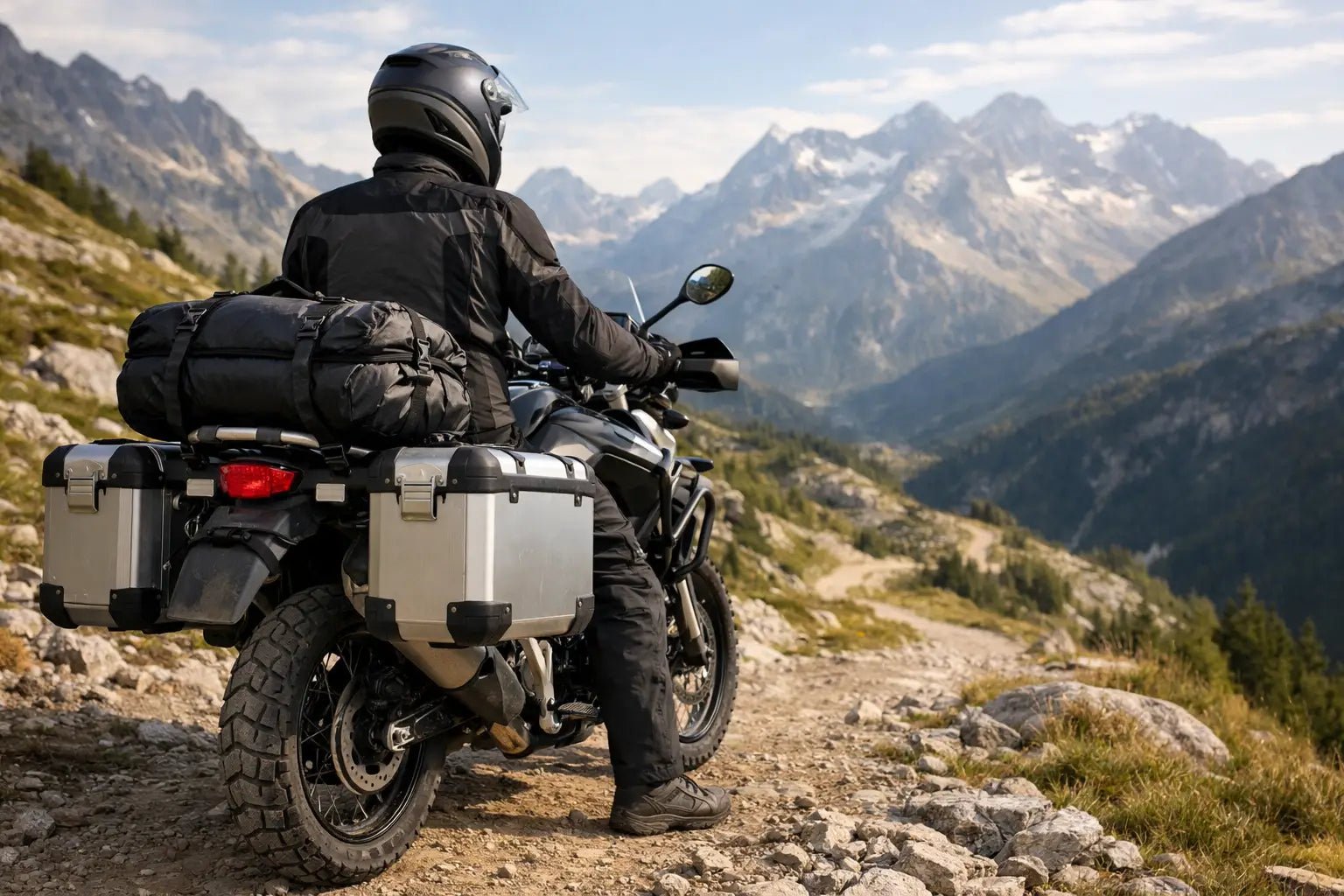
When preparing a motorcycle for a real trip, the choice of luggage changes everything. A good adventure motorcycle luggage guide isn't just about figuring out how many liters to buy, but about avoiding mistakes that will cost you in terms of stability, practicality, and durability when the asphalt ends or the weather turns.
Luggage is not a neutral accessory. It shifts weight, widens the bike, influences the center of gravity, and determines how quickly you can access your gear. On a BMW GS, a KTM Adventure, an Africa Twin, or a Ténéré, the right setup depends on how you truly travel: hotel or camping, asphalt only or rocky sections, weekend trips or crossing multiple countries.
Adventure motorcycle luggage guide: Where to really start
The starting point isn't the brand or even the aesthetics. It's the real use. Someone who does long transfers on asphalt with organized luggage has different needs from someone who alternates between state roads, dirt tracks, and narrow passages. In both cases, the luggage must work well with the bike, not against it.
The first decision concerns the type of system. In the adventure sector, the choice usually divides between aluminum panniers and semi-rigid luggage. The former offer structure, usable capacity, and excellent content protection. The latter reduce weight and perceived bulk, and in off-road use, they offer clear advantages when dealing with low-speed falls or more technical sections.
There is no single best solution. There is the one that is most consistent with your travel style.
Aluminum or semi-rigid
Aluminum panniers remain a benchmark for long-distance touring. They are easy to load, handle bulky items well, and withstand intensive use. The top-opening lid is practical during the trip: you can open it, take what you need, and close it again without emptying half the bag by the roadside. Furthermore, with a well-designed frame, the system conveys an immediate sense of solidity.
The downside is known to those who also use their motorcycle on dirt roads. Aluminum adds mass, increases overall width, and can deform in the event of an impact. This doesn't always mean breakage, but it can mean less precise closures or alignment difficulties after a fall.
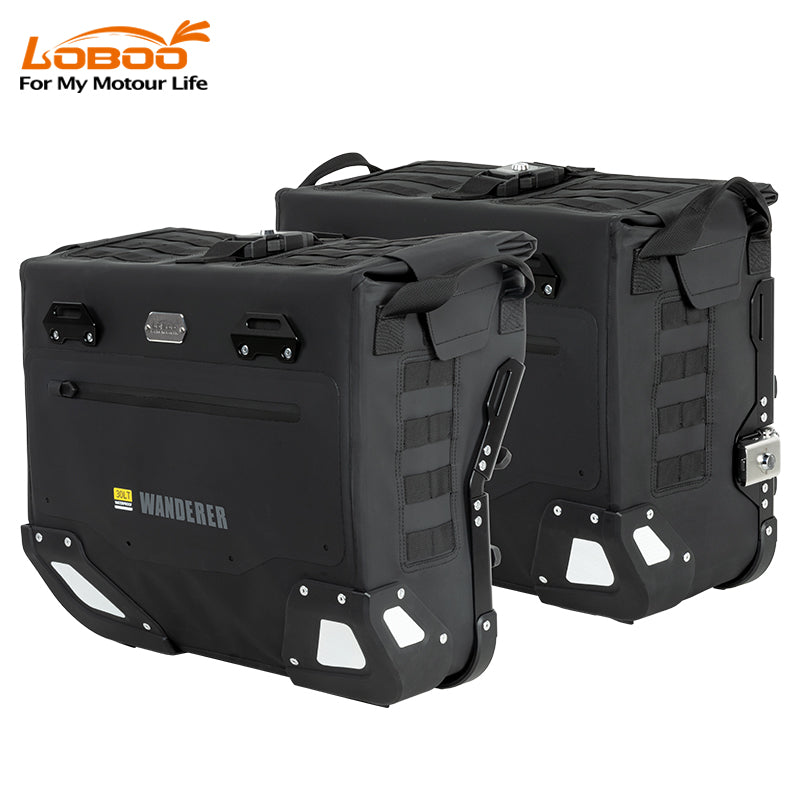
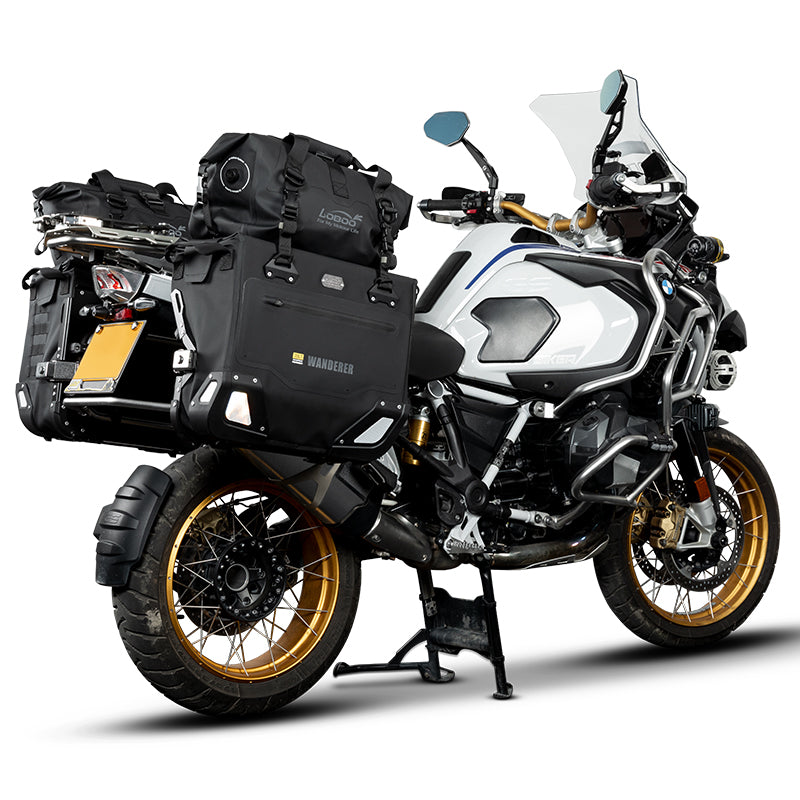
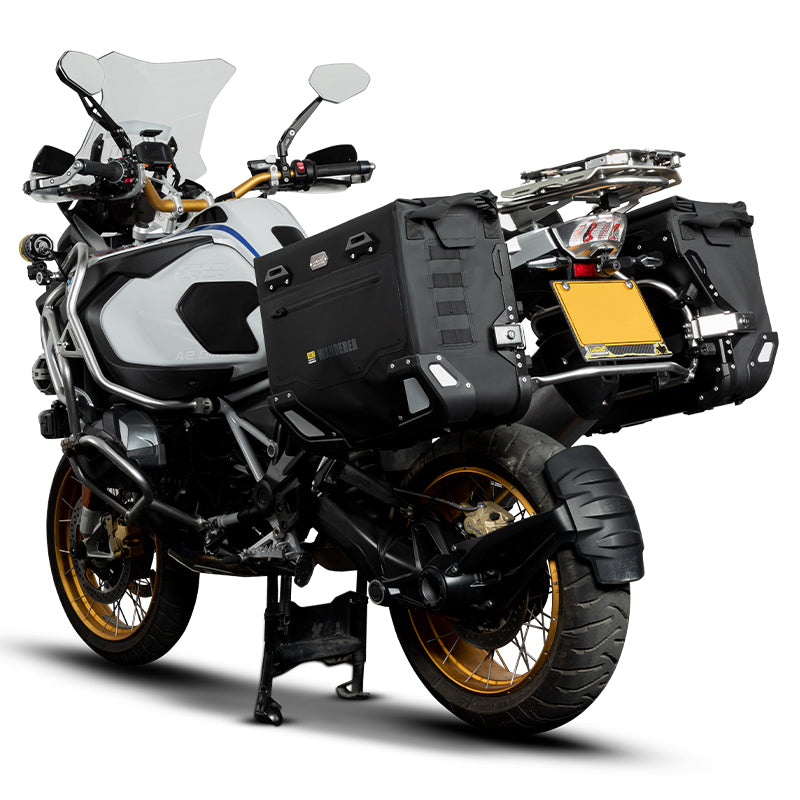
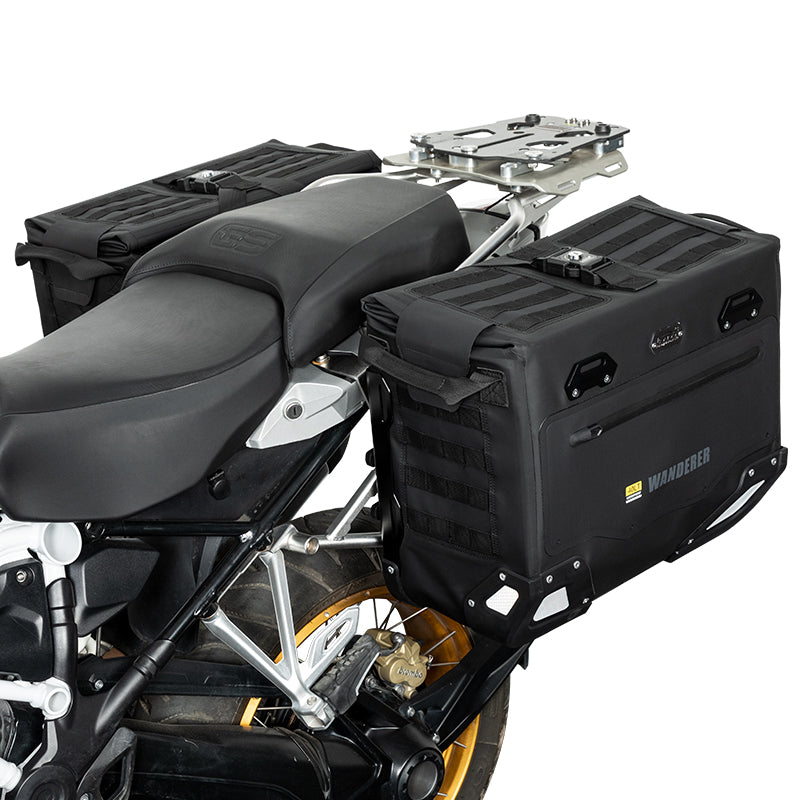
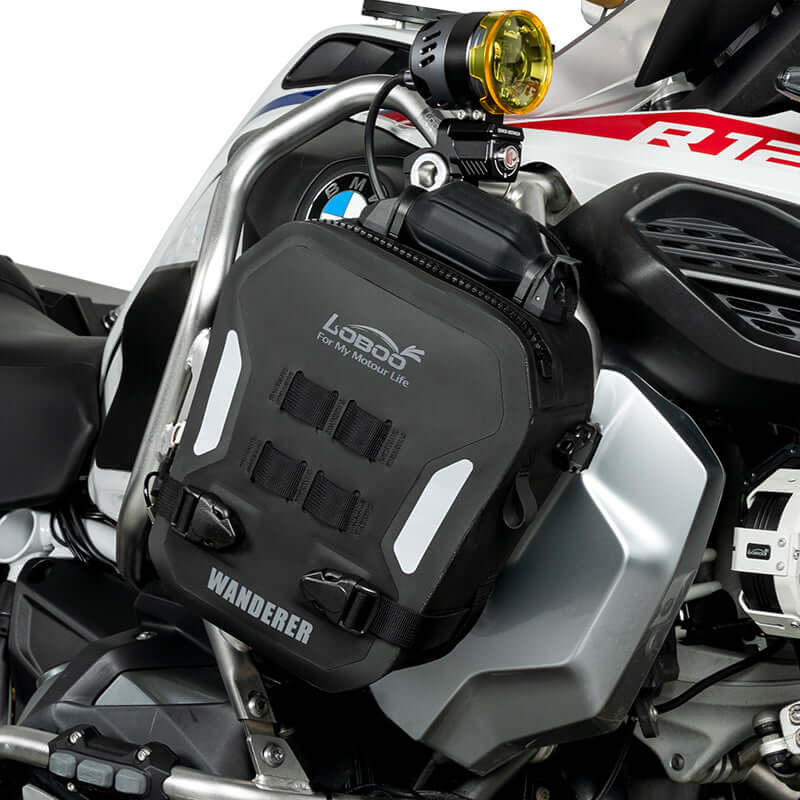
Semi-rigid luggage, on the other hand, appeals to those looking for a lighter and more forgiving setup for mixed use. They are often waterproof, stable, and less penalizing on rough terrain. They make a lot of sense on bikes already loaded with protection, tools, and travel accessories, where every extra pound helps. However, they require a more careful approach to internal organization, and in some cases, offer less practicality for quick access.
If you mainly ride on asphalt, take long trips, and want absolute order in your luggage, aluminum is often the natural choice. If your itinerary includes frequent dirt roads, challenging passages, or you prefer a less bulky motorcycle, semi-rigid luggage deserves serious consideration.
The right capacity is not the maximum capacity
One of the most common mistakes is choosing the largest available capacity, thinking it will be more comfortable. In reality, more volume often means more useless stuff, more weight, and a less balanced motorcycle. In adventure riding, how you distribute the load is much more important than how many liters you have available.
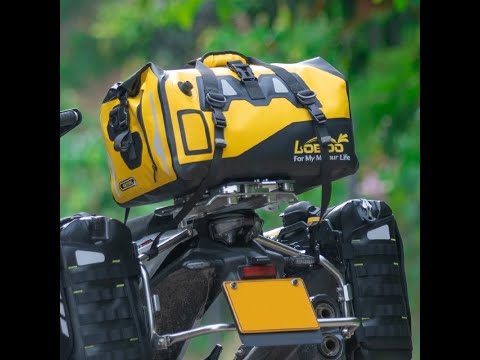
For a long weekend or a trip with accommodation, a well-sized pair of side cases may be sufficient. For longer trips, a top case or rear bag becomes useful, but only if the weight remains under control. Loading too high and too far back worsens handling, especially in slow maneuvers, changes of direction, and on uneven surfaces.
It's advisable to think in terms of categories of objects. Tools, spare parts, rain gear, and heavy items should go low and close to the center of the bike. Clothing and light materials can be placed higher. If you're traveling two-up, this principle is even more important because space is reduced and margins for error shrink.
Frames, mounts, and compatibility with the motorcycle
A good pannier mounted on a mediocre frame remains a mediocre system. The frame must be compatible with the specific motorcycle model, well-anchored, and designed to withstand vibrations, torsion, and real loads. In the adventure sector, compatibility is not a catalog formality: it changes the position of the panniers, the asymmetry due to the exhaust, the distance from the wheel, and the ease of mounting.
On many maxi enduros, the exhaust side imposes compromises. Some systems work with asymmetrical panniers to compensate for the bulk, others maintain a more uniform aesthetic but widen the bike's profile more. There isn't one right choice for everyone here. If you do a lot of city riding or often pass through narrow sections, lateral bulk matters a lot. If you prioritize capacity and load regularity, you can accept a few extra centimeters.
The quick-release system also deserves attention. Those who use their motorcycle every day or alternate between travel and daily use appreciate quick-release mounts, but speed and solidity must coexist. A good system is one that can be mounted and dismounted without complications, but once closed, does not exhibit play, vibrations, or uncertainty.
Waterproofing, locks, and details that make a difference
Many first look at the liters and then, perhaps, at the details. Usually the opposite happens in real travel: it's the details that decide whether the system simplifies your day or not.
Waterproofing must be reliable, not just stated. In rigid panniers, seals, precision of closures, and build quality count. In semi-rigid luggage, materials, welds, and the closure system count. A pannier that withstands two hours of heavy rain is worth much more than one with interesting specifications only on paper.
Locks must be practical with gloves, easy to operate, and adequately protected from dirt and dust. Handles, external anchor points, the ability to mount inner bags or supplementary accessories also make a difference on a long journey. These are not brochure details: they are elements you use every day, multiple times a day.
How the choice changes based on the type of trip
Those who prepare their motorcycle for fast asphalt touring tend to prioritize order, quick access, and content protection. In this scenario, a well-calibrated aluminum set with a top opening remains very effective. If the motorcycle covers many kilometers with a constant load and passenger, daily practicality outweighs a few extra pounds.
For mixed-use adventure, with many transfers but also real dirt roads, more balance is needed. Here, the robustness of the frame, the overall weight of the system, and the final width of the motorcycle become decisive. A system that is too bulky may be perfect on the highway and annoying as soon as the surface breaks up.
For light to medium off-road travel, often the best setup is not the largest. It's the one that keeps the bike controllable even when you're tired, the terrain is uneven, and you have to manage slow maneuvers. In these conditions, lightening and compacting the load is a technical choice, not a compromise.
Common mistakes to avoid
The first mistake is buying luggage without considering the specific motorcycle. An excellent solution on a GS may not make the same sense on a more essential Ténéré or on a KTM with a more dynamic setup. Geometries, heights, exhaust, and intended use change the final result.
The second mistake is underestimating the weight of the empty system. If you already start with several kilograms of structure, the useful margin for luggage, tools, and water quickly diminishes. You notice it less on the road. On dirt roads, you notice it immediately.
The third is to think that more rigidity always means more safety. It depends. On a road trip, a rigid structure is often a clear advantage. In mixed use, you also need to evaluate impact tolerance, ease of repair, and the system's behavior in the event of a fall.
The right choice is the one consistent with your setup
A useful adventure motorcycle luggage guide shouldn't push you towards the largest or most flashy solution. It should help you build a setup consistent with your motorcycle, itinerary, and riding style. The perfect system is one that remains stable, protects the contents, doesn't complicate maneuvers, and allows you to leave knowing that everything is where it should be.
If you are preparing your motorcycle to go far, think like a real traveler: compatibility first, weight under control, sufficient but not excessive capacity, materials suitable for your terrain. The rest matters less. The right luggage isn't noticed in travel photos. It's noticed when, after hours of rain, dust, and kilometers, it simply continues to do its job.


Share:
DENALI Motorcycle Auxiliary Lights Review: Are They Really Worth the Cost?
GPS and Smartphone Mounts for Motorcycles: A Guide to Choosing and Compatibility