The first line of a journey is often written on the fairings. Not on the engine, not on the tires. All it takes is a slow maneuver on gravel, a bag rubbing the wrong way, a branch on a narrow section, or a stationary drop to end up with marks, cracks, or contact points that worsen over time. If you are wondering how to seriously protect motorcycle fairings while traveling, there is no single answer: it depends on the bike, how you actually use it, and how exposed it is to impacts, abrasions, and vibrations.
Why fairings suffer more than you might think
On a touring motorcycle, fairings are not just an aesthetic feature. They protect components, channel airflow, house mounting points, and, on many adventure and touring models, work close to the tank, radiators, and side panels. When traveling fully loaded, with bags, crash bars, tools, and perhaps some sections ridden standing on the foot pegs, the number of possible contact points increases.
The problem is that damage does not only come from falls. There is the constant abrasion from straps and luggage, gravel thrown up by the front wheel, dried mud that holds abrasive dirt, and even vibrations on rough tracks. A superficially marked fairing is one thing. A fairing working under stress, with forced mounts or cracked points, is another.
How to protect motorcycle fairings while traveling without adding unnecessary weight
The most common mistake is thinking that one accessory will be enough. In reality, effective protection comes from a well-planned combination: impact protection, abrasion protection, and proper load management. If you ride on asphalt and take long-distance trips, your priorities are different from those of someone who also uses a GS, an Africa Twin, or a Ténéré on dirt roads.
The first serious barrier against fall damage is a system of engine guards and side protectors, when compatible with the model. They do more than protect the engine. In many stationary or low-speed falls, they keep the motorcycle raised just enough to prevent its weight from being transferred directly onto the side panels, air ducts, and lateral panels. However, not all tubular frames provide the same coverage. Some protect the lower area well while leaving the upper part of the fairing exposed. Others do the opposite. What matters here is the actual geometry of the kit, not simply the presence of engine guards.
Next comes surface protection. Clear protective films, anti-abrasion films, and specific adhesive pads are especially useful in areas where contact is frequent: the sides of the tank, points near the knees, and areas where straps run or a bag may swing. They are not designed to absorb major impacts, but they reduce rubbing marks and help preserve the finish over time. On motorcycles that are genuinely used, they make more difference than you might think.
The areas to protect before setting off
Not all fairings have the same priority. On touring motorcycles, it is worth thinking in terms of critical areas.
The lower area is most exposed in low-speed falls and on narrow sections. If your motorcycle has wide side panels or protruding air ducts, you need to determine whether a tubular protector can really act as a support point. The central area, on the other hand, mainly suffers from rubbing against technical clothing, knee guards, and poorly secured luggage. The upper part may seem safer, but in a sideways rollover or an impact with branches and rocks, it is far from immune.
Another frequently overlooked point is the area near the luggage systems. When the side frames are well designed, they keep the luggage away from the bodywork. If the clearance is minimal or the attachment is inadequate, the bags can move and hit the fairings. It is slow damage, but very common on long trips.
Engine guards, bars, and sliders: what really changes
This is where practicality matters. Engine guards are the most effective solution when you want to limit structural damage in the typical falls that occur during adventure travel: fully loaded maneuvers, uneven ground, slow U-turns, and stops on soft surfaces. They absorb and distribute part of the energy, but they must have solid, well-designed mounting points. A poorly designed kit can transfer stress where it should not.
Sliders serve a different purpose. On some road motorcycles they work well in a slide, but on many touring motorcycles they do not offer the same overall protection as bars, especially on mixed surfaces and with a loaded setup. They can also protect one point while leaving others exposed. They should not be ruled out automatically, but they must be evaluated according to the model and intended use.
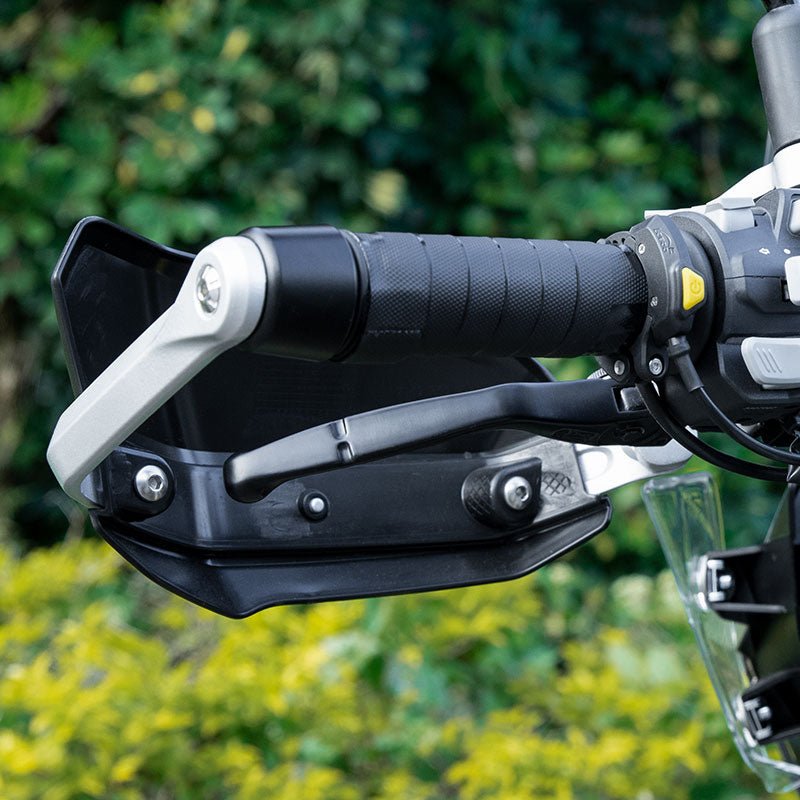
Upper fairing protectors are particularly useful on large adventure bikes with extensive, expensive plastics. They make even more sense if you ride on light or moderate off-road terrain, where a simple loss of balance can turn into direct contact between the side panel and the ground.
Protection against rubbing matters more than you think
Much of the damage occurs without any falls. A tank bag placed incorrectly, a strap with sand trapped underneath, or a rear bag moving for hundreds of miles: these details alone are enough to damage finishes and clear coats.
Quality protective films are designed precisely for this purpose. They must adhere well, withstand heat, water, and UV rays, and not lift at the edges. On motorcycles used for long trips, it is best to apply them before the surface starts showing marks, because on already scratched fairings both adhesion and the aesthetic result deteriorate. It is not just a matter of appearance. A protected surface is easier to clean and helps preserve the motorcycle’s value over time.
There is one important caveat, however: film cannot correct an incorrect setup. If a bag is constantly touching the fairing, the mounting, strap tension, or distance from the panels must be corrected first.
Load, luggage, and contact points: mounting makes the real difference
Anyone who travels extensively knows this: luggage can become the bodywork’s worst enemy. A well-supported hard case usually causes fewer problems, while soft or semi-rigid bags require more attention at their contact points and in terms of lateral stability.
If you use soft luggage systems, always check where the weight is transferred when the motorcycle is stationary and how the load moves over bumps. Straps must not run over sharp fairing edges or permanently compress plastic panels. On some models, it is worth using dedicated supports or small frames that keep the luggage away from painted surfaces. This is one of those cases where model-specific compatibility makes a real difference.
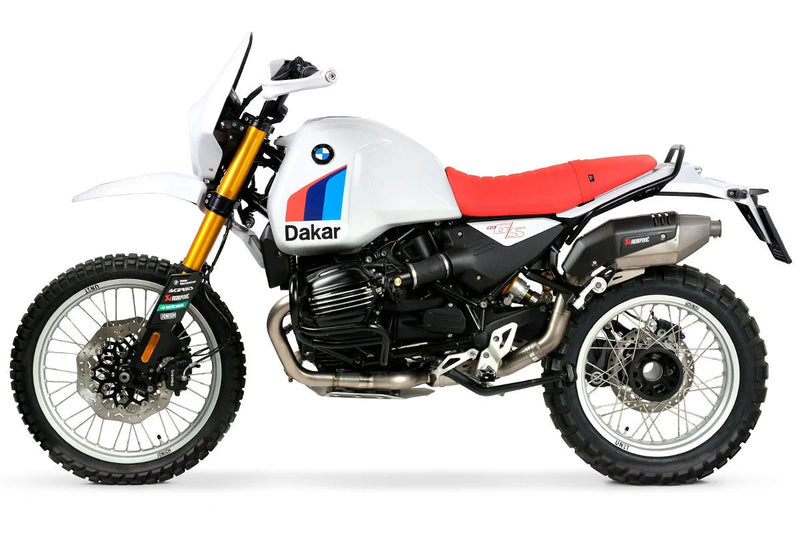
On motorcycles such as the BMW GS, KTM Adventure, Africa Twin, or Ténéré, the shape of the side panels varies considerably, and so does the way the load can interfere with the fairings. Universal solutions exist, but they do not always work well when the trip gets longer and the terrain worsens.
Materials and finishes: painted, raw, or composite plastic
The type of fairing also matters. Painted plastics are more sensitive to superficial marks and require more careful protection in contact areas. Raw plastics hide minor scratches better, but they can still become glossy or dull where bags and boots rub against them. Parts made from composite materials or with special finishes deserve even more attention, because repairs can be expensive and are not always invisible.
For this reason, there is no universal protection that works equally well for every motorcycle. What works well on a fully faired touring bike may be inadequate on an adventure bike that is genuinely used off-road.
Preventive maintenance during the trip
Protecting the fairings does not only mean installing accessories before departure. During the trip, it is worth periodically checking rubbing points, tightening luggage fasteners, and cleaning the areas where dust and mud build up between the bag and the bodywork. Fine dirt acts like sandpaper, especially after rain and off-road riding.
Vibrations matter too. If you hear a new noise or notice that a bag has changed position, it is better to stop and check. A small adjustment made in time often prevents much more annoying damage at the end of the day.
The right strategy is proportional to how you use your motorcycle
If you ride mainly on asphalt, focus on protecting contact surfaces and choose a stable, well-spaced, compatible luggage system. If you alternate between road and dirt, a well-designed engine guard with good coverage becomes a priority. If you often travel fully loaded, first check where the weight can be transferred onto the side panels during slow movements or difficult stops.
This is where a technical approach makes the difference. You do not need to install everything. You need to protect the right points with components designed for your motorcycle and the type of trip you actually take. Endurrad follows exactly this approach: real compatibility, premium accessories, and solutions designed to go anywhere without improvisation.
A perfect fairing after years of travel is not always realistic. A well-protected fairing, however, is. And often the difference between a motorcycle that is properly prepared and one that is simply accessorized can be seen right there, in the details that withstand mile after mile.