


In short. Side cases for BMW GS motorcycles should be chosen starting with the frame, not the case: the R 1200 GS (from 2013), R 1250 GS, and their respective Adventures use a single LOBOO frame (JP071B) and asymmetric cases because the exhaust takes up space on the right; the R 1300 GS (JP131B) and R 1300 GS Adventure (JP151B) have different, non-interchangeable frames, but accept symmetric 37+37 or 45+45-liter cases.
The limit that matters when traveling is not the number of liters: BMW specifies 10 kg per side case and 180 km/h with its own cases, and the LOBOO CONQUEROR manual specifies the same 10 kg load. Below you will find, model by model, the frame, possible configurations, dimensions, weights, tightening torques, and actual prices of what is available on Endurrad today.
With the GS, the frame determines everything: three motorcycle families, three different codes
Before choosing between aluminum and semi-rigid cases, you need to know which GS you have, because that determines the frame, case symmetry, and even the tightening torque of the screws.
| Motorcycle | LOBOO frame | Compatible cases | M8 tightening torque | Current frame |
|---|---|---|---|---|
| R 1200 GS from 2013, R 1200 GS Adventure from 2014, R 1250 GS and GS Adventure from 2019 | JP071B (one frame for GS and Adventure) | Asymmetric: PIKE TRACKER 45+38, CONQUEROR 45+38, WANDERER 40+30 | 20 N·m | Available, 1 pc · €329 |
| R 1300 GS from 2023 | JP131B | Symmetric: PIKE TRACKER 37+37 or 45+45, CONQUEROR 45+45, WANDERER 40+40, ALPS 23/30 | 20 N·m (M6 12 N·m) | Available, 3 pcs · €329 |
| R 1300 GS Adventure from 2024 | JP151B | Symmetric: PIKE TRACKER 37+37 or 45+45, CONQUEROR 45+45, WANDERER 40+40, ALPS 23/30 | 18 N·m | Available, 2 pcs · €329 |
Why the R 1300 GS and its Adventure do not share the same frame
LOBOO's product sheets are explicit: the R 1300 GS Adventure has a different rear subframe from the standard GS, so JP131B and JP151B are not interchangeable. This is the most common ordering mistake with these two motorcycles because their names are almost identical. On the R 1200 and R 1250 generations, however, the same JP071B package covers both the GS and Adventure: inside are the spacers and M8×35 screws marked ADV, to be used only on the Adventure.

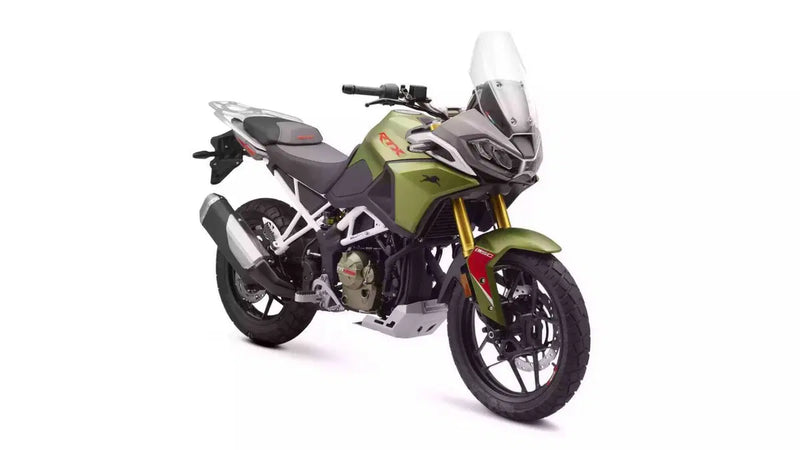
On the R 1300 GS, the exhaust leaves room for two identical panniers.
On the R 1300 GS, the exhaust no longer takes up space along the right side as it did on previous generations: the panniers can be identical on both sides, and the load is balanced without any thought.
LOBOO's stated dimensions for the PIKE TRACKER panniers clearly explain the choice: the P37 and P45 have the same external length and height (540 × 388 mm); only the depth changes, from 272 mm to 321 mm per pannier. In other words, with the 45s the motorcycle is approximately 5 cm wider on each side, in exchange for 16 additional liters of total capacity.
- you have an R 1300 GS and order JP131B, or an R 1300 GS Adventure and order JP151B
- you want to change the type of pannier in the future: aluminum, semi-rigid, and inflatable panniers fit the same frames
- you install the top case with a dedicated LOBOO plate or luggage rack
- does not transfer from one GS to another: the two R 1300 frames are not interchangeable
- does not accept hard panniers from other brands or the original Vario panniers
- with the short exhaust, it is not enough on its own: the CPQ131 deflector is required

- Compatible panniers
- PIKE TRACKER, CONQUEROR, WANDERER, ALPS
- Configuration
- Symmetrical 37+37 or 45+45 L
- Components
- 22 items, crossbar included
- Torques
- M6 12 N·m · M8 20 N·m
- Drilling
- None
- Material and load
- Not specified in the manual
For the Adventure, the part number is JP151B, side pannier frames for the R 1300 GS Adventure (€329, 2 pieces available): 17 components, 18 installation steps, and all M8 fasteners at 18 N·m, a different value from the 20 N·m for the standard GS. For the top case on the R 1300 GS, there is the JPT131WA top case plate on the original luggage rack (€113, available), while on the Adventure LOBOO offers either the plate or the JP151WPRO reinforced luggage rack (€306, 1 piece).

On the R 1200 and R 1250 GS, the panniers are asymmetrical because of the exhaust.
On the Boxer models from 2013 to 2023, the high-mounted exhaust outlet is on the right side: the right pannier must be narrower at the bottom, and the pairs become 45+38 or 40+30.
LOBOO solves this with a shaped right case: the CONQUEROR C38R has the same length and height as the C45L (527 × 380 mm), but a depth of 291 mm that decreases to 236 mm at the bottom, where the exhaust runs. On the PIKE TRACKER, the pair for the R 1250 GS is the P45L on the left and P38R on the right; with the semi-rigid WANDERER cases, 40 L is mounted on the left and 30 L on the right.
What difference asymmetry makes on a trip
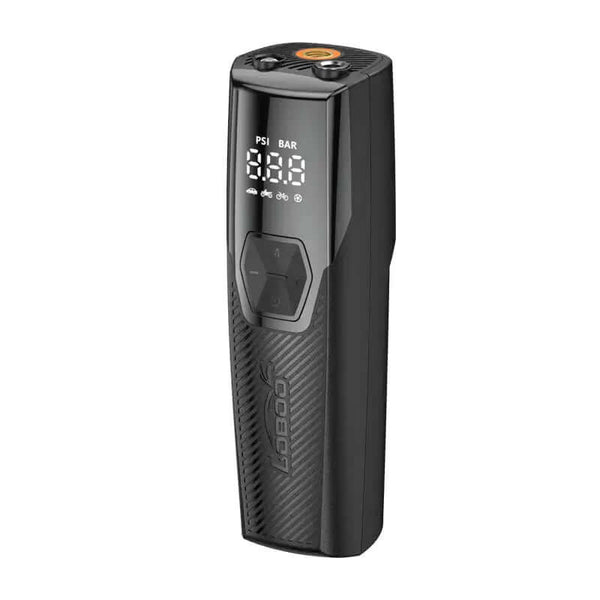
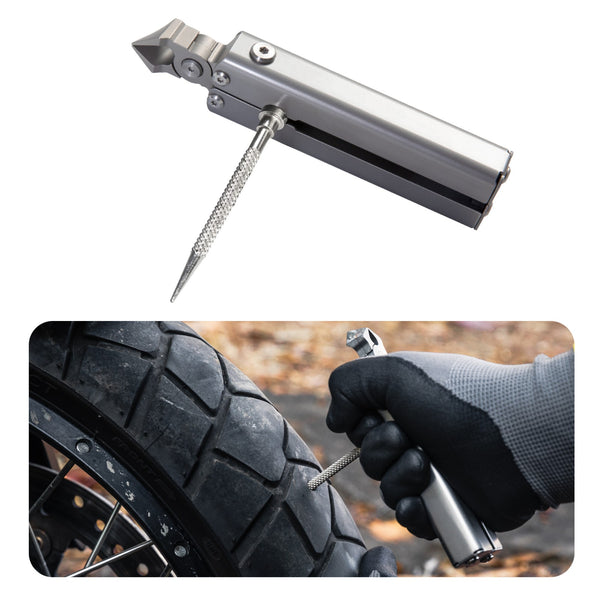
With a seven-liter difference between the two sides, you do the balancing: heavy, compact items (tools, puncture repair kit, compressor) go in the more capacious left case and as low as possible; bulky, lightweight items go on the right. The 10 kg limit per case remains the same on both sides.

- Capacity
- 45 L left · 38 L right
- C45L
- 527 × 315 × 380 mm
- C38R
- 527 × 291 × 380 mm, 236 mm at the bottom
- Load
- 10 kg per case
- Mounting
- Nine-point quick release
- Frame
- JP071B, sold separately (€329)

The top case on the R 1200 and R 1250 GS mounts on the LOBOO JP071W luggage rack (€153, 5 pieces), or on the JP072W for the Adventure (€153, 2 pieces): these are variants of the same CONQUEROR page for the R 1250 GS. The guides to WANDERER cases on the R 1200 and R 1250 GS and to preparing the GS 1250 for travel complete the picture.
Aluminum, semi-rigid, or inflatable: on the GS, weight and bulk change, not the frame
On LOBOO racks, you can alternate between the three types of luggage without changing the frame. The choice is therefore a matter of use, and the stated figures help you make it.
| Case | Type | External dimensions (1 case) | Stated weight | Capacity | Price and status today |
|---|---|---|---|---|---|
| PIKE TRACKER P37 | Aluminum | 540 × 272 × 388 mm | 6.2 kg | Seals, no published IP rating | R 1300 GS/GSA Kit from €1,013, sold out |
| PIKE TRACKER P45 | Aluminum | 540 × 321 × 388 mm | 6.5 kg | Seals, no published IP rating | R 1300 GS/GSA kit from €1,103, out of stock |
| CONQUEROR C45 | Anodized aluminum | 527 × 315 × 380 mm | Not stated | Rubber seals | R 1300 GS/GSA pair €964 silver, €1,044 black, available |
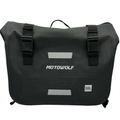
| WANDERER BCB40T | TPU semi-rigid | 450 × 270 × 400 mm | 5.9 kg | IPX6, magnetic roll-top | Kit with R 1300 GS or GSA frames €1,310, available |
| ALPS 30 L | Inflatable | 420 × 240 × 420 mm with support | Not stated | IPX7 | Pairs from €626 to €671, available |
The surprising figure is the weight: a 40 L WANDERER weighs 5.9 kg compared with 6.2-6.5 kg for a PIKE TRACKER, so the semi-rigid case is not automatically much lighter. The advantage of the semi-rigid case on the GS lies elsewhere: it has no rigid edges in the event of a stationary fall, it compresses, and it includes two 20 L waterproof bags that can become internal or external luggage. The full comparison between families is in the guide aluminum, semi-rigid, or soft bags.

- Capacity
- 45 + 45 L, C40T top case 40 L separately
- Material
- Anodized aluminum alloy, riveted structure
- Lock
- Five-plate cylinder, replaceable
- Load
- 10 kg per case
- Frame + mounting plate kit
- JP131B + JPT131WA €442 (3 pcs)
- C40T top case
- €477 silver · €522 black
For the Adventure, the same pair with JP151B frames is on the CONQUEROR for R 1300 GS Adventure page. Those who prefer semi-rigid cases can find the WANDERER 40+40 kit with frames for R 1300 GS and the one for the R 1300 GS Adventure, covered in detail in the guide WANDERER for R 1300 GS.

ALPS inflatables: main luggage, not an accessory
The ALPS inflatable side cases in 23 or 30 L work with frames featuring an 18 mm tube. LOBOO states a bracket load capacity of 12 kg per side on asphalt and 8 kg on uneven surfaces, and over 300 kg of resistance when the case is inflated. On the R 1300 GS and GS Adventure, spacers are not needed because the frames are symmetrical; on the original BMW R 1200 and R 1250 GS frames, BDPQ01LBK spacers are used to compensate for the flare toward the exhaust.

The real limit is 10 kg per pannier and 180 km/h, not the number of liters
A 45 L pannier filled with tools can easily exceed 10 kg. The limits stated by BMW for its own panniers and those in the LOBOO manual coincide, and it is best to treat them as the rule.
| System | Load per pannier | Maximum speed | Source |
|---|---|---|---|
| BMW Vario, R 1300 GS | 10 kg side panniers · 6 kg top case · 26 kg total | 180 km/h | BMW Motorrad, press release dated 16/10/2023 |
| BMW aluminum, R 1300 GS Adventure | 10 kg (8.6 kg with volume extension) | 180 km/h | BMW Motorrad UK, official FAQ |
| LOBOO CONQUEROR | 10 kg | Not specified | LOBOO manual |
| LOBOO PIKE TRACKER | Not specified: the BMW motorcycle limit applies | Not specified | LOBOO specifications |
| LOBOO ALPS (bracket) | 12 kg on asphalt · 8 kg off-road | Not specified | LOBOO specifications |
There is also the Highway Code: Article 170, paragraph 5, prohibits objects on two-wheeled vehicles that are not securely fastened or that protrude beyond the specified limits, with a fine of €83 to €332 (paragraph 6). A pannier attached to its frame is not a problem; a poorly secured bag tied on top of the lid is.

Genuine BMW panniers and aftermarket panniers cannot be mixed
The real choice is not between brands, but between two closed systems: BMW's and the aftermarket manufacturer's system you choose.
- want the visual integration and variable-volume Vario system on the R 1300 GS
- ride mainly on the road and 10 kg per side is enough for you
- want a single point of contact for your motorcycle and accessories
- want to switch between aluminum, semi-rigid, and soft panniers on the same frames
- looking for top-loading panniers with riveted, individually replaceable parts
- On the R 1300 GS, you want the symmetrical 45+45 configuration
A GS with panniers is often completed with a tank bag, protection, and footpegs: the guide to R 1300 GS accessories and the one on the R 1300 GS Adventure explain what actually fits each one.
Installing the frames requires no drilling, but a torque wrench is needed
The three LOBOO manuals follow the same logic: put everything in position, then adjust, then tighten in sequence. The number of parts and torque specifications vary.
- Check the model and exhaust. R 1300 GS or Adventure? Original or short exhaust? With the short exhaust, LOBOO recommends the CPQ131 deflector.
- Remove the seat and the indicated parts. On the R 1300 GS, replace the passenger footpeg brackets with those in the kit; on the Adventure, also remove the original luggage rack and some tail sections; on the R 1200 and R 1250, remove some components on both sides and in the exhaust area.
- Position the frames without tightening. Attach the two frames to the mounting points and close them with the crossbar, leaving the screws loose.
- Check alignment and symmetry. Attach one empty pannier on each side and check the clearances and distance from the exhaust.
- Tighten in sequence to the correct torque. R 1300 GS: M6 12 N·m, M8 20 N·m. R 1300 GS Adventure: M8 18 N·m. R 1200 and R 1250 GS: M8 20 N·m.
- Check again after the first few miles. The CONQUEROR manual recommends checking the tightness of the frame and mounts before every trip.

- Function
- Directs gases away from panniers and bags
- When needed
- R 1300 GS and GSA with short exhaust
- Material
- Black aluminum, stainless steel clamp
- Price
- 29 €

To organize the content, the guide to inner bags for aluminum panniers and the guide to the top case plate complete the three-pannier system.
Frequently asked questions about BMW GS side cases
Which side cases should I mount on a BMW R 1300 GS?
Do the R 1300 GS racks fit the R 1300 GS Adventure?
Why are the cases different sizes on the R 1250 GS?
Does the same rack fit the R 1250 GS and R 1250 GS Adventure?
How much weight can I put in a GS side case?
How fast can you ride with cases on the GS?
Can I mount LOBOO cases on the original BMW racks?
Is 37+37 or 45+45 liters better for the R 1300 GS?
Do semi-rigid cases weigh less than aluminum cases?
Is an exhaust deflector needed on the R 1300 GS?
Do you need to drill the motorcycle to install the frames?
How do you mount the top case together with the side cases?
Do side cases make the motorcycle non-compliant with the Italian Highway Code?
Tell me which GS you have, and we’ll tell you what fits
Tell us the make, model, and year of your GS (and whether it is an Adventure or has an aftermarket exhaust): we’ll point you to the correct frame, the cases currently available, and the compatible top case. You can also find the latest GS case news in the Endurrad App for iPhone.