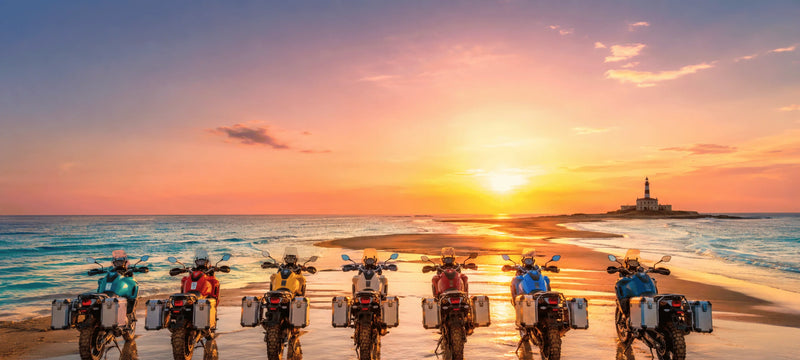
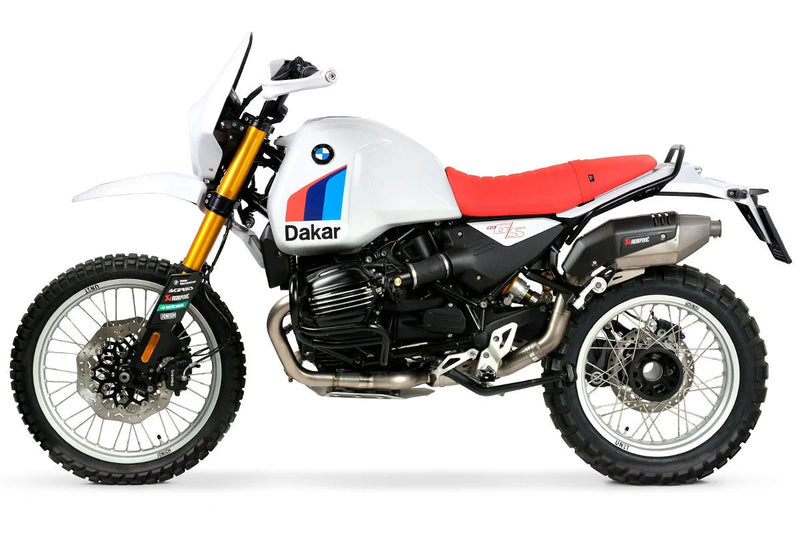
When you start traveling seriously, you quickly realize that choosing the best waterproof motorcycle panniers does not mean simply buying two containers. It means finding a system that stays stable on rough terrain, protects your load in continuous rain, and does not make riding more difficult when the motorcycle is loaded for days. This is where you see the difference between an ordinary accessory and a set designed for adventure touring, mixed road-and-trail riding, and real-world use.
Those who travel with a BMW GS, a KTM Adventure, an Africa Twin, or a Ténéré often start with a simple question: are hard cases or waterproof soft bags better? In practice, the answer depends on how you use the motorcycle. If you ride exclusively on asphalt and cover long distances, hard cases still make sense. But if you alternate between dirt roads, technical sections, low-speed falls, and changing loads, waterproof panniers become a much smarter solution.
How to choose the best waterproof motorcycle panniers
The first criterion is true waterproofing. It may seem obvious, but not all bags described as waterproof offer the same level of protection. A bag made with welded fabric, a properly sized roll-top closure, and reinforced attachment points provides real protection even in heavy rain or during shallow crossings. A simple rain cover, on the other hand, may be enough for a brief storm, but it is not the right choice for someone traveling for days.
The second point is structure. The best waterproof motorcycle panniers should not be floppy or unstable. Good semi-rigidity makes loading easier, maintains the shape, and limits luggage movement. When the motorcycle moves over rocky ground or fast trails, the difference is immediately noticeable: less swaying, less stress on the pannier frame, and fewer inconveniences when riding standing up.
The attachment system also matters. Panniers truly suited to adventure riding must work well with dedicated frames or model-specific mounts. This aspect is crucial, especially on heavy, powerful motorcycles. A universal mounting system may seem versatile, but it often forces compromises in exhaust clearance, ground clearance, and load symmetry. On a properly prepared motorcycle, the luggage should integrate with the bike, not struggle to adapt to it.
The right capacity, not the maximum capacity
One of the most common mistakes is looking for the greatest capacity possible. In reality, the right capacity depends on the type of trip and the motorcycle. For weekend outings or light travel, a compact set improves handling and reduces side-to-side bulk. For long crossings or two-up riding, more volume is needed, but without overdoing it. The more space you have, the more likely you are to fill it - and weight always comes at a cost, especially off asphalt.
On motorcycles such as the Yamaha Ténéré 700 or KTM 890 Adventure, a slim solution is often the best-balanced choice. On a BMW R 1250 GS Adventure or a well-equipped Africa Twin, you can move up in capacity without compromising stability too much, provided the support system is up to the task.
Materials and details that make the difference
Materials say much more than simple aesthetics. In the best waterproof motorcycle panniers, you will usually find highly abrasion-resistant fabrics, reinforcements in impact zones, sturdy buckles, and inner or outer panels designed to distribute the load. This is not just a matter of long-term durability. It is a matter of reliability when the motorcycle falls while stationary, slides at low speed, or spends entire days exposed to sun, dust, and water.
Details matter too. The straps should be easy to adjust while wearing gloves. The closures should remain secure even after being opened and closed many times. Carry handles are genuinely useful when you quickly unload the motorcycle at the end of the day. The outer surfaces should be easy to clean and should not retain mud and moisture longer than necessary.
Another often-overlooked element is heat protection. On the exhaust side, a well-designed pannier must maintain the correct clearances and, if necessary, use dedicated protective panels. This is not an area for improvisation. If the system is not designed for your motorcycle-exhaust-frame configuration, the risk of wear or damage is real.
Waterproof soft bags or hard cases?
For many adventure riders, the switch from hard cases to waterproof panniers happens after their first demanding off-road trip. The reasons are practical. A soft bag weighs less, absorbs impacts better, and tends to be less troublesome in a fall. It also reduces the risk of damage to both the motorcycle and the rider in more awkward situations, such as slow maneuvers on uneven ground.
Hard cases remain a valid option if you want maximum protection for the contents, immediate access, and a very organized structure. However, they have more pronounced bulk, greater weight, and a less forgiving response on dirt. For those who alternate between long transfers and demanding sections, waterproof bags are often the best compromise.
There is no universal solution. There is only the solution best suited to the way you travel. If your itinerary consists mainly of roads, hotels, and consistently well-organized luggage, hard cases still have their advantages. If your priority is to go anywhere with fewer constraints, waterproof soft luggage has the edge.
Compatibility with the motorcycle: the point that decides everything
In the adventure world, real compatibility matters more than a specification sheet read too quickly. An excellent bag on paper can become the wrong choice if it does not work well with your motorcycle's side frame, seat, passenger footpegs, or exhaust. That is why, when evaluating the best waterproof motorcycle panniers, you should always think in terms of platform.
On BMW GS and GS Adventure models, for example, the final width and its relationship with the pannier frames are very important. On the Honda Africa Twin, you should check how cleanly it mounts in relation to the tail section and aftermarket exhausts. On KTM Adventure and Yamaha Ténéré models, the priority is often to keep weight and bulk under control so as not to compromise standing riding or changes of direction on uneven ground.
A well-structured technical catalog, such as Endurrad's, helps precisely at this stage: not stopping at the product category, but arriving at a choice that is consistent with the motorcycle model and its real-world use.
When a frame is truly necessary
Not all bags require the same type of support. Some systems work well with full side frames, others are designed for lighter structures, and still others for minimalist configurations. But on motorcycles loaded for off-road use, a dedicated frame is often the most stable and secure choice.
Without proper support, lateral movement increases, weight distribution worsens, and it becomes more difficult to maintain a consistent distance from the wheel and exhaust. For a short trip, it may seem acceptable. For a week of alpine passes, rain, and rocky trails, it is not.
The features you should really look for
Before buying, it is worth checking a few specific elements. A good waterproof pannier should have an effective roll-top closure, adjustable but solid attachments, anti-abrasion reinforcements, clear compatibility with the motorcycle or frame, and capacity suited to the type of trip. If one or two of these aspects are missing, you risk ending up with a product that works well only in ideal conditions.
It is also useful to evaluate modularity. Some systems allow you to add external pockets, accessory mounts, or supplementary load solutions. For long-distance travelers, this flexibility is much more useful than a few extra claimed liters. It allows you to organize the weight more effectively and keep what you really need within reach.
Finally, consider ease of everyday use. Quick removal, simple cleaning, access to the contents without wasting time, and the ability to carry the bags by hand once you get off the motorcycle. After a thousand miles, these details become essential.
What is the right choice for your trip?
If you go adventure touring with mixed stages, changeable weather, and a motorcycle prepared for long-distance travel, the best choice is usually a premium waterproof pannier designed to withstand abrasion, water, and prolonged vibration. If your use is almost entirely on-road, you can give more importance to internal organization and ease of access.
The real question is not which bag is the most famous, but which one works best with your motorcycle, your load, and your riding style. A bag that is too large for a slim motorcycle worsens handling. One that is too small for a long trip forces you into poor packing arrangements. A system that is not stable, even if it has plenty of capacity, eventually causes fatigue and complicates everything.
Preparing your motorcycle properly means eliminating problems before they arise. Waterproof panniers are part of this approach: fewer compromises, more control, and more freedom to continue even when the weather changes or the asphalt ends. And that is usually where the journey truly begins.