


In short
Does riding a motorcycle reduce stress? Partly, yes, but not in the way it's often described. The UCLA study published in Brain Research in 2021 measured lower cortisol during about 22 minutes of riding compared with periods spent sitting still. But a similar drop also occurred in a car. What motorcycling does on top of that is something else: it slightly raises heart rate and adrenaline and keeps visual attention sharper.
- The famous “28% less stress” figure comes from a 2019 press release, not the scientific article.
- Compared with sitting still: cortisol fell by about −24% while riding and about −27% in a car (our calculation based on the published average values).
- Only motorcycling significantly raised epinephrine (+29%) and heart rate (from 74 to 84 beats per minute).
- The study was funded by Harley-Davidson and involved experienced, healthy motorcyclists: useful, but not definitive.
- In winter, you can preserve the benefits with short rides, warm hands and neck, and no pride when fatigue sets in.
Motorcycling lowers stress compared with sitting still, not compared with driving
Motorcyclists know without needing electrodes: after a ride, you come home different. Science confirms part of this feeling and disproves the way it's often summed up.
What the research actually measured
In November 2026, the UCLA study funded by Harley-Davidson started circulating again on industry websites. We read the full version, published in Brain Research, vol. 1752 (2021), instead of stopping at the headlines. The result is more interesting than the slogan: motorcycling isn't an anxiolytic on two wheels; it's an activity that activates the body and sharpens attention, while cortisol falls just as it does when driving a car.
For a motorcyclist, the difference matters. It explains why a ride clears your head without making you drowsy, and why the same ride, when you're tired or cold, stops doing you good.
The UCLA Study in Brain Research: Who, How, and What Results
The article is titled “Modulation of attention and stress with arousal: The mental and physical effects of riding a motorcycle.” First author Don A. Vaughn, among the authors Mark S. Cohen and Agatha Lenartowicz, from UCLA’s Semel Institute for Neuroscience and Human Behavior.
How the experiment was set up
Each participant completed all the tests: about 22 minutes riding their own motorcycle, about 22 minutes driving a car provided by the researchers (a Lexus NX200), and periods of 7 minutes sitting outdoors, stationary, before and after each drive. The routes were two public roads in Southern California, Angeles Crest Highway and Mesa Grande. During the tests, the researchers recorded EEG using a 64-channel cap, heart rate using an electrocardiogram, and hormones in urine and saliva.
There were 77 people recruited (23 women, average age 42), but the overall analyzed sample consisted of 42 people, and some values were calculated from even smaller subgroups.

| Measure | On a motorcycle | In a car | Stationary | What it means |
|---|---|---|---|---|
| Heart rate (bpm) | 84 | 78 | 74 | Mild activation, higher on a motorcycle |
| Urinary epinephrine (µg/g creatinine) | 14,6 | 12,4 | 11,3 | Significantly increases only on a motorcycle |
| Urinary cortisol (µg/g creatinine) | 31,11 | 30,01 | 41 | Lower while driving; similar on motorcycles and in cars |
| Salivary DHEA-S (pg/mL) | 107,35 | 99,71 | 90,43 | Higher on a motorcycle than when stationary |
| Cortisol/DHEA-S ratio | 12,0 | 12,0 | 14,4 | Same value on a motorcycle and in a car |
| Posterior alpha power (EEG) | 4,7% | 5,2% | 5,1% | Lower on a motorcycle: higher visual attention, according to the authors |
Mean values published in the article (Vaughn et al., Brain Research 1752, 2021, DOI 10.1016/j.brainres.2020.147203). The percentages cited in the text (cortisol −24% on a motorcycle and −27% in a car, epinephrine +29%, ratio −17%) are calculations by Endurrad based on these mean values, not data reported by the authors.
Motorcycles vs. cars: the difference is in activation, not cortisol
The comparison with cars is the part almost nobody reports. The study measured three scenarios specifically to find out whether motorcycles had something special.
What motorcycles do that cars don't
Cortisol drops compared with periods of sitting still, both on a motorcycle and in a car, and the cortisol/DHEA-S ratio does not differ significantly between the two rides. What really distinguishes the two experiences lies elsewhere: epinephrine rises on a motorcycle, the activation hormone (the change is not significant in a car), heart rate increases by about 10 beats per minute, and the alpha signal in the brain's visual areas is lower than in a car.
Put in riding terms: a motorcycle puts you in a state of calm alertness. You're more awake and attentive, without this translating into greater hormonal stress. The authors compare the effect on attention, by analogy, to that of a cup of coffee: this is an illustration, not a measurement.
- Riding (a motorcycle or car) lowers cortisol compared with sitting still
- Heart rate and epinephrine increase on a motorcycle
- On a motorcycle, EEG signals indicate higher visual attention
- The effects apply to experienced motorcyclists, on rides of about 22 minutes
- That motorcycles reduce stress more than cars
- That the effect lasts for the following days
- That it applies to newly licensed or anxious motorcyclists
- That motorcycles cure anxiety or depression
Other studies on motorcycles and well-being: how much weight do they really carry?
The UCLA study isn't the only one cited when discussing motorcycles and the mind. The others are smaller, older, or different in nature: it's worth comparing them.
| Source | Year | Sample | What it says | Strength |
|---|---|---|---|---|
| UCLA, Brain Research (funded by Harley-Davidson) | 2021 | 77 recruited, 42 analyzed | Cortisol drops while riding; activation and attention increase on the motorcycle | High for the topic: peer-reviewed journal, public data |
| Yamaha and Tohoku University (Kawashima Lab) | 2009 | 21 + 22 people | Regular riding associated with better cognitive function and lower stress | Low: company press release with no figures or cited publication |
| University of Padua and others, Frontiers in Sports and Active Living | 2025 | 75 male FMI-registered riders | Flow is linked more to intrinsic motivation than to the pursuit of intense sensations | Medium: questionnaires, only competitive riders, no control group |
| Carole Nash survey (UK insurer) | 2026 | Not stated | 88% of motorcyclists believe that motorcycling is good for mental health | Low: opinion of people who already ride motorcycles, method not published |
The Padua study on flow
The most recent study is Italian: “Riding with the flow,” published on June 13, 2025, in Frontiers in Sports and Active Living by a group led by Paolo Mancin and Marta Ghisi of the University of Padua. It involved 75 riders, 36% of them enduro riders and 33% motocross riders. The finding that matters to those who travel: flow, that complete concentration in which time seems to pass differently, is linked more to the pleasure of riding itself than to the pursuit of adrenaline. The authors themselves caution that this is a cross-sectional study of men only, and that it applies to racers, not touring riders.
The 2009 Yamaha study
The Yamaha press release of March 4, 2009 describes two experiments from 2008 with Professor Ryuta Kawashima's laboratory: one on the track at Sportsland SUGO with an XJR400, involving 11 regular motorcyclists and 10 people who had not ridden for over ten years; the other in Iwata, involving 22 former motorcyclists who returned to using motorcycles in their daily lives between June and November. The conclusions are positive, but there are no data or statistics: it's a clue, not proof.
Why riding a motorcycle clears your mind: attention, presence, and flow
This is where the numbers end and the experience of those who have been riding for years begins. The two, however, fit together well.
You can't think about your problems and the curve at the same time
Riding a motorcycle demands your full attention: where you look, how hard you brake, what the car ahead is doing, what the road surface is like as you exit the hairpin. L your attention is focused on the present, and the thoughts that go round and round at home fall behind. It is the same reason the UCLA study found a stronger visual attention signal on a motorcycle than in a car: in a car, you can drive with your mind elsewhere; on a motorcycle, much less so.
On a road you know, at a pace you can handle, this attention becomes enjoyable. This is the state psychologist Mihály Csíkszentmihályi called flow: a challenging but manageable task, clear goals, immediate feedback on what you do. Riding a motorcycle has all three.
| Situation | What usually happens | Effect on the mind |
|---|---|---|
| Familiar road, relaxed pace | Just the right challenge, many easy decisions | The situation closest to flow |
| Heavy urban traffic | Constant alertness, few rewards | High arousal, little relaxation |
| Unfamiliar dirt road or mountain pass beyond your abilities | The task exceeds your skill | Tension and fear replace flow |
| Long, monotonous highway | Task too easy | Boredom and declining attention, risk of fatigue |
Endurrad editorial table, based on the flow model and riding experience: it is not the result of a specific study of motorcyclists.
If a difficult stretch always makes you tense, we've devoted a whole guide to overcoming your fear of cornering one step at a time. And if the problem is getting back on the bike after an accident, you'll find the full guide in getting back on a motorcycle after a fall.
How to keep the benefits of riding a motorcycle in winter
November is when many people put their motorcycle in the garage and realize how much they miss it. If riding also helps you feel good, it's worth protecting that passion with a few precautions.

- Shorten your rides, don't cancel them. The UCLA study measured effects on rides of about 22 minutes: an hour during the middle of a clear day is already a good ride. Two short rides are better than one long ride in the cold.
- Protect your hands first. Cold fingers slow down the levers and clutch and increase tension. Heated grips or heated grip covers make a bigger difference in winter than any other accessory.
- Cover your neck. L'air coming in through your helmet cools your torso and wears you out. A neck warmer costs little and makes an immediate difference.
- Check your tires and cold pressure. In low temperatures, tires warm up slowly: take the first corners gently. We discuss this in our guide to winter motorcycle tires.
- Choose roads you know. In winter, the flow comes when there are no surprises: damp shadows, leaves, and frost are easier to manage on a familiar route.
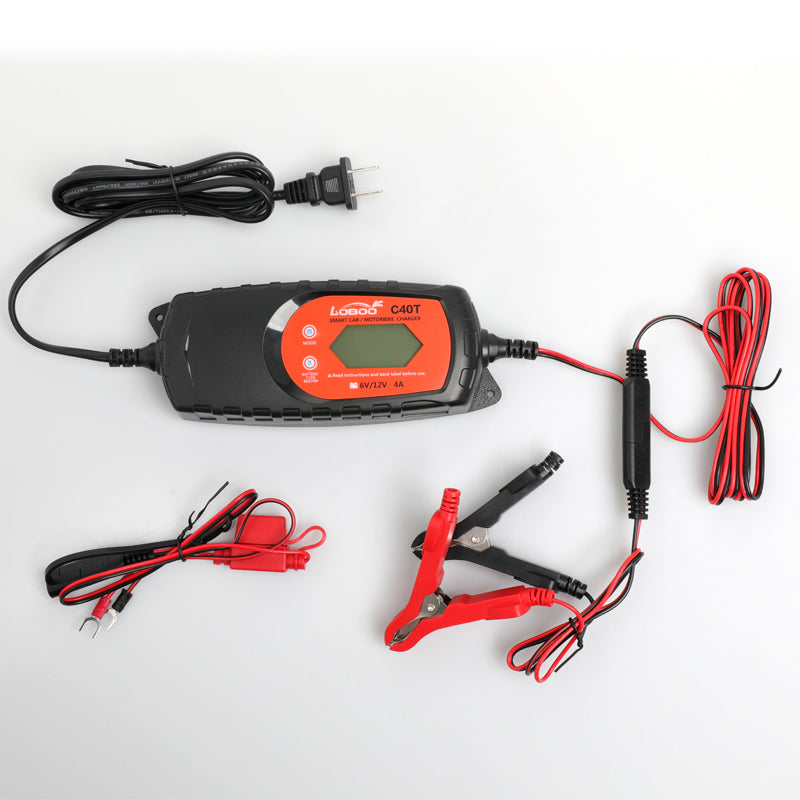
- When your motorcycle is parked, take care of it. Take your time with maintenance, use a battery tender, and plan your spring trip: these things also keep your connection to riding alive. Find the steps in the motorcycle winter storage guide.

- Heat settings
- 4
- Compatible grips
- diameter 29–35 mm
- Installation
- over the original grips
- Price
- 81 €

- Use
- neck and lower face
- Season
- fall and winter
- Price
- 9 €
Most of the other items in the heated motorcycle clothing collection are currently being restocked: check current availability before setting off.
Comfort and fatigue: when a ride stops being relaxing
The benefits of a ride last until your body starts to complain. A stiff neck, strained wrists, knees bent too far: physical fatigue brings mental fatigue with it.

L’ergonomics is well-being, not a luxury
If your shoulders are tense after an hour, the problem is often that the handlebar is too low or too far away. A riser that raises it and brings it closer by a few centimeters straightens your back and relieves pressure on your wrists; wider foot pegs distribute your weight better when you ride standing up on dirt roads. These are small adjustments that make it possible to stay in that state of calm alertness for longer. Learn more in our guide to motorcycle fatigue on long trips and our guide to handlebar risers.

- Rise
- 30 mm
- Stated compatibility
- BMW R 1250 GS, R 1200 GS, S 1000 XR
- Price
- 68 €

- Surface
- 85 × 60 mm
- Material
- CNC aluminum
- Installation
- above the original foot pegs
- Price
- 68 €
For other models, find risers, foot pegs, and comfort accessories in the LOBOO ergonomics and comfort collection.
What a motorcycle can’t do: risk, fatigue, and mental health
It would be dishonest to describe riding a motorcycle as a cure, and anyone who travels knows it. The well-being it brings depends on two things: riding safely and knowing when it’s not the right time.
When it’s better not to set out or to stop
- When you want to ride to vent strong anger or tension: the arousal adds to the arousal, and riding becomes aggressive.
- When you’re tired or haven’t slept much: the attentiveness a motorcycle requires is exactly what you’re lacking.
- When the cold stiffens your hands and makes you tense your shoulders.
- When a difficult stretch repeatedly makes you anxious: turning back or taking another route is an experienced rider’s choice.
The way you travel also changes the experience: some people find peace on their own, while others find it in company. We’ve discussed this in traveling by motorcycle alone and in traveling by motorcycle as a couple.

Frequently asked questions about motorcycles and stress
Does riding a motorcycle really reduce stress?
The strongest study available, published in Brain Research in 2021 by UCLA researchers, measured lower urinary cortisol during about 22 minutes of motorcycle riding compared with periods spent at rest. However, a similar drop also occurred while driving a car. The honest answer is: riding a motorcycle lowers some stress markers compared with being at rest, but the study does not show that it does so more than driving a car.
Where does the figure of 28% less stress come from?
This comes from Harley-Davidson’s January 2019 press release, issued before the scientific publication, which discussed stress hormone biomarkers reduced by 28%, measured as the ratio of DHEA-S to cortisol. In the article published in 2021, the average values are different: the cortisol/DHEA-S ratio drops from 14.4 at rest to 12.0 while riding, about 17% lower by our calculation, and the same 12.0 is recorded while driving a car.
Who funded the UCLA motorcycle study?
The study was funded by Harley-Davidson, as stated in both the 2021 press release and the disclaimer, which notes that the opinions expressed do not necessarily represent those of UCLA. The research was nevertheless published in a peer-reviewed journal, Brain Research, vol. 1752, and is freely available under a CC BY 4.0 license.
How is riding a motorcycle different from driving a car for the brain?
In the UCLA study, the clearest difference was in activation: on a motorcycle, heart rate and epinephrine (adrenaline) rose compared with periods at rest, while in a car they did not rise significantly. Alpha activity in the rear areas of the brain was also lower on a motorcycle than in a car, a signal the authors interpret as greater visual attention.
Is riding a motorcycle like exercising?
No, that comparison should be taken with a grain of salt. On a motorcycle, the average heart rate rose from 74 to 84 beats per minute compared with periods at rest: a mild activation. The comparison with light exercise comes from the sponsor's press release, not from a measurement of energy expenditure. A day of off-road riding puts much more physical demand on you than a ride on asphalt, but none of the studies cited here measured that.
Can motorcycling replace therapy for anxiety?
No. The available studies measure short-term effects in small groups of experienced, healthy motorcyclists. If anxiety, low mood, or insomnia persist, the right person to talk to is a doctor or psychologist. Motorcycling can remain a passion that makes you feel good, alongside treatment, not in place of it.
Why does your mind go blank when you're riding a motorcycle?
Riding requires constant attention: your line, braking, traffic, road surface. When the task is demanding but within the rider's abilities, many describe a state of complete concentration known in psychology as flow. The UCLA study measured signals consistent with greater visual attention; flow in motorcyclists has been studied mainly using questionnaires, such as the 2025 University of Padua study of riders.
Is the Yamaha study claiming that motorcycling is good for the brain reliable?
It is an interesting but weak indication. Yamaha and Professor Ryuta Kawashima's lab at Tohoku University presented it in a press release dated March 4, 2009: 21 people in the first track experiment and 22 in the second, which ran from June to November 2008. The press release mentions improved cognitive functions and reduced stress, but provides no figures, statistics, or scientific publication.
Is it true that 88% of motorcyclists say riding makes them feel better?
This is the result of a 2026 survey commissioned by British insurer Carole Nash: 88% of respondents believe riding is good for their mental health. The articles reporting it give neither the sample size nor the method, so it should be read as the opinion of people who already ride, not as scientific evidence.
How can you keep the benefits of motorcycling in winter?
Shorter rides during the middle of the day work well, along with layered clothing that protects your hands and neck, checking your tires and tire pressure when cold, and choosing a route you know. If your bike sits unused for weeks, taking your time with maintenance and planning a spring trip can also help you stay connected to riding.
How long should a ride last to feel better?
In the UCLA study, each riding session lasted about 22 minutes, so the measured effects relate to a short ride. There’s no data indicating an optimal duration. Beyond a certain point, especially in cold weather, fatigue matters more: when your attention wanes, the benefit becomes a risk, and it’s time for a break.
When does motorcycling stop feeling good?
When you ride to blow off intense anger or tension, when you’re tired, when the cold stiffens your hands, or when fear takes over on a difficult stretch. In these conditions, your attention suffers. Stopping, warming up, or postponing your ride isn’t giving up: it’s how you make sure motorcycling remains something that makes you feel good.
Keep your passion alive this winter
Warm hands, a protected neck, and a riding position that doesn’t wear you out: these are the details that turn a short November ride into that half hour that helps you feel at peace again. Tell us your bike’s make, model, and year, and we’ll suggest compatible accessories. With the Endurrad App for iPhone, you’ll always have the catalog, orders, and blog updates in your pocket, even at a mountain-pass café.
Sources. Vaughn D.A. et al., “Modulation of attention and stress with arousal: The mental and physical effects of riding a motorcycle”, Brain Research 1752 (2021) 147203, full text at eScholarship UCLA; Harley-Davidson press release dated March 2, 2021 (Newswise) and January 17, 2019 (Rider Magazine, Cycle News); Mancin P. et al., “Riding with the flow”, Frontiers in Sports and Active Living, June 13, 2025, DOI 10.3389/fspor.2025.1501123; Yamaha Motor press release dated March 4, 2009; Carole Nash survey reported by Visordown (May 7, 2026); inSella (November 18, 2026), Moto.it (December 11, 2019). Percentage changes calculated by Endurrad from published average values. Product prices and availability verified on November 20, 2026. This article is for informational purposes and does not replace the advice of a doctor or psychologist.