If you're considering the best Yamaha Ténéré travel upgrades, the point isn't to fill the bike with accessories. The point is to understand what really reduces fatigue, risk, and compromises when you're facing three days of Alpine passes, a night ride in the rain, or a hundred kilometers of unpaved road with luggage on board.
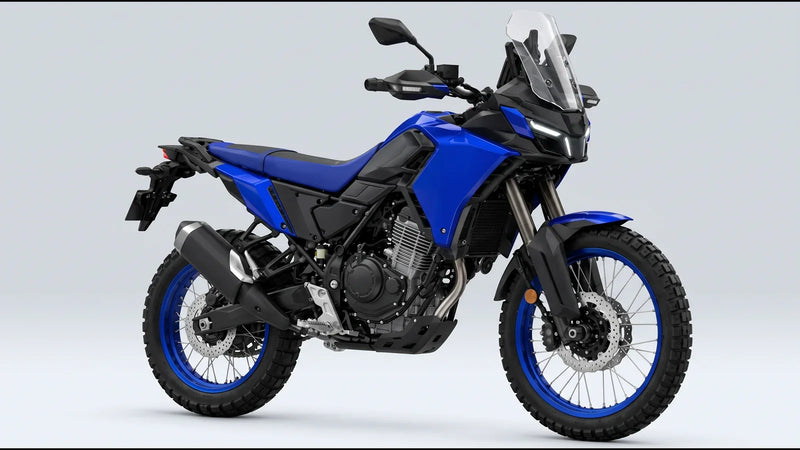
The Ténéré, whether the 700 or 1200, starts with an honest foundation that is very well suited to travel. Precisely for this reason, upgrades should be chosen carefully. Some change the way you tackle a long day. Others look impressive in the garage and only weigh on your wallet and the bike.
Best Yamaha Ténéré travel upgrades - where to really start
The priority depends on how you use the bike. If you do long transfers and mixed roads, it makes sense to work on comfort, wind protection, and load capacity. If your trip includes real off-road riding, keeping weight low, protecting exposed parts, and improving control while standing on the footpegs matter more.
That is why it makes sense to think in four areas: protection, luggage, ergonomics, and electrical power. That is where the Ténéré goes from being a capable motorcycle to a properly prepared travel companion.
1. Serious protection, not parking-lot accessories
The first useful upgrade is almost always protection. Not because you are bound to crash, but because when traveling, one wrong footing on loose ground, a maneuver with a loaded bike, or a badly placed rock is enough to ruin your day.
On a Ténéré 700, it makes sense to start with a well-designed skid plate and side protection suited to how you use the bike. If you ride on asphalt with light off-road sections, you can stop at a good lower protection system. If you carry luggage and ride over rocky ground or easy trails, crash bars and targeted protection start to make sense.
Here, the compromise is simple: the more you protect, the more weight and bulk you add. That is why there is no single right kit for everyone. On a Ténéré 1200 intended for fully loaded touring, the extra weight is less noticeable and structural protection offers more value. On a 700 also used off-road, every kilogram needs to be justified.
2. Luggage: hard cases or soft bags?
This is one of the choices that has the greatest impact on a trip, and not just because of capacity. Luggage changes the bike's balance, its width in traffic, how easily you can maneuver on a slope, and even how relaxed you feel when leaving the bike in front of a hotel.
Aluminum cases make sense if you do long transfers, multi-day trips, carry organized equipment, and want a rigid structure that simplifies loading. They are practical when you need to open, close, and find everything quickly. On the other hand, they add weight high up and make the rear considerably wider.
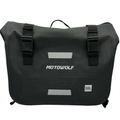
Soft and semi-rigid bags are often the smarter choice on the Ténéré 700. They keep the weight more manageable, suffer less in low-speed drops, and suit a dynamic riding style better. You give up some ease of access and, in certain cases, protection for the contents.
The right question is not which system is superior. It is this: how much of your trip do you actually spend riding standing up, squeezing through narrow roads, or picking the bike up on uneven ground? The more that share increases, the more logical soft luggage becomes.
3. Seat and ergonomics - the upgrade you feel after 300 km
Many riders start with the exhaust or windscreen. In reality, if you do real touring, ergonomics catch up with you before everything else. The stock seat may be fine for medium-length rides, but after several consecutive hours, leg position, pelvic support, and freedom of movement begin to take their toll.
A more suitable seat does not always mean a softer one. If it is too yielding, it compresses more poorly after a while. What you want is better support over time and a shape that does not force you to change position every half hour.
The same applies to handlebar risers, footpegs, and windscreens. If you are tall and often ride standing up, a few carefully chosen millimeters at the handlebar can change your posture off-road. If you mainly ride fast asphalt, better airflow management is worth more than any cosmetic accessory. Just be careful not to add modifications at random: different footpegs change your knee angle, while handlebar risers change the load on your arms. The overall setup matters more than any individual part.
4. Handguards and heated grips: little show, lots of benefit
When it comes to travel, these are underrated upgrades until you need them. Handguards protect levers and hands not only from branches or minor falls, but also during transfers in rain, cold, and dirty air.
Heated grips are not a winter luxury. They are a practical way to keep feeling in your fingers on early starts, returns from high elevations, or when you pass through two seasons in the same day. If you lose sensation, the brake and clutch become more tiring and less precise. Over long distances, this difference is much more noticeable than it might seem from the product description.
5. Navigation mount and electrical power
On modern trips, the cockpit matters. Not because you need to fill the handlebar with screens, but because you need readable navigation, stable power, and controls that are accessible while wearing gloves.
A properly designed GPS or smartphone mount should remain readable both standing and seated, without annoying vibrations or forcing you to take your eyes too far from the road. The critical point is installation: the wrong position can reduce instrument visibility or create unnecessary reflections.
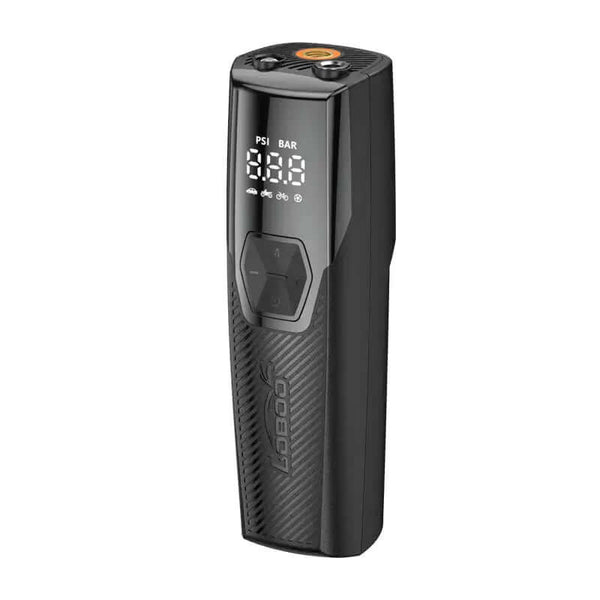
A USB or 12V socket also only makes sense if it is installed with real travel in mind. Rain, mud, vibration, and poorly managed cables are unforgiving. If you use your phone for navigation for hours, you will notice the difference between stable power and an improvised connection before the next border crossing, not afterward.
6. Auxiliary lights - useful, but only for certain routes
This is a classic upgrade to consider carefully. LED auxiliary lights are extremely valuable if you ride at night, frequently travel through areas with difficult visibility, or want fuller side lighting on secondary roads. In those situations, they reduce fatigue and give you more time to read the road ahead.
However, if you almost always travel during the day, their real-world impact may be smaller than that of protection, a seat, or luggage. They also need to be installed with clean brackets and wiring. A powerful light mounted poorly vibrates, causes annoyance, and eventually creates more problems than benefits.
7. Footpegs suited to your use
Footpegs do not stand out much in photos, but you notice them immediately when riding. If you ride off-road, a wider platform provides better support with rigid boots and distributes your weight better when standing for long periods. If you only ride on asphalt and tour, the benefit may be more marginal.
There is a compromise here too. More aggressive footpegs help with off-road control, but they can be less pleasant in urban use or with less structured footwear. They are worthwhile only if your trip genuinely includes sections where you ride standing up, rather than just the occasional gravel road.
8. Tires and repair kit - less glamorous, more practical upgrades
It is not the accessory people debate at the bar, but it is often the one that changes a trip the most. Choosing the right tire for the Ténéré depends on the actual ratio of asphalt to off-road riding, not on what you would like to tell yourself before setting off.
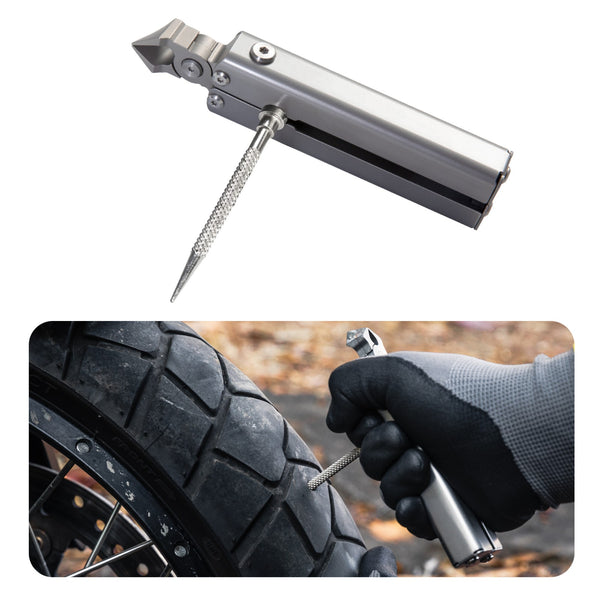
A tire that is too off-road-oriented on a trip with lots of fast roads gives you more noise, faster wear, and less precision. A tire that is too road-oriented, on the other hand, takes away your confidence as soon as the surface deteriorates or the weather turns bad. Along with the tires, a sensible repair kit and carefully selected tools have enormous practical value. They take up little space and can prevent a minor problem from becoming a lost day.
What you can postpone without worry
If you are building the bike gradually, there is no need to do everything at once. Exhausts, cosmetic details, redundant cockpit accessories, and components that do not solve a clear problem can wait.
Always ask yourself first: does this upgrade prevent a real limitation? Does it help me ride better, get less tired, protect the bike, or manage the load more efficiently? If the answer is vague, it probably is not a priority.
How to choose the right upgrades for your Ténéré
The cleanest way to choose the best Yamaha Ténéré travel upgrades is to start with your most demanding scenario, not with your Sunday ride. Think about the day when you are tired, the bike is loaded, the weather changes, and you still have distance to cover. That is when an accessory shows whether it is genuinely useful.
If you are preparing a Ténéré 700 for mixed travel, the most sensible order is usually essential protection, suitable luggage, ergonomics, navigation, and then lighting. On a Ténéré 1200 geared more toward touring, comfort, load capacity, and electrical management move higher up the priority list.
On Endurrad, this approach makes sense because model-based selection helps you avoid the most frustrating mistake of all: buying an accessory that is good in theory but wrong for your bike or your way of traveling.
The Ténéré does not ask for much to take you far. It only asks that every added part have a clear purpose. When upgrades come from a real problem, the bike remains simple, more effective, and much more your own.