You almost always get your first motorcycle wrong for the same reason: you choose it with your head full of images and far too few hours in the saddle. If you're wondering how to choose your first motorcycle, the point isn't to find the one that excites you while it's standing still, but the one that lets you ride well after three hours, during maneuvers, in the wet, and when you're tired.
The right motorcycle at the beginning doesn't have to impress you at the bar. It has to forgive a slightly messy corner entry, a poorly executed braking maneuver, a U-turn on a slope, and parking on gravel. This matters even more if your goal isn't the city, but touring, back roads, and perhaps your first easy off-road sections.
How to choose your first motorcycle based on real-world use
The useful question isn't "what motorcycle do I like?" but "where will I actually use it over the next 12 months?" If you imagine taking long trips but will really be doing Sunday rides and a few long weekends, you need a motorcycle that helps you grow today, not one that could theoretically take you to the North Cape.
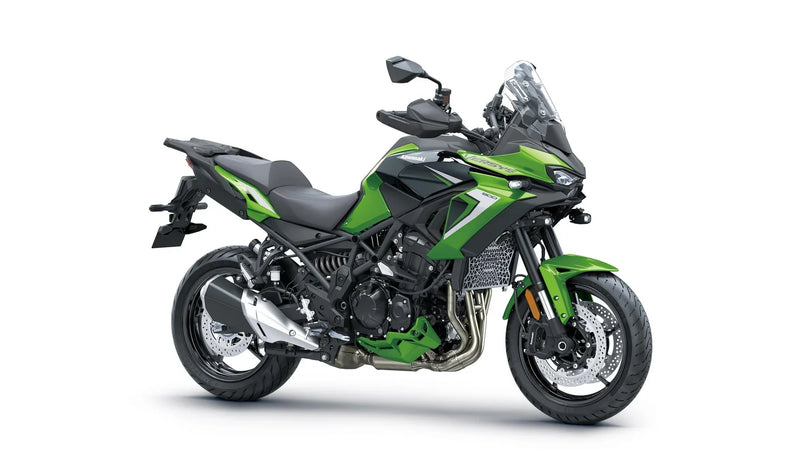
For mixed road and touring use, a sensible mid-size motorcycle is often the smartest choice. Motorcycles such as the CB500X, V-Strom 650, Versys 650, F 750 GS, or Himalayan have a practical advantage: they teach you without making every maneuver difficult. You have enough engine for main roads and highways, but not so much inertia that every mistake becomes a problem.
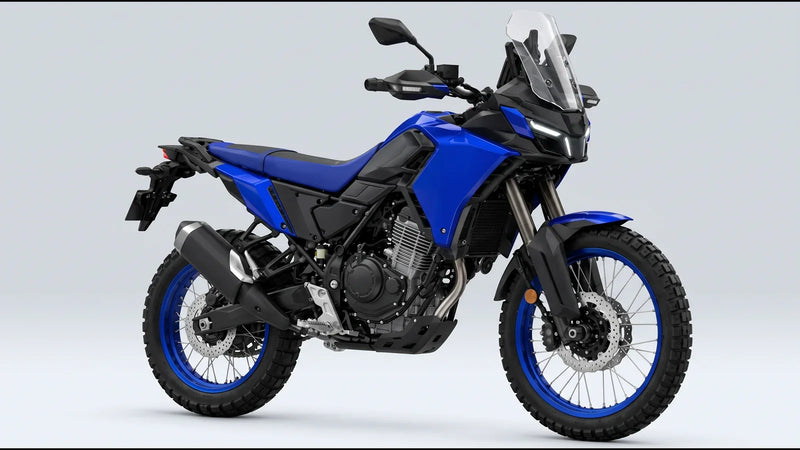
If, on the other hand, you're aiming for an adventure setup right away, the temptation to move up to a Ténéré 700, F 850 GS, or Africa Twin is understandable. These are capable, serious motorcycles for serious touring. But your height, your experience, and above all where you'll ride matter a great deal here. A tall motorcycle with a 21-inch front wheel can offer a lot on broken roads and gravel, but slow maneuvers require more technique and confidence.
Weight matters more than power
Beginners look at horsepower. Almost always, they should be looking at kilograms. You feel the weight when you're reversing with the engine off, when the road is sloped, or when you have to stop awkwardly with the handlebars turned. That's when you understand whether the motorcycle is really yours or whether you're struggling with it.
A first motorcycle doesn't have to be absolutely lightweight, but it must feel manageable at low speed. If it already puts you under pressure while stationary, after a full day it will feel even bigger. And when a motorcycle intimidates you, you ride more rigidly, make more mistakes, and learn more slowly.
This doesn't mean maxi enduros are forbidden. It means that, if this is your first experience, you need to test them honestly. An R 1250 GS or a 1290 Super Adventure can be docile while moving, but their mass is still there during maneuvers. If you're physically strong, have good balance, and perhaps have previous off-road experience, the situation changes. If you're starting from zero, a mid-size engine usually gives you more room for error.
Seat height, ergonomic triangle, and control
Many people reduce everything to the classic "being able to touch the ground well." In reality, the issue is broader. You don't necessarily need to place both feet flat on the ground, but you must be able to stop and set off again without anxiety. If every stop forces you to decide in advance which side you're going to fall on, the motorcycle is simply too demanding for where you are right now.
Along with seat height, look at the width of the seat itself, the distance to the handlebars, and the footpeg position. Two motorcycles with the same stated height can feel very different. A wide seat spreads your legs and worsens your footing. Handlebars that are too far away put extra weight on your shoulders. High, rear-set footpegs close your knees and tire you sooner.
If you're thinking about trips of 300-500 km per day, ergonomics are not a detail. They determine whether you arrive alert or exhausted. And for beginners, they matter twice as much, because when your movements aren't automated yet, every physical discomfort takes attention away from riding.
An easy engine beats a spectacular engine
At first, a predictable engine helps. Progressive throttle response, linear power delivery, a manageable clutch, and a gearbox that doesn't make you fight it. In practice, you want a motorcycle that does exactly what you ask, without surprising you when exiting a corner or navigating tight hairpins.
That's why a mid-size twin-cylinder or a well-tuned single-cylinder engine can often be an excellent teacher. Not because they are slow, but because they let you understand what you're doing. A very powerful motorcycle may seem "easier" during a short test ride, thanks to electronics, but it still requires more maturity when the pace increases or the surface deteriorates.
If your goal is motorcycle touring, strong mid-range torque matters more than top speed. On a trip, you use flexibility, smoothness, reasonable fuel consumption, and less stress. These qualities are less flashy, but after 600 km they become very tangible.
Choose according to the route, not the ultimate dream
Many people buy a motorcycle for the biggest trip they might take once. It's better to choose it for 90% of your actual rides. If you'll mainly ride on asphalt, take a few gravel roads, and carry light luggage, a mid-size crossover makes more sense than a taller, heavier, more specialized machine.
If, on the other hand, you already know you'll be looking for frequent off-road riding, then a 21-inch wheel, longer-travel suspension, and a natural standing position become practical rather than aesthetic features. But here too there's a compromise: the more a motorcycle is oriented toward off-road use, the more adjustment it may require on long transfers, especially with a passenger and luggage.
The truth is simple: there is no perfect first motorcycle for everything. There is the one that best matches your skill level, your build, and the type of road you'll actually ride.
Real costs: purchase, protection, and equipment
The budget isn't just the price of the motorcycle. If you want to use it for touring, you need to account from the start for the expenses that really matter: insurance, maintenance, tires, proper technical riding gear, and essential accessories. This is where many people get their calculations wrong.
Buying a motorcycle at the limit of your budget and then postponing everything else is a false economy. On a first motorcycle, protection and practicality make more difference than a few extra horsepower. Handguards, crash bars if designed for that model, a sensible luggage solution, a stable navigation mount, and suitable clothing change the experience far more than a carefully read specification sheet.
If you're looking at an adventure or touring model, also think about the availability of specific accessories. A motorcycle with strong aftermarket support lets you adapt it as you grow: the essentials first, then the rest. Endurrad takes exactly this approach, focusing on model compatibility and real-world use, which matter more on a first motorcycle than an endless catalog.
New or used?
For many people, the sensible first choice is a recent, sound, verifiable used motorcycle. The advantage is clear: you spend less, absorb a potential misjudgment more easily, and feel less anxious about the small inevitable marks of learning. A well-maintained used motorcycle lets you learn more calmly than a new one you're afraid even to park.
The important thing is not to buy based solely on price. Maintenance history, the condition of the drivetrain, tires, brakes, any crashes, and whether accessories were installed properly all matter. On an adventure motorcycle, also inspect the plates, subframes, skid plate, and mounting points carefully. A motorcycle that has seen gravel isn't inherently a problem. The problem is not understanding how it was used.
Buying new makes sense if you want a warranty, manageable financing, and a motorcycle to keep for years. But as a beginner, you're paying more for a need that you can often satisfy with a better-selected used motorcycle.
If you want to learn more, download our e-book How to Choose the Right Motorcycle — PRO Guide
Tests to carry out before deciding
If you can, test more than one motorcycle on the same day. A few miles are enough to understand a lot, but you need to look at the right things. When setting off, notice whether you immediately feel at home or are compensating. During maneuvers, assess how heavy it feels. Under braking, see whether you can modulate it naturally. On uneven ground, check whether the motorcycle follows the surface well or tires you out.
There's also a simple and very honest test: imagine yourself with that motorcycle loaded up, wearing touring boots, perhaps in the rain, at the end of the day. Do you still feel in control or not? The right first motorcycle is the one that makes you want to use it often, not the one that forces you to be at 100% all the time.
The most common mistakes when choosing your first motorcycle
The first is buying too soon, after falling in love with a design or a name. The second is overestimating how much off-road riding you'll actually do. The third is underestimating weight and seat height because "I'll get used to it." Sometimes that's true, but adapting under stress isn't the best way to learn.
There's also the opposite mistake: choosing a motorcycle that's too small for your actual plans. If you already know you'll be taking long trips, riding ring roads, crossing mountain passes, and carrying luggage, a platform that's too limited may feel cramped within a few months. The point is to find headroom, not excess.
That's why the best choice is often neither the most exciting nor the most cautious option overall. It's the one that lets you grow without punishing you. If a motorcycle lets you ride your first 10,000 km well, you've probably chosen wisely. And after those kilometers, you'll understand much better what you really need in your second motorcycle.
Want to learn more? Download our e-book How to Choose the Right Motorcycle — PRO Guide