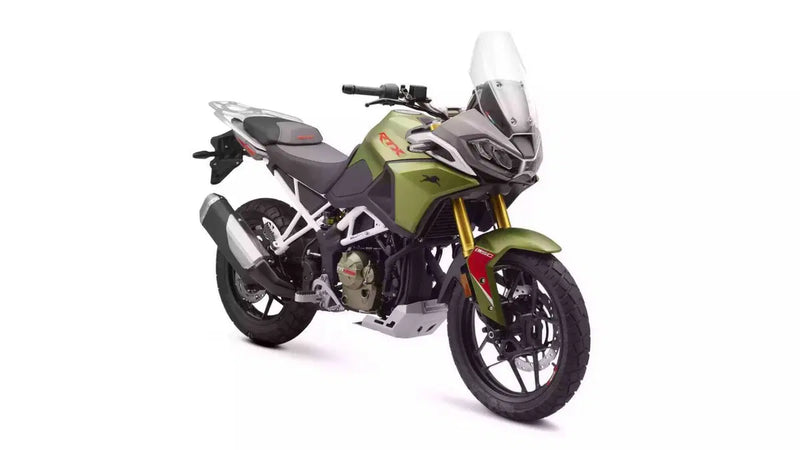



Anyone who racks up the miles knows: the problem isn’t setting off, it’s still arriving clear-headed after 400 or 700 km. When it comes to the best motorcycle touring comfort accessories, the difference isn’t made by the flashiest gadget, but by the one that reduces fatigue, tension and stress in the saddle for hours, on perfect asphalt as well as on long stretches with rough sections.
On a touring or adventure motorcycle, comfort isn’t a luxury. It’s a technical component that affects control, safety and the ability to ride well even at the end of the day. An incorrect position tires the shoulders, an ineffective windscreen sends turbulence onto the helmet, and an unsuitable seat turns the journey into a series of forced stops. That’s why it makes sense to think in terms of real priorities, rather than picking accessories at random.
How to choose the best motorcycle touring comfort accessories
The first rule is simple: comfort is personal, but not random. It depends on the rider’s height, the motorcycle’s geometry, riding style, whether you ride with a passenger, luggage and the proportion of off-road riding. An accessory that works well on a BMW GS may require a different approach on a KTM Adventure or a Yamaha Ténéré, because the seat-handlebar-footpeg triangle, aerodynamic protection and weight distribution can vary considerably.
That’s why, before buying, it makes sense to ask yourself three questions. Where does the discomfort start after two hours? Neck and helmet in the airflow, a poorly loaded back, legs bent too much, numb hands? And then: does the problem appear during fast transfers or slow off-road riding? Finally: do you need more comfort for the rider, the passenger or both? This is how you understand which accessories really make sense.
Comfort seat: the first upgrade that changes the journey
If there’s one component that makes an immediate difference, it’s the seat. A well-designed touring seat distributes weight more effectively, reduces pressure points and limits the progressive fatigue that, after many hours, makes you keep shifting around to find relief.
It’s not just about the padding. A seat that’s too soft often feels comfortable for the first few miles, but over the long term it can compress too much and create pressure in the wrong places. A more technical solution instead focuses on material density, seat shape and genuine support. For frequent travellers, including couples, the difference is clear.
There’s a trade-off to consider here. A wider, more supportive seat is excellent for road touring, but it can restrict movement more during light off-road riding or when you frequently ride standing up. Those who alternate between asphalt and dirt need to find a balance, rather than chasing maximum static comfort at the expense of dynamic control.
Windscreen and deflectors: less air, less fatigue
Many people underestimate aerodynamics. In reality, a large part of the fatigue on long transfers comes from turbulence, air pressure on the chest and continuous noise around the helmet. A suitable windscreen, perhaps combined with side deflectors or adjustable spoilers, can noticeably improve the quality of the ride.
There is no one correct size for everyone, however. A rider who is 1.90 m tall and one who is 1.72 m tall will have very different impressions on the same motorcycle. The helmet also makes a difference. Some setups eliminate pressure on the chest but create turbulence around the visor. Others do the opposite. That’s why compatibility with the motorcycle model is essential, but not enough: you also need smart adjustability and a configuration suited to your height.
On large adventure touring motorcycles, the best result often comes from a combined system rather than a single component. The main windscreen, upper extension and well-positioned deflectors work together to smooth out the airflow. The benefit isn’t just comfort: at the end of the day you arrive less tense and with more energy for technical or urban sections.
Handlebar risers and riding position
If you feel tension between your shoulder blades, in your trapezius muscles and in your lower back after a few hours, the cause may be a posture that is too far forward or, conversely, unnatural for the handlebar width. Risers are designed to correct height and setback, improving the ergonomic triangle.
They’re simple accessories only in appearance. A few millimetres can make a big difference, especially on adventure motorcycles that are ridden both seated and standing. A slightly raised handlebar helps take the load off your wrists and shoulders during long transfers, but above all makes the standing position on dirt more natural.
Here too, extreme solutions should be avoided. If you raise the handlebar too much without considering the cables, hoses and weight distribution, you can reduce front-end feel. The right choice is the one that improves comfort without changing the bike’s riding character.
Footpegs and rubber inserts: comfort for legs and feet
Long journeys put a great deal of strain on the legs. A triangle that is too tight tires the knees and hips, especially for taller riders. In these cases, lowered footpegs or footpegs with a wider platform can provide a real advantage. Foot support improves and the position becomes less cramped.
For those who ride mostly on asphalt, anti-vibration rubber inserts on the footpegs help filter out some of the minor vibrations. Those who often ride off-road, on the other hand, prefer wider, more technical, serrated footpegs that offer greater control while standing. It depends on the main use. Comfort and grip must remain balanced.
A detail that is often overlooked is the passenger. If you ride as a pair, the rear footpegs affect the quality of the entire day. An uncomfortable position at the back means more stops, more movement in the saddle and less overall stability.
Heated grips and hand protection
Comfort isn’t only about ergonomics. Temperature matters too, and a lot. Cold hands mean less sensitivity on the brake, clutch and controls, as well as greater overall fatigue. Heated grips are one of the smartest accessories for those who travel in the shoulder seasons, at high altitude or through areas with significant temperature swings.
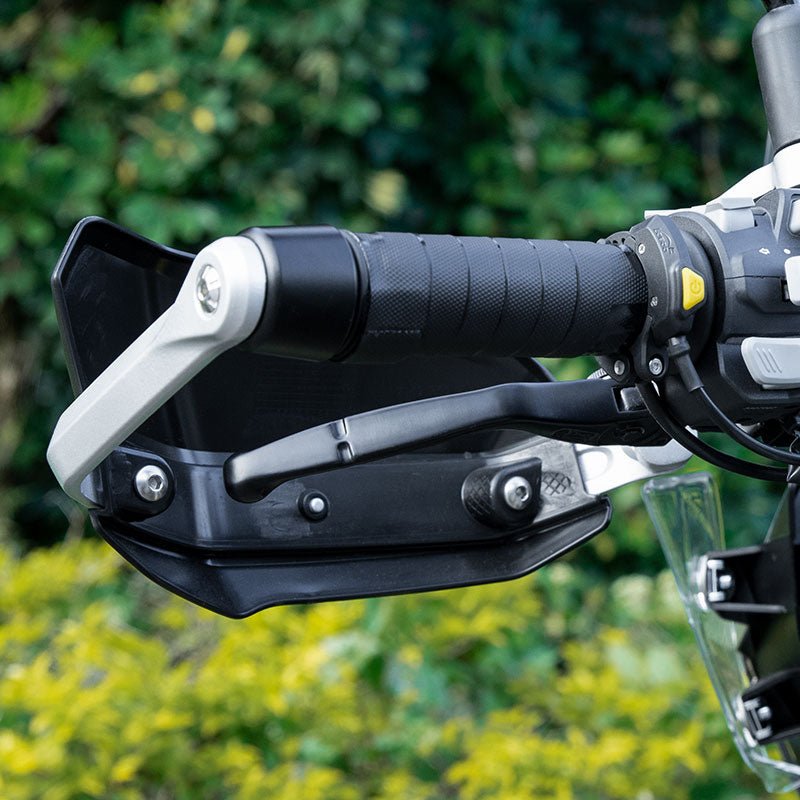
Combined with effective handguards, they reduce exposure to air, water and cold. They aren’t only useful in winter. A long stage in the rain or a mountain pass taken early in the morning is enough to understand how much they affect real comfort.
In this area, it’s worth choosing reliable, well-integrated components that are compatible with the motorcycle’s electrical system. The last thing you want on a journey is an accessory that has been fitted badly or has poorly designed electrical management.
Cruise control, throttle lock and reduced fatigue
During motorway transfers or on very smooth main roads, the right hand stays in the same position for hours. This is a classic source of fatigue in the wrist, forearm and shoulder. If the motorcycle has cruise control, the long-distance benefit is obvious. Where it isn’t available, a mechanical throttle-support system can still reduce the load.
It isn’t a priority accessory for everyone. If you mainly ride mixed roads, mountain passes or off-road routes, the benefit is limited. But for those who often cover long transfers before reaching the most interesting part of the journey, it’s a very sensible upgrade.
Tank bags, luggage and weight distribution
Luggage affects comfort more than it may seem. A motorcycle that’s loaded incorrectly becomes more tiring to ride, especially during slow manoeuvres and fully loaded U-turns. Panniers, top cases, soft bags or semi-rigid bags should be chosen not only for capacity, but also for overall balance.
A heavily loaded top case can make transfers easier, but worsen behaviour on rough surfaces and increase rear-end inertia. Panniers distribute the load better, but make the motorcycle wider and change its overall dimensions. A tank bag is convenient for items you want close at hand, but if it’s too large it can interfere when riding standing up.
In other words, comfort isn’t just about sitting comfortably. It also means having a motorcycle that is predictable, balanced and easy to manage at every stage of the journey.
Motorcycle touring comfort accessories that are genuinely useful for each model
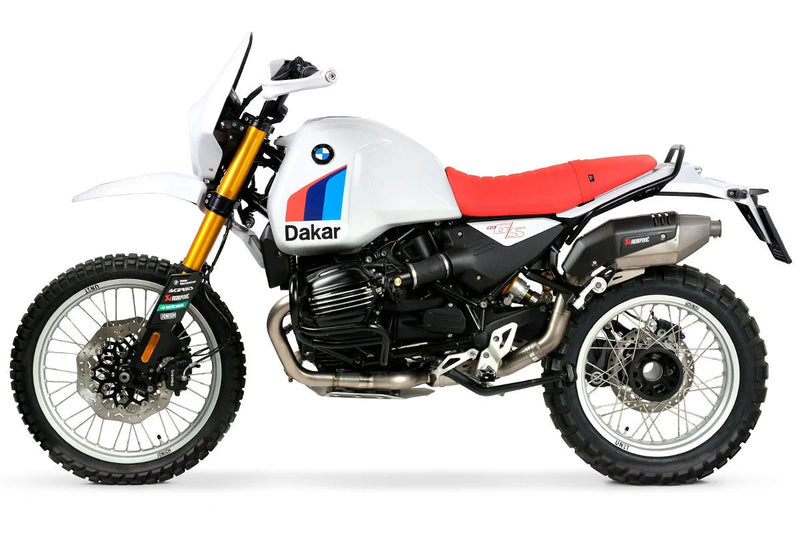
Compatibility matters more than theory. On a Honda Africa Twin, it may make sense to work first on the windscreen and handlebar. On a BMW GS, the focus is often on the seat, fine-tuning the aerodynamics and footpeg position. On a KTM Adventure, where the motorcycle’s dynamic character remains central, it’s best to choose accessories that improve comfort without making the bike feel heavier. On a Yamaha Ténéré, meanwhile, many riders look for a balance between mobility off-road and support during long transfers.
This is where a technical selection organised around the motorcycle model and real-world use makes the difference. Endurrad takes precisely this approach: premium accessories designed for specific motorcycles, chosen to handle touring, asphalt and mixed sections without unnecessary compromises.
Where to start if you really want to improve comfort
If your motorcycle is already fundamentally good, there’s no need to transform it. The most sensible approach is to start with the areas that have the greatest effect on real fatigue: the seat, wind protection and riding position. Only afterwards does it make sense to fine-tune things with footpegs, hand temperature management and luggage accessories.
The most common mistake is buying a lot and correcting very little. The right approach, instead, is to make targeted changes with components that are compatible and suited to the way you travel. Because true comfort isn’t measured by the number of accessories fitted, but by the miles covered well - and by your desire to set off again the next morning.