In brief. A motorcycle smart display with CarPlay and Android Auto is a waterproof 5–7-inch screen that attaches to the handlebars and wirelessly displays the phone's apps: Google Maps, Waze, Apple Maps, music and calls. The phone stays in your pocket, protected from rain and vibrations; however, the phone continues to handle navigation.
Compared with a navigator such as the Garmin zūmo XT2, it costs less and uses the apps you already know, but it cannot navigate without your phone. Before buying, check five specifications: brightness in nits, IP rating, power supply, mount type and extra features (dashcam, tire pressure sensors, BMW controls). In this guide, we explain them one by one and compare the most popular displays using the data stated by the manufacturers, including the JADO S6 that we sell and support directly.
The smart display projects the phone; it does not replace it
CarPlay and Android Auto were designed for cars: the phone does the calculations, while the onboard screen displays a simplified interface with large icons. A motorcycle smart display brings the same logic to the handlebars, inside a watertight housing.
The connection is twofold: Bluetooth plus Wi-Fi
The phone pairs with the display via Bluetooth, then the image is projected over direct Wi-Fi between the two devices. That is why the best displays also work on the less crowded 5 GHz band. After the first pairing, the connection resumes automatically when you turn on the ignition.
The maps, route calculation and traffic information remain on the phone: if the navigation app has maps downloaded for offline use (Google Maps allows this), it also works without a data connection. The screen itself does not contain maps.
What the more complete models add
In addition to projection, many displays integrate features that the phone on the bike cannot provide: front and rear dashcams with recording in the event of a collision, tire pressure sensors (TPMS), blind-spot vehicle alerts via camera, handlebar controls and, on some BMWs, use of the Wonder Wheel. They are almost always optional accessories: the «base» price of a display should be considered together with that of the modules you actually need.

CarPlay display, sat nav, or smartphone: three paths with different limitations
The right question is not which one is «the best», but where you want the maps to be and what happens when your phone is absent, runs out of battery, or loses signal.
| Appearance | Smart CarPlay / Android Auto display | Motorcycle sat nav (e.g. Garmin zūmo XT2) | Smartphone on a mount |
|---|---|---|---|
| Where navigation takes place | On the phone, projected onto the display | On the sat nav, with its own maps and route calculation | On the phone |
| Without a phone | No navigation (dashcam and sensors remain available, if present) | Navigates independently | Not applicable |
| Available apps | Those compatible with CarPlay / Android Auto | Only the manufacturer's software and apps | All of them |
| Phone protection | In your pocket: no direct vibrations, rain, or sun on the screen | The phone is not needed | Exposed to vibrations, water, and overheating |
| Water resistance | From IP67 to IP69K depending on the model | IPX7 for the zūmo XT2 (Garmin specification) | Depends on the phone and case |
| Indicative price | From around €300 to over €600 with accessories | €599.99 at launch (zūmo XT2, 2023) | The cost of the mount |
- you plan trips with Google Maps, Waze, or Apple Maps and want the same apps while riding
- you want to protect your phone's camera from handlebar vibrations
- you are interested in a dashcam and tire pressure sensors in a single device
- you often travel where there is no network and do not want to depend on your phone's offline maps
- you use complex GPX tracks and the manufacturer's group features
- you want a device that also works when your phone is dead

The five technical-specification figures that determine the purchase
Manufacturer spec sheets are full of acronyms. Five really matter to motorcycle travelers; the rest is almost always marketing.
1. Brightness in nits
The nit measures how much light the screen emits. In bright sunlight with a clear visor, it is the factor that separates a readable display from one that makes you lower your gaze. Stated values range from approximately 1,000 nits (Carpuride W702 Pro) to 1,800 nits (JADO S6) and up to 2,300 nits (Chigee AIO-6). The automatic light sensor also matters, as it lowers brightness at night to prevent glare.
2. IP protection rating
The first digit indicates protection against dust, and the second against water. Ratings are not cumulative: IP69K is not automatically also IP67, because the tests are different.
| Rating | What it tests | What it means on a motorcycle |
|---|---|---|
| IPX7 | Temporary immersion up to 1 m for 30 minutes; no dust test | Withstands heavy rain |
| IP67 | Complete dust protection + temporary immersion up to 1 m for 30 minutes | Rain and dust from unpaved roads |
| IP68 | Dust + prolonged immersion under conditions declared by the manufacturer | As above, with additional margin |
| IP69K | Dust + water jets at 80 °C and 80–100 bar from 10–15 cm (ISO 20653 standard) | It also withstands pressure-washer jets; the most stringent level for motorcycle displays |
3. Screen size and resolution
The 5-inch model suits naked and smaller motorcycles, the 6-inch model is the most common compromise on large adventure bikes, while the 7-inch model shows more of the map but takes up more space and may cover the instrument panel. Legibility at a glance matters more than resolution: large icons and high contrast.
4. Power supply
A motorcycle display is powered by the 12 V electrical system. It is better if it accepts a wide range (the JADO S6 states 9–32 V) and if the wiring includes a switched-power (ACC) wire, so it turns on and off with the ignition. Some budget models can also be powered via USB: convenient, but the connection is less watertight.
5. Mount and extra features
The mount determines whether the display vibrates, whether it can be removed when parked, and whether it ends up in front of the dashboard. Extra features (dashcam, tire sensors, BMW controls) are worthwhile only if you need them: consider the total price, including accessories.

Four models compared using the manufacturers' data
We compared three smart displays widely available in Europe and, for reference, the Garmin navigator most commonly used by motorcycle tourists. All data comes from the manufacturers' official websites, consulted on October 6, 2026.
| Voice | JADO S6 | Chigee AIO-6 | Carpuride W702 Pro | Garmin zūmo XT2 |
|---|---|---|---|---|
| Type | Smart display | Smart display | Smart display | Standalone navigator |
| Screen | 6", 1280×640 | 6", 1280×720 | 7", 1024×600 | 6" |
| Declared brightness | 1,800 nits | 2,300 nits | 1,000 nits | not declared in nits |
| Protection | IP69K | IP69K | IP67 | IPX7 |
| CarPlay / Android Auto | Yes, wireless (plus HiCar) | Yes, wireless | Yes, wireless | No |
| Dashcam | Optional, 2 1080p cameras | Cameras included or optional depending on the version | No on this model | No |
| Tire pressure sensors | Optional | Compatible | Optional | No |
| BMW controls | Wonder Wheel with dedicated module | Wonder Wheel with dedicated modules | Not declared | – |
| Reference price | €379 on Endurrad | $499 (Max) and $599 (LTE 4G) on chigee.com | $339.99 on promotion, $459.99 list price on carpuride.com | €599.99 at launch |
How to read the table
Chigee AIO-6 is the display with the highest declared brightness, and the LTE version has its own 4G module with SIM, useful for tracking and anti-theft protection; it costs more and the official prices are in dollars. Carpuride W702 Pro focuses on its 7-inch screen and price, but with 1,000 nits and IP67 it is better suited to road touring than off-road riding. JADO S6 sits in the middle: IP69K, 1,800 nits and an ecosystem of accessories (cameras, sensors, mounts) that can be purchased one piece at a time. The Garmin zūmo XT2 remains the only one of the four that navigates without a phone.

JADO S6: what it does, what it costs and what still needs to be confirmed
This is the display we know best because we sell it, ship it and provide support for it. For this reason, we separate the manual's data from the promotional materials, which do not match in some respects.

- Screen
- 6" IPS, 1280×640
- Brightness
- Up to 1,800 nits, automatic sensor
- Protection
- IP69K, from −20 to +70 °C
- Connections
- Wireless CarPlay, Android Auto and HiCar; Bluetooth 5.0; 2.4 / 5 GHz Wi-Fi
- Positioning
- GPS, BDS, GLONASS, Galileo, QZSS
- Storage
- 32 GB eMMC, microSD up to 256 GB (U3)
- Power supply
- 9–32 V, wiring with switched power
- Dimensions and weight
- 167 × 86 × 28 mm, 430 g
- Price
- €379.00 (list price €429.00)
- Projects CarPlay, Android Auto, and HiCar wirelessly
- Records with the optional cameras, even when the motorcycle is parked
- Displays tire pressure and temperature with the optional sensors
- It can be updated via Wi-Fi (OTA) or from a memory card
- It does not navigate without a phone: it has no built-in maps
- It has no internal battery: it must be connected to the motorcycle's electrical system
- Does not record without the camera kit, sold separately

Cameras, sensors, and remote control are purchased separately, only if needed
The S6 price includes the display and basic mounting hardware. The accessories turn the display into a dashcam, tire monitoring unit, or remote control: prices and availability updated here as of October 6, 2026.
| Accessory | What it is for | Price | Availability |
|---|---|---|---|
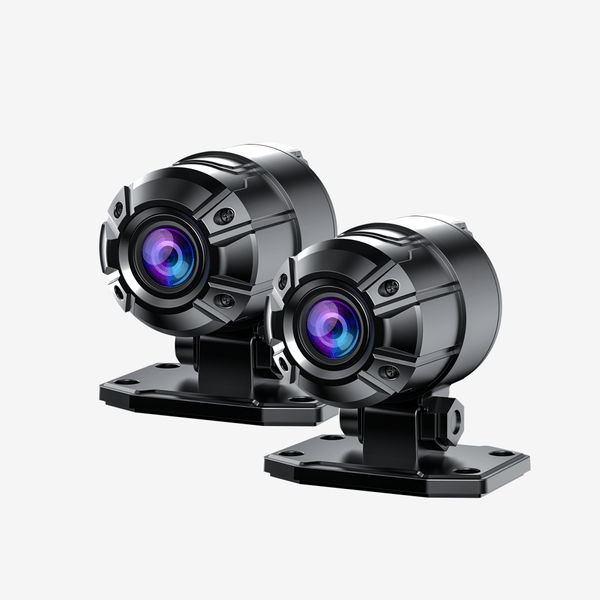
| 2-camera 1080p Sony Starvis kit | Front and rear dashcams, blind spot warning | 85,00 € | Available |
| Quick-release mount for BMW preparation | Mounting on the original BMW navigation base | 82,00 € | Available |
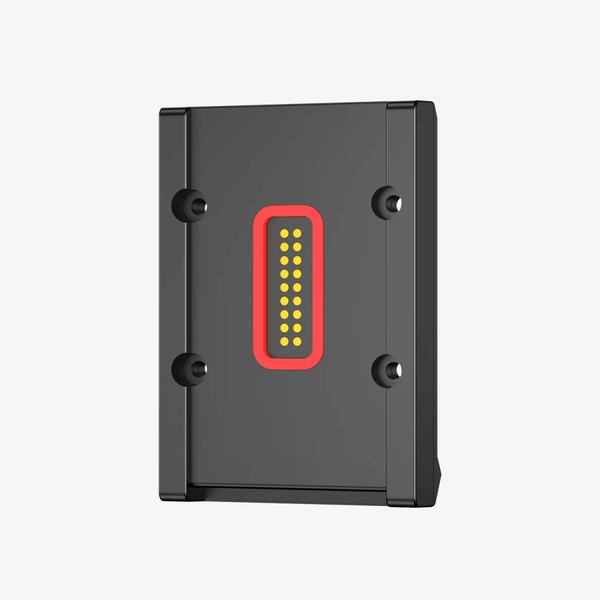
| Universal quick-release mount with power supply | Attach and detach in seconds on any motorcycle | 82,00 € | Available |
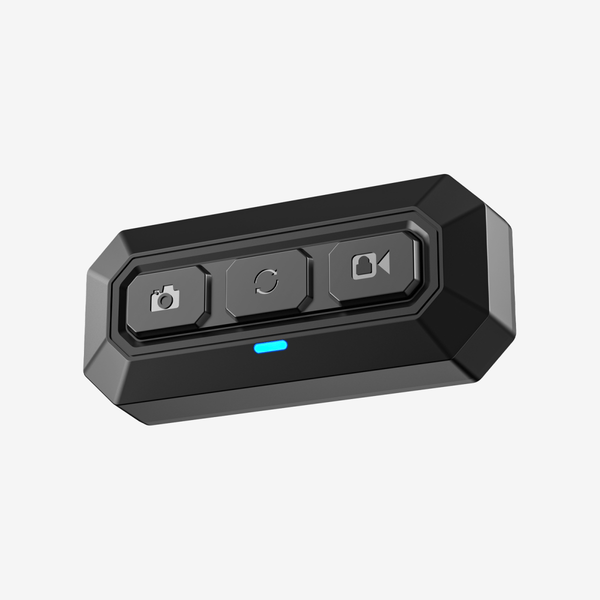
| Bluetooth handlebar remote control | Calls, music, and screen switching without touching the display | 37,00 € | Available |
| Expandable steering stem mount | Mounting in the steering plate hole, 12–30 mm | 25,00 € | Available |
| Crossbar mount Ø 12–16 mm | Mounting on a crossbar or navigation bar | 24,00 € | Available (last item) |
| Pair of tire pressure sensors | Tire pressure and temperature on screen | 40,00 € | Out of stock |

- Recording
- 1080P at 30 fps
- Sensor
- Sony IMX307 Starvis, color night vision
- Cycle
- 1-, 3-, or 5-minute loop, video lock in case of impact
- Body
- Zinc alloy, IP69K
- Works with
- JADO S6 display only
- Price
- 85,00 €

- Mounting
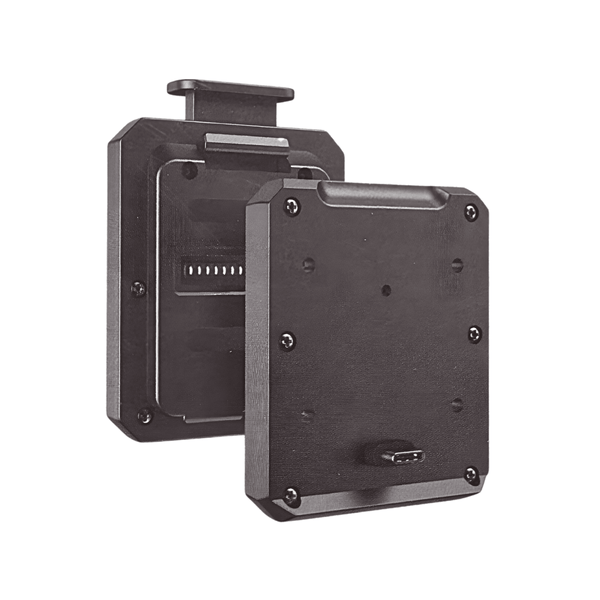
- On the original BMW navigation base, without handlebar brackets
- Attachment
- One-handed, double lock with safety lever
- Controls
- BMW Wonder Wheel
- Motorcycle data
- To be confirmed with the manufacturer; not for BMWs up to 2014
- Price
- 82,00 €

The mounting determines half the experience
A well-chosen display that is poorly mounted vibrates, ends up too low, or covers the dashboard. There are three options: handlebar bracket, crossbar or steering plate, or the original navigation base on BMWs equipped with one.
- The S6 attaches to the original base with the dedicated mount
- Controlled with the Wonder Wheel
- Before ordering, send us the model and year: the base must be the factory one
- 22–32 mm handlebar bracket with reducing rings, included with the display
- 12–16 mm crossbar or steering plate hole with dedicated mounts
- Universal quick-release mount for removing it when parked
- Choose the position. The display must be mounted high, close to the line of sight, without covering warning lights or instruments and without interfering with the steering at full lock.
- Prepare the power supply. According to the JADO manual: red wire to the battery positive terminal, black to the negative terminal, yellow to a switched circuit (ACC), with a 3 A fuse. With the ignition off, the yellow wire should read 0 V; with the ignition on, between 11 and 14.4 V.
- Connect the main wiring harness to the display and tighten the connector screws.
- Insert the U3-class microSD card and press the rubber cap until it is flush: if it remains raised, waterproofing is not guaranteed.
- Pair the phone via Bluetooth with the “S6-XXXX” device and confirm the CarPlay or Android Auto request on the phone.
- Update the firmware from Settings, Version, System update, by connecting the display to the phone's hotspot.

On the motorcycle, use the display with voice and controls, not your fingers
The smart display is specifically designed to prevent handling the phone while riding. The Highway Code prohibits using devices that require you to take your hands off the handlebars, and the penalties are severe.
The practical rules we follow
- Set your destination and playlist while the motorcycle is stationary, before setting off.
- While riding, use the voice assistant through the intercom, remote control, or Wonder Wheel.
- Enable the screen lock, if the display supports it, to prevent accidental touches in the rain.
- Keep the brightness on automatic: at night, a screen at maximum brightness causes glare and eye strain.
The interpretation of the regulations in individual cases is up to the enforcement authorities: these are common-sense guidelines, not legal advice. For helmet audio, see the comparison between intercoms and earbuds.

Frequently asked questions about smart motorcycle displays
What is a smart motorcycle display with CarPlay?
It is a waterproof 5- to 7-inch screen that mounts on the handlebars and wirelessly displays Apple CarPlay or Android Auto from the smartphone. Navigation, music, and calls remain on the phone, which can stay in your pocket.
Is internet required to use CarPlay on a motorcycle display?
The connection between the phone and display uses Bluetooth and direct Wi-Fi, without internet. Mobile data is used by the navigation app for traffic and searches; if you have downloaded offline maps, for example in Google Maps, navigation also works without coverage.
Does the smart display work without a phone?
Not for navigation, because it does not contain maps. The JADO S6's own display functions remain active: recording with the optional cameras, tire pressure monitoring with the sensors, and riding information such as speed and altitude.
Is a CarPlay display or a Garmin navigator better?
A CarPlay display is a good choice for those who already use Google Maps, Waze, or Apple Maps and want to protect their phone from vibrations. A navigator such as the Garmin zūmo XT2 is a good choice for those who often travel without a network connection or want a device that works even when their phone is out of battery.
How many nits are needed to read the display in sunlight?
There is no official threshold. Motorcycle displays are rated at approximately 1,000 to 2,300 nits: the higher the value, the more readable the screen remains in bright sunlight. The automatic light sensor also matters, as it reduces brightness at night.
What is the difference between IP67 and IP69K?
IP67 indicates complete protection against dust and immersion up to 1 meter for 30 minutes. IP69K, according to ISO 20653, tests resistance to water jets at 80 °C and 80–100 bar from close range: it is the most stringent rating found on motorcycle displays.
Does the JADO S6 work with both iPhone and Android?
Yes. The JADO S6 supports Apple CarPlay, Android Auto, and Huawei HiCar wirelessly. The initial pairing is done via Bluetooth, after which the connection is automatically reestablished when the device is turned on.
How is a motorcycle smart display powered?
From the motorcycle's 12 V electrical system. The JADO S6 accepts 9 to 32 V and connects with three wires: positive and negative to the battery, and one wire to a switched circuit, so it turns off with the ignition. The manual specifies a 3 A fuse.
Can the JADO S6 be mounted on the BMW navigation mount?
Yes, with the dedicated €82 quick-release mount, which attaches to the original navigation base and allows you to use the Wonder Wheel. Motorcycle data compatibility must be confirmed with the manufacturer and is not available on BMWs up to 2014.
Does the JADO S6 have an integrated dashcam?
The display handles recording, but the cameras are purchased separately: the €85 kit includes two 1080p cameras at 30 fps with a Sony Starvis sensor, 1-, 3-, or 5-minute loop recording, and video locking in the event of an impact.
What comes in the JADO S6 package?
According to the manufacturer's manual: the display, the main wiring harness with Type-C connector, the power cable, the handlebar mount for 22 to 32 mm tubes with reducing rings, and the mounting hardware. Cameras, tire sensors, remote control, and special mounts are optional.
Is it legal to use a smart display on a motorcycle?
Article 173 of the Italian Highway Code prohibits using devices while riding that require you to take your hands off the handlebars, with penalties ranging from €250 to €1,000 and license suspension. The display should be set up while stationary and used with voice commands, a remote control, or the Wonder Wheel.
Does the smart display drain the motorcycle's battery?
If it is connected to the switched circuit, it turns off with the ignition. JADO states that the S6 consumes approximately 9.2 W at startup and 0.005 W in standby. Parking recording, if enabled, draws power even when the motorcycle is switched off.
Which navigation apps can be used?
All navigation apps compatible with CarPlay or Android Auto installed on the phone, such as Google Maps, Waze, and Apple Maps. Apps that are not compatible with these platforms are not projected onto the display.
Want to know how to install it on your motorcycle?
Tell us your motorcycle's make, model, and year (for BMWs, also tell us whether it has the factory navigation preparation): we'll recommend the right mount for the JADO S6 and compatible accessories, with up-to-date availability.
JADO displays and accessoriesSources. JADO S6 data from the manufacturer's user manual (retail version and BMW kit) and Endurrad product sheets; Chigee AIO-6 from the official chigee.com website; Carpuride W702 Pro from the official carpuride.com website; Garmin zūmo XT2 from the Garmin Italia press release dated April 20, 2023; IP69K rating according to ISO 20653; penalties under Article 173 of the Italian Highway Code. Brightness and IP ratings are figures declared by the manufacturers, not measured by Endurrad. Endurrad prices and availability verified on October 6, 2026; prices for displays from other brands are those published on the official websites on the same date and may change.
First published on July 6, 2026, rewritten on October 6, 2026 by merging our previous guides on JADO displays, waterproof displays, and the comparison between CarPlay and motorcycle navigation systems.