Identification

Brand

LOBOO

Model

R1M

LOBOO Name: Helmet Intercom Headset

Communication

Bluetooth

5.2

Qualcomm chip

Group intercom

Up to 24 drivers

CMT mesh networks with dynamic topology, without a cellular network

Connected devices

2 simultaneously

Phone and satnav, or phone and action cam

Group memory

Yes

Recognizes the companions from the last lap and reforms the formation

Audio

Speakers

45

Hi-fi tuning for noisy environments

Noise cancellation

Activate, calibrated to the guide

Smart mixing

The music gets quieter when someone speaks

Audio input

3.5 mm DC jack

Action cam recording

Yes, with one-touch switching

DJI Action 5, DJI Osmo 360, Insta360 X5, GoPro 12 and 13

Commands

Volume

Knob, usable with gloves

More features

Voice command, muted microphone, do not disturb, previous and next track

Power supply

Autonomy

60 hours of music, 10–15 hours of intercom use

LOBOO laboratory data: varies with use

Top up

USB-C, 5 V 1 A

Construction

Protection

IP67

Waterproof and dustproof

Operating temperature

-20 / +60

Dimensions

107 × 55,3 × 18

Attack

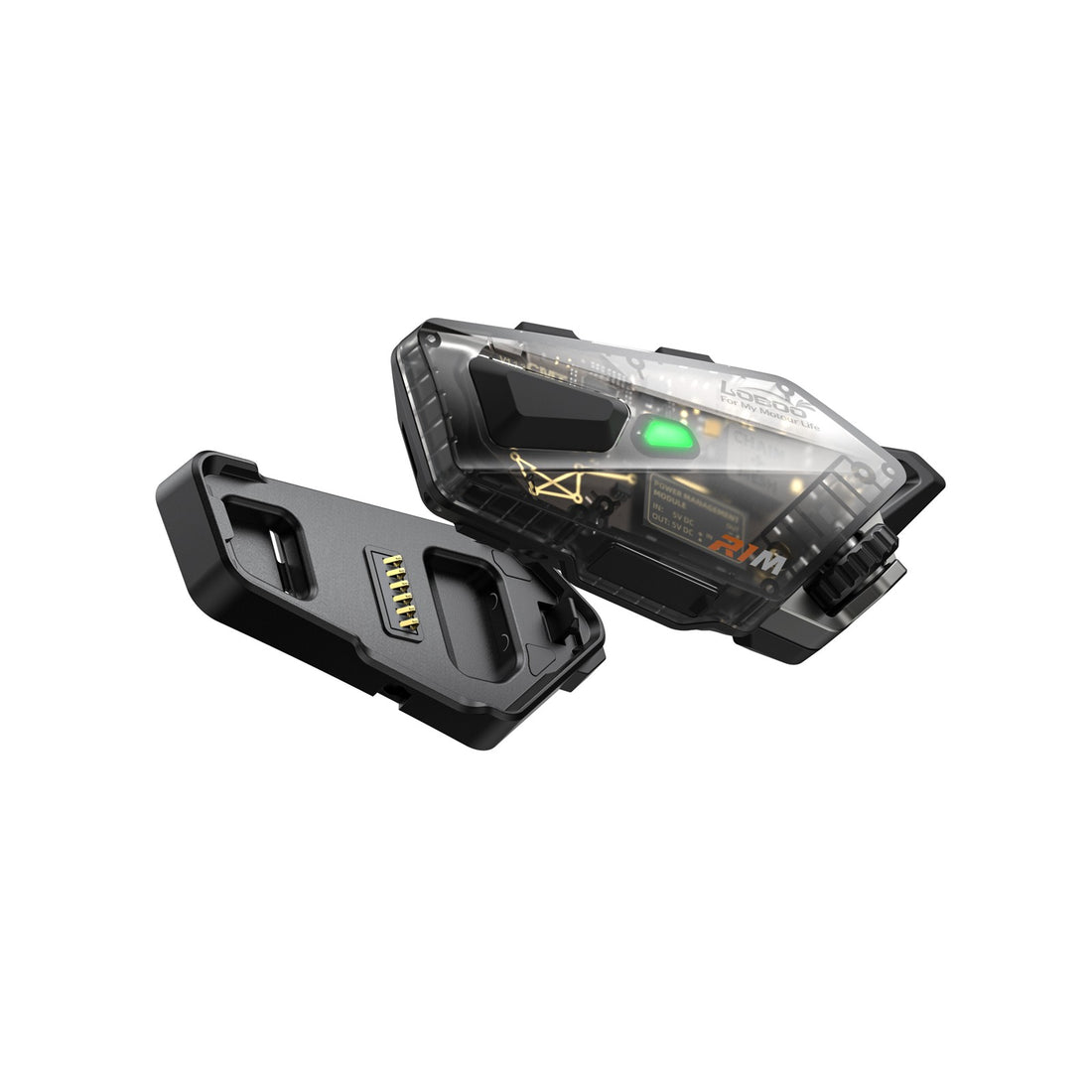
Quick-release base

It snaps on and detaches with a button

Compliance

Certifications

CE and RoHS

Certifications shown by the manufacturer; details not published

Equipment

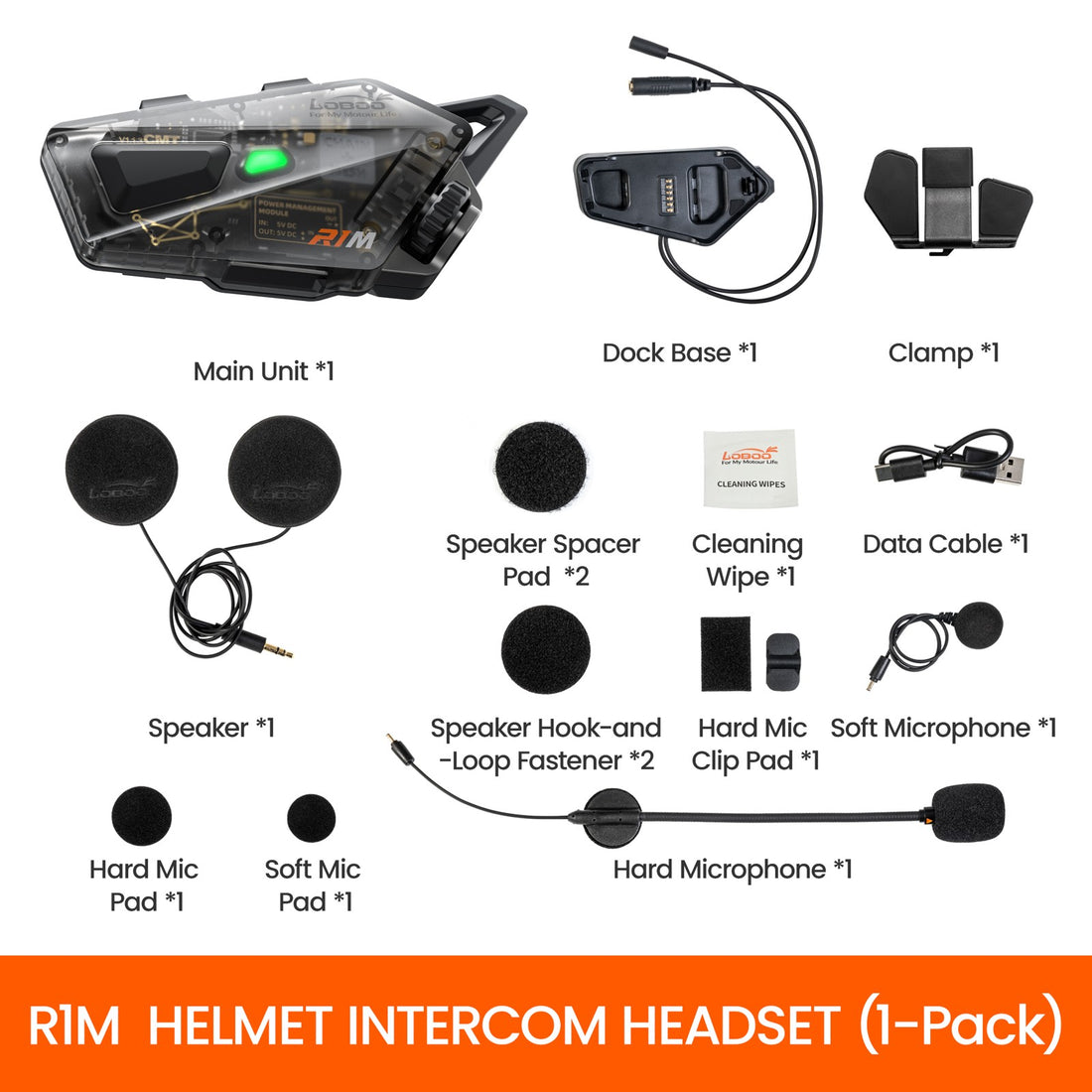
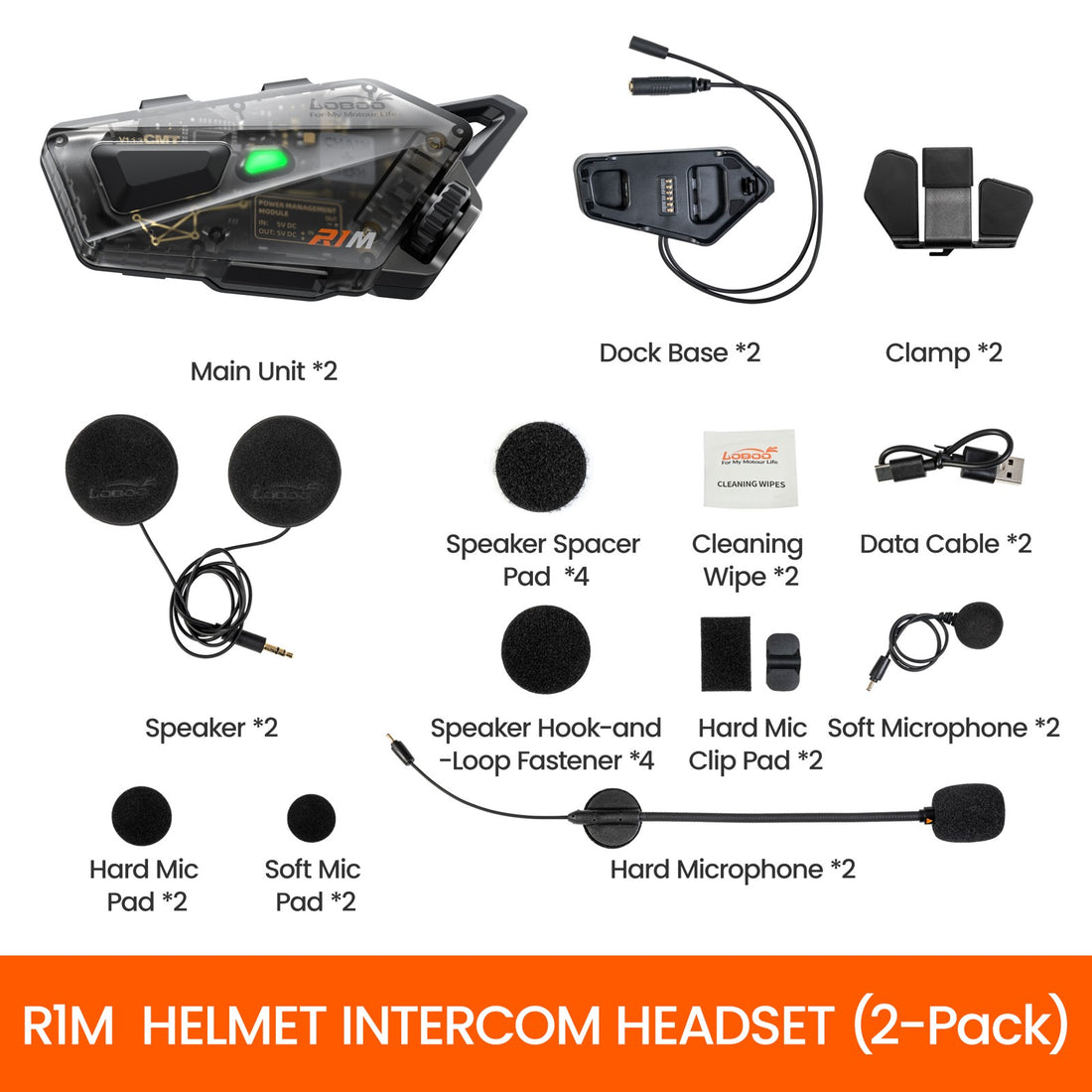
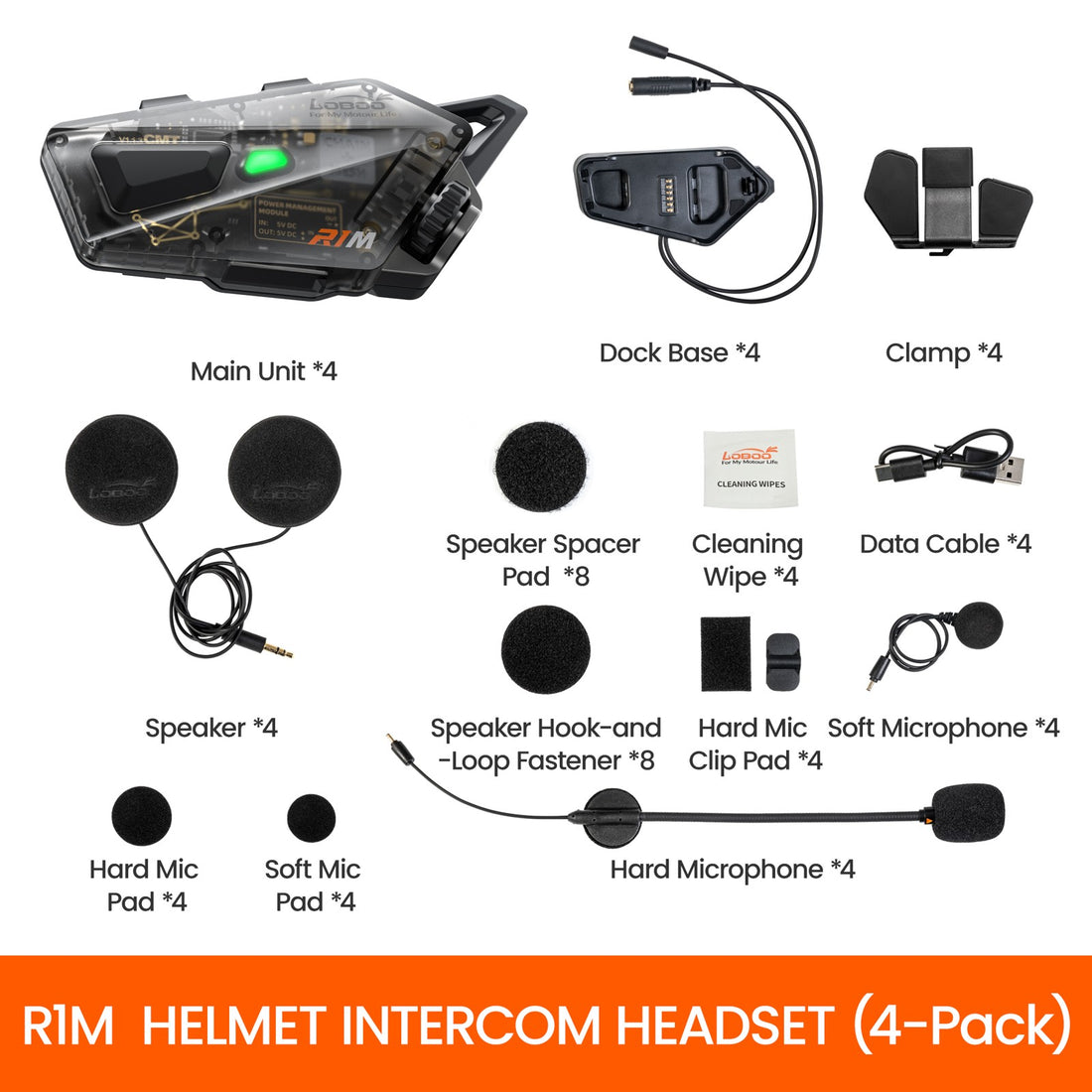
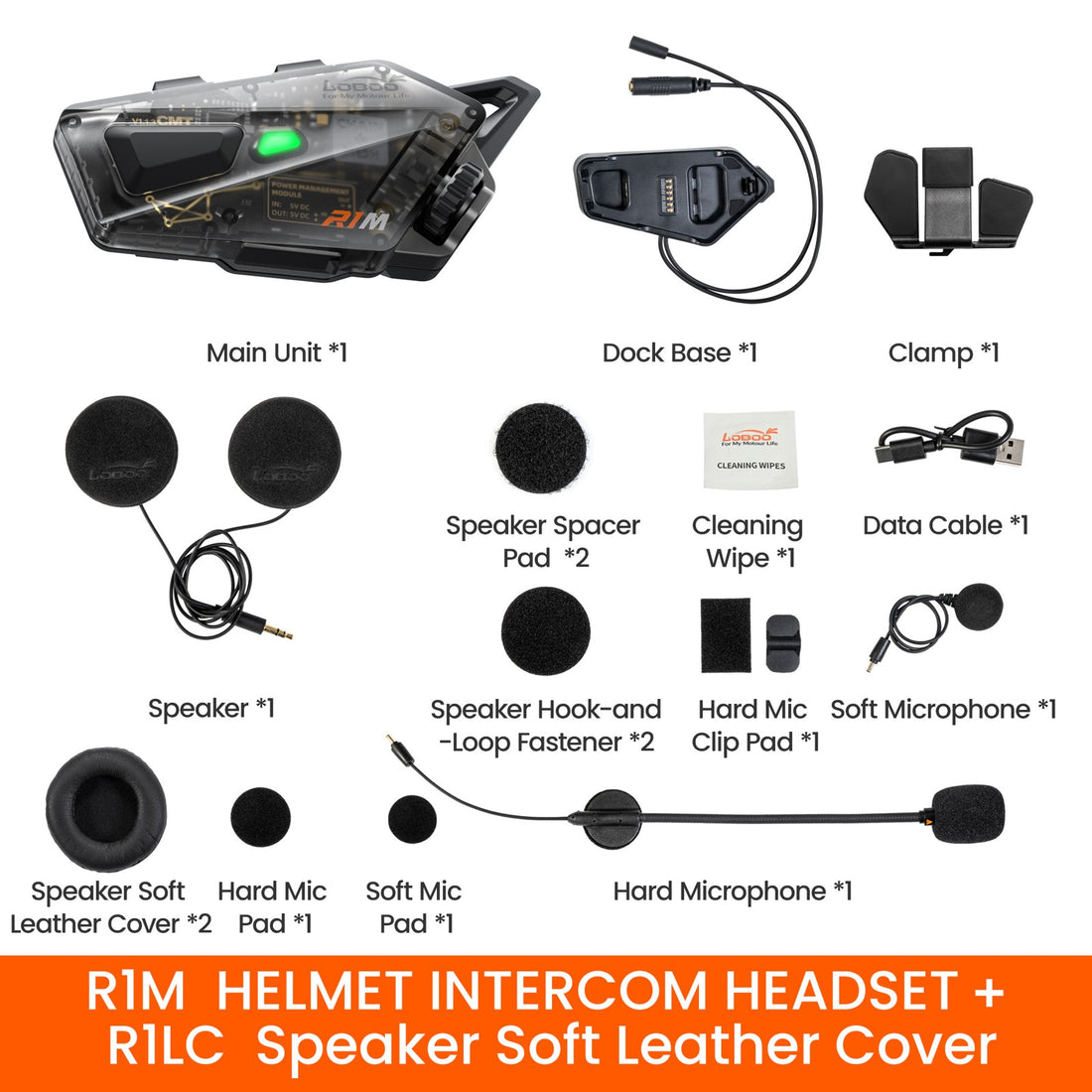
In the package, for earphones

Unit, docking base, speakers, rigid microphone, and flexible microphone

Additional data cable, clamp, 2 Velcro straps and 2 spacers for the speakers, microphone cushions, and cleaning cloth

Accessories sold separately

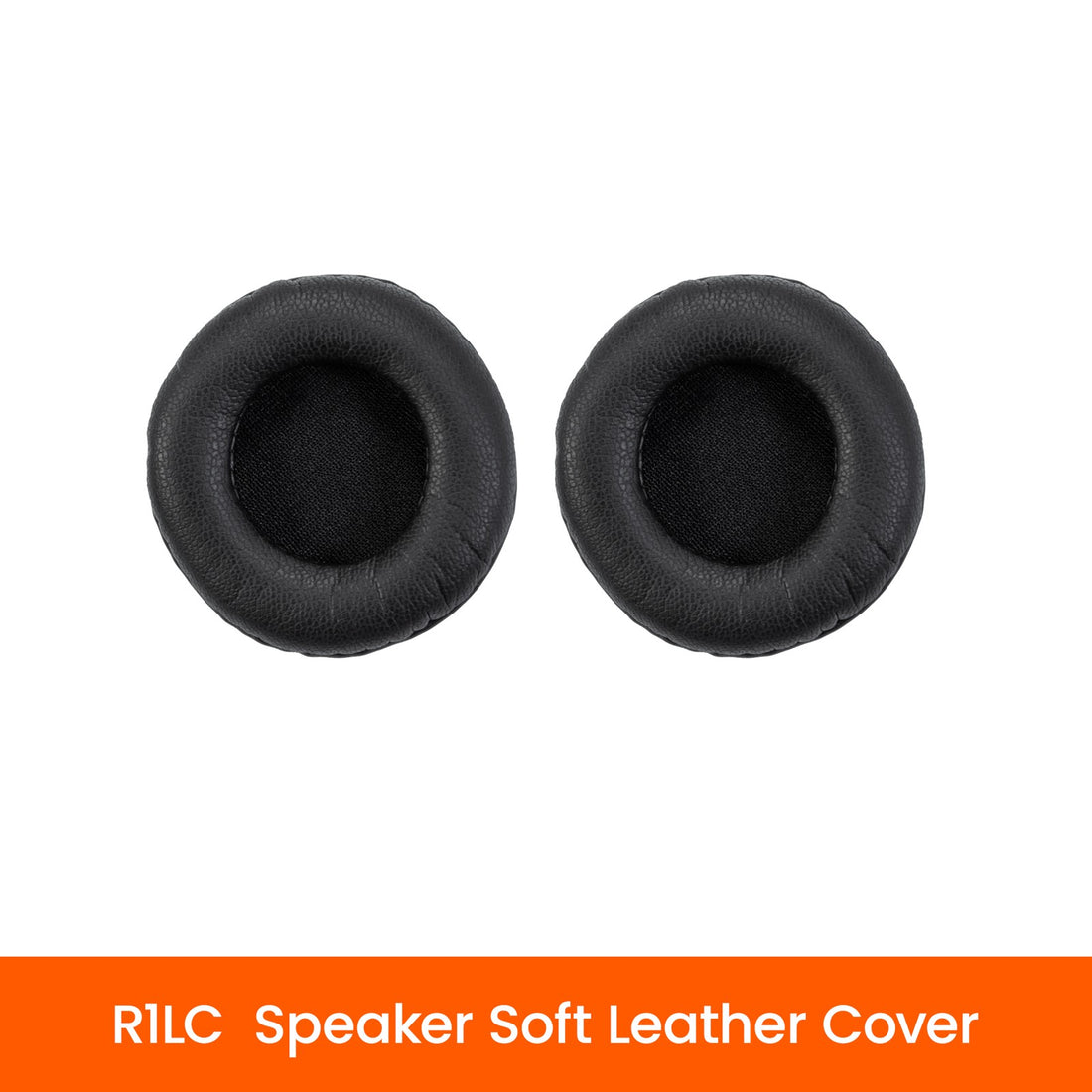
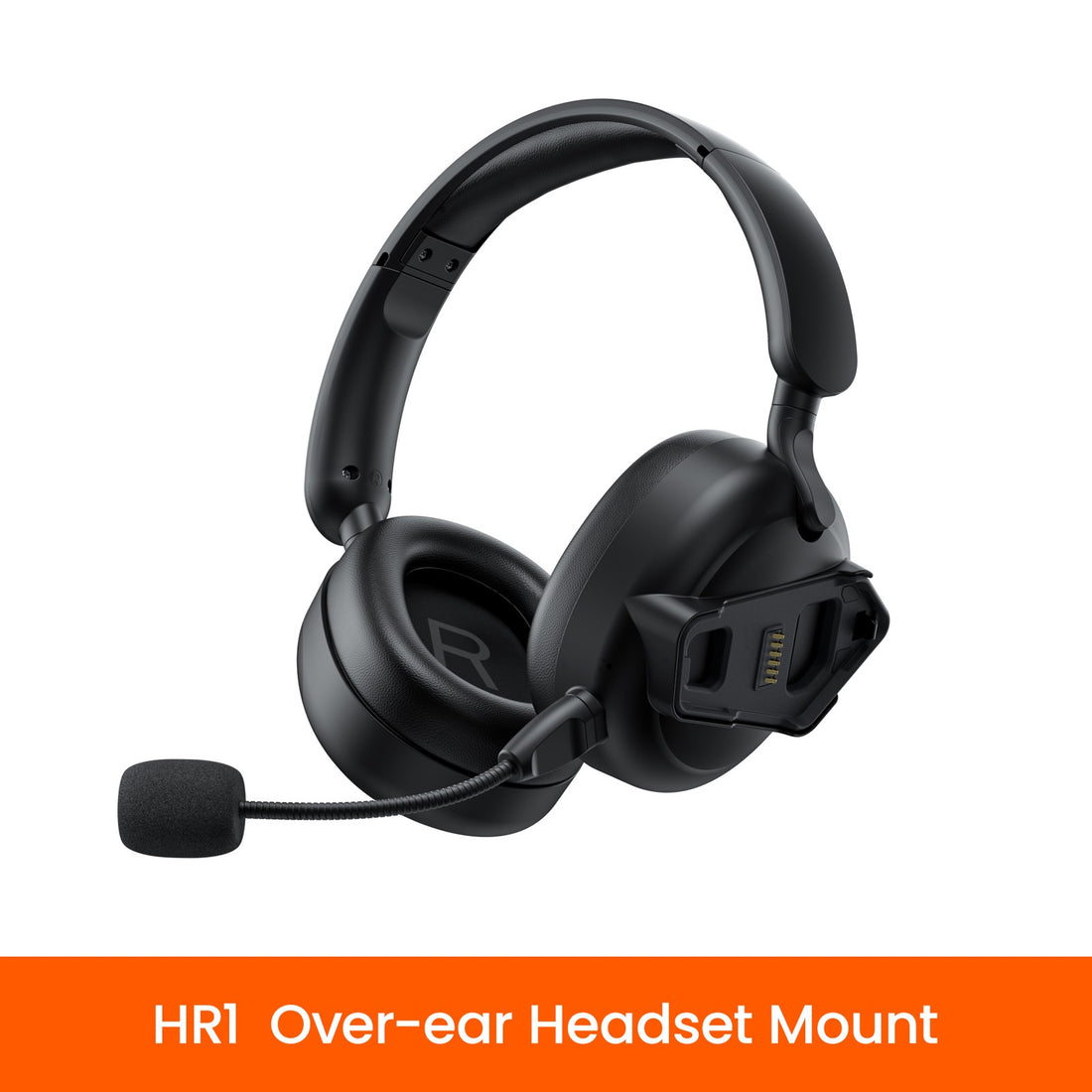
Archetto over-ear HR1 and leather ear cushions R1LC

Compatibility

Helmets

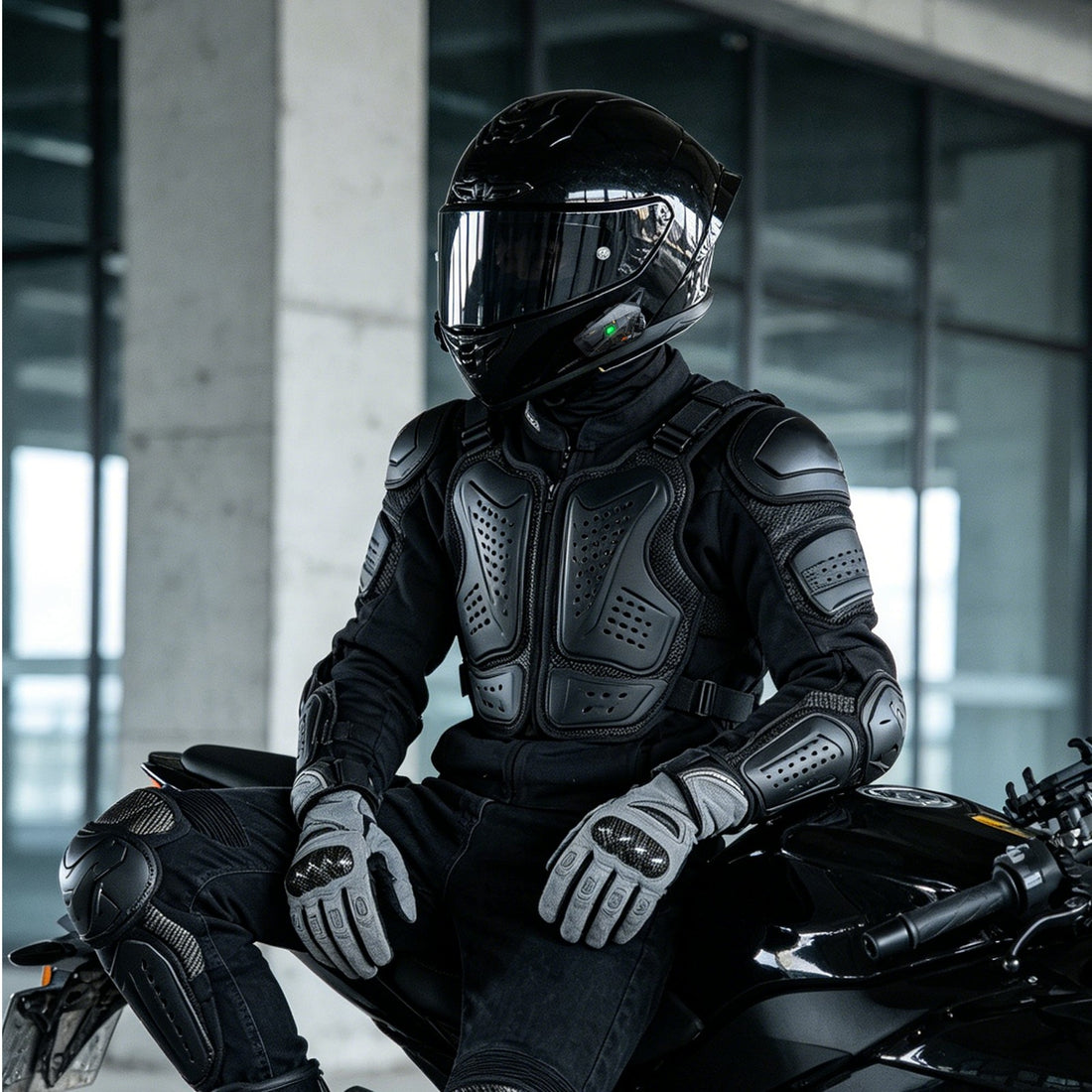
Full-face, modular, jet, and open-face helmets

Dati dichiarati da LOBOO sui pannelli tecnici del prodotto. Le autonomie sono rilevate in laboratorio e variano con l'uso reale.

R1M · mesh fino a 24 piloti · altoparlanti da 45 mm · IP67 · 60 ore di autonomia

All you need to know before ordering

Technical specifications, equipment, delivery, and warranty: find every detail, verified against official LOBOO documentation, below.

Description Bluetooth motorcycle helmet intercom with mesh for up to 24 riders

A helmet intercom with mesh networking for up to 24 riders that does not need a phone or cellular coverage to work: group communication travels between the devices, so it also works where there is no signal.

The group is created in an instant and re-forms by itself

Anyone in the group can invite a new participant without starting the setup procedure over. There is also group memory: the device recognizes the companions from the last ride, and the group automatically re-forms when you set off again.

The topology combines dynamic daisy chaining with mesh networking: if a rider falls behind or moves away, the network reconfigures instead of dropping.

45 mm audio, not typical intercom audio

The speakers measure 45 mm in diameter, something rarely seen in helmets: rich bass and real volume, with tuning designed for aerodynamic noise. The intelligent noise cancellation targets riding frequencies, not those of an office.

When someone speaks on the intercom, the music automatically lowers and then comes back up: you do not need to take your hands off the handlebars.

Two devices at once

The Bluetooth 5.2 chip keeps two devices connected simultaneously — a phone and a navigator, or a phone and an action camera. With one tap, you can switch from a private conversation to recording the group audio on the action camera: compatible models include DJI Action 5, DJI Osmo 360, Insta360 X5, GoPro 12, and GoPro 13.

Usable with gloves

The volume is adjusted with a dial that you can find by touch without looking. There is voice control to activate your phone's assistant, microphone muting for when you sing, and a «do not disturb» mode for listening without being interrupted.

Ready to stay outside all year

IP67 rating, resistance to dust and water, and an operating temperature range from -20 to +60 °C. The mount features a quick release: align it, snap it into place, and remove it by pressing a button.

Claimed battery life is 60 hours in music mode and 10–15 hours in group intercom mode.

Packages of 1, 2, or 4

Choose based on how many of you there are: one for solo riders who want music and navigation, two for a rider and passenger, or four for a regular group.

Why choose it
  • Funziona dove non c'è campo: la mesh collega i dispositivi fra loro, non attraverso la rete dati.
  • Ventiquattro piloti: è il numero di un raduno, non di una gita in due.
  • Audio da 45 mm: un diametro che sui caschi si vede raramente, con bassi veri.
  • Due dispositivi insieme: telefono e navigatore, oppure telefono e action cam.
  • Si usa con i guanti: rotella per il volume e comando vocale, niente pulsanti da indovinare.
  • Resta sul casco tutto l'anno: IP67 e temperature da -20 a +60 °C.
Who is it recommended for

Quale confezione scegliere

  • Un auricolare: per chi viaggia da solo e vuole musica, navigatore e telefonate
  • Due auricolari: per pilota e passeggero, o per la coppia di amici che gira sempre insieme
  • Quattro auricolari: per il gruppo abituale, con la mesh già pronta

È la scelta giusta se:

  • Viaggi in gruppo su strade dove il telefono spesso non prende
  • Vuoi musica e navigatore insieme senza scollegare niente
  • Registri i viaggi con una action cam e vuoi le voci nel video
  • Usi la moto tutto l'anno e l'interfono resta sul casco

Da valutare se:

  • I tuoi compagni hanno interfoni di altre marche: la mesh è fra dispositivi LOBOO
  • Ti serve solo ascoltare musica da solo: qui paghi funzioni di gruppo che non useresti
Documents and manufacturer

Montaggio

  • La base si fissa alla calotta con il morsetto o con l'adesivo, a seconda del casco. Pulisci la superficie con il panno in dotazione prima di incollare.
  • Gli altoparlanti vanno negli incavi delle guanciali, con gli spessori in dotazione se restano lontani dalle orecchie.
  • Microfono rigido sugli integrali, microfono morbido su jet e modulari aperti. Va davanti alla bocca, non di lato.
  • Prova la posizione a casco indossato prima di fissare tutto.

Uso e sicurezza

  • Certificazioni dichiarate dal produttore: CE e RoHS. Gli estremi degli attestati non sono pubblicati.
  • L'uso di dispositivi audio alla guida è regolato dal Codice della Strada: tieni un volume che permetta di sentire i rumori esterni e non usare le mani sul dispositivo in movimento.
  • Non modificare la calotta del casco per installare l'interfono: forare o tagliare compromette l'omologazione.
  • Ricarica con alimentatore USB-C da 5 V. Autonomie dichiarate dal produttore in laboratorio.

How does it work, in detail?

Talk to the group without depending on your phone

Talk to the group without depending on your phone

L'R1M uses a mesh network between devices: group conversation doesn't rely on the cellular network and doesn't need an app open on your phone. It works where there's no signal—which is exactly where you need it.

It's the difference between an intercom that keeps up and one that leaves you gesticulating at the first hairpin bend.

Twelve features, on one screen

Twelve features, on one screen

Mesh for up to 24 riders, quick group creation, rider memory, noise cancellation, 45 mm speakers, music and voice mixing, low latency, voice control, dual connectivity, action camera recording, volume wheel, quick release, IP67 rating, and long battery life.

Each section below explains what it actually changes while riding.

The network reconfigures itself automatically

The network reconfigures itself automatically

The topology is dynamic: chain when you’re riding in a line and mesh when the group spreads out. If a rider falls behind or slips into an overtake, the connection is routed through the others instead of dropping.

With old chain intercoms, one broken link was enough to leave half the group out.

No field, no problem

No field, no problem

Intercoms that run through an app need mobile data: in the mountains, at mountain passes, and on the slopes, the group goes silent exactly where communication is needed most.

Here, communication is between the devices. Your phone is for music and navigation, not for talking to each other.

Whoever arrives later gets in right away

Whoever arrives later gets in right away

The group is created in just a few seconds, and anyone in it can invite a new participant without starting the process over or making everyone line up again.

It’s the feature you appreciate at the second rest stop, when your late friend finally arrives.

Twenty-four drivers, and the group remembers itself

Twenty-four drivers, and the group remembers itself

Twenty-four participants on the same intercom: that’s the number for a meetup, not a trip for two. Most intercoms stop well short of that.

There’s also group memory: the device recognizes the riders from the last outing, and the group reconnects automatically at the next departure.

The noise it removes is the sound of air

The noise it removes is the sound of air

Noise cancellation is tuned to the frequencies of riding: the airflow around the helmet and the engine’s low rumble, not the hum of an office.

It’s the difference between being understood at 130 and having to repeat every sentence twice.

45 mm speakers, not an intercom

45 mm speakers, not an intercom

Forty-five millimeters in diameter is a lot for a helmet: more surface area means present bass and volume that doesn’t distort when you turn it up.

It’s what separates an intercom from a travel audio system, and you can hear it in the first track, not after a thousand kilometers.

The music lowers by itself

The music lowers by itself

When someone speaks over the intercom, the music volume drops and rises again as soon as the conversation ends. You don't have to take your hand off the handlebars to hear what they're saying.

The same applies to navigation directions, which remain intelligible over the music track.

The delay that determines a warning

The delay that determines a warning

The intercom’s latency is low, and it’s not a matter of convenience: there are twenty meters of road between a “watch out for the gravel” warning that arrives immediately and one that arrives half a second later.

With high latency, you end up taking turns speaking, like on a radio.

The phone’s assistant, without touching anything

The phone’s assistant, without touching anything

Voice control activates the smartphone assistant: change the destination, answer a call, or play another album without taking off your gloves.

Every task you complete by voice is one you don’t have to do while looking at your phone.

Muted microphone and do not disturb

Muted microphone and do not disturb

The microphone goes quiet whenever you want: when you sing, yawn, or simply have wind blowing on you and don’t want to blast it into everyone else’s ears. You can still hear everyone.

Do Not Disturb mode does the opposite: it isolates you from the conversation when you need to concentrate, on a technical section or in city traffic.

Phone and navigator together

Phone and navigator together

The Bluetooth 5.2 chip keeps two devices connected simultaneously: your phone and GPS navigator, or your phone and action camera.

No disconnections and reconnections every time you switch: navigation directions come through while music plays from your phone.

The group's audio ends up in the video

The group's audio ends up in the video

With a single tap, switch from a private conversation to recording group audio on the action camera: travel videos feature your companions’ voices instead of just the sound of the wind.

LOBOO lists DJI Action 5, DJI Osmo 360, Insta360 X5, GoPro 12, and GoPro 13 as compatible. While recording, the camera uses one of the two connections.

The volume can be felt by touch

The volume can be felt by touch

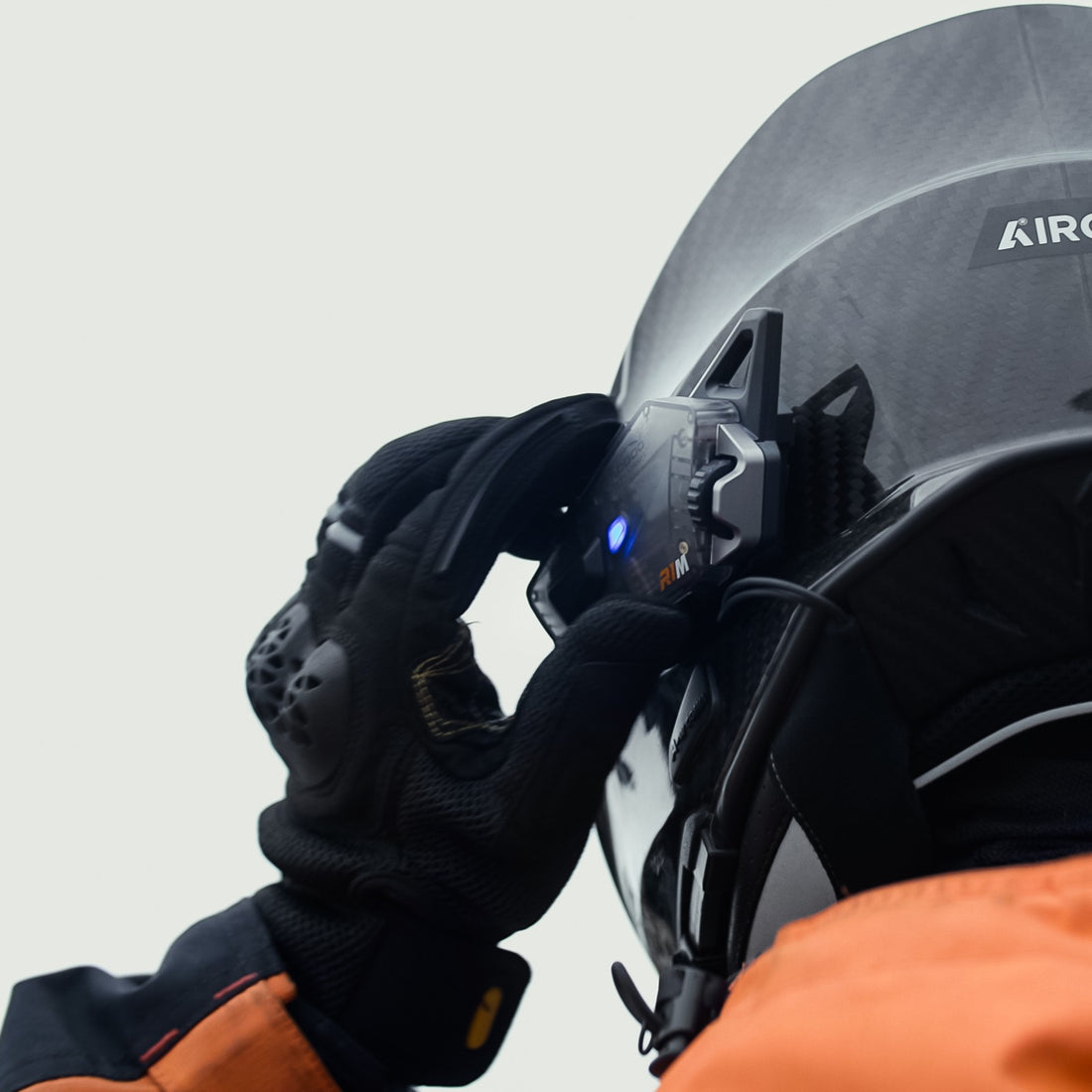
One dial, not three identical buttons to distinguish with winter gloves on. You turn it and the volume goes up, without looking or counting clicks.

It’s the kind of detail that doesn’t appear in the spec sheets and you notice it every time you enter a tunnel.

It detaches from the helmet in one second

It detaches from the helmet in one second

The base stays on the helmet, while the unit aligns and snaps into place. To remove it, press the release button: take it home to charge without bringing the helmet along.

With two bases, the same unit can be moved from one helmet to another.

IP67: rain is not a problem

IP67: rain is not a problem

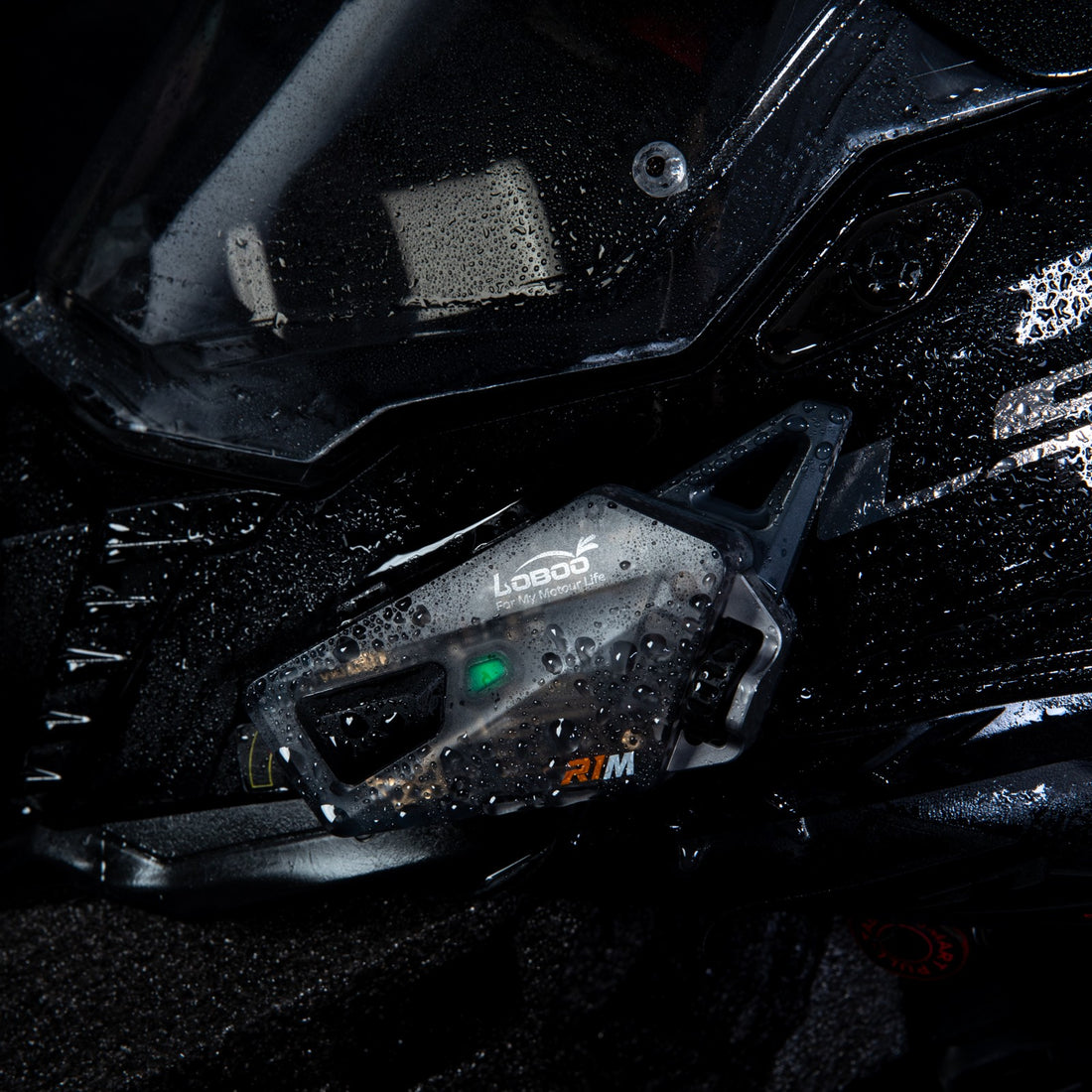
IP67 is a measured rating, not an adjective: complete dust protection and resistance to temporary immersion. During a thunderstorm or when washing the helmet, nothing changes.

The specified temperatures range from -20 to +60 °C, so even winter storage in the garage is covered.

Sixty hours of music, ten to fifteen in a group

Sixty hours of music, ten to fifteen in a group

Two modes: the long-lasting mode provides approximately 60 hours of music playback, while the mode with group intercom active lasts between 10 and 15 hours.

These are LOBOO laboratory figures and vary with volume and the distance between riders, but the general magnitude is clear: a full day of group travel without looking for an outlet.

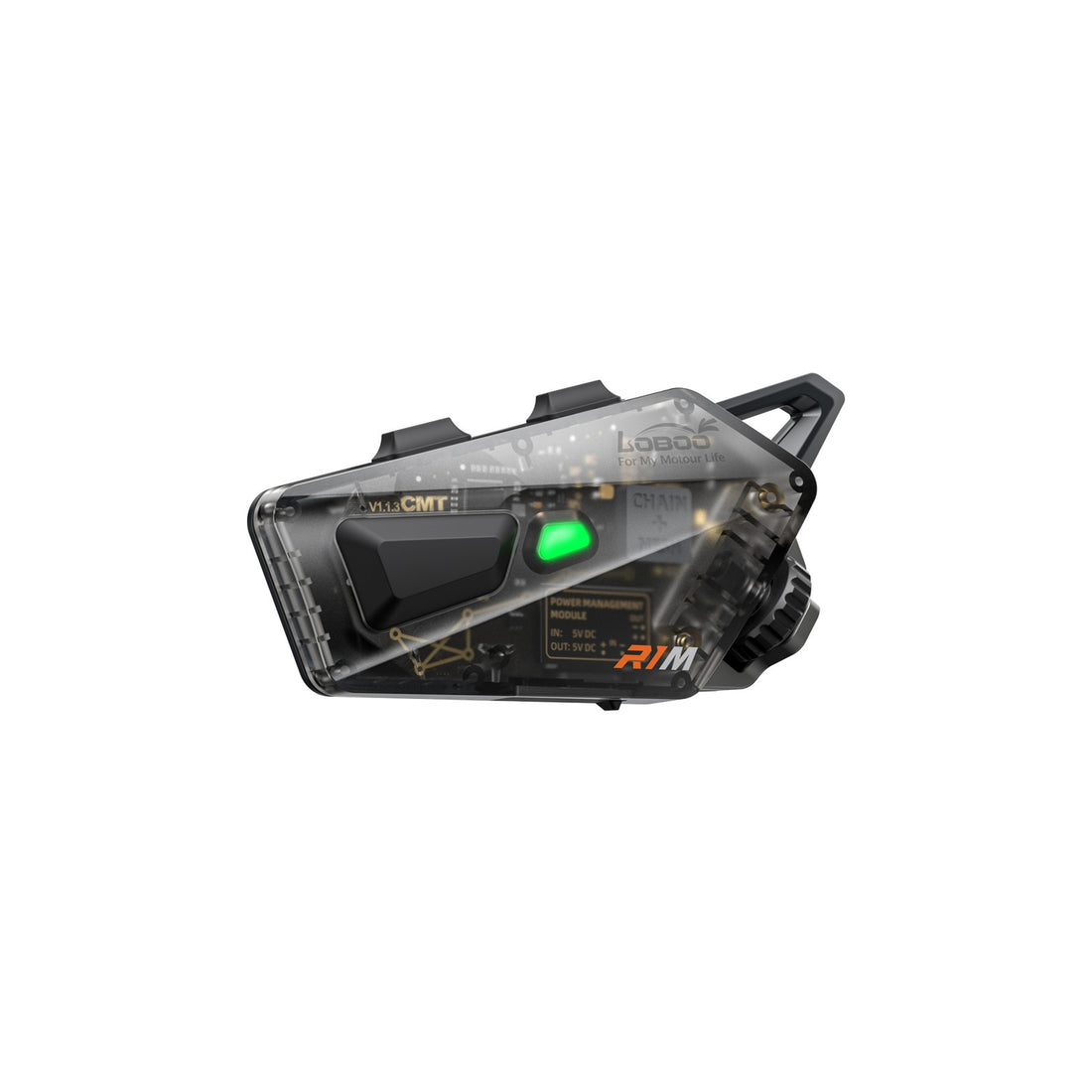
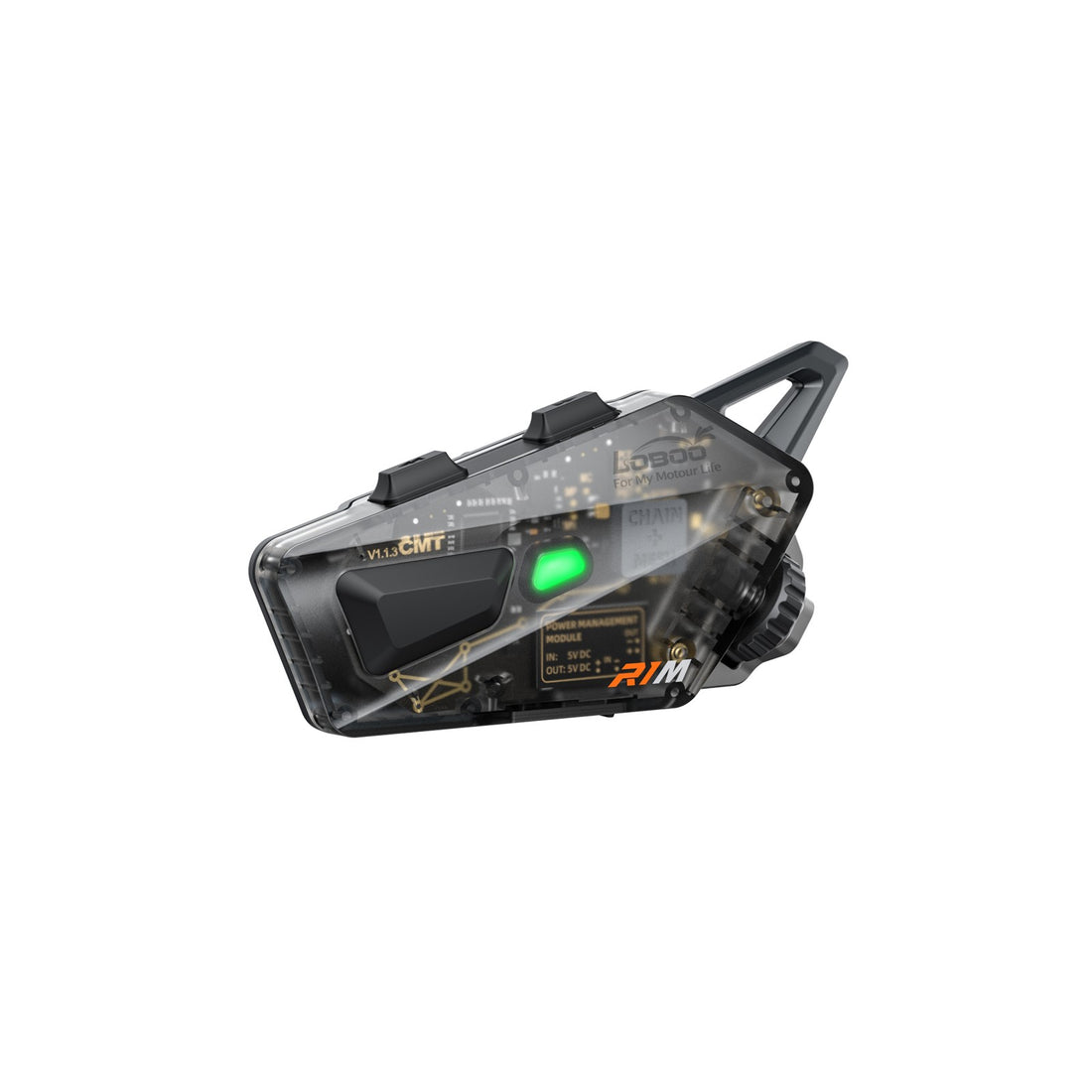
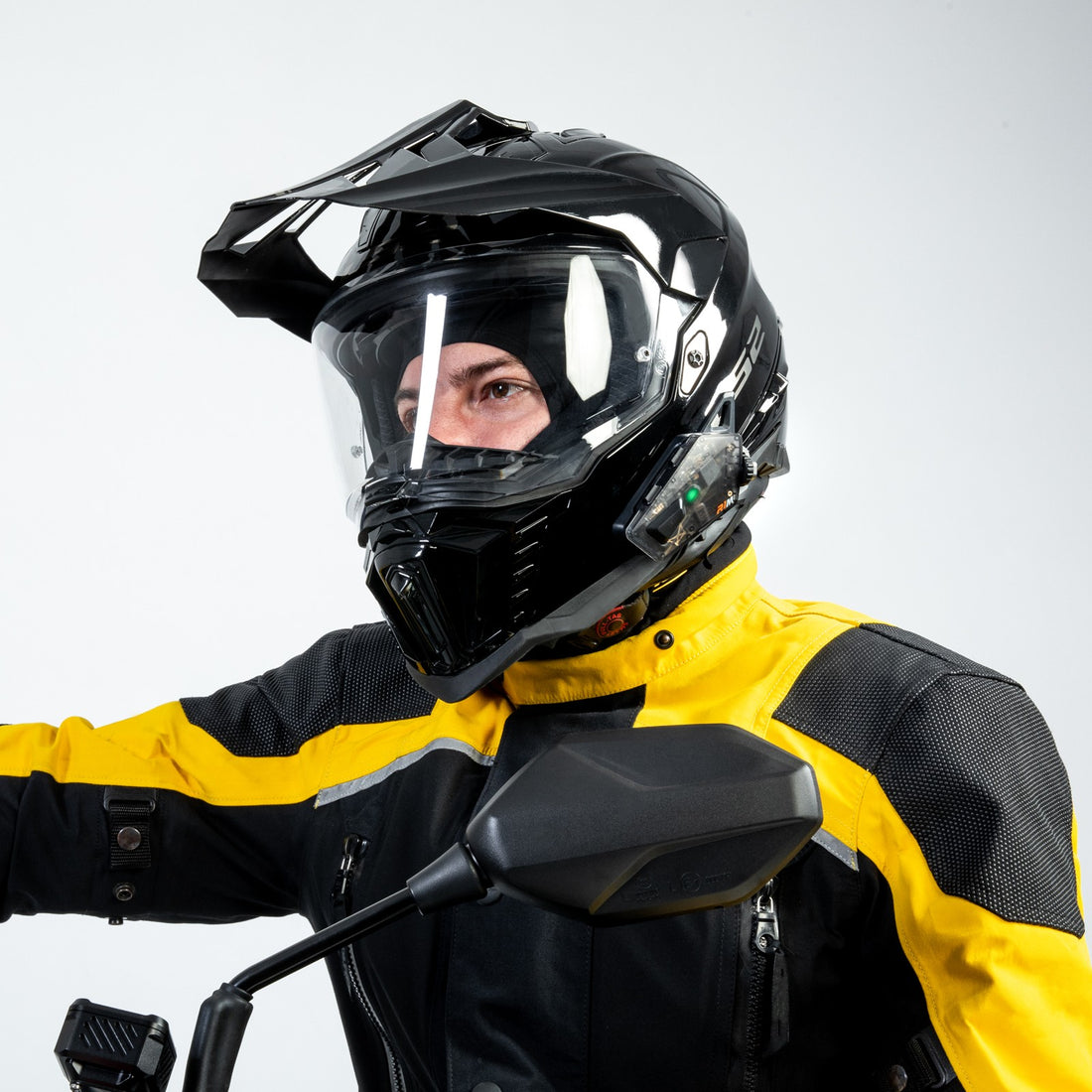
The casing exposes the electronics

The casing exposes the electronics

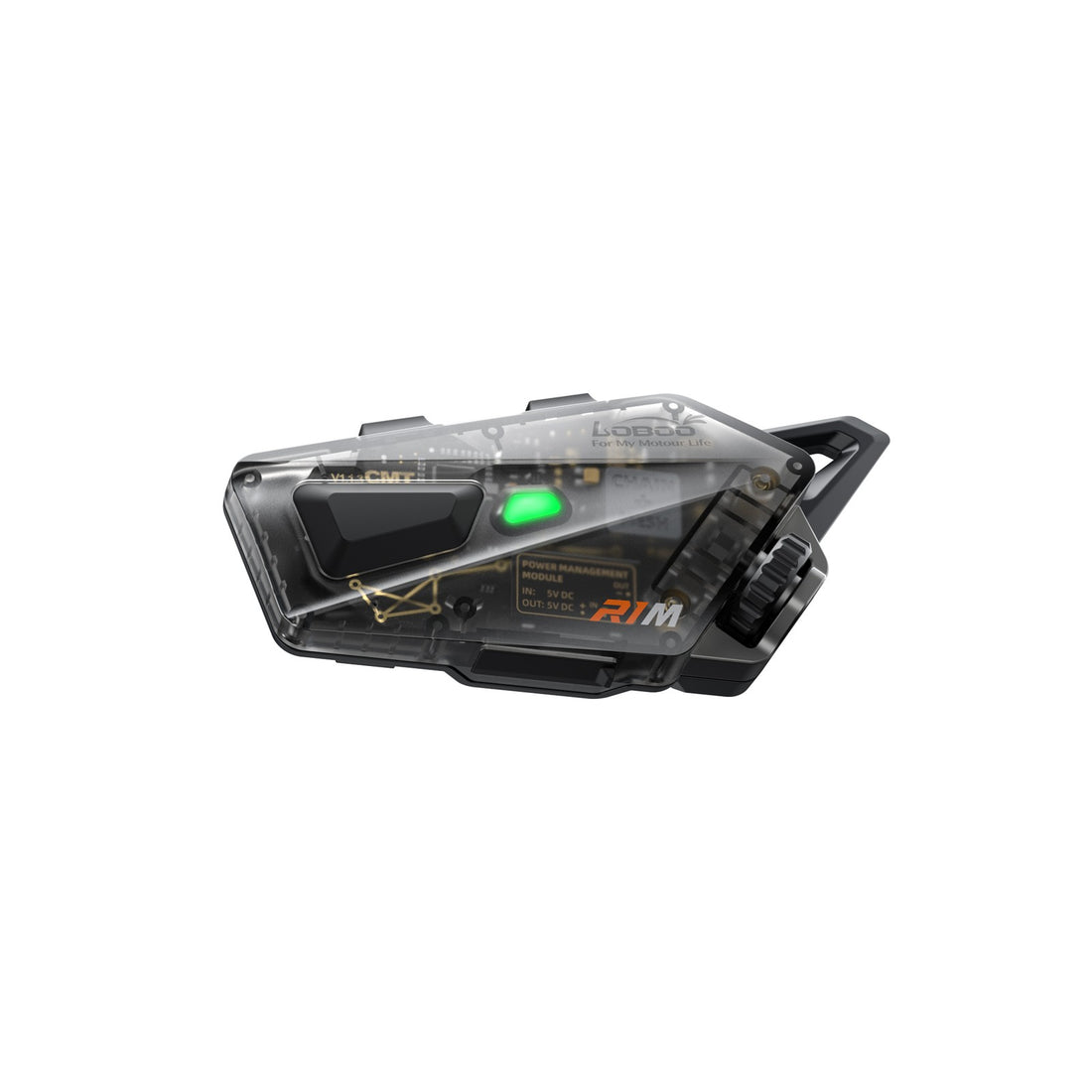
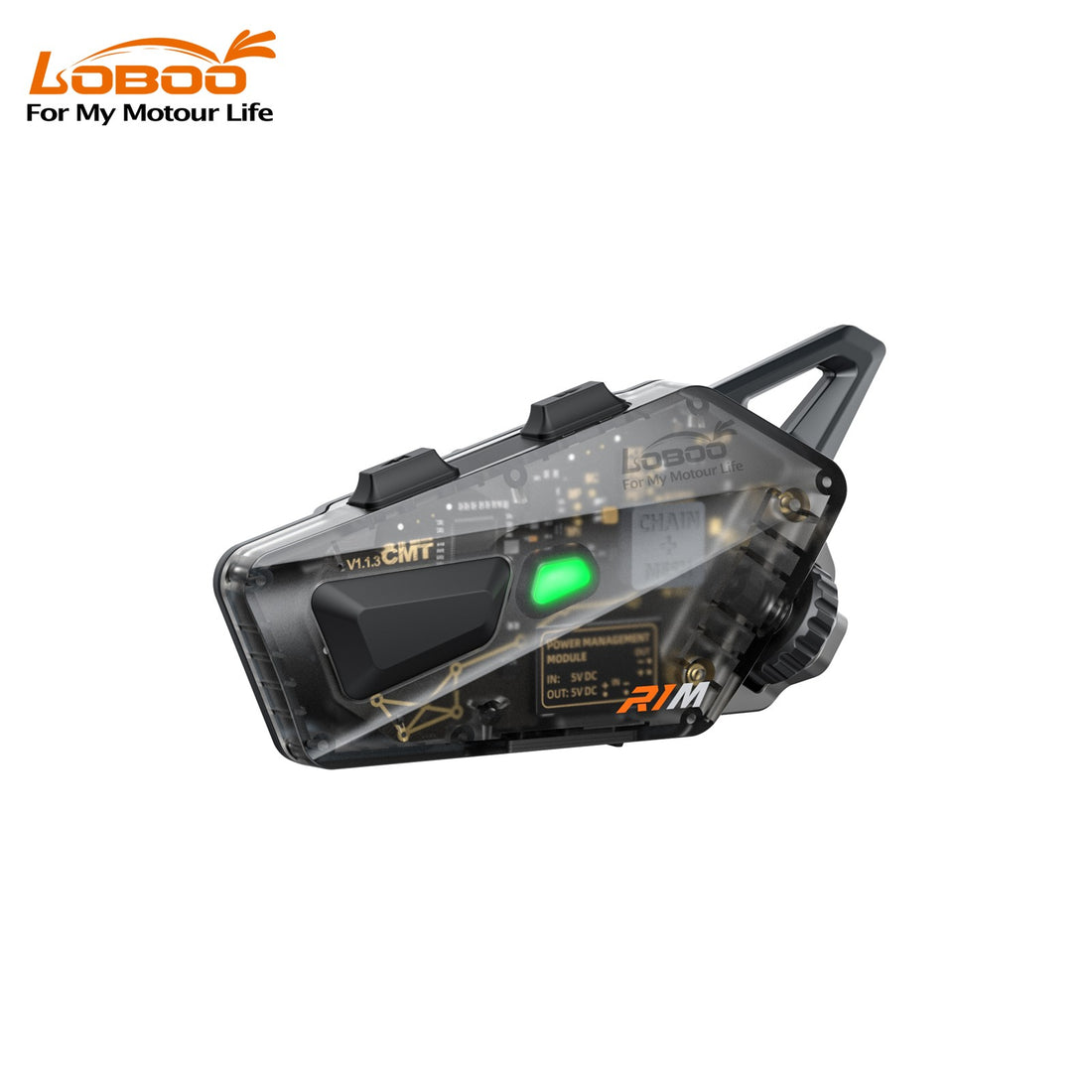
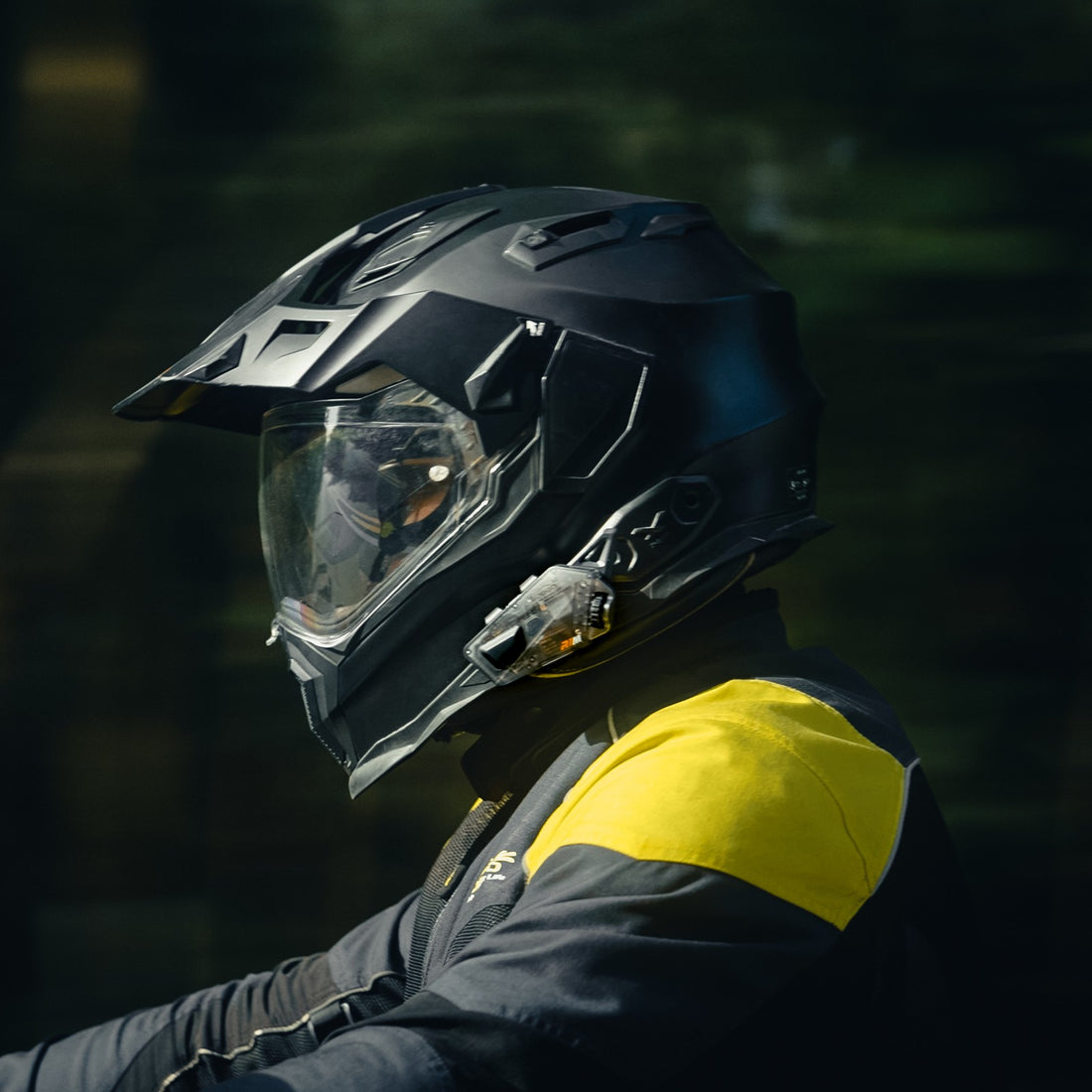
The transparent shell reveals the board and circuits beneath the helmet’s profile. It is a deliberate aesthetic choice, not an accident.

The light indicator remains legible even during the day and shows at a glance the device’s status.

CE and RoHS Certificate

CE and RoHS Certificate

The manufacturer declares CE and RoHS certification and provides the certificates: electrical safety and limits on hazardous substances.

If you need the certificate details for paperwork, ask us: we will request them from the manufacturer.

Without a helmet, it becomes a cap.

Without a helmet, it becomes a cap.

The HR1 over-ear headband is a separate accessory: it transfers the unit to a head-worn headset and lets it work without a helmet, with the same audio and microphone.

It is useful for quad riders, those leading a group on foot, or those coordinating a gathering from a van. It is not included in the package.

The numbers, written out in full

The numbers, written out in full

Bluetooth 5.2, USB-C charging at 5 V and 1 A, IP67 rating, 3.5 mm audio jack input, temperatures from -20 to +60 °C.

The unit measures 107 × 55.3 × 18 mm. The body features previous- and next-track buttons, the power button, volume controls, an indicator light, and the charging port.

Everything needed to assemble it is included in the box.

Everything needed to assemble it is included in the box.

For each earpiece: unit, mounting base, speakers, rigid microphone, and flexible microphone, so you can choose the one suitable for your helmet.

Plus a data cable, clamp, two Velcro straps, and two spacers for the speakers, microphone pads, and a cloth for cleaning the surface before attaching the base.

Full-face, modular, or jet

Full-face, modular, or jet

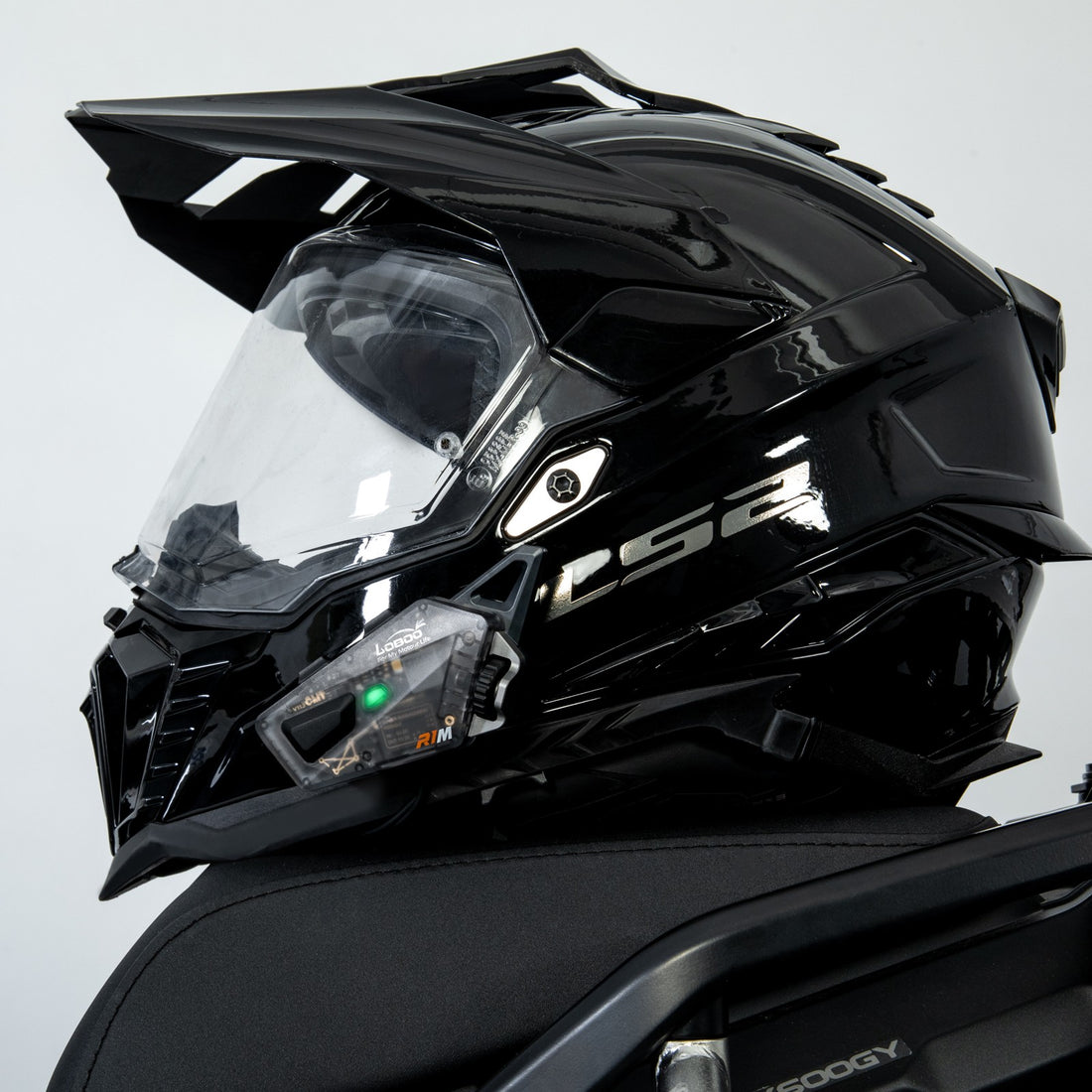
The base attaches to the shell with the clamp or adhesive, depending on the helmet. The speakers go into the cheek-pad recesses, the boom microphone on full-face helmets, and the soft microphone on jet and open modular helmets.

Before sticking it on, clean the surface with the supplied cloth and test the position while wearing the helmet: the microphone should be in front of your mouth, not to the side.

FAQs

For more information, please see our FAQ.

How many units do I need?

One for each helmet. If you’re traveling alone and only need music, navigation, and phone calls, the single-pack is enough. For rider and passenger, you need two units, one per helmet: it’s not a system that can be split.

The four-pack is for the regular group and is designed for those who want everything already configured.

Does it fit on my helmet?

For full-face, modular, jet, and open-face helmets. The base attaches to the shell with the clamp or adhesive, depending on the shape, and the package includes both microphones: the rigid one for full-face helmets and the flexible one for jet and open-face modular helmets.

The speakers go into the cheek-pad recesses, using the included spacers if they remain too far from your ears. Never drill the shell to install it: this would compromise the helmet’s certification.

Do you need a phone or coverage to talk in a group?

No, and that is the key point of this intercom. Group communication takes place between devices on the mesh network: it does not use the cellular network and does not require an app to be open.

The phone is only used for what phones do: music, navigation, and calls. In a pass with no signal, you can still talk to each other.

Does it work with intercoms from other brands?

The group mesh intercom works between R1M devices: it is the proprietary network that supports 24 participants and automatically reforms the group.

If your companions have intercoms from different brands, the option is classic two-way Bluetooth pairing, which is the common standard but does not provide group features. If you always ride together, the two- or four-pack is designed precisely for this.

How far away can teammates hear you?

LOBOO does not publish a distance in kilometers, and it would be wrong to invent one: in a mesh, what matters is not the range between two devices but the chain, because the signal bounces from one rider to another.

In practice, the group stays connected as long as it remains a group: if someone falls far behind, the network reconfigures through the others, and whoever loses the connection rejoins automatically when they come back within range.

Can I listen to music and hear the navigation at the same time?

Yes. Bluetooth 5.2 keeps two devices connected at the same time, so your phone and GPS coexist without disconnecting anything.

When a direction arrives or someone speaks over the intercom, the music automatically lowers and then comes back up.

How do I record audio on the action cam?

The camera connects as a second Bluetooth device, and with one tap you can switch from the private conversation to recording group audio. LOBOO lists DJI Action 5, DJI Osmo 360, Insta360 X5, GoPro 12, and GoPro 13 as compatible.

Keep in mind that while you are recording, the camera occupies one of the two available connections, so using the phone and camera together rules out the navigation system.

How long does the battery last?

About 60 hours in music mode and between 10 and 15 hours with group intercom active, according to the manufacturer's laboratory tests.

Even using the lower figure, that’s more hours than you’ll spend traveling in a day. It recharges via USB-C, and the unit detaches from the helmet with a button, so you can bring it inside without bringing the helmet with you.

Is it rain-resistant?

Yes: the stated rating is IP67, meaning total dust protection and resistance to temporary immersion. It is a measured value, not an adjective, and easily withstands a rainstorm on the highway.

The operating temperatures range from -20 to +60 °C, so you can leave it on your helmet even in winter.

Can it be used without a helmet?

With the HR1 over-ear headband, which is a separate accessory, the unit moves onto a headset and retains the same audio and microphone.

It is useful for quad-bike riders, people leading a column on foot, or anyone coordinating a group from the support van.

Didn't find the answer you were looking for?

Do not hesitate to contact us

Buying guides, technical comparisons, and news on adventure motorcycle accessories

Before choosing

View all

Honda CRF1100L Africa Twin con allestimento fuoristrada, pilota fermo in sella su prato

Honda Africa Twin: which version is really worth it?

Base, ES, DCT, or Adventure Sports: official 2026 Honda Italy prices and weights compared, what really changes between the CRF1100L Africa Twin versions, and which one is best depending on how you ride.

Read moreabout Honda Africa Twin: which version is really worth it?

ZXMoto 820X bianca vista di tre quarti anteriore, adventure cinese a tre cilindri

ZXMoto 820X: the three-cylinder Chinese adventure bike targeting Europe

The ZXMoto 820X emerges from Chinese homologation documents: a 819 cc three-cylinder engine, around 116 hp, 19- and 17-inch wheels, and a European debut expected at EICMA 2026. What is confirmed, what is not, and how it compares with the Triumph Tiger 900 GT.

Read moreabout ZXMoto 820X: the three-cylinder Chinese adventure bike targeting Europe

Prototipo BMW di media cilindrata camuffato durante i collaudi su strada bianca, vista frontale

BMW F 600 GS: what do we really know about the new mid-displacement GS?

BMW is reportedly developing a mid-displacement GS between the F 450 GS and F 900 GS: what the prototype shows, what BMW has actually confirmed, and how it would compare with the Yamaha Ténéré 700.

Read moreabout BMW F 600 GS: what do we really know about the new mid-displacement GS?