

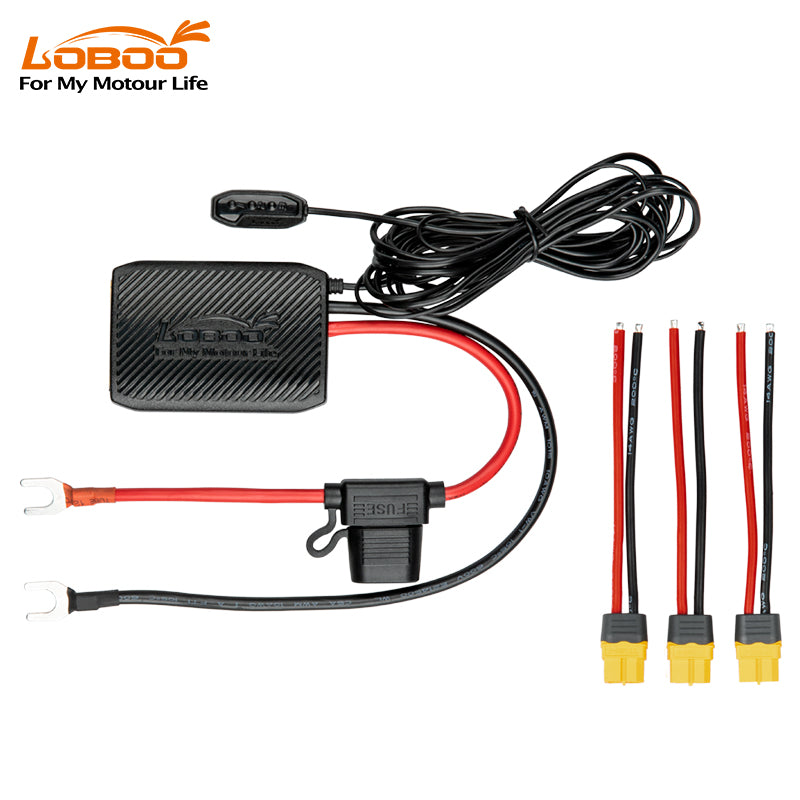
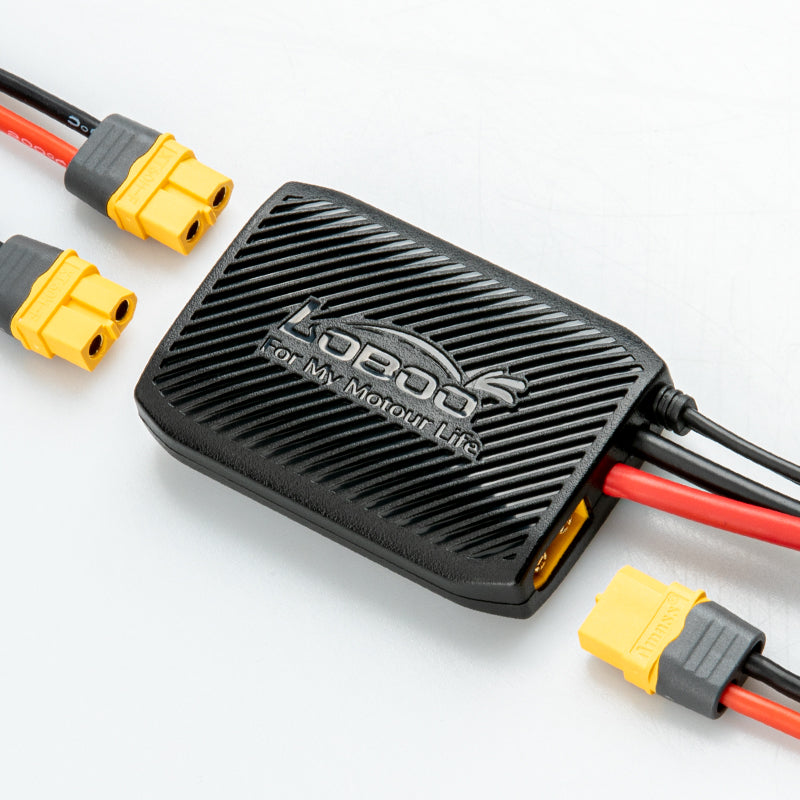
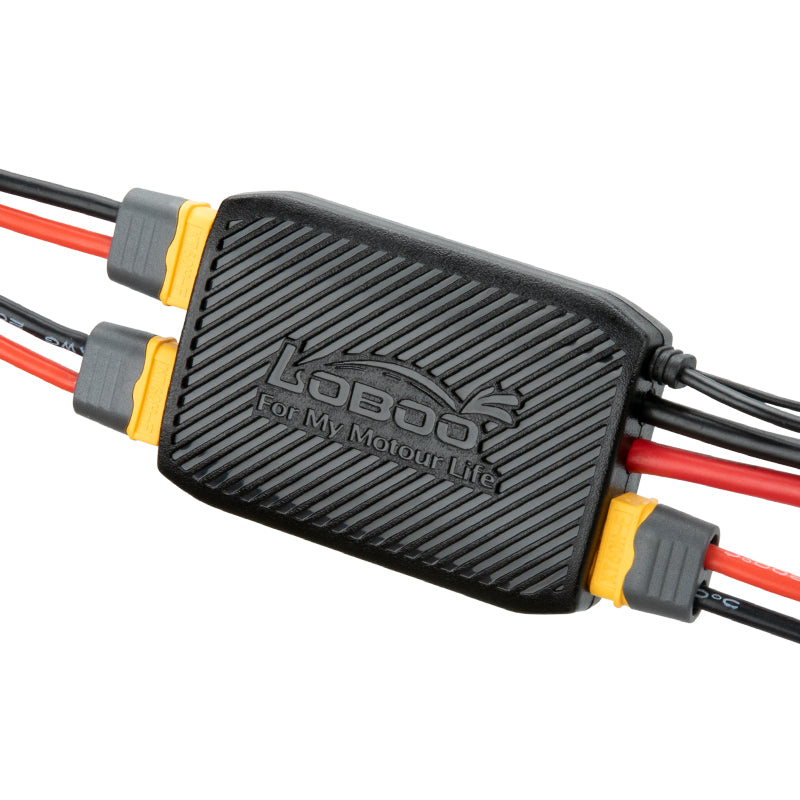
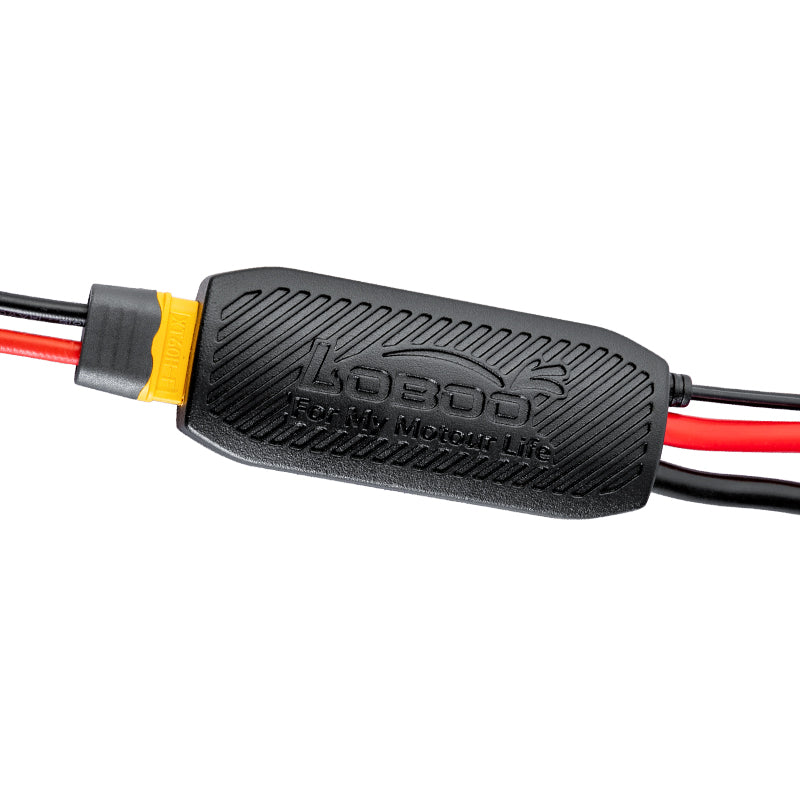
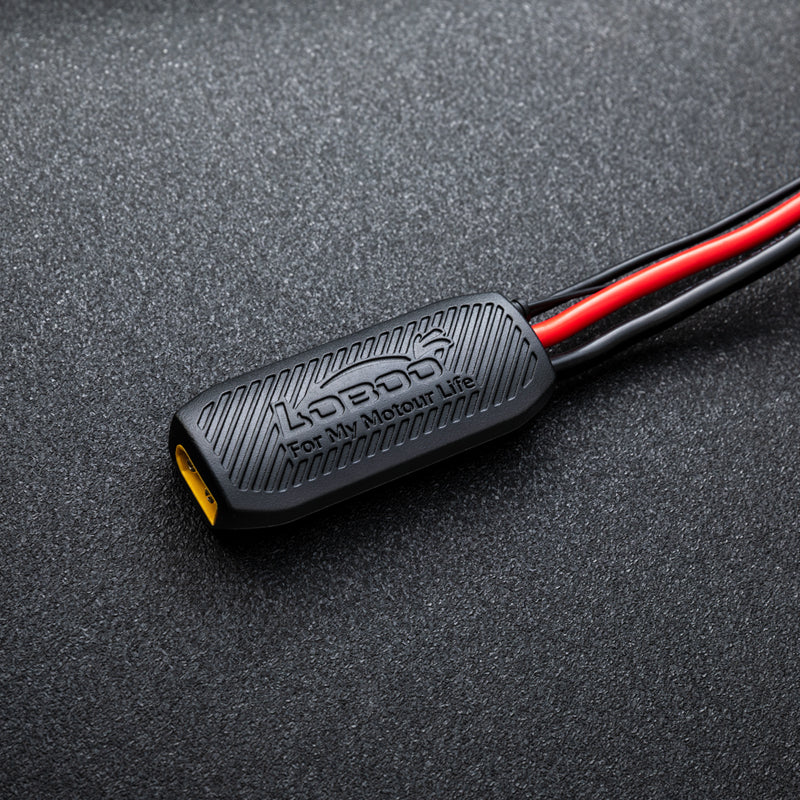
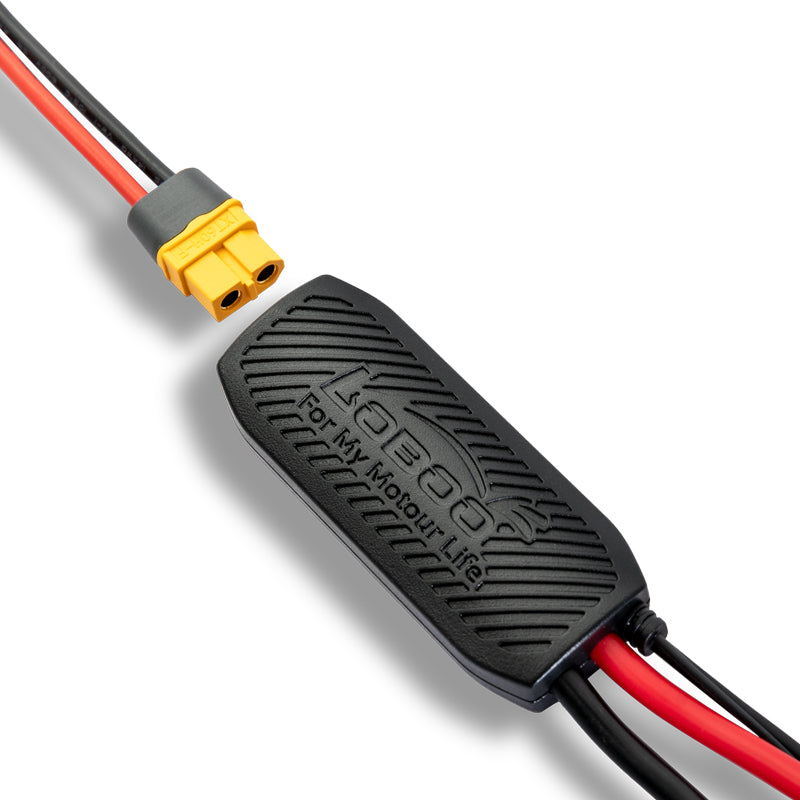
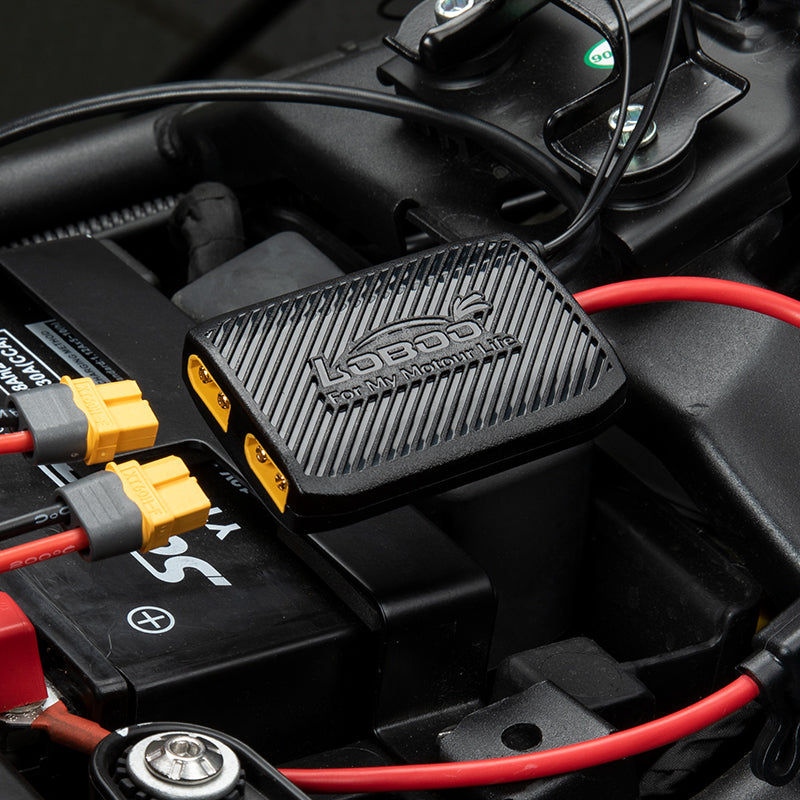
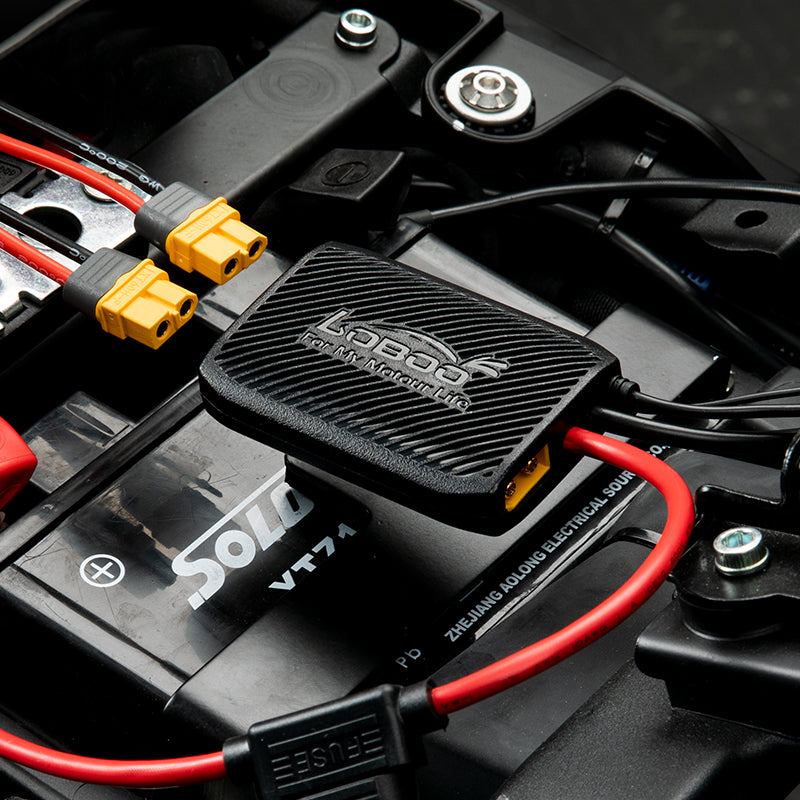
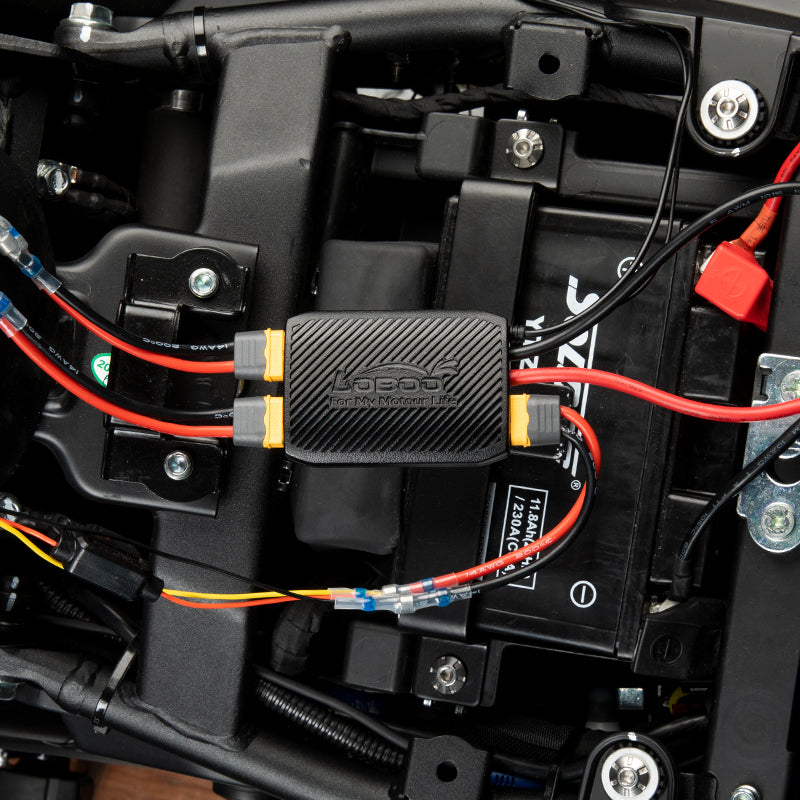
Motorcycle Power Distribution Unit – 1 or 3 protected outputs, IP65
Sale price€72,00Regular price
€80,00
In stock, ready to ship
480 W on three channels – accessories follow the key
CB20
—
Cosa è compreso nel prezzo
Scarica il manuale
Documentazione ufficiale LOBOO in PDF: puoi consultarla prima dell'acquisto per vedere montaggio, dotazione e istruzioni.
Vedi tutti i documenti nella scheda «Documenti e produttore» ↓
- Spedizione gratuitaoltre 100 € in Italia, oltre 250 € in Europa
- Garanzia 24 mesigaranzia legale di conformità
- Pagamento a ratedisponibile al checkout
- Reso entro 14 giornidalla ricezione dell'ordine
Hai dubbi sulla compatibilità? Contattaci prima dell'acquisto →
I recommend them to you!

Original LOBOO product, guaranteed
Motorcycle Power Distribution Unit – 1 or 3 protected outputs, IP65
CB20 - three outputs
Sale price€72,00Regular price
€80,00
If you have any questions, please do not hesitate to contact us. We will get back to you as soon as possible, within 24 hours on weekdays.
-
Endurrad accessory delivery
For accessories purchased from Endurrad.com, delivery times vary depending on product availability.
Estimated delivery times:
Products in stock: generally shipped within 24–48 business hours.
Products available from the supplier: estimated delivery within 5–10 business days.
Made-to-order or temporarily unavailable products: delivery times may vary and are indicated on the product page or communicated by our customer service team.
As soon as your order is handed over to the carrier, you will receive the information needed to track the shipment.
The accessories are carefully checked and packaged before shipping. When provided by the manufacturer, the package includes manuals, assembly instructions, documentation, and the accessories required for installation.
For products with special availability or procurement times, we recommend contacting Endurrad before purchasing to learn the latest estimated delivery time.
-
Customer support
Available Mon. to Fri.
- 08:30 - 13:30
- 14:30 - 17:30
- Saturday and Sunday - Closed
-
Contacts
1 or 3
Exits
30A
Max current
IP65
Protection
127g
Weight
Identification
Brand
LOBOO
Models
CB20 with three outputs and CB10 with one output
These are the two selectable variants on this page
Official name
Electronics Manager
LOBOO item number
11.1.04002.001.01 (CB20) and 11.1.04010.001.01 (CB10)
Electrical data
Operating voltage
12-15 V
CB20 Outputs
OUT1 20 A, OUT2 15 A, OUT3 10 A (maximum values)
Declared total simultaneous power: 480 W
CB10 output
A single output up to 30 A
360 W rated, with no need to connect the ACC wire
Compatible batteries
12 V lead-acid, including AGM and maintenance-free, and lithium iron phosphate
Protectors
Undervoltage
Below 11 V, OUT2 and OUT3 turn off after 1 minute; below 10 V, OUT1 turns off after 3 minutes
The indicators flash slowly during the warning period
Overvoltage
Shutdown of all outputs above 24 V
The indicator light also turns off
Tension maintained
55 V
Overcurrent
Shutdown above 25 A on a single line
The corresponding indicator light flashes rapidly
Short circuit
Automatic shutdown of the affected line
Overtemperature
Shutdown above 80 degrees
Polarity reversal
No dispensing if positive and negative are reversed
Materials and measurements
Dimensions
72.8 x 50.4 x 16.9 mm
Weight
127 g
Cable and indicator light included
Protection rating
IP65
Dustproof and resistant to water jets
Installation
Links
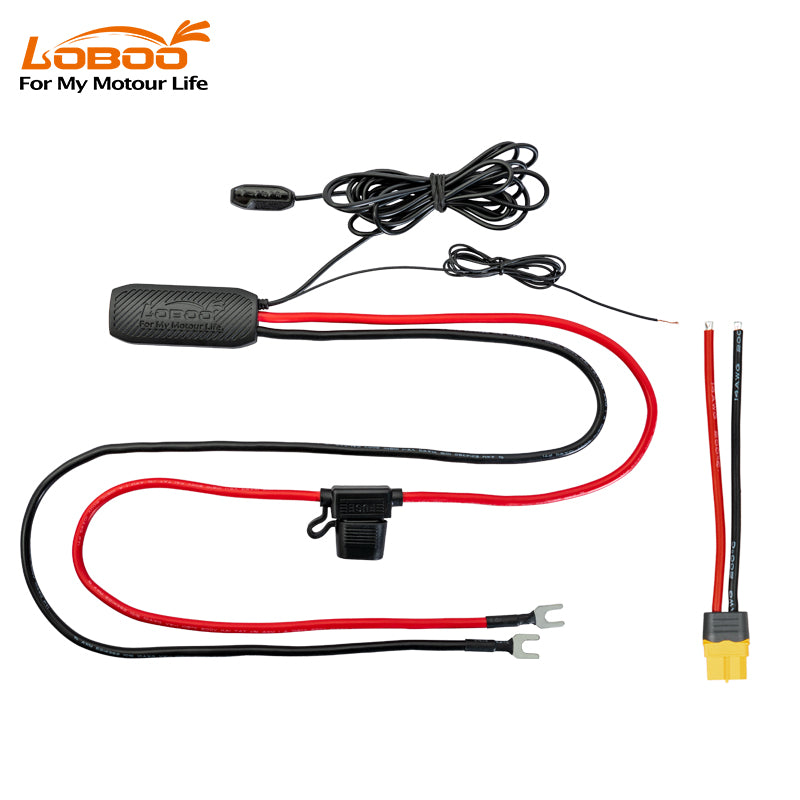
Positive, negative, ACC wire, and outputs to the accessories, with an indicator light
The ACC wire is the one that becomes live when you turn the key.
Equipment
Package contents
1 control unit, 3 output cables, 8 solder rings, 15 cable ties, 1 battery maintenance card
Manufacturer's warranty
12 months LOBOO, in addition to the 24-month legal warranty
Lithium motorcycle battery with integrated protection electronics.
All you need to know before ordering
Technical specifications, equipment, delivery, and warranty: find every detail, verified against official LOBOO documentation, below.
Description Motorcycle Power Distribution Unit – 1 or 3 protected outputs, IP65
When you add auxiliary lights, heated grips, and a USB socket, the battery terminal becomes a cluster of overlapping ring terminals. This control unit replaces it: one connection to the battery and outputs already protected for accessories.
Connecting to the motorcycle’s ACC wire makes the accessories turn on with the key and switch off when parked, without switches and without the risk of leaving anything on.
The two versions
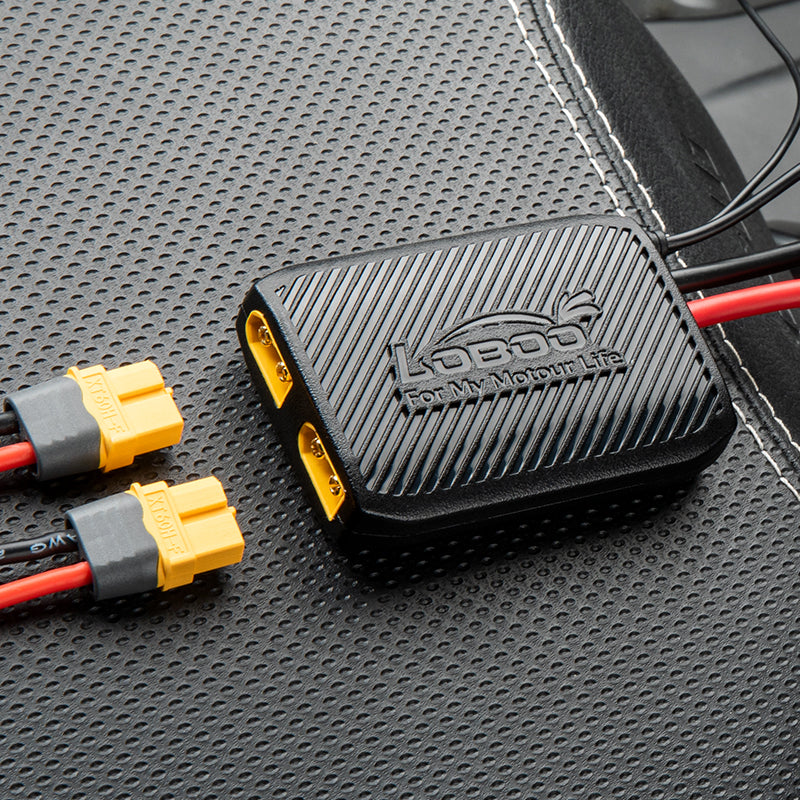
- CB20, three separate outputs. OUT1 up to 20 A, OUT2 up to 15 A, OUT3 up to 10 A: the manufacturer assigns them respectively to high loads such as auxiliary lights, medium loads such as heated grips, and low loads such as USB sockets and GPS units. Each line has its own protection and indicator light.
- CB10, a single output up to 30 A and a declared 360 W, with no need to connect the ACC wire. It is the choice for one large accessory on its own.
What happens when something goes wrong
The manual specifies precise thresholds, not generic “multiple protections”:
- Undervoltage: below 11 V, the OUT2 and OUT3 indicator lights flash slowly for one minute, then the outputs switch off. Below 10 V, OUT1 does the same, with three minutes’ warning. This protection leaves you enough power to start the engine.
- Overvoltage: above 24 V, all outputs switch off and the indicator light goes out. Withstands up to 55 V as specified.
- Overcurrent: above 25 A on a single line, automatic shutdown and a rapidly flashing indicator light.
- Short circuit: immediate shutdown of the affected line.
- Overtemperature: above 80 °C, the device switches itself off.
- Reverse polarity: if the positive and negative connections are reversed, the device supplies no power.
Where to install it
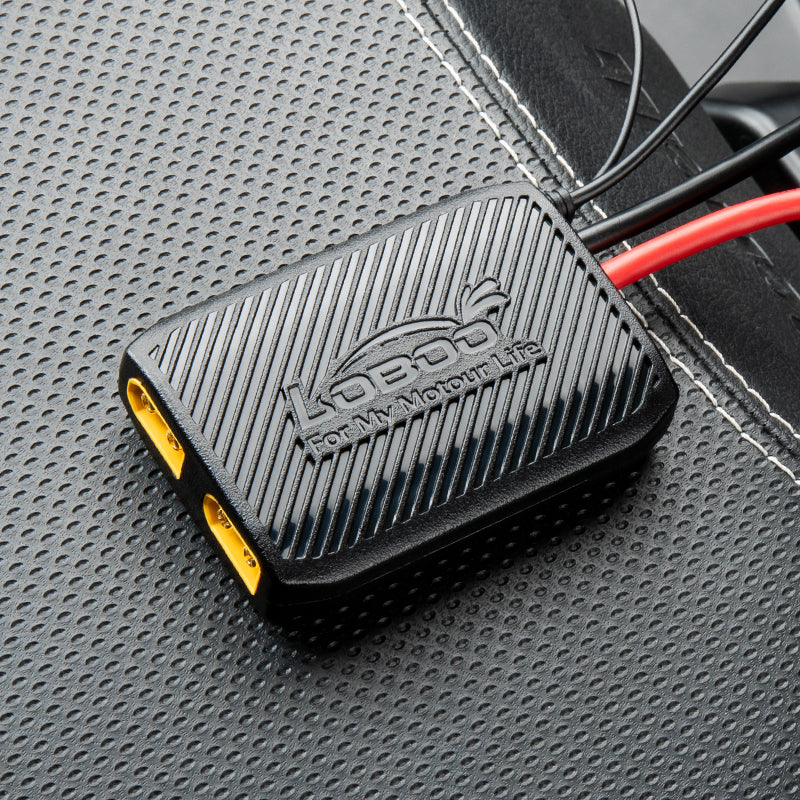
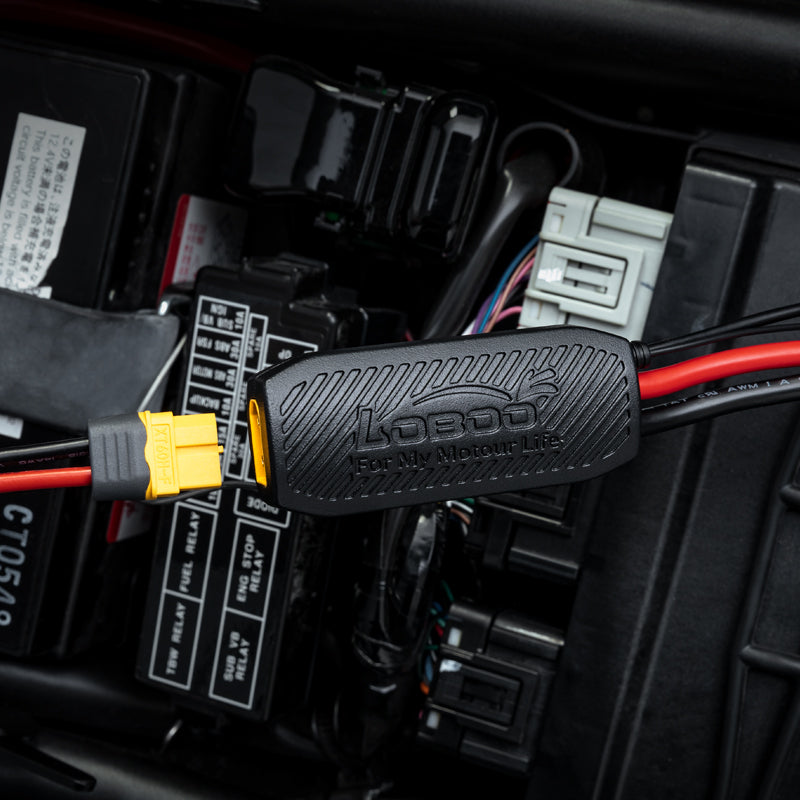
It measures 72.8 × 50.4 × 16.9 mm and weighs 127 g with the cable and indicator light: it fits under the seat of almost any motorcycle. It has an IP65 rating, an operating voltage of 12–15 V, and is compatible with 12 V lead-acid batteries, including AGM and maintenance-free batteries, as well as lithium iron phosphate batteries.
In the box
The control unit, three output cables with female connectors, eight heat-shrink solder seal rings, fifteen cable ties, and the battery maintenance card. The bilingual user manual can be downloaded from this page.
Use the solder seal rings as follows: strip the section to be connected, insert one wire into the ring, cross the two conductors inside it, and heat it until the solder melts, then shrink the sleeve. No crimping tool is needed.
Why choose it
Who is it recommended for
Documents and manufacturer
Download files

The problem it solves

A chip that keeps an eye on the battery

CB20: three outputs, 480 W total

CB10: a single 30 A output

It also handles heavy loads

Lead-acid or lithium, and no configuration options

The protections, with the numbers

IP65, and it fits in the palm of your hand
FAQs
For more information, please see our FAQ.
What is the difference between CB10 and CB20?
What is the ACC wire, and where can I find it?
Will it work for my motorcycle?
How do you connect the accessories to the outputs?
What’s in the package?
What happens if the battery runs out?
Can I assemble it myself?
Buying guides, technical comparisons, and news on adventure motorcycle accessories
Before choosing
Under Decree-Law 162/2026, in 2027 no road tax will be due on gasoline-powered motorcycles, with no kW limit, but only one vehicle per person: if you have a car with up to 80 kW, the exemption applies to the car. Practical cases, real savings, deadlines, special-status Regions, and what to do now.
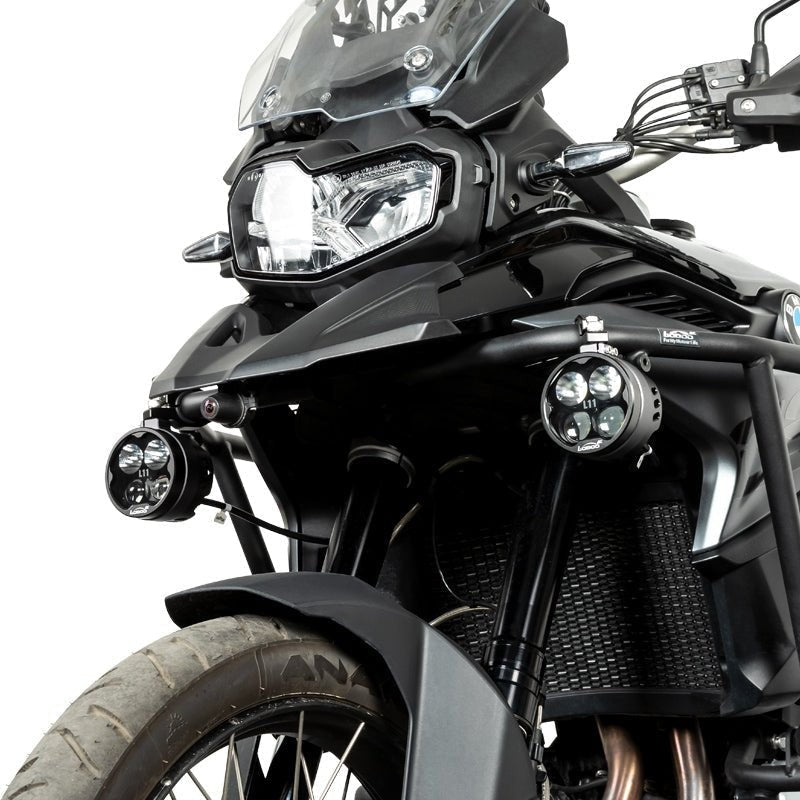
Riding a motorcycle in the dark during standard time: how to see better and be seen
From October 25, sunset comes before 5:30 p.m. What the 2025 ISTAT data say about motorcyclists, what Article 152 requires regarding lights, and what checks to carry out on lights, visor, and tires before returning in the evening.
Read moreabout Riding a motorcycle in the dark during standard time: how to see better and be seen
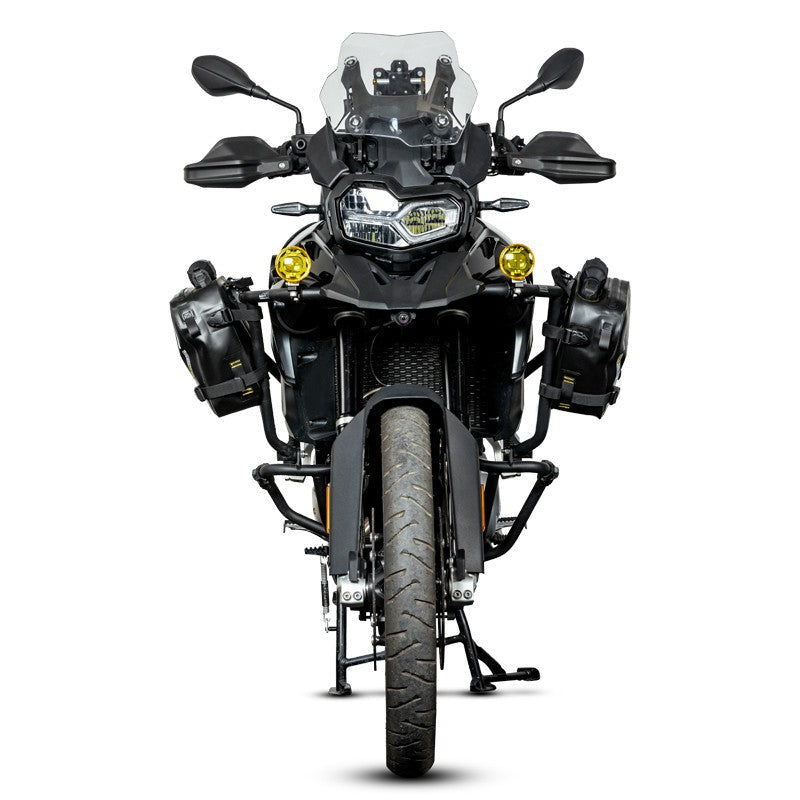
New Highway Code and motorcycles: what is already law, what is only a draft, and what to do now
On October 14, 2026, the government’s delegation for the new Highway Code expires: what is already law for motorcyclists, what is only a draft (emergency lane, gloves and back protectors, fines), and how to prepare your motorcycle without waiting.
Let customers speak for us
Ottimo prodotto e sopratutto molto soddisfatto sul supporto clienti
Gabriele Sanarica

Valigia semirigida
Buon prodotto, materiali robustii, ottime finiture e perfetto rapporto qualità/prezzo.
Alex Paltro

Manopole Endurrad
Dopo 4 anni avevo le manopole del mio GS 1250 ormai consumate ed in estate diventavano appiccicose. Sappiamo che le originali hanno un costo esagerato per via della sostituzione completa. Consigliatemi da Giuseppe di endurrad non ho esitato a provarle. Risultato ben più alto di ogni aspettativa, montaggio semplicissimo, viene fornito tutto il necessario insieme alle istruzioni, (sul canale YouTube anche il video).
Le manopole hanno una texture che ne favorisce il grip ed estetica, la sua struttura con camere vuote interne le rende morbide e confortevoli. Ultra consigliate.
Endurrad sempre una garanzia
Domenico Caló

Comoda e capiente
Comoda
Capiente
Estensibile
Ottimo prodotto
Sara Pagnozzi

Quick release..? Ottimale..!
Il modulo che mi è stato inviato con Jado S6 oltre che integrarsi perfettamente con la consolle BMW, è stabile e privo di vibrazioni…ma da encomiare, è sicuramente la cortesia e professionalità della ENDURRAD, nella persona dell’amico Giuseppe, che mi ha assistito puntualmente in un piccolo, e risolto, problema tecnico post-acquisto…Grazie..
Franco Biondi

High quality product
Senza dubbi, la qualità della borsa è veramente eccezionale. Facile istallazione.
Fernando AMC

Ottime, fanno il loro lavoro
Perfect
marco

professionalità
disponibilità
Franco Della Porta

Tamponi protezione tubolari moto
Il materiale è arrivato nei tempi previsti. Sono ben fatti e rispondono alle aspettative. Il prezzo lo ritengo leggermente alto vedendo altri prodotti simili. Ma dato le parti in gomma grigie che ben si adattavano alla mia moto e per il design ho speso volentieri qualcosa in più.
Un consiglio.. Nella lista dei marchi non c'è la Moto Guzzi!!!
Claudio Romanetti

PIU VELOCI DI AMAZON
Prima della qualità dei prodotto JADO S6 che ho acquistato da ENDURRAD devo elogiare la tempestività della consegna effettuata dalla stessa azienda con proprio personale. Ordine effettuato unitamente ad altri prodotti Loboo la sera di mercoledì alle 18:30 consegna a casa avvenuta giovedì alla 15:00 meno di 24 ore e non abito della stessa provincia, Bravi. Comunque del prodotto Jado S6, delle telecamere e della staffa per BMW allo stato posso elogiare la qualità percepita dei materiali e della stessa confezione. Ho montato la staffa e acceso l'apparecchio unitamente alla telecamera anteriore. Luminoso, semplice, accetta la lingua Italiana e la velocita di risposta ai comandi rilevata e buona anche con la rotella BMW così come le immagini serali della telecamera. Ora vediamo come si comporterà durante il normale utilizzo su strada e sterrato. Ma sono certo che le aspettative verranno confermate. Voglio ringraziare Giuseppe della Endurrad per la Sua disponibilità e professionalità manifestata telefonicamente. Lo consiglio
GIORGIO

Can bmw
Tutto ok.Consegna veloce e precisa
Attikio De Marchi

Eccellente prodotto
Spedizione immediata, prodotto eccellente montate su multistrada v4 rally
marco

Eccellente prodotto
Spedizione immediata, prodotto eccellente montate su multistrada v4 rally
marco

Ottimo prodotto e molto utile per aumentare spazio bagali e proteggere la moto
Lucio Volpe
Borse Lobo Crash Bar Gonfiabili
Prodotto arrivato in tempi rapidi. Ben confezionato.Le borse non solo rispecchiano la descrizione, ma sembrano di qualità.
Facile il montaggio nonostante le istruzioni sono solo in lingua inglese e cinese.
Nella confezione oltre le borse vi è un portachiavi ed un lubrificante per le cerniere che appena viene applicato rende scorrevole e maneggevole l'apertura e la chiusura della cerniera della borsa.
Spero sia per il loro utilizzo ma sopratutto per tenuta del materiale di rimanere soddisfatto a lungo nel tempo.
Claudio C.


