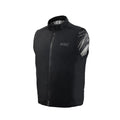
Identification

Brand

LOBOO

Model

RJR10

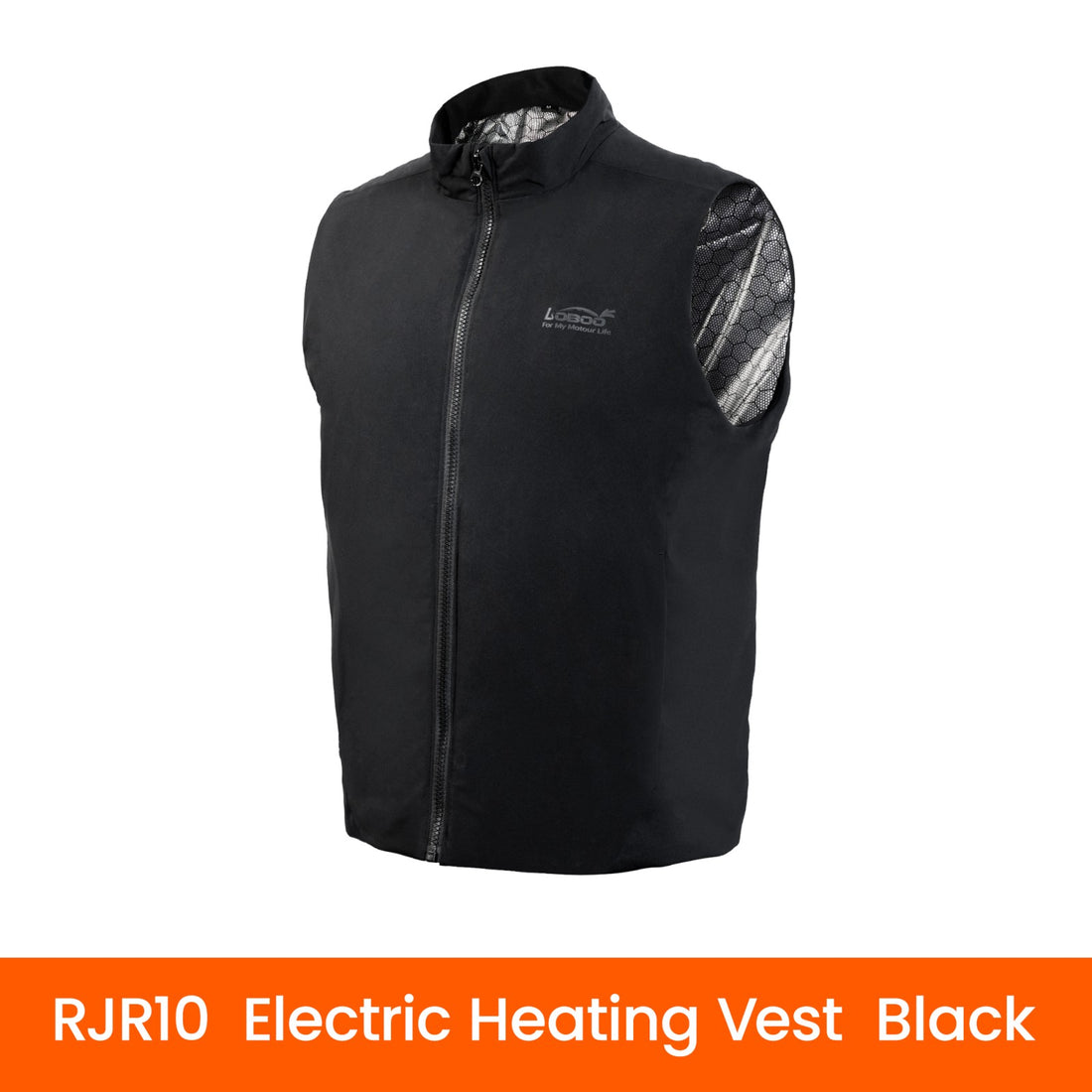
LOBOO Name: Electric Heating Vest · black color

Heating

Heating element

Carbon fiber

Thinner and softer than traditional heating elements

Heated zones

5

Right and left chest, back, right and left lower back

Commands

Two independent buttons

One for the front and one for the back, adjustable separately

Temperature levels

25, 35, and 45 °C

Steady yellow, orange, and red LEDs. Sensors for constant temperature

Power supply

Claimed range

4.5 h at 25 °C · 3.5 h at 35 °C · 2.2 h at 45 °C

With a 10,000 mAh power bank, at an ambient temperature of 0°C and with no wind

Entrance

USB-A, 5 V 2 A

Cable already integrated into the pocket. Power bank not included

Materials

Shell

Nylon 88%, elastane 12%

Four-way stretch, with a windproof and breathable TPU membrane

Lining

95% polyester, 5% elastane

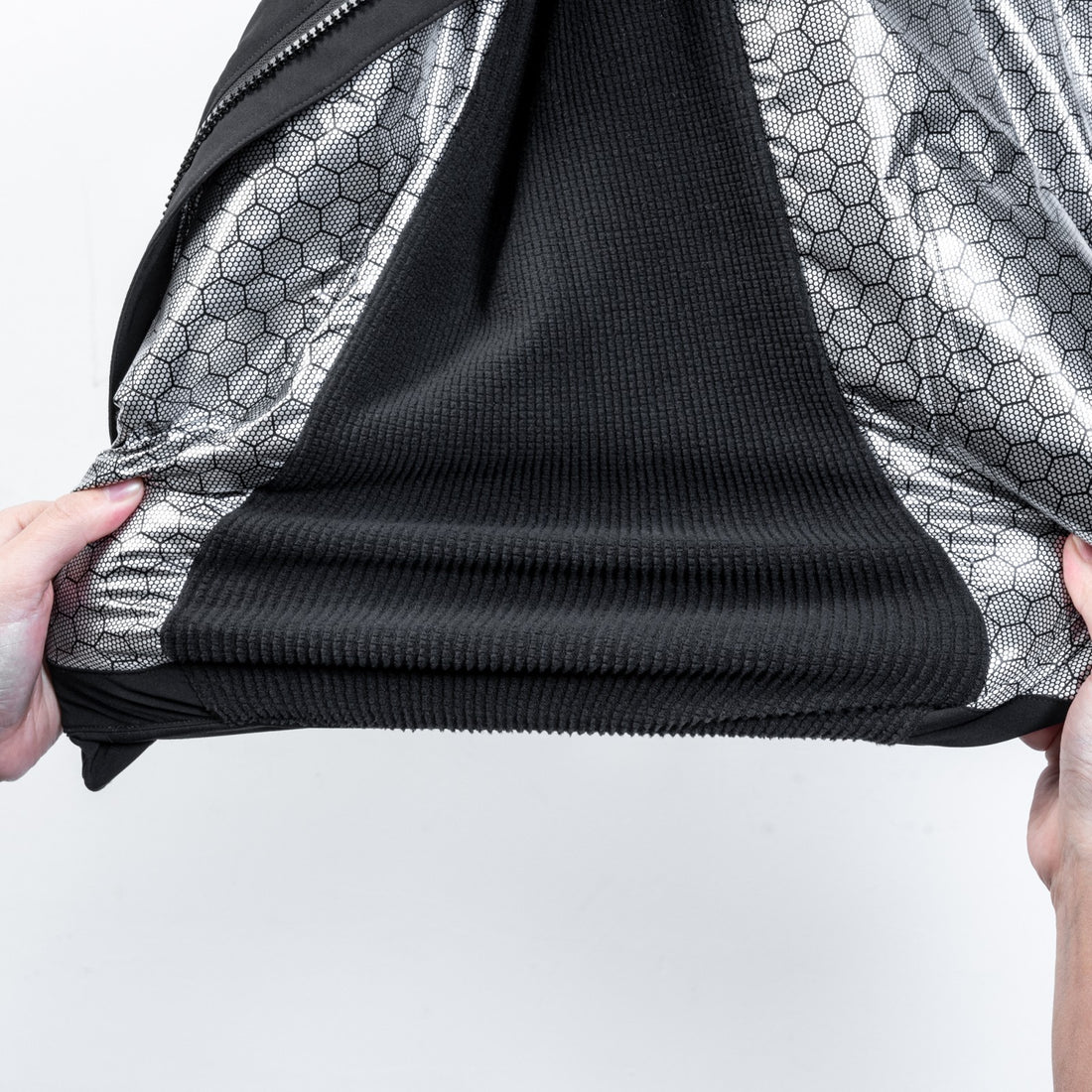
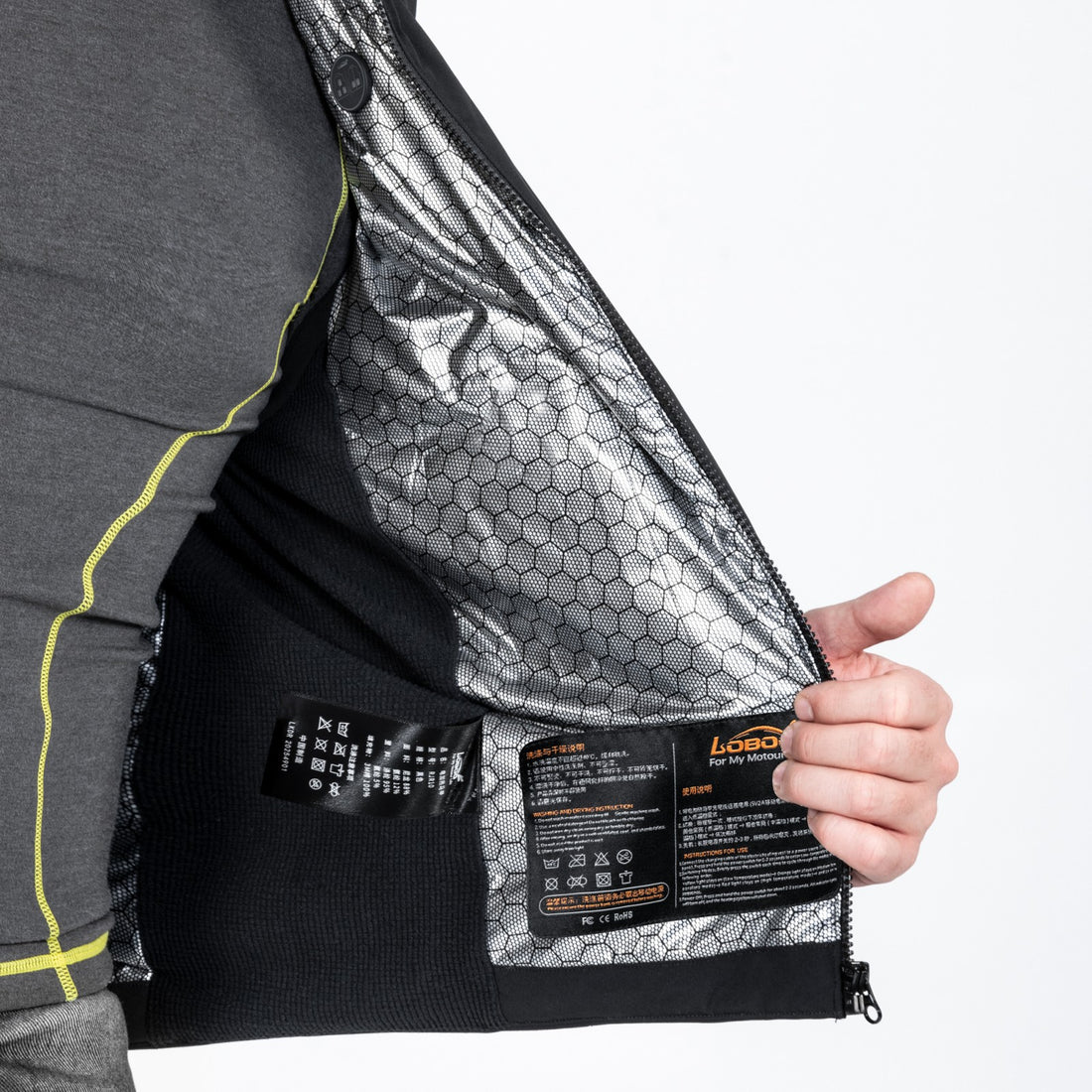
Heat-reflective treatment to retain warmth

Padding

3M Thinsulate 100%

Maintains over 80% of its insulating power when wet

Side inserts

Stretch fabric

They follow the movement in the driving position

Measurements

Weight

382

Back length

66 · 68 · 70 · 72 · 74 cm

From M to 3XL, tolerance ±0.5 cm

Chest circumference

110 · 114 · 118 · 122 · 128 cm

From M to 3XL, tolerance ±1 cm

Between two sizes

Choose the largest one

Manufacturer’s recommendation: the vest is worn over other layers

Use

Washing

See symbols on the label

Always disconnect the power before washing

Compliance

Certifications

FCC, CE, and RoHS

Certifications shown by the manufacturer; details not published

Dati dichiarati da LOBOO sui pannelli tecnici. Le autonomie sono rilevate a 0 °C senza vento con power bank da 10.000 mAh e variano con l'uso reale.

RJR10 · 5 zone riscaldate · comandi separati petto e schiena · 3M Thinsulate · 382 g

All you need to know before ordering

Technical specifications, equipment, delivery, and warranty: find every detail, verified against official LOBOO documentation, below.

Description Heated motorcycle vest with carbon fiber and USB power supply

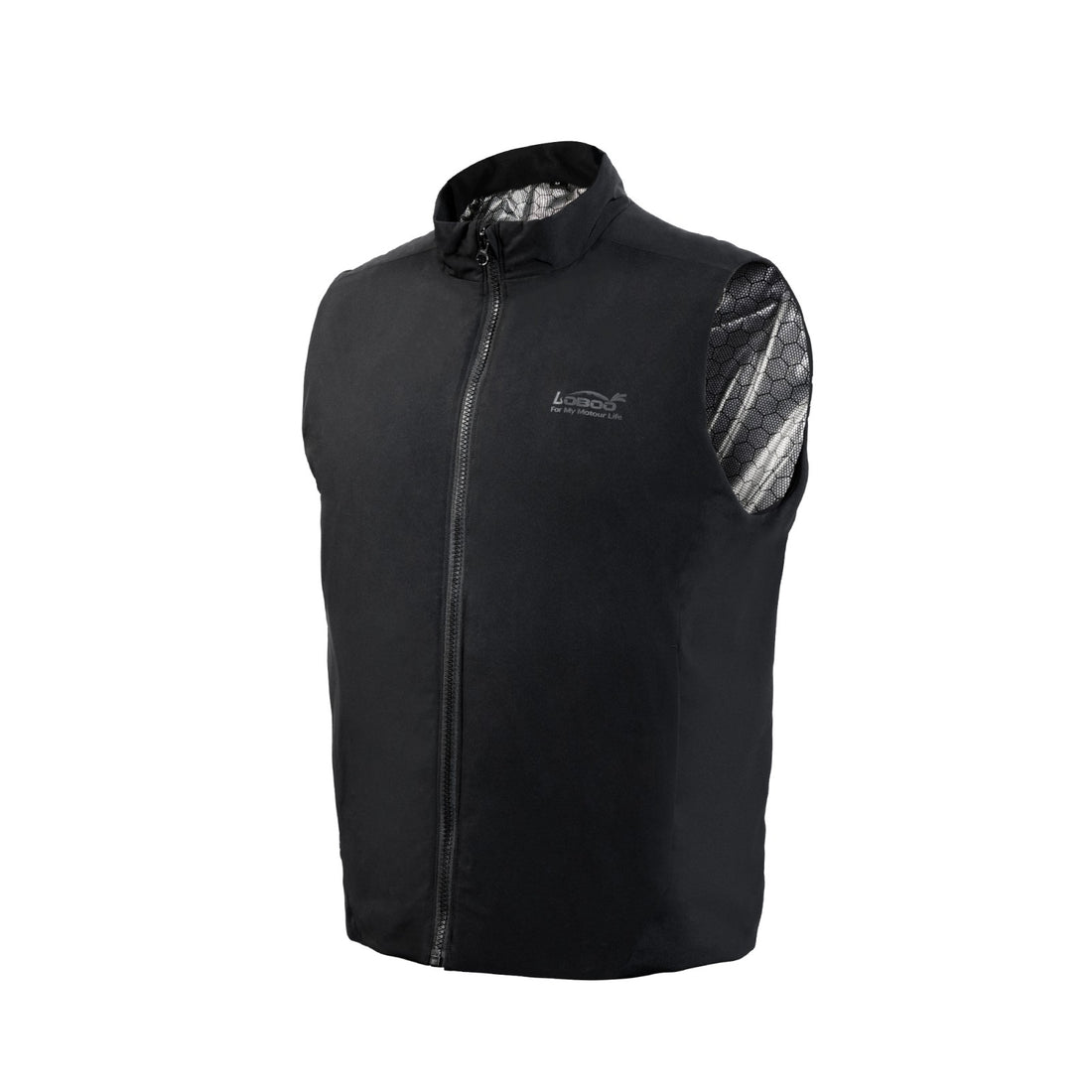
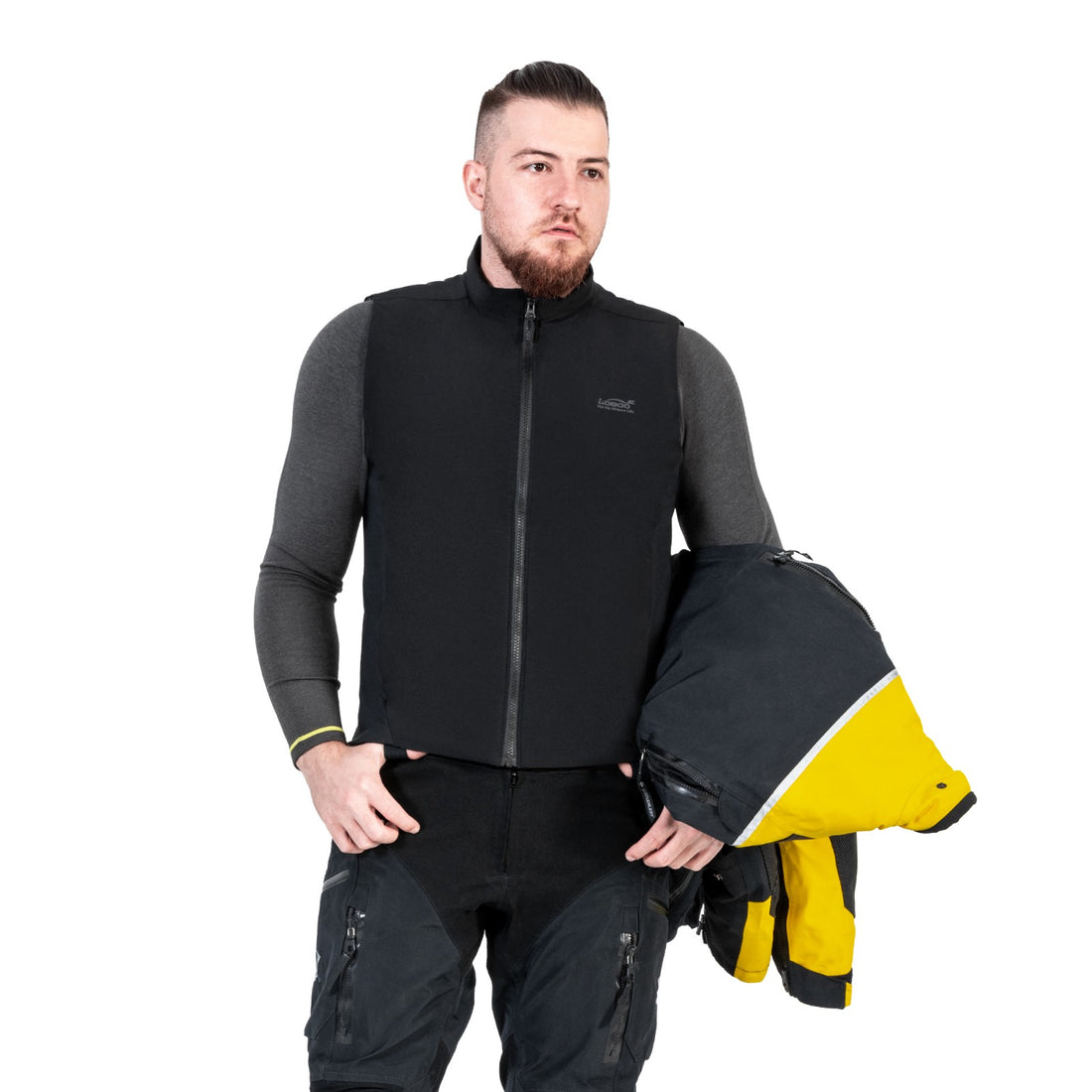
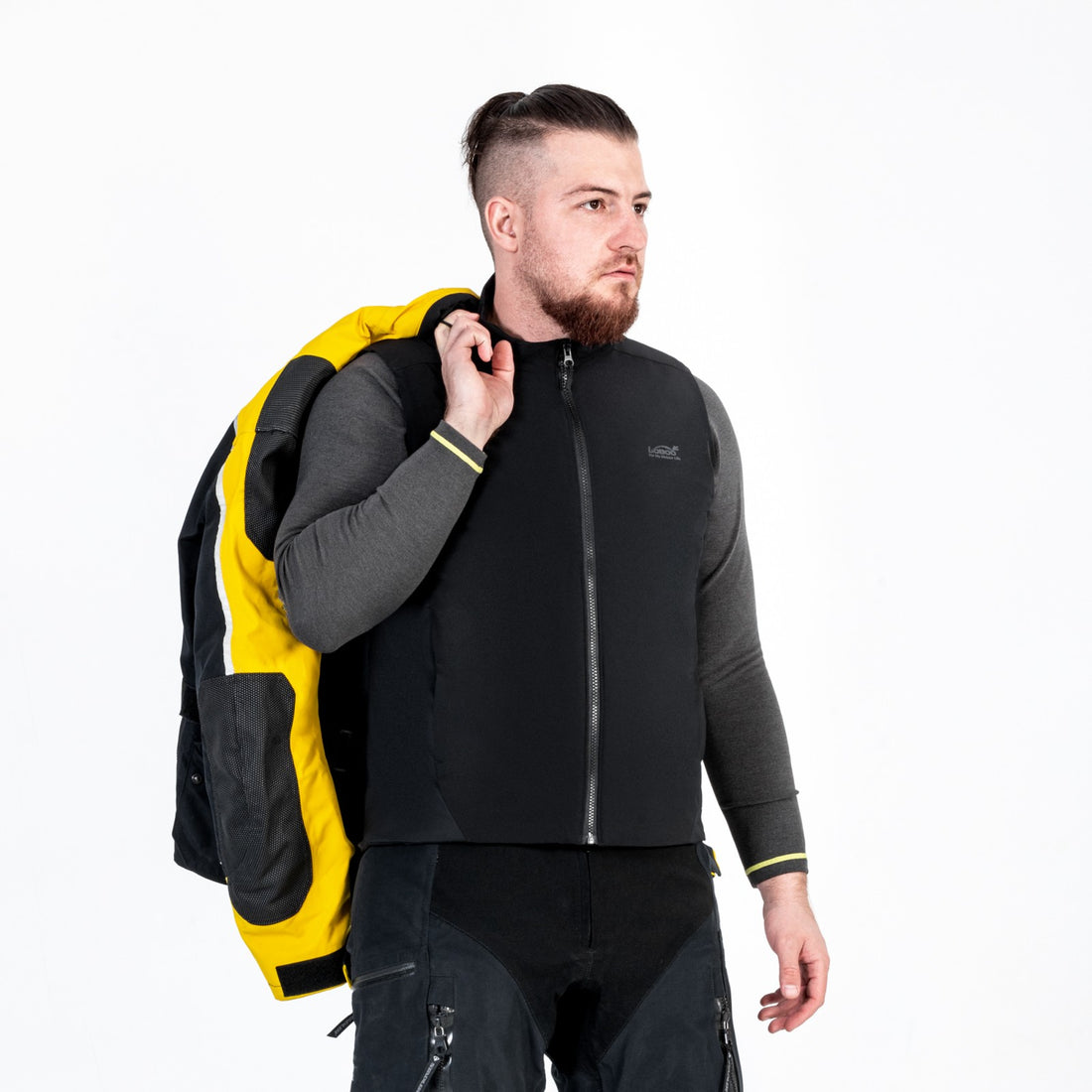
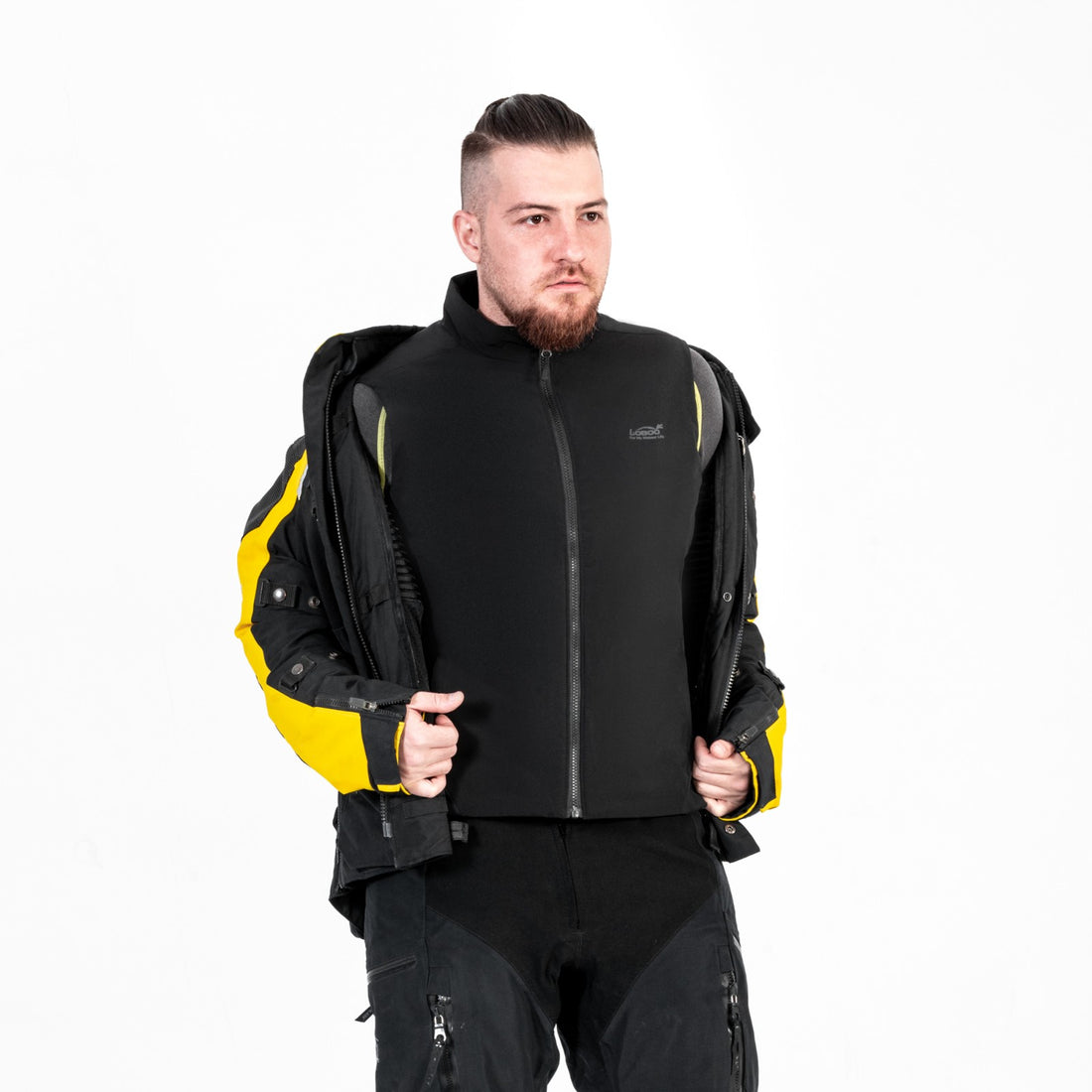
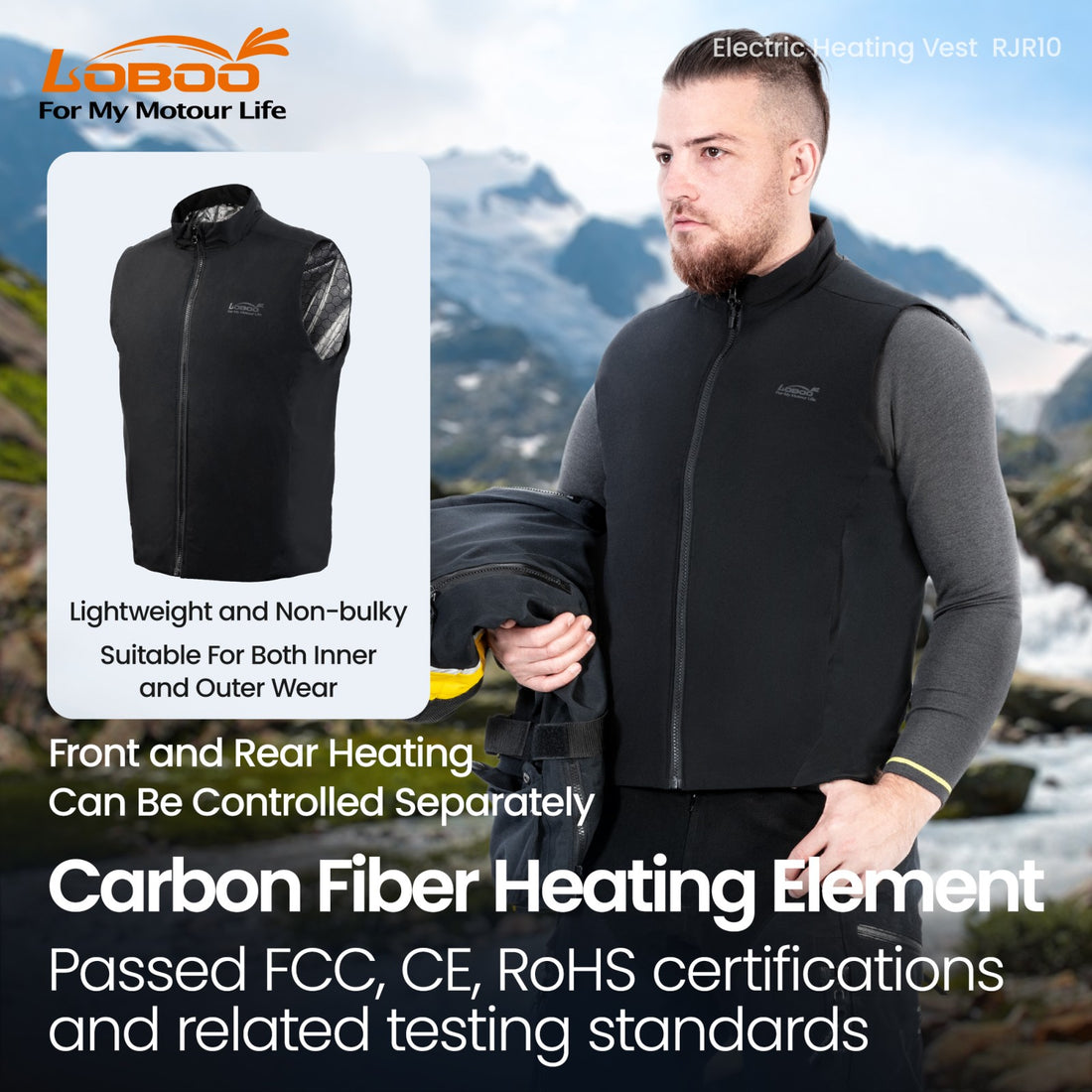
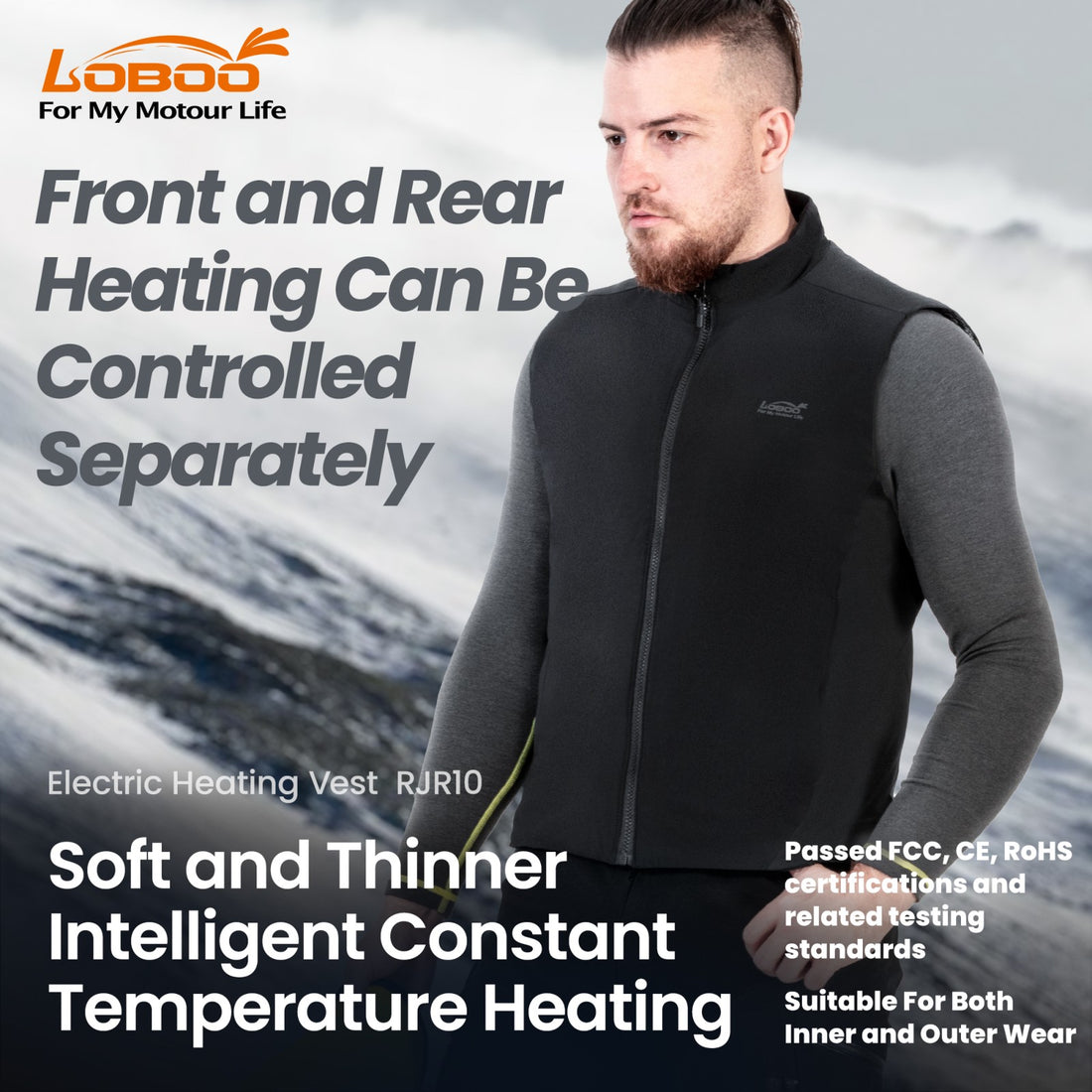
A heated vest designed to be worn under a motorcycle jacket without adding bulk: the heating element is made of carbon fiber, thinner and softer than traditional heating elements, and the garment weighs 382 grams.

Five zones, two separate controls

There are five heated zones: right and left chest, back, and right and left lower back. There are two buttons, one for the front and one for the back, and they operate independently: you can heat only the back while leaving the chest neutral, or vice versa.

Each zone has three levels, with a sensor that keeps the temperature constant instead of alternating between on and off.

How long does it last?

  • 25 °C, steady yellow LED — approximately 4.5 hours
  • 35 °C, steady orange LED — approximately 3.5 hours
  • 45 °C, steady red LED — approximately 2.2 hours

These figures were recorded by LOBOO at an ambient temperature of 0 °C, with no wind, using a 10,000 mAh power bank and a light layer over the vest. The USB-A cable is already integrated into the pocket: you need a 5 V, 2 A power bank, which is not included.

Warmth that does not depend on the battery

Even when the heating is switched off, the vest provides insulation: the padding is made of 3M Thinsulate, an ultrafine fiber that traps air at the same thickness and retains over 80% of its insulating power when wet, whereas traditional cotton drops below 30%.

The inner lining is heat-reflective, and the shell is made of four-way stretch nylon with a windproof and breathable TPU membrane. The sides feature stretch inserts that follow your movement in the saddle.

Under or over

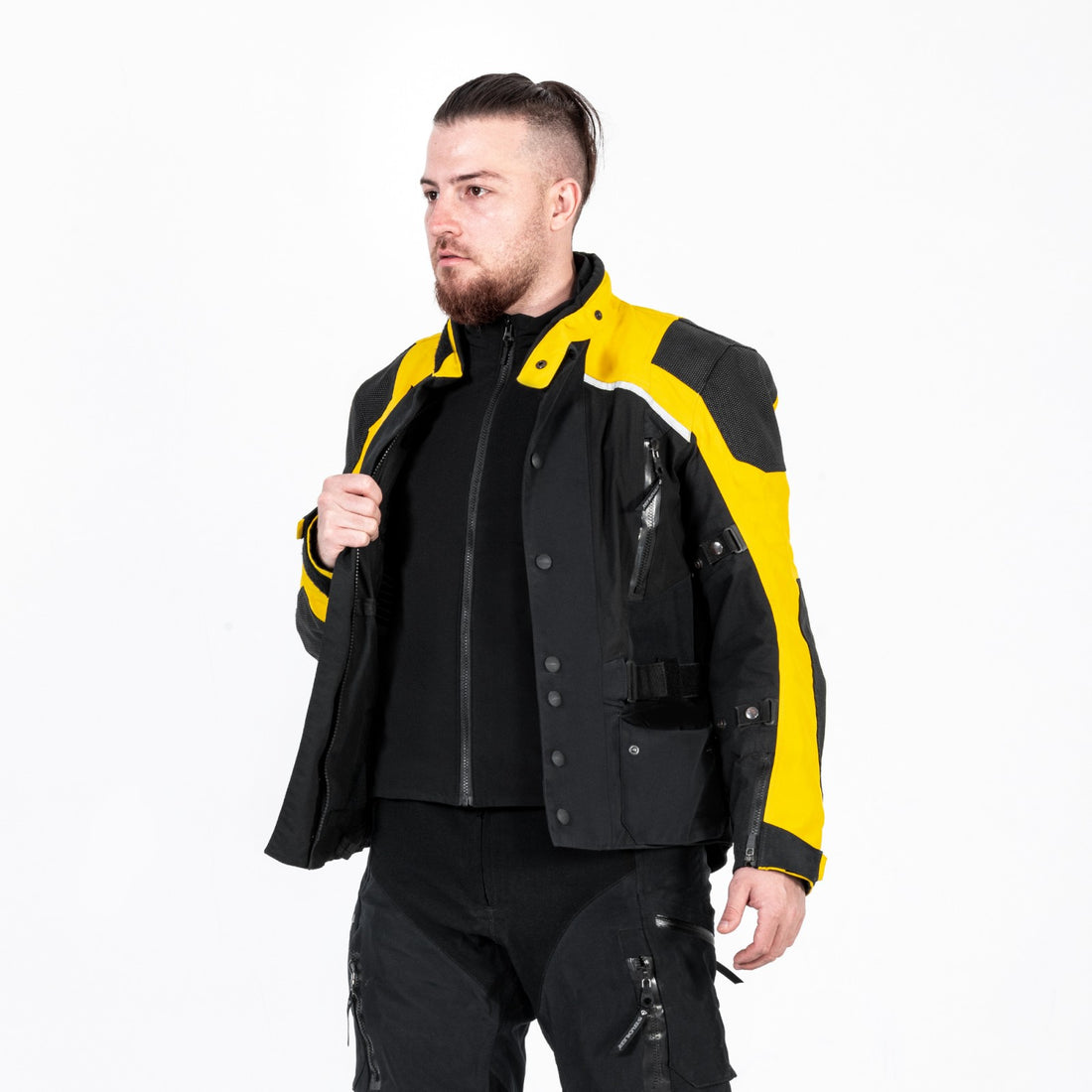
Wear it under a technical jacket as a thermal layer, or on its own over a sweatshirt in the city. It has no sleeves precisely for this reason: under a jacket, bulk around the arms is the first thing that becomes uncomfortable.

Sizes

Available from M to 3XL. The size chart lists the back length and chest circumference for each size, along with the height-and-weight guide: if you are between two sizes, LOBOO recommends choosing the larger one, because the vest is designed to be worn over other layers.

Why choose it
  • Due comandi, non uno: scaldi la schiena e lasci il petto neutro, o il contrario. La maggior parte dei gilet ha un solo pulsante per tutto.
  • Temperatura costante: i sensori mantengono il livello scelto invece di alternare caldo e freddo.
  • Scalda anche da spento: l'imbottitura 3M Thinsulate isola per conto suo, quindi la power bank scarica non ti lascia al freddo.
  • Sottile sotto la giacca: fibra di carbonio al posto delle resistenze e 382 grammi in tutto, senza maniche che facciano volume.
  • Alimentazione che hai già: una normale power bank USB, senza batterie proprietarie da comprare a parte.
  • Antivento e traspirante: membrana TPU sul guscio elasticizzato, fodera termoriflettente all'interno.
Who is it recommended for

Come scegliere la taglia

  • M: schiena 66 cm, torace 110 cm
  • L: schiena 68 cm, torace 114 cm
  • XL: schiena 70 cm, torace 118 cm
  • 2XL: schiena 72 cm, torace 122 cm
  • 3XL: schiena 74 cm, torace 128 cm

Se sei fra due taglie prendi la più grande: il gilet si porta sopra una maglia tecnica o una felpa, e stretto scalda peggio perché comprime l'imbottitura.

È la scelta giusta se:

  • Usi la moto anche d'inverno e la giacca tecnica da sola non basta
  • Hai già una power bank e non vuoi un sistema con batteria dedicata
  • Soffri il freddo più sulla schiena che sul petto, o viceversa
  • Vuoi un capo che serva anche a piedi, sotto un piumino o da solo

Non fa per te se:

  • Cerchi un capo che si colleghi alla batteria della moto: qui l'alimentazione è USB
  • Ti servono anche le maniche riscaldate: questo è un gilet
  • Fai tappe da più di quattro ore senza soste: al massimo livello l'autonomia è di circa due ore per carica
Documents and manufacturer

Uso e sicurezza

  • Serve una power bank con uscita USB-A da 5 V e 2 A, non inclusa. Il cavo è già nella tasca del gilet.
  • Con il freddo la sensibilità della pelle cala: LOBOO raccomanda di partire dal livello basso e salire solo se serve, per evitare ustioni da bassa temperatura.
  • Non usare il riscaldamento su pelle nuda e non dormire con il gilet acceso.
  • Scollega sempre l'alimentazione prima del lavaggio e segui i simboli sull'etichetta interna.
  • Non piegare né stirare le zone riscaldanti e non usare il capo se il tessuto è lacerato in corrispondenza dell'elemento.
  • Certificazioni dichiarate dal produttore: FCC, CE e RoHS. Il gilet non è un capo protettivo e non sostituisce l'abbigliamento tecnico da moto.

How does it work, in detail?

Constant heat, not in waves

Constant heat, not in waves

The heating element is made of carbon fiber: thinner and softer than traditional heating elements, so you don’t feel it under the jacket. The sensors maintain the temperature at the selected level instead of switching between on and off.

The front and back have separate buttons, and there are three levels.

Five zones, where they’re truly needed

Five zones, where they’re truly needed

Right and left chest, back, right and left lower back. These are the areas that catch the airflow while riding and, once they get cold, cool everything else down.

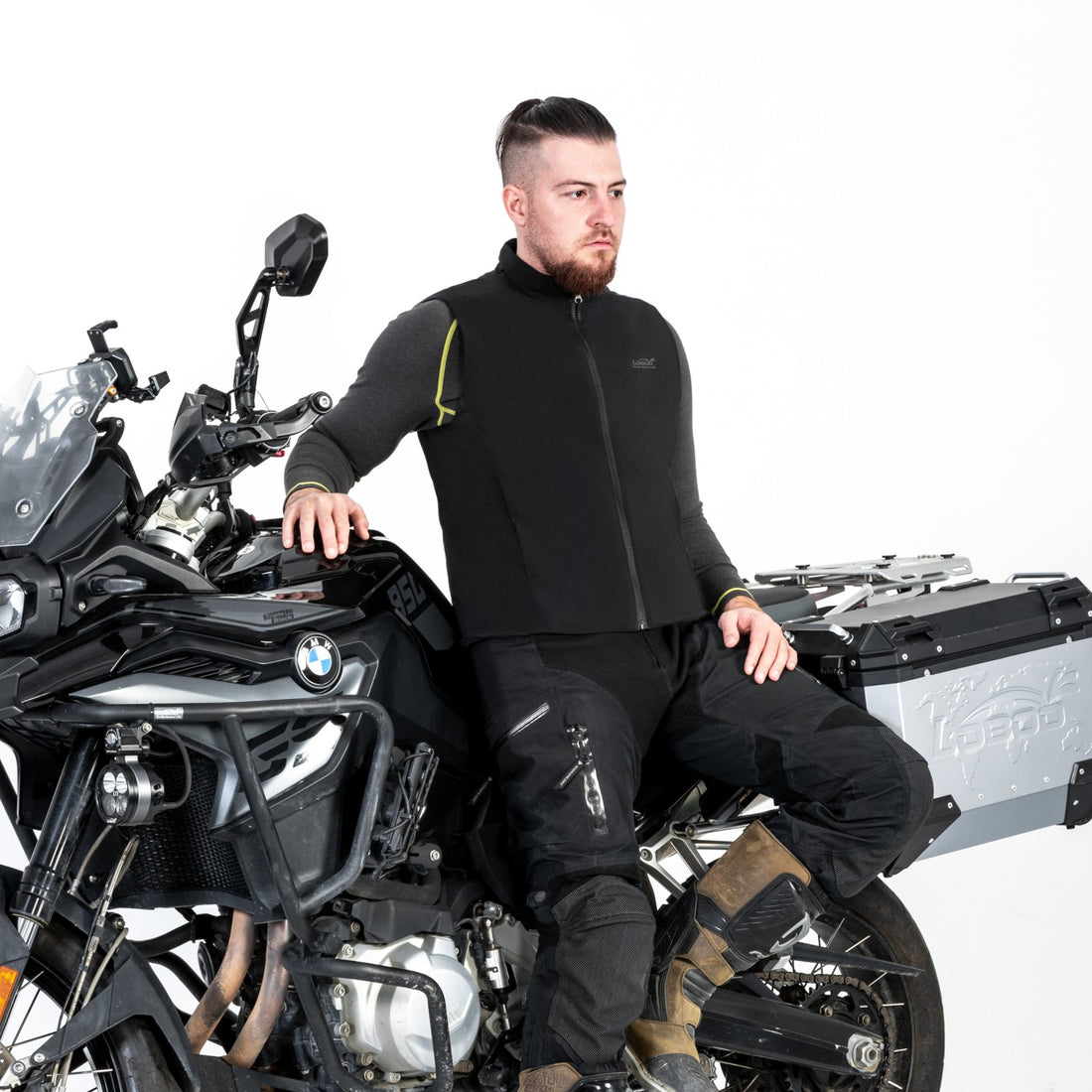
The lower back matters twice as much in an adventure riding position, where your back is exposed every time you stand on the foot pegs.

Two buttons, not one

Two buttons, not one

The front and back are adjusted separately. You can keep the back at maximum and the chest turned off—this is the setup for those who have their jacket tightly closed in front and get airflow at the back.

Almost all heated vests have a single control for the entire garment.

Three levels and how long they last

Three levels and how long they last

Yellow LED for 25 °C and approximately 4.5 hours, orange for 35 °C and 3.5 hours, red for 45 °C and 2.2 hours.

These measurements were taken by LOBOO at an ambient temperature of 0 °C, with no wind, using a 10,000 mAh power bank and a light layer over the vest. The manufacturer recommends starting at the low setting: in cold weather, the skin is less sensitive, increasing the risk of low-temperature burns.

The cable is already in the pocket

The cable is already in the pocket

Power is supplied by a USB-A cable that comes out inside the pocket: connect a standard 5 V, 2 A power bank to it and leave it there. There’s no proprietary battery to purchase separately and no dedicated charger to remember when traveling.

The power bank is not included: with a 10,000 mAh one, the manufacturer claims 4.5 hours on the low setting.

Thermal jersey or standalone top

Thermal jersey or standalone top

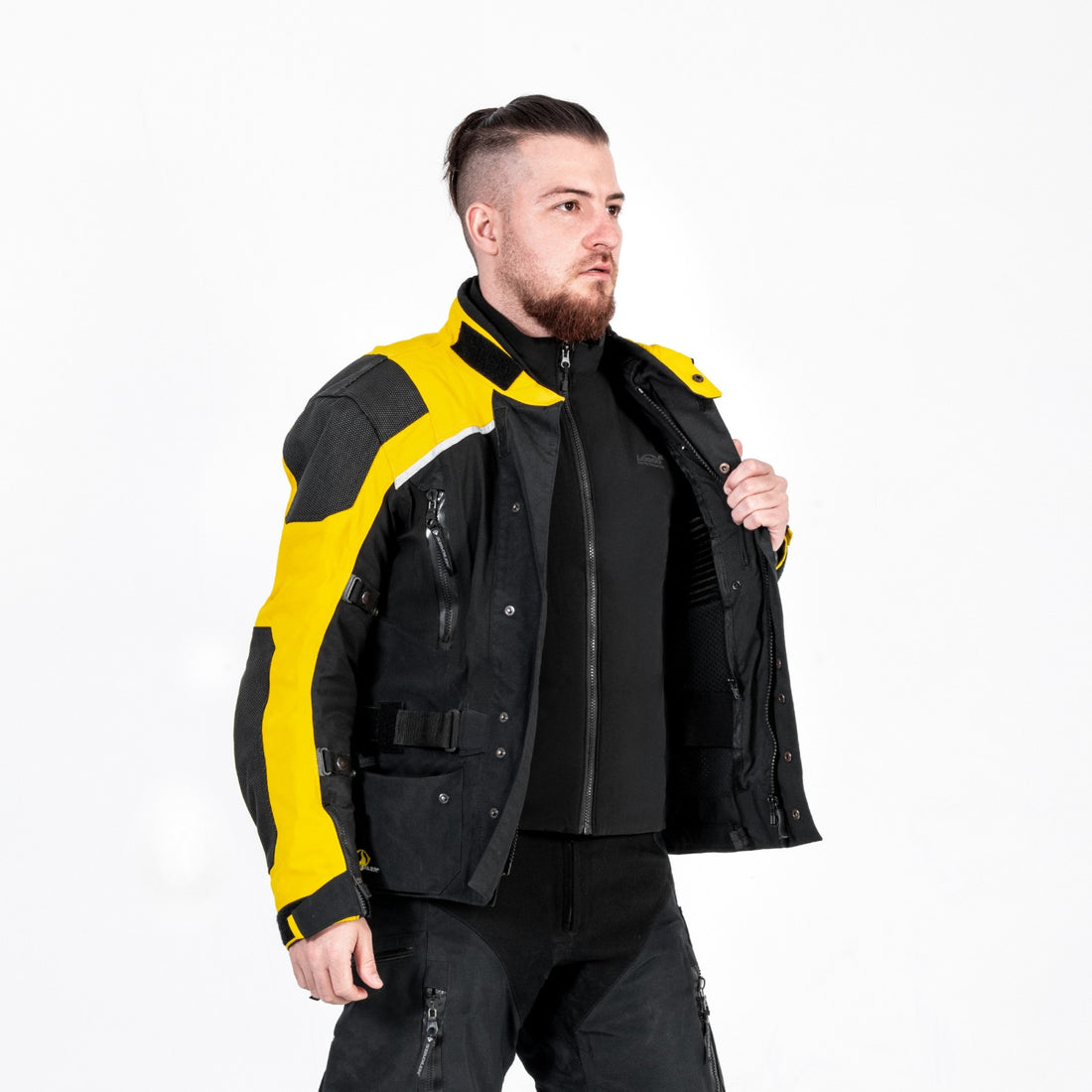
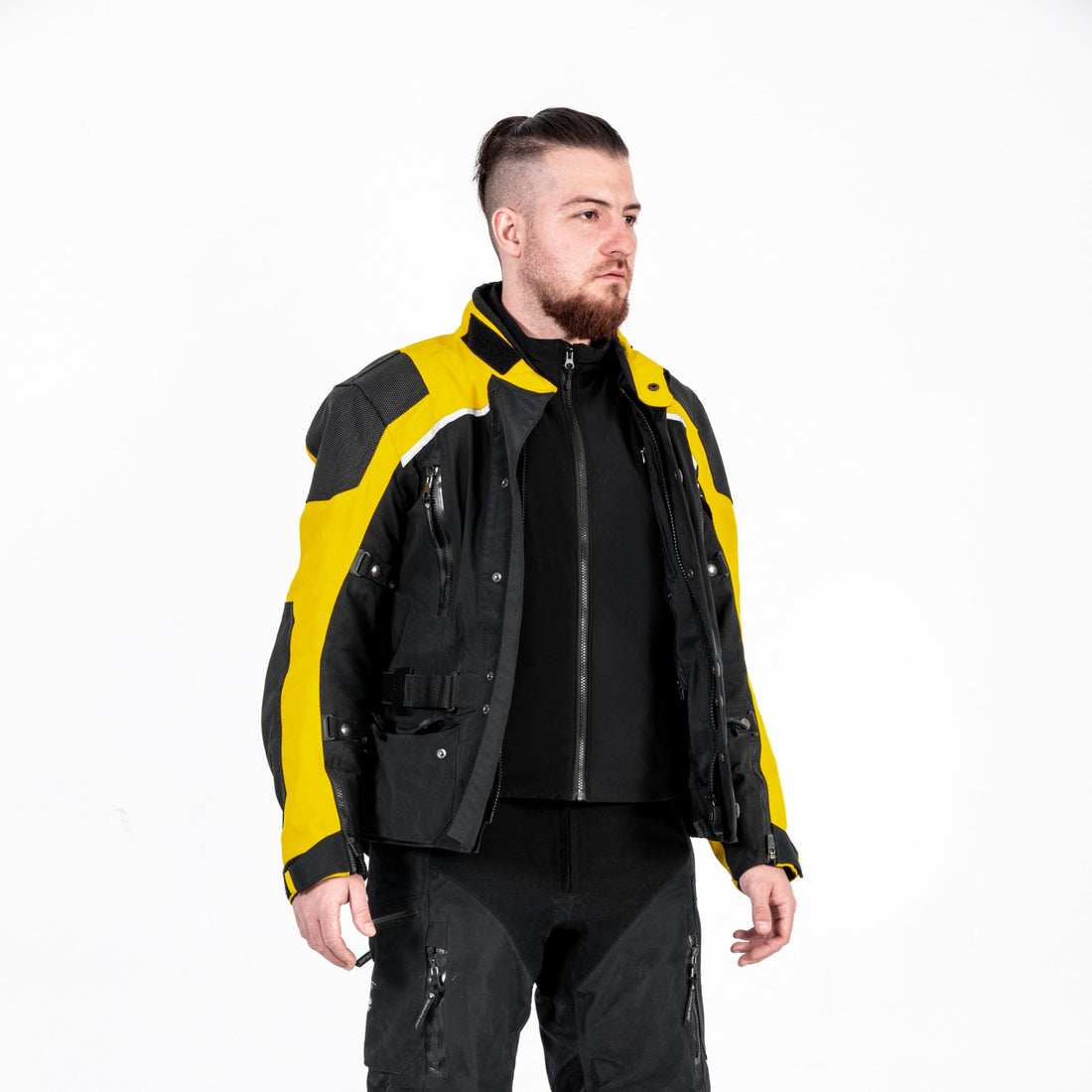
Under a technical jacket, it provides the warmth of a thermal layer without sleeves that add bulk to the arms and restrict movement. Worn on its own over a sweatshirt, it is a garment you can wear around town.

The stretch inserts on the sides follow the position in the saddle, where the back lengthens and the front shortens.

The same garment, two uses

The same garment, two uses

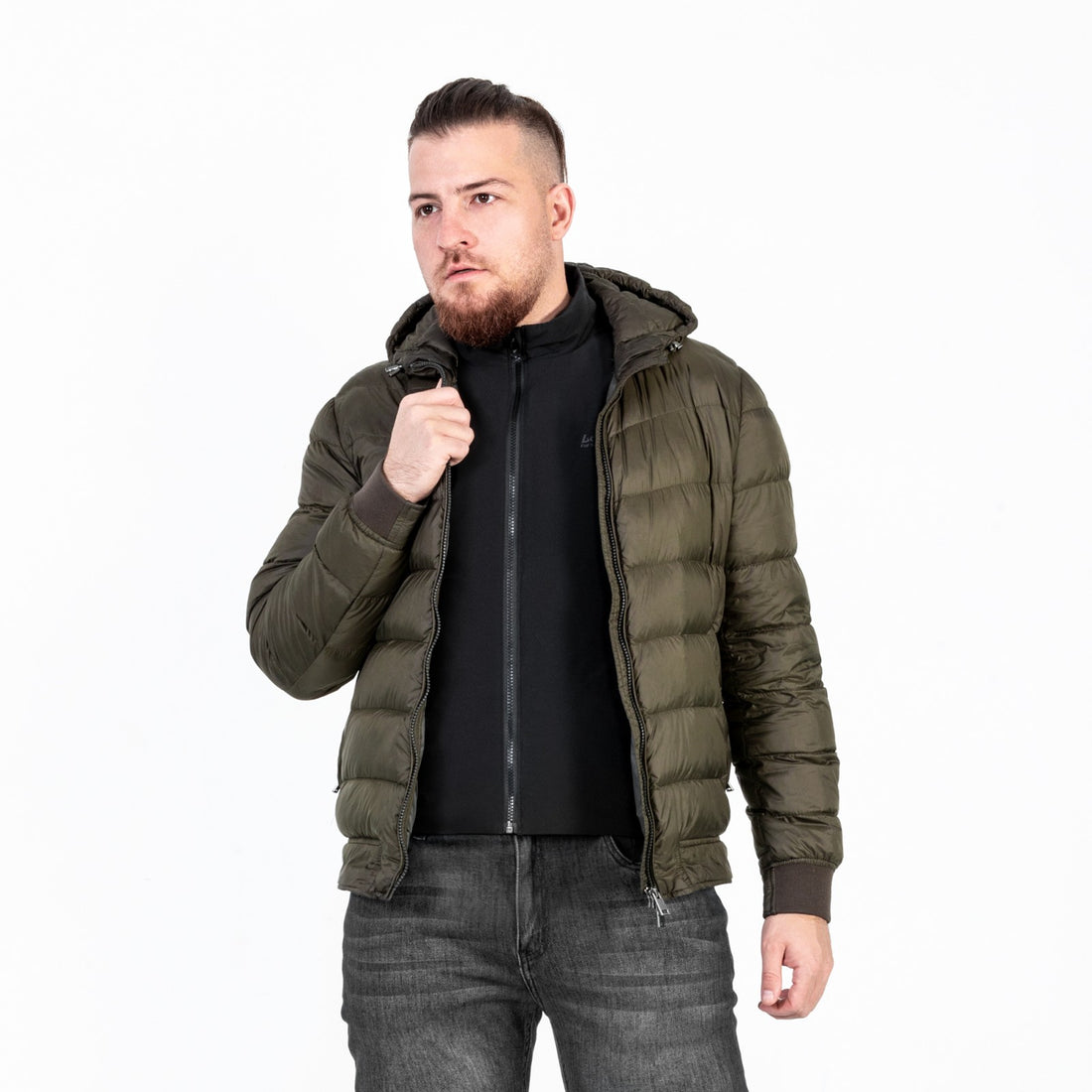
On a motorcycle, it fits under your jacket and doesn’t show. On foot, you can wear it under a puffer jacket or on its own, and it doesn’t look like technical clothing: it’s black, smooth, and has no conspicuous seams.

That’s why a heated vest gets more use than you might expect: it’s also useful when you get off the motorcycle.

It also heats when the heating is turned off

It also heats when the heating is turned off

The filling is made of 3M Thinsulate, an ultrafine fiber—the diameter is as little as one-thirtieth that of a human hair—that traps more air at the same thickness. It weighs one-third as much as traditional cotton and takes up far less space.

The figure that matters on a motorcycle is different: when wet, it retains over 80% of its insulating power, while cotton drops below 30%. And it retains its shape after fifty washes. If the power bank runs out, the vest still remains a thermal garment.

Reflects inside, keeps the wind out

Reflects inside, keeps the wind out

The inner lining has a heat-reflective treatment: it reflects back toward the body the heat that would otherwise be lost—the heat produced by the vest and the heat produced by you.

The shell is made of four-way stretch nylon with a TPU membrane: it blocks wind while allowing vapor to escape, which in a garment worn under a closed jacket can mean the difference between being dry and wet at the end of a stage.

How it fits in the saddle

How it fits in the saddle

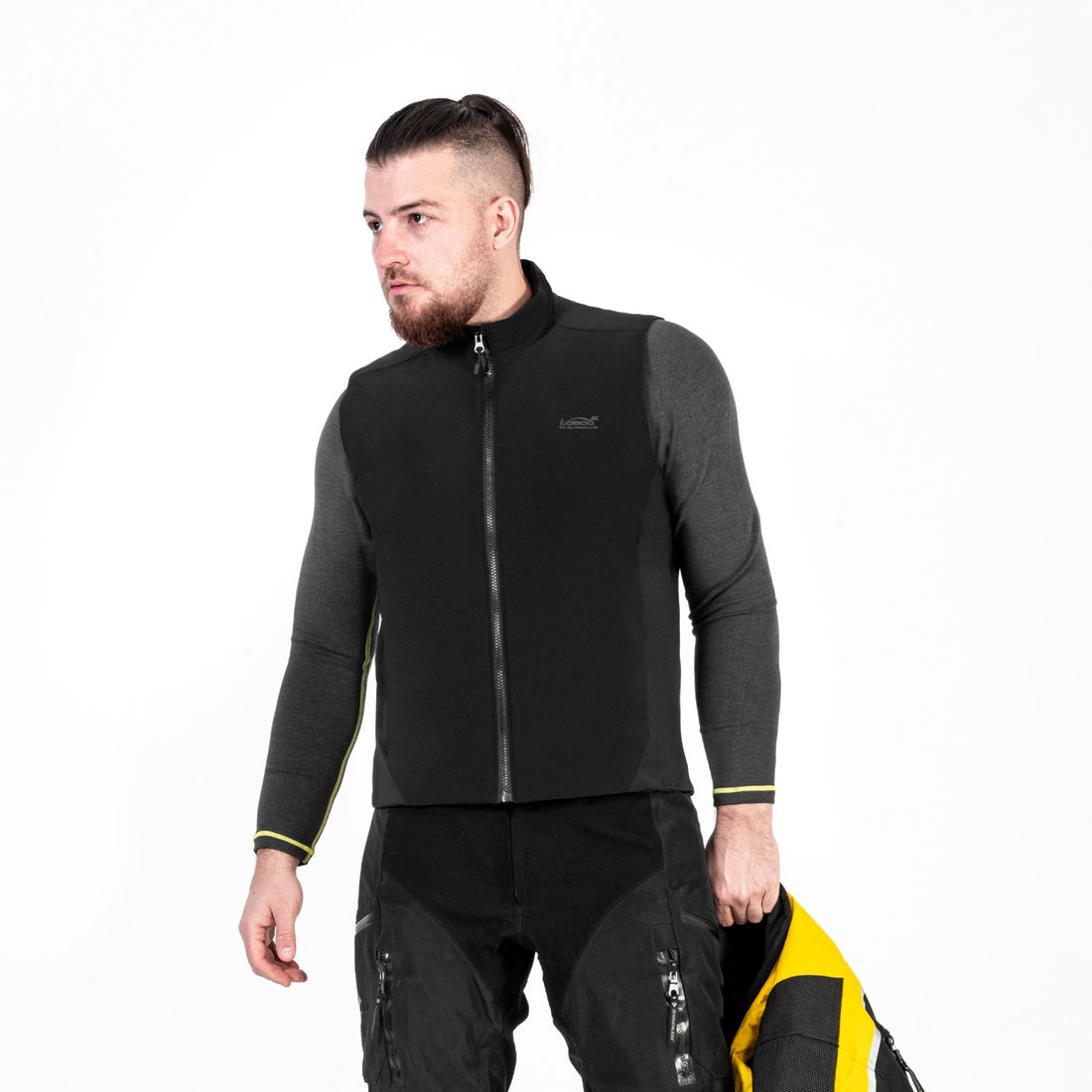
The cut is designed for the riding position: slightly longer in the back, shorter in the front, with a high collar that closes the gap between the helmet and jacket.

Under an adventure jacket, it adds no noticeable bulk around the shoulders, which is where thermal layers usually cause discomfort.

Front and back

Front and back

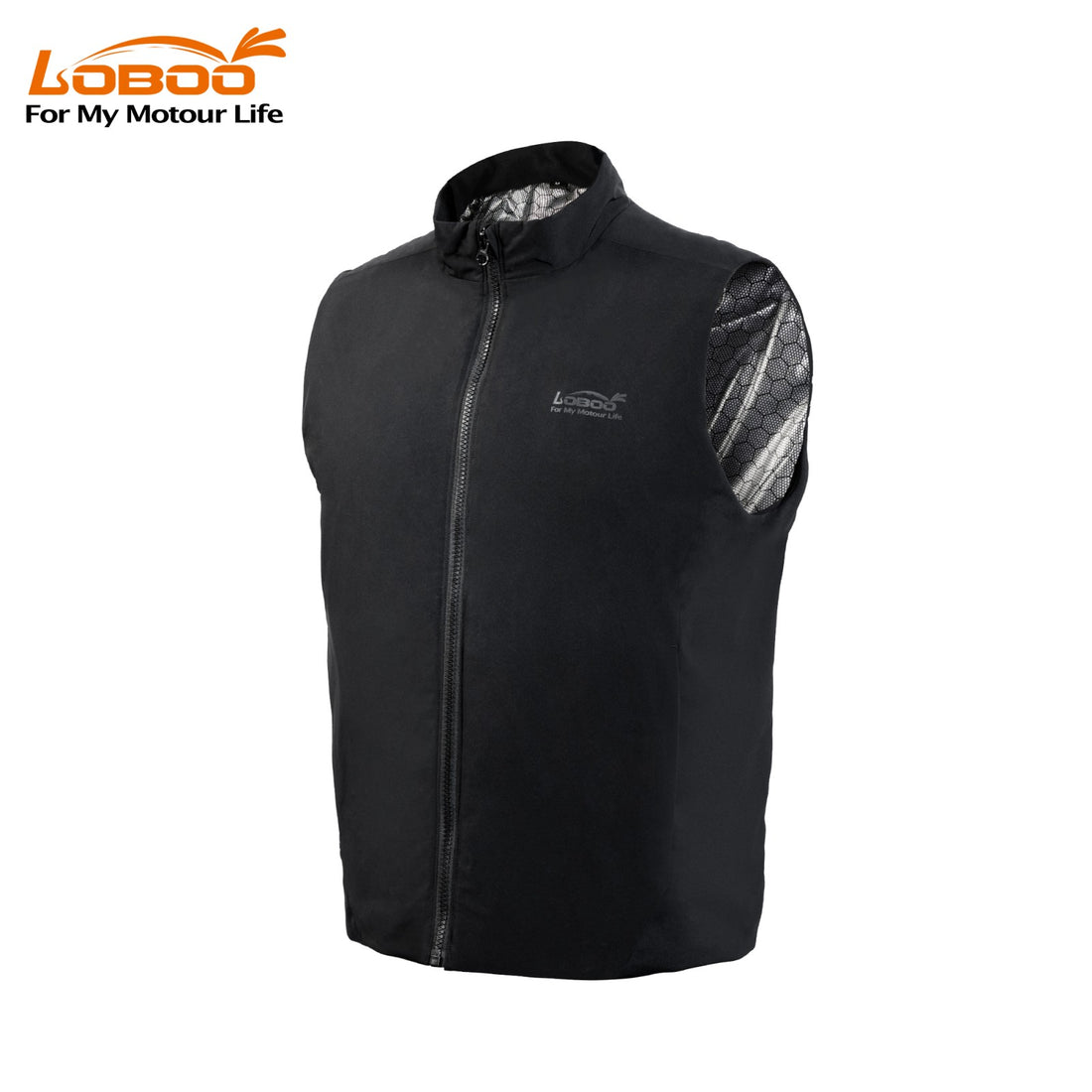
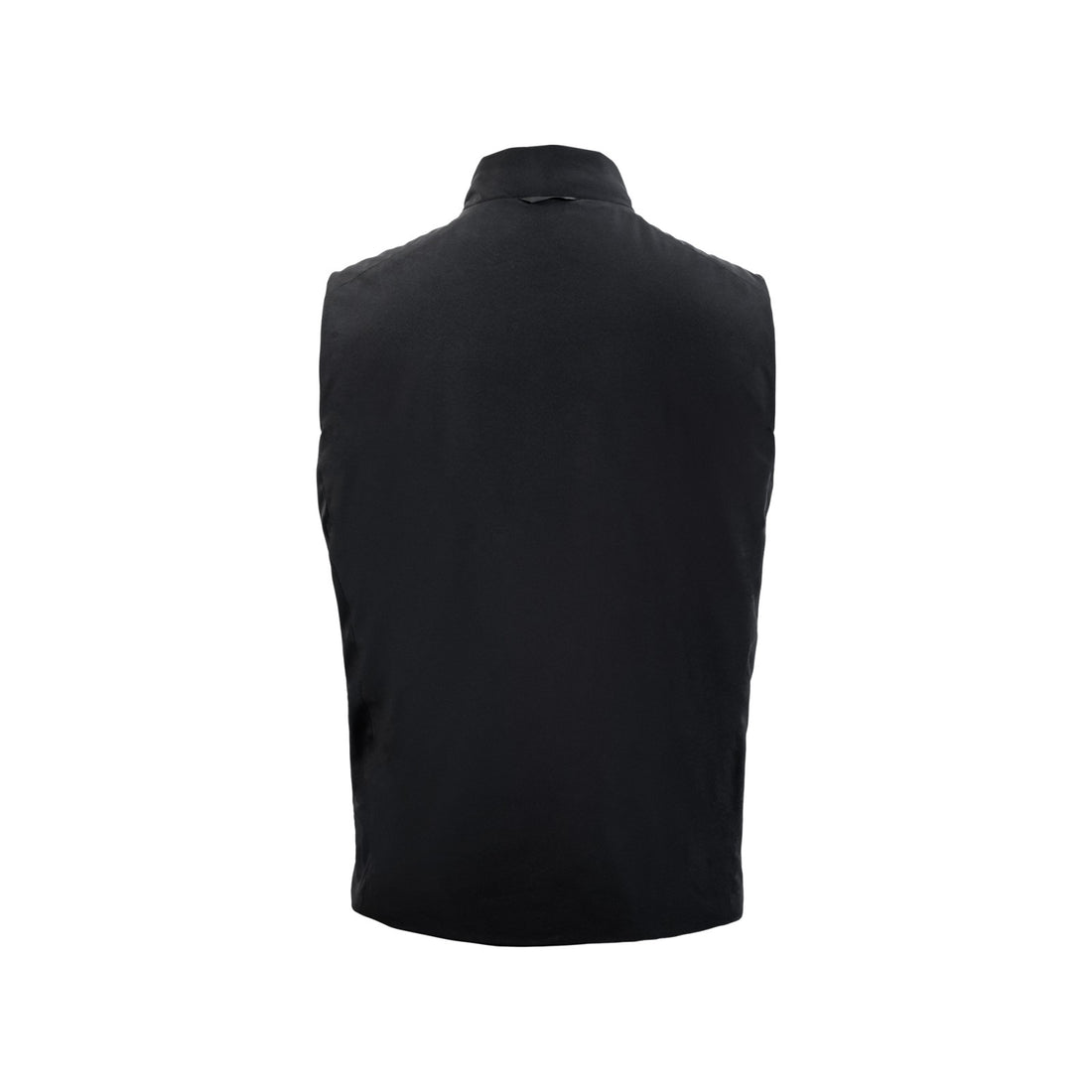
Full-length front zipper, high collar, yellow trim along the edges. The back is smooth and pocketless, so it doesn’t create pressure points under a backpack or jacket.

The garment is available only in black.

It isn't noticeable under the jacket.

It isn't noticeable under the jacket.

Three hundred and eighty-two grams and no sleeves: worn under a technical jacket, the vest takes up the space of a lightweight sweatshirt and leaves your arms and shoulders free.

The pocket with the cable remains accessible when the jacket is closed, so the power bank can be connected and disconnected without taking off your clothes.

Measurements for each size

Measurements for each size

Shell: 88% nylon and 12% elastane, lining: 95% polyester and 5% elastane, 3M Thinsulate insulation. Weight: 382 grams.

The table gives back length and chest circumference for each size, plus the intersection of height and weight. If you are between two sizes, choose the larger one: the vest is worn over other layers, and a tight fit keeps you less warm because it compresses the insulation.

FCC, CE, and RoHS certified

FCC, CE, and RoHS certified

For a garment that heats with electricity, certifications are not just any stamp: they concern electrical safety and limits on substances used in fabrics that come into contact with the skin.

The manufacturer declares FCC, CE, and RoHS compliance and displays the certificates.

FAQs

For more information, please see our FAQ.

What size should I get?

Measure your chest circumference, not your jacket size: M corresponds to 110 cm, L to 114, XL to 118, 2XL to 122, and 3XL to 128. The back length ranges from 66 to 74 cm.

If you’re between two sizes, choose the larger one, as the manufacturer recommends: the vest is worn over a technical shirt or sweatshirt, and if it’s tight, it compresses the insulation and keeps you less warm.

Which power bank do I need, and isn’t it included?

It is not included. You need a power bank with a 5 V, 2 A USB-A output—pretty much any recent model: the cable is already sewn into the vest pocket; you connect the power bank to it and leave it in there.

The runtimes stated by the manufacturer are calculated using a 10,000 mAh power bank. With a 20,000 mAh one, you double the runtime, at the cost of a little extra weight in your pocket.

How long does a charge really last?

With a 10,000 mAh power bank, LOBOO states 4.5 hours on the low setting (25 °C), 3.5 hours on medium (35 °C), and 2.2 hours on high (45 °C).

These measurements were taken at an ambient temperature of 0 °C, with no wind and a thin layer over the vest. In reality, wind while walking and a colder day shorten all of these times, but under normal use the low setting is sufficient: the high setting is for warming up quickly in the first few minutes, not for keeping it on all day.

Can I power it from the motorcycle’s outlet instead of a power bank?

Yes, provided the socket supplies 5 V at a minimum of 2 A via USB-A. An adequately powered handlebar USB socket will work, with the advantage of providing unlimited runtime as long as the engine is running.

Two things to watch out for: the cable must be able to follow you when you get off, so it is best to unplug it before dismounting, and with low-power sockets the vest may not reach the highest setting.

Can I heat only my back?

Yes. There are two buttons, one for the front and one for the back, and they work independently: you can keep the lumbar area at maximum and the chest area off, or vice versa.

It is useful in two cases: when the jacket closes well at the front but lets air in at the back, and when you want to extend battery life by using just one zone.

Does it heat up even if I don’t plug it in?

Yes, and that is an important difference compared with inexpensive heated vests. The insulation is 3M Thinsulate, so the garment insulates on its own: if the power bank runs out halfway through a stage, you are not left in your shirtsleeves.

The heating adds warmth; it does not replace insulation.

Is there a risk of getting burned?

The manufacturer warns of a real and little-known risk: low-temperature burns. In the cold, the skin is less sensitive, and a moderate heat source held against it for a long time can damage it without you noticing at the time.

For this reason, LOBOO recommends starting at the low setting and increasing it only if necessary, and not wearing the heated vest directly against bare skin. It should not be used while sleeping.

Is it waterproof?

No, and the manufacturer does not claim that. The shell has a windproof and breathable TPU membrane, so it can withstand moisture and a few splashes, but it is not a rain garment: it goes under the technical jacket, which is the waterproof one.

The useful figure is different: 3M Thinsulate insulation retains over 80% of its insulating performance even when wet, whereas traditional insulation drops below 30%.

Can it be washed?

Yes, following the symbols printed on the inner label, which are the only valid reference. The rule that always applies: disconnect the power before washing and make sure the garment is completely dry before reconnecting it.

Do not iron the heating areas or fold them forcefully: the carbon-fiber wire is thin and does not tolerate sharp creases.

Why a vest and not a jacket with sleeves?

Because it goes under the motorcycle jacket, and the sleeves are the first problem there: they add bulk around the arms, bunch up at the elbows, and restrict movement on the handlebars.

There is also a physiological reason: warming the torso raises the perceived temperature of the entire body, because that is where the blood passes before reaching the extremities. For the hands and feet, heated gloves and insoles remain the solution, acting directly where needed.

Can it also be used on foot, not just on a motorcycle?

Yes, and that’s one of the reasons it’s worth it. It’s black, smooth, and free of flashy technical details: wear it under a puffer jacket in the city, under a work jacket, or on its own over a sweatshirt.

People who work outdoors in winter use it exactly like motorcyclists do.

Does it replace protective clothing?

No. It is a thermal garment, not protective gear: it has no certified armor and should not be used instead of a motorcycle jacket. It is worn underneath as a warm layer.

Didn't find the answer you were looking for?

Do not hesitate to contact us

Buying guides, technical comparisons, and news on adventure motorcycle accessories

Before choosing

View all

Honda CRF1100L Africa Twin con allestimento fuoristrada, pilota fermo in sella su prato

Honda Africa Twin: which version is really worth it?

Base, ES, DCT, or Adventure Sports: official 2026 Honda Italy prices and weights compared, what really changes between the CRF1100L Africa Twin versions, and which one is best depending on how you ride.

Read moreabout Honda Africa Twin: which version is really worth it?

ZXMoto 820X bianca vista di tre quarti anteriore, adventure cinese a tre cilindri

ZXMoto 820X: the three-cylinder Chinese adventure bike targeting Europe

The ZXMoto 820X emerges from Chinese homologation documents: a 819 cc three-cylinder engine, around 116 hp, 19- and 17-inch wheels, and a European debut expected at EICMA 2026. What is confirmed, what is not, and how it compares with the Triumph Tiger 900 GT.

Read moreabout ZXMoto 820X: the three-cylinder Chinese adventure bike targeting Europe

Prototipo BMW di media cilindrata camuffato durante i collaudi su strada bianca, vista frontale

BMW F 600 GS: what do we really know about the new mid-displacement GS?

BMW is reportedly developing a mid-displacement GS between the F 450 GS and F 900 GS: what the prototype shows, what BMW has actually confirmed, and how it would compare with the Yamaha Ténéré 700.

Read moreabout BMW F 600 GS: what do we really know about the new mid-displacement GS?